
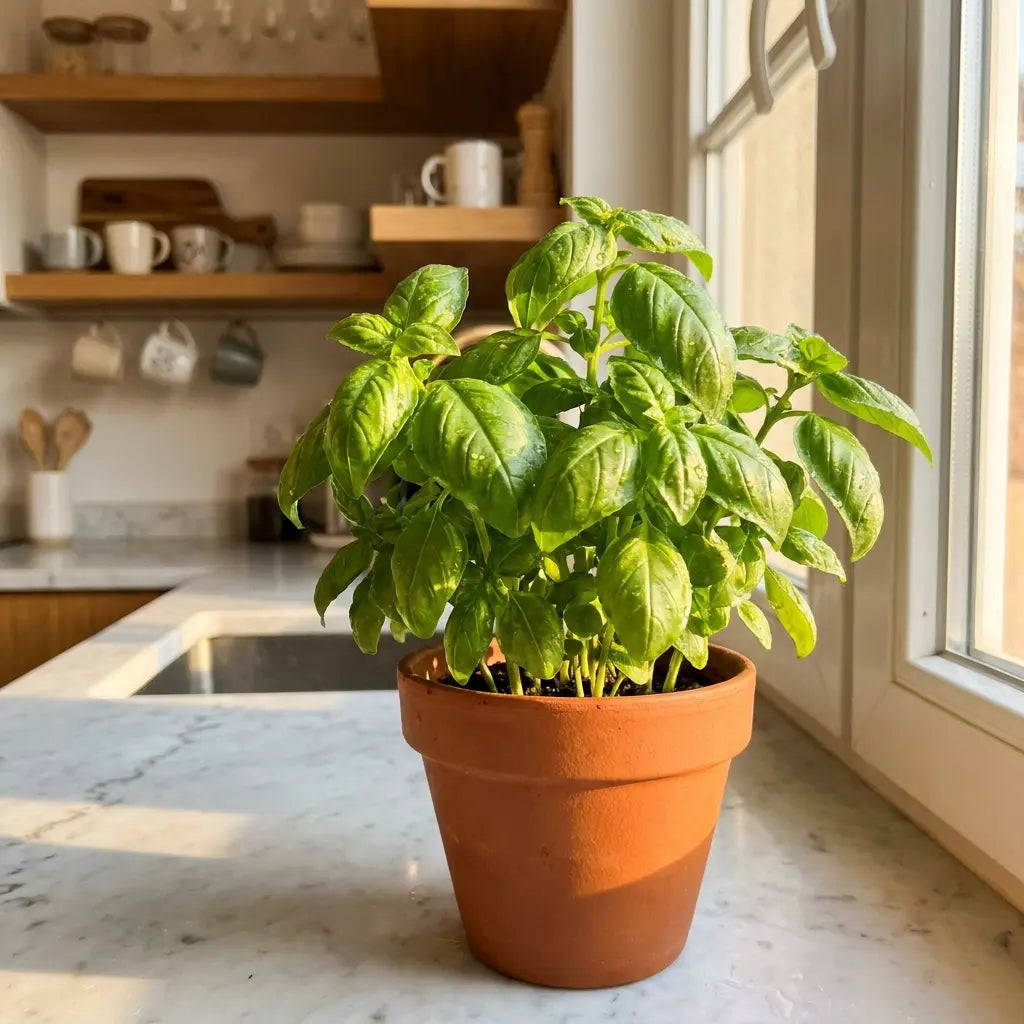
Fresh basil makes everything taste better: a torn leaf over ripe tomatoes, a handful blended into silky pesto, a sprig floating in a summer cocktail. But if you've ever bought a pot from the grocery store, you know how this story usually ends: wilted leaves, blackening stems, and a plant that didn't survive the week. Learning how to grow basil indoors changes all of that, permanently.
Basil is one of the most rewarding herbs to grow at home. It thrives in warm, bright conditions and rewards consistent care with weeks of continuous harvests. Whether you have a sunny south-facing window or a dedicated grow light, indoor basil is within reach for any home cook.
This guide covers everything: picking the right variety, the exact conditions basil needs, a step-by-step growing process for both soil and hydroponic setups, and the harvesting technique that keeps your plant producing for months rather than weeks.
Why Growing Basil Indoors Is Worth It
Store-bought basil spends days in refrigerated transport and display, roughly 20°F colder than this tropical herb actually prefers. By the time it reaches your kitchen, the essential oils that give basil its fragrance have already started to degrade. Home-grown basil, harvested minutes before use, is categorically different: brighter, more aromatic, and far more intense in the pesto or pasta sauce. If pesto is the goal, our homemade basil pesto guide pairs the classic recipe with the exact basil you'll be growing here.
Growing indoors also means fresh basil regardless of the season. Outdoor basil dies at the first frost; an indoor setup extends your harvest through fall, winter, and spring without interruption. For anyone who cooks with herbs regularly, the numbers are compelling: a $3.99 bunch every two weeks adds up to over $100 per year, the same supply you can grow continuously from a $4 seed packet.
There's also the simpler pleasure of a living plant in your kitchen. An indoor herb garden adds life to a windowsill and makes cooking feel more connected. You reach for exactly what you need and the plant grows back. Once you start, it's hard to imagine cooking without one.
Choosing the Right Basil Variety for Indoor Growing
Not all basil performs the same way indoors, and the variety you choose shapes both what you grow and how you cook with it. These three varieties are the best performers for an indoor herb garden and offer the most culinary range.
Genovese Basil: The Classic Choice
Genovese is what most people picture when they think of basil: broad, glossy green leaves with a sweet, peppery fragrance that's the foundation of Italian cooking. It's the classic for pesto, Caprese salads, and Margherita pizza, and it's the most productive variety for indoor growing. Plants are vigorous, respond exceptionally well to regular harvesting, and produce continuously for months under the right conditions.
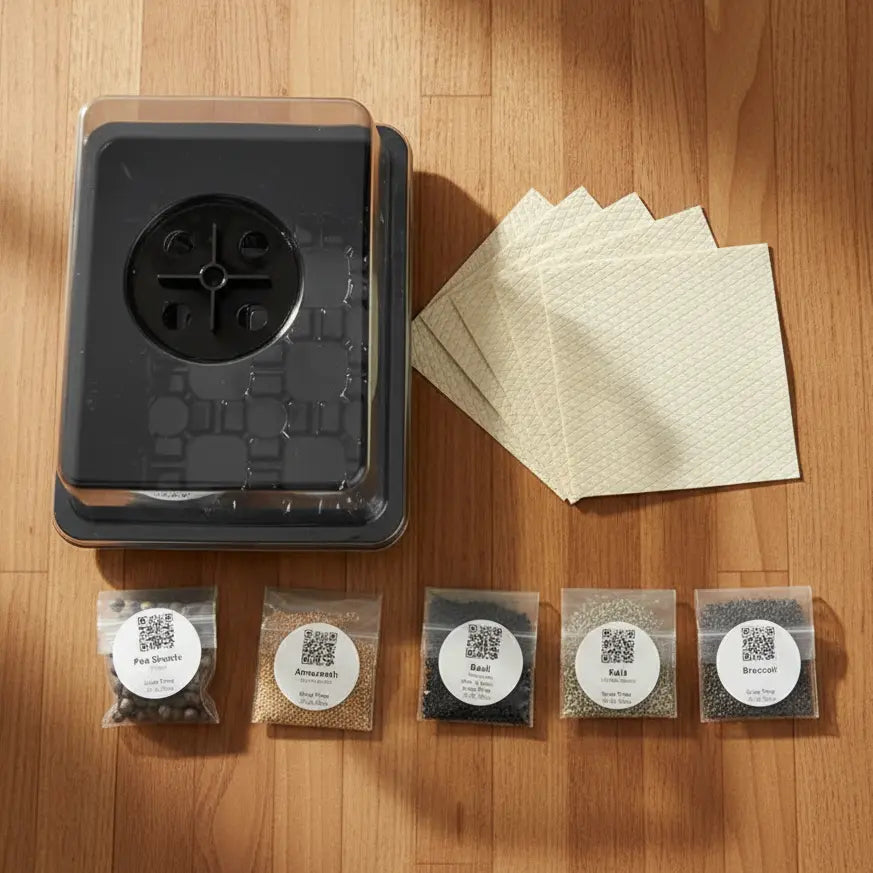
If you're starting with one variety, start here. Aquager's Genovese Aroma 2 Basil Seeds are a high-germination cultivar selected for intense aroma and reliable indoor performance, four seed packets per set so you can stagger plantings for an uninterrupted supply.
Red Rubin Basil: Bold Color, Rich Flavor
Red Rubin basil has deep purple-red leaves that are almost ornamental, looking as striking on a windowsill as it does on a plate. The flavor mirrors Genovese but with a slightly spicier, more complex edge, making it excellent for infused oils, herb butters, and any presentation where visual impact is part of the dish.
It grows slightly slower than Genovese but is equally manageable indoors. Aquager's Red Rubin Basil Seeds bring this striking variety into your kitchen garden with the same generous four-packet format.
Lime Basil: The Unexpected Favorite
Lime basil is the variety that surprises people. Smaller-leaved than Genovese, it carries a distinct citrus note alongside the classic basil fragrance, somewhere between lemon verbena and sweet basil. It's exceptional in cocktails, Thai and Vietnamese dishes, fruit salads, and desserts where brightness is the goal.
Its compact growth habit makes it ideal for smaller pots and tight windowsill setups. Aquager's Lime Basil Seeds are an easy entry point into this underappreciated variety that might just become your new favorite.

Basil Plant Care: Light, Water, and Temperature
Basil evolved in hot, bright, well-drained conditions in South Asia. Replicate those conditions indoors and basil thrives; deviate significantly and it struggles. These four variables cover most of what you need to know about basil plant care.
Light: Basil needs 6 to 8 hours of direct sunlight per day. A south-facing window is the best natural spot in the Northern Hemisphere during spring and summer. In fall and winter, or in rooms without strong south light, supplemental grow lights work well. Run them 14 to 16 hours per day and position bulbs 4 to 6 inches above the plant. Insufficient light is the single most common reason indoor basil fails: plants stretch, produce small flavorless leaves, and lose their aroma entirely.
Water: Basil likes consistent moisture, not standing water. Press your finger into the top inch of soil, and if it's dry, water thoroughly until it drains from the bottom. Never let basil sit in a tray of standing water. Overwatering causes root rot, which paradoxically looks like drought stress: wilting despite wet soil. Underwatering shows as wilting with dry, crispy leaf edges.
Temperature: Keep basil above 60°F at all times and ideally between 70°F and 85°F. This herb is genuinely cold-sensitive: a single night below 50°F near a drafty window can blacken the leaves permanently. Keep plants away from air conditioning vents and cold glass in winter.
Feeding: Basil is a light feeder in soil. A balanced liquid fertilizer at half strength every two to three weeks is sufficient. Over-fertilizing with nitrogen produces lush, oversized leaves with diluted flavor, so restraint is better here.
How to Grow Basil Indoors Step by Step
Whether you're starting from seed or transplanting a nursery seedling, the process is straightforward. Follow these steps and you'll have a harvestable plant in three to four weeks.
- Choose your growing method. You can grow basil in potting soil, simple, low cost, and effective, or in a hydroponic system, which delivers faster growth, higher yields, and no soil management. Both work well indoors; your choice depends on your setup and how seriously you want to produce.
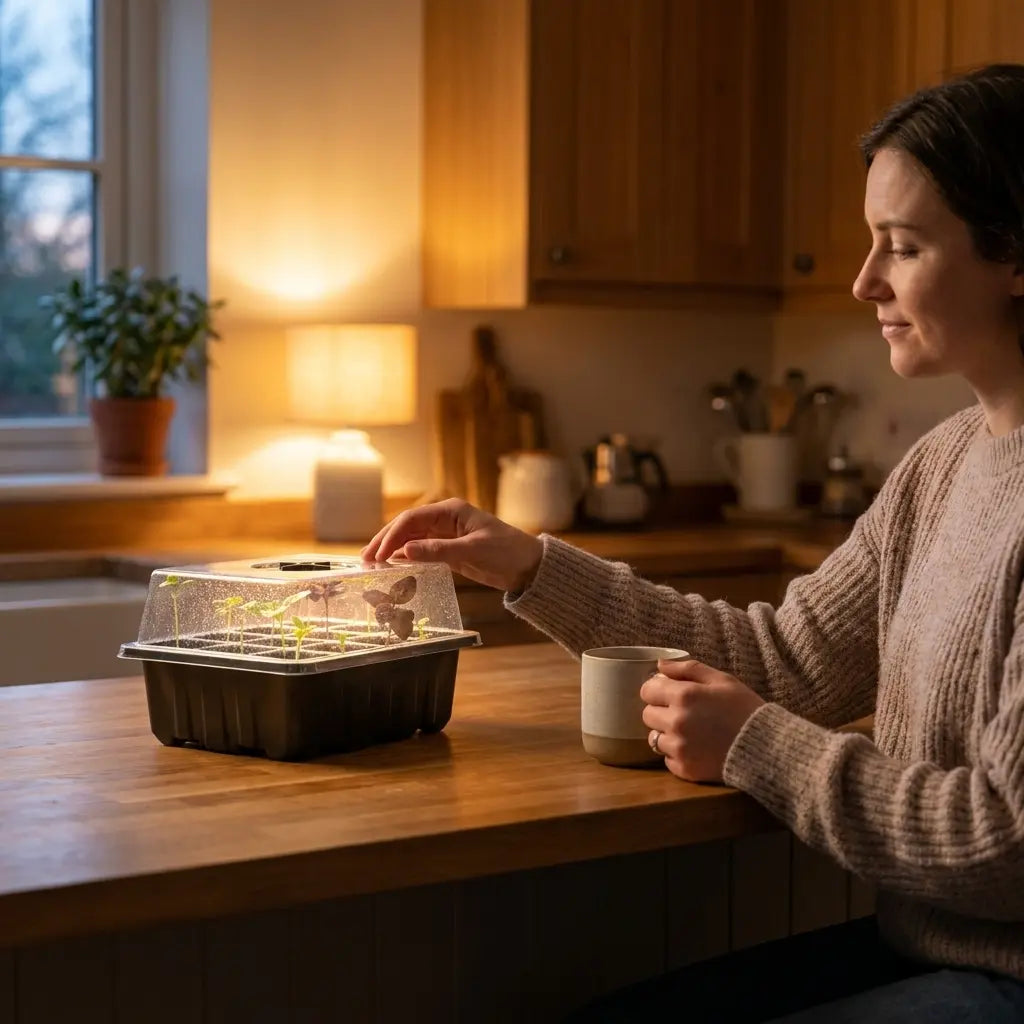
- Plant your seeds. In soil, sow seeds ¼ inch deep in a quality potting mix. Plant 2 to 3 seeds per pot to account for germination gaps. Keep the soil warm (70°F or above) and consistently moist. A seedling heat mat dramatically speeds germination.
- Wait for germination. Basil germinates in 5 to 10 days under warm conditions. You'll see two small seed leaves (cotyledons) emerge first, followed by the first true basil leaves about a week later.
- Thin to one plant per spot. Once seedlings have their first true leaves, keep the strongest one per container and gently remove the others. Crowded plants compete for light and nutrients and produce weak, leggy growth.
- Move to full light. Once established, position plants at your brightest window or directly under grow lights running 14 to 16 hours per day. This is when fast, healthy leaf production begins.
- Water consistently. Check moisture every one to two days. Water thoroughly when the top inch of soil is dry and always discard standing water from the tray within 30 minutes of watering.
- Begin light fertilizing. Once your plant has 3 to 4 sets of true leaves, start half-strength liquid feedings every two to three weeks. Reduce if you notice unusually large leaves with reduced scent, a sign of over-feeding.
- Pinch flower buds immediately. The moment a flower stalk appears, pinch it off at the base. Flowering signals the plant to stop leaf production, once it blooms, leaves shrink, flavor drops, and the plant enters its natural decline. Pinching keeps it in productive vegetative growth for months longer.

The Easiest Way to Grow Basil Indoors Year-Round
Soil-grown basil works, but it comes with the variables every home grower knows well: inconsistent watering, soil-borne pests, and plants that peak for a few weeks before tapering off. Hydroponic basil sidesteps most of these challenges by delivering water, oxygen, and nutrients directly to the root system: consistent conditions, no guesswork, faster growth.
In a well-maintained hydroponic setup, basil grows 30 to 50% faster than in soil and produces larger, more aromatic leaves for significantly longer. Hydroponic basil has been the standard in commercial herb production and top restaurant kitchens for decades. Bringing that same approach home no longer requires a complicated DIY build.
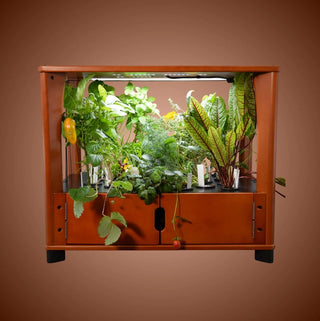
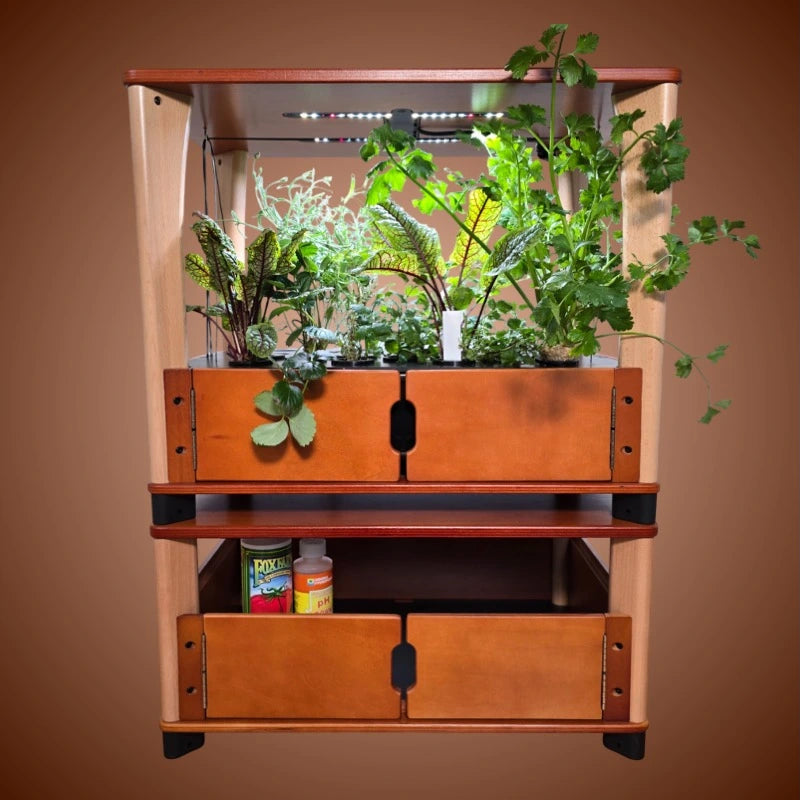
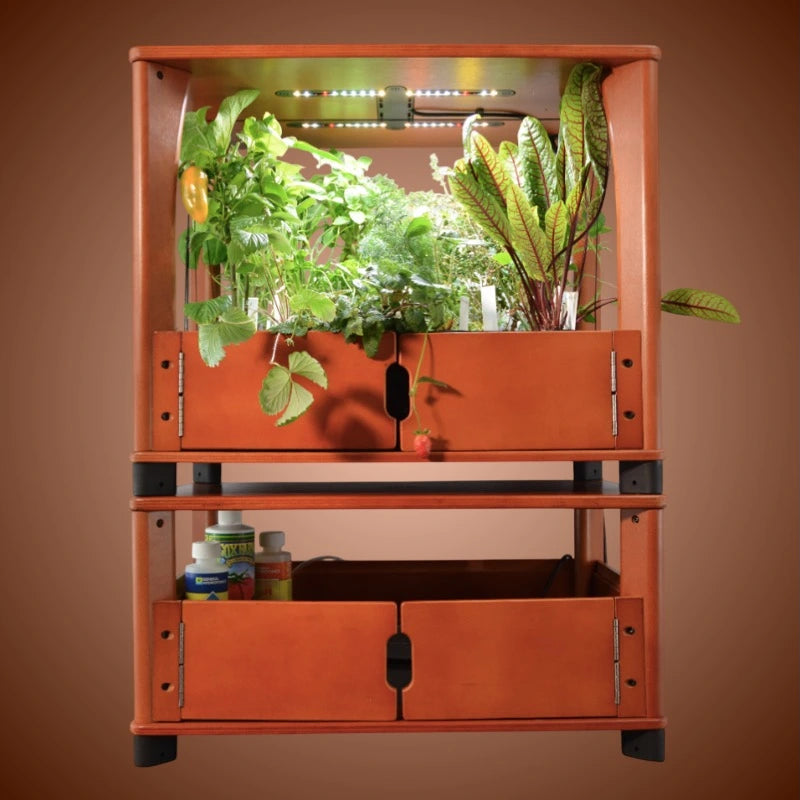
The Aquager Chef's Organic Set is a furniture-grade indoor growing system with 24 plant sites, integrated grow lighting, and a reservoir-fed watering system that takes the guesswork out of growing entirely. It fits naturally in a kitchen corner or dining room, looking like furniture rather than a science project. Load it with Genovese, Red Rubin, or Lime Basil seeds and you have a continuous harvest running year-round from the same system.
For hydroponic basil specifically, maintaining the right water pH (between 5.5 and 6.5) is the variable that matters most for flavor and plant health. The pH Control Kit (test indicator, pH Up, pH Down, and dropper) makes this a two-minute weekly task that measurably improves both plant vigor and leaf flavor. It's a small addition with a noticeable result.

When and How to Harvest Indoor Basil
Harvesting correctly is as important as growing correctly. The wrong technique stalls a plant; the right one makes it more productive with every cut.
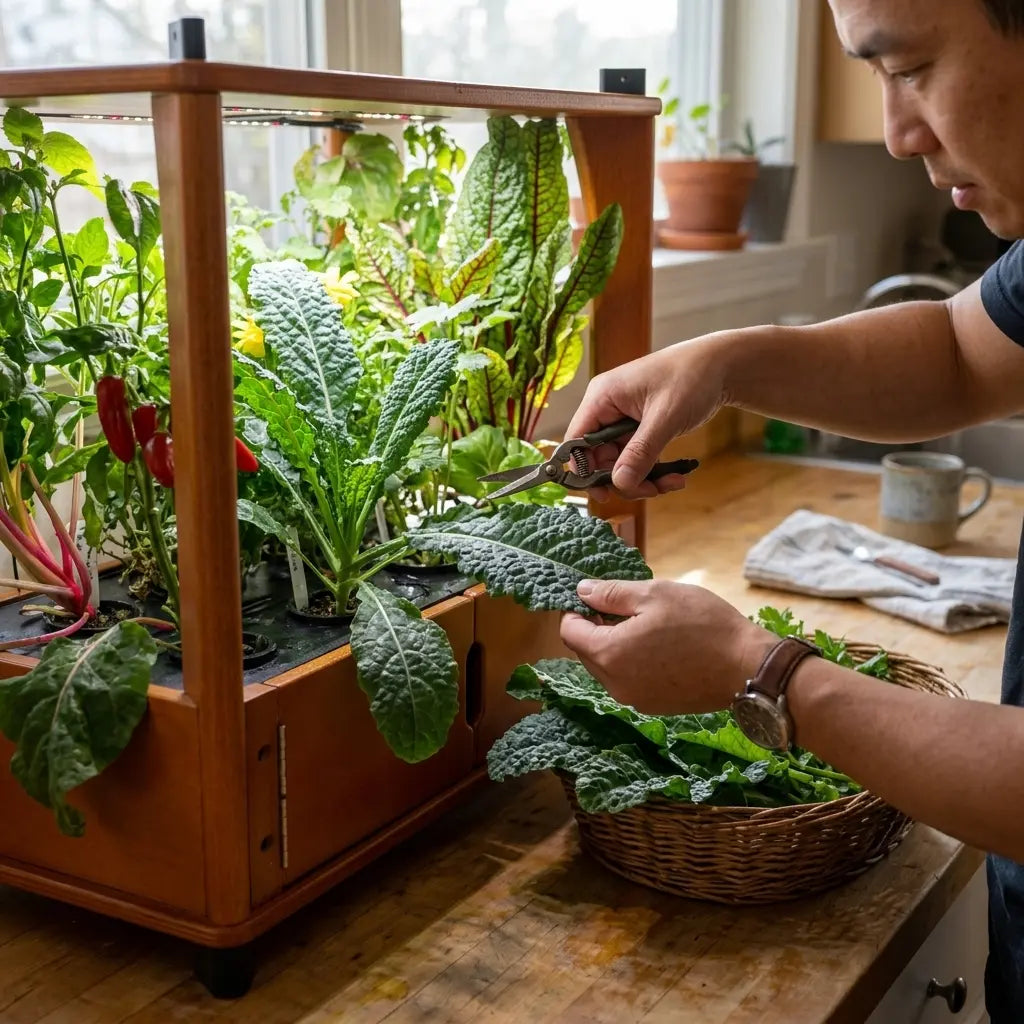
Always harvest from the top of the plant, cutting the stem just above a pair of leaves. This signals the plant to branch at that point, producing two new stems where there was one. Never strip leaves from the bottom or harvest more than one-third of the plant in a single session. Taking too much stresses the plant and slows recovery significantly.
The best time to harvest is in the morning, after overnight transpiration but before midday heat. Essential oil concentration, and therefore flavor intensity, is highest in morning leaves. For everyday use, pinching individual leaves as needed works perfectly. For a larger harvest, cut whole stems above a leaf node rather than plucking individual leaves.
If you see a flower stalk forming, pinch it off at the base immediately and harvest the stem above it. Removing flowers as soon as they appear keeps your plant in active vegetative growth and extends productive harvesting by weeks.
Frequently Asked Questions About Growing Basil Indoors
How much light does basil need indoors?
Basil needs 6 to 8 hours of direct sunlight per day, or 14 to 16 hours under a grow light positioned 4 to 6 inches above the plant. A south-facing window is the best natural light source. Insufficient light is the most common cause of weak, pale, low-flavor indoor basil.
Why is my indoor basil dying?
The two most common causes are overwatering, where roots sitting in wet soil develop rot that looks like drought stress, and too little light, which causes stretching and yellowing. Check the roots if you suspect rot: healthy roots are white or cream-colored; rotted roots are brown and mushy. If rot is present, start fresh with better drainage and allow the soil to dry slightly between waterings.
Can basil grow indoors year-round?
Yes. With adequate light and temperatures consistently above 60°F, basil grows year-round indoors without interruption. Supplemental grow lighting is typically needed in winter even in south-facing rooms. For a full seasonal plan, see our guide to growing herbs indoors all winter. A hydroponic setup with built-in lighting removes seasonal light dependency entirely.
How long does indoor basil last?
With consistent harvesting and flower pinching, a well-maintained soil-grown basil plant lasts 4 to 6 months. Hydroponic basil often outlasts this significantly, as the roots receive consistent nutrients and soil-borne disease is eliminated. Starting new seedlings every few months ensures a continuous, uninterrupted supply.
Start Growing Basil Indoors Today
Growing basil indoors is one of the most immediately rewarding things a home cook can do. The difference between store-bought and home-grown is unmistakable from the first harvest: more fragrant, more flavorful, and always ready when you need it.
Start with the variety that fits your cooking: Genovese for Italian classics, Red Rubin for depth and color, or Lime Basil for something unexpected. And when you're ready to grow year-round with no seasonal limits, the Aquager Chef's Organic Set gives you a continuous supply of fresh basil, and a dozen other herbs and vegetables, from a beautiful piece of furniture that belongs in your kitchen.
Author: Aquager Team · Published: May 10, 2026 · Updated: August 24, 2026 · Reviewed: August 24, 2026 (Phase 3)












0 comments