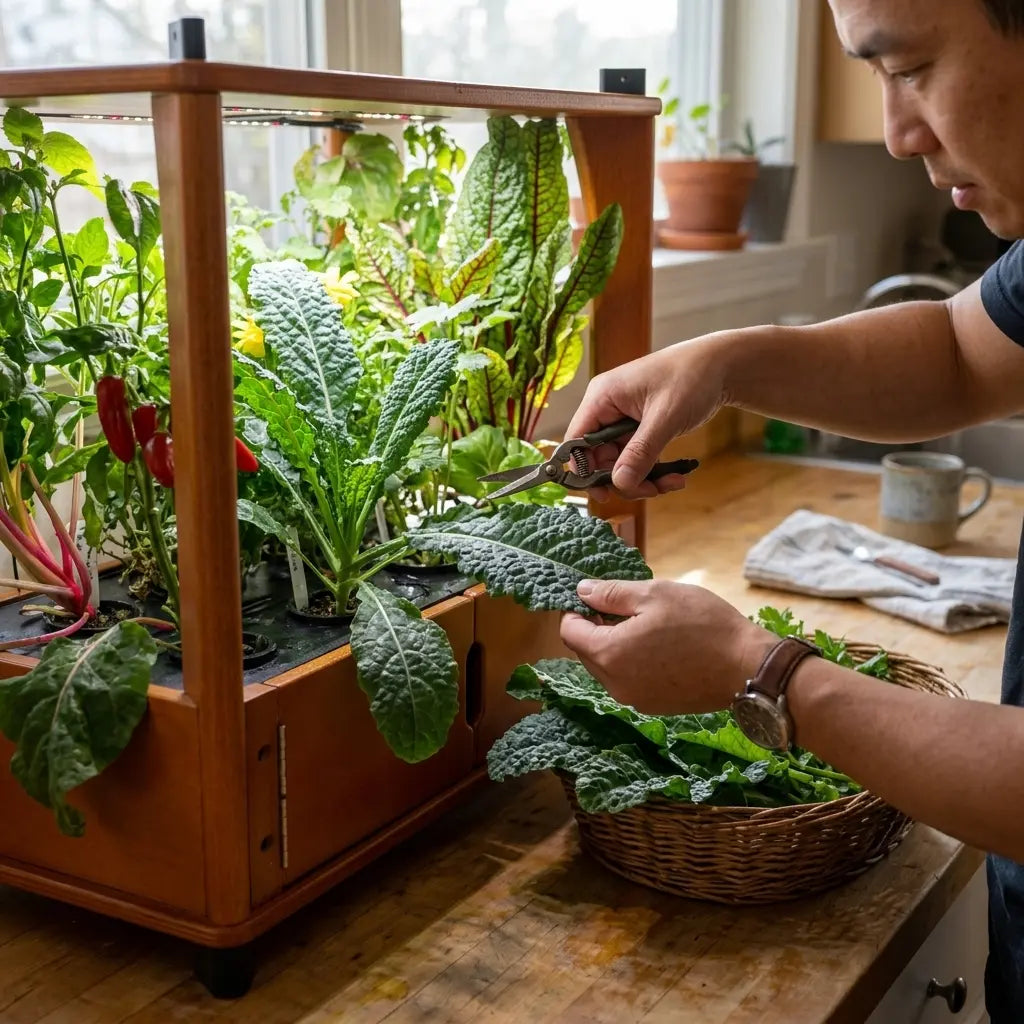
Growing food indoors year-round means producing edible plants continuously, inside your living space, without depending on seasons, weather, or outdoor soil conditions.
In practice, indoor food growing isn’t about recreating a garden inside your home. It’s about using controlled systems—light, water, airflow, and spacing—to deliver predictable growth with minimal effort and minimal failure.
In short: growing food indoors year-round is possible—but only when the system matches your space, routine, and expectations.
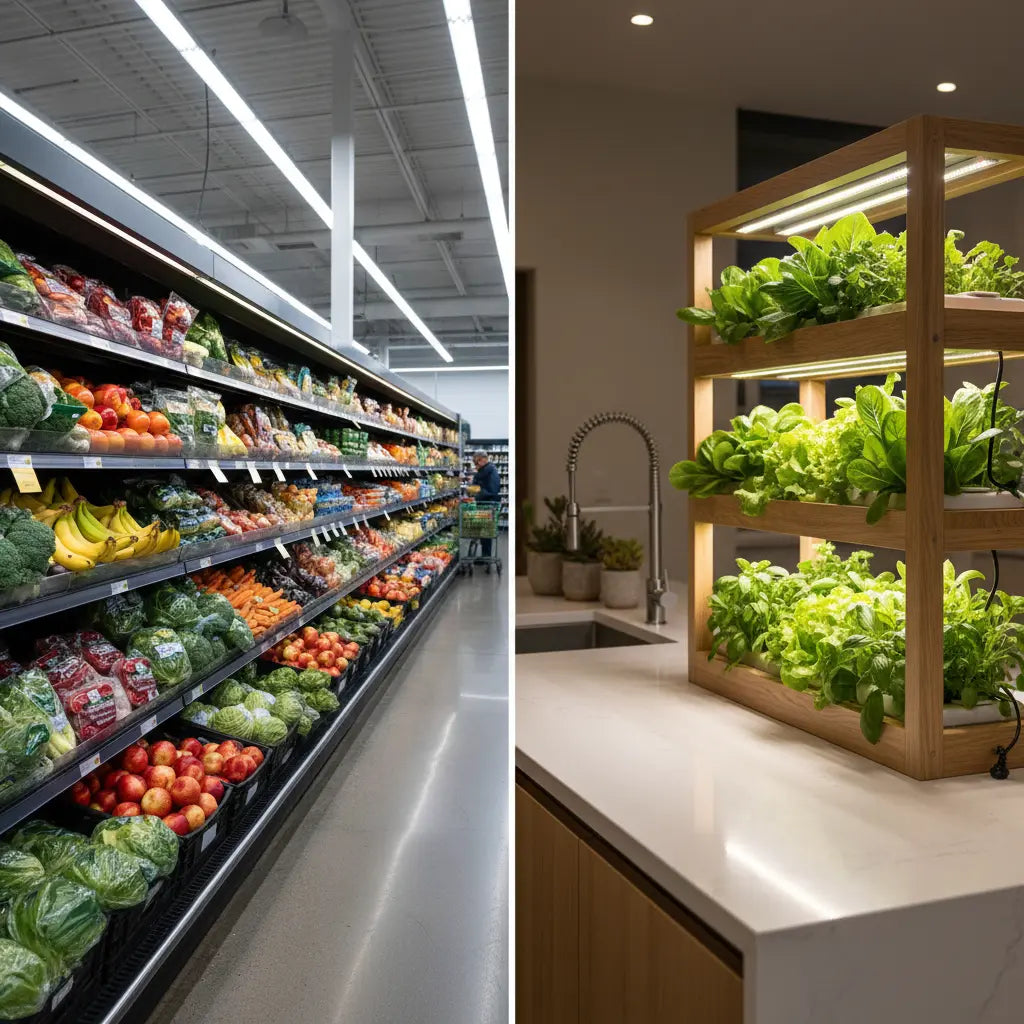
Why This Matters
Interest in growing food indoors has surged as people look for fresher ingredients, lower grocery dependence, and more control over what they eat. But most people who try indoor food growing don’t stop because they lose motivation—they stop because the setup doesn’t fit their life.
For most people growing indoors, the difference between success and giving up isn’t effort—it’s whether the system aligns with their space, routine, and tolerance for maintenance.
This page exists to answer the real question behind the search for growing food indoors year-round:
Is this actually worth doing for someone like me—and if so, what approach makes sense?
How Indoor Food Growing Works (Mental Model)
Indoor food growing succeeds when four variables stay stable:
- Light consistency – plants receive predictable light cycles regardless of season
- Water delivery – roots get oxygenated moisture without over- or under-watering
- Environment control – temperature and airflow stay within plant-friendly ranges
- Human effort – the system matches how often someone realistically wants to interact with it
Traditional gardening fails indoors because it relies on uncontrolled inputs (sunlight, evaporation, soil behavior). Indoor systems work when they replace uncertainty with repeatability.
You’re not “gardening more.” You’re removing variables.
Common Failure Modes (Why Most Attempts Don’t Last)
Most indoor food growing failures fall into predictable patterns—not because people lack skill, but because systems demand more than expected.
1. Light Mismatch
Plants placed near windows often receive insufficient or inconsistent light, leading to slow growth and weak yields.
2. Overwatering and Root Stress
Soil indoors dries unevenly. This causes root oxygen issues, fungus gnats, and eventual plant decline.
3. High Maintenance Burden
Systems that require frequent adjustments, mixing, or troubleshooting quietly exhaust beginners.
4. Space Friction
Large, plastic, or visually intrusive setups get moved, ignored, or dismantled.
5. Expectation Gap
People expect “some effort,” but not daily decision-making. When effort exceeds expectations, abandonment follows.
In short: most failures aren’t about growing skill—they’re about system friction.
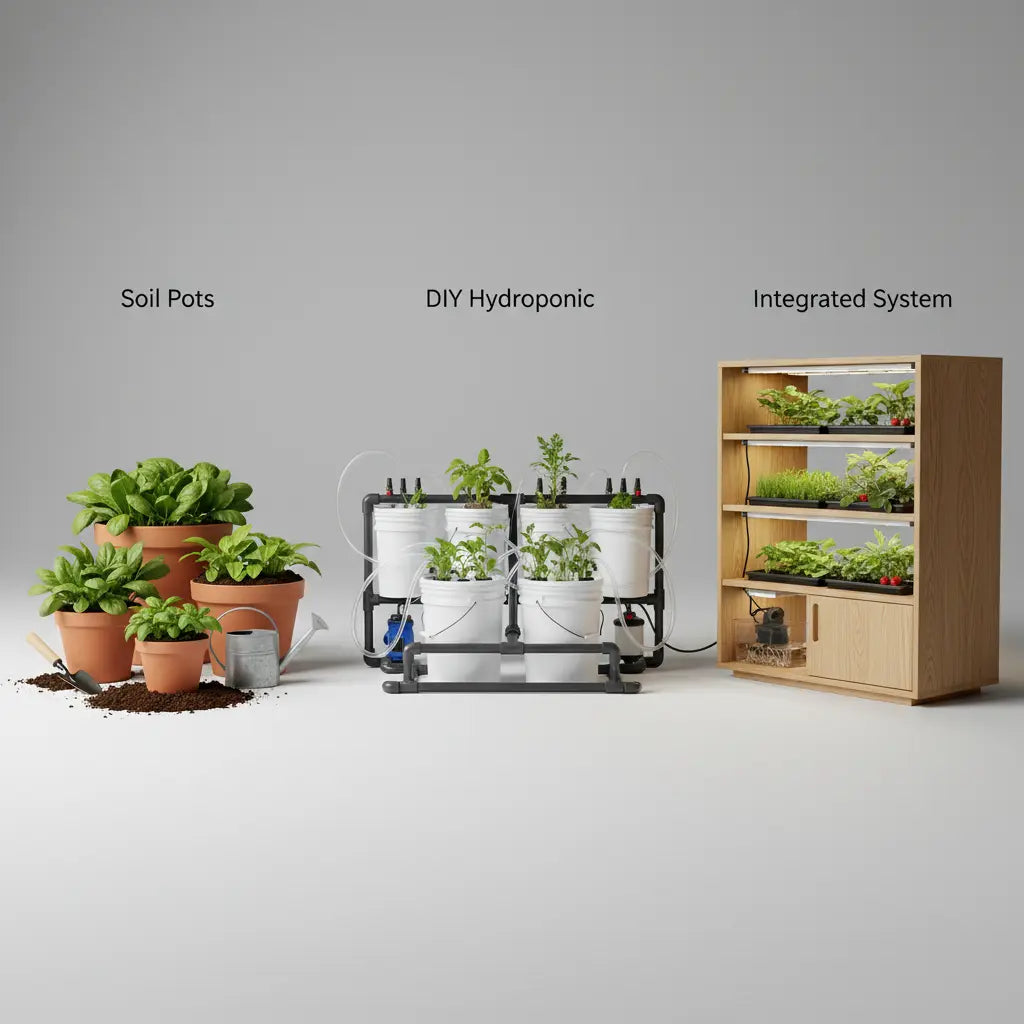
Indoor Food Growing Options (High-Level)
There are several legitimate ways to grow food indoors year-round. Each comes with tradeoffs that matter—especially for beginners.
Soil-Based Indoor Growing
- Familiar and low upfront cost
- High variability in watering and pests
- Inconsistent yields indoors
- Mess and odor sensitivity
DIY Hydroponic Setups
- Higher yield potential
- Requires assembly, tuning, and troubleshooting
- Steeper learning curve
- Easy to abandon if something goes wrong
Integrated Indoor Growing Systems
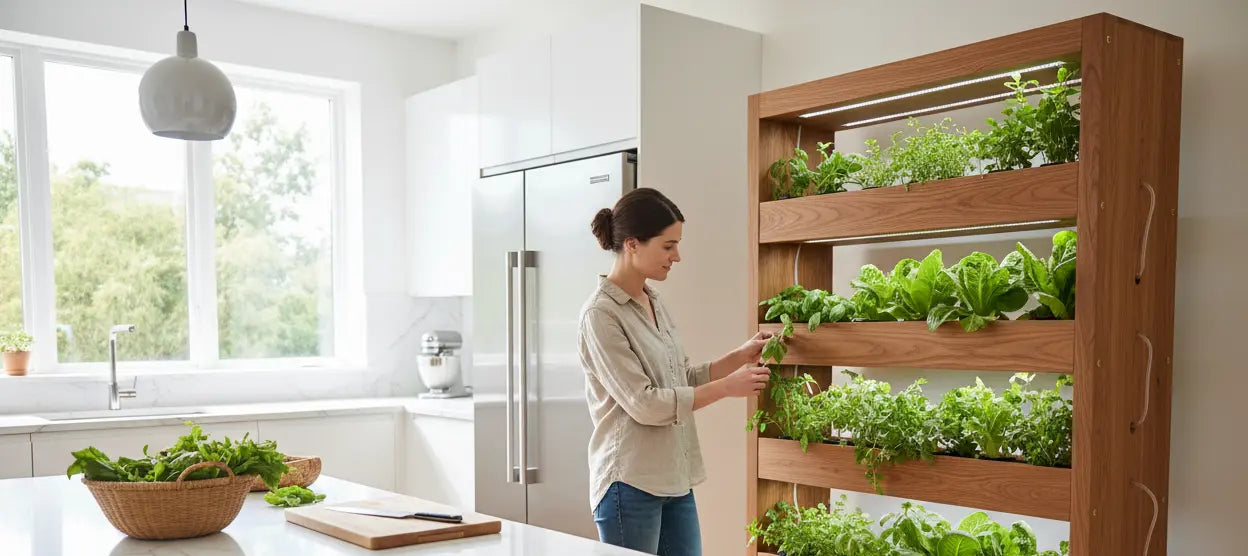
- Designed for stability and predictability
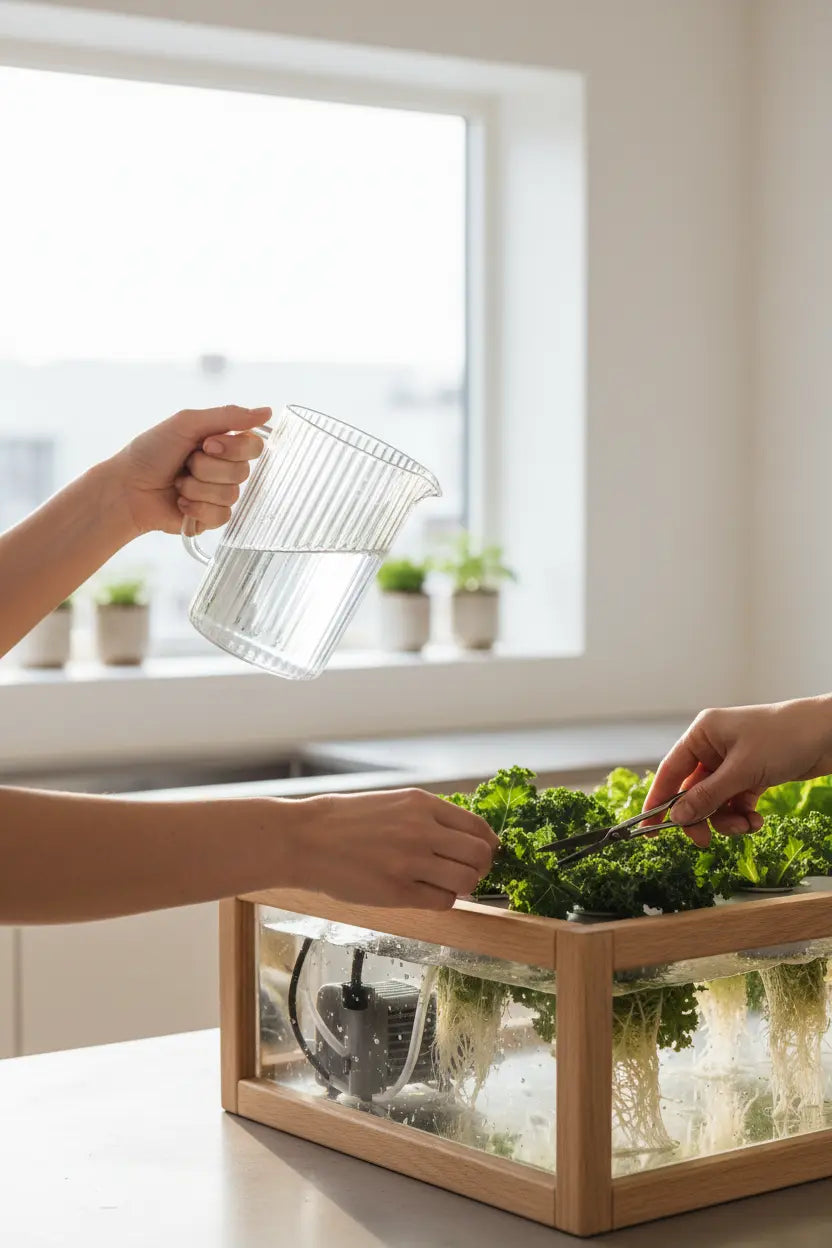
- Controlled water and light delivery
- Lower daily effort
- Higher upfront cost, lower ongoing friction
None of these approaches are “wrong.” But they are right for different people.
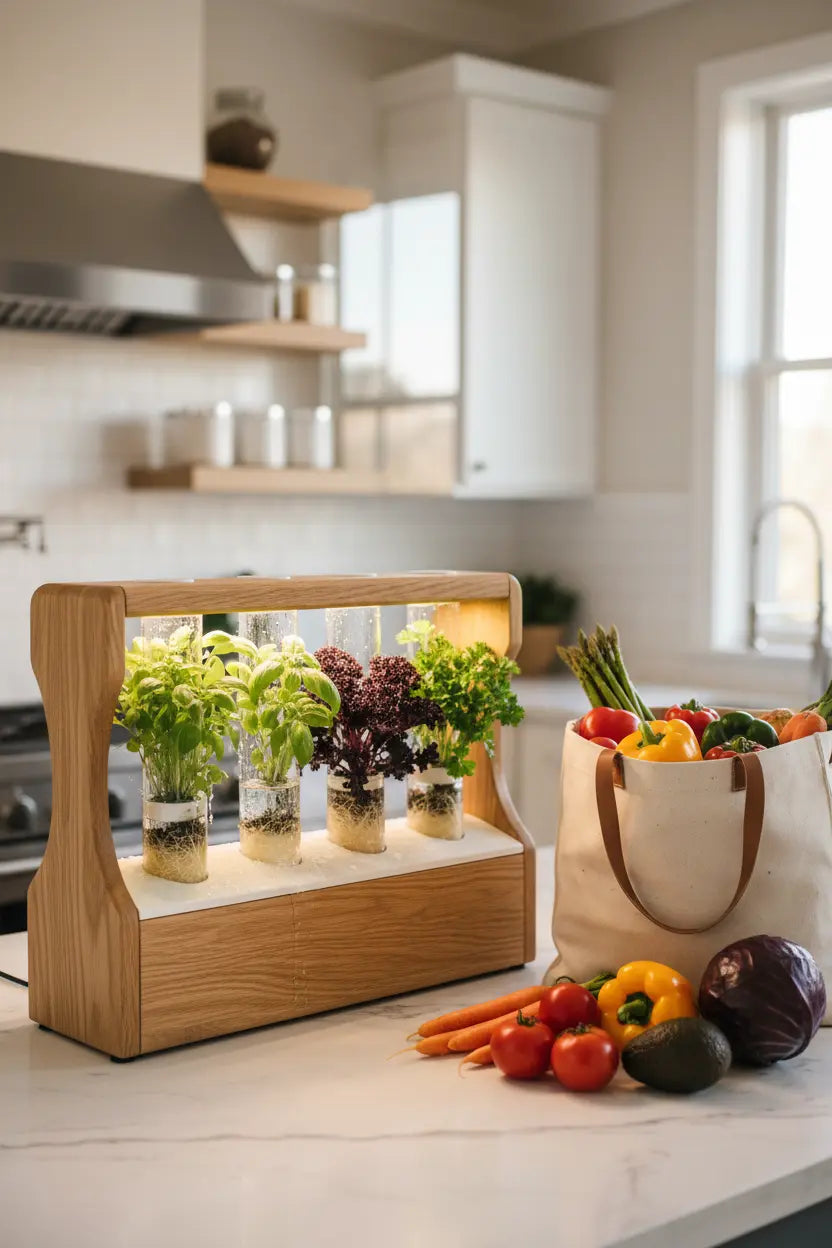
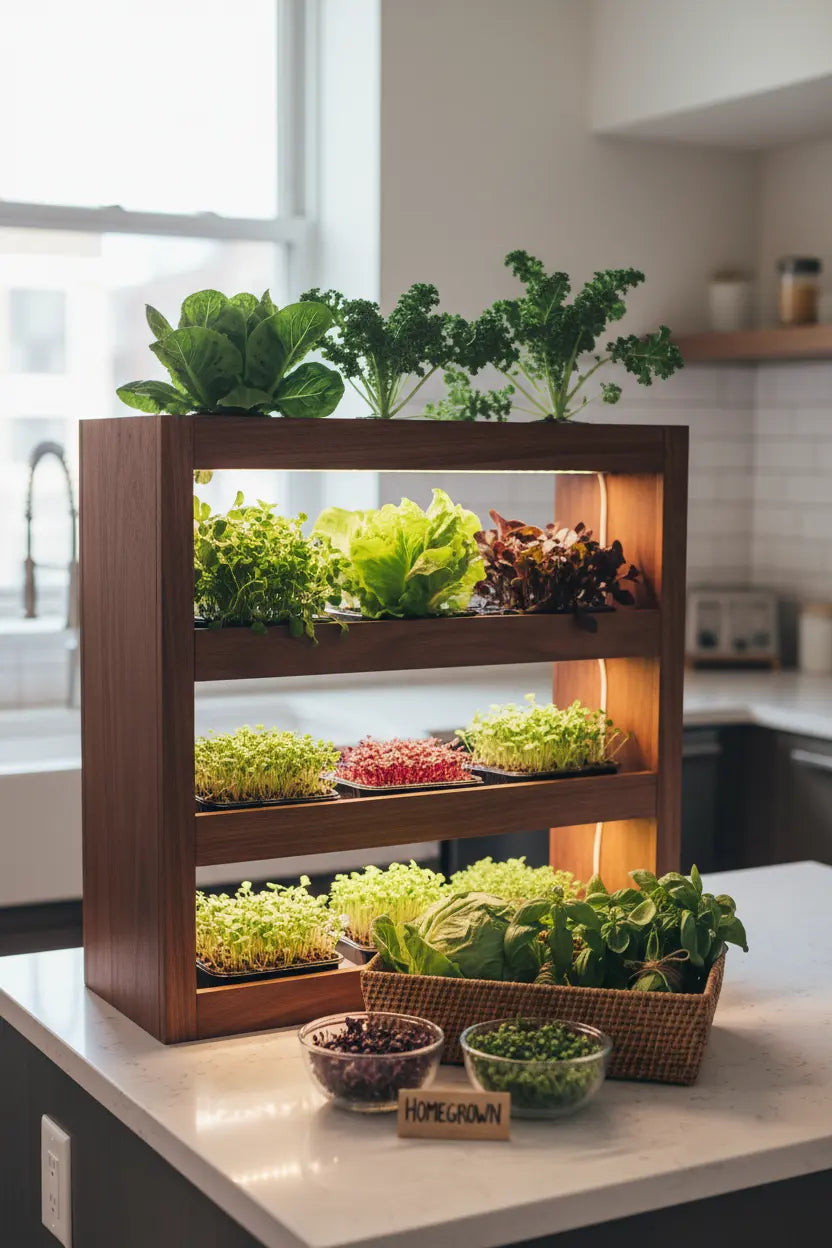
Who This Is For / Not For
This is a good fit if you:
- Want fresh food year-round without gardening experience
- Live in an apartment or indoor-only space
- Prefer predictable systems over experimentation
- Value beginner-friendly design and low maintenance
This may not be a fit if you:
- Want large-scale crop production
- Enjoy constant tinkering and manual control
- Prefer outdoor soil gardening as a hobby
This distinction matters more than enthusiasm.
Product Direction
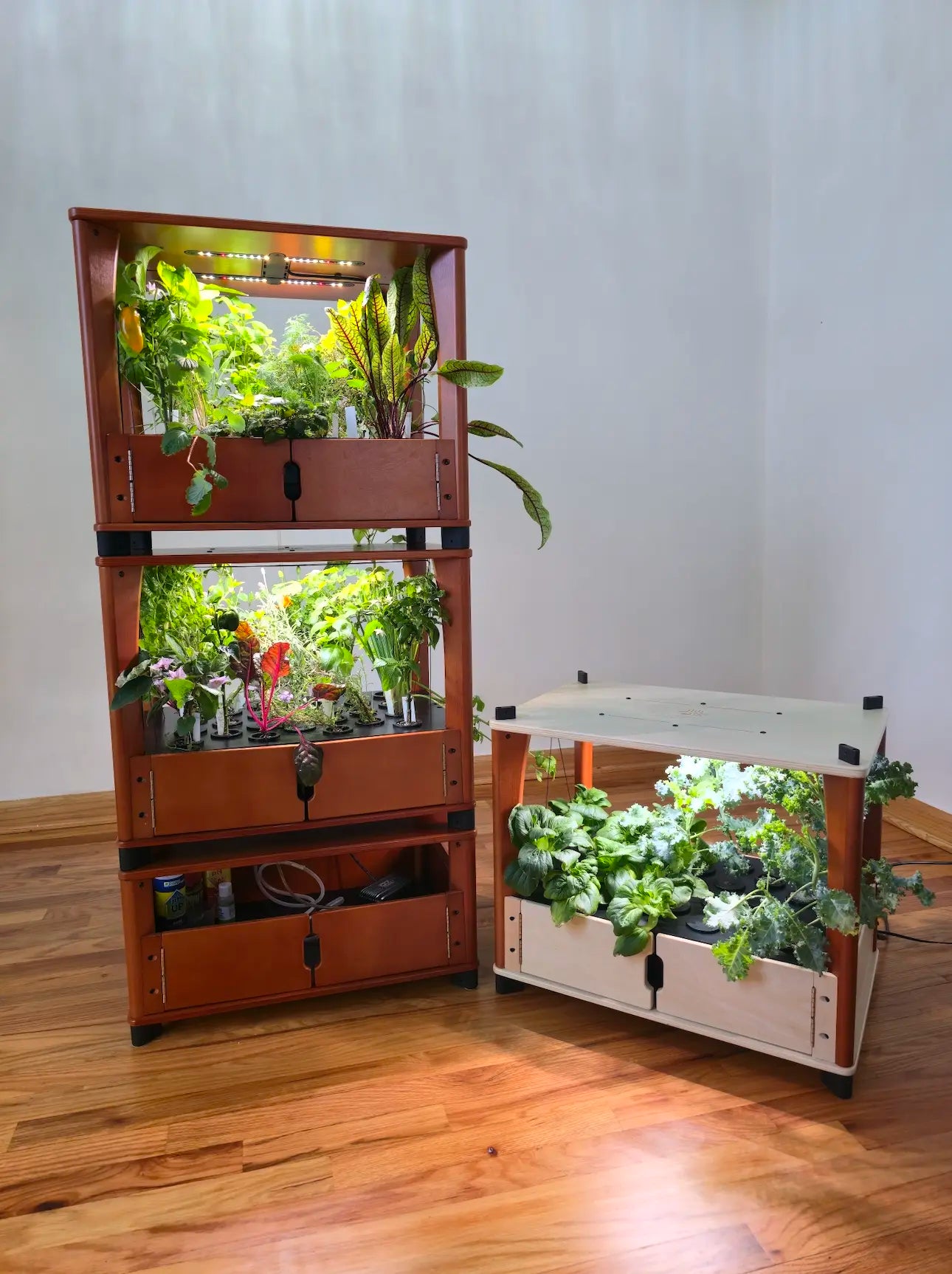
For beginners who want to grow food indoors year-round with minimal friction, an integrated indoor growing system designed for consistency tends to deliver the best long-term results.
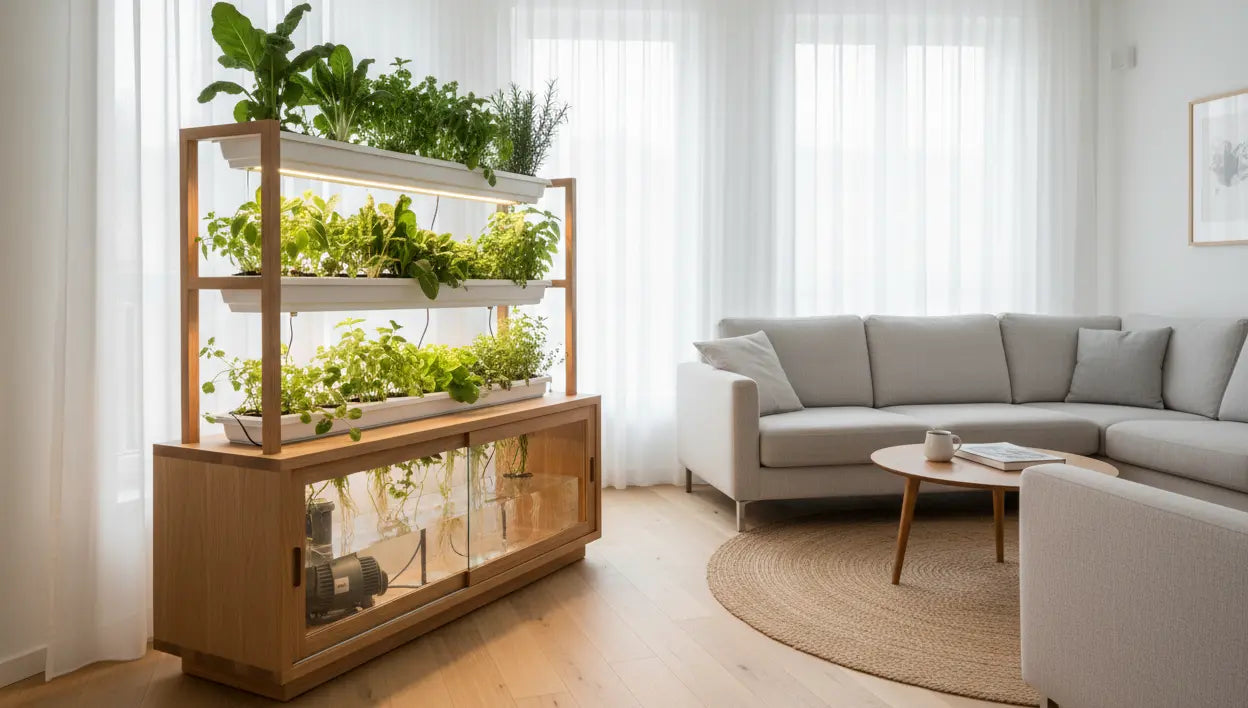
This system is designed to reduce failure points—light inconsistency, overwatering, and daily decision fatigue—while fitting naturally into indoor living spaces.
Cost, Effort, and Expectations (What People Usually Get Wrong)
When people ask whether it’s worth it to grow food indoors year-round, they usually underestimate one of three things: cost, effort, or expectations.
Cost (Upfront vs. Ongoing)
Indoor food growing systems typically involve:
- A higher upfront cost than buying pots and soil
- Lower ongoing waste (water, failed plants, replacements)
- More predictable outcomes over time
The mistake beginners make is comparing indoor systems to outdoor gardening costs.
The correct comparison is against:
- Grocery store produce quality
- Food waste from unused herbs
- Repeated failed indoor attempts
In short: indoor growing costs more upfront, but less in frustration and replacement over time.
Effort (Time vs. Cognitive Load)
Most beginners don’t quit because something takes too much time.
They quit because it takes too many decisions.
- When to water
- How much to water
- Is the light enough
- Is this normal growth
Beginner-friendly systems work because they remove decision-making, not because they remove effort entirely.
For most people, effort isn’t the problem—uncertainty is.
Expectations (What Indoor Growing Is—and Isn’t)
Indoor food growing works best when expectations are clear:
- You will get consistent, smaller harvests, not farm-scale output
- You will grow what thrives indoors, not everything you eat
- You gain reliability and freshness, not total self-sufficiency
When expectations match reality, people stick with it.
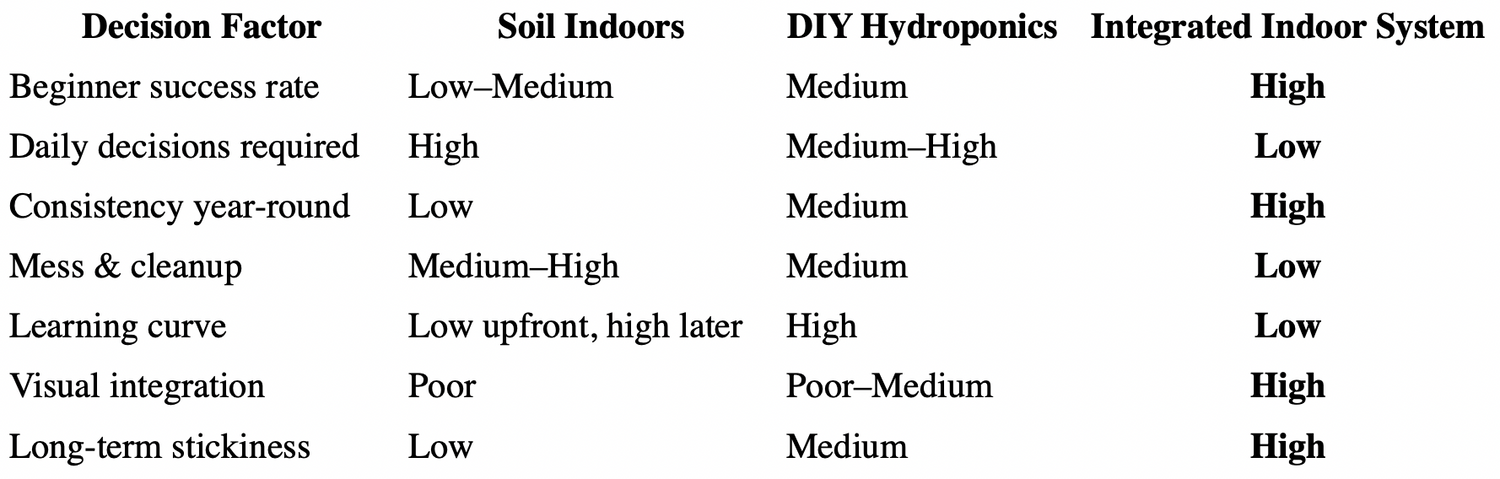
Comparison: Indoor Food Growing Approaches
(Decision-Oriented)
This comparison focuses on outcomes and fit, not features.
In short: systems designed for beginners reduce failure not by doing more—but by asking less from the user.
Decision Guidance: Is Growing Food Indoors Year-Round Worth It?
The answer depends on fit, not enthusiasm.
It’s worth it if:
- You want reliable access to fresh food indoors
- You’ve struggled with indoor plants before
- You value consistency over experimentation
- You want a system that works with your routine, not against it
It’s probably not worth it if:
- You want to replace most grocery shopping
- You enjoy constant tweaking and optimization
- You prefer outdoor gardening as a hands-on hobby
For most beginners, success comes from choosing a system designed for their reality—not their ambition.
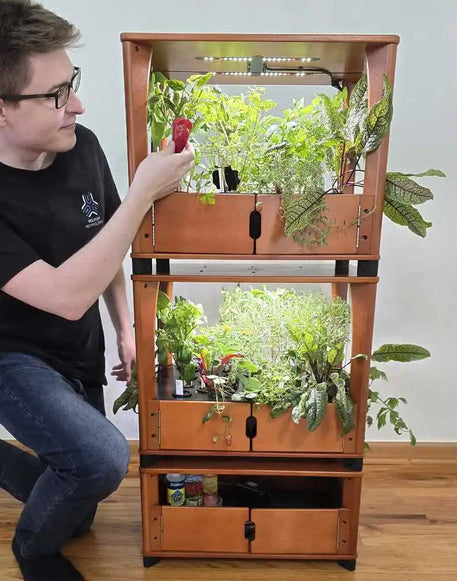
Product Fit (Clear, Calm Direction)
For beginners who want to grow food indoors year-round without turning it into a second job, an integrated system designed for stability and ease tends to offer the best experience.
Recommendation
Designed to:
- Reduce daily decisions
- Maintain consistent light and water delivery
- Fit naturally into indoor living spaces
- Support year-round indoor food growing for beginners
Is it really possible to grow food indoors year-round?
Yes—when light, water, and environment are controlled consistently rather than left to chance.
Is indoor food growing beginner-friendly?
It can be, but only if the system is designed to reduce decisions and common failure points.
Does indoor growing save money?
Not immediately. It saves waste, frustration, and replacement costs over time.
What food grows best indoors year-round?
Leafy greens, herbs, and compact edible plants adapted to indoor environments.
How much time does it take?
Typically minutes per day, but far fewer decisions than traditional indoor setups.
Is hydroponics required?
No—but systems that control water delivery tend to perform more reliably indoors.
Do I need gardening experience?
No. Beginner-friendly systems are built for people starting from zero.
Published: Feb 10, 2026
Next Review: May 11, 2026