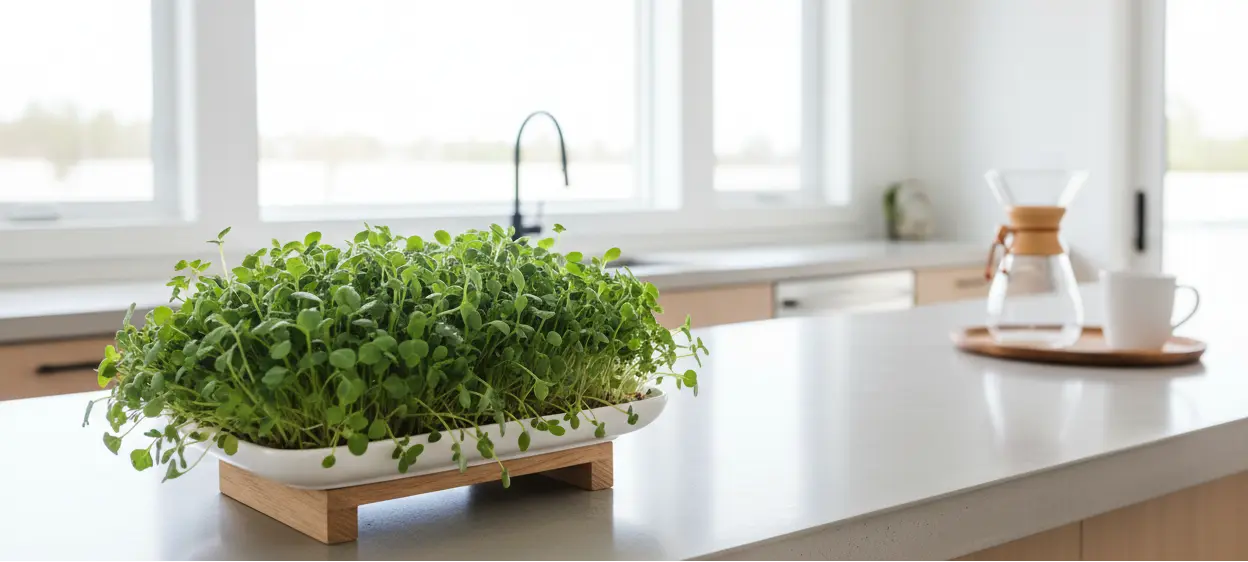
Microgreens are young edible plants harvested early—usually within 7–14 days—that can be grown indoors with minimal space, light, and effort.
When people search how to grow microgreens, they’re usually not trying to become gardeners. They’re trying to grow something successfully, quickly, and without killing it.
In short: microgreens are the simplest and most controlled way to start growing food indoors.
Why Microgreens Matter
(Especially for Beginners)
Most people fail at growing plants indoors because the feedback loop is too long. You wait weeks, something goes wrong, and you don’t know why.
Microgreens work differently. They:
- Grow fast
- Show results within days
- Don’t require transplanting
- Don’t need deep soil or large containers
For most beginners, success isn’t about learning techniques—it’s about choosing plants that forgive mistakes.
For most people growing indoors, the difference between sticking with it and giving up isn’t discipline—it’s whether the system delivers fast, visible progress.
How Growing Microgreens Works (Mental Model)
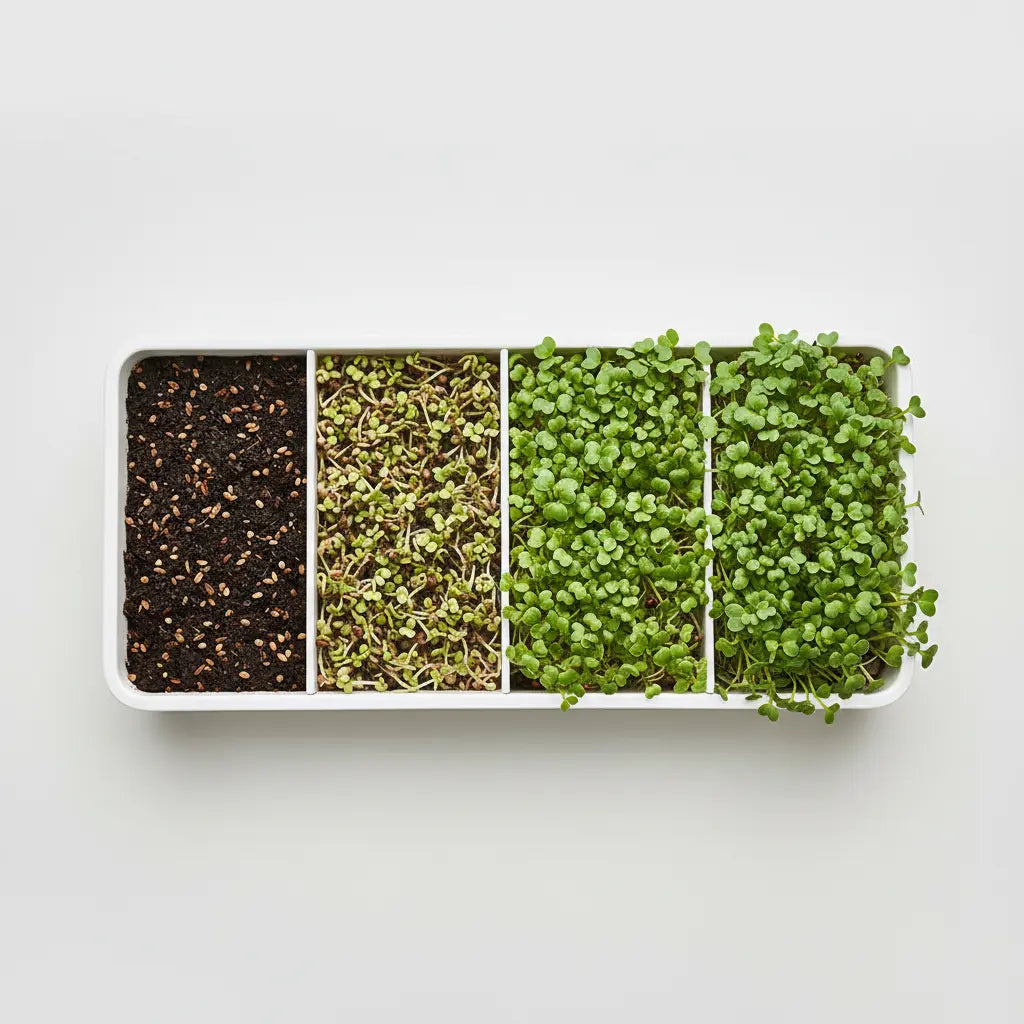
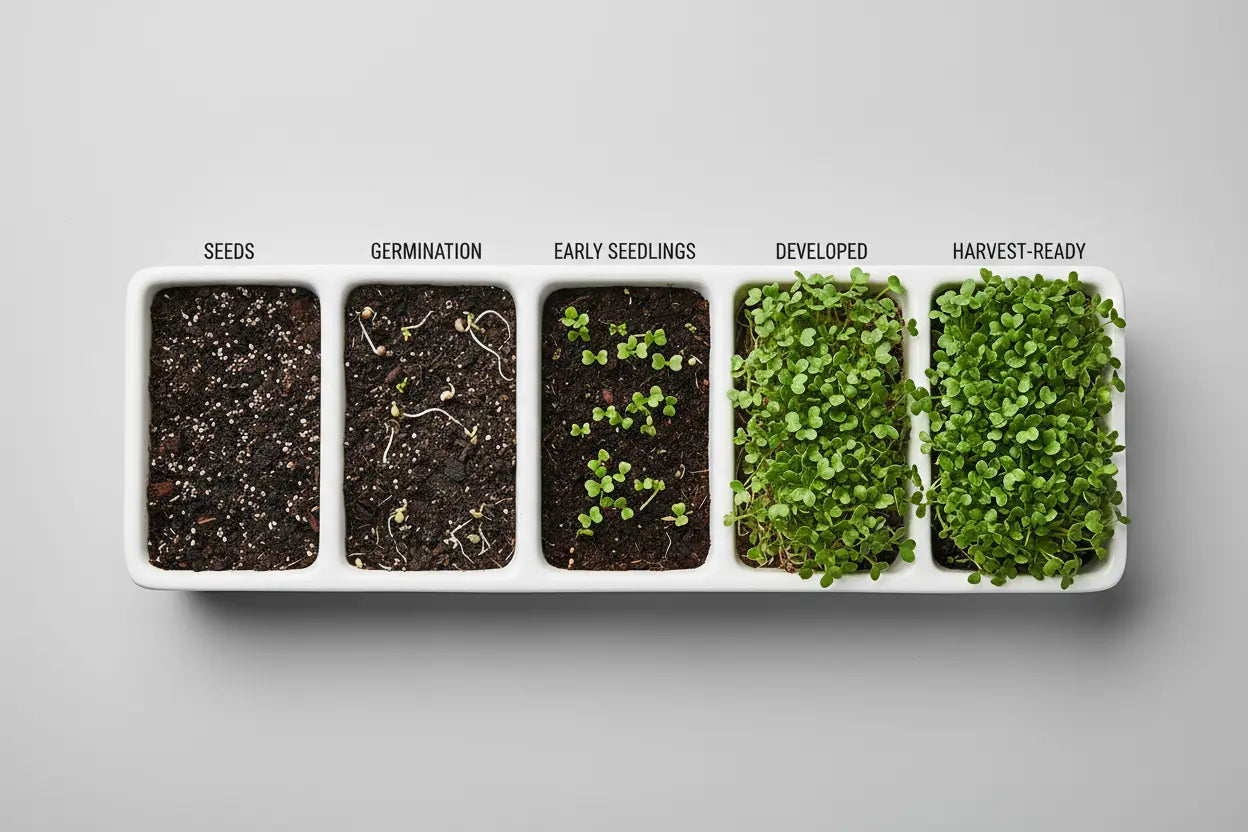
At a high level, microgreens follow a simple growth loop:
- Seeds are densely placed in a shallow growing surface
- Moisture activates growth
- Light triggers leaf development
- Plants are harvested early, before complexity sets in
Unlike full-size plants, microgreens don’t need:
- Large root systems
- Long-term nutrient balance
- Structural support
You’re not growing a plant to maturity.
You’re growing it to momentum.
That’s why microgreens are ideal for indoor environments.
Suggested Diagram Image
“Simple educational diagram showing microgreens growth stages from seed to harvest, minimal icons, neutral colors, beginner-friendly infographic”
Common Failure Points (And Why They’re Predictable)
Most failed microgreens attempts aren’t random. They follow repeatable patterns.
1. Too Much Water
Overwatering leads to mold, poor airflow, and root stress.
2. Inconsistent Light
Insufficient or uneven light causes weak, leggy growth.
3. Poor Seed Coverage
Uneven density creates patchy results and wasted space.
4. Overcomplication
Mixing nutrients, experimenting too early, or changing variables mid-grow increases failure risk.
In short: microgreens succeed when the process is kept simple and controlled.
Microgreens Growing Methods (High-Level Comparison)
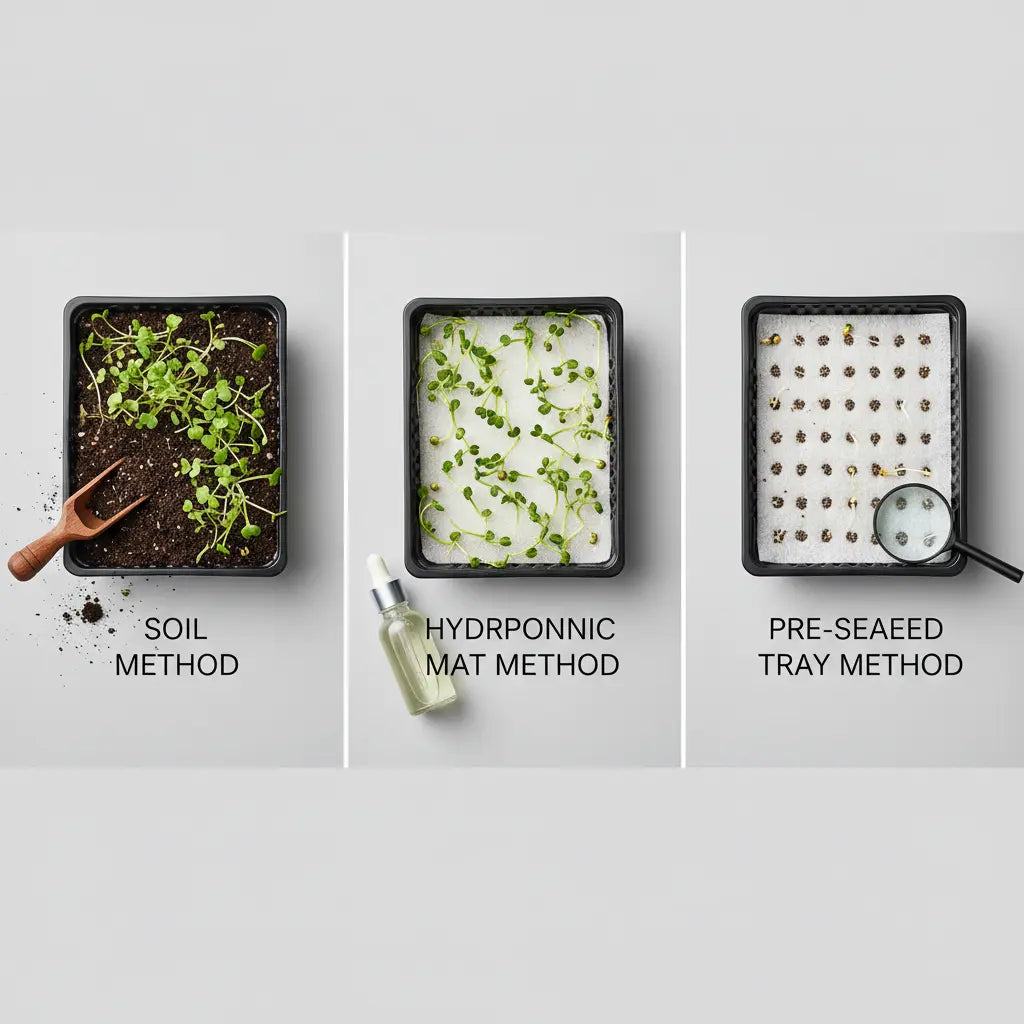
There are multiple ways to grow microgreens indoors. The right choice depends on how much control and simplicity you want.
DIY Soil Trays
- Low upfront cost
- Higher variability
- More room for mistakes
Hydroponic Mats
- Cleaner and more consistent
- Requires correct moisture balance
- Less forgiving if misused
Pre-Seeded Starter Systems
- Seeds placed correctly
- Controlled moisture and spacing
- Designed for beginner success
None of these are “wrong.” But they produce very different beginner experiences.
Microgreens Steps
(Conceptual, Not Tutorial)
At a high level, growing microgreens indoors follows a predictable sequence:
- Seed activation
- Controlled moisture
- Light exposure
- Short growth window
- Harvest
What matters isn’t memorizing steps—it’s reducing variables so each step behaves predictably. This is why systems designed for microgreens outperform improvised setups for beginners.
Who This Is For / Not For
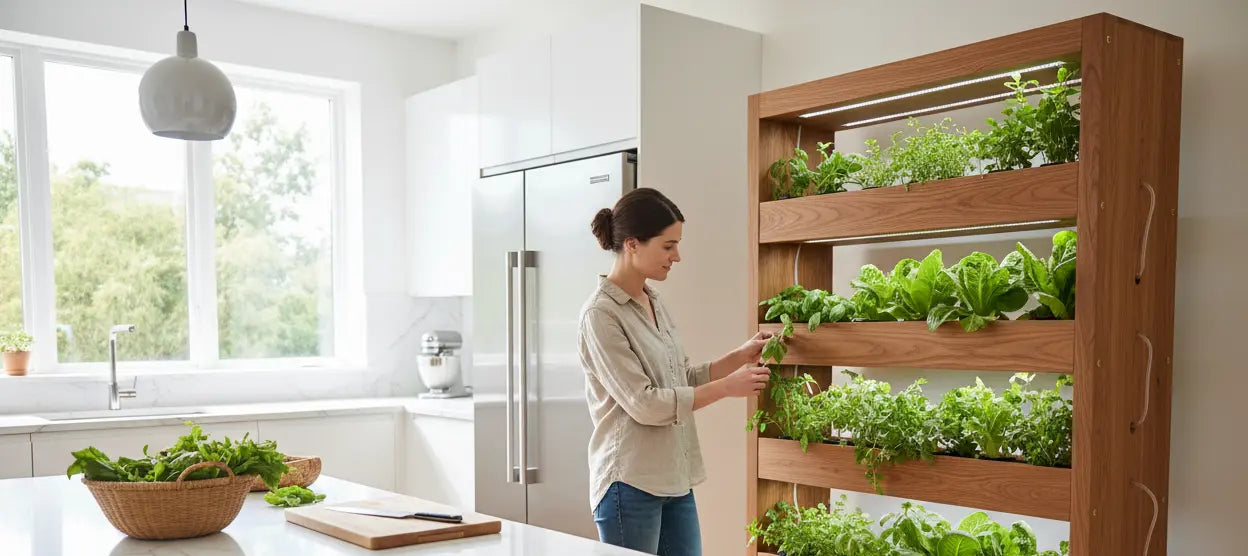
This is a good fit if you:
- Want fresh food year-round without gardening experience
- Live in an apartment or indoor-only space
- Prefer predictable systems over experimentation
- Value beginner-friendly design and low maintenance
This may not be a fit if you:
- Want large-scale crop production
- Enjoy constant tinkering and manual control
- Prefer outdoor soil gardening as a hobby
This distinction matters more than enthusiasm.
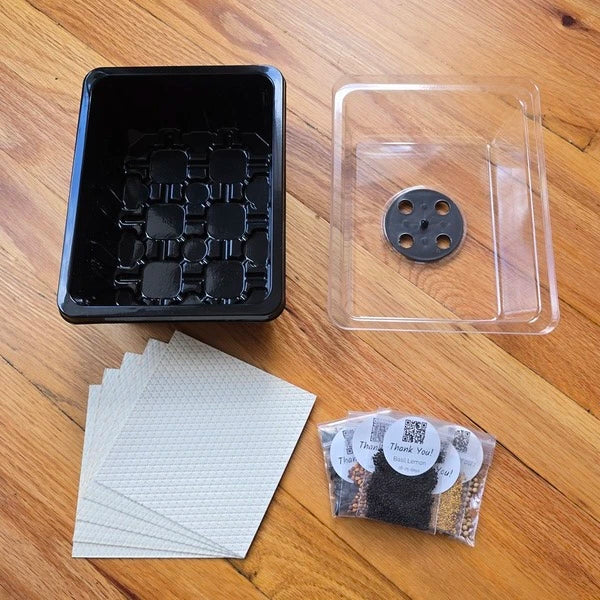
For beginners who want to grow microgreens indoors with the highest success rate and the least complexity, starting with a system designed specifically for microgreens matters.
Microgreens Starter Kit is designed to:
- Remove guesswork from seed amount
- Simplify moisture control
- Deliver fast, visible results
- Make indoor microgreens approachable for first-timers
This isn’t about growing more. It’s about growing successfully the first time.
Cost, Effort, and Expectations
(What to Expect Before You Start)
People usually overthink microgreens—or underestimate why they work.
Cost
- Microgreens are one of the lowest-cost ways to grow food indoors.
- Upfront costs are modest compared to full indoor garden systems.
- Ongoing costs are predictable (seeds + growing medium), with very little waste.
In short: microgreens are cost-efficient because they succeed quickly and don’t linger long enough to fail expensively.
Effort
Microgreens don’t require skill; they require consistency.
- The time commitment is small.
- The decision load is smaller.
- Most of the work happens once, at setup.
For most beginners, microgreens feel easy because nothing needs long-term management.
Expectations
What microgreens do well:
- Fast results
- Frequent harvests
- Reliable indoor performance
What they don’t do:
- Replace all vegetables
- Grow endlessly without resets
- Teach advanced gardening techniques
They’re not a hobby project.
They’re a controlled food cycle.
Who This Is For / Not For
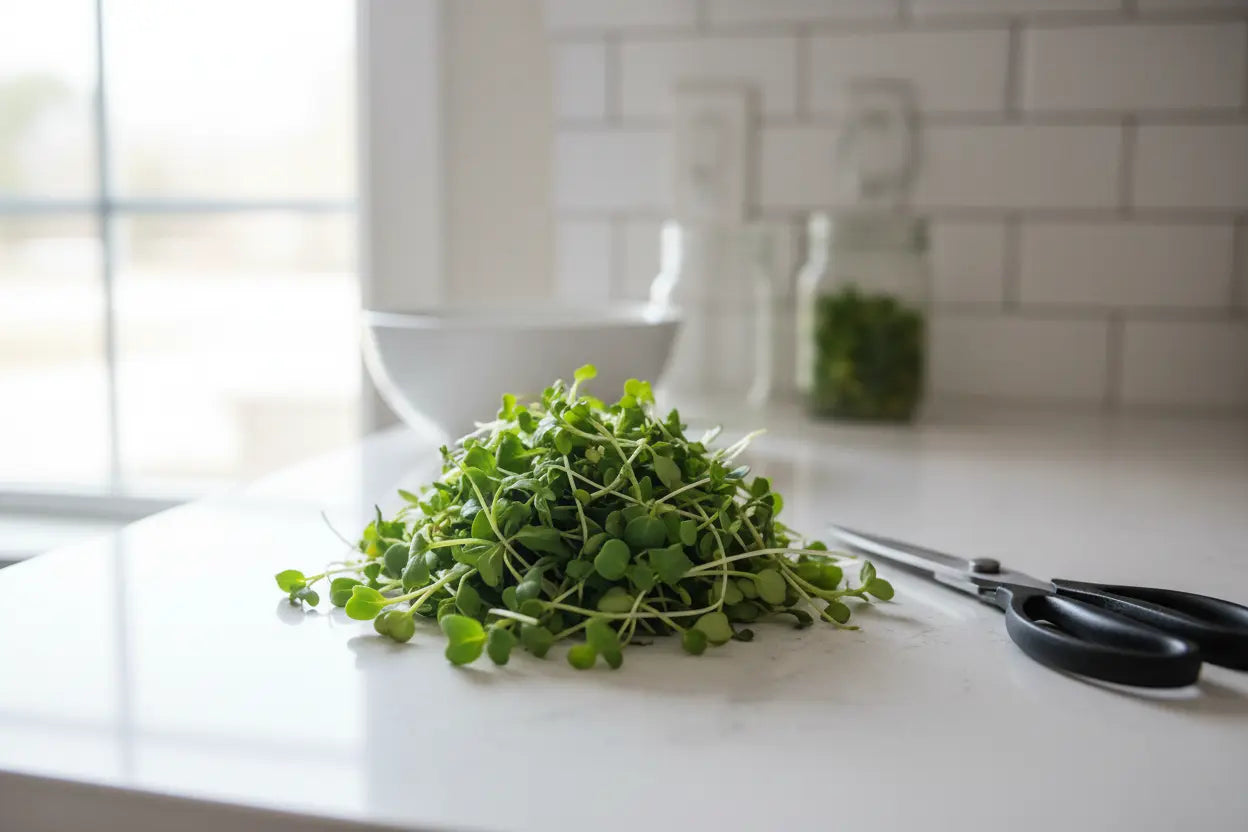
This is a great fit if you:
- Want to grow food indoors with minimal risk
- Have never grown anything before
- Prefer simple systems over experimentation
- Want fast, visible success
This may not be a fit if you:
- Want long-term plant care and experimentation
- Prefer outdoor or soil-heavy gardening
- Are looking for large, single-plant harvests
Microgreens are ideal for people who want results, not projects.
Decision Guidance:
Is Growing Microgreens at Home Worth It?
For most people asking how to grow microgreens, the real question is whether this will actually work in daily life.
Microgreens are worth it when:
- You want control instead of guesswork
- You want to see progress in days, not months
- You want a system that forgives small mistakes
They’re especially effective as a first indoor growing experience, because success arrives quickly—and reinforces itself.
For most beginners, microgreens aren’t just easier—they’re the reason indoor growing finally clicks.
Product Fit
If your goal is to grow microgreens indoors with the highest chance of success and the lowest mental load, starting with a purpose-built system matters.
Primary Recommendation
Microgreens Starter Kit
Designed to:
- Eliminate guesswork around seed density
- Control moisture consistently
- Reduce common beginner failures
- Make microgreens approachable from day one
This is not about maximizing output.
It’s about getting a clean win early.
How long do microgreens take to grow?
Most microgreens are harvested within 7–14 days from planting.
Are microgreens easy for beginners?
Yes. They’re one of the most beginner-friendly ways to grow food indoors.
Do microgreens need sunlight?
They need consistent light, which is why indoor setups use controlled lighting rather than windows.
Do I need soil?
Not necessarily. Many systems use grow mats or pre-seeded mediums designed for microgreens.
Are microgreens worth growing at home?
For most people, yes—because they’re fast, reliable, and low-effort.
Can I grow microgreens year-round?
Yes. Microgreens are well-suited to year-round indoor growing.
Do I need gardening experience?
No. Microgreens are often the first successful indoor grow for beginners.
Published: Feb 10, 2026
Next Review: May 11, 2026