
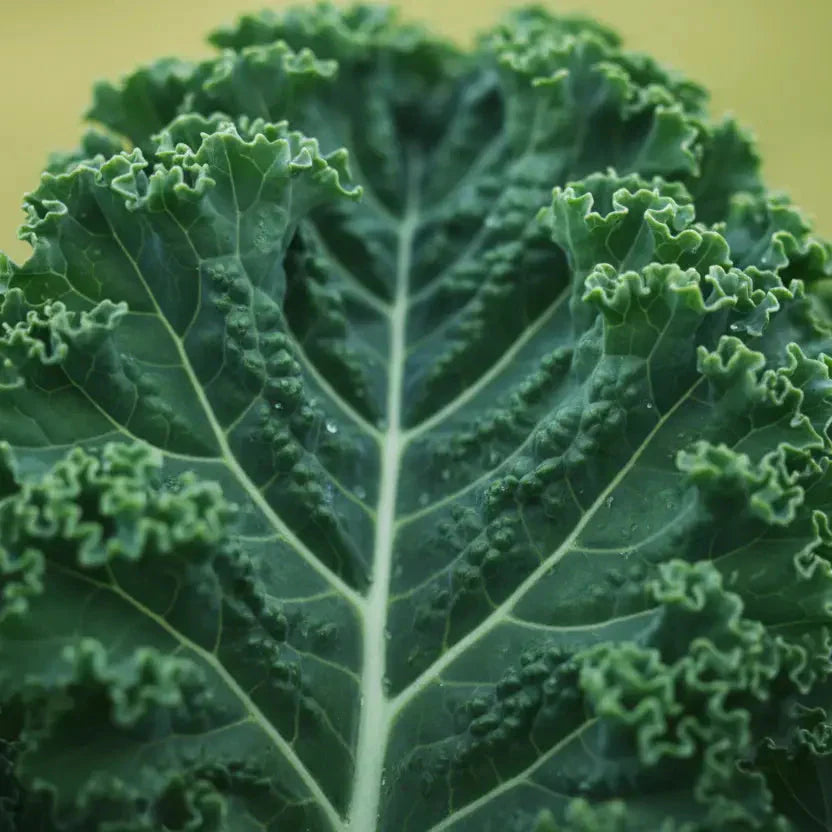
Kale Yield Per Plant: How Much You Actually Get
Kale yield per plant is higher than most people expect, especially when the plant is harvested repeatedly instead of all at once. A single kale plant does not produce just one harvest. It can continue producing leaves for weeks or even months when maintained properly.
In simple terms, one healthy kale plant can produce multiple handfuls of leaves per harvest, and those harvests repeat over time. Instead of thinking about one plant as one meal, it is more accurate to think of it as a continuous source of greens.
For most beginners, this is where expectations are often wrong. Many assume that growing food at home means waiting a long time for a single result. Kale works differently. Once established, it becomes a cut-and-come-again plant, meaning you harvest the outer leaves while the plant continues growing from the center.
In short, kale yield per plant is not fixed: it compounds over time.
This becomes even more important when growing conditions are stable. Inconsistent watering, poor light, and soil issues can reduce output significantly. That is why many people see lower yields when growing outdoors or in traditional setups. When those variables are controlled, the plant can focus entirely on producing new leaves instead of recovering from stress.
If you are struggling with low output, it is often not the plant: it is the environment.
Later in this article, we will break down how this scales across multiple plants and what that means for real food production at home, including how a well-designed indoor system makes this level of consistency possible.
To make this more concrete, consider a simple example:
- One kale plant produces a small handful of leaves per harvest
- Harvest happens multiple times per week once mature
- Leaves regrow continuously when cut properly
This turns one plant into a repeating source of food, not a one-time output.
That is why kale is often used as a benchmark crop in controlled growing environments. It is predictable, resilient, and capable of producing consistent yields when conditions are right.
Understanding this changes how you think about growing food at home. Instead of asking, “How much does one plant produce?” the better question becomes:
👉 How much can one plant produce over time?
That is the key difference.
In this guide:
How Often You Can Harvest Kale (And Why Yield Multiplies)
Understanding how often you can harvest kale is what turns a single plant into a consistent food source. This is where most of the actual yield comes from, not just the size of the plant, but how frequently it produces new leaves.
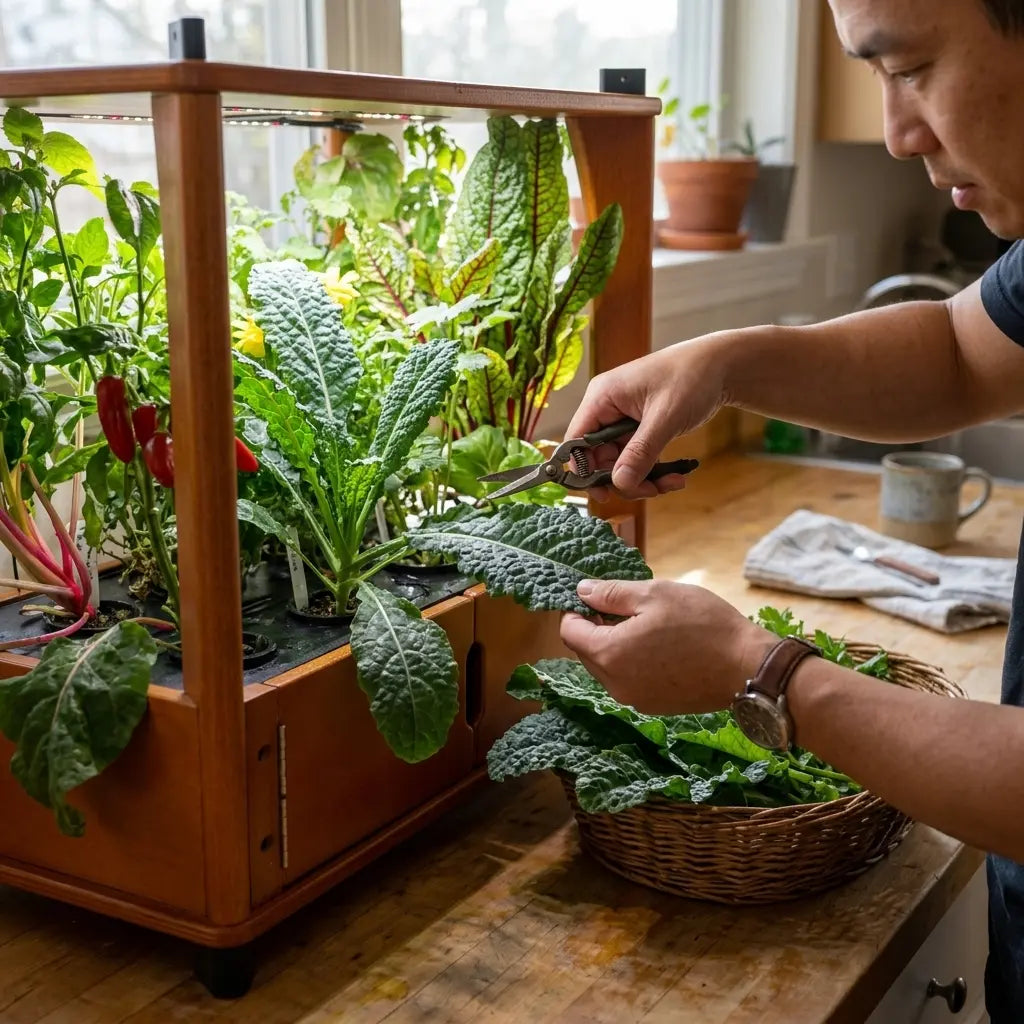
Once kale reaches maturity, it can typically be harvested every few days to once per week, depending on growth conditions. The key is not to remove the entire plant. Instead, you harvest the outer leaves and allow the center to keep growing. This method keeps the plant alive and continuously producing.
This is what people mean when they say kale is a cut-and-come-again crop. The plant does not stop after the first harvest. It keeps generating new leaves as long as the environment supports it.
When conditions are stable, this cycle becomes predictable. Leaves regrow at a steady pace, and each harvest adds to the total output over time. That is why kale yield per plant increases significantly across multiple harvests, not just from one initial cut.
In less controlled environments, this process is often interrupted. Plants may slow down due to:
- inconsistent watering
- poor or fluctuating light
- stress from temperature changes
- nutrient imbalances
When that happens, regrowth slows, and harvest frequency drops. This is one of the main reasons people feel like growing food at home “does not produce much.” The issue is not the plant itself, but how often it can successfully regenerate.
When regrowth is consistent, the math changes quickly. Instead of one plant producing one harvest, you get one plant producing multiple harvests per week, across multiple weeks of continuous production.
This creates a compounding effect, where the total output becomes much higher than expected.
If you are trying to estimate how much kale you can grow, focusing only on a single harvest will always underestimate the result. The real output comes from the frequency of harvest cycles over time.
Later in this article, we will scale this across 24 plants and up to 96 plants, which is where the numbers start to become much more meaningful for everyday food use.

From One Plant to 24 and 96: How Yield Scales in a Home Setup
Once you understand that kale yield per plant compounds over time, the next step is to see how this scales when you grow multiple plants at once. This is where growing at home starts to shift from a small hobby into something that can meaningfully contribute to your food supply.
A single kale plant producing repeated harvests is useful, but the real impact comes when you multiply that across a full growing system.
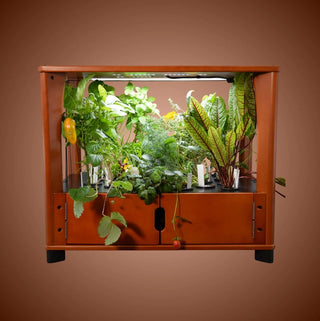
With a typical setup like the Aquager Home Farm, you can grow up to 24 plants at once. Because each plant is producing leaves continuously, you are not waiting for one harvest to finish before starting again. All plants are growing and regenerating at the same time.
This creates a steady flow of production.
Instead of one plant producing occasional leaves, you now have 24 plants producing consistent weekly harvests.
If each plant contributes a small handful of leaves per cycle, the combined output becomes significant very quickly. What felt like a small amount at the plant level becomes a reliable volume of greens when scaled across the system.
And this is only the starting point.
The system is designed to be stackable, which means you can expand from 24 plants, to 48, to 72, up to 96 plants. Our vertical hydroponic setup guide walks through exactly how that stacking works in a small space.
At that level, you are no longer thinking in terms of individual plants. You are thinking in terms of total production capacity.
This is where the earlier concept becomes important again: 👉 yield is not just per plant, but per system over time.
When multiple plants are harvested on a rotating basis, the output becomes more stable and predictable. Instead of peaks and gaps, you get a continuous supply of fresh leaves that can be used throughout the week.
In less structured setups, scaling often introduces more problems. More plants can mean:
- more inconsistency
- more maintenance
- more chances for failure
But when the system is designed around simplicity and repeatability, scaling does not increase complexity in the same way. The same process applies whether you are growing a few plants or dozens.
This is why controlled systems are often used when consistency matters. They allow you to scale production without introducing new variables at each level.
If you are trying to understand how much food you can realistically grow at home, this is the turning point. The question is no longer about one plant, but about how multiple plants perform together over time.
In the next section, we will translate this into something more concrete by comparing this output to what you typically pay for kale at the store.

Store Prices vs Home Production: What Kale Actually Costs
Understanding kale yield per plant is only half of the picture. The other half is what that yield replaces. This is where the comparison becomes practical, because most people already buy kale regularly without thinking much about the long-term cost.
At the store, kale is usually sold in small bunches or packaged portions. Prices vary, but a typical range is:
- $2 to $4 per bunch
- often used in 1 to 2 meals
- quality and freshness can vary
At first glance, this does not seem expensive. But the key is frequency. Kale is not something people buy once. It is something they buy repeatedly.
If you purchase kale even a few times per week, the cost adds up quickly over a month and even more over a year.
Now compare that to what happens when you grow it.
Instead of paying for each bundle, you are harvesting directly from your plants. And because kale is a cut-and-come-again crop, you are not replacing it after each use. The same plant continues producing over time.
This changes the cost structure completely. Instead of paying per purchase, you move toward harvesting from an ongoing source.
Even at a small scale, the difference becomes noticeable. With multiple plants producing at once, you are not limited to one or two portions. You can harvest exactly what you need, when you need it, without depending on store availability.
There is also a quality difference that is often overlooked. Store-bought kale has already been harvested, transported, and stored. By the time it reaches your kitchen, it has already lost some freshness. When you harvest at home, you are cutting leaves at their peak.
That means:
- better texture
- stronger flavor
- longer shelf life after harvest
When you combine these factors, the comparison is not just about price. It is about control, consistency, and access.
If you are trying to estimate how much value kale production provides, the important question becomes:
👉 how often are you replacing store purchases with your own harvest?
In the next section, we will take this further by estimating how much kale you can produce over a full year, based on continuous harvest cycles and system size.

Annual Kale Production: What This Looks Like Over a Year
To understand the full impact of kale yield per plant, you need to look beyond a single harvest or even a single week. The real value comes from how much a system can produce over time.
Kale is not a one-cycle crop. Once established, it can continue producing for months. When harvested correctly, plants regenerate new leaves regularly, creating a continuous output rather than a one-time result.
If we simplify this into a practical model:
- one plant produces small harvests multiple times per week
- this continues over several months
- output compounds across time
Now scale that to a system level.
With 24 plants growing at the same time, each contributing repeated harvests, you are effectively creating a rotating production cycle. Some leaves are ready to harvest, others are still growing, and new growth is constantly replacing what you remove.
This creates a steady rhythm: harvest, regrow, harvest, regrow.
When this cycle continues over weeks and months, the total output becomes much larger than expected from a single snapshot.
If you expand the system to its full capacity, up to 96 plants in a stacked configuration, the production potential increases proportionally. At that level, you are no longer supplementing your meals occasionally. You are creating a consistent supply that can support regular use in your kitchen.
This is where the idea of growing food at home shifts.
Instead of occasional harvests that feel small, you move toward ongoing production that replaces repeated store purchases.
The key factor here is consistency. If growth conditions remain stable, the output becomes predictable. Plants continue producing, and harvest cycles remain regular. This removes much of the uncertainty that people associate with growing food at home.
Over the course of a year, this consistency matters more than any single harvest. Small, repeated yields accumulate into a meaningful total. And because kale is harvested continuously, you are not waiting for one large crop. You are benefiting from constant availability.
This is why systems designed for repeatable conditions tend to perform better over time. They allow plants to stay in a productive state instead of constantly restarting the growth cycle.
In the final sections, we will connect this directly to how a well-designed indoor system is structured to support this kind of continuous production and why that makes indoor growing more predictable.

Why This Level of Production Only Works in a Controlled System
The numbers from the previous section show what kale yield per plant can look like when everything works consistently. The key word here is consistent. Without stable conditions, these numbers drop quickly, and the entire system becomes unpredictable.
Most people who try to grow food at home run into this problem early. Plants grow unevenly, harvests are irregular, and output never reaches what was expected. This is usually not because kale is difficult to grow. It is because the environment keeps changing.
Common issues include:
- inconsistent watering cycles
- uneven or insufficient light
- poor root oxygen levels, covered in more detail in our guide to root oxygen in hydroponic systems
- soil-related problems like compaction or pests
Each of these slows down growth and reduces how often you can harvest. When harvest frequency drops, total yield drops with it. Over time, this turns what could be a continuous food source into occasional, unreliable output.
This is where system design becomes important.
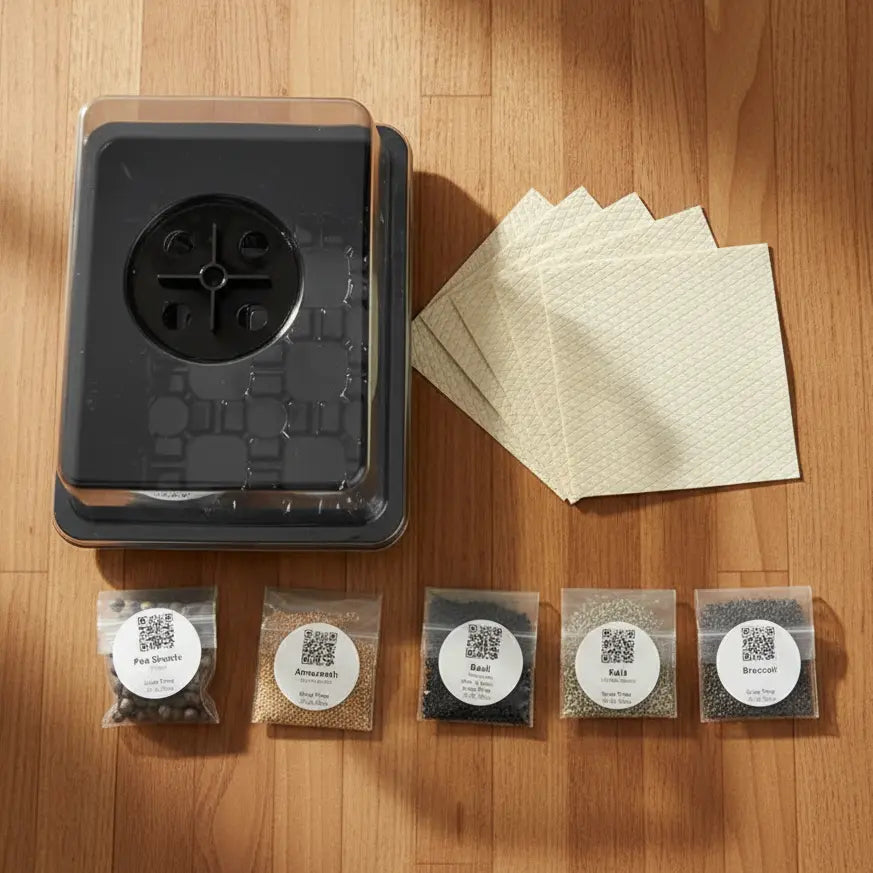
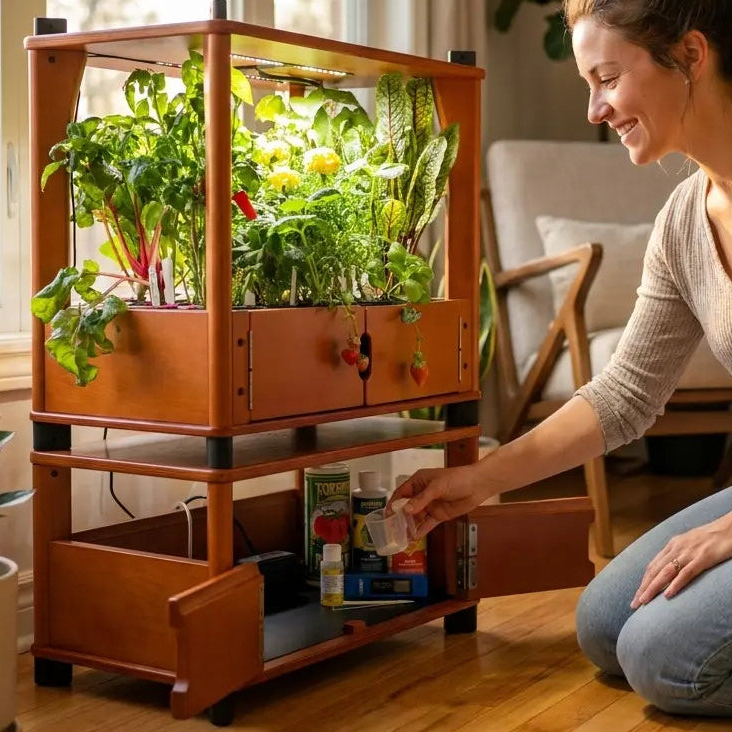
The Aquager Home Farm is structured around reducing these variables as much as possible. Instead of relying on soil, it uses clean organic grow mediums like coco coir and peat, which start free of pests and provide a stable structure for root development. Water and nutrients are delivered consistently, and roots receive oxygen through a simple air-stone system.
Lighting is also controlled, which removes dependence on sunlight and allows plants to grow at a steady rate regardless of the room or season.
Together, these elements create an environment where plants can stay in a productive state instead of constantly recovering from stress. That is what allows repeated harvest cycles to remain consistent over time, which is the foundation of the yield numbers we calculated earlier.
It is important to note that no system eliminates every possible issue. As mentioned earlier, pests can still be introduced from external sources, such as bringing in plants from outside. However, because the system starts clean and remains controlled, these situations are less common and easier to manage compared to traditional setups.
If you are trying to achieve predictable food production at home, the goal is not to maximize complexity. It is to remove unnecessary variables so plants can grow without interruption.
When the environment is controlled, plants behave differently. Growth becomes steady, harvests become repeatable, and small outputs begin to scale into something meaningful over time.

What This Means for Your Kitchen (And Why It Changes How You Buy Food)
At this point, the numbers and structure behind kale yield per plant are clear. What matters now is how this translates into everyday use, because that is where the real shift happens.
Most people do not think about kale in terms of production. They think about it in terms of purchase. You go to the store, buy a small portion, use it for a meal or two, and repeat the process a few days later.
This creates a pattern: buy, use, run out, buy again. When you grow kale at home, this pattern changes.
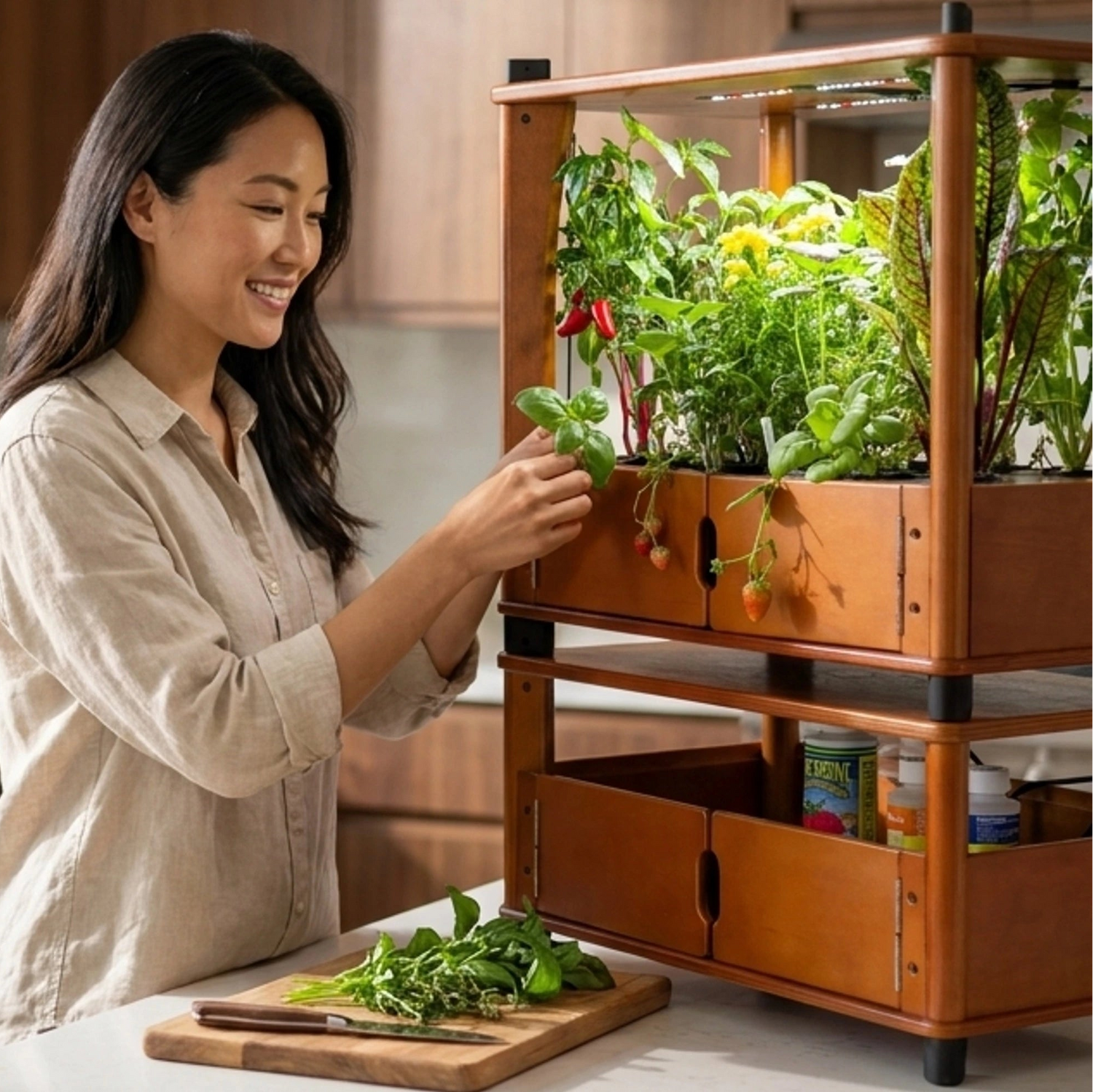
Instead of planning meals around what you purchased, you start planning around what is available. Because the plants are producing continuously, you are no longer limited to a fixed amount. You can harvest what you need, when you need it, and leave the rest to keep growing.
This creates a different kind of flexibility:
- need a handful for a salad, harvest immediately
- need more for a smoothie, harvest again
- want to cook a larger meal, combine output from multiple plants
There is no delay between decision and access. The plants become part of your kitchen, not something separate from it.
Over time, this reduces how often you rely on store-bought greens. Even if you do not replace every purchase, the frequency changes. Instead of buying kale multiple times per week, you begin using what you already have available.
This also affects how you think about freshness. Store-bought produce is already several steps removed from harvest. When you cut kale directly from the plant, you are using it at its peak, which improves both texture and flavor.
The financial impact follows naturally from this shift. As discussed earlier, repeated small harvests accumulate into a meaningful amount over time. But the more important change is behavioral. You are no longer reacting to store availability or pricing. You are working with a consistent, controlled supply.
Kale is not the only crop that behaves this way indoors. If you are curious how the same math plays out with other greens, our breakdowns of basil yield at home and growing celery indoors cover the same cut-and-come-again logic.
For many people, this is the first time growing food at home feels practical. It is no longer about occasional success or experimentation. It becomes part of a routine that fits into daily life.
When production is steady, even simple crops like kale can shift from being an occasional ingredient to something you rely on regularly without thinking about availability or cost.
Kale Production Summary (Quick Numbers)
If you skip everything else, here is what kale yield per plant looks like in simple terms.
Per Plant
- 2 to 4 servings per week once mature
- continuous harvest (cut-and-come-again)
- production lasts for months
24 Plants (One Home Farm)
- 48 to 96 servings per week
- ~200 to 400 servings per month
Estimated store equivalent: $200 to $400 per month in kale value
96 Plants (Fully Stacked System)
- 192 to 384 servings per week
- ~800 to 1,500+ servings per month
Estimated store equivalent: $800 to $1,600+ per month
What This Means
- Small, repeated harvests scale quickly
- Output becomes predictable over time
- Even partial usage offsets regular grocery spending
Most importantly: 👉 this is not one harvest: it is continuous production.
The Key Takeaway
Kale is not valuable because of how much one plant produces once.
It is valuable because of:
- how often it regrows
- how easily it scales
- how consistently it can be harvested
If you want to see how this kind of production works in a real setup, explore the Aquager Home Farm. And if leafy greens are just the start, our guide to growing Swiss chard indoors shows how the same system handles a second cut-and-come-again crop.

Mini FAQ
How much kale does one plant produce?
A kale plant can produce 2 to 4 servings per week once mature, with repeated harvests over time instead of a single yield.
How long does kale keep producing?
Kale can continue producing for several months when harvested correctly, as long as the center of the plant is left intact.
How often can you harvest kale?
Kale can be harvested every few days to once per week by removing outer leaves while allowing new growth to continue.
Does kale regrow after cutting?
Yes, kale is a cut-and-come-again plant, meaning it regrows continuously when harvested properly.
Is hydroponic kale yield higher than soil?
Hydroponic kale can provide more consistent yields because water, nutrients, and light are controlled, reducing stress on the plant.
Can you grow enough kale at home to replace store purchases?
With multiple plants growing at once, it is possible to replace a portion or even most of your kale purchases, depending on how much you harvest and use.
Author: Aquager Team · Published: March 16, 2026 · Updated: August 24, 2026 · Reviewed: August 24, 2026 (Phase 3)













0 comments