
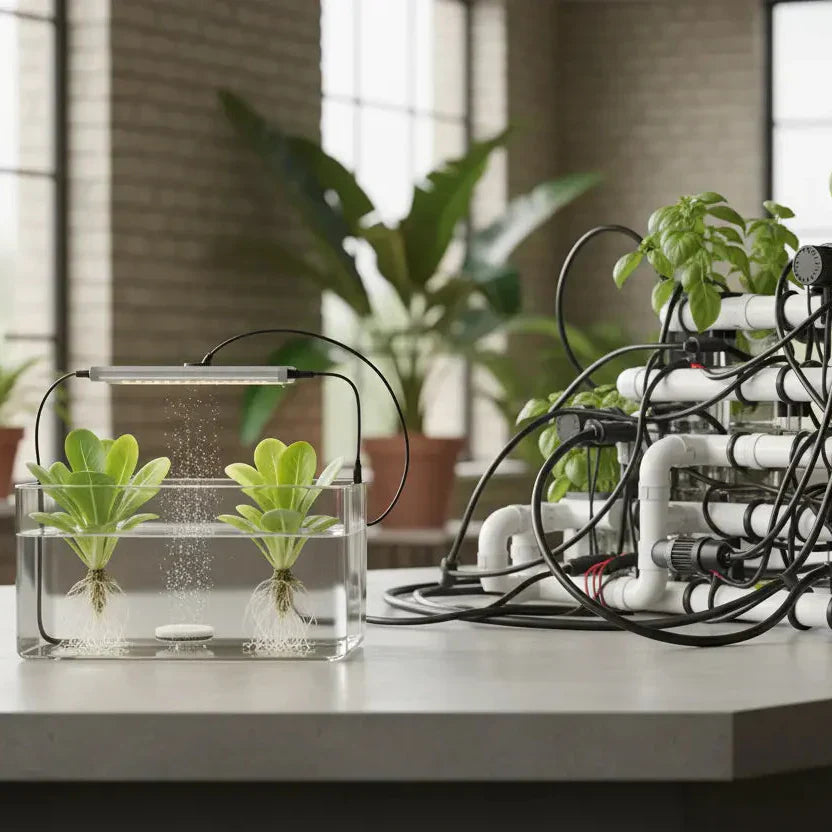
Why Hydroponic Systems Became So Complicated
A simple hydroponic system often performs more reliably than complex hydroponic systems because fewer components reduce the number of things that can fail. Many people first encounter hydroponics through images of advanced indoor farms filled with pumps, tubing, timers, and automated controllers. These installations look impressive, but they were originally designed for commercial agriculture rather than everyday home environments.
Commercial hydroponic farms must manage thousands of plants at once. Water, nutrients, and oxygen move continuously through large growing areas. To make this possible, farms rely on pumps, plumbing networks, filtration systems, and automated nutrient dosing equipment. Sensors and controllers constantly monitor conditions so growers can maintain stable production. These technologies make sense when crops are grown at industrial scale, but they are often unnecessary for home growers.
When hydroponic technology became popular for home gardening, many consumer systems copied these commercial designs. Manufacturers often believed that adding more technology would make systems appear more advanced. As a result, many indoor gardening products include multiple pumps, circulating reservoirs, tubing systems, and electronic controllers. While these additions may look sophisticated, they also introduce more parts that must function perfectly for plants to grow successfully.
For beginners, this complexity can quickly become frustrating. Each additional component introduces another possible failure point. A pump might stop running, tubing can clog, or water circulation may slow down. When these problems occur, plant roots can lose access to oxygen and nutrients very quickly. Because plant roots depend on stable conditions, even small interruptions can stress plants and slow their growth.
This often leads to confusion among new growers. When plants struggle, beginners frequently assume they made a mistake with watering or nutrients. In reality, the difficulty may come from the system design itself. Complex hydroponic systems require more monitoring, more maintenance, and more troubleshooting than many people expect when they first begin growing plants indoors.
A simple hydroponic system approaches the problem differently. Instead of relying on complicated circulation systems, it focuses on providing the core conditions plants need to grow. Plants require water, nutrients, oxygen, and light. When these elements remain stable, plants can grow quickly and produce healthy harvests.
Because simple systems remove unnecessary equipment, they often create a more stable growing environment. With fewer mechanical parts involved, there are fewer opportunities for failure. This stability is one reason many experienced growers eventually prefer simpler setups over complicated ones. In home environments where reliability matters most, simplicity often becomes the most effective design principle.
For growers exploring ways to produce food indoors, understanding the difference between simple and complex systems can make a significant difference. Systems designed around stability and ease of maintenance are often easier to manage and more dependable over time.
If you want to see how a simplified indoor growing system is designed for home use, explore AQUAGER HOME FARM to understand how modern hydroponic systems apply these principles.

Failure Points in Complex Hydroponic Systems
One of the main differences between a simple hydroponic system and complex hydroponic systems is the number of components required to keep everything running. Every additional part introduces another potential point of failure. While advanced systems can produce excellent results when maintained properly, they often require much more attention than beginners expect.
Pumps are one of the most common sources of problems. Many complex hydroponic systems depend on pumps to circulate nutrient solution through tubing or between reservoirs. When a pump stops working, the entire circulation process can stop immediately. Plant roots rely on constant access to water, nutrients, and oxygen. When circulation stops, roots can lose these resources quickly, which may stress the plant and slow its growth.
Tubing networks can also create maintenance challenges. Water moving through narrow tubes can carry small particles of nutrients or organic residue. Over time, these materials may build up inside the tubing. When buildup occurs, water flow becomes restricted or uneven. In some cases, tubing can clog completely. For someone new to hydroponics, identifying the exact location of a blockage can be difficult.
Another challenge comes from systems that rely on multiple reservoirs. When nutrient solution circulates between containers, small changes in water levels can affect the stability of the system. If one reservoir becomes slightly unbalanced, circulation patterns can change. This may lead to uneven nutrient delivery or inconsistent oxygen levels around the roots.
Complex systems also require more regular inspection. Growers often need to check pumps, tubing connections, water levels, and timers to ensure everything continues operating correctly. While experienced growers may develop routines for this type of maintenance, beginners often find it overwhelming. Instead of focusing on plant health, they spend time diagnosing mechanical problems.
Mechanical components also wear out over time. Pumps may lose efficiency, tubing may need cleaning, and connectors can become loose. When multiple mechanical parts are involved, small issues can accumulate until they begin affecting plant growth. This is why reliability becomes such an important factor in indoor gardening systems.
Because of these challenges, many growers eventually begin simplifying their hydroponic setups. Instead of relying on complicated circulation networks, they choose systems with fewer moving parts. Fewer components mean fewer mechanical failures and fewer maintenance tasks. This allows the grower to focus more on plant growth rather than equipment troubleshooting.
Understanding these failure points helps explain why system design matters so much in hydroponics. The goal is not simply to create a system that works when everything runs perfectly. The goal is to create a system that continues working reliably even when conditions are not ideal. For many home growers, this is where simpler designs begin to show their advantages.

Why Simple Hydroponic Systems Are Often More Reliable
After seeing the maintenance challenges that can occur in complex setups, many growers begin asking a simple question: why do simple hydroponic systems often perform more reliably than complicated ones? The answer usually comes down to stability. Plants grow best when their environment remains consistent, and systems with fewer moving parts are much easier to keep stable over time.
In hydroponics, plant roots depend on a few essential conditions. They need consistent access to water, dissolved nutrients, oxygen, and appropriate light. When these conditions remain steady, plants can grow rapidly and produce strong harvests. However, when systems depend on constant circulation or multiple mechanical components, maintaining that stability becomes more difficult.
Complex systems often rely on continuous water movement. Pumps circulate nutrient solution through tubing and between reservoirs so that plants receive a steady supply of nutrients. While this approach works well in large-scale agriculture, it introduces risks in smaller home environments. If the pump stops or circulation slows down, the system can quickly become unstable.
Simple systems approach the problem differently. Instead of relying on continuous circulation, they maintain a stable nutrient reservoir where plant roots can access water and nutrients directly. This design reduces the number of mechanical components involved. Because there are fewer moving parts, there are fewer opportunities for something to fail.
Oxygen is another important factor in hydroponic growing. Plant roots must receive oxygen to absorb nutrients efficiently. In soil, air pockets naturally provide oxygen around the roots. In hydroponics, oxygen must be delivered through water. One of the simplest ways to accomplish this is through aeration, which introduces small bubbles of air into the nutrient solution.
Aeration keeps water from becoming stagnant and ensures that roots receive a steady supply of oxygen. When oxygen levels remain stable, plants can absorb nutrients more efficiently and grow more consistently. This approach allows hydroponic systems to maintain healthy root environments without relying on complicated circulation systems.
Another advantage of simple designs is easier monitoring. When systems are straightforward, growers can quickly observe whether conditions remain stable. Water levels, nutrient balance, and plant health are easier to track when there are fewer components involved. This simplicity makes troubleshooting much easier if something unexpected happens.
Reliability becomes especially important for people growing food indoors. Most home growers want a system that works consistently without requiring constant adjustments. A system that operates predictably allows growers to focus on plant care rather than equipment maintenance.
Over time, many experienced growers discover that simplicity often produces the most dependable results. By focusing on stable conditions rather than complex engineering, simple hydroponic designs can provide a consistent environment where plants thrive. This principle helps explain why some of the most reliable indoor growing systems rely on straightforward designs that prioritize stability over complexity.
Why Aquager Farms Are Designed Around Simplicity
After understanding the differences between simple hydroponic systems and complex hydroponic systems, the design philosophy behind modern indoor farms becomes easier to understand. Many of the frustrations beginners experience with hydroponics do not come from plant biology. They come from system design. When systems rely on too many mechanical components, the growing process becomes harder than it needs to be.
This insight strongly influenced how Aquager farms were designed.
Instead of building a system around pumps, plumbing networks, and complicated circulation systems, the goal was to focus on the core conditions plants need to grow successfully indoors. Plants require stable access to water, nutrients, oxygen, and light. When these elements remain consistent, plants grow quickly and predictably.
Aquager farms use a stable nutrient reservoir where plant roots can access water and nutrients directly. This approach removes the need for complex circulation systems. Instead of constantly moving water through tubing networks, the system maintains a consistent environment around the roots. Stability becomes the priority rather than mechanical complexity.
Oxygen delivery is another important part of this design. Roots require oxygen to absorb nutrients efficiently. In soil, oxygen is naturally present in air pockets between particles. In hydroponic environments, oxygen must be introduced through water. Aquager farms solve this by using air stones that release small oxygen bubbles into the nutrient solution. These bubbles help maintain healthy oxygen levels around the roots without requiring complicated circulation systems.
Because the system focuses on stability rather than automation, the number of moving parts remains very small. This dramatically reduces the chances of mechanical failure. Growers do not need to worry about pumps stopping or tubing becoming clogged. Instead, the system operates in a predictable way that is easy to monitor.
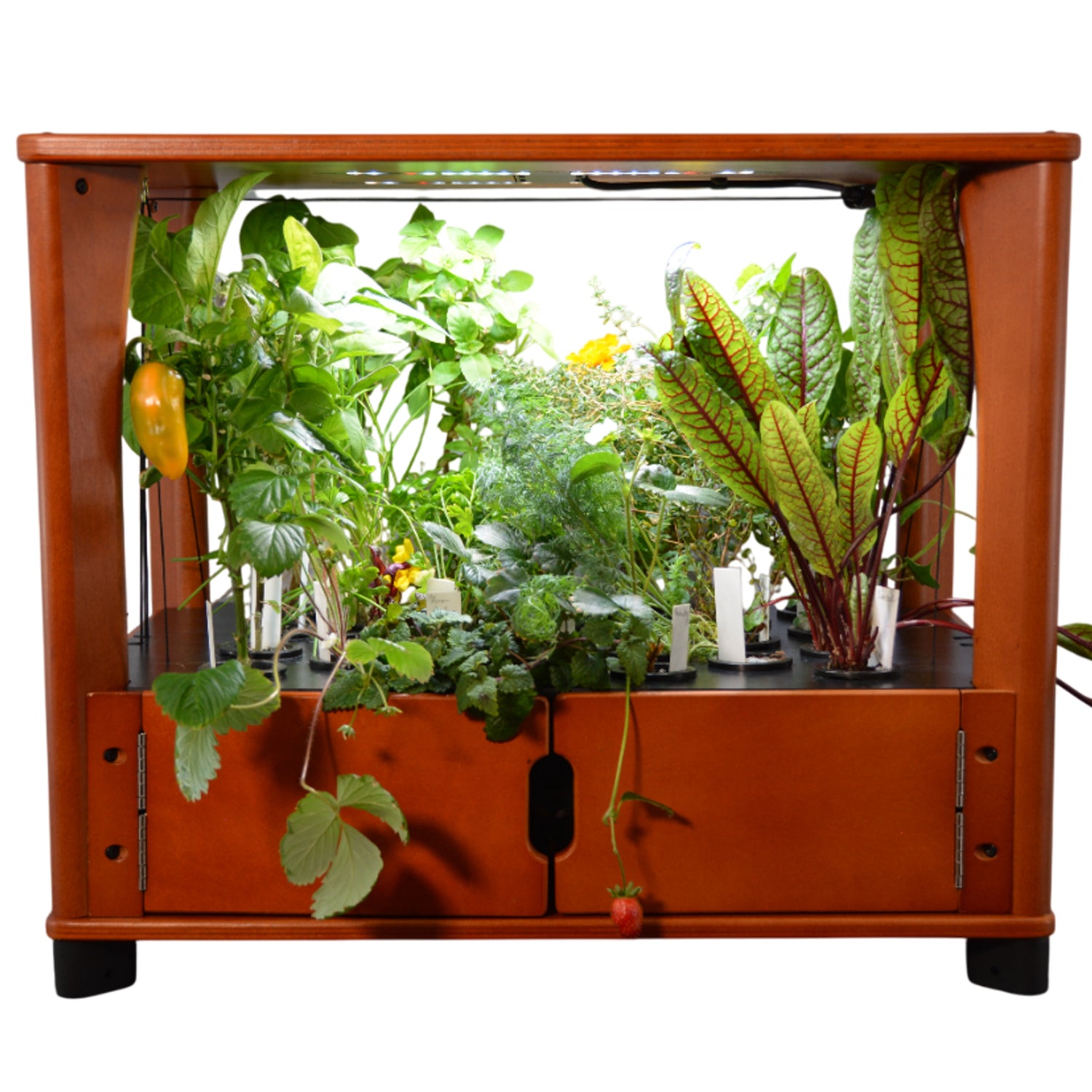
Another important design decision was the physical structure of the farms themselves. Many hydroponic systems are designed as plastic appliances that sit on a counter. Aquager farms take a different approach by treating the growing system as part of the home environment. The farms are designed as furniture-style structures that integrate naturally into kitchens, living spaces, and apartments. This makes it easier for people to keep their growing systems visible and accessible rather than hiding them away.
Simplicity also makes it easier for new growers to succeed. When systems are easier to understand, beginners can focus on learning how plants grow instead of troubleshooting equipment. This reduces frustration and helps people build confidence in indoor food production.
For people exploring indoor growing, the most important factor is often reliability. A system that operates consistently with minimal maintenance allows growers to focus on harvesting fresh food rather than maintaining complex machinery. By prioritizing simplicity, Aquager farms were designed to provide a stable environment where plants can grow reliably indoors throughout the year.
If you want to see how these design principles are applied in practice, explore the Aquager Home Farm here.

Mini FAQ
What is the simplest hydroponic system?
The simplest hydroponic system uses a stable nutrient reservoir where plant roots access water, nutrients, and oxygen without complex circulation equipment.
Why do complex hydroponic systems fail more often?
Complex systems include more mechanical parts such as pumps and tubing. These components can clog, stop working, or require frequent maintenance.
Do hydroponic plants need oxygen?
Yes. Plant roots require oxygen to absorb nutrients efficiently. Aeration methods such as air stones help maintain healthy oxygen levels in hydroponic systems.
Are simple hydroponic systems better for beginners?
Many beginners succeed more easily with simple systems because there are fewer components to maintain and fewer opportunities for equipment failure.
Published: March 16, 2026
Last Updated: March 16, 2026
0 comments