
A good gift looks like someone thought about it. A kit in a plain shipping box does not. A kit with a care card, a seed pack on top, and a short note does.
The good news is that it takes about 20 minutes. This guide walks through 5 steps to turn a microgreens kit into a gift people keep talking about, from picking the kit to writing the note. If the calendar is tight, see our guide to last minute Christmas gifts for food lovers.
Ordering for Christmas? See the 2026 order-by dates.
What Do You Need to Package a Microgreens Kit as a Gift?
- A microgreens kit
- One seed pack (optional, but it helps)
- A gift box, kraft paper, or a tote bag
- Twine, tissue paper, and one natural touch such as pine or a cinnamon stick
- An index card and a pen
How Do You Package a Microgreens Kit as a Gift?
Step 1: Choose the right kit
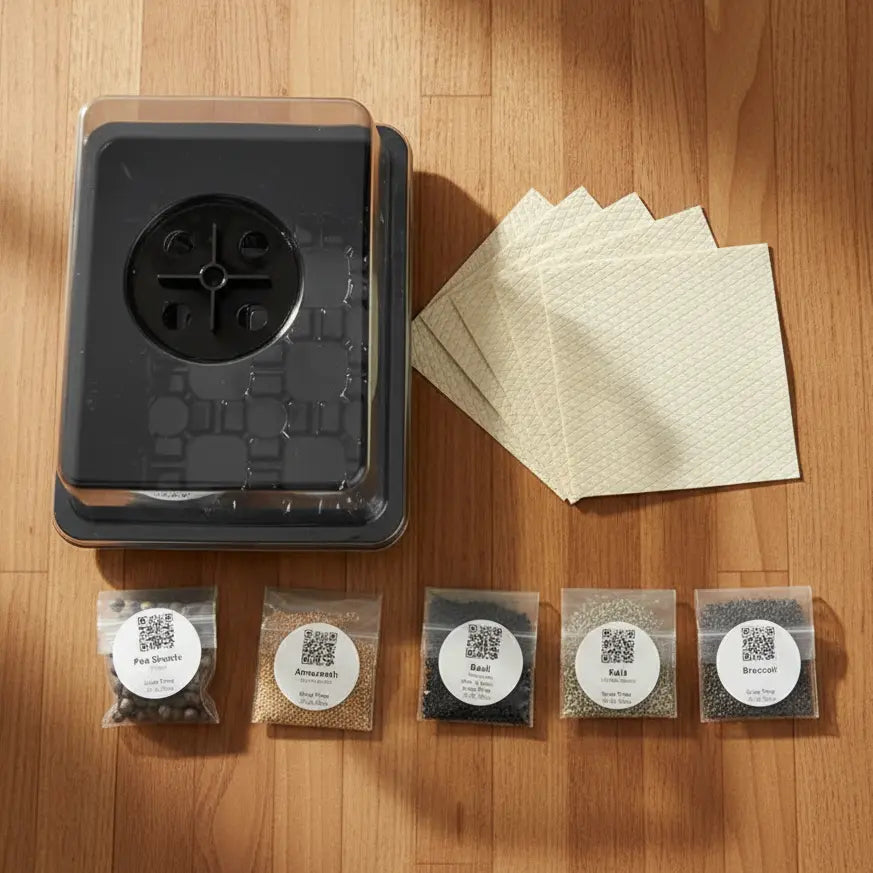
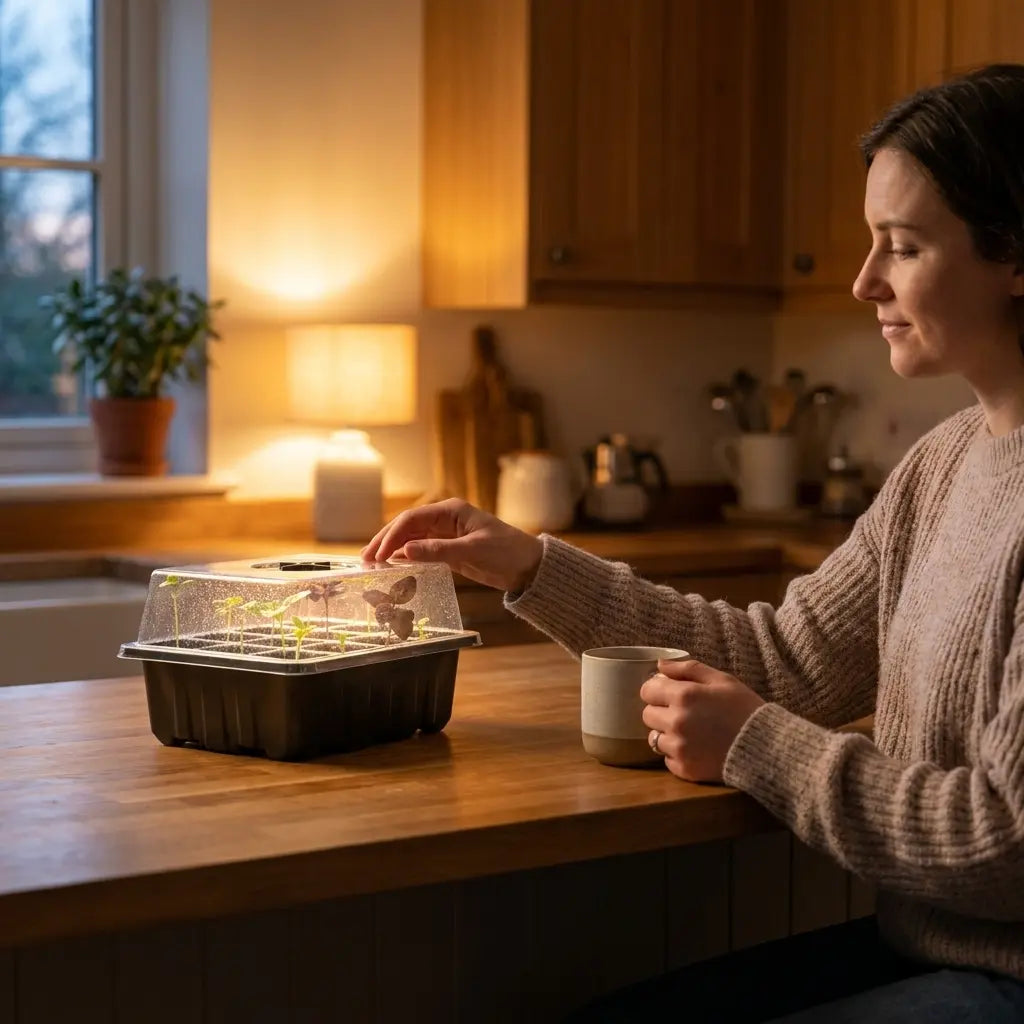
Pick a kit that matches the person. The Microgreens Starter Kit ($29.99) is the best fit for most people. It comes with two trays, a humidity dome, grow mats, and seed packs, so the recipient only needs to add water. The Grab & Grow Starter Kit ($44.99) is the pick for someone who wants zero setup. It comes in variants such as Basil Overload and Pollinator Defense.

Step 2: Add one seed pack on top
A small extra makes the gift feel planned. Tuck in a Pea Shoots or Radish Confetti Mix pack ($7.99 each). Each pack includes an organic grow mat. Pea shoots are sweet and mild, and radish is peppery and bright.
Step 3: Wrap or box it
Pick the style that fits your time and budget:
- The gift box: Line a white or kraft box with green tissue paper. Place the trays, dome, and seed pack inside, close the lid, and tie it with twine. Tuck a sprig of pine or eucalyptus under the knot.
- Kraft wrap: Wrap the kit in kraft paper and seal it with a strip of green or red washi tape. Add a handwritten tag on twine. It is fast and creates less waste.
- The reusable tote: Drop the kit into a plain canvas tote with tissue paper on top. The recipient gets a useful bag along with the gift.
Green tissue, kraft paper, twine, and one natural touch look handmade and warm without a single roll of shiny wrap.

Step 4: Write a care card
A care card shows you thought past the purchase. Keep it to one index card and cover 5 things:
- What is in the box. Example: "You have two trays, a dome lid, grow mats, and seeds. Just add water."
- How to start. Example: "Wet the mat, spread the seeds, cover with the dome, and keep it damp in a bright spot."
- When to harvest. Example: "Pea shoots are ready in 7 to 14 days. Snip them with scissors just above the mat."
- What to eat it with. Example: "Pea shoots are sweet and mild on avocado toast. Radish is spicy on tacos and eggs."
- Where to learn more. Add the link to our beginner's guide to growing microgreens.
A 4 by 6 inch card is easy to prop on the counter or keep in a kitchen drawer.

Step 5: Add a gift note
Add a short note to the card or the tag. Here are 6 ready-to-use ideas, each under 40 words:
- For the foodie friend: "You make everything from scratch. Now you can grow your own garnish too. Fresh greens in one to two weeks. Merry Christmas."
- For your mom: "I got you something that keeps giving. These grow in your kitchen and taste better than the store kind. I will eat them with you when I visit."
- For a teacher: "You gave so much this year. Here is something that grows, just like your students. Happy holidays and thank you."
- For a coworker: "You said you wanted to eat better next year. This makes it easy. Grow your own fresh greens, no garden needed. Happy holidays."
- For the person who has everything: "I gave up finding something you do not own, so I got you something alive. Microgreens. Merry Christmas."
- For a new parent: "Something fresh and low effort for when you have no spare energy. Harvest in a week or two. Happy everything."
Want more gift ideas at different prices? See our list of stocking stuffers under $50 or our Christmas gift ideas for foodies.
Frequently Asked Questions
Is a microgreens kit a good gift for someone who does not cook much?
Yes. Microgreens need almost no cooking skill. The recipient grows them, then snips them onto toast, salads, eggs, or soup.
Should I include seeds in the gift?
The Microgreens Starter Kit already includes seed packs. Extra packs are $7.99 each and add more flavors. Most Grab & Grow variants come with seeds, but the No Seeds variant does not.
How long until the recipient can harvest?
It depends on the variety. The Starter Kit lists a first harvest in 5 to 25 days, and pea shoots take 7 to 14 days. Put that range on the care card so they know what to expect.
What if the recipient has never heard of microgreens?
That works in your favor. Many people have eaten microgreens at restaurants without knowing what they were. Growing them at home for the first time is a fun surprise.
What should I write on the care card?
Cover 5 things: what is in the box, how to start, when to harvest, what to eat it with, and where to learn more. A handwritten card works best, but a printed one is fine.
A Gift That Gets Opened More Than Once
Most gifts are opened once. A growing kit gets opened again every time the recipient starts a new tray, and every harvest reminds them of you. Wrap it well, write the card, and add one seed pack on top. Then you have a gift that is useful, personal, and far more memorable than most presents at the same price.
Author: Aquager Team · Published: June 7, 2026 · Updated: October 11, 2026 · Reviewed: October 10, 2026 (Phase 2 and 3)












0 comments