
There is a special kind of pride on Christmas morning when you put a plate in front of someone and the garnish came from something you grew. Not bought. Grown, on your windowsill, in December.
This guide covers six Christmas brunch ideas that use microgreens as a real ingredient, not an afterthought. For each recipe you get the best variety, how to use it, and why it works.
The recipes run from simple avocado toast to a smoked salmon board that looks catered. All six use pea shoots, radish or sunflower, which you can grow at home in about one to three weeks.

1. Avocado Toast With Pea Shoots and Lemon Zest

The most repeated brunch dish of the last decade gets a Christmas morning upgrade. What makes avocado toast look like a café plate and not a Tuesday snack is almost always the garnish.
The microgreen: Pea Shoots. Their bright green tendrils and fresh sweetness pair with avocado in a way that feels natural. The contrast of deep green avocado against bright, trailing shoots is what makes the plate look styled, not just assembled. For growing tips, see the complete pea shoot growing guide.
How to use it: Mash ripe avocado onto sourdough with a pinch of flaky salt and red pepper flakes. Place a loose cluster of pea shoots at the center, letting a few tendrils fall over the edge of the toast. Add lemon zest last. The lemon brightens the sweet pea shoots.
The "you grew this" moment: Pea shoots are one of the most satisfying microgreens to grow. They are dense, fast-growing and clearly alive when harvested that morning. Putting them on the first plate of Christmas morning sets the tone for the whole day.
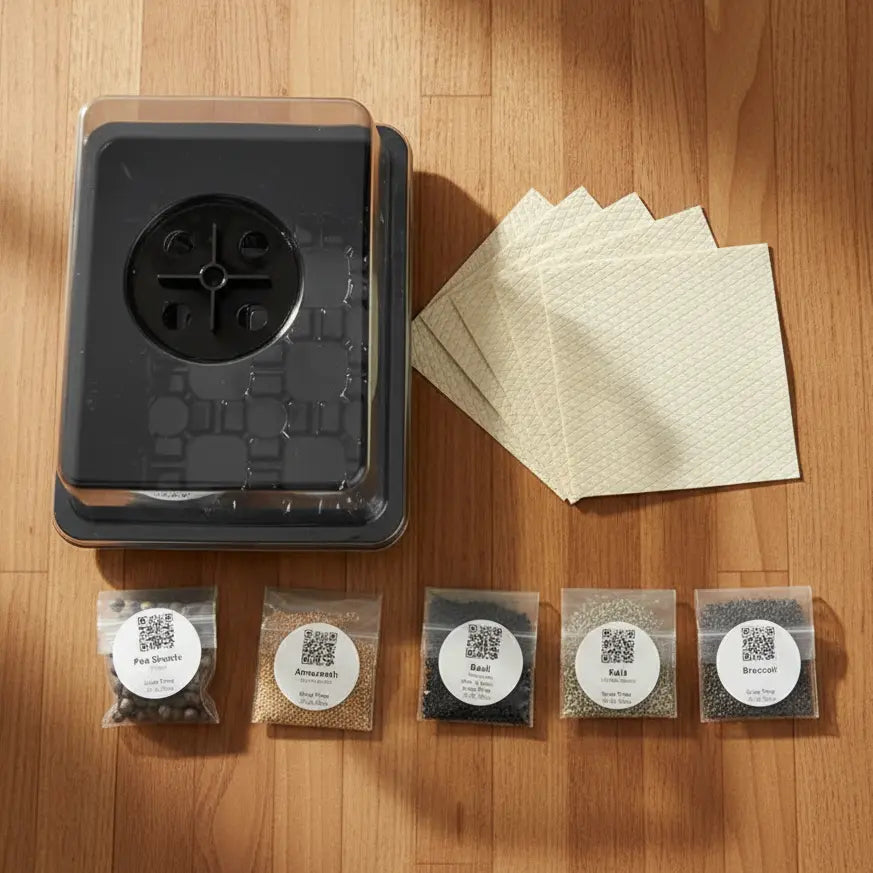
Want to grow them yourself? The Microgreens Starter Kit ($29.99) has the trays, humidity dome and organic grow mats you need to start on a windowsill, and pea shoots are ready in 7 to 14 days.
2. Eggs Benedict With Radish Microgreens
Classic eggs Benedict sits at a spot between effort and payoff that most home cooks respect. The hollandaise earns its place, and the poached eggs take attention. The one thing the dish almost always lacks is a finishing touch with texture and a flavor that cuts through the richness.
The microgreen: Radish Confetti Mix. Its spicy heat cuts through hollandaise and brightens every bite. The red, white and green stems add visible color to a plate that is otherwise mostly yellow and brown. See the step-by-step guide to growing radish microgreens for more.
How to use it: Plate your Benedict as normal. Before serving, place a small cluster of radish microgreens on top of the poached egg, centered at the 12 o'clock position. The spice hits at the end of each bite, a clean, sharp note that makes the hollandaise taste even richer by contrast.
Notes for plating: The microgreens go on last, always after the sauce has been poured. Plate the table quickly and serve right away so they look their best.
3. Smoked Salmon Board With Pea Shoots, Radish and Crème Fraîche
A smoked salmon board is the no-cook centerpiece of a Christmas brunch buffet. Done right, it looks like it came from a caterer. The difference between a good board and a great one is almost entirely in how it is dressed.
The microgreens: Two varieties side by side. Scatter pea shoots loosely for volume and brightness, and cluster radish microgreens near the salmon for spice and color. The green and red against pale salmon and white crème fraîche reads as Christmas without trying.
How to build the board: Lay smoked salmon in loose folds on one side of the board. Add small ramekins of crème fraîche and capers. Scatter thin-sliced cucumber and rye crackers. Then add a large, loose handful of pea shoots across the center, letting them trail naturally, and cluster the radish microgreens near the salmon.
Why this works for a crowd: Everything can be assembled 30 minutes ahead. The microgreens, added last, make the board look freshly styled when guests sit down, even if you built it before you got dressed.
4. Herb Frittata With Sunflower Microgreens
A frittata is the most forgiving egg dish in the Christmas breakfast repertoire. It feeds a crowd, serves at room temperature and slices cleanly. Sunflower microgreens added after baking give the finished dish height and freshness.
The microgreen: Sunflower Black Oil. Its thick, meaty texture and nutty flavor match the heartiness of a frittata better than lighter microgreens do. It is also sturdier than most varieties, which helps on a buffet table. Our guide to growing sunflower microgreens indoors walks through the soak and the growing steps.
How to use it: Cook the frittata through and let it rest for 5 minutes. Then scatter sunflower microgreens loosely across the surface, spread out so every slice gets some. Finish with a drizzle of good olive oil and flaky salt. The nutty flavor complements eggs the way a parsley finish does, with more texture and presence.
Variations: This works just as well with a base of roasted potato and leek, spinach and feta, or sweet potato and goat cheese. The microgreen finish stays the same.
5. Holiday Grain Bowl With Sunflower and Amaranth
The grain bowl earns its spot on a Christmas brunch table as the dish that feels nourishing, not heavy. On a morning of rich food, that fills a real role. The microgreens add flavor, and they also make the bowl look like the most considered dish on the table.
The microgreens: Sunflower for texture and nuttiness over roasted grains, and Amaranth Garnet Red for a hit of ruby red on top. The red and green is the Christmas palette in food form, and it looks striking against a base of roasted farro or freekeh. Amaranth is optional, and it takes the longest to grow, so see the planting table below.
How to build the bowl: Start with warm roasted grains such as farro, freekeh or quinoa. Add roasted squash, dried cranberries and toasted pepitas. Dress with a tahini lemon dressing. Finish with a handful of sunflower microgreens folded into the top layer and a small cluster of amaranth in the center.
For a Christmas brunch buffet: Build the base ahead of time and keep it warm. Add the microgreens right before serving. Those few seconds are what separate the bowl from the background.
6. Garnished Mimosa With Pea Shoots
The mimosa is the signature drink of any Christmas brunch that takes itself seriously. Most people serve them in flutes and leave it at that. One extra touch, a small sprig of pea shoots draped over the rim, makes it the most photographed thing on the table.
The microgreen: Pea shoots. Their bright green against the pale gold of the champagne is striking, and the trailing tendrils drape naturally over the rim of a flute. Unlike a sprig of rosemary or a slice of fruit, pea shoots take three seconds to add and need no prep.
How to do it: Pour the mimosa as normal. Take a single small stem of pea shoots, 3 to 4 inches long with the top curling, and lay it over the rim so the tendril hangs outside. That is the whole technique. The natural curl of the shoot looks intentional without any arranging.
The moment: When guests pick up their mimosa and notice the fresh green garnish, the question is almost always the same: "Did you grow this?" The answer, yes, on the windowsill, a couple of weeks ago, starts Christmas morning right.
When Should You Plant Microgreens for Christmas Brunch?
Count back from Christmas Eve, when you harvest. For a December 24 harvest, plant sunflower first, between December 3 and 17, and soak the seeds for 48 to 72 hours before planting. Then plant radish and pea shoots between December 9 and 17. Plant at the early end of each range for a safety margin.

| Variety | Grow time | Plant between (for a December 24 harvest) |
|---|---|---|
| Sunflower Black Oil | 7 to 21 days | December 3 to December 17 |
| Radish Confetti Mix | 10 to 15 days | December 9 to December 14 |
| Pea Shoots | 7 to 14 days | December 10 to December 17 |
| Amaranth Garnet Red (optional) | 16 to 25 days | November 29 to December 8 |
The Starter Kit has two trays and a humidity dome, so start the earliest variety first and reuse a tray once it is cut. Order by late November so the seeds arrive in time. Planning the dinner table too? See our guide on how to garnish Christmas dinner with microgreens.
How Much Does It Cost to Grow Microgreens for Christmas Brunch?
The Microgreens Starter Kit costs $29.99 and includes two trays, a humidity dome, organic grow mats and seeds. Each variety is a $7.99 seed pack that includes a grow mat. Pea shoots, radish and sunflower add up to $23.97, so the most you would spend to start is $53.96, or $61.95 with optional amaranth.
| Item | Cost |
|---|---|
| Microgreens Starter Kit | $29.99 |
| Pea Shoots, Radish and Sunflower packs ($7.99 each) | $23.97 |
| Kit plus three packs | $53.96 at most |
| Optional Amaranth Garnet Red pack | $7.99 |
The seeds in the kit may already cover one of these varieties, so your total could be lower.
What Else Do People Ask About Christmas Brunch Microgreens?
How far ahead can I prep the microgreens for Christmas brunch?
Harvest on Christmas Eve, keep the microgreens in the refrigerator, and plate them right before serving. For the best texture, harvest within 2 days of the meal.
Can I use microgreens in hot dishes?
Only as a finish, never in the cooking. Add them after the heat is off and the dish has rested briefly. On the frittata, that means after it comes out of the oven and rests for 5 minutes. Heat wilts microgreens quickly.
What if I only have one tray?
Grow pea shoots first. They are the most useful of the three varieties and appear in three of the six recipes. Then grow radish. Stagger your plantings so each tray matures a few days apart, giving you a rolling harvest across Christmas week.
Is this realistic if I have never grown microgreens before?
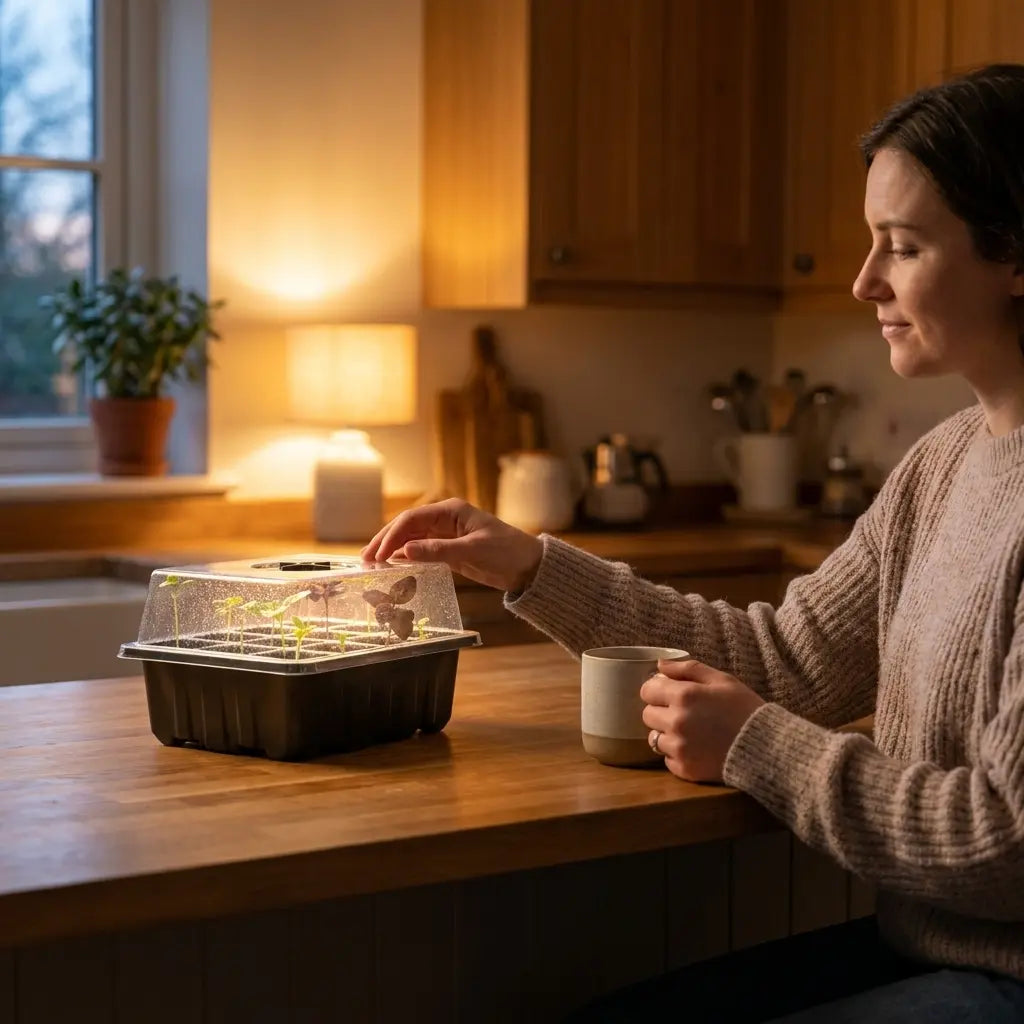
Yes. The Microgreens Starter Kit is made for beginners, and harvest comes in 5 to 25 days, depending on the variety. It fits a windowsill, a kitchen counter or a spot under a grow light. If you plant in early December, you will have time for a second try before Christmas. For the full process, see our beginner's guide to growing microgreens at home.
How much microgreens do I need for all six recipes?
Plan on one tray per variety. A tray yields about 30 g (1.1 oz) of pea shoots, 20 g (0.7 oz) of radish, or 22 g (0.8 oz) of sunflower, based on the product pages. Three seed packs cover the full spread, and a second tray of pea shoots helps because they appear in three recipes.
Is a Christmas Brunch With Microgreens Worth the Effort?
Christmas brunch gets less attention than Christmas dinner, which is exactly why a small detail like fresh, homegrown microgreens on every dish stands out. It is unexpected and beautiful, and the story behind it, a few weeks, a windowsill and seeds you planted yourself, is the kind of thing people remember.
Plant in early December, harvest on Christmas Eve, and put them on every plate and every glass. The kit has everything you need to start, and you only add water.
Author: Aquager Team · Published: June 7, 2026 · Updated: October 10, 2026 · Reviewed: October 10, 2026 (Phase 2 and 3)












0 comments