
Radish microgreens are ready to harvest in as little as five days. That's faster than almost any food you can grow at home — and these tiny greens pack a nutritional punch that full-grown radishes can't come close to matching.
If you've been exploring microgreens benefits for a while, radish is probably already in your rotation. If you're just starting out, it's one of the best first crops you can choose: fast, forgiving, and genuinely useful in the kitchen.
This guide covers the full picture — the science behind the nutrition, what radish microgreens actually taste like compared to a mature radish, and three specific ways to use them in everyday cooking.
What Are Radish Microgreens?
Radish microgreens are the seedling stage of the radish plant, harvested at 5–7 days when the first seed leaves (cotyledons) are fully open. At this stage, the plant has converted nearly all of its seed energy into a dense concentration of vitamins, enzymes, and protective plant compounds.
They're not the same thing as a sprouted radish seed. Microgreens are grown in a medium — like a coco coir grow mat — exposed to light, and harvested by cutting the stem above the surface. Sprouts are grown in water and eaten root and all. It's a different product entirely, with different food safety considerations. Microgreens are generally considered the safer choice because they're not grown in standing water, which eliminates the primary risk factor associated with sprout contamination.
Radish microgreens come in many varieties. The Radish Confetti Mix is a blend of red, purple, and green types, which gives them a striking visual range and adds a slight variation in spice intensity across the mix.
Radish Microgreens Nutrition: What the Science Shows
The nutritional case for radish microgreens centers on their glucosinolate content. Glucosinolates are sulfur-containing compounds found throughout the Brassica family — which includes radish, broccoli, kale, and mustard. When plant tissue is cut or chewed, an enzyme called myrosinase is released and converts glucosinolates into isothiocyanates. These compounds are the ones researchers have studied most extensively for their role in liver detoxification and cellular protection.
Radish microgreens are a meaningful source of several key nutrients:
- Vitamin C — important for immune function, collagen synthesis, and iron absorption. Radish microgreens contain significantly more vitamin C than mature radishes by fresh weight.
- Vitamin E — a fat-soluble antioxidant that protects cell membranes from oxidative damage.
- Vitamin K — essential for blood clotting and bone density maintenance.
- Folate — a B vitamin involved in DNA synthesis and repair, particularly important during pregnancy.
- Anthocyanins — the pigments that give red and purple radish varieties their color. These are potent antioxidants associated with reduced inflammation and improved cardiovascular markers.
Research published in the Journal of Agricultural and Food Chemistry found that Brassica microgreens contain concentrated nutrient levels compared to their mature counterparts — in some cases 4 to 40 times higher by fresh weight. Radish microgreens fall clearly in this category.
The liver-support connection comes from radish's specific glucosinolate profile. Radish microgreens are particularly rich in glucoraphasatin, which converts to sulforaphene — a compound that activates Phase 2 detoxification enzymes in the liver. These enzymes help neutralize and eliminate compounds that accumulate from processed food, pollution, and environmental exposure.
This isn't a miracle cure, and it doesn't replace medical treatment for liver conditions. But regularly including radish microgreens in your diet is a legitimate, food-based way to support your liver's natural detox functions — without supplements, powders, or anything processed. For a broader comparison of how radish nutrition stacks up against other varieties, our guide to the most nutritious microgreens, ranked by science covers all 18 Aquager varieties side by side.
The Flavor Profile: Spicy Microgreens vs. Full-Grown Radish
The flavor of radish microgreens is sharper and more immediate than a full-grown radish. Where a mature red radish builds heat slowly as you chew, radish microgreens deliver peppery heat right away — a bright, clean spice without the watery aftertaste that mature radishes sometimes carry.
The heat comes from the same glucosinolate-myrosinase reaction described above. When you cut or chew the microgreens, the enzyme activates and the isothiocyanates responsible for the heat are produced almost instantly.
On a heat scale, radish microgreens sit between arugula (mild, peppery, nutty) and mustard (bold, horseradish-like, very intense). The Confetti Mix blend tends to be slightly milder than a single-variety crop, with the heat distributed across multiple radish types. For a full comparison of the spicy microgreens options, see our radish vs. mustard vs. arugula breakdown.
For anyone who enjoys a little heat in their food — on tacos, bowls, sandwiches — radish microgreens are a natural fit. They deliver intensity without the lingering burn of hot sauce, and they add color and crunch at the same time.
3 Ways to Use Radish Microgreens in the Kitchen
Radish microgreens are at their best when used raw. Heat destroys both the volatile compounds responsible for the spicy flavor and the myrosinase enzyme that activates the glucosinolates. Always add them after cooking, not during.
On Burgers and Sandwiches
Radish microgreens make a natural replacement for shredded lettuce on a burger or deli sandwich. The texture adds crunch, the heat cuts through rich flavors like cheese and aioli, and the red-purple coloring makes the whole thing look significantly better.
Add a small handful on top of the patty just before serving. The residual heat from the burger will slightly wilt the microgreens — which actually mellows the spice level and brings out a subtle sweetness.
As a Sushi and Poke Companion
Radish microgreens appear alongside sashimi and in poke bowls at high-end Japanese restaurants because they complement the clean, umami-forward flavors of raw fish. A small mound next to salmon sashimi or on a spicy tuna roll adds heat, color, and a textural contrast that pickled ginger alone doesn't provide.
At home, use them in poke bowls, alongside smoked salmon on toast, or next to a simply prepared piece of grilled fish. The flavor pairing works every time.
In Grain Bowls and Salads
This is probably the most common use: a handful of radish microgreens scattered over a grain bowl as a peppery finishing layer. They hold their texture under a light vinaigrette without wilting the way baby arugula does.
Pair them with roasted sweet potato, farro, and tahini dressing. The sweetness of the sweet potato and the nuttiness of the grain both amplify the pepper note in the greens. It's a combination that reliably impresses.
The Easiest Way to Grow Your Own Radish Microgreens
Growing radish microgreens at home requires almost no equipment. The crop germinates reliably, handles slightly uneven conditions better than most microgreens, and delivers results in under a week.
What you need: a shallow grow tray, a grow mat, radish seeds, and water. That's the entire setup.
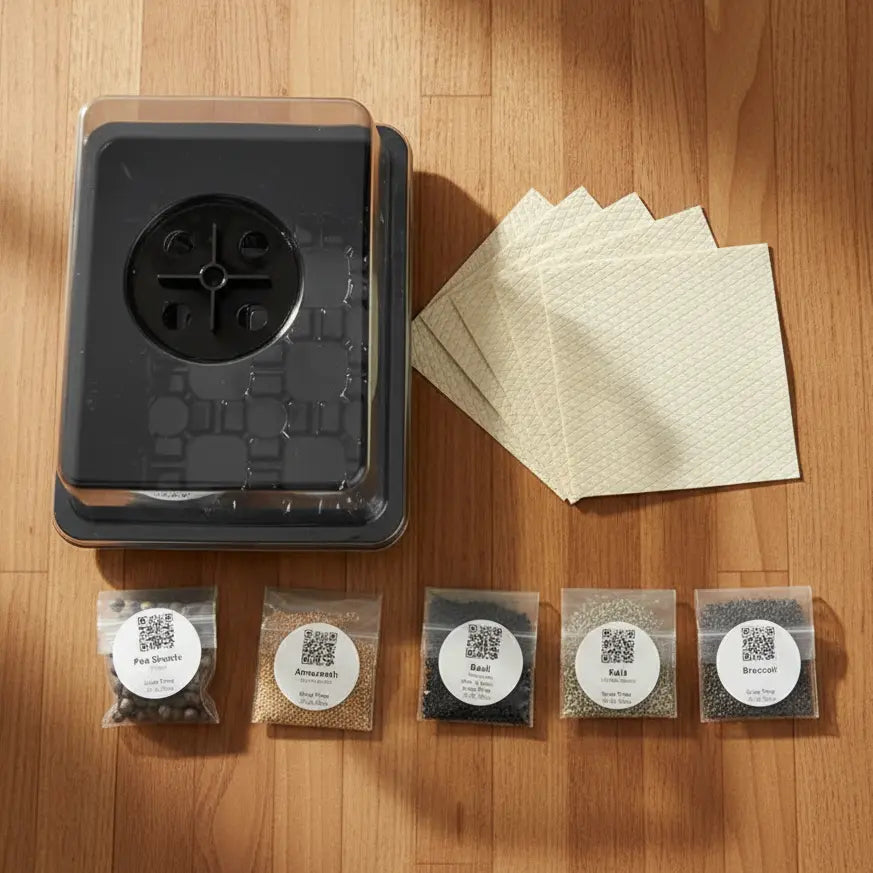
The Microgreens Starter Kit includes the tray, humidity dome, and a coco coir grow mat that holds moisture evenly during the critical germination phase. The mat is the key piece — it prevents the overwatering that kills most beginner crops, because it retains what the roots need and drains the excess.
Here's the basic process:
- Soak the grow mat until fully saturated, then drain any standing water.
- Scatter seeds densely and evenly — roughly 1 to 1.5 oz per 10×20 inch tray.
- Mist lightly, cover with the humidity dome, and set in a dark spot for 2–3 days.
- Once germinated, remove the dome and move to a south-facing window or grow light.
- Harvest at day 5–7 when the cotyledons are fully open, cutting just above the mat surface.
The Radish Confetti Mix seeds include a grow mat in the package — everything you need to start a tray immediately, without buying anything else first.
Frequently Asked Questions
Are radish microgreens spicier than regular radishes?
Yes. Radish microgreens tend to be sharper and more immediate in their heat than a full-grown radish. The glucosinolate concentration is higher in the seedling stage, which means more isothiocyanates are produced when you eat them. The Confetti Mix is slightly milder than a single-variety radish crop due to the blend.
Can you eat radish microgreens every day?
Yes — they're safe to eat daily as part of a balanced diet. Most people use a small handful as a garnish or topping per meal rather than eating large quantities at once. There's no known upper limit for healthy adults.
Do radish microgreens regrow after you cut them?
No. Radish microgreens don't regrow from the same mat after harvest. The cotyledon stage is the crop, and once cut, the plant won't produce a new flush. If you want a continuous supply, stagger your plantings — start a new tray every 5–7 days and you'll always have something ready to harvest.
How do you store radish microgreens after harvest?
Cut dry (don't wash before storing), place in an unsealed container lined with a dry paper towel, and refrigerate at 35–40°F. Stored this way, radish microgreens last 5–7 days. Wash only just before eating to prevent premature wilting.
How are radish microgreens different from broccoli microgreens?
Both are Brassica-family crops with glucosinolate benefits, but they produce different compounds. Broccoli microgreens are high in glucoraphanin (which converts to sulforaphane), while radish microgreens are higher in glucoraphasatin (which converts to sulforaphene). Both are worth growing — they're complementary crops, not interchangeable. If you want a direct comparison, our beginner's guide to growing microgreens at home covers which variety to start with based on your goals.
Final Thoughts
Radish microgreens are one of the most rewarding crops to grow at home: fast, reliable, and genuinely useful in everyday cooking. The 5–7 day grow cycle means you can maintain a continuous supply at almost any scale, and the heat and color they add to a dish makes the effort more than worth it.
The nutrition is real, backed by research, and available in food form — which is generally a better delivery mechanism than a supplement. Add them to your next bowl, drop them on a burger, or serve them alongside fish. You'll notice the difference immediately.
If you're ready to start your first tray, the Radish Confetti Mix includes everything you need for your first harvest. If you want the full setup from day one, the Microgreens Starter Kit covers the tray, dome, and mat together. Either way, you'll have your first harvest in less than a week.
Author: Aquager Team · Published: June 4, 2026 · Updated: September 12, 2026 · Reviewed: September 12, 2026 (Phase 2)














0 comments