
Why Most Indoor Gardens Look Like Appliances
The idea of indoor garden furniture is still unfamiliar to many people because most indoor gardening systems were originally designed to function like appliances. When people first encounter hydroponic systems, they usually see compact machines placed on kitchen counters with bright LED arms, plastic housings, and visible control panels. These systems often resemble coffee makers or small kitchen devices more than something designed to blend naturally into a home environment.
This appliance-style approach developed largely because early consumer hydroponic products focused on convenience and automation. Designers attempted to create compact machines that could grow plants indoors with minimal setup. To accomplish this, they packaged lights, pumps, water reservoirs, and controls into a single plastic unit. While this made the systems easy to ship and sell, it also meant they were designed primarily as devices rather than as elements of interior design.
Over time, this design philosophy became the standard for many indoor gardening products. Companies continued to treat hydroponic systems as appliances rather than part of the home itself. As a result, most systems still emphasize technical features such as pumps, timers, and automated water circulation. These components may help manage plant growth, but they also give the systems a machine-like appearance.
For many households, this creates a small but important problem. Kitchens, living rooms, and apartments are usually designed around furniture and decor that match the style of the space. Wooden tables, cabinets, and shelving units are intended to create a comfortable environment. When a plastic appliance-style garden is placed in the middle of the room, it often looks out of place compared with the surrounding furniture.
This difference may seem minor, but it can influence how often people actually use their indoor gardening systems. If a system feels like a temporary device rather than a natural part of the home, it may be moved to a corner, placed in a storage area, or used less frequently over time. The design of the system can therefore affect not only how it looks, but also how consistently it becomes part of daily life.
Because of this, some designers have begun exploring a different concept: hydroponic systems that function as furniture rather than appliances. Instead of trying to hide the growing system, this approach integrates it directly into the living space. The goal is to make the garden feel like part of the room rather than a device sitting on the counter.
Understanding why so many indoor gardens look like appliances helps explain why the idea of indoor garden furniture is becoming more relevant. As indoor growing becomes more common, design choices are beginning to shift toward systems that integrate naturally with home environments rather than standing apart from them.

Why Design Matters Inside the Home
The concept of indoor garden furniture becomes easier to understand when we look at how people interact with their living spaces. Homes are carefully arranged environments where furniture, lighting, and layout all work together to create a comfortable atmosphere. Tables, cabinets, shelves, and other furnishings are chosen not only for their function but also for how they fit visually within the room.
When a gardening system is introduced into that environment, its design immediately affects how it is perceived. A plastic appliance-style system may function well, but it can stand out sharply against the rest of the room. Bright LED arms, molded plastic housings, and visible wiring often make these systems appear temporary or experimental. Even when plants are growing successfully, the device itself can look disconnected from the surrounding space.
This contrast becomes more noticeable in apartments or smaller homes where space is limited. In compact living areas, each object typically serves multiple purposes. A table may function as both a workspace and a dining surface. Shelving units may hold books, plants, and decorative items. Furniture is often selected carefully to maintain a consistent visual style throughout the room.
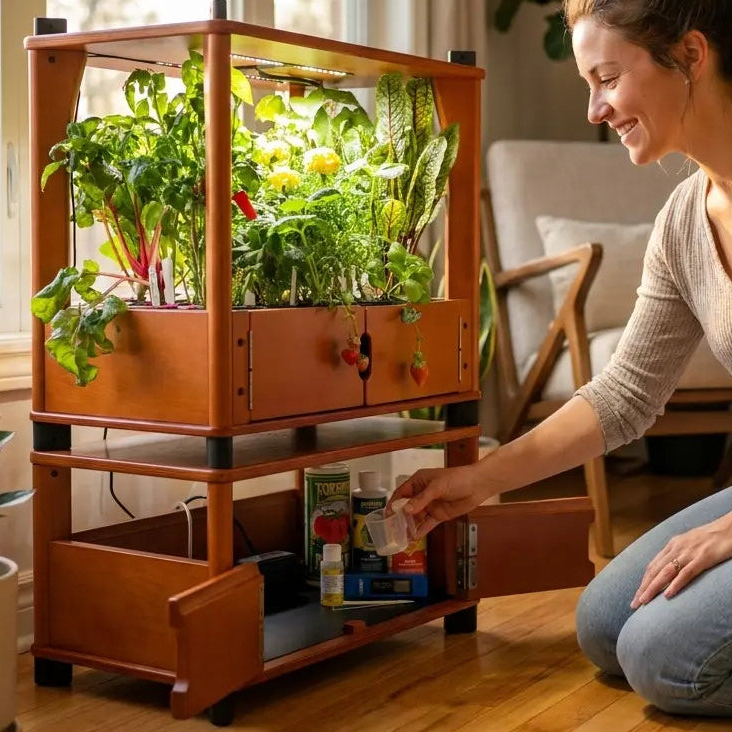
Because of this, the idea of garden furniture indoors begins to make more sense. When a growing system is designed as furniture, it can blend naturally into the environment rather than competing with it. Instead of appearing as a device placed temporarily on a counter, it becomes part of the structure of the room itself.
This approach changes how people interact with the system. When plants are integrated into furniture, they remain visible and accessible throughout the day. People are more likely to notice plant growth, check water levels, and harvest leaves when the system is positioned naturally within their living space. The garden becomes part of daily life rather than something that operates separately from it.
Another advantage of furniture-style systems is longevity. Appliances are often associated with temporary use. Devices may be replaced or upgraded frequently as new models appear. Furniture, on the other hand, is usually designed to remain in a home for many years. When a growing system adopts the form of furniture, it suggests permanence rather than short-term use.
This difference in perception can influence how people approach indoor growing. A device may feel like something to experiment with, while a piece of furniture feels like part of the household. When plants grow within furniture-like structures, they are more likely to remain integrated into everyday routines.
For these reasons, designers have begun reconsidering how indoor gardens should be built. Instead of treating them purely as machines, they are increasingly exploring ways to design systems that function as both growing environments and pieces of home furniture. This shift in thinking helps explain why indoor garden furniture is becoming an important concept in modern indoor growing.

Why Furniture-Style Indoor Gardens Are Used More Consistently
When people begin growing plants indoors, their initial excitement often comes from the idea of harvesting fresh food at home. Herbs, leafy greens, and vegetables growing inside the kitchen can feel surprisingly rewarding. However, maintaining that enthusiasm over time depends heavily on how easily the garden fits into everyday life.
This is where the concept of indoor garden furniture becomes important. Systems that resemble appliances often start as interesting gadgets, but over time they can feel separate from the rest of the home environment. When something feels like a device rather than a natural part of the room, it is easier to ignore it or move it out of sight.
Furniture-style gardens change that dynamic completely.
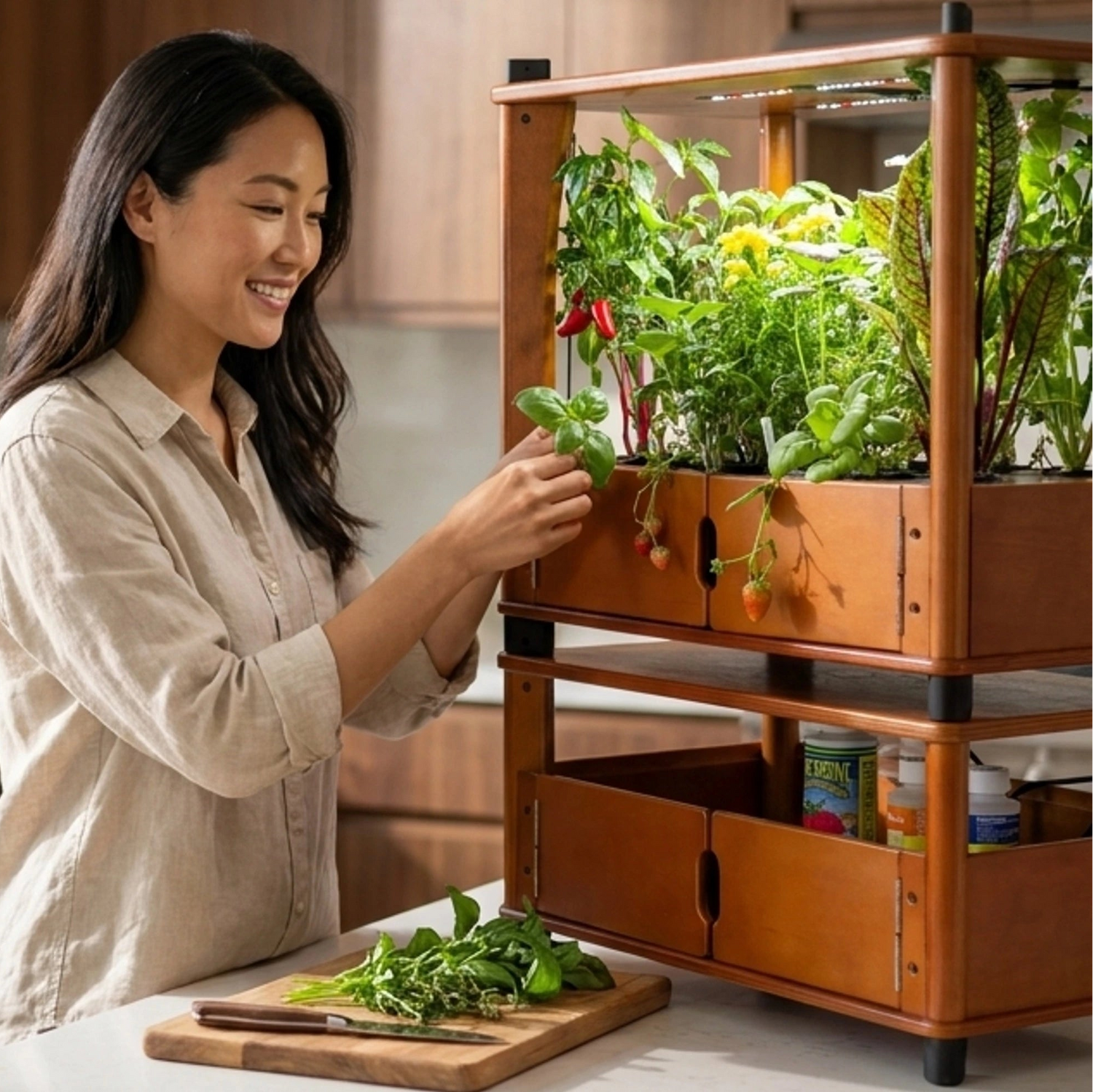
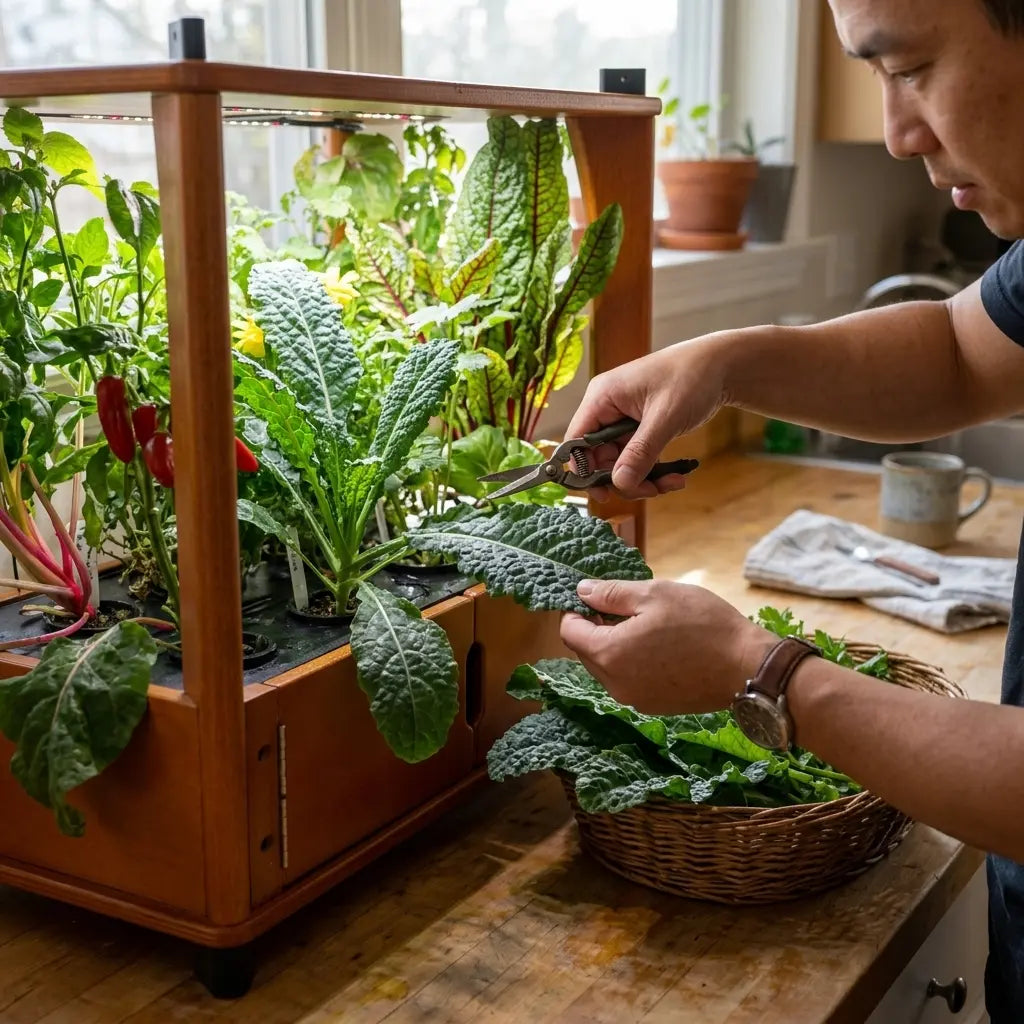
When a garden is integrated into a piece of furniture, the plants become part of the living space itself. Instead of sitting on a counter like a machine, the garden occupies a place similar to a shelf, cabinet, or table. Because the plants are always visible, people naturally pay more attention to them throughout the day. Small observations such as noticing new leaves or checking water levels become part of daily routines.
Visibility plays a surprisingly large role in plant care. When plants remain in sight, people are more likely to maintain them regularly. Simple tasks like refilling water or harvesting leaves become quick habits rather than chores that require remembering. Over time, this consistency makes indoor growing much easier to sustain.
Another advantage of hydroponic furniture is that it allows plants to feel like part of the home's design rather than something experimental. In many homes, decorative plants already appear on tables, shelves, or window areas. When a growing system adopts a similar structure, it blends naturally into these environments.
This design philosophy also encourages long-term use. Furniture is typically chosen carefully because it will remain in the home for years. A well-designed growing system that resembles furniture tends to feel more permanent than a plastic appliance placed temporarily on a counter. Instead of being treated as a gadget, the garden becomes a stable part of the household.
For indoor food production, this consistency is extremely valuable. Plants such as leafy greens, herbs, and microgreens grow best when they are maintained regularly. Systems that remain visible and integrated into the home environment make it easier for growers to stay engaged with the process.
This shift in thinking has led to a new generation of indoor growing systems that prioritize design, integration, and simplicity. Rather than focusing only on automation or compact machines, designers have begun creating systems that function both as growing environments and as furniture within the home.
If you want to see how this approach is applied in a modern indoor growing system, you can explore the Aquager Home Farm here.
Understanding this design shift helps explain why many newer systems are moving away from appliance-style gardens and toward solutions that integrate more naturally into everyday living spaces.

Why Aquager Farms Are Designed as Indoor Garden Furniture
The shift from appliance-style gardens to indoor garden furniture did not happen by accident. It emerged from a simple observation: people are more likely to grow food at home when the growing system fits naturally into their living environment.
Many early indoor gardens focused primarily on technology. Pumps circulated water through tubing systems. Plastic housings contained reservoirs and electronics. Control panels managed lighting schedules. While these systems could grow plants successfully, they often felt more like small machines than part of the home.
The design approach behind Aquager farms started with a different question.
Instead of asking how to build another hydroponic device, the goal was to understand how indoor food production could become part of everyday living spaces. If people are going to grow food year-round inside their homes, the system must feel comfortable and natural within the room.
This led to a design philosophy built around three core principles.
1. Furniture Integration
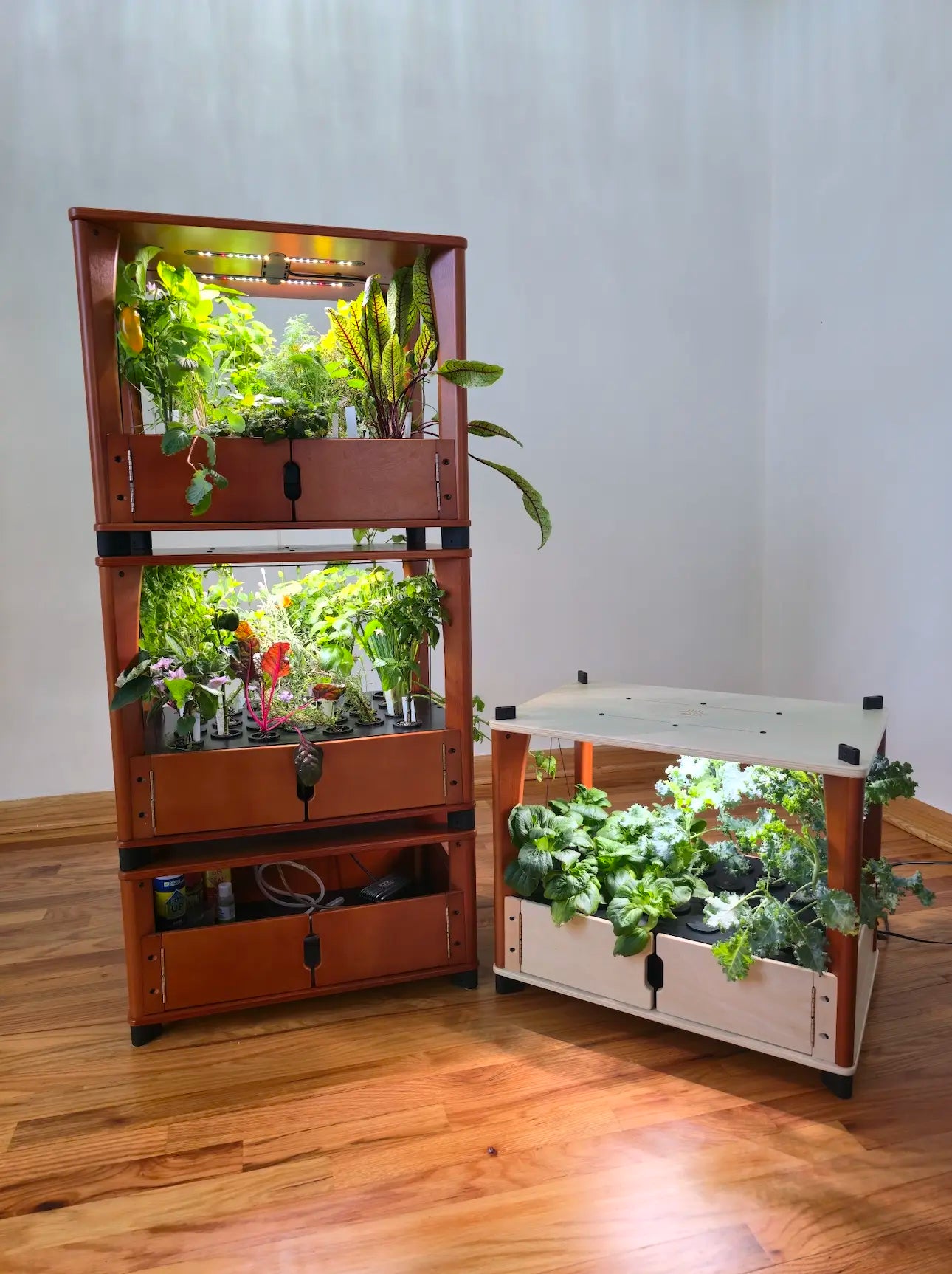
Aquager farms are built to function as indoor garden furniture, not appliances. This means the structure itself is designed to visually match the type of materials commonly found in homes.
Instead of plastic shells or machine-like housings, the system uses wooden structural components that resemble shelves, cabinets, or small furniture units. This allows the garden to blend naturally into kitchens, apartments, and living spaces without looking like a temporary gadget.
2. Simplicity Over Mechanical Complexity
Another key decision was reducing the number of mechanical components required for plant growth. Many hydroponic systems rely on pumps, tubing networks, or automated circulation systems. These parts can introduce potential failure points and require additional maintenance.
Aquager farms focus on a much simpler foundation:
- A stable nutrient reservoir
- Air stone oxygenation for healthy roots
- Full-spectrum LED lighting
- Minimal moving parts
This approach reduces mechanical complexity while still creating the conditions plants need to grow successfully indoors.
3. Long-Term Use in Real Homes
Furniture is typically chosen with the expectation that it will remain in the home for years. Designing indoor gardens with this mindset changes how the system is used.
When a garden looks like furniture:
- it stays visible in the room
- it becomes part of the home’s layout
- people interact with the plants more often
This visibility encourages consistent care, which is one of the most important factors for successful indoor growing.
For many beginners, the biggest challenge is not learning how plants grow. The challenge is maintaining a system that feels easy to live with. When a garden fits naturally into the home environment, plant care becomes part of everyday routines rather than a separate task.
This is the principle behind the Aquager Home Farm, which was designed to combine hydroponic growing with furniture-style integration.
By prioritizing simplicity, stability, and furniture-style design, Aquager farms aim to make indoor food production easier to maintain over the long term.










0 comments