
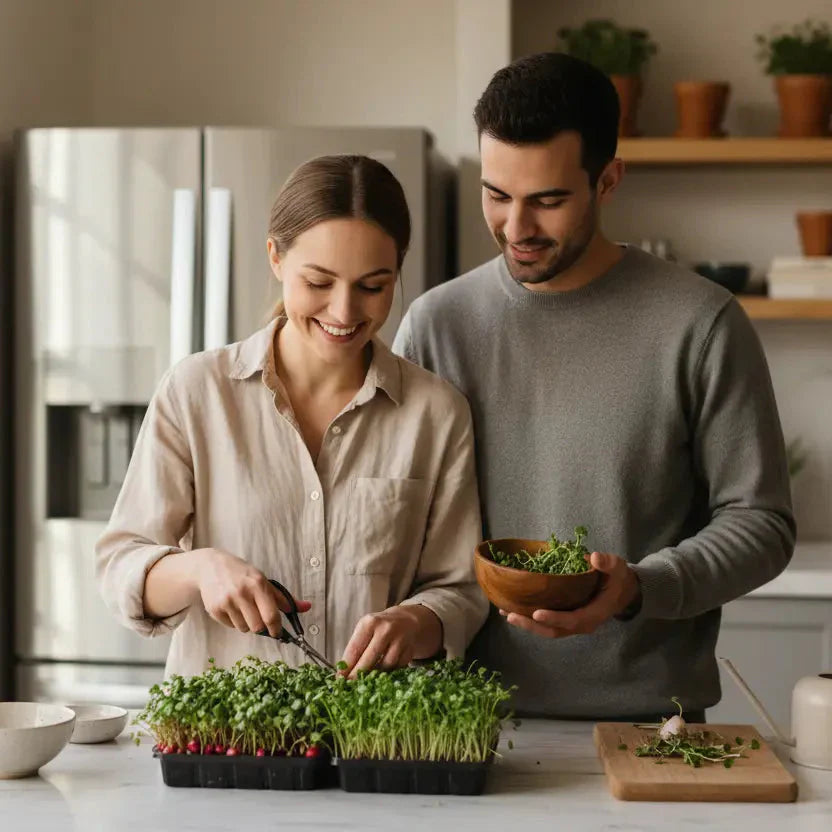
Growing microgreens at home can become one of the simplest activities couples share together. Many people look for small projects they can enjoy in their kitchen or living space. Cooking together is common. Watching movies is easy. But growing something together often feels more rewarding. It creates a small daily routine and something visible to care for.
Microgreens make this especially easy. They grow quickly, require very little space, and can be harvested in just days. Because of their short growth cycle, couples can see progress almost immediately. Even a small tray on a kitchen counter can produce fresh greens within one to two weeks.
In short, growing microgreens together means planting seeds in a shallow tray, watering them regularly, and harvesting young greens once they reach a few inches tall.
Many beginners assume indoor gardening requires experience or special equipment. Microgreens remove most of that difficulty. The process is simple enough for people who have never grown plants before.
If you are completely new to indoor growing, understanding the fundamentals of microgreens for beginners can make the process easier to follow and far less intimidating.
Growing something together may seem like a small activity. Over time, it often becomes a habit couples look forward to each day.
Why Microgreens Are Perfect for Growing at Home
Microgreens are one of the easiest plants people can grow indoors. Unlike traditional vegetables, they do not require deep soil, large pots, or outdoor garden space. A small tray is usually enough to start growing microgreens at home.
These young plants are harvested very early in their growth cycle. Most varieties are ready to harvest within 7–14 days after planting. Because of this short timeline, beginners see results quickly. That fast progress often makes indoor growing feel much more rewarding.
Another reason microgreens work well indoors is their size. The plants stay small and compact while developing their first true leaves. This allows them to grow in shallow trays placed on kitchen counters, shelves, or windowsills.
Microgreens also adapt well to indoor environments. They grow under natural sunlight or simple LED grow lights. Unlike many vegetables, they do not need months of care before producing food.
For couples trying a shared activity, this simplicity matters. The process remains easy enough to maintain while still creating a daily routine. Watering, checking growth, and harvesting together becomes part of that routine.
In short, microgreens succeed indoors because they grow quickly, require little space, and produce visible progress within days.

Why Growing Microgreens Together Works So Well
Many indoor gardening projects take months before results appear. That long timeline can make it difficult to stay motivated. Microgreens are different. Their rapid growth creates visible progress every few days, which makes them ideal for shared activities.
When couples grow microgreens at home, the process becomes a small daily routine. One person may water the tray. The other may check the growth or adjust the light. These simple tasks take only a few minutes but create a shared sense of care and progress.
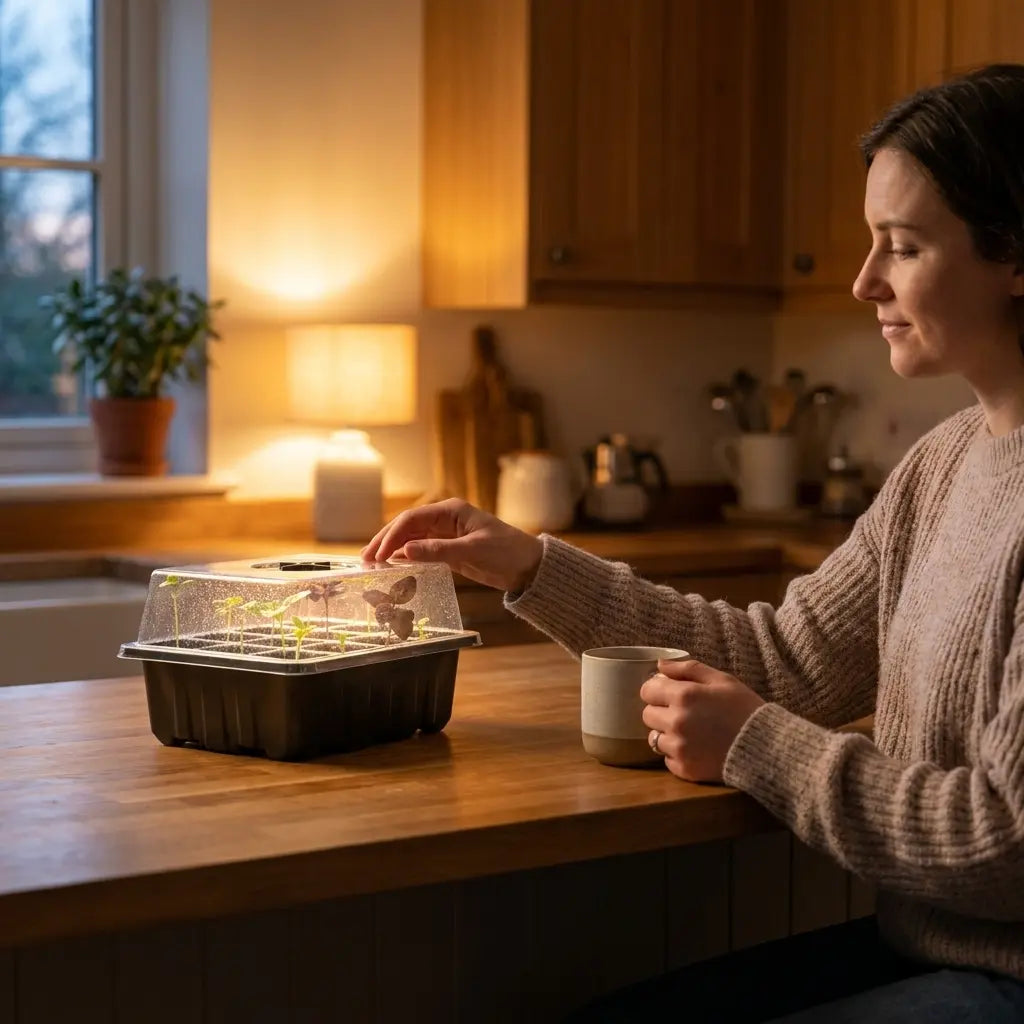
Microgreens also grow in small spaces. A single tray can sit on a kitchen counter or near a window. Because the system remains compact, couples can easily observe the plants throughout the day.
Another advantage is the clear growth cycle. Seeds sprout quickly, leaves appear within days, and harvesting follows soon after. This short cycle makes the activity feel rewarding without requiring long-term commitment.
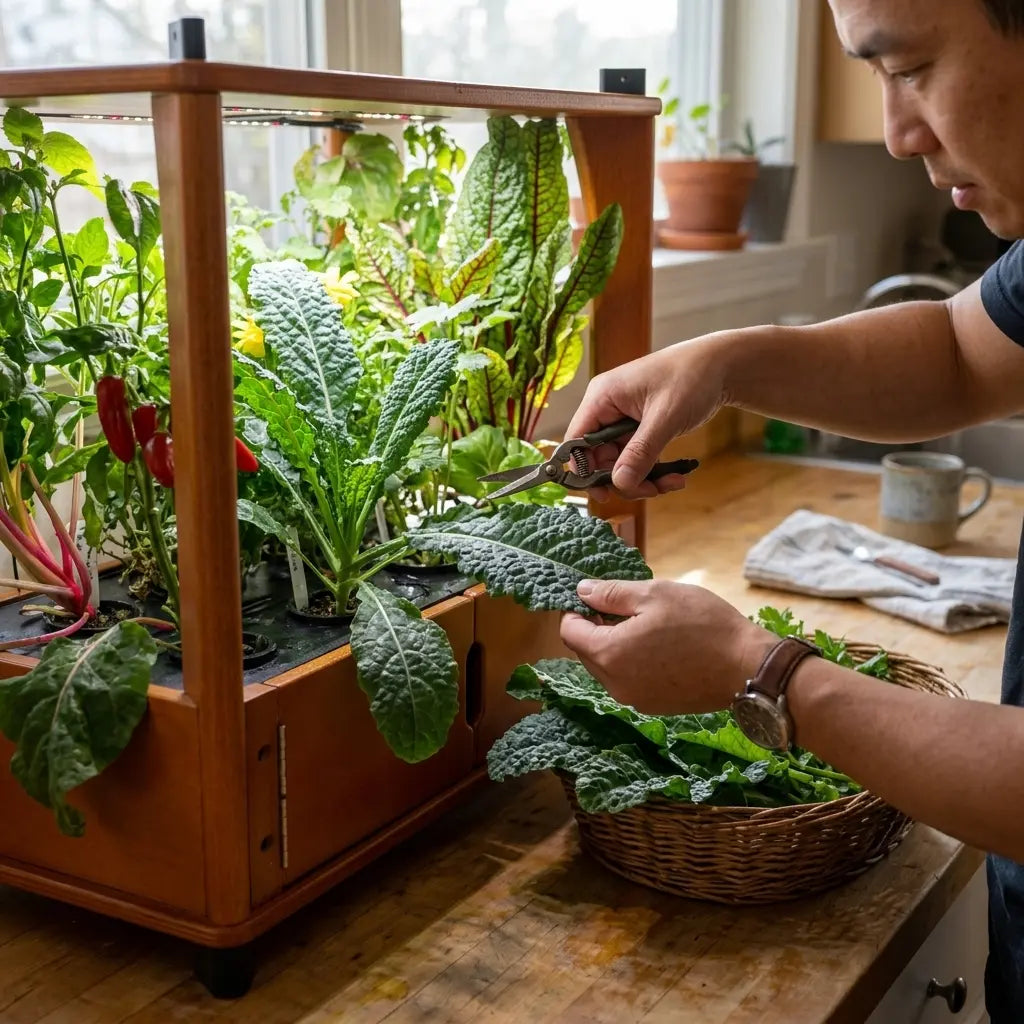
For many beginners, the most enjoyable moment arrives during harvest. Cutting fresh microgreens together and adding them to a meal creates an immediate connection between growing and cooking.
These small routines often become habits. Over time, couples may start another tray or experiment with different varieties. What begins as a simple indoor project can slowly turn into a shared hobby.
How Couples Can Start Growing Microgreens at Home
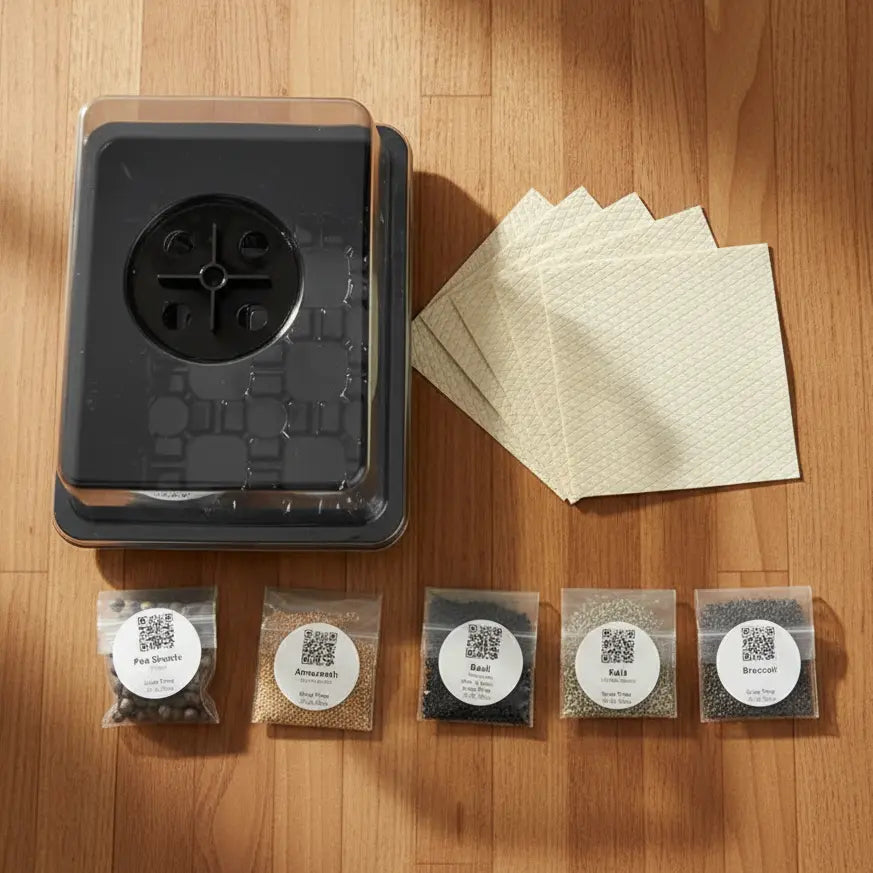
Starting to grow microgreens at home does not require a complicated setup. The process usually begins with a shallow tray, seeds, water, and a small source of light. Because the plants grow quickly, beginners can see progress within just a few days.
The basic idea is simple. Seeds are spread across the surface of a shallow growing medium. The tray stays slightly moist while the seeds germinate and develop their first leaves. Once the young plants reach a few inches in height, they are ready to harvest.
Most couples begin with a small routine that takes only a few minutes each day. One person may water the tray. The other may check how the plants are developing. Watching the first shoots appear often becomes the most exciting part of the process.
A typical microgreens growing routine looks like this:
- Place seeds evenly across a shallow tray
- Keep the surface slightly moist during germination
- Provide natural light or a simple indoor grow light
- Watch the seedlings grow over the next several days
- Harvest the greens once they reach a few inches tall
Because the growth cycle is short, this process repeats quickly. A new tray can be started while another one is ready for harvest. That continuous cycle makes microgreens one of the most approachable ways to begin indoor gardening.
If you are just starting, learning the fundamentals of microgreens for beginners can make the process even clearer and help avoid common early mistakes.
Common Beginner Mistakes When Growing Microgreens Together
Microgreens are simple to grow, but beginners sometimes run into small problems during the first few trays. These issues are usually easy to fix once people understand what microgreens need to grow well indoors.
One common mistake is expecting growth immediately. Seeds usually take a few days to germinate. During this early stage, it may appear that nothing is happening. In reality, the roots are developing below the surface before the first shoots appear.
Another frequent issue is inconsistent watering. Microgreens grow best when the growing medium stays evenly moist. Too little water slows growth, while too much water can create poor air circulation around the roots.
Lighting can also cause problems indoors. If microgreens do not receive enough light, the stems stretch and become thin. Providing steady light helps the young plants grow stronger and more upright.
Crowding the tray is another beginner challenge. When seeds are spread too densely, plants compete for light and airflow. Giving the seedlings a little space allows them to develop healthier leaves.
Some common beginner mistakes include:
- expecting seeds to sprout immediately
- inconsistent watering during early growth
- insufficient light indoors
- overcrowding seeds in the tray
- harvesting too early
These small mistakes are part of the learning process. Most couples quickly improve their routine after the first tray or two. With a little practice, growing microgreens at home becomes predictable and easy to maintain.

When Growing Microgreens Becomes a Shared Habit
Many couples start growing microgreens at home as a small experiment. The process feels simple at first. Seeds are planted in a tray, watered daily, and harvested within a week or two. Because the growth cycle is short, the results appear quickly.
Over time, this small activity often becomes part of a daily routine. One person may check the moisture level in the tray. The other may look for the first signs of sprouting. These small moments create a shared rhythm around the plants.
Harvesting is usually the most satisfying stage. Cutting fresh microgreens together and adding them to a meal connects the growing process directly to the kitchen. Even a small handful of greens can make the effort feel worthwhile.
Because microgreens grow so quickly, couples often start another tray soon after harvesting the first one. The process repeats naturally. Each new tray becomes easier to manage as the routine becomes familiar.
For beginners, this simplicity is one of the main reasons microgreens remain popular for indoor growing. They do not require large spaces or complex equipment. A small tray can continue producing fresh greens with only a few minutes of attention each day.
If you want to understand the full process and learn how beginners typically start growing microgreens indoors, the guide below explains the fundamentals in more detail.
→ Microgreens for Beginners: The Easiest Way to Grow Food Indoors

FAQ: Growing Microgreens at Home
Can beginners grow microgreens at home easily?
Yes. Microgreens are one of the easiest plants beginners can grow indoors because they require little space and usually reach harvest within 7–14 days.
Do microgreens need direct sunlight?
Microgreens grow well with natural window light or a simple indoor grow light. Consistent light helps seedlings grow stronger and prevents thin stems.
How much space do microgreens require?
Most trays used for growing microgreens are small and shallow. A single tray can sit on a kitchen counter, shelf, or windowsill.
How often should microgreens be watered?
Microgreens usually need light watering once or twice per day, depending on indoor humidity and airflow.
Learn More About Growing Microgreens
Growing microgreens at home is often the easiest way beginners start indoor gardening. The process is simple, fast, and easy to repeat once you understand the basics.
If you want to explore the full beginner process and understand how indoor microgreen systems work, the guide below explains everything step by step.
→ Microgreens for Beginners: The Easiest Way to Grow Food Indoors












0 comments