
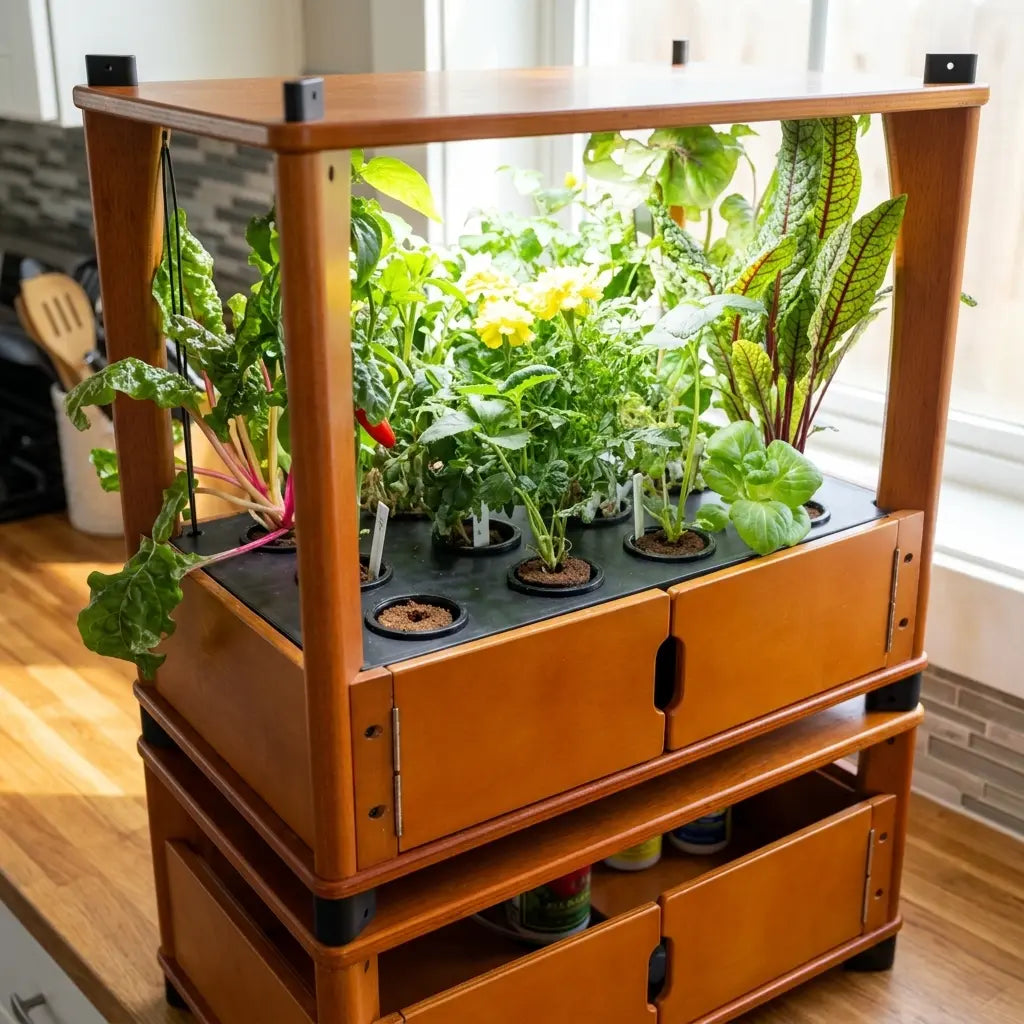
Every hydroponic system needs something to hold the plant's roots in place, since there is no soil doing that job. That something is the growing medium, and which one a system uses affects how often you water, how easily roots get the oxygen they need, and in at least one case, what you are breathing in while you set it up.
Three materials dominate home and commercial hydroponics: coco coir, clay pebbles, and rockwool. Each has a real, well-documented set of tradeoffs, and none of them is universally best. What changes the answer is the setup: a commercial greenhouse with a recirculating system has different needs than a countertop farm on a kitchen counter.
This comparison covers water retention, aeration, and safety for all three, since those are the three factors that matter most once a medium is actually in use rather than sitting in a bag on a shelf.
Germination is worth mentioning up front too. All three materials can host a seed successfully, but the medium a seed germinates in and the medium a mature plant's roots spend months in do not need to be the same choice, which is why many pre-seeded hydroponic products settle on whichever medium performs best across the entire lifecycle rather than optimizing for the first week alone.
What Actually Matters in a Growing Medium
Water retention determines how often a plant needs attention. A medium that holds moisture well tolerates a missed watering; one that drains quickly needs a more consistent schedule or an automated system to match.
Aeration is the flip side of the same coin. Roots need oxygen as much as they need water, and a medium that stays too saturated can suffocate roots even while technically providing plenty of moisture.
The two factors pull in opposite directions more often than not. A material dense enough to hold a lot of water tends to compress the air pockets roots need, while a material with excellent airflow tends to dry out fast. Finding a medium that manages both reasonably well, rather than maximizing one at the expense of the other, is really what this whole comparison comes down to.
Safety covers what the material is made from, how it is manufactured, and what handling it involves. This is the factor most buying guides skip entirely, and it is where the three options in this comparison differ most sharply.
Coco Coir
Coco coir is made from the fibrous husk of coconuts, a byproduct of the coconut industry that would otherwise go to waste. It is processed, washed, and often compressed into bricks or pre-formed plugs before sale.
Water retention is strong, holding moisture well between waterings while still draining excess. Aeration is good but not exceptional, striking a middle ground rather than excelling at either extreme.
Safety is where coco coir separates itself clearly from the other two. It is organic, renewable, fully compostable at the end of its life, and produces no dust or fiber irritation during normal handling. There is no manufacturing byproduct to worry about breathing in, and no landfill waste when a batch is finished.
The one real downside is that raw coco coir can bind calcium and magnesium unless it has been pre-buffered, which is why quality pre-seeded coco coir products specify that the buffering has already been done. Aquager's organic grow mediums ship pH-balanced for exactly this reason, removing that step for the grower.
Texture is also worth a mention, since it is the detail most comparisons skip. Coco coir feels close to a fine, dark potting soil, loose enough to let roots spread easily but structured enough to hold its shape in a net pot or grow plug. That familiarity matters for anyone coming from traditional soil gardening, since it looks and behaves like something they already recognize rather than an unfamiliar industrial material.
Clay Pebbles (LECA)
Clay pebbles, often sold under the name LECA for lightweight expanded clay aggregate, are made by heating clay to extremely high temperatures until it expands into round, porous pellets.
Aeration is the best of the three by a wide margin. The round shape and porous surface create enormous air pockets around the roots, which is why clay pebbles are the standard choice for ebb-and-flow and deep water culture systems built around a recirculating reservoir.
Water retention is the tradeoff, and it is a significant one. Clay pebbles hold very little moisture on their own, which means a system using them either needs frequent watering cycles or a reservoir constantly cycling water past the roots. Left alone for even a day or two without a fresh cycle, a clay-pebble medium dries out fast.
Safety is generally good. Clay pebbles are inert, chemically stable, and reusable almost indefinitely if rinsed clean between grows. The main practical downside is dust during the initial rinse, which is a minor nuisance rather than a genuine hazard, and the pellets are noticeably heavier than either coco coir or rockwool of the same volume.
Clay pebbles are also a common choice outside pure hydroponics, showing up as a top-dressing for houseplants and as a growing medium for orchids specifically, since orchid roots evolved to grow exposed to air rather than buried in dense soil. That crossover use is a good indicator of just how much this material prioritizes airflow over moisture retention.
Rockwool
Rockwool is manufactured by melting basalt rock and chalk at extremely high temperatures and spinning the molten material into fine fibers, similar in concept to fiberglass insulation. It is compressed into cubes, slabs, or starter plugs.
Water retention and aeration are both genuinely strong, which is rockwool's real advantage. It holds moisture evenly while still maintaining enough pore space for root oxygen, a balance neither coco coir nor clay pebbles matches quite as well, and it is why commercial greenhouses use it so widely for consistent, large-scale seed starting and cloning.
Safety is the category where rockwool needs real caveats. Cutting or handling dry rockwool releases fine mineral fibers that can irritate the eyes, skin, and respiratory tract, similar to fiberglass insulation, and manufacturer safety sheets recommend a dust mask and gloves when cutting slabs. Pre-soaked, wetted rockwool is far less of a concern than dry, freshly cut material.
Rockwool also does not biodegrade or compost. Once a growing cycle is done, used rockwool goes to a landfill, and it typically requires pre-soaking in pH-adjusted water before first use since raw rockwool starts at a very high pH that would otherwise stress young roots.
None of this makes rockwool a poor material. Commercial growers who cut and handle it as a routine part of the job have well-established protocols for doing so safely, and the consistency it offers across thousands of identical starts is genuinely valuable at that scale. The caveats above matter more for a home grower who is not set up with the same handling routine and is far less likely to own a dust mask rated for mineral fiber.
Side-by-Side Comparison
| Factor | Coco Coir | Clay Pebbles | Rockwool |
|---|---|---|---|
| Water retention | Strong | Weak | Strong |
| Aeration | Good | Excellent | Good |
| Renewable/compostable | Yes | No, but reusable | No |
| Handling safety | No irritation | Minor dust when rinsing | Dust mask recommended when cutting dry |
| Prep required | None if pre-buffered | Rinse before use | Pre-soak and pH adjust |

Why Coco Coir Wins for Most Home Growers
Clay pebbles make sense in a commercial or hobbyist setup built around a recirculating reservoir that keeps the medium wet on a schedule. Rockwool makes sense in a commercial greenhouse running thousands of identical starts where the handling precautions are already part of standard operating procedure.
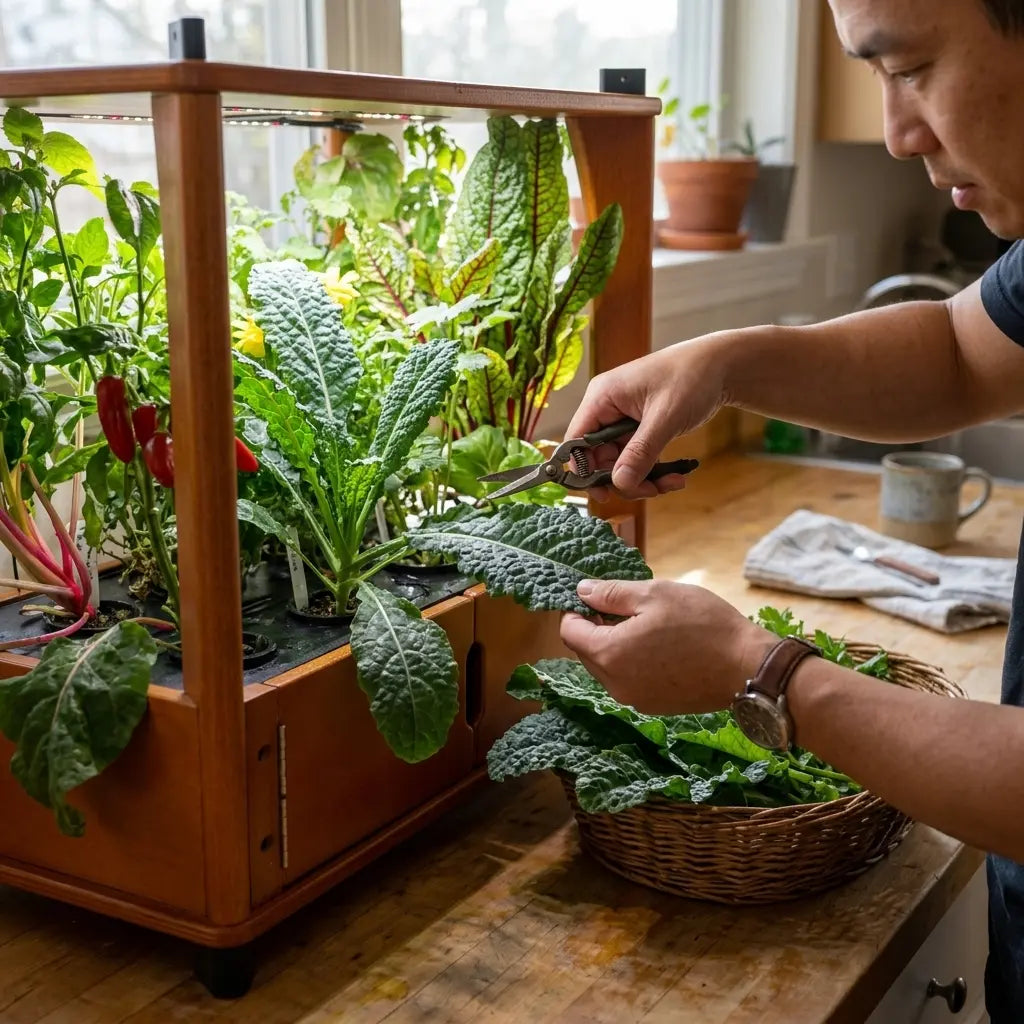
Neither assumption holds for a countertop system in a home kitchen. There is no recirculating reservoir cycling water past clay pebbles every few hours, and there is no reason to introduce a material that needs a dust mask and pre-soak step into a space where people are also cooking and eating.
Coco coir's water retention tolerates the more relaxed watering schedule of a home system, its aeration is more than adequate for herbs and leafy greens, and its safety profile means there is nothing to buffer against or protect yourself from beyond normal handling. It is also the only one of the three that composts at the end of its life instead of going to a landfill.
None of this means clay pebbles or rockwool are the wrong choice for every hobbyist. Someone building a larger, recirculating deep water culture system from scratch has genuine reasons to reach for clay pebbles, and a grower propagating dozens of cuttings at once may still prefer rockwool's consistency. The comparison changes once the system in question is a compact, pre-seeded countertop farm rather than a custom-built reservoir setup.
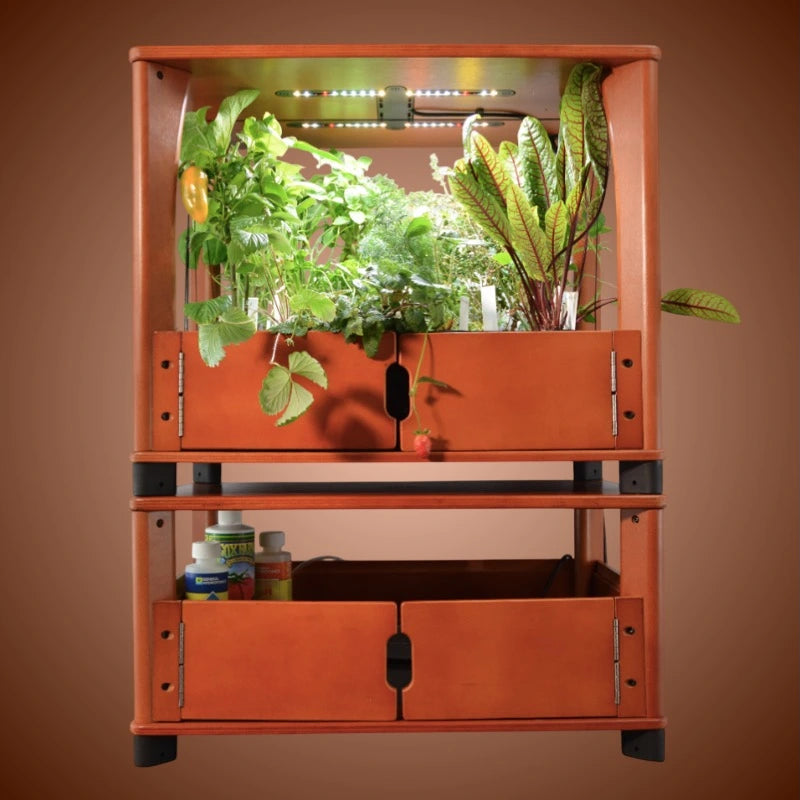
This is also why Aquager builds every pre-seeded grow medium from organic coco coir and peat rather than clay pebbles or rockwool. It matches how the system is actually used: a kitchen counter, not a commercial greenhouse, with no recirculating reservoir and no interest in handling precautions for a mineral fiber product.

Growing Medium FAQ
Which growing medium is safest to handle at home?
Coco coir, since it produces no dust or fiber irritation during normal handling, unlike rockwool, which requires a dust mask when cutting dry material.
Can I mix growing mediums in the same system?
It is possible but uncommon. Most home systems use one medium consistently since mixing complicates watering and aeration decisions without a clear benefit for a small setup.
Is rockwool actually dangerous to use?
Wetted, pre-soaked rockwool poses little risk. The real caution applies to cutting or handling dry rockwool, which releases fine mineral fibers that can irritate skin, eyes, and airways, similar to fiberglass insulation.
Why do clay pebbles need such frequent watering?
Their round, porous shape maximizes air pockets around the roots but holds very little moisture itself, which is an intentional tradeoff for systems built around a constantly recirculating reservoir.
Does coco coir need any special preparation before use?
Raw coco coir can bind calcium and magnesium unless it has been pre-buffered. Pre-seeded coco coir products, including Aquager's, ship already buffered and pH-balanced, so no extra preparation is needed.
Is coco coir reusable, or is it single-use?
Coco coir typically breaks down over one to two growing cycles and is then composted rather than reused, unlike clay pebbles, which can be rinsed and reused many times over.
What happens to used rockwool and clay pebbles when a grow is finished?
Clay pebbles can be rinsed and reused indefinitely. Rockwool does not biodegrade or compost and is typically discarded to a landfill once it breaks down.
Does the growing medium affect how fast a plant reaches harvest?
Grow time is driven mostly by the plant variety itself rather than the medium, though a medium with poor aeration or inconsistent moisture can slow growth by stressing the roots. Our full catalog of grow times for every herb and vegetable Aquager sells assumes a properly buffered coco coir medium as the baseline.
Do herbs and vegetables have different medium preferences?
Not meaningfully at the home growing scale. The same coco coir medium works well across leafy greens, culinary herbs, and woody perennials, which is part of why it suits a mixed countertop farm better than a medium tuned for one specific plant type.
The Right Medium for the System You Actually Have
Water retention, aeration, and safety point in different directions depending on the system. Clay pebbles reward a recirculating reservoir, rockwool rewards commercial-scale consistency, and coco coir rewards a home setup that needs to be forgiving, safe, and low-maintenance.
For a countertop hydroponic farm in a kitchen, that last set of priorities is the one that matters, which is why coco coir remains the standard choice for home growers and the medium behind every Aquager Home Farm.
For more on getting a new system running well from the start, our beginner's guide to setting up hydroponics covers the basics beyond just the growing medium.
Author: Aquager · Published: July 5, 2026 · Updated: July 5, 2026













0 comments