
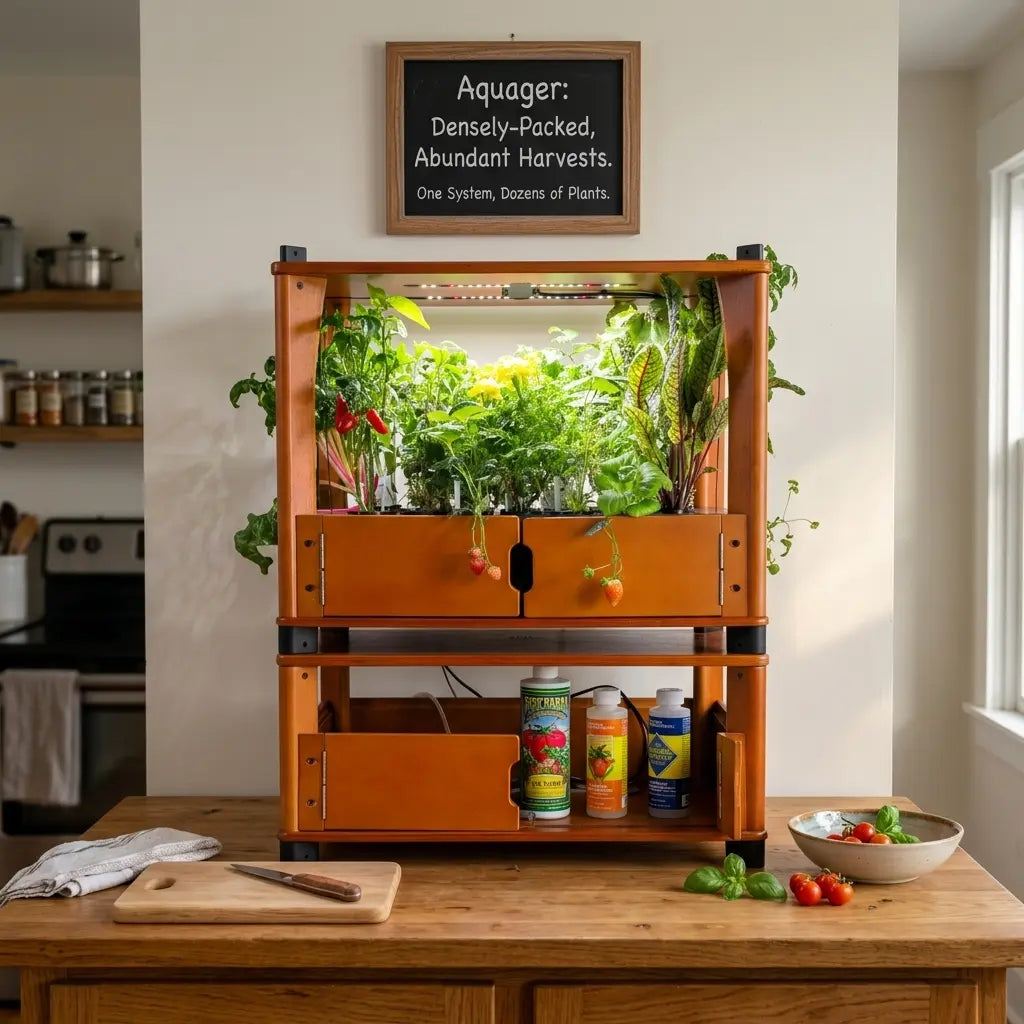
Outdoor gardening runs on a calendar dictated by frost dates, last-freeze warnings, and a narrow window between too cold and too hot. Indoor hydroponic growing mostly sidesteps that calendar entirely, since a climate-controlled kitchen holds a steady temperature no matter what the forecast says outside.
That does not mean every plant behaves the same way once it is growing. Grow time, ideal temperature range, and light needs still vary widely from a 30-day watercress harvest to 90 days for rosemary, and knowing those differences up front is the difference between a productive tray and a disappointing one.
Most gardening advice bundles this information into an outdoor planting calendar built around zip codes and frost dates, which is genuinely useful information for a backyard bed but mostly irrelevant to a countertop farm that never sees an actual frost. This catalog exists to fill that gap with information that is actually relevant to how these plants grow indoors.
This catalog covers all 35 herb and vegetable varieties Aquager grows, organized into five groups based on how they actually behave rather than an outdoor planting season that does not apply indoors. Each entry lists grow time, germination window, ideal temperature, and light needs.
A note on the temperature and light figures: Aquager's own listings confirm grow time and a 7 to 14 day germination window for every variety here. The temperature and light ranges reflect standard, well-established growing conditions for each plant type, provided as general guidance rather than a lab-measured spec for each individual seed pack.
Grouping by growth behavior rather than calendar month also makes this reference more durable. A grow time of 50 days is true in January, June, or October in a climate-controlled kitchen, while a planting calendar tied to outdoor frost dates would need updating every time you moved, or every time an unusually warm or cold season shifted the usual dates.
How to Use This Catalog
Grow time is the number of days from a pre-seeded grow medium to a usable first harvest, as listed on each product page. Germination, the period before a visible sprout appears, runs 7 to 14 days across every variety in Aquager's catalog, since all of them ship in the same pre-seeded organic coco coir and peat mediums.
Ideal temperature is the range where a plant grows fastest and stays healthiest, not the range where it merely survives. Most varieties tolerate a wider window than listed, but growth slows noticeably outside it.
The five groups below are ordered roughly from fastest to slowest overall, starting with leafy vegetables that reach harvest in under two months and ending with woody perennials that take a full season before their first cutting but then keep producing for years without replanting.
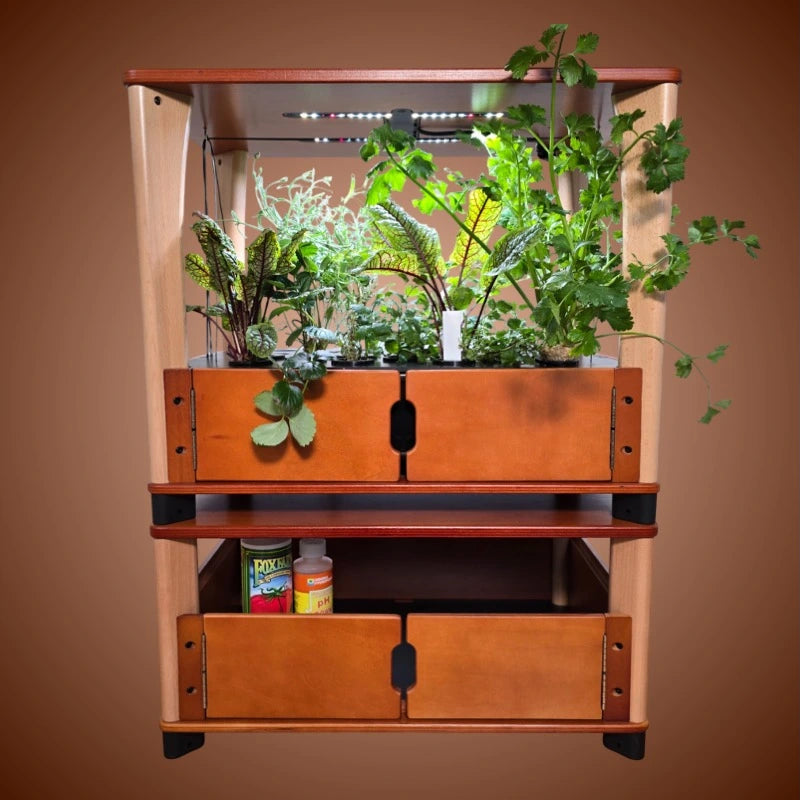
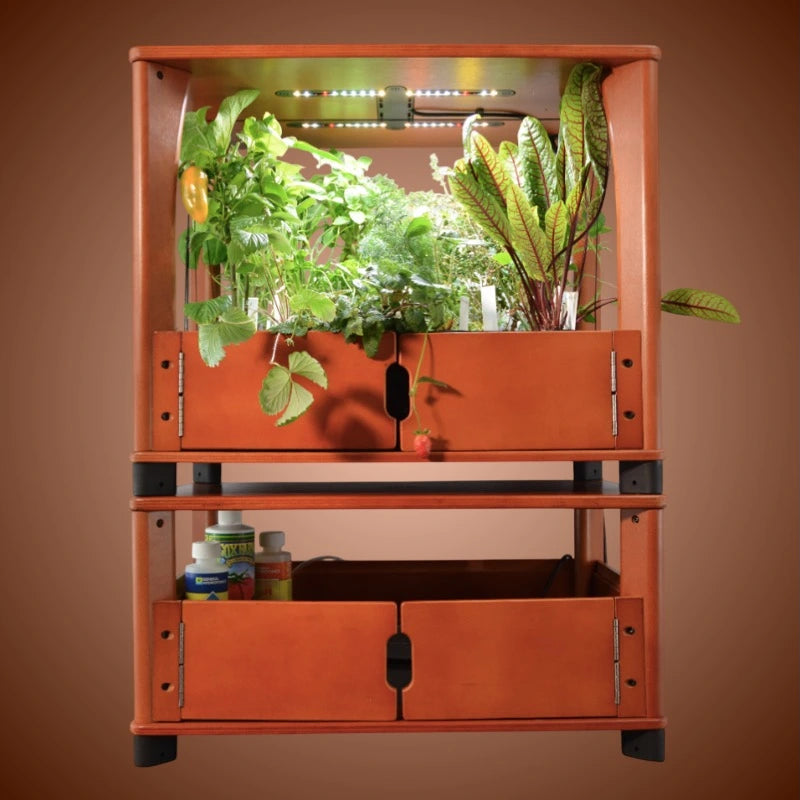
Light needs are given as hours of moderate to bright light per day. An Aquager Home Farm's built-in full spectrum LED grow lights are designed to cover the higher end of these ranges automatically, which removes most of the guesswork of matching a plant to a windowsill.
Cool-Season Leafy Vegetables
This group tolerates cooler temperatures well and can bolt, meaning it sends up a flower stalk and turns bitter, if kept too warm for too long. Several actually improve in flavor after cooler exposure.
Ideal temperature: 60 to 70°F. Light needs: 12 to 14 hours of moderate to bright light daily.
| Plant | Grow Time | Germination |
|---|---|---|
| Arugula (Astro) | 40 days | 7-14 days |
| Spinach (Space) | 40 days | 7-14 days |
| Tatsoi | 45 days | 7-14 days |
| Sorrel (Red Veined) | 50 days | 7-14 days |
| Bok Choy (Little Shanghai) | 50 days | 7-14 days |
| Chard (Firebird) | 60 days | 7-14 days |
| Chard (Gold) | 60 days | 7-14 days |
| Kale (Frisé Rouge) | 60 days | 7-14 days |
| Kale (Mamba) | 60 days | 7-14 days |
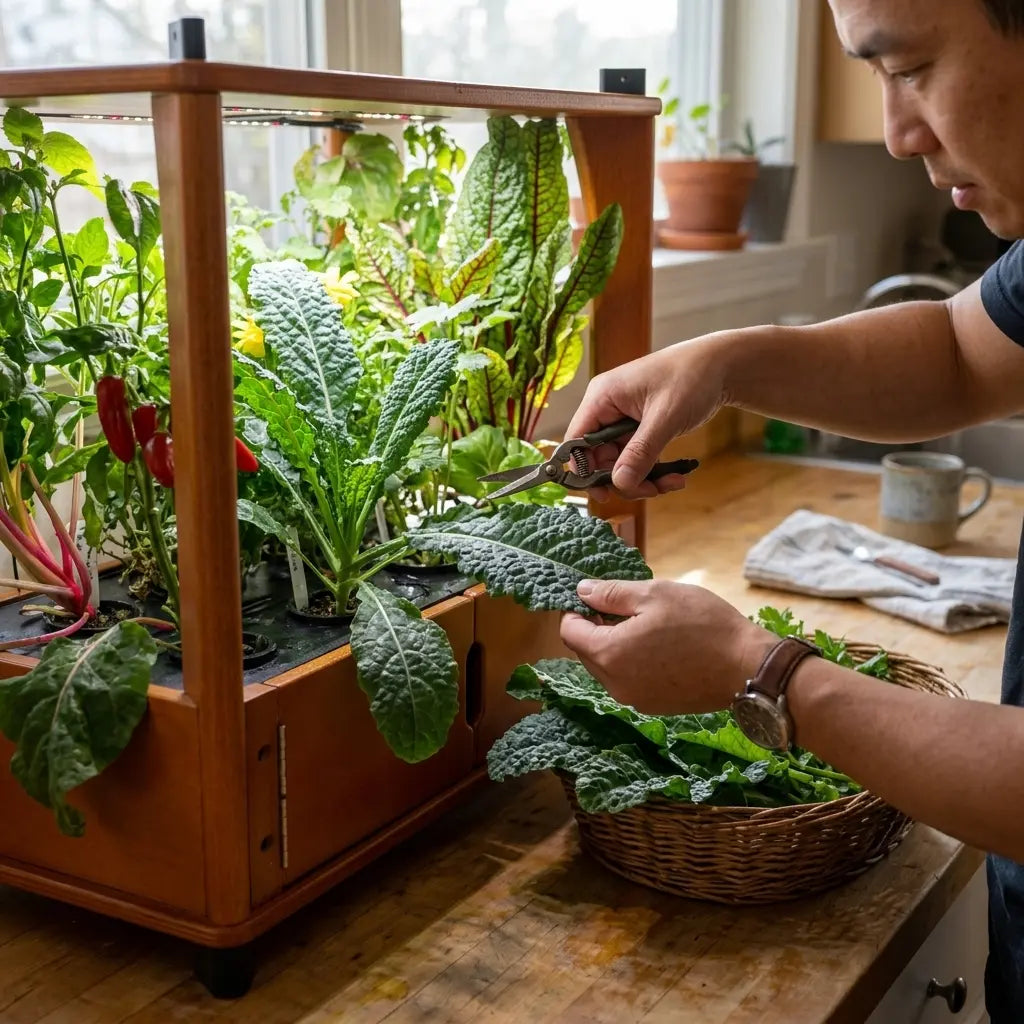
Arugula and spinach are the fastest options in this group and a good starting point if you want an early win. Both kale varieties and chard reward patience with a longer cut-and-come-again harvest window once they mature.
Most of this group shares a cut-and-come-again habit, meaning a single tray can be harvested repeatedly over several weeks rather than pulled all at once. Bok choy and tatsoi are the two most heat- and cold-tolerant of the nine, holding their texture and flavor across a wider swing in kitchen temperature than the others.
Mild Cool-Season Culinary Herbs
This group leans toward the herbs used more as a supporting flavor than a main ingredient: garnishes, aromatics, and soup bases. Most tolerate cooler kitchen temperatures without complaint.
Ideal temperature: 60 to 72°F. Light needs: 12 to 14 hours of moderate to bright light daily.
| Plant | Grow Time | Germination |
|---|---|---|
| Watercress | 30 days | 7-14 days |
| Dill (Ella) | 50 days | 7-14 days |
| Dill (Bouquet) | 50 days | 7-14 days |
| Fennel (Bronze) | 50 days | 7-14 days |
| Chives (Staro) | 50 days | 7-14 days |
| Chervil (Fine Curled) | 60 days | 7-14 days |
| Parsley (Giant of Italy) | 75 days | 7-14 days |
| Celery (Cutting) | 80 days | 7-14 days |
Chives and dill are the easiest starting points here, both fast and forgiving. Parsley and celery take real patience, closer to three months than one, so they reward starting early rather than waiting until a specific dish calls for them. For a timing example built around this exact group, our guide to planting dill, chives, and parsley for an Easter harvest walks through working backward from a target date.
Fennel and chervil are the two most overlooked plants in this group, both slower to find in a grocery store than the more common herbs around them, and both reward a fresh harvest more noticeably than something like parsley, which holds up reasonably well even a few days after being cut.
Basil Family: Warm-Season Favorites
Basil is the single most requested herb in Aquager's catalog, and it comes in seven distinct varieties, each suited to a different style of cooking. All are warm-season plants that grow noticeably faster and bushier in a warm kitchen than a cool one.
Ideal temperature: 70 to 85°F. Light needs: 14 to 16 hours of bright light daily.
| Plant | Grow Time | Germination |
|---|---|---|
| Basil (Genovese Aroma 2) | 50 days | 7-14 days |
| Basil (Lime) | 50 days | 7-14 days |
| Basil (Aromatto) | 50 days | 7-14 days |
| Basil (Aya Prospera) | 50 days | 7-14 days |
| Basil (Red Rubin) | 55 days | 7-14 days |
| Basil (Sweet Thai) | 65 days | 7-14 days |
| Basil (Holy Tulsi - Kapoor) | 70 days | 7-14 days |
Genovese, Lime, Aromatto, and Aya Prospera are the fastest of the seven at 50 days, with Aya Prospera bred specifically for disease resistance in humid indoor environments. For a full breakdown of flavor, culinary use, and which variety to start with first, see our complete guide to all seven Aquager basil varieties.
Sweet Thai and Holy Tulsi take noticeably longer than the other five, 65 and 70 days respectively, and both are also the most heat-loving of the group, growing fastest in a warm kitchen rather than a cool one. Neither is a true substitute for Genovese in an Italian dish, but both fill a role none of the other basils can.
Warm-Season Aromatic Herbs
This group covers herbs grown more for tea, wellness, and pollinator appeal than everyday cooking, though several cross over into the kitchen too. Most are forgiving plants that tolerate a wider range of conditions than the basil family.
Ideal temperature: 65 to 80°F. Light needs: 12 to 15 hours of moderate to bright light daily.
| Plant | Grow Time | Germination |
|---|---|---|
| Catnip | 50 days | 7-14 days |
| Borage | 50 days | 7-14 days |
| Lemon Balm | 55 days | 7-14 days |
| Stevia | 60 days | 7-14 days |
| Red Amaranth | 80 days | 7-14 days |
Catnip and borage are the most forgiving plants in this entire catalog, tolerant of a wide range of conditions and quick to recover from a rough start. Red Amaranth is the outlier, both in its 80 day grow time and its striking burgundy foliage that doubles as a garden centerpiece.
Lemon balm and stevia are both worth growing for tea rather than savory cooking, and both hold their flavor best when harvested fresh rather than dried and stored, which is a real advantage of growing them at home over buying either dried at a store.

Woody Mediterranean Perennials
This is the patience group. Every plant here takes 90 days to a first real harvest, longer than anything else in the catalog, but each is a true perennial that keeps producing for years once established, unlike the annual herbs and vegetables above.
Ideal temperature: 65 to 80°F. Light needs: 14 to 16 hours of bright light daily, with tolerance for drier conditions between waterings.
| Plant | Grow Time | Germination |
|---|---|---|
| Marjoram (Zaatar) | 60 days | 7-14 days |
| Oregano (Greek) | 60 days | 7-14 days |
| Thyme (Summer) | 60 days | 7-14 days |
| Lavender (Munstead) | 90 days | 7-14 days |
| Rosemary | 90 days | 7-14 days |
| Sage (Common) | 90 days | 7-14 days |
Marjoram, oregano, and thyme reach a usable harvest faster than lavender, rosemary, and sage, though all six are worth starting sooner rather than later given how long the wait is. Once established, this group needs the least ongoing replanting of anything in the catalog.
All six are also the most drought-tolerant plants Aquager sells, meaning a missed watering or a longer-than-usual stretch between nutrient checks is far less likely to damage them than it would a fast-growing leafy green. That resilience is part of why they suit a long-term, low-maintenance tray rather than one you rotate through quickly.
Building a Rotation Across All Five Groups
A single Aquager Home Farm runs 24 plants at once, which is enough room to mix fast growers with slow ones so something is always close to harvest. Starting a tray of 40-day arugula alongside a 90-day rosemary means an early win while the slower plant works in the background.
Grow time is also a useful filter when deciding what to start first. Watercress at 30 days is the fastest single variety in this entire catalog, while rosemary, sage, and lavender at 90 days are the longest. Anyone new to indoor growing benefits from starting with something in the 40 to 55 day range, long enough to feel like a real harvest and short enough not to test patience.
A practical rotation might pair one fast leafy green, one basil variety, and one woody perennial in the same 24-plant farm. The leafy green and basil both cycle through in a matter of weeks and can be replanted repeatedly, while the perennial slot stays put for years and slowly turns into the most reliable, lowest-effort plant in the entire setup.
Because every variety in this catalog uses the same pre-seeded organic grow medium format, mixing categories in one farm does not require different setup steps for different plants. The only real variable to manage is how warm the kitchen runs, since that affects how fast the warm-season plants in particular move through their grow time.
If you are setting up a system for the first time, our beginner's guide to setting up hydroponics covers the basics of getting any of these 35 varieties from grow medium to first harvest.

Herb and Vegetable Catalog FAQ
What is the fastest herb or vegetable to grow in this catalog?
Watercress, at just 30 days from grow medium to first harvest, is the fastest variety Aquager offers.
What takes the longest to grow?
Lavender, rosemary, and sage each take about 90 days to reach a first usable harvest, though all three are long-lived perennials afterward.
Does germination time vary between plants?
No. Every variety in this catalog germinates in 7 to 14 days, since all of them ship in the same pre-seeded organic coco coir and peat grow mediums.
Do I need to worry about outdoor planting seasons with an indoor system?
Not in the way outdoor gardeners do. A climate-controlled kitchen and built-in grow lights mean most of these varieties can be started any time of year, though warm-season plants like basil will grow fastest in a warmer room.
Can I grow cool-season and warm-season plants in the same farm at the same time?
Yes. A typical kitchen temperature sits within the tolerable range for both groups, even though each grows fastest closer to its own ideal range.
Which plants are best for a first-time grower?
Arugula, spinach, chives, and basil are all fast, forgiving choices in the 40 to 50 day range that build confidence before tackling a 90-day perennial.
How many of these varieties can I grow in a single farm?
A standard Aquager Home Farm runs 24 plants at once, enough room to mix several categories from this catalog in the same tray, expandable up to 96 plants for a larger rotation.
Do the woody perennials need to be replanted every year like the herbs and vegetables?
No. Marjoram, oregano, thyme, lavender, rosemary, and sage are true perennials that keep producing for years once established, unlike the annual herbs and vegetables elsewhere in this catalog.
Is it better to grow one plant per tray or mix varieties?
Mixing is generally fine as long as the plants share a similar light and temperature preference. Pairing a fast leafy green with a warm-season basil in the same farm works well since both tolerate typical kitchen conditions; pairing a heat-loving basil directly next to a cool-preferring plant is less ideal, though usually still workable given the LED lighting and steady indoor temperature most kitchens hold.
Where do the temperature and light figures in this catalog come from?
Grow time and germination are confirmed on each Aquager product listing. Temperature and light ranges reflect standard, well-established growing conditions for each plant type rather than a lab-measured spec unique to each seed pack.
One Catalog, Dozens of Harvests
Thirty-five varieties across five groups is enough to run a genuinely rotating kitchen garden, not just a single tray of basil that gets replanted the same way every time. Grow time is the single most useful number for planning what to start next, and the temperature and light groupings above make it easy to match a plant to how your kitchen actually feels.
Whether the plan is a fast 30-day watercress harvest or a 90-day rosemary plant that will still be producing years from now, the same Aquager Home Farm handles all of it, with no separate setup required for each category.
Bookmark this catalog rather than trying to memorize 35 grow times. New varieties occasionally join the lineup, and the fastest way to plan a new tray is checking the relevant group above rather than guessing at how long a plant you have not grown before is likely to take.
Author: Aquager · Published: July 5, 2026 · Updated: July 5, 2026












0 comments