
Most hydroponic failures are not caused by a bad plant or a broken system. They come from a small handful of habits, usually formed in the first few weeks, that quietly work against the plant rather than for it.
None of the ten mistakes below are exotic or hard to fix. Most take less than a minute to correct once you know to look for them, and several are things that feel like the right instinct but actually cause the exact problem they are meant to prevent.
This list is different from our guide on why plants fail indoors, which compares hydroponics to soil growing in general. This one assumes you have already chosen hydroponics and walks through the specific, avoidable mistakes that trip up new growers once a system is already running.
Several of these mistakes share a common thread: they are overcorrections. A grower notices something that looks slightly off, panics, and makes a change that creates a bigger problem than the one they were trying to solve. Recognizing that pattern in yourself is often as useful as knowing the individual fixes below.
1. Skipping pH Checks
Nutrient uptake in hydroponics is far more sensitive to pH than in soil, since there is no soil buffer to correct an imbalance. Most herbs and vegetables want a pH between 5.5 and 6.5, and even a small drift outside that range can lock nutrients out of reach of the roots regardless of how much fertilizer is in the water.
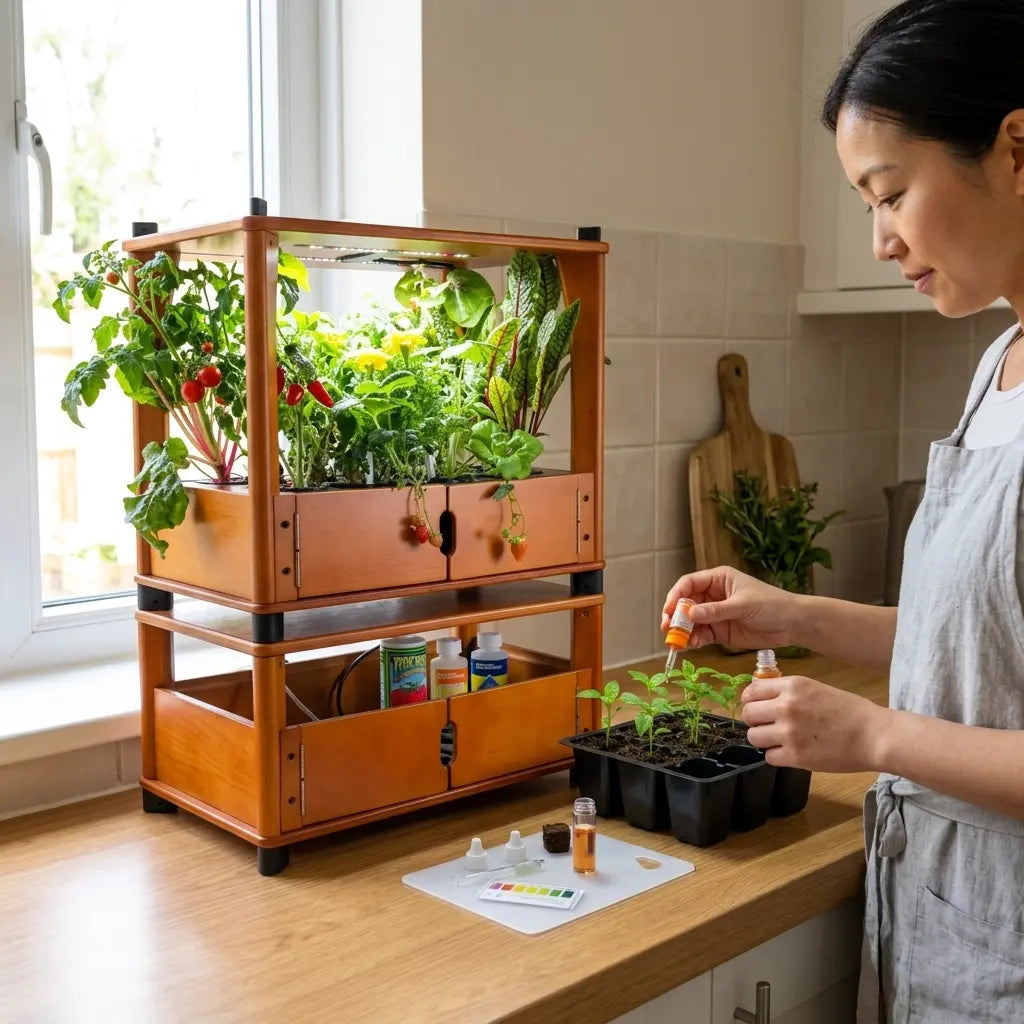
The fix is a weekly pH check with a simple test kit, adjusting up or down as needed. Aquager's pH Control Kit includes a test indicator plus pH up and down solution, which covers this check in under a minute once it becomes routine.
Skipping this step is easy to justify early on, since a system can run for a week or two on borderline pH without any visible symptoms. The trouble is that by the time yellowing or stunted growth actually shows up, the plant has already been struggling for days, which makes pH the single most valuable habit to build early rather than after something looks wrong.
2. Ignoring Water Temperature
Water that runs too warm, generally above 75 to 80°F, holds less dissolved oxygen and becomes a much friendlier environment for the pathogens behind root rot. Water that runs too cold slows nutrient uptake and can stall growth almost as effectively as no nutrients at all.
The ideal range for most home systems is 65 to 75°F, which a typical kitchen counter usually holds without any extra equipment. The fix is mostly about placement: keep the reservoir away from direct sun, a stove, or a heating vent, all of which can push water temperature outside the ideal range without anyone noticing.
A kitchen counter is usually already close to ideal, which is part of why countertop systems tend to have fewer temperature-related issues than a garage or greenhouse setup exposed to bigger swings between day and night.
3. Overfeeding Nutrients
More fertilizer is not better fertilizer. Overfeeding causes a buildup of mineral salts in the growing medium, which shows up as browned, crispy leaf tips and edges, commonly called nutrient burn.
The fix is following the dosing instructions on the label rather than estimating, and starting new plants at half strength for the first couple of weeks. Aquager's Plant Nutrients come with clear dosing guidance for exactly this reason.
This mistake is especially common among first-time growers who assume that a struggling plant needs more food, when the visible symptoms of overfeeding and underfeeding can look surprisingly similar at first glance. Checking the medium for a visible salt crust on the surface is a quick way to confirm overfeeding before adding anything else.
4. Underfeeding and Missing Nutrient Deficiency Signs
The opposite mistake is just as common. Yellowing lower leaves usually point to a nitrogen deficiency, while a purplish tint can signal a phosphorus shortage, and both are easy to miss if a grower is not checking leaf color regularly.
The fix is sticking to a consistent feeding schedule rather than feeding only when a plant already looks unhealthy, and learning the handful of visual cues that show up before a deficiency becomes serious. A PPM/EC meter takes the guesswork out of whether the nutrient solution is actually at the right strength.
5. Letting the Reservoir Run Dry
A reservoir that runs dry exposes roots to air for hours or days at a stretch, which is far more stressful to a hydroponic root system than it would be to a plant growing in soil, since hydroponic roots are not built to tolerate drying out the way soil-anchored roots are.
The fix is simply checking water level on a regular schedule rather than waiting for a visible problem. A larger water tank reservoir also buys more time between refills, which matters if a weekly check is more realistic than a daily one.
6. Ignoring Root Oxygenation
Roots need oxygen from the water itself, not just nutrients, and stagnant, unmoving water depletes dissolved oxygen fast, especially once water temperature rises. Low-oxygen, warm water is the single biggest contributor to hydroponic root rot, which shows up as roots turning brown, slimy, and eventually foul-smelling instead of staying white and firm.
The fix is keeping water moving with an air pump and air stone, which continuously replenishes dissolved oxygen around the root zone. Aquager's air pump and air stone handle this automatically once installed.
Root rot rarely appears overnight. It usually develops over several days of poor oxygenation, which means catching it early, a slight discoloration or a faint off smell, gives a real chance to correct the water conditions before the damage spreads to the rest of the root system.

7. Handling Roots Too Roughly
Moving a seedling, adjusting a net pot, or disturbing an established root ball more than necessary can trigger transplant shock, which shows up as sudden wilting or stalled growth even though nothing else in the system has changed.
The fix is minimizing root disturbance once a plant is established, and choosing a pre-seeded system that avoids a separate transplanting step in the first place. Since Aquager's grow mediums are pre-seeded in place, roots grow directly into their permanent spot without ever needing to be moved.
Growers coming from traditional soil gardening sometimes bring over a habit of transplanting seedlings from a small starter pot into a larger one, which is a normal and necessary step in soil but an unnecessary risk in a pre-seeded hydroponic system where that transition simply does not need to happen.
8. Letting Algae Take Over the Reservoir
Algae needs the same three things a plant does: light, water, and nutrients, which means any nutrient reservoir exposed to light is a candidate for an algae bloom. Algae competes with the plant for nutrients and can clog smaller components once it builds up.
The fix is blocking light from reaching the reservoir and grow medium surface entirely. Light-blocking net pot covers handle this at the plant level, and keeping any reservoir opaque or covered prevents the problem before it starts.
A small amount of algae is mostly a cosmetic nuisance, showing up as a green film on exposed surfaces, but left unchecked it competes directly with the plant for the same nutrients in the water, which is worth preventing rather than cleaning up after the fact.
9. Checking on the System Constantly
It is possible to interfere with a hydroponic system by paying too much attention to it. Constantly adjusting pH, changing nutrient strength, or moving plants around in response to normal day-to-day variation introduces more instability than it solves.
The fix is settling into a consistent schedule, checking pH and nutrient levels on a set interval rather than reactively, and resisting the urge to make a change every time something looks slightly different than it did the day before.

10. Giving Up During Normal Root Establishment
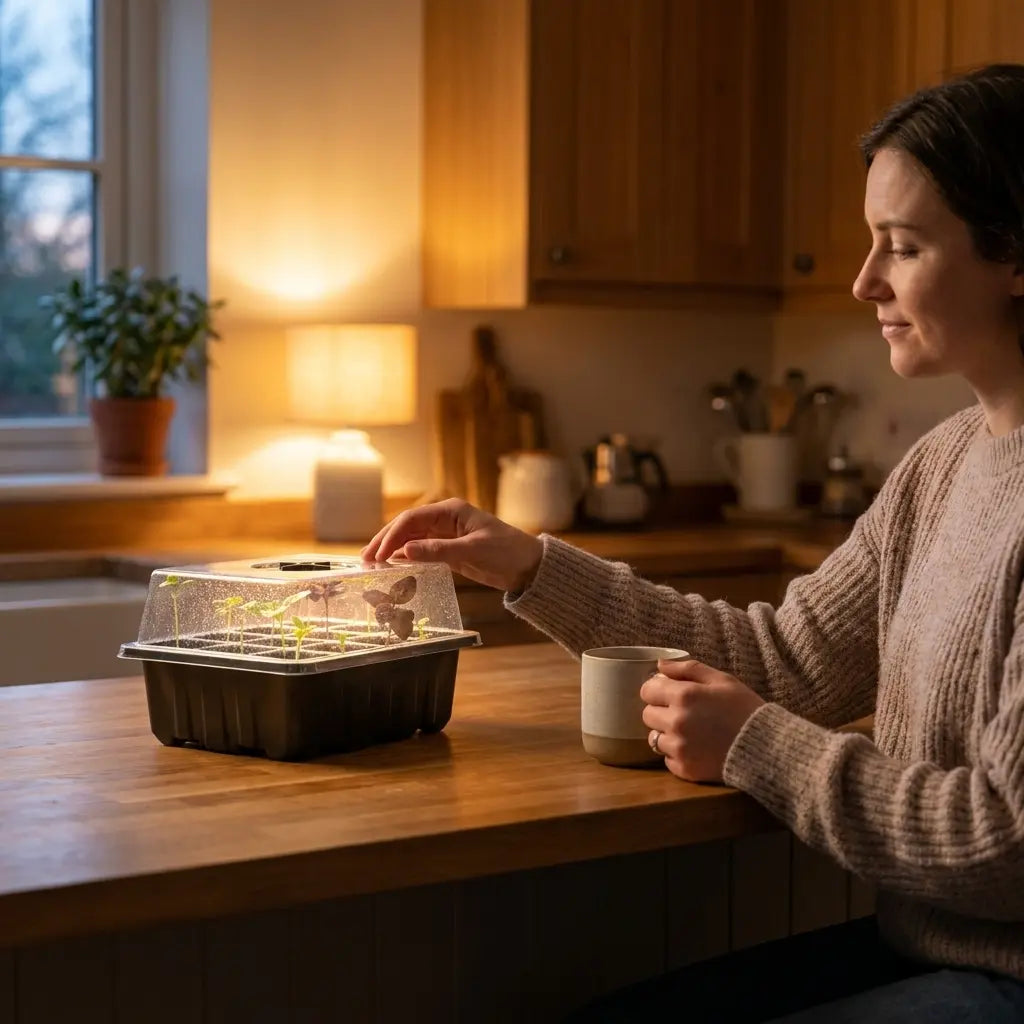
This is the mistake that ends the most hydroponic gardens before they ever really start. Germination takes 7 to 14 days across nearly every herb and vegetable, and for much of that window there is genuinely nothing to see above the grow medium, even though roots are actively establishing underneath it.
New growers frequently interpret that quiet period as failure, then start overwatering, over-adjusting, or digging into the medium to check on progress, all of which disrupts the exact process they are worried isn't happening. The fix is trusting the timeline and leaving the tray alone during the germination window. Our full grow time catalog lists the expected germination and harvest window for every variety, so there is a specific number to check against instead of guessing.
This mistake compounds quickly, since digging into a grow medium to check on a seed almost always does more damage than the wait itself would have. A seed that would have sprouted on day nine can easily be set back or killed by a well-meaning check on day five.
Hydroponic Mistakes FAQ
What is the single most common hydroponic mistake?
Giving up during normal root establishment, since the first 7 to 14 days often show no visible growth above the medium even though the plant is developing normally underneath it.
How do I know if my hydroponic plant has root rot?
Healthy roots are white and firm. Roots affected by rot turn brown or tan, feel slimy, and often develop a noticeable foul smell, usually caused by warm, stagnant, low-oxygen water.
What pH should I keep my hydroponic system at?
Most herbs and vegetables do best between 5.5 and 6.5. Checking weekly with a simple test kit catches drift before it affects nutrient uptake.
Can I fix nutrient burn once it happens?
Flushing the growing medium with plain, pH-balanced water and reducing nutrient strength going forward usually stops further damage, though already-burned leaf tips will not recover their original color.
Do I need an air pump for a small home system?
It helps considerably. Even a small air pump and air stone keep dissolved oxygen levels higher around the roots, which meaningfully lowers the risk of root rot compared to still water.
How often should I check my hydroponic system?
A brief daily glance for water level plus a weekly pH and nutrient check is enough for most home systems, without needing to intervene every single day.
Is it normal for nothing to happen for the first week or two?
Yes. Germination runs 7 to 14 days for nearly every variety, and that window is when the most damage from impatience and over-adjustment tends to happen.
Fewer Mistakes, More Harvests
None of these ten mistakes require expensive fixes or advanced know-how. Most come down to checking the right thing on a consistent schedule and resisting the urge to intervene when nothing visible is happening.
Taken together, these ten mistakes cluster into three underlying habits: not checking the right things on a regular schedule, reacting too strongly to normal variation, and skipping the specific piece of equipment that would have prevented the problem automatically. Fixing any one of the three tends to resolve several of the individual mistakes above at once.
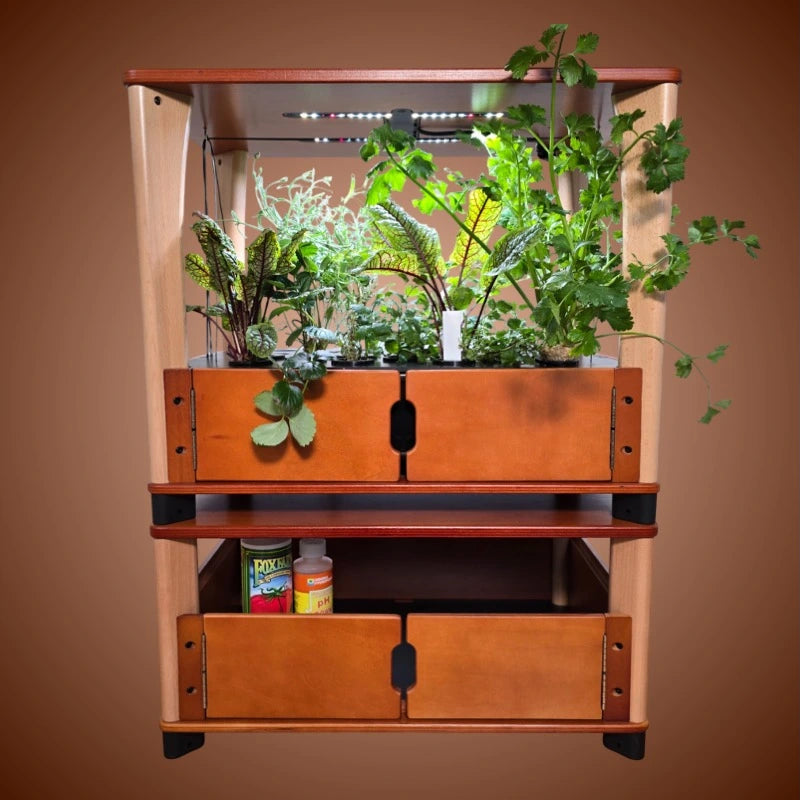
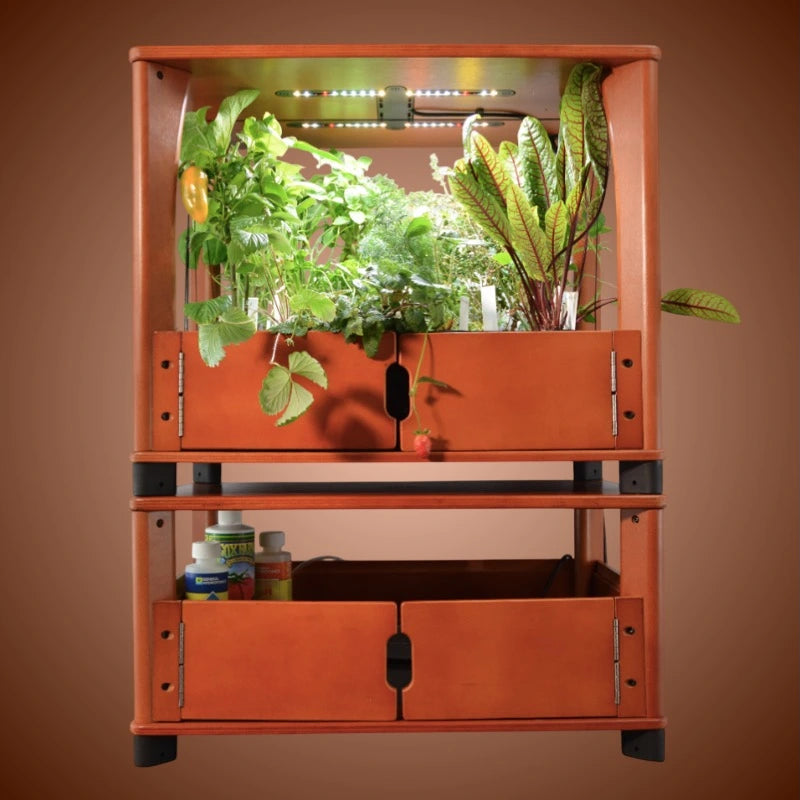
A well-designed system removes several of these mistakes before they can happen at all. The Aquager Home Farm ships with pre-seeded, pH-balanced grow mediums and a built-in light schedule, which handles two of the most common failure points automatically.
If you are just getting started, our beginner's guide to setting up hydroponics covers the basics before any of these mistakes have a chance to come up.
Author: Aquager · Published: July 5, 2026 · Updated: July 5, 2026












0 comments