
You’ve been thinking about getting a home farm. You also travel for the holidays. And somewhere in the back of your mind, those two facts seem to conflict.
They don’t. Not with a hydroponic system.
Indoor plants care is genuinely different when the system is reservoir-based, timer-controlled, and requires no soil. The Aquager Home Farm was designed for people with real lives — including people who take trips. This guide walks through what actually needs to happen for a 3-day weekend, a one-week holiday, a two-week Christmas trip, and longer. The answer, in each case, is less than you think.
Why Hydroponic Plants Handle Travel Better Than Soil Plants
The reason soil-based indoor plants struggle when you travel is simple: soil dries out. The plants are entirely dependent on you adding water at regular intervals, and any gap longer than a few days puts them under stress.
A hydroponic system doesn’t work that way. The plants’ roots sit in or above a reservoir of nutrient solution. The reservoir holds water. The system draws from it continuously and automatically. There is no soil to dry out, no watering schedule in the traditional sense — only a water level to monitor once a week.
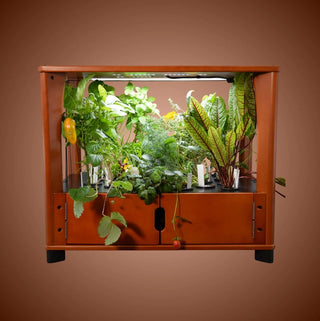
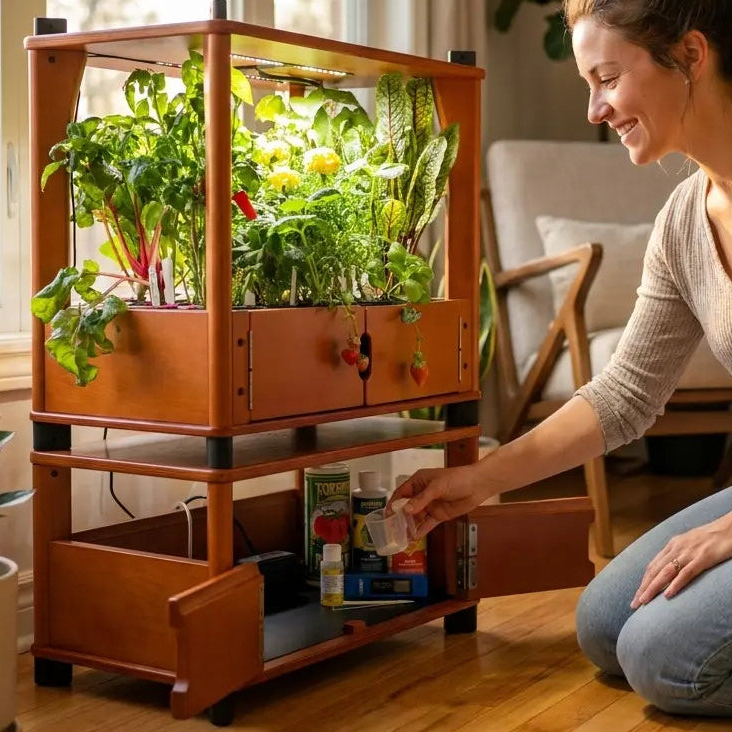
The Aquager Home Farm runs on a 13-litre water tank. In normal operation, that tank needs topping up roughly once a week. The LED grow lights run on a cycle timer — they turn on and off automatically, with no intervention required. The system does not know you’ve left the house.
For a guide to what grows best in this system year-round, see our overview of growing herbs indoors year-round.
The 3-Day Trip: Fill the Reservoir and Leave
For a long weekend — Thursday to Sunday, or three to four nights — there is exactly one thing to do before leaving: fill the water tank.
A full 13-litre reservoir, in a system running 12–16 pods, lasts approximately 7–10 days at typical plant consumption rates. For a 3-day trip, you have margin to spare. Fill the tank, confirm the grow light timer is set, and leave.
The herbs will grow while you’re gone. When you get back, they’ll be slightly larger than when you left. That’s it.
The 1-Week Trip: One Full Reservoir Is All You Need
For a trip of five to seven days — a standard holiday week — the same logic applies, with slightly more attention paid to the starting water level.
Before leaving:
- Fill the water tank completely.
- Add the correct amount of nutrients for a full tank (follow the dosing guide on your nutrient bottle).
- Check the pH and adjust if needed.
- Confirm the grow light timer is running on the correct cycle.
A fully topped 13L tank supports a week of growth without intervention in most home environments. Herb plants in active production consume more water than seedlings; if your system is running fast-growing herbs like basil or mint and you’re concerned, err toward a seven-day trip as the outer boundary for unattended operation.
When you return: check the water level (it will be lower but not empty), top up, and continue as normal. The herbs will have grown noticeably in your absence.
The 2-Week Trip: One Conversation with a Neighbor
Two weeks is the point at which one tank of water is no longer sufficient, and you’ll want someone to check in once. The ask is genuinely small.
The full task for a neighbor or friend visiting mid-trip:
- Check the water level indicator on the tank.
- If it’s below the halfway mark, add water using the fill jug left next to the farm.
- Add the pre-measured nutrient dose (leave it pre-measured in a small container).
- Total time: five minutes.
This is a lower ask than watering soil plants, which require judgment about soil moisture, different amounts per plant, and checking multiple pots. The Aquager system has one reservoir. The task is: is the water low? Add more. Done.
If finding a plant sitter feels like effort, consider the alternative framing: you’re asking someone to spend five minutes in your kitchen, once, over two weeks. Most neighbors will say yes without hesitation.
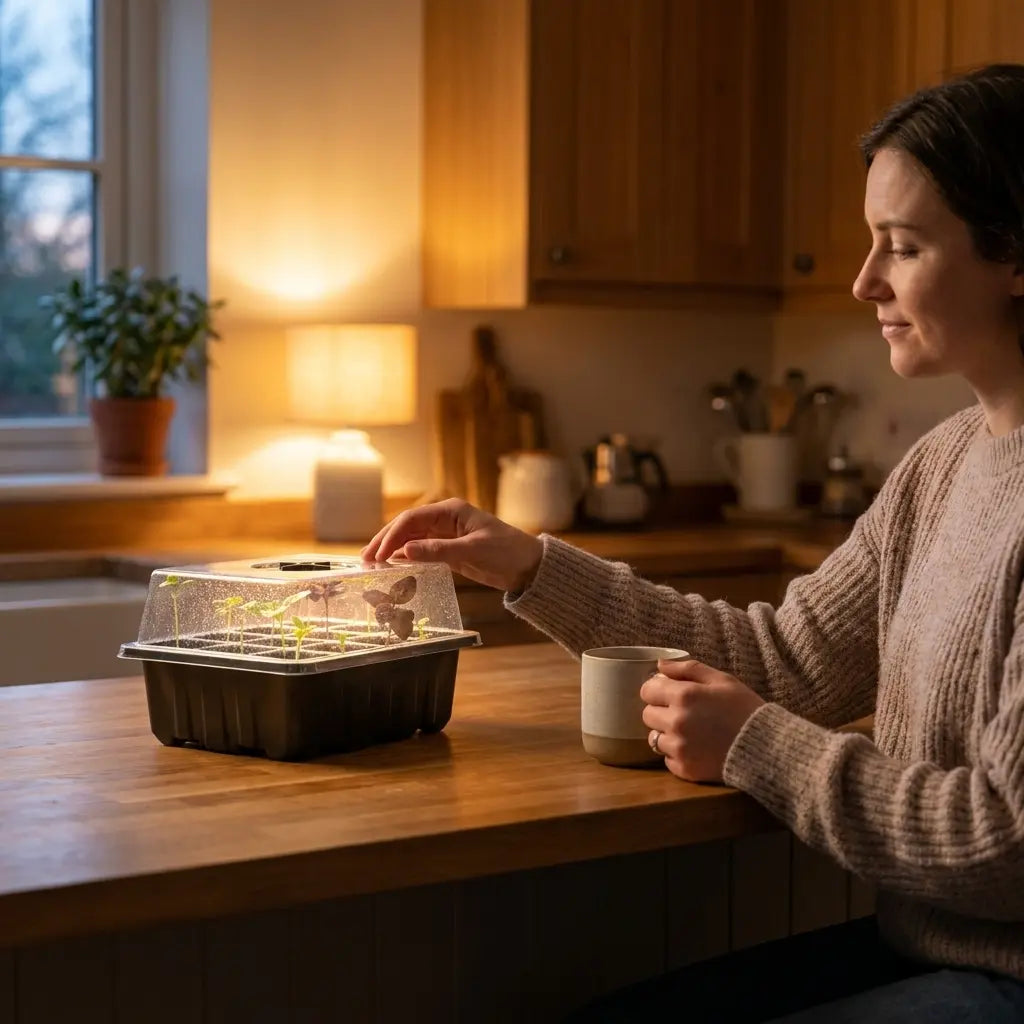
The better move for the two-week trip: Before leaving, plant a new microgreens tray. Microgreens take 7–10 days to reach harvest. Time the planting so the tray is ready — or close to it — when you return. Your neighbor’s five-minute water check now also includes the moment they see the microgreens coming up. And you come home to a harvest waiting on the counter.
Longer Than Two Weeks: The Weekly Top-Up
For extended holiday travel — three weeks or more — the system needs a weekly water top-up. This is the entire maintenance requirement.
Write simple instructions and leave them with whoever has access to your home:
- Once per week, check the water level window on the tank.
- If the water is below the midpoint, fill to the full line using the jug on the counter.
- Add the pre-measured nutrient sachet (leave one per week, labelled, in order).
- Do not adjust anything else.
The grow lights, the air pump, and the water circulation run on timers. They do not need touching. The only variable is the water level. For someone who has never seen a hydroponic system before, this takes one short demonstration and the written instructions above.
Plants left on this schedule for three to four weeks will not merely survive — they’ll grow. You may return to herbs that need harvesting more than they need watering.
What to Plant Before You Leave
Leaving for a trip is actually a good time to start new pods. Here’s why: most Aquager herb pods take three to six weeks to reach their first real harvest. If you’re leaving for two or three weeks, starting pods before departure means they’re in active production when you return — rather than sitting at the same stage they were at before you left.
Fast-starting pods worth planting before a trip:
Chives are among the fastest herbs in the system, showing significant growth within two to three weeks of seeding. Start them before a two-week trip and come home to established plants ready for their first snip.
Basil germinates quickly and puts on noticeable growth in the first three weeks. A trip away during the early growth phase means you’re not watching seedlings do very little — you come home to a plant that’s already doing something.
For a full overview of which herbs establish fastest, see the easiest herbs to grow indoors.
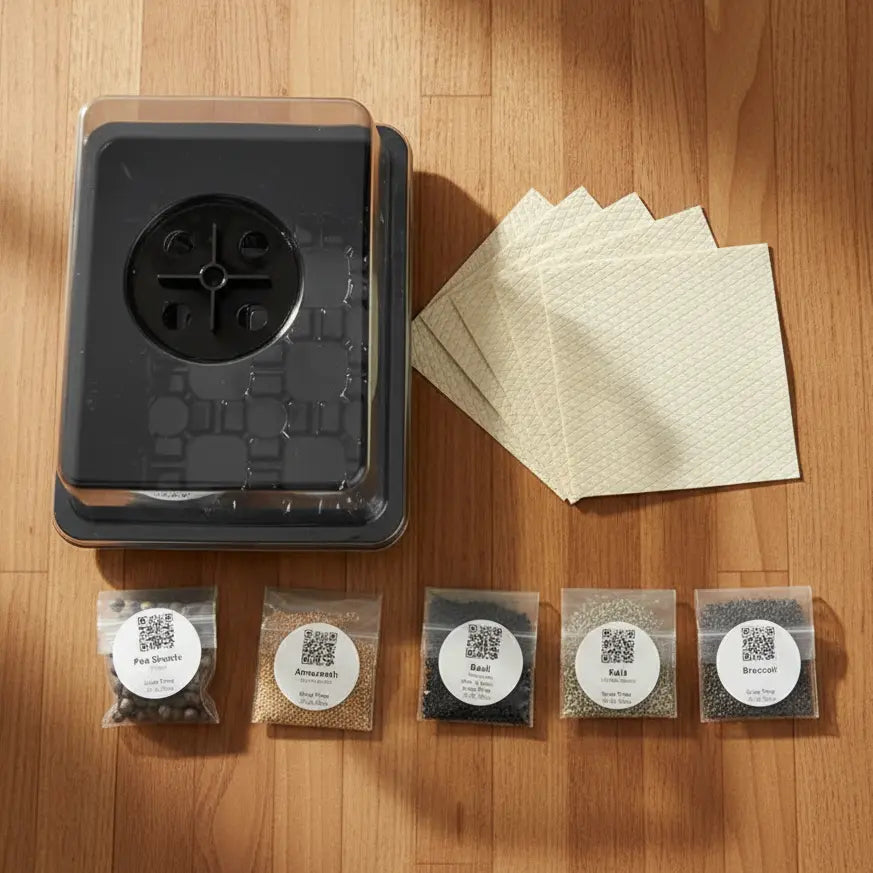
Microgreens are the standout option for timing a trip with a harvest. Sow a radish microgreens or pea shoots tray 7–10 days before your return date, and the harvest will be waiting when you get back. It’s a better homecoming than an empty fridge.
The System That Fits Around Real Life
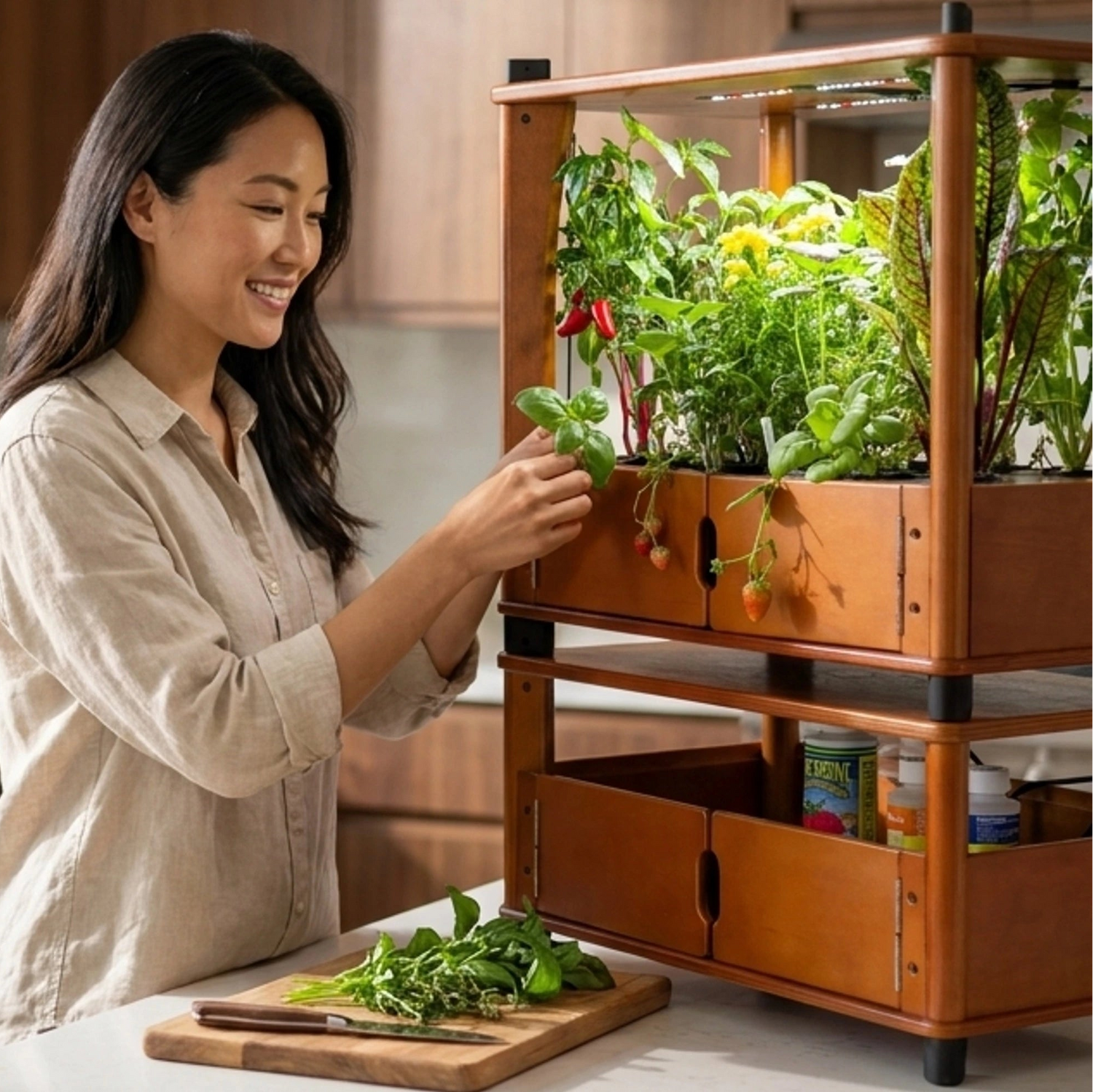
Taking care of indoor plants shouldn’t require you to stay home. The Aquager Chef’s Organic Set includes the Home Farm, the Storage Unit, and everything needed to run a full herb garden year-round — including during the months when you travel most.
The reservoir system means no daily watering. The timer means no manual light management. The lack of soil means no mess for whoever checks in on your behalf. The setup is designed to be left running, because real life includes trips, weekends away, and holiday travel.
If the reason you haven’t started a home farm is the travel question, that question has a simple answer: fill the tank before you leave. For longer trips, a neighbor and five minutes. Your farm will be waiting when you get back — and very likely, it will have grown.
Frequently Asked Questions
How long can the Aquager farm run completely unattended?
In normal operation with a full 13L tank, the system runs for approximately 7–10 days without any intervention. This covers most holiday trips outright. For trips longer than a week, a single mid-trip water top-up is sufficient.
Do the grow lights need to be turned off when I leave?
No. The grow lights run on a cycle timer and should be left running on their normal schedule. Turning them off for the duration of a trip would set the plants back more than a slight water shortage would. Leave the timer as-is.
What happens if the water runs out completely?
Hydroponic plants are more resilient to a brief dry period than soil plants, because their roots are typically moist rather than dependent on capillary action through dry soil. A day or two without water will stress but not necessarily kill established herb plants. The goal is to avoid this by filling the tank before leaving — but the consequences of a slightly miscalculated trip are less severe than with soil plants.
Can I leave nutrients in the tank for weeks at a time?
Yes, within reason. A properly dosed nutrient solution in a covered, aerated reservoir remains stable for two to three weeks. For trips longer than three weeks, ask your plant sitter to add a fresh nutrient dose when they top up the water — pre-measure and label the dose to make it foolproof.
Is there anything I should harvest before leaving?
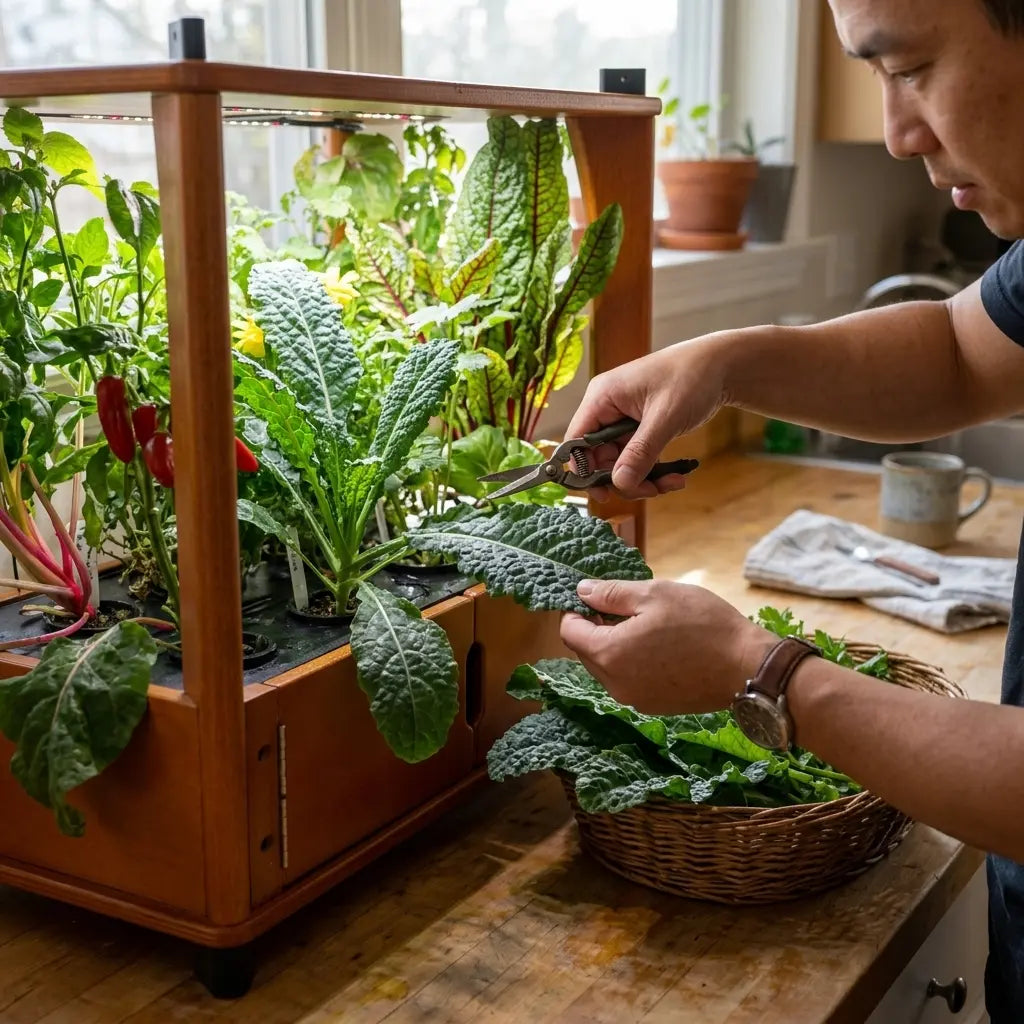
If you have herbs at or near peak harvest size, cut them before leaving. An overgrown herb plant in the absence of regular harvesting can go to flower (bolt) and decline in quality. Harvest everything at peak, and the plants will continue producing new growth while you’re away. You leave with fresh herbs in the fridge and come home to new growth on the way.
The Trip You Were Going to Take Anyway
Holiday travel and a home herb garden are not competing priorities. The system is designed for the kind of indoor plant maintenance that fits around real life — not the kind that requires you to be present every day.
Fill the tank. Set the timer. Leave someone a five-minute task if you’re gone more than a week. Come home to herbs that kept growing while you were away, and a microgreens tray that timed itself to your return.
The farm will be waiting.
Author: Aquager Team · Published: June 7, 2026 · Updated: September 12, 2026 · Reviewed: September 12, 2026 (Phase 2)












0 comments