
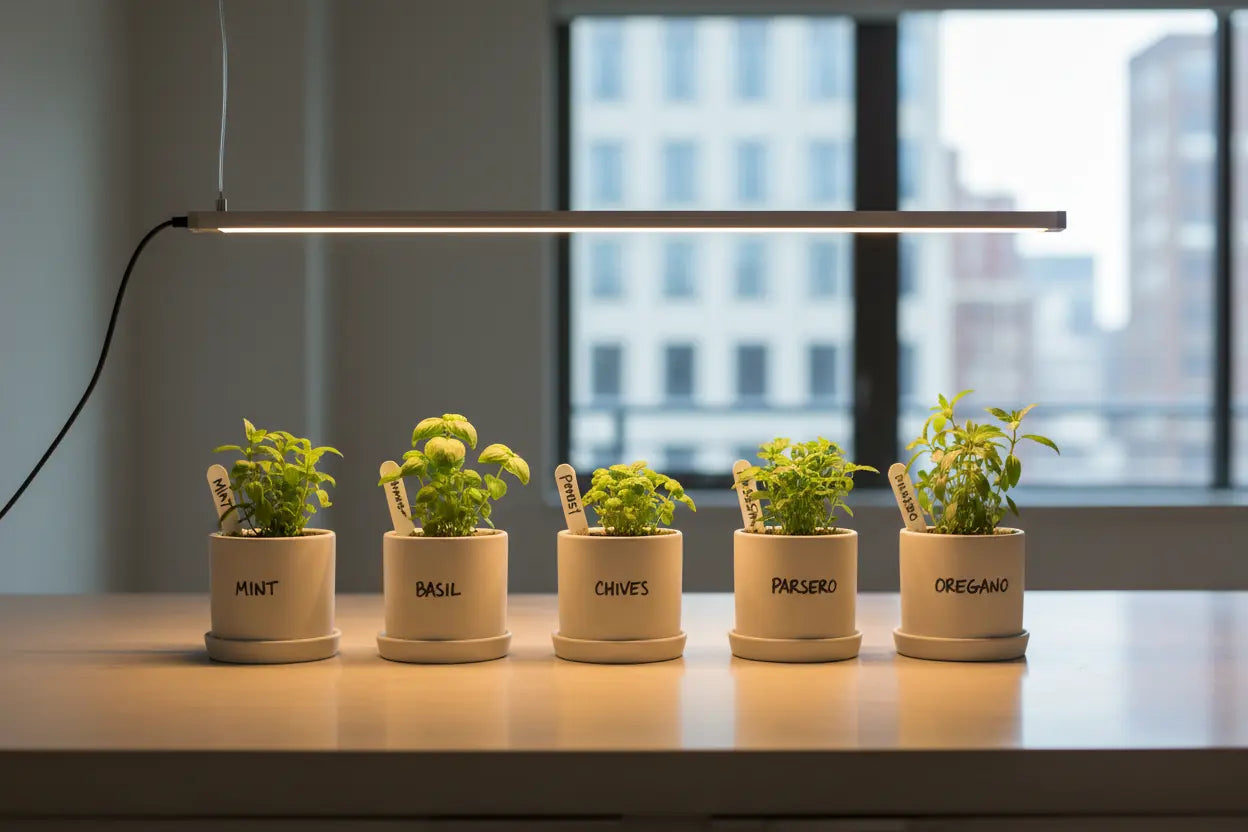
If you've ever brought home a basil plant and watched it collapse within two weeks, you're not alone. Indoor herbs seem simple at first, until leaves yellow, stems stretch, and everything feels fragile. Most beginners don't lack a green thumb. They just started with herbs that ask more of an indoor environment than it can easily give.
The easiest herbs to grow indoors are the ones that forgive small mistakes: inconsistent watering, imperfect light, and small containers. Light, airflow, and watering margins are all tighter indoors than outside, which is why some herbs thrive while others struggle no matter how much care you give them.
Below are the 10 most forgiving herbs for indoor growing, ranked by how much beginner error they can absorb before they show it.

What Makes an Herb Easy to Grow Indoors?
Not every herb behaves the same indoors. Some demand intense sun, fast draining soil, and strong airflow that a typical home just can't provide. The herbs on this list share three traits that make them forgiving instead:
- Variable watering tolerance: they recover from a missed or late watering instead of wilting for good.
- Moderate light needs: a bright window or basic indoor lighting is enough, no grow room required.
- Compact root systems: they adapt to small containers instead of needing deep soil.
When an herb combines all three, it becomes dramatically easier to keep alive through the small mistakes every beginner makes.
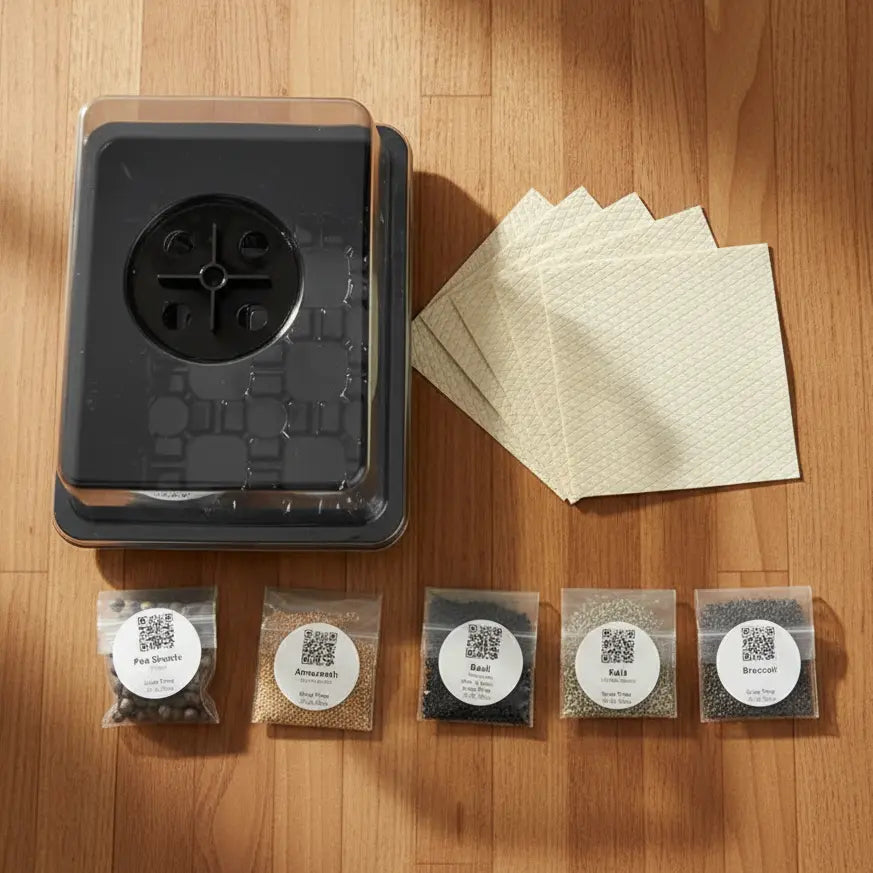
Every Aquager seed product ships as a pre-seeded organic grow medium, not loose seeds. Open the pack, add water, and you're growing, no measuring, no guessing at planting depth. Germination rates run over 90%, and the majority of our grow mediums are tested fully organic. If you want one box that covers several herbs plus microgreens at once, the Grab & Grow Kit is worth a look too.

The 10 Easiest Herbs to Grow Indoors
These are ranked for resilience, not popularity.
1. Mint
Mint tolerates irregular watering and moderate indoor light better than almost anything else on this list. Its aggressive growth habit makes it resilient: if leaves droop temporarily, mint usually rebounds within a few days once conditions stabilize, and it adapts well to small containers without needing perfect placement.
Mint also roots easily from a cutting off any live plant, so if you already know someone growing it, that's often the fastest start of all.
2. Chives
Chives are compact and structurally sturdy. They don't demand deep soil and regrow quickly after trimming, and their upright growth makes them less prone to collapse in moderate indoor lighting. Unlike herbs that need careful trimming, chives naturally regrow after cutting, which makes them ideal for regular harvesting.
→ Shop Chive Seeds: pre-measured, ready to plant

3. Basil
Basil needs consistent light, but it responds clearly to care. Placed near a bright window or under supplemental lighting, it grows quickly and signals stress early, which gives beginners time to correct course before the plant actually declines. With steady light and drainage, basil often becomes the most productive herb in an indoor garden.
For the full growing timeline and troubleshooting, see How to Grow Basil Indoors.

4. Parsley
Parsley grows more slowly but handles cooler indoor conditions well. Once established, it stays stable with moderate light and consistent moisture, and it's far less sensitive to temperature swings than more delicate herbs, which makes it a strong fit for kitchens where the temperature drifts through the day.
→ Shop Italian Parsley Seeds: steady grower, minimal fuss

5. Oregano
Oregano prefers slightly drier soil, which makes it surprisingly beginner-friendly. Most indoor herb failures come from overwatering, and oregano tolerates minor dryness far better than soft-leaf herbs, a habit it inherited from its native Mediterranean climate.
→ Shop Oregano Seeds: thrives with less water, not more

6. Thyme
Thyme prefers bright light but tolerates drier soil and compact containers well. It grows slowly and steadily, which makes it less reactive to minor care inconsistencies, and it can stay productive for long periods near a bright window or grow light with very little maintenance.
→ Shop Thyme Seeds: low maintenance, long lasting

7. Lemon Balm
Closely related to mint, lemon balm adapts just as easily indoors. It grows steadily under moderate light and tolerates occasional watering fluctuations, and its fragrant leaves are popular for teas and light cooking on top of being easy to keep alive.
→ Shop Lemon Balm Seeds: pleasant citrus scent, very easy to grow

8. Green Onions (Scallions)
Green onions are the fastest confidence builder on this list. They regrow from kitchen scraps, need minimal depth, and their vertical growth makes lighting easy to manage, so even someone with zero gardening experience can get a real harvest from them.

9. Cilantro
Cilantro is more heat-sensitive than the others here but performs reasonably well indoors if kept cooler and away from ovens or heating vents. It needs steady moisture and doesn't demand deep containers, and it grows reliably once temperature and watering are consistent.
Cilantro bolting fast is the most common complaint beginners have with it. If that's happened to you already, see How to Keep Cilantro From Bolting.

10. Sage
Sage tolerates dry soil and bright indoor light well. Once rooted, it stays structurally stable and needs minimal maintenance, developing thick, durable leaves that handle drier conditions better than most leafy herbs.
→ Shop Sage Seeds: hardy, aromatic, and very low maintenance


Starting Herbs Indoors Without Guesswork
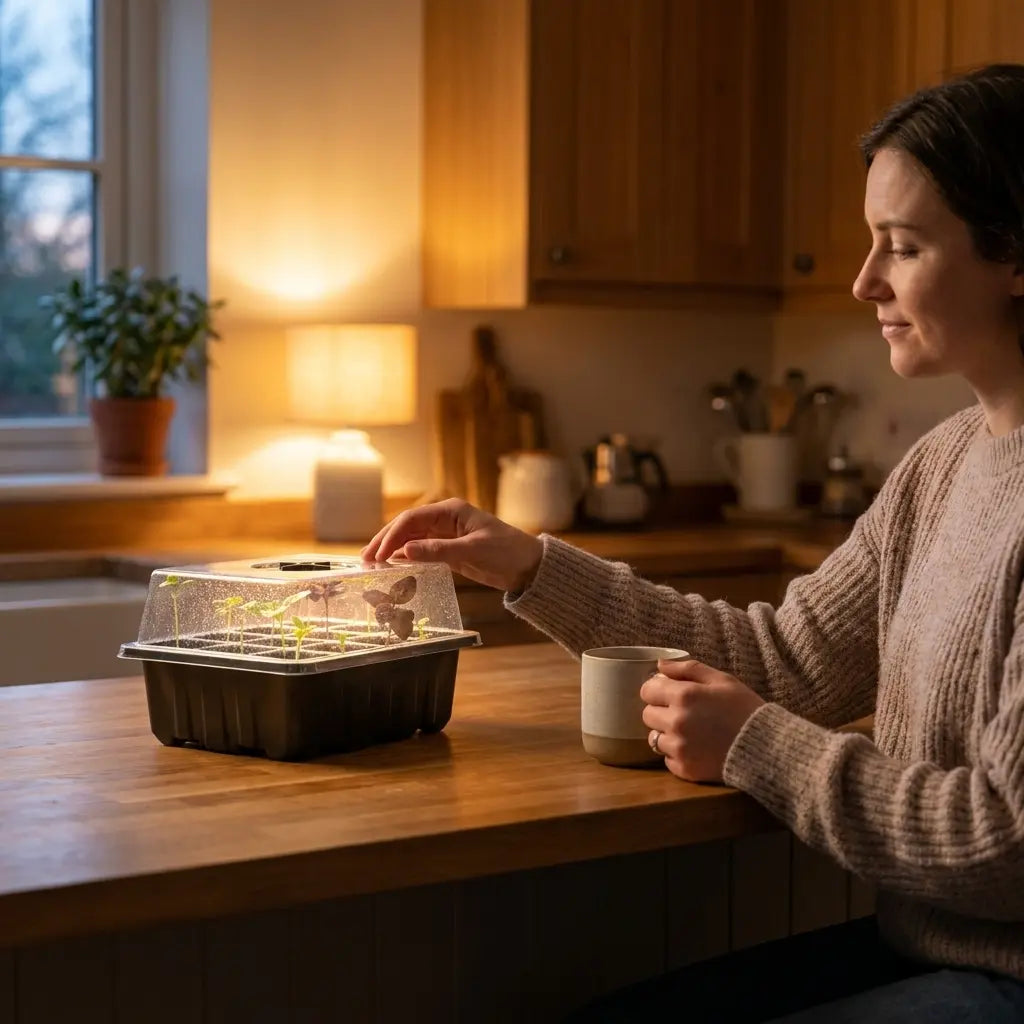
For most beginners, the confusing part isn't choosing the herb, it's getting started. Every Aquager seed product, individual herb packs and the Grab & Grow Kit alike, ships as a pre-seeded organic grow medium, so you're never measuring seed spacing or guessing planting depth. You just add water and keep the light consistent.
Seed quality still matters, even with the guesswork removed. Aquager sources from Johnny's Selected Seeds, which tests germination rates and seed quality for commercial growers, so sprouting stays even and reliable.
If you've had trouble with seed starting before, outside of an Aquager kit, 5 Indoor Seed Starting Mistakes That Kill Growth Fast covers the failure points we see most often.
Light Tiers: What Most Beginners Miss
Indoor light varies more than most people expect, and understanding your light tier improves results more than buying new plants does.
Low to moderate light (indirect window light): mint, parsley, chives, lemon balm.
Bright light (south-facing window or grow light): basil, oregano, thyme, sage.
If herbs stretch or lean hard toward the window, they're not getting enough light. Supplemental LED lighting usually fixes this within a week or two. For a full breakdown of options, see Best Grow Lights for Indoor Herb Gardens.

Watering: The Most Common Failure Point
Overwatering kills more indoor herbs than underwatering does. Indoors, soil dries slowly because airflow is limited, and roots sitting in constantly damp soil suffocate from lack of oxygen.
Skip the daily watering schedule. Check the top inch of soil instead, and water thoroughly only when it's dry, letting the excess drain away. Containers need drainage holes, no exceptions. Herbs that tolerate dryness (oregano, thyme, sage) survive beginner watering habits far better than soft-leaf herbs like basil or cilantro.

If You've "Killed Every Plant"
Killing an indoor plant usually comes down to one of two things: not enough light, or poor drainage. It rarely means you're incapable.
The easiest herbs on this list reduce that pressure. They grow steadily, recover from small mistakes, and let you build confidence before you take on anything more demanding. Once light, drainage, and watering habits become predictable, growing herbs indoors stops feeling intimidating.
Quick Comparison: Easiest Indoor Herbs
Choosing the right herb becomes easier when you compare how each plant behaves indoors. Some herbs tolerate lower light levels, while others prefer brighter environments but remain forgiving if watering is not perfectly consistent.
The table below summarizes the key characteristics of the herbs covered in this guide.
| Herb | Difficulty | Light Preference | Watering Tolerance |
|---|---|---|---|
| Mint | Very Easy | Moderate light | Very forgiving |
| Chives | Very Easy | Moderate light | Moderate |
| Basil | Easy | Bright light | Consistent watering |
| Parsley | Easy | Moderate light | Moderate |
| Oregano | Easy | Bright light | Tolerates dryness |
| Thyme | Easy | Bright light | Prefers dry soil |
| Lemon Balm | Very Easy | Moderate light | Flexible |
| Green Onions | Very Easy | Moderate light | Moderate |
| Cilantro | Moderate | Moderate light | Consistent moisture |
| Sage | Easy | Bright light | Tolerates dryness |
Mini FAQ
What Herbs Are Easy to Grow Indoors?
Mint, chives, and lemon balm are the easiest herbs to grow indoors because they tolerate inconsistent watering and moderate light. Basil, oregano, thyme, and sage need brighter light but reward simple care with a strong harvest. Start with mint or chives for the most forgiving results.
Do I need a grow light?
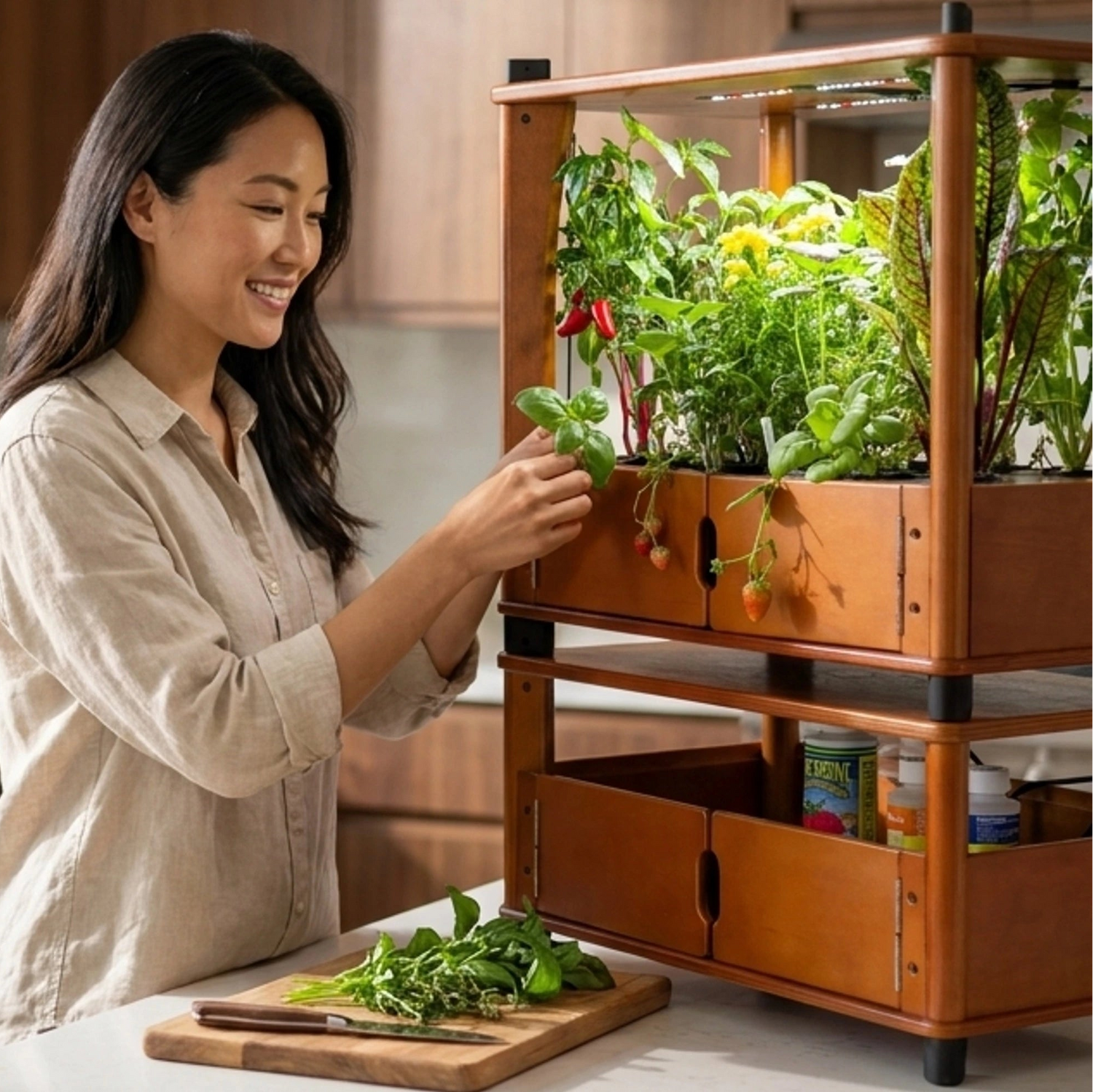
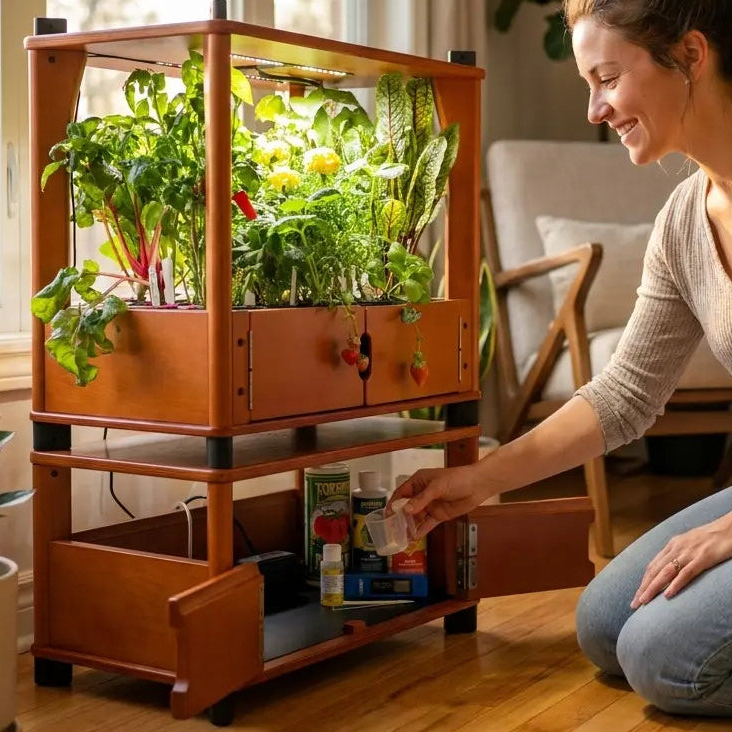
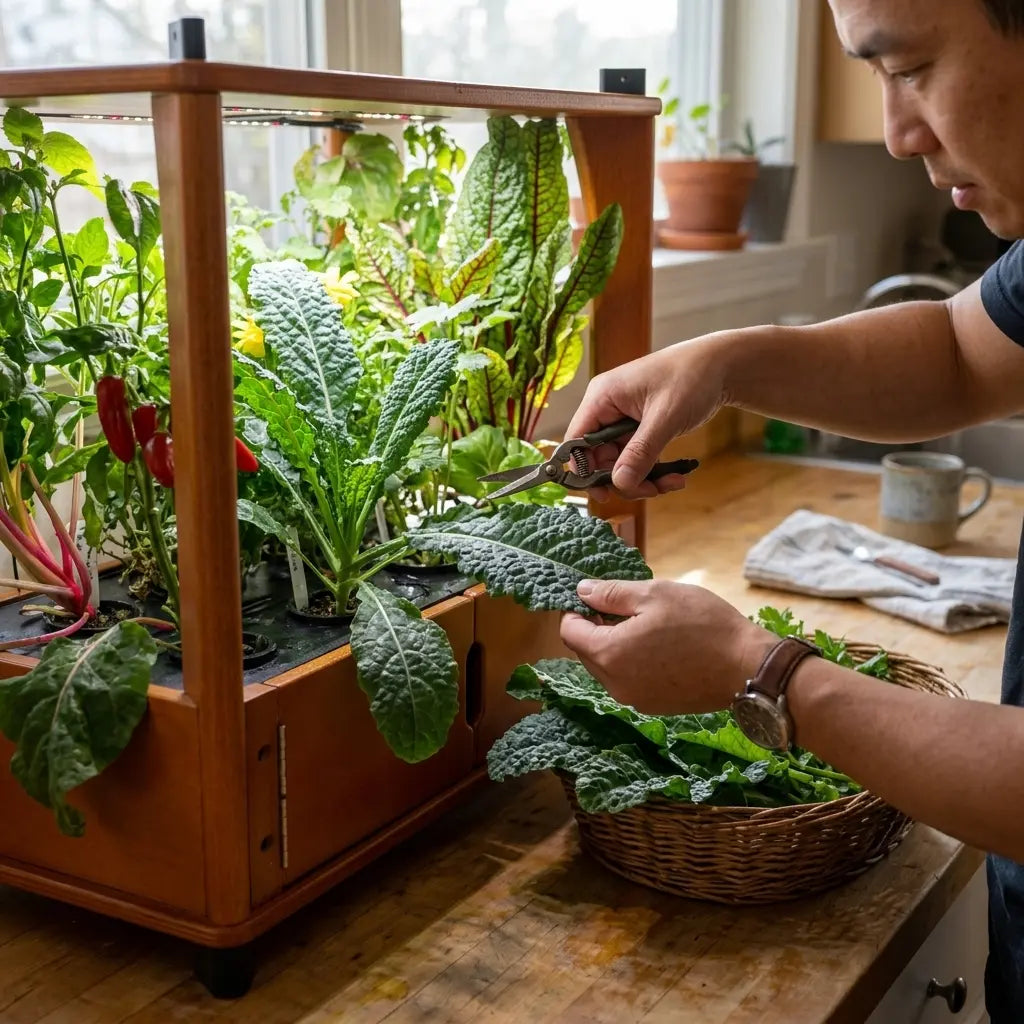
Not always. Mint, chives, parsley, and lemon balm do fine near a bright window. Basil, thyme, and sage benefit from consistent supplemental light. The Aquager Indoor Farm has built-in LED lighting already calibrated for herbs, so you're not guessing at placement.
How often should I water indoor herbs?
When the top inch of soil is dry. Skip fixed daily schedules since soil dries at different rates depending on container size, airflow, and the season.
Can herbs grow indoors year-round?
Yes, if light and drainage stay stable. The Aquager Indoor Farm makes that easy by keeping both consistent automatically.
Why do indoor herbs sometimes grow tall and weak?
Not enough light. Herbs stretch toward whatever light they can find, which produces thin stems and fewer leaves. Stronger window light or a grow light, like the one built into the Aquager Indoor Farm, fixes this quickly.
Growing herbs indoors doesn't require perfect conditions. It requires picking herbs that match indoor realities, then removing the common failure points with the right setup.
Author: Aquager Team
Published: February 24, 2026
Updated: August 14, 2026
Reviewed: August 14, 2026 (Phase 3)








0 comments