
If you want to grow herbs indoors year-round, the goal isn't complexity — it's stability. Most beginners don't fail because herbs are difficult. They fail because indoor environments behave differently than outdoor gardens.
In short: indoor herbs succeed when you control three variables — light, drainage, and watering rhythm.
Indoors, light, airflow, and watering margins are tighter — so issues show up in days, not weeks.
This guide walks you through the simplest way to grow fresh kitchen herbs indoors consistently, without turning your countertop into an experiment.
The Simplest Year-Round Kitchen Setup
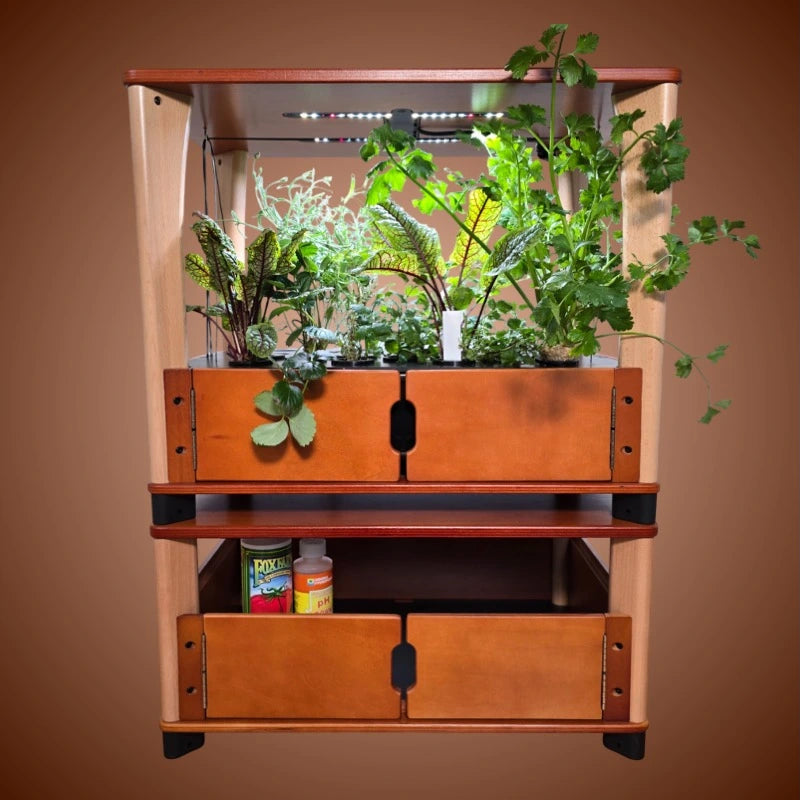
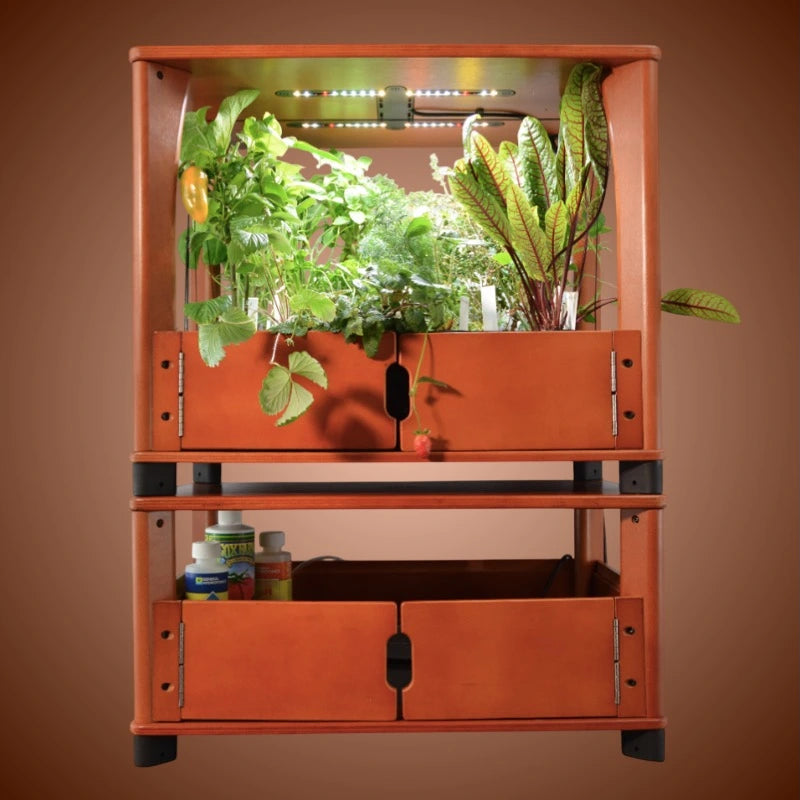
To grow herbs indoors successfully, think in terms of a repeatable system rather than individual plants. You need:
- A container with proper drainage
- Loose, well-aerated potting mix
- A consistent light source
- A predictable watering routine
That's it.
Many beginners rely solely on window light. While this can work in peak summer near a strong south-facing window, most US apartments don't provide enough consistent light across all seasons.
Herbs need steady energy input. When:
- light drops, plants stretch
- watering is inconsistent, roots suffer
- containers trap moisture, decay begins below the surface before you notice anything above.
The simpler and more controlled your setup, the easier it becomes to grow herbs indoors year-round.

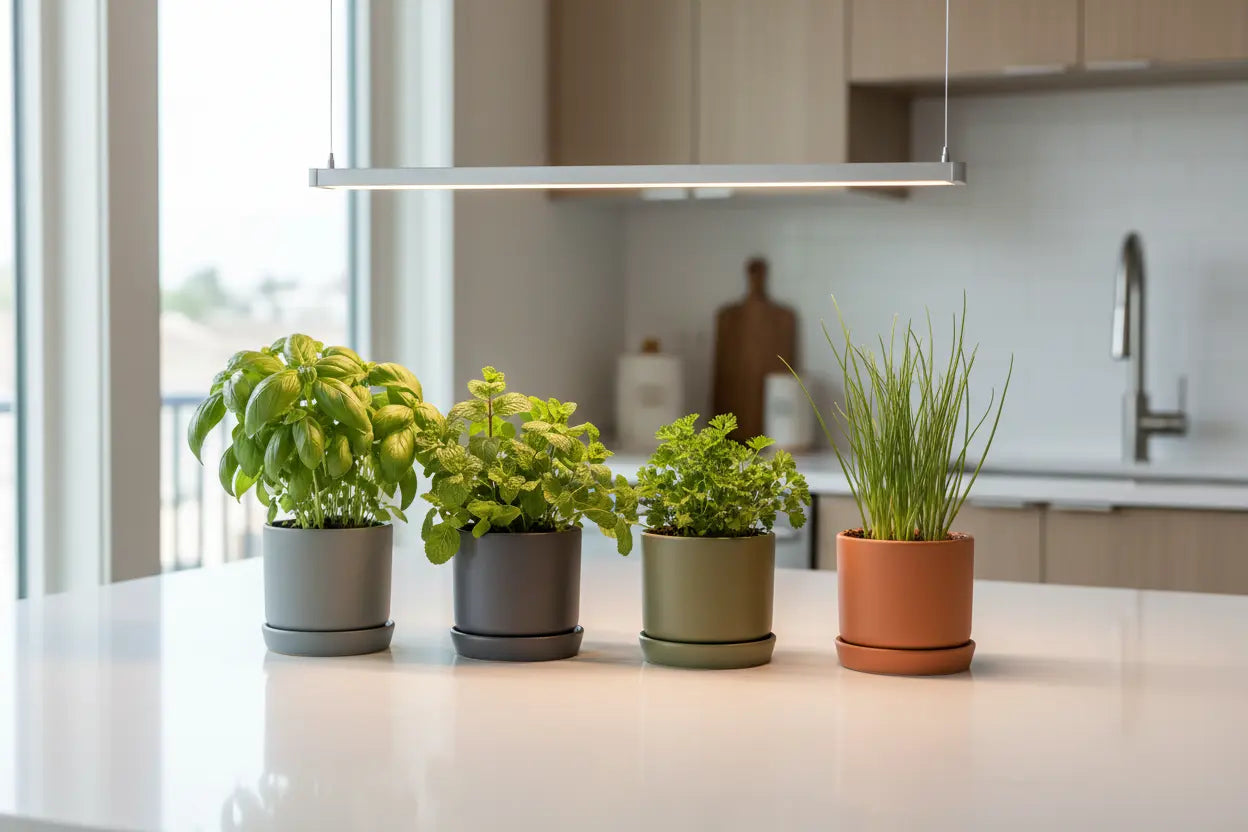
The 4 Easiest Herbs to Grow Indoors
If your goal is consistency, start with herbs that tolerate indoor variability.
Basil
Fast-growing and responsive. Needs strong light but recovers quickly from minor stress. Excellent for pruning practice.
Mint
Extremely forgiving. Tolerates slight watering inconsistency and adapts well to containers. Grows aggressively once established.
Parsley
Slower to start, but stable once growing. Performs well in moderate indoor conditions.
Chives
Compact and low-maintenance. Ideal for small kitchens and limited counter space.
These herbs are beginner-friendly because they tolerate slight variations in moisture and container size better than more sensitive varieties like rosemary or thyme.
If even these herbs are declining quickly, the issue is often environmental — not the plant itself.
→ Read Why Indoor Gardening Fails in Apartments to understand the structural reasons herbs and other plants struggle indoors.
Light Is the Real Bottleneck
Most indoor herb problems are light problems.
Herbs require roughly 12–16 hours of BRIGHT light daily to maintain compact growth. Without enough light, they stretch toward the source, producing thin stems and weak leaves.
Winter months reduce daylight duration significantly across much of the United States. Even bright rooms can become insufficient between October and March.
A small LED grow light positioned 6–12 inches above the plant canopy dramatically improves consistency. It removes seasonal variability and stabilizes growth patterns.
Without adequate light, watering adjustments won't fix leggy growth. Light must come first.

Watering and Drainage: The Hidden Failure Point
Overwatering is the most common reason indoor herbs decline.
Because indoor airflow is limited, moisture remains trapped in containers longer than expected. Roots sitting in saturated soil lose oxygen quickly. Warning signs of overwatering include:
- Yellowing leaves
- Drooping despite moist soil
- Foul soil smell
- Mold on surface
Instead of watering daily, check soil moisture. If the top inch feels dry, then water thoroughly — allowing excess water to drain completely.
Decorative containers without drainage holes create slow root suffocation. Always prioritize function over aesthetics when growing herbs indoors.
If multiple plants decline simultaneously, the problem is often systemic rather than individual.
→ See Why Plants Die Indoors for a broader explanation of indoor plant stress patterns.
How Year-Round Growing Changes With the Seasons
Growing herbs indoors year-round means adjusting for seasonal shifts inside your home. In winter:
- Daylight hours shorten
- Indoor heating dries air
- Windows cool soil temperatures
In summer:
- Windows can overheat containers
- Air conditioning changes airflow
- Light intensity increases near glass
The plant remains the same — but the indoor environment changes.
This is why stable lighting often makes the biggest difference. It removes seasonal variation and creates predictable growth cycles.
Keeping Herbs Productive Long-Term
Indoor herbs do not self-regulate like outdoor plants. To maintain steady growth:
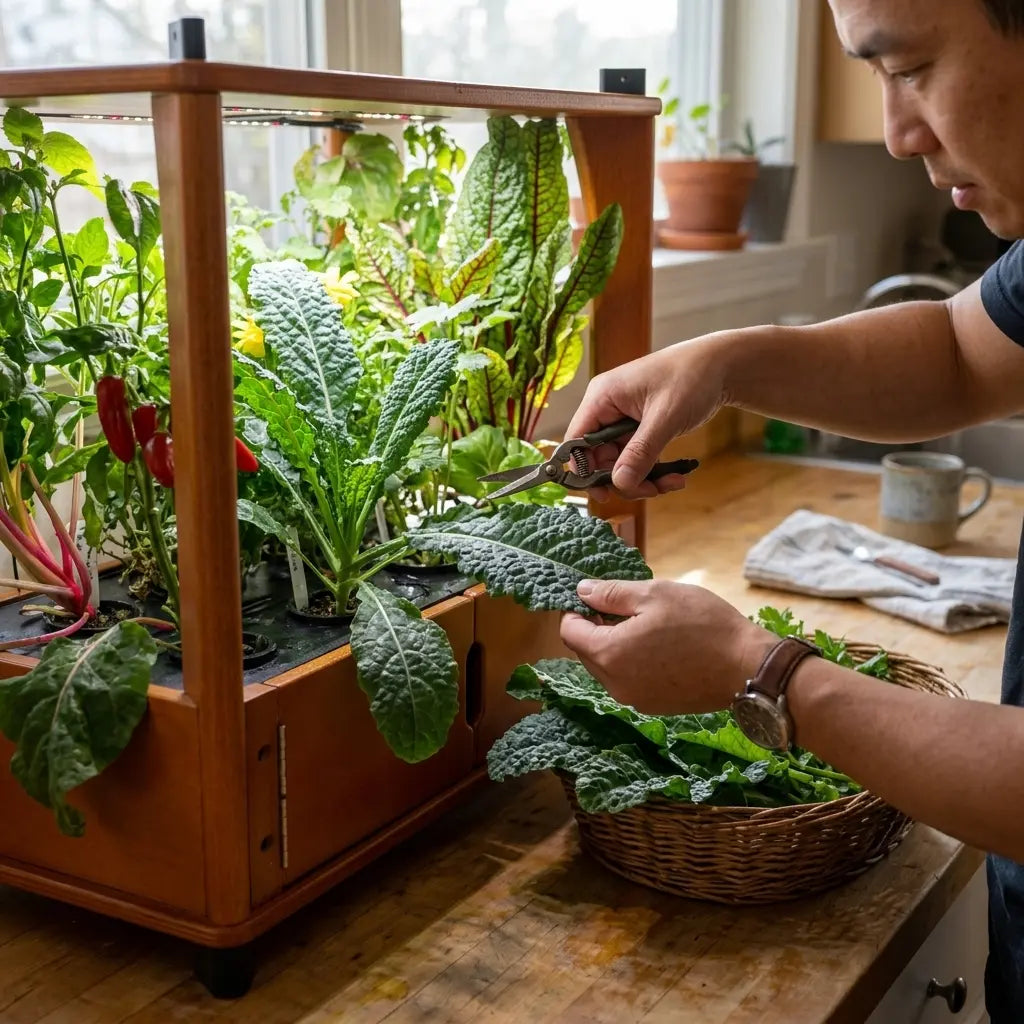
- Harvest regularly (never remove more than one-third at once)
- Rotate pots for even light exposure
- Trim basil before it flowers
- Restart parsley if growth slows significantly
- Divide mint if it outgrows its container
Compact growth signals balance. Tall, weak growth signals imbalance.
Sometimes restarting a plant produces better results than forcing recovery. Indoor gardening rewards rhythm more than rescue attempts.

Common Beginner Mistakes
When trying to grow herbs indoors, beginners often:
- Rely only on window light
- Water on a schedule instead of checking soil
- Use containers without drainage
- Expect outdoor growth speed indoors
- Crowd multiple herbs into small containers
Indoor success is about reducing friction points.
If you're struggling with repeated herb decline, the issue may be broader than light or watering alone.
To understand the deeper environmental constraints of apartment growing, read:
👉 Why Indoor Gardening Fails in Apartments
Mini FAQ
Can I grow herbs indoors without a grow light?
Yes, but results depend heavily on window direction and season. Supplemental lighting increases consistency significantly.
How many hours of light do indoor herbs need?
Most kitchen herbs perform best with 12–16 hours of bright light daily.
Why do my herbs grow tall and weak?
This is usually caused by insufficient light intensity.
Can herbs grow in just water?
Some herbs can root in water temporarily, but long-term growth requires proper nutrients and oxygen around the roots.
Growing fresh herbs indoors year-round is less about perfection and more about stability. Control light. Ensure drainage. Water consistently. Repeat.
For a deeper understanding of why indoor plants struggle — and how to prevent long-term failure patterns — continue here:
👉 Why Indoor Gardening Fails in Apartments
Author: Aquager Team · Published: February 17, 2026 · Updated: August 1, 2026 · Reviewed: August 1, 2026 (Phase 2)












0 comments