
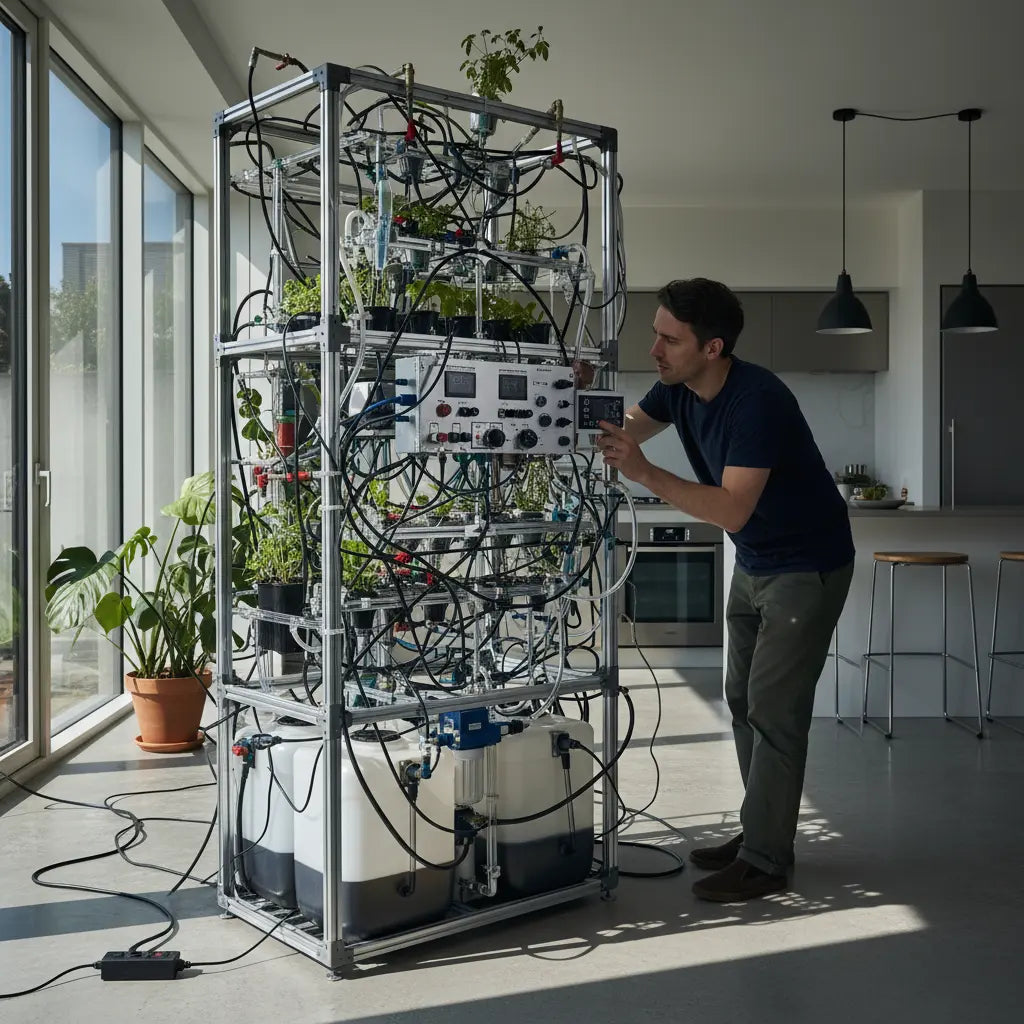
A simple hydroponic system is expected to make growing plants easier, but many indoor setups feel more complicated than expected. This is one of the most common frustrations people experience when starting to grow food at home.
At first, the idea seems straightforward. Add water, provide light, and plants grow. However, once the system is set up, it often includes multiple components, instructions, and steps that are not directly related to plant growth.
This creates a gap between expectation and reality.
Instead of focusing on the plants, attention shifts to managing the system itself.
- checking settings
- adjusting components
- monitoring different parts
- troubleshooting small issues
Over time, the system becomes the main focus, not the plants.
This is where many beginners struggle. The difficulty does not come from growing plants. It comes from managing a setup that includes more elements than necessary.
In many cases, the system introduces complexity through:
- multiple connected parts
- unclear setup steps
- features that require ongoing attention
- components that depend on each other
Each added element increases the number of variables that need to be managed. This makes the process less predictable, especially for someone growing indoors for the first time.
Another issue is that when something does not work as expected, it becomes harder to identify the cause. With more components involved, troubleshooting takes longer and often leads to confusion.
This replaces:
-
simple process → predictable results
with:
-
complex system → multiple variables → inconsistent experience
The key realization is that plants themselves are not complicated to grow. What often makes indoor gardening feel difficult is the system surrounding them.
Understanding this difference is important. It shifts the focus from adding more features to simplifying the environment in which plants grow.
What Plants Actually Need to Grow
A simple hydroponic system works because plants only need a few core inputs to grow. These requirements do not change indoors. They remain consistent across most environments.
Plants do not require complex systems. They require a stable environment where these essentials are consistently available.
At the root level, plant growth depends on four main factors:
- Light → drives photosynthesis and growth
- Water → delivers nutrients and maintains structure
- Oxygen → allows roots to perform respiration
- Nutrients → provide the building blocks for development
These four elements are sufficient for plant growth when they are balanced correctly.
Everything else in a system is built around managing or stabilizing these inputs. However, adding more components does not always improve how these factors are delivered.
For example:
- Light can be provided with a simple, consistent source
- Water can be delivered through a stable system
- Oxygen can be introduced through basic aeration
- Nutrients can be mixed and maintained manually
This replaces:
-
complex system → multiple dependencies
with:
-
simple inputs → consistent conditions
Another important point is that plants respond to consistency, not complexity. When these four elements remain stable, plants grow predictably.
In many indoor setups, issues do not come from missing inputs. They come from inconsistency caused by too many variables.
From a practical perspective:
- Plants do not need continuous adjustments
- They do not require constant monitoring of multiple parameters
- They perform well when conditions are stable over time
This is why simpler systems often produce better results for home growing. They focus on delivering the essentials without introducing unnecessary variation.
The key idea is not to remove functionality. It is to focus only on what directly supports plant growth.

What Many Systems Add (And Why)
Many indoor hydroponic systems include additional features beyond what plants actually need. These features are designed to automate, monitor, or control the growing process, but they are not always necessary for home use.
Common additions include:
- mobile apps and remote control
- sensors for pH, water level, or nutrients
- automated dosing systems
- alerts and notifications
- digital control panels
These components are typically introduced to make systems more advanced. In larger or commercial setups, they help manage many plants at once. They reduce manual work when scale becomes too large to handle easily.
However, at home, the situation is different.
A typical home setup has a limited number of plants. Conditions are easier to observe and adjust manually. The environment is more stable compared to outdoor or large-scale systems.
This creates a mismatch.
- Advanced features → designed for scale and automation
- Home setups → small, visible, and manageable
Because of this, many of these features do not directly improve plant growth in a home environment. Instead, they add layers to the system that the user must understand and manage.
For example:
- A sensor may provide data, but the user still needs to interpret it
- An app may send alerts, but it adds another system to maintain
- Automation may reduce manual steps, but it introduces dependency on electronics
This replaces:
-
direct interaction → simple adjustments
with:
-
system-mediated control → more steps and dependencies
Another factor is that these features are often bundled together. This increases the overall complexity of the system even if each individual feature seems useful on its own.
From a practical perspective:
- More features do not always mean better results
- Additional components do not necessarily improve plant performance
- Systems can become harder to use without improving outcomes
The key point is that these additions are not inherently wrong. They are designed for specific use cases. However, in many home setups, they go beyond what is required to grow plants successfully.

Why Extra Features Create Problems
Extra features in a hydroponic system do not just add functionality. They also introduce new points where things can go wrong. This is where complexity begins to affect the overall experience, especially in home environments.
Each added component creates a dependency. When systems include sensors, apps, control panels, and automated processes, they rely on multiple parts working together at the same time. If one part behaves incorrectly, it can affect the entire system, even if everything else is functioning properly.
For example, a sensor may provide inaccurate readings due to calibration issues or environmental changes. An app may disconnect, lag, or fail to update in real time. Automated dosing systems can stop working without immediate visibility. When these situations occur, the user is no longer focused on plant growth. Instead, attention shifts to diagnosing and managing the system itself.
This changes the nature of indoor growing.
Instead of a simple process where inputs lead to predictable results, the system becomes layered with variables that are not always visible or easy to control. When something goes wrong, the cause is often unclear. The issue could come from the plant, the water, the nutrients, or one of several system components.
This replaces:
-
a direct growing process → clear and predictable outcomes
with:
-
a multi-component system → multiple possible failure points
Maintenance also becomes more demanding as complexity increases. Even when individual components are reliable, the combined system requires more attention over time. Each added feature introduces something that must be monitored, adjusted, or occasionally fixed.
- setup becomes more time-consuming
- routine checks involve more steps
- troubleshooting takes longer and requires more knowledge
This can create a situation where small issues become harder to resolve. Instead of making a quick adjustment, users may need to check multiple parts of the system before identifying the source of the problem.
Cost follows the same pattern. Systems that focus on essential inputs can remain relatively affordable because they rely on fewer components. In contrast, systems that include advanced features require additional hardware, software, and integration, which increases the overall price.
In many cases, this leads to a noticeable gap:
- simpler home systems → around $299 range
- feature-heavy systems → often $800 or more
Despite this difference, both types of systems can support a similar number of plants in a home environment. The added cost does not necessarily translate into better plant performance. Instead, it reflects the inclusion of additional technology.
Another important factor is long-term reliability. The more components a system has, the more potential points of failure exist over time. Even if issues are rare, the probability of something requiring attention increases as complexity grows.
The key point is not that these features are inherently ineffective. They are often useful in specific contexts, especially where large-scale production or precise control is required. However, in most home setups, they go beyond what is necessary to support consistent plant growth.
Simpler systems reduce the number of variables involved. This makes them easier to understand and easier to manage. When fewer components are involved, it becomes easier to identify issues, make adjustments, and maintain stable conditions over time.
In practice, this leads to a more predictable growing experience. Instead of managing a system, the focus returns to the plants themselves, which is the original goal of indoor gardening.

When Complex Systems Actually Make Sense
Complex hydroponic systems are not inherently ineffective. In certain environments, they are necessary and provide clear advantages. The key is understanding where that level of complexity is actually required.
In large-scale or controlled environments, small changes can have a significant impact. Managing hundreds or thousands of plants requires precision and automation that cannot be handled manually. In these cases, advanced systems are designed to reduce labor and maintain consistency across a much larger operation.
For example, in commercial or research settings, systems often need to:
- monitor nutrient levels continuously
- adjust conditions in real time
- maintain uniform results across large volumes of plants
These environments benefit from sensors, automation, and control systems because the scale makes manual management inefficient or impossible.
The same applies to highly specialized growing conditions. Certain plants or experiments require precise control over variables such as nutrient concentration, water chemistry, or environmental conditions. In these situations, advanced features help maintain accuracy and repeatability.
However, this level of control is typically not necessary in a home environment.
At home, the number of plants is limited. The system is visible and accessible. Adjustments can be made manually without requiring automation. Conditions are easier to observe, and small variations do not have the same impact as they would in larger systems.
This creates a clear distinction:
-
Advanced systems
→ designed for scale, precision, and automation
-
Home systems
→ designed for simplicity, visibility, and consistency
When complex systems are used in a home setting, they often provide more control than is needed. This does not necessarily improve results, but it does increase the number of variables that must be managed.
Another factor is user experience. Advanced systems assume a level of familiarity with the technology. They are built for users who understand how to interpret data, adjust parameters, and manage multiple system components.
For most home users, the goal is different. The focus is on growing food reliably with minimal effort, not optimizing every variable.
This is why complexity should match the use case.
In environments where scale and precision are critical, complex systems make sense. In home environments where simplicity and consistency are more important, simpler systems are often more effective.
Understanding this distinction helps set realistic expectations. It clarifies that complexity is not always an advantage. It is a tool that becomes valuable only when the situation requires it.
In Short (What Plants Actually Need vs What Systems Add)
A simple hydroponic system focuses on delivering what plants actually need, without adding unnecessary layers of complexity. This is what makes indoor growing more predictable and easier to manage over time.
In short, plants do not require advanced technology to grow indoors. They require stable conditions where light, water, oxygen, and nutrients are consistently available.
Everything beyond that is optional.
Many systems are designed to automate or monitor these inputs, but this does not change the fundamental requirement. It only changes how the system is managed.
This creates a clear distinction:
-
Essential inputs
→ light, water, oxygen, nutrients
→ directly support plant growth -
Additional features
→ apps, sensors, automation
→ support system management, not plant growth itself
This explains why some systems feel more difficult than expected. The complexity does not come from the plants. It comes from managing additional layers that are not required for basic growth.
If you’re struggling with an indoor setup, the issue is often not what is missing. It is the number of variables involved. When too many components are introduced, it becomes harder to maintain consistency.
A simplified system reduces those variables. It focuses on delivering the essentials in a stable way, which makes plant behavior easier to predict.
From a practical perspective:
- fewer components → fewer things to manage
- fewer dependencies → fewer points of failure
- simpler structure → easier maintenance
This leads to a more stable growing process. Instead of reacting to system behavior, you are working with a setup that remains consistent over time.
The key takeaway is that indoor growing does not require complexity to be effective. It requires consistency in the core elements that support plant growth.
When those elements are stable, plants respond naturally, and the system becomes easier to maintain.
Start with What Plants Actually Need
Indoor growing becomes easier when the focus stays on what plants actually need. Once light, water, oxygen, and nutrients are delivered consistently, the process becomes more predictable and easier to manage over time.
Many challenges come from systems that introduce additional layers without improving the core growing conditions. When unnecessary components are removed, it becomes easier to maintain stability and understand how the system behaves.
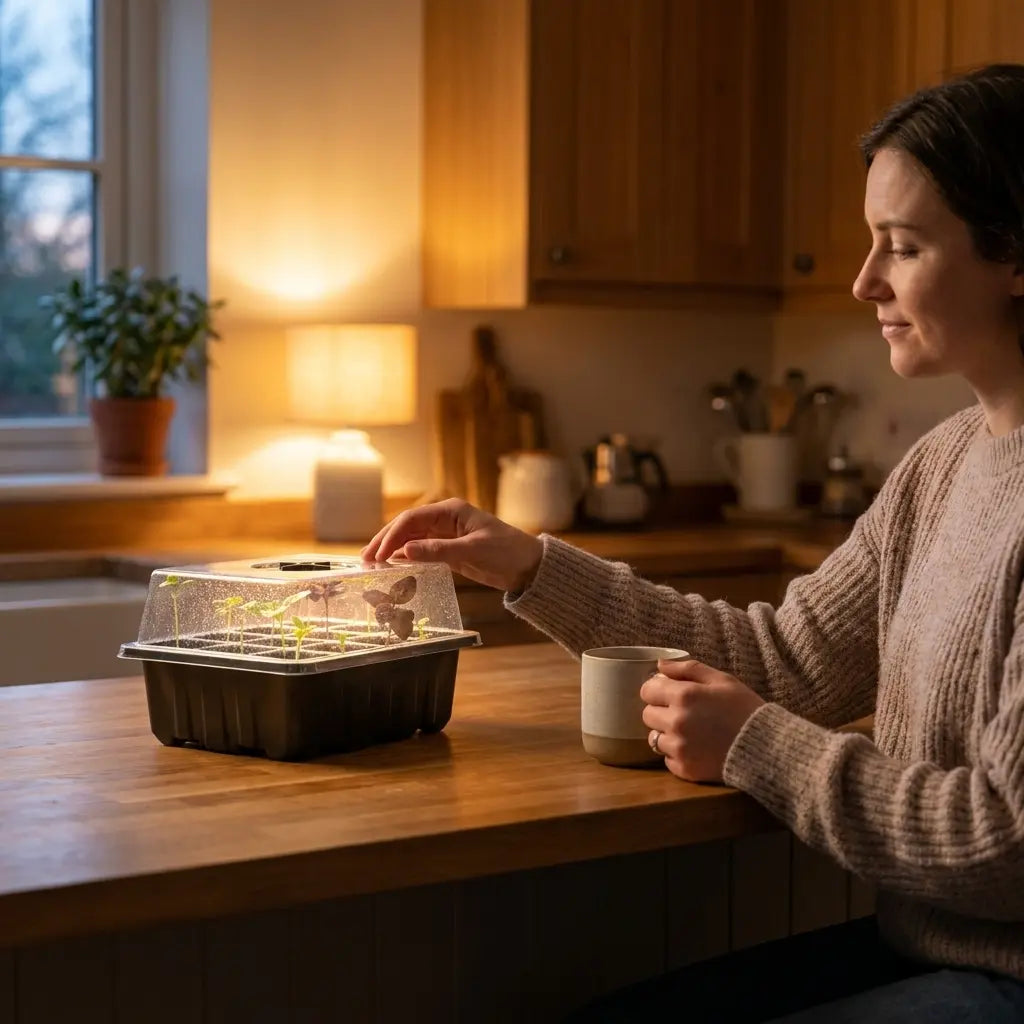
If you are looking to grow food at home, it helps to explore systems that are built around these essentials. Structured setups designed for simplicity can provide consistent results without requiring constant adjustments or monitoring.
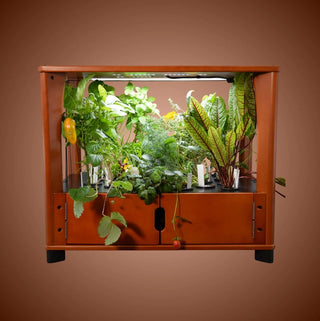
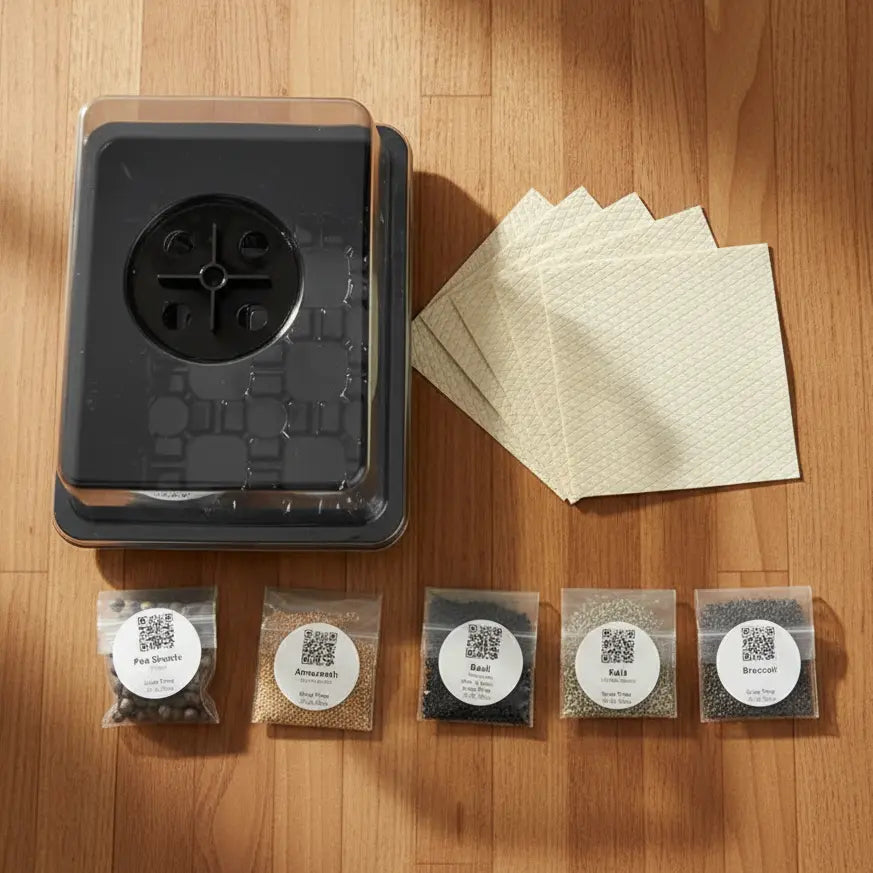
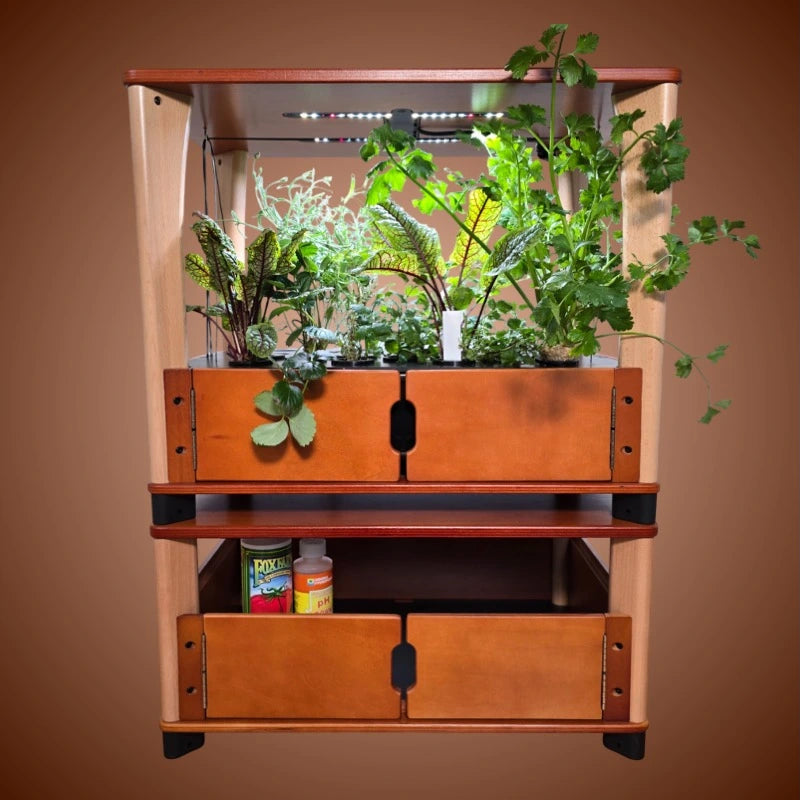
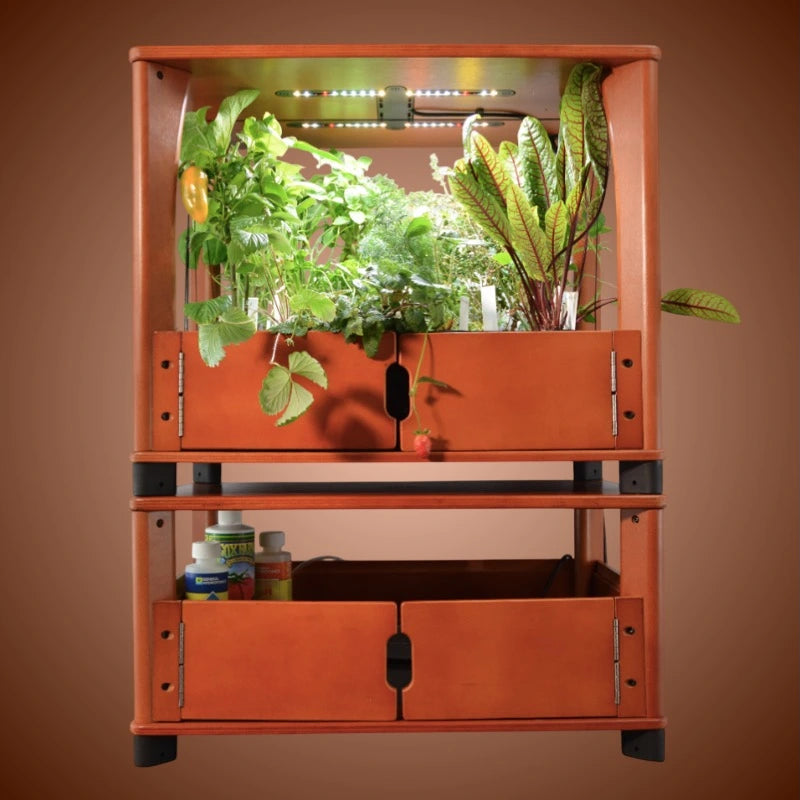
You can explore options like the Aquager Hydroponic Home Farm or beginner-friendly setups such as the Aquager Grab & Grow Kit to see how indoor systems can be simplified for home use.
The goal is not to reduce capability. It is to remove unnecessary complexity so that the system remains stable and easy to maintain. When the focus stays on the essentials, indoor growing becomes more accessible and more reliable over time.

Mini FAQ
Do hydroponic systems need sensors and apps to work?
No, plants do not require sensors or apps to grow. These features can help monitor conditions, but they are not necessary for maintaining a stable growing environment.
Why do some hydroponic systems feel difficult to manage?
Many systems include multiple components that require monitoring and adjustment. This increases the number of variables, which can make the system harder to maintain.
Are simple hydroponic systems less effective?
No, simple systems can be just as effective when they provide consistent light, water, oxygen, and nutrients. Plant growth depends on these inputs, not on system complexity.
When are advanced hydroponic systems useful?
They are useful in large-scale or highly controlled environments where automation and precision are required. In most home setups, this level of complexity is not necessary.
Author: Aquager Team · Published: March 19, 2026 · Updated: August 2, 2026 · Reviewed: August 2, 2026 (Phase 2)











0 comments