
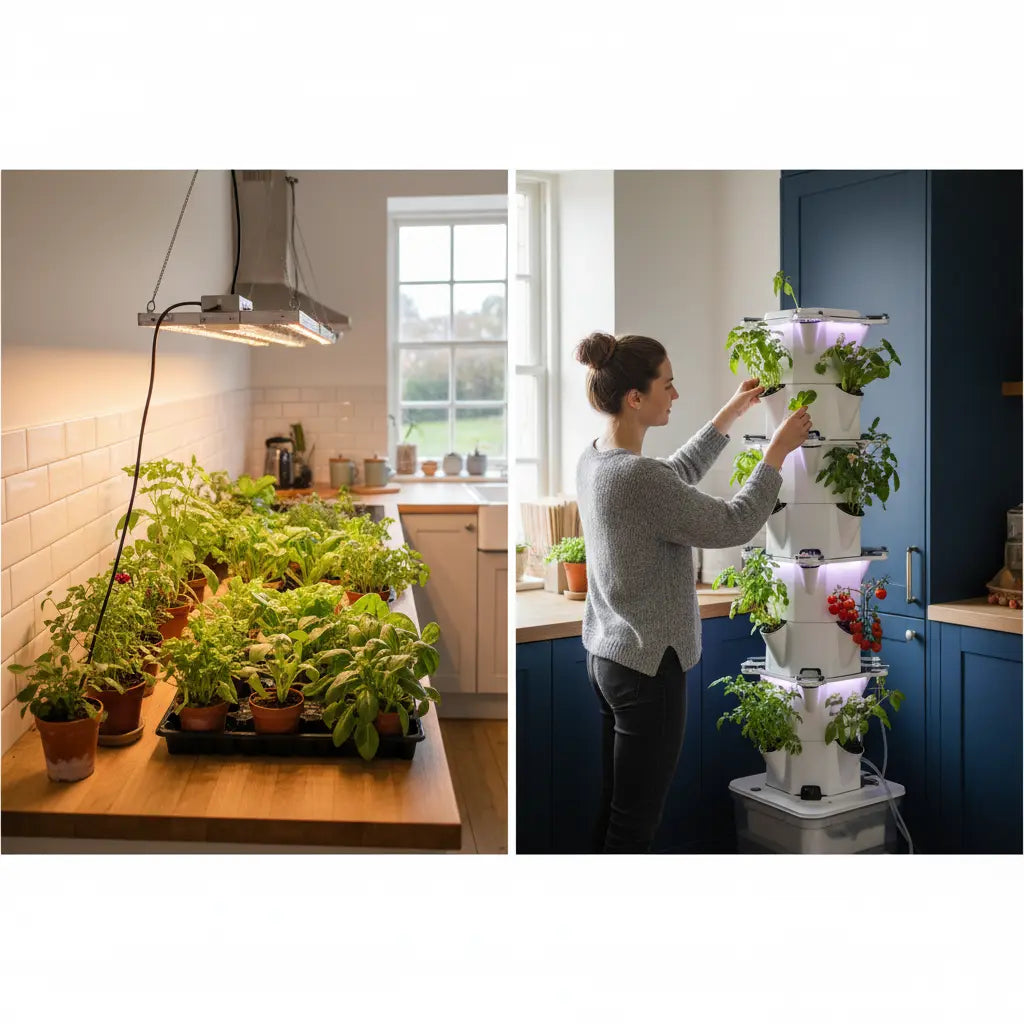
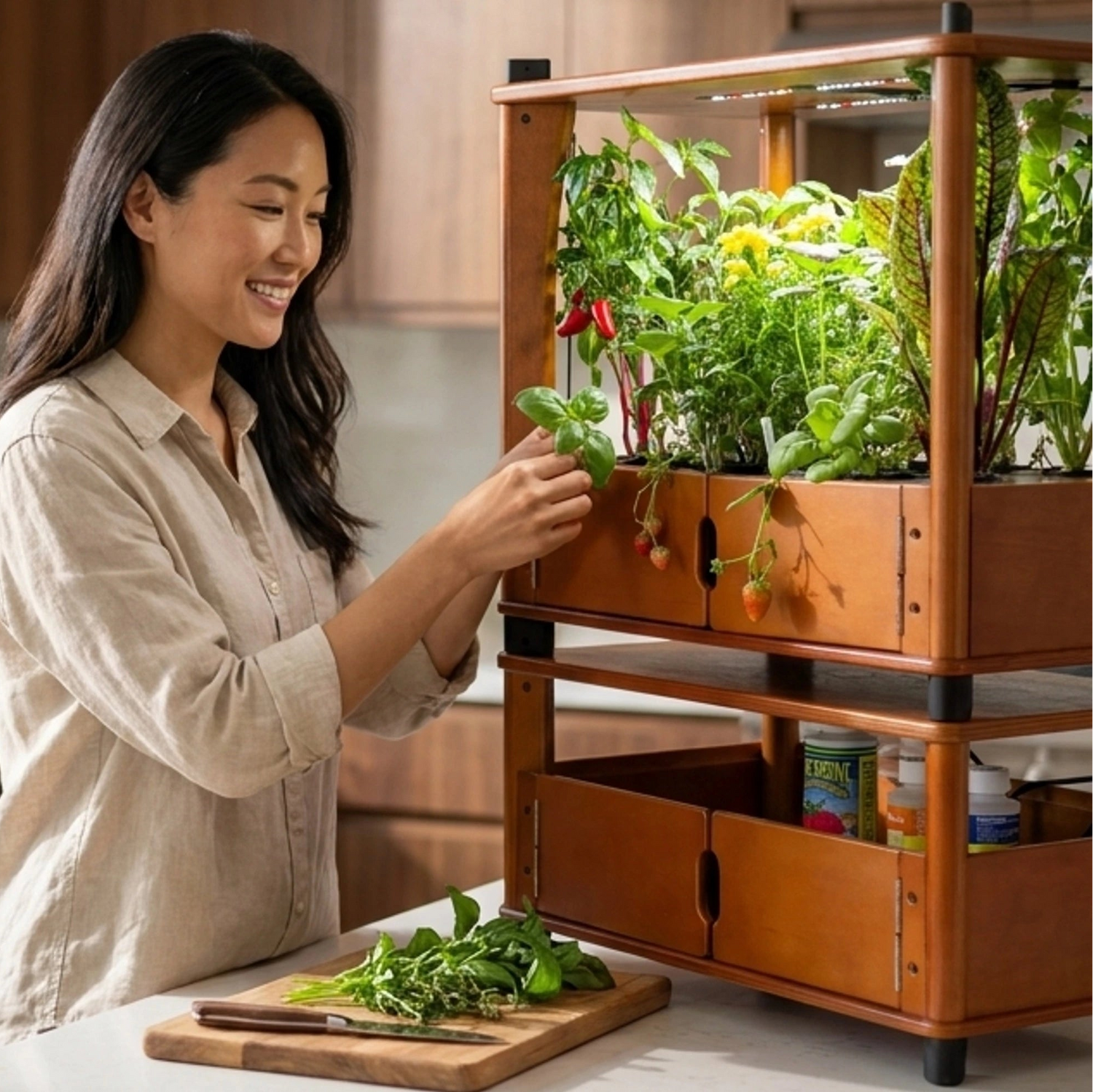
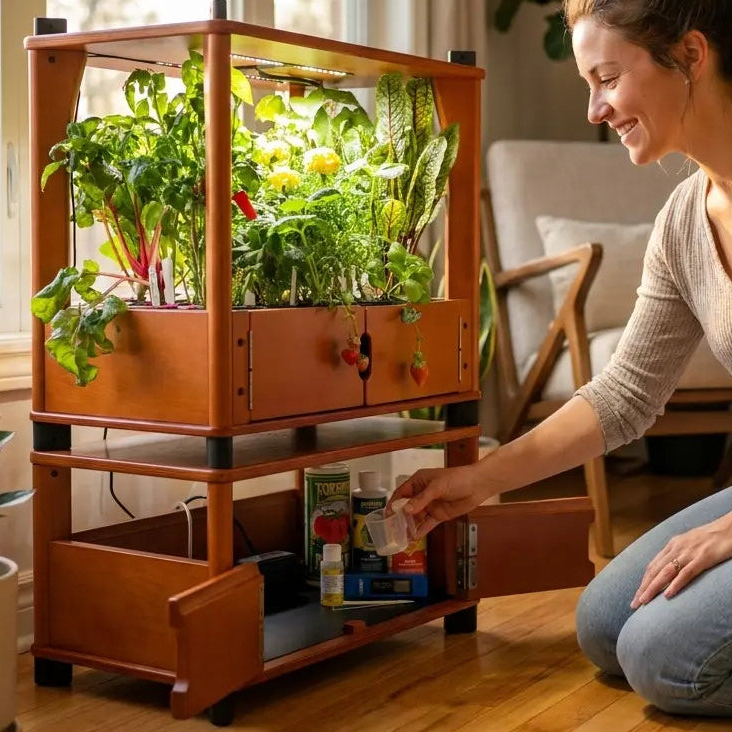
A vertical hydroponic system makes indoor food production easier because it uses height instead of floor space. By stacking plants vertically, you can grow significantly more food in the same area without expanding your setup.
This is the key reason why many indoor growing setups feel limited. Most people grow horizontally. They place plants on a counter, shelf, or table, which quickly runs out of space. Even if the plants grow well, production stays low because there is nowhere to add more plants.
Stacking changes that completely.
Instead of one surface → limited number of plants, you get one footprint → multiple growing levels → multiplied plant count.
In a typical home setup, a single surface can support around 12 to 24 plants depending on spacing. Once that space is full, production stops increasing. You cannot grow more without adding another table or area.
With vertical stacking, the same footprint can support multiple levels:
- 1 level → ~24 plants
- 2 levels → ~48 plants
- 4 levels → ~96 plants
This does not require more room. It uses the vertical space that is already available in most homes.
This is especially important indoors, where space is the main limitation, not plant growth. Plants can grow efficiently under controlled conditions, but without stacking, production stays small.
Another advantage is that vertical systems keep everything organized in one place. Instead of spreading plants across different surfaces, the entire growing area is structured and compact. This makes it easier to manage and maintain over time.
The core idea is simple:
- Indoor growing is limited by space, not plant capability
- Vertical systems remove that limitation
- More levels = more plants = more consistent food production
This is why stackable hydroponic systems are becoming more common in home setups. They allow indoor growing to move beyond small-scale planting into something that can produce meaningful amounts of food.

The Real Limitation: Horizontal Space Indoors
The main limitation of indoor growing is not plant growth. It is horizontal space. Most home setups rely on flat surfaces like counters, shelves, or tables. These areas fill up quickly, which limits how much food you can produce.
Even if your plants are growing well, production stops increasing once the surface is full. This creates a ceiling that cannot be overcome without expanding into another part of the home.
In a typical indoor setup:
- A kitchen counter or shelf holds 12–24 plants
- A small table setup may reach 20–30 plants
- After that, additional plants require new space
This is where most indoor growers plateau. They see healthy growth, but the total output stays low because the number of plants is fixed by the available surface area.
The issue becomes more noticeable over time. As plants grow and require spacing, the usable area decreases further. What started as a full setup becomes partially filled as plants expand.
This creates a common pattern:
- Initial setup → feels productive
- Plants grow → spacing increases
- Available space shrinks → total output stays limited
At the same time, most homes have unused vertical space. Walls, corners, and areas above counters remain empty while all growing activity happens at one level.
Here is the key mismatch:
- Horizontal growing → limited by floor and surface space
- Indoor environments → have unused vertical space available
This is why horizontal setups feel inefficient. They use the most constrained dimension while ignoring the most available one.
From a practical perspective:
- Adding more plants horizontally requires more room
- More room means spreading the setup across the home
- This increases complexity and reduces convenience
The result is a fragmented system where plants are placed in different locations instead of one organized structure.
Vertical systems solve this by shifting the growing direction. Instead of expanding outward, they expand upward within the same footprint.
This is not about increasing plant growth speed. It is about removing the space limitation that prevents scaling.

How Stacking Changes Output (Case Study Numbers)
Stacking changes indoor growing from a space-limited activity into a scalable system. The key difference is not how fast plants grow. It is how many plants you can grow at the same time within the same footprint.
In a horizontal setup, output is tied directly to surface area. Once that area is full, production stops increasing. Even if each plant performs well, total output remains fixed.
Stacking removes that limitation by multiplying the number of growing layers.
Here is how the difference looks in a typical home setup:
-
Single surface (horizontal setup)
→ ~24 plants
→ limited weekly harvest
With vertical stacking:
-
1 level (same as horizontal)
→ ~24 plants
-
2 levels (same footprint)
→ ~48 plants
-
4 levels (same footprint)
→ ~96 plants
This is not an estimate based on larger space. It is the same physical area, expanded vertically.
The impact becomes more clear when looking at production over time.
-
24 plants
→ baseline production
-
48 plants
→ ~2× output
-
96 plants
→ ~3–4× output depending on consistency
This increase comes from plant count, not individual plant performance. Each plant continues to produce at the same rate, but the total number of plants increases significantly.
This replaces one level → fixed output with multiple levels → multiplied output.
Another important effect is consistency. When plants are organized in a structured system, spacing and conditions remain more uniform. This reduces variability between plants and improves overall yield stability.
Here is the key shift:
-
Horizontal setup
→ limited plant count
→ fixed production
-
Vertical system
→ expanded plant count
→ scalable production
From a practical perspective:
- You do not need more room to grow more food
- You increase output by adding levels, not space
- Production scales with structure, not footprint
This is why stacking becomes the turning point. It allows indoor growing to move from small-scale planting into something that can produce a meaningful amount of food on a regular basis.

Why Vertical Systems Work Better Indoors
Vertical hydroponic systems fit indoor environments because they align with how space, light, and control already work inside a home. Instead of spreading plants across different areas, everything is organized into one structured system.
Indoors, conditions are more controlled than outdoors. Light, temperature, and airflow are relatively stable. However, this only works efficiently when plants are arranged in a way that distributes those conditions evenly.
In horizontal setups, plants are often placed in different spots:
- some near windows
- some further away
- some receiving more light than others
This creates uneven growth. Some plants grow faster, while others lag behind. Over time, this reduces consistency in both size and yield.
Vertical systems improve this by organizing plants into a uniform structure.
- All plants are positioned within a defined system
- Light can be distributed more evenly across levels
- Spacing remains consistent between plants
This reduces variability and makes plant performance more predictable.
Another advantage is how vertical systems interact with light. Indoors, light is often limited or directional. When plants are spread out, it becomes harder to ensure each plant receives enough light.
In a vertical system:
- Light sources can be aligned with each level
- Distance between plants and light remains consistent
- Coverage becomes more efficient
This replaces scattered plants → uneven light exposure with structured system → controlled light distribution.
The same applies to maintenance. When plants are spread across different surfaces, tasks like watering, checking growth, or harvesting become fragmented.
With a vertical system:
- All plants are in one location
- Maintenance becomes centralized
- Monitoring is faster and more consistent
From a practical perspective:
-
Horizontal setup
→ uneven conditions
→ scattered maintenance
→ inconsistent results
-
Vertical system
→ controlled environment
→ centralized management
→ stable growth patterns
This is why vertical hydroponic systems work well indoors. They match the controlled nature of indoor environments and organize plants in a way that improves consistency, efficiency, and overall output.

What Makes Modular Systems Easier to Use at Home
One of the main reasons vertical hydroponic systems work well at home is that they are often modular. This means you can start with a small setup and expand it over time without changing the entire system.
This removes one of the biggest barriers to indoor growing: committing to a large setup from the beginning.
Instead of building everything at once, you can grow into it.
A typical modular approach looks like this:
-
Start with 1 level
→ ~24 plants
→ simple setup, easy to manage
-
Add a second level later
→ ~48 plants
→ same footprint, increased output
-
Expand to 3–4 levels over time
→ ~72–96 plants
→ significantly higher production
This replaces full setup upfront → higher complexity with gradual expansion → controlled growth.
Another advantage is that each level follows the same structure. You are not learning a new system each time you expand. You are repeating the same setup, which keeps the process simple.
This consistency reduces mistakes and makes maintenance easier.
From a usability perspective:
- You do not need to redesign your setup when expanding
- You do not need additional floor space
- You scale by adding levels, not changing location
This is especially useful in apartments or small homes where space is limited and flexibility matters.
Modular systems also allow you to adjust based on your needs.
- If you want small production → stay at 1 level
- If you want more output → add levels
- If your needs change → adjust the system
This flexibility makes indoor growing more practical over time.
Another key benefit is that modular systems keep everything organized. As you expand, the structure remains compact instead of spreading across different areas of your home.
This leads to:
- cleaner setup
- easier access
- faster maintenance
Here is the main shift:
-
Non-modular setup
→ fixed size
→ harder to scale
→ less flexible
-
Modular vertical system
→ expandable
→ adaptable
→ consistent structure
This is why modular vertical hydroponic systems are becoming more common in home environments. They allow you to start simple and scale production without increasing complexity.

In Short (What a Vertical Hydroponic System Actually Does)
A vertical hydroponic system is a structured way to grow more plants indoors by stacking them in multiple levels within the same footprint. It does not change how plants grow. It changes how many plants can grow at once in a limited space.
In short, vertical systems make indoor food production easier because they remove the main limitation, which is horizontal space.
Instead of expanding outward, they expand upward.
Here is the concept simplified:
- Indoor growing is limited by surface area
- Vertical systems use unused height instead of floor space
- Stacking increases plant count without increasing footprint
- More plants = higher total food output
- Structured systems improve consistency and maintenance
This explains why many indoor setups feel productive at first but do not scale. They rely on one level, which limits how many plants can be grown at the same time.
If you’re struggling with growing enough food indoors, the issue is often not plant performance. It is the number of plants you can fit into your space.
For example:
- A single-level setup → ~24 plants → limited weekly harvest
- A multi-level system → up to ~96 plants → significantly higher output
The difference is not in how each plant grows. It is in how many plants are growing at once.
Another key point is that vertical systems keep everything in one place. This improves organization and reduces the effort needed to manage plants across multiple areas.
From a practical perspective:
- You do not need a larger space to grow more food
- You do not need to spread plants across your home
- You increase production by adding levels, not area
This is what makes vertical hydroponic systems effective for home use. They align with indoor constraints and turn limited space into a more productive growing environment.
Start Growing More Food in the Same Space
Understanding how vertical systems work changes how indoor growing is approached. It shifts the focus from growing a few plants to creating a system that can produce a meaningful amount of food at home.
Most limitations people experience are not caused by plant growth. They are caused by space. Once that limitation is removed through stacking, indoor growing becomes more practical and more consistent over time.
If you are looking to grow food indoors, it helps to explore systems that are designed around this idea. Structured setups allow you to organize plants vertically, maintain consistent conditions, and expand production without taking up additional space.
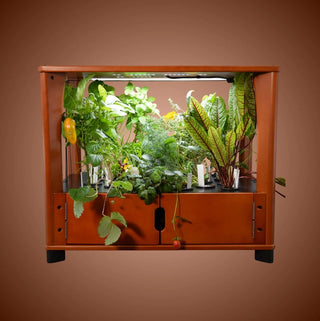
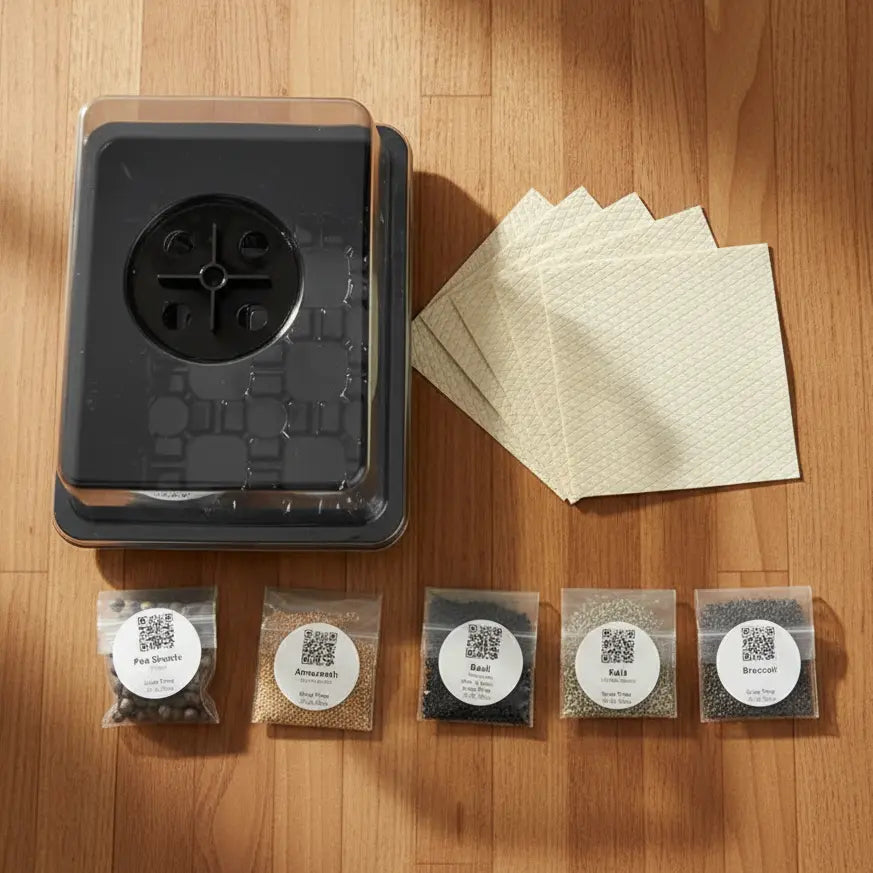
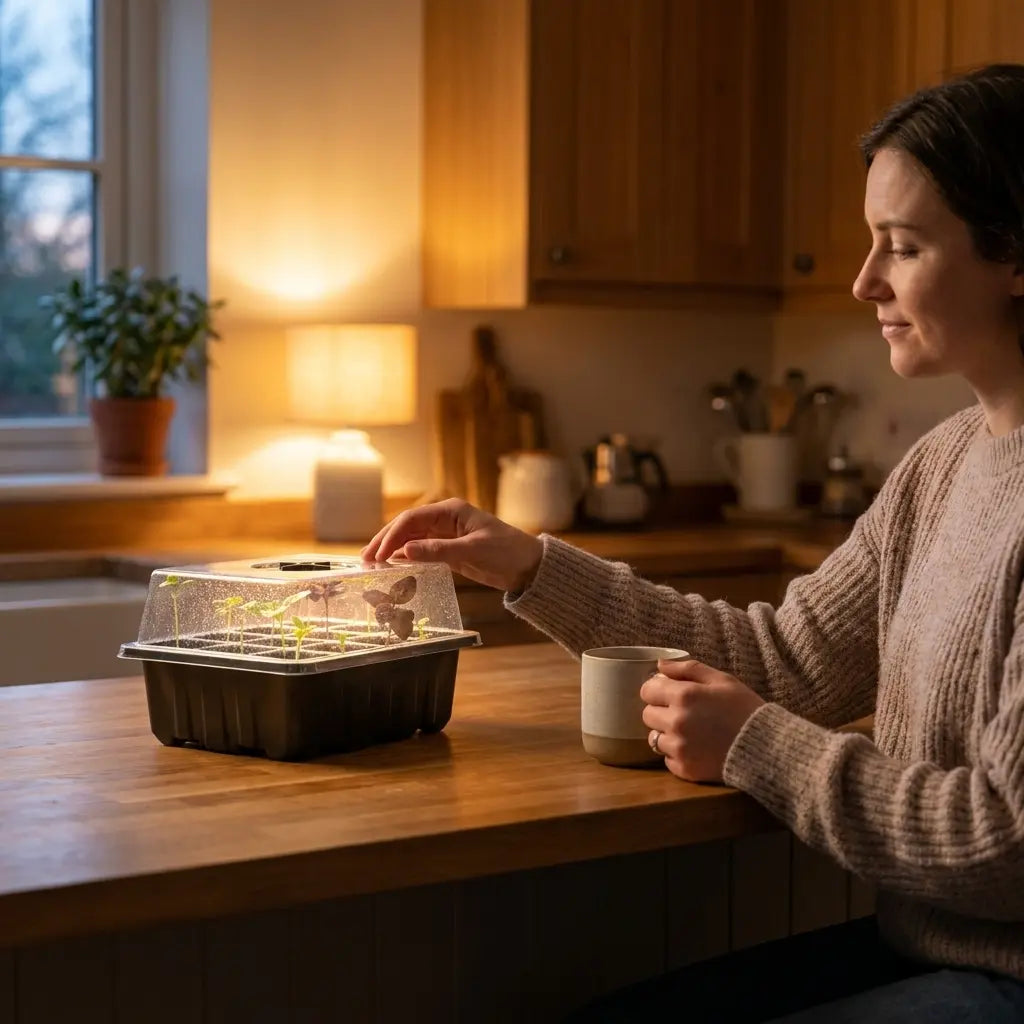
You can explore options like the Aquager Hydroponic Home Farm or beginner setups such as the Aquager Grab & Grow Kit to see how indoor systems are designed for home environments.
The goal is not to increase complexity. It is to simplify growing while making better use of the space you already have. When plants are organized efficiently, indoor food production becomes easier to manage and more reliable over time.
Mini FAQ
How much food can you grow with a vertical hydroponic system?
It depends on the number of levels, but a typical home setup can range from around 24 plants on one level to up to 96 plants with multiple stacked levels.
Are vertical hydroponic systems suitable for apartments?
Yes, they are designed to use vertical space, which makes them suitable for small indoor environments like apartments or kitchens.
Is vertical indoor gardening harder to maintain?
No, in many cases it is easier because plants are organized in one system, making maintenance more centralized and consistent.
Do vertical systems require more space?
No, they use the same footprint as a single-level setup. The increase in production comes from adding levels, not expanding outward.
Author: Aquager Team · Published: March 18, 2026 · Updated: August 2, 2026 · Reviewed: August 2, 2026 (Phase 2)











0 comments