
There are two plants that belong in every indoor cat’s life, and most cat owners are using them wrong — or not at all. Cat grass and catnip are not the same thing. They don’t do the same thing. They don’t even come from the same plant family. And yet they’re often sold interchangeably, lumped together as “cat plants,” and completely misunderstood by the people who buy them.
National Cat Day is October 29. It’s the best possible excuse to get both growing on your counter — and to finally understand what each one actually does to your cat, and why.
This guide covers the real difference between cat grass and catnip, why indoor cats need cat grass specifically, how to grow both in 7 days, and which product makes the easiest and most impressive National Cat Day gift you can give.
Cat Grass vs. Catnip: Two Completely Different Plants
The confusion is understandable. Both are green. Both are plants. Both are sold in pet stores as “cat plants.” But that’s where the similarity ends.
Cat grass is wheatgrass (Triticum aestivum) — the same plant used in wheatgrass shots and green smoothies for humans. Cats eat it. It’s a food, not a drug. The effect is physical: cats consume it to aid digestion, induce vomiting to clear hairballs, or simply because grazing on grass is an instinct inherited from wild ancestors who ate prey animals with grassy gut contents.
Catnip is Nepeta cataria, an herb in the mint family. Cats don’t eat it for nutrition — they respond to it neurologically. The compound responsible is nepetalactone, a volatile oil released when the plant is bruised or crushed. When a cat sniffs it, nepetalactone binds to receptors in the nasal tissue and triggers a response in the brain’s olfactory bulb that produces the characteristic euphoric behavior: rolling, rubbing, vocalizing, and a state of feline bliss that lasts 5 to 15 minutes.
The key distinction: cat grass is eaten, catnip is smelled. Cat grass provides a physical benefit; catnip provides a neurological one. One is food, one is an olfactory experience. Your cat needs both for completely different reasons.
Why Indoor Cats Need Cat Grass
Wild cats graze grass instinctively. It’s not nutritional grazing — it’s functional. Cats eat grass for two primary reasons:
1. To induce vomiting. Cats are obligate carnivores with digestive systems designed to process meat. Indigestible material — fur from grooming, feathers, bones — accumulates in the stomach. Grass contains fiber and certain compounds that trigger the gag reflex, helping cats expel what their digestive system can’t process.
2. As a natural laxative. The fibrous blades move indigestible material through the digestive tract, reducing the likelihood of hairball-related blockages. This is particularly relevant for long-haired cats and heavy groomers.
Indoor cats have no natural access to grass — so they improvise. They chew on houseplants. This is both a behavior problem and a health risk: many common houseplants are toxic to cats, including pothos, lilies, aloe vera, and snake plants. A cat eating a houseplant is almost certainly doing so because it needs grass and can’t find any.
Fresh-grown wheatgrass cat grass solves this directly. Place a tray within reach and most cats will prefer it to any houseplant — because they recognize it as the right material for the job.
For a deeper look at the wheatgrass biology and growing process, see our full guide: Why Your Cat Needs Fresh Wheatgrass — and How to Grow It in 7 Days.
How Catnip Actually Works on Your Cat
About 50 to 70 percent of cats respond to catnip — the response is genetic. Kittens under 6 months and many senior cats don’t respond at all. If you have a cat that ignores catnip entirely, that’s normal — they simply don’t carry the receptor gene.
For cats that do respond, the experience is consistently described by veterinary behaviorists as a safe, self-limiting euphoria. The nepetalactone-induced response lasts 5 to 15 minutes, after which the cat becomes temporarily immune for 30 minutes to 2 hours. There’s no addiction, no withdrawal, and no evidence of harmful effect from regular exposure.
Fresh-grown catnip is dramatically more potent than dried. The nepetalactone content in a living catnip plant is significantly higher than in dried store-bought catnip, where volatile compounds have partially evaporated over months of storage. A cat that shows mild interest in dried catnip will often have a much more vivid response to fresh-grown leaves.
The Day-by-Day Grow Journal: 7 Days to Happy Cat
This is the part worth sharing. Growing cat grass at home is fast enough to document the whole process on social media — from seed to the moment your cat takes their first sniff.
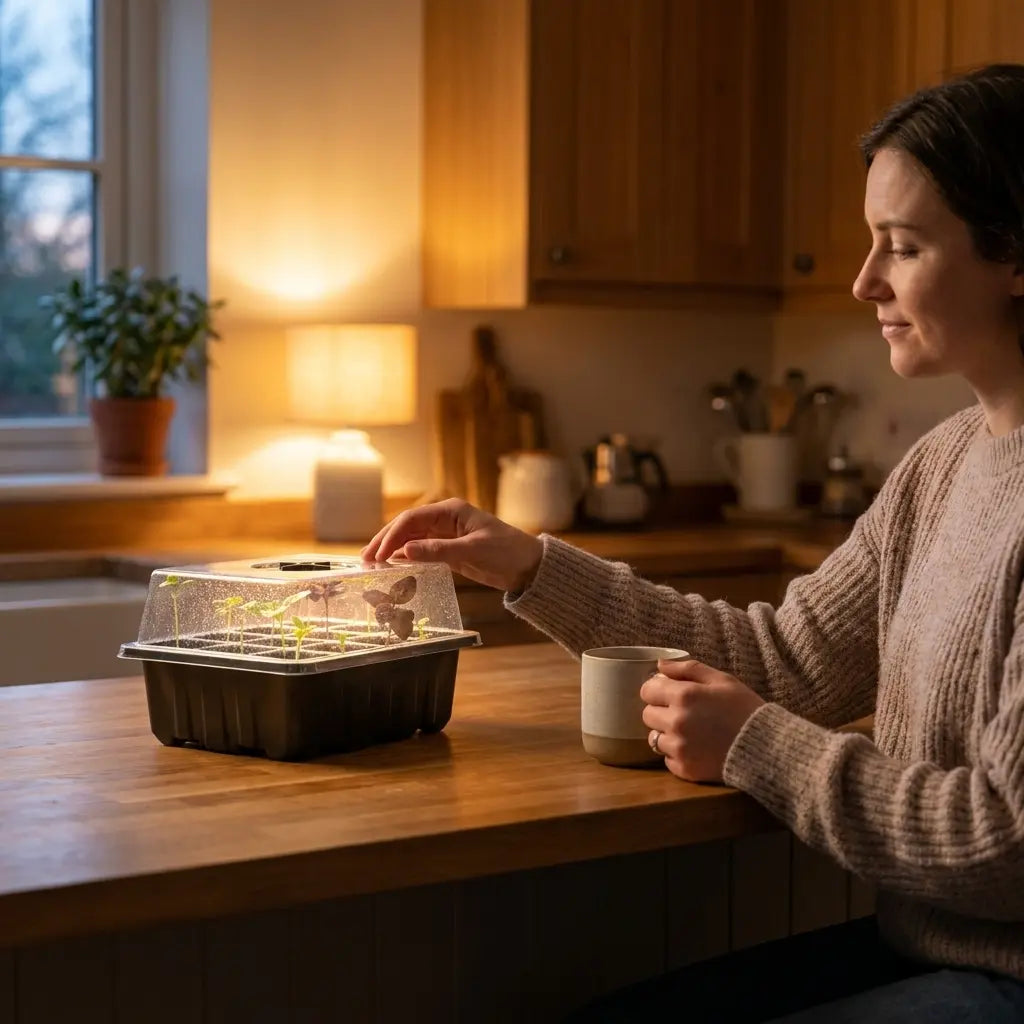
Day 1: Soak wheatgrass seeds in water for 6 to 8 hours (recommended — speeds germination noticeably). Plant on a damp organic grow mat. Cover with a dome or second tray.
Day 2: Seeds begin to swell and split. Tiny white root tips emerge. Water the bottom tray lightly. Keep the cover on.
Day 3: First pale green shoots push through, 0.5 to 1 inch tall. The tray smells faintly of fresh bread. This is when it starts to look like something remarkable.
Day 4: Shoots are 1 to 2 inches and starting to stand upright. Move to a bright windowsill if you haven’t already. Remove the dome.
Day 5: Shoots green up and separate into individual blades. The cat will probably be investigating the tray by now.
Day 6: Dense mat of 2 to 3 inch green blades. Fully green, standing tall, unmistakably grass.
Day 7: Ready to serve. Place the tray on the floor or a low surface and step back. The reaction speaks for itself.
For catnip, the timeline is longer — catnip is a slow-growing herb that takes 3 to 4 weeks from seed to first harvest. The Catnip Seeds (4x) come pre-seeded in organic grow mediums, removing the most finicky part of the process. Once seedlings are established, you can begin harvesting small amounts of leaves for your cat to sniff fresh.
The Perfect National Cat Day Gift: The Grab & Grow Cat Grass Kit
National Cat Day on October 29 is the one day a year when even non-cat-people expect cat owners to celebrate their pets. For cat owners who want to give something genuinely useful — not another toy that gets ignored — the Grab & Grow Pre-Seeded Starter Kit (Cat Grass) is the best option in this price range.
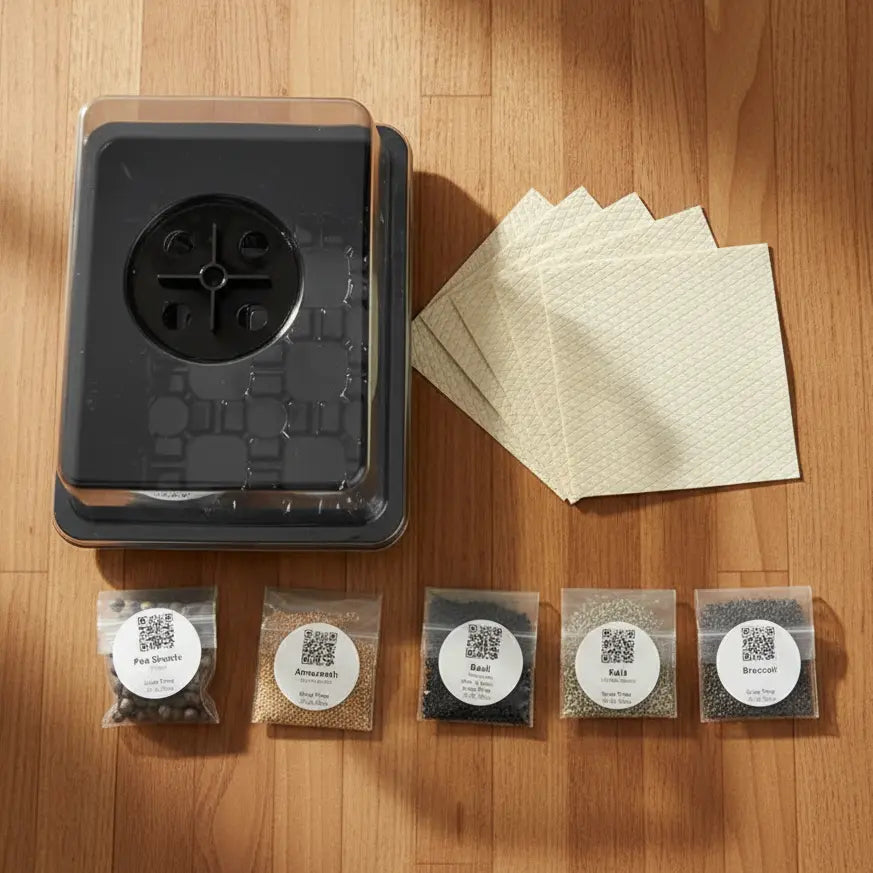
It’s pre-seeded — the cat grass seeds are already embedded in the grow medium. The recipient just adds water and waits 7 days. No gardening knowledge required, no measuring, no mess. At $39.99, it sits comfortably in the meaningful cat gift category — above a toy, below a vet visit, exactly right for someone who takes their cat seriously.
For cat owners who want to grow both cat grass and catnip, pair the Grab & Grow Kit with the Catnip Seeds (4x) — $7.99 — for a complete “spoil your cat” gift set under $50.
Frequently Asked Questions
What’s the difference between cat grass and catnip?
Cat grass (wheatgrass) is eaten by cats for digestive support and hairball management — it’s a food. Catnip (Nepeta cataria) triggers a neurological response through the compound nepetalactone, causing the characteristic rolling, rubbing, and euphoric behavior. Two completely different plants with completely different effects.
Do all cats respond to catnip?
No. The catnip response is genetic, and approximately 30 to 50 percent of cats don’t respond. Kittens under 6 months and many senior cats also tend not to respond. If your cat ignores catnip entirely, that’s completely normal.
How often should I give my cat fresh cat grass?
A continuous supply is ideal for active groomers or cats prone to hairballs. Most cats regulate their own intake. Replace the tray when it looks depleted or starts to yellow, typically every 1 to 2 weeks.
Is it safe to grow cat grass and catnip together?
Yes. Both are non-toxic to cats. Wheatgrass is one of the safest plants a cat can consume. Catnip is equally safe — there’s no known toxicity even with heavy exposure, and cats self-regulate their response naturally.
How do I grow cat grass if I’ve never grown anything before?
The Grab & Grow Cat Grass Kit is specifically designed for complete beginners — seeds are pre-embedded in the grow medium, so you just add water. For the seed-pack approach, read our beginner’s guide: How to Grow Microgreens at Home: The Complete Beginner’s Guide.
Give Your Cat What They Actually Need This National Cat Day
The best National Cat Day gift isn’t another toy that ends up under the sofa. It’s something your cat will actually use every day — because their biology is wired for it.
Cat grass gives indoor cats access to what their instincts are already searching for. Fresh catnip gives them an experience that no dried store product can match. Both grow on a kitchen counter in days, for a few dollars, and your cat will visibly prefer them to every other thing in the room.
The Wheatgrass Cat Grass Microgreens Seeds — $3.99 — and the Catnip Seeds (4x) — $7.99 — are the DIY route. The Grab & Grow Cat Grass Kit — $39.99 — is the gift that arrives ready to grow.
Author: Aquager Team · Published: June 1, 2026 · Updated: September 12, 2026 · Reviewed: September 12, 2026 (Phase 2)












0 comments