
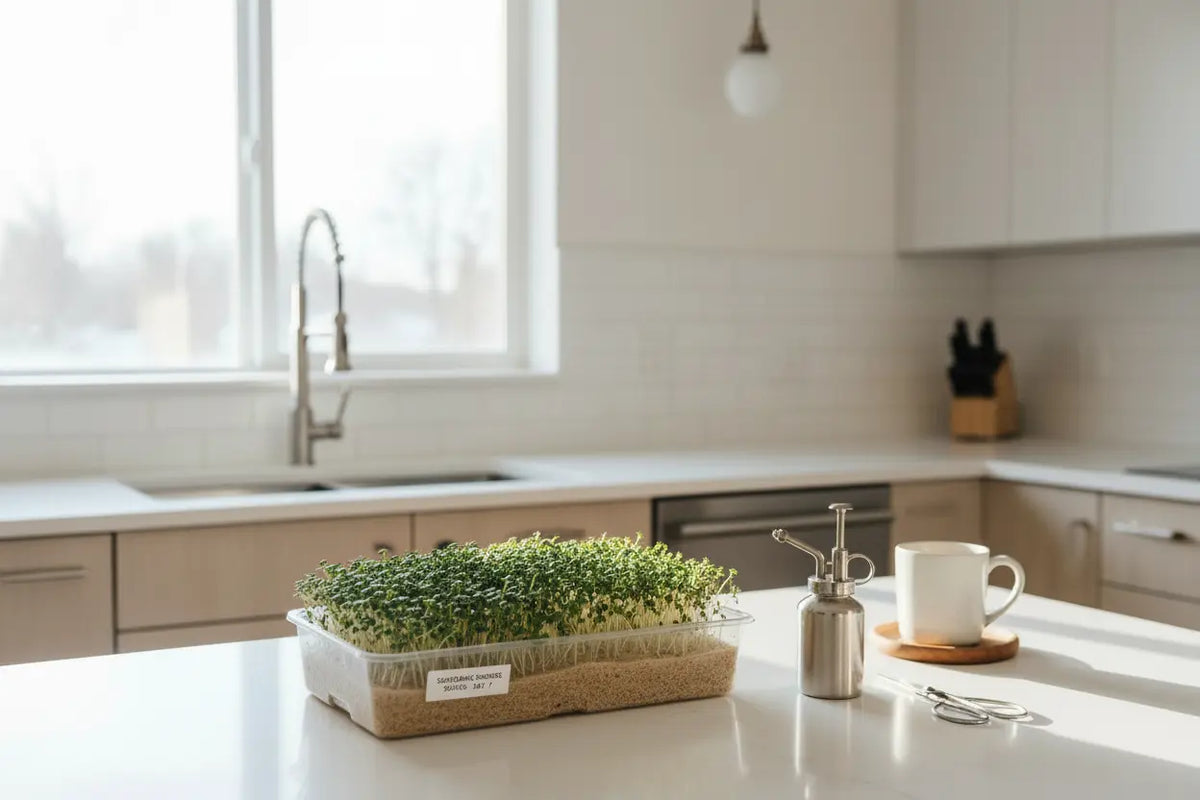
A New Year Resolution That Feels Achievable
Every New Year brings the same goal: eat better. In 2026, that goal increasingly turns into something more hands-on—grow something myself.
For many people, microgreens are the first step. They’re small, fast-growing, and often described as “easy.” They fit on a kitchen counter. They don’t require a garden. And they promise visible results in days, not months.
And yet, once people actually try to grow microgreens indoors, uncertainty shows up almost immediately. You follow the steps, mist the tray, wait. Then you start wondering if what you’re seeing is normal.
In short: microgreens are simple, but indoor growing introduces constraints that most beginner advice doesn’t explain clearly.
Why Microgreens Are the Go-To Fresh Start in 2026
Microgreens have become a popular New Year reset for good reasons:
- Grow quickly
- Don’t need much space
- Don’t require long-term plant care
- Feel forgiving compared to full indoor gardens
For someone setting resolutions in 2026, microgreens feel like a low-risk way to start growing food indoors. But speed also means fast feedback. Unlike larger plants, microgreens respond immediately to their environment. Moisture, light, and airflow issues show up within days.
That’s why beginners often feel something is “wrong” even when they’re doing everything they were told.
Why Growing Microgreens Indoors Can Feel Confusing
This confusion shows up faster indoors, where airflow, moisture, and light margins are tighter. That’s why beginners often think they’ve made a mistake—even when they’re following instructions correctly.
Indoors:
- Air doesn’t move naturally
- Moisture evaporates more slowly
- Light changes throughout the day and season
- Small inconsistencies compound quickly
Microgreens aren’t fragile—but they are responsive. That responsiveness is what makes them great for learning. It’s also what makes the first few attempts feel uncertain.
The problem isn’t that microgreens are hard. It’s that indoor environments behave differently than most advice assumes.
How to Think About Growing Microgreens Indoors in 2026
Most beginner guides focus on steps. What’s more important is the mental model.
Microgreens grow well indoors when:
- Conditions stay consistent
- The grow cycle stays short
- The setup doesn’t change mid-cycle
- Fewer decisions are made along the way
You’re not managing a long-lived plant. You’re managing a controlled growth window. This is why microgreens work best when treated differently than houseplants or vegetables. They’re not about nurturing over time. They’re about creating a stable environment for a short period—and then harvesting.
In 2026, the people who succeed with microgreens indoors aren’t optimizing. They’re simplifying.
Common Beginner Struggles (That Are Completely Normal)
If your first attempt at growing microgreens indoors doesn’t go perfectly, it usually falls into one of these patterns:
Too Much Water
Shallow roots and high moisture can lead to mold or poor growth quickly.
Inconsistent Light
Window light changes more than most people expect, especially in winter months.
Uneven Seed Density
Too many seeds or uneven coverage leads to patchy results.
Adjusting Too Much Mid-Grow
Changing placement, watering, or light during a grow cycle often creates more issues than it fixes.
None of these mean you failed. They mean microgreens are giving you fast feedback.
What a Realistic Fresh Start Actually Looks Like
A realistic New Year reset with microgreens isn’t about perfection. It’s about repeatability. That means:
- Letting a full grow cycle finish
- Observing instead of reacting immediately
- Keeping the setup the same between batches
- Growing the same thing more than once
For many beginners, the first successful indoor grow in 2026 isn’t impressive—it’s reassuring. That reassurance is what leads to consistency.
When Microgreens Stop Feeling “Beginner Simple”
If confusion persists after your first few grows, it’s usually a sign that the question has changed.
You may have started with: “Can I grow microgreens indoors?”
But now you’re asking:
- “Why does this feel inconsistent?”
- “Why do results vary between batches?”
- “Why does advice contradict itself?”
At this point, piecemeal tips stop helping. What’s needed is a clear system.
Mini FAQ (People Also Ask)
Are microgreens easy to grow indoors?
Yes, especially when conditions stay consistent and the grow cycle stays short.
Why did my microgreens fail so quickly?
Because microgreens grow fast, they also react quickly to moisture and light issues.
Can microgreens be grown year-round indoors?
Yes. Microgreens are especially well suited to year-round indoor growing.
Do microgreens need sunlight?
They need reliable light; window light alone is often inconsistent indoors.
Where to Go Next
If growing microgreens indoors feels close—but not fully clear—you’re not missing effort. You’re missing structure.
To understand how microgreens grow indoors, why some setups work more consistently than others, and how beginners reduce failure over time:
👉 Microgreens for Beginners
https://aquagertech.com/pages/microgreens-microgreens-for-beginners
This article is meant to reduce confusion—not replace structured guidance.
Author: Aquager Team · Published: February 10, 2026 · Updated: August 1, 2026 · Reviewed: August 1, 2026 (Phase 2)












0 comments