
If you've ever considered growing your own food indoors, you've probably imagined large pots, months of waiting, and plants that may or may not survive. For many beginners, indoor food growing feels complicated.
But if you're searching for the easiest food to grow indoors, there's one clear answer: microgreens.
Microgreens are the simplest way to grow your own food at home because they eliminate most of the variables that make indoor gardening difficult: long timelines, pollination, transplanting, and ongoing plant maintenance.
Indoors, complexity compounds quickly. The shorter the growth cycle, the fewer variables can go wrong. Here are the beliefs that keep beginners from starting, and why they don't hold up.
Myth: Growing Food Indoors Takes Big Pots and Months of Waiting
This is easy to believe because most familiar food crops back it up. Tomatoes take months. Peppers need deep containers. Herbs decline after a few weeks and need ongoing care. If those are the only crops you've tried indoors, assuming all food takes a long time and a lot of space is a reasonable conclusion.
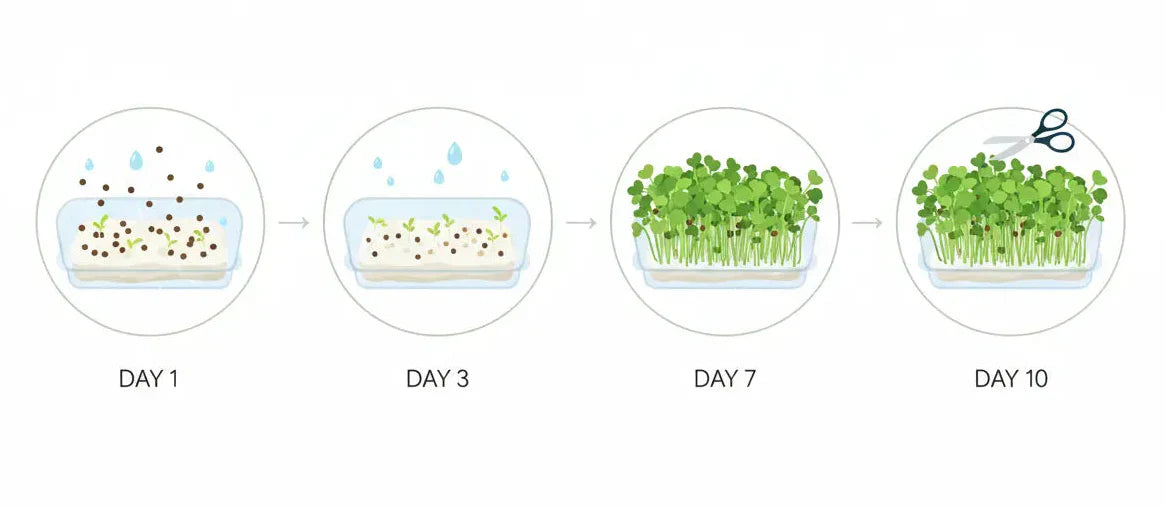
What's actually true: microgreens skip that entire timeline by design. They're harvested at the earliest stage of plant life, in 7 to 10 days, instead of being grown to full maturity. Indoors, complexity comes from limited airflow, reduced sunlight, and constrained root space, and a shorter growth cycle simply gives those problems less time to show up.
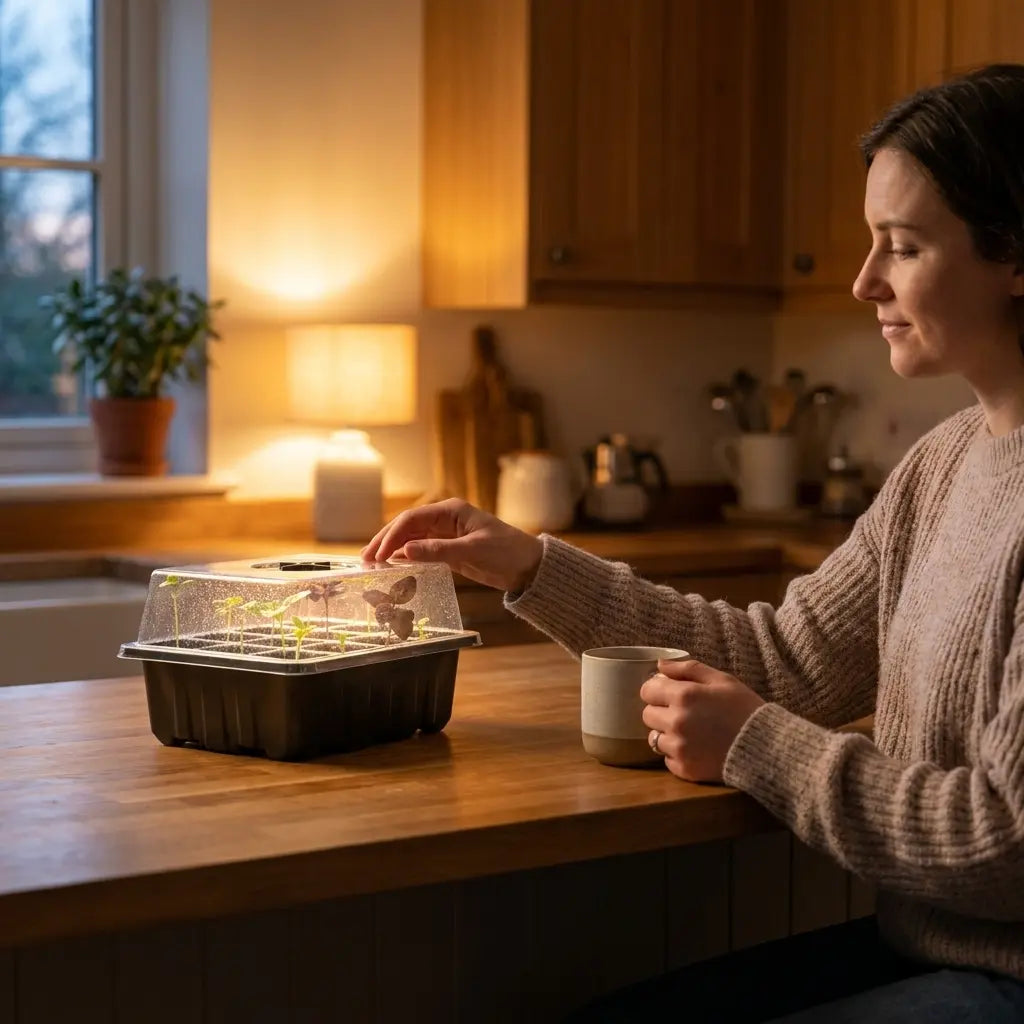
What to do instead: stop picturing a full-size vegetable garden. A shallow tray on a countertop is the entire setup. If you want the broader picture of what microgreens actually are and how they differ from mature vegetables, read What Are Microgreens? A Beginner's Guide.

Myth: Fast-Growing Food Must Be Fragile or Hard to Get Right
It's tempting to assume that anything ready in a week must be delicate or need constant babysitting to actually work. Slower usually feels safer.
What's actually true: the opposite is closer to reality. Traditional vegetables require weeks of seedling care, transplanting into larger containers, and ongoing pruning. Microgreens skip all of that. You sow seeds in a shallow tray, they sprout in 2 to 4 days, and they're harvest-ready in about a week. The shorter the timeline, the fewer things can go wrong, and if a tray does fail, you restart in days, not months.
What to do instead: pick a fast, forgiving variety for your first tray so you see the full cycle quickly. See The 5 Fastest-Growing Microgreens (Harvest in 7 Days or Less) for the specific varieties that make the shortest, most forgiving first attempt.

Myth: You Need a Backyard or a Big Kitchen to Grow Your Own Food
Most indoor food crops do struggle with limited space, so this belief has real evidence behind it too. Tomatoes need deep containers. Peppers need root depth. Cucumbers need support structures to climb.
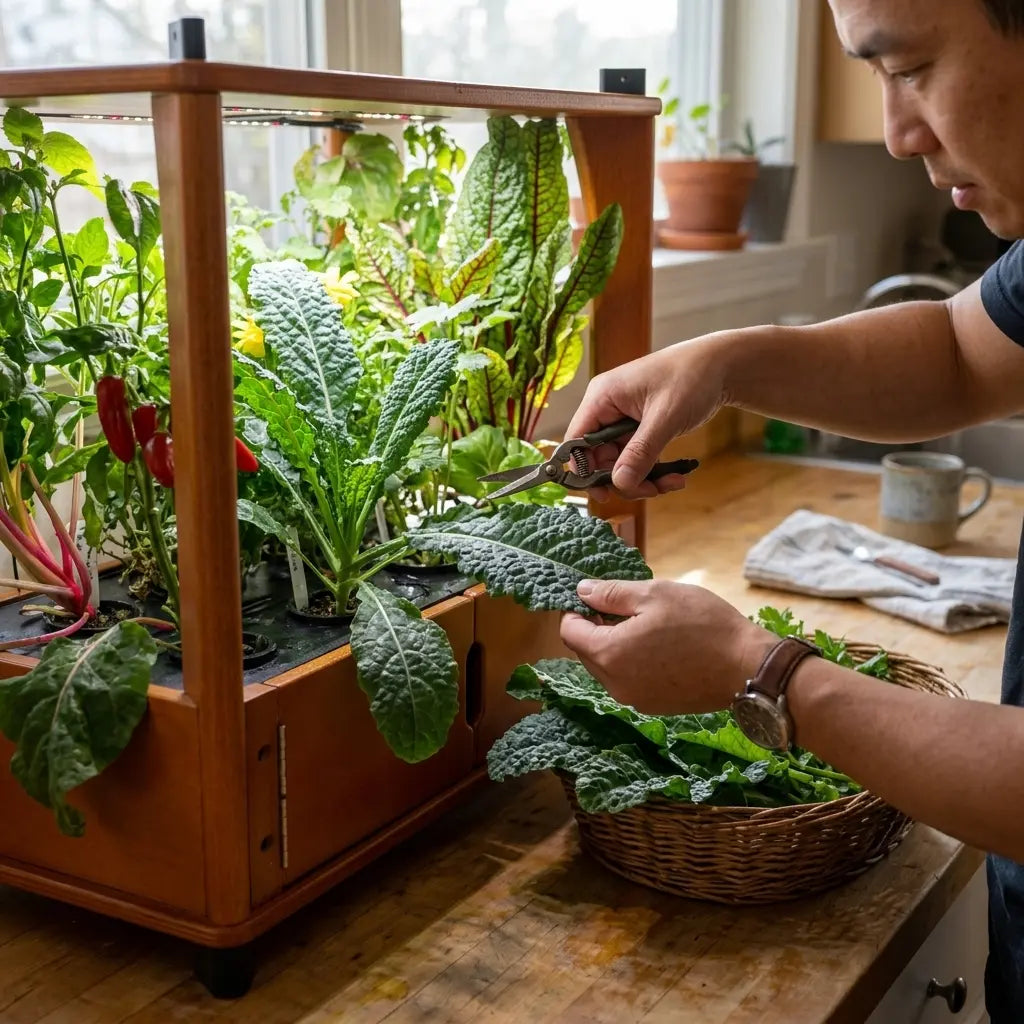
What's actually true: microgreens require only a shallow tray, and they don't need root expansion because they're harvested early. That makes them a fit for apartments, dorm rooms, or small kitchens. A single tray can sit on a countertop, a shelf, under a small LED light, or near a bright window. No backyard required, no balcony required.
What to do instead: pick any flat surface with a few hours of light and start there. Space was never actually the barrier, it just felt like one.

Myth: Microgreens Need Special Equipment or Expert-Level Care
Growing food indoors usually gets harder as plants mature. Pollination, long-term nutrient balancing, structural support, and ongoing pest monitoring all show up eventually, so it's fair to assume any indoor crop eventually demands specialized gear and know-how.
What's actually true: microgreens never reach that stage. You harvest before flowering, fruiting, or any structural weakness appears, so those long-term plant stresses never develop. The process is genuinely repetitive and simple: fill a tray, sow, water, wait a week.
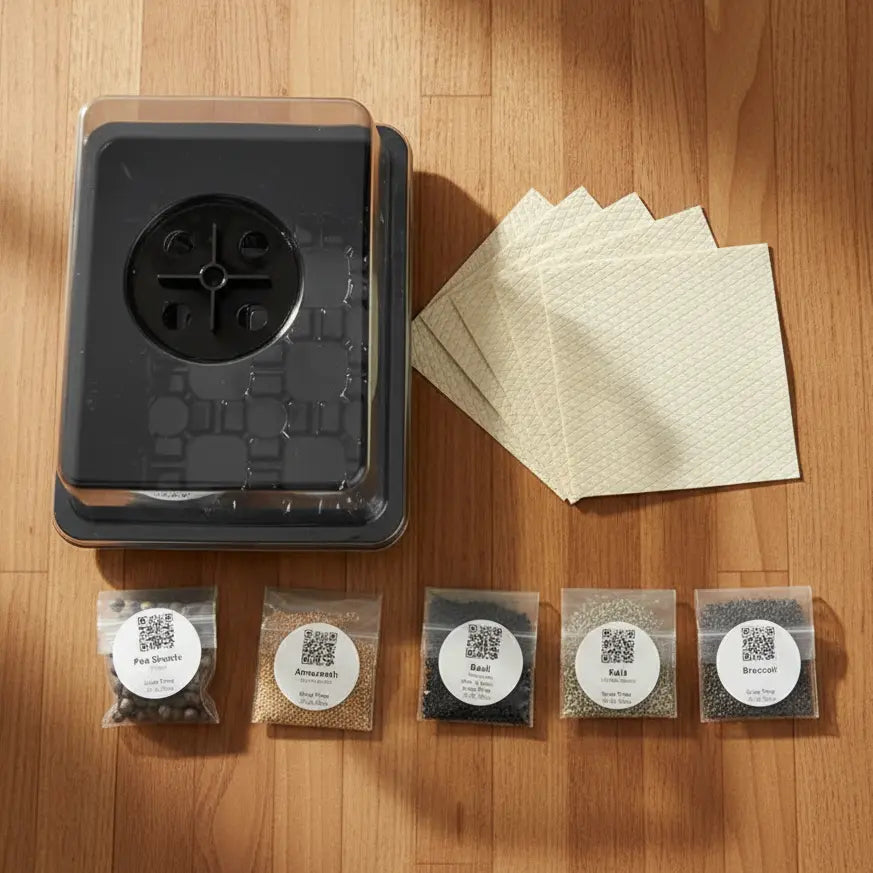
What to do instead: the frustrating part usually isn't the growing, it's guessing which tray, dome, and mat combination actually works together. The Microgreens Starter Kit bundles two trays, a dome, and organic grow mats, so the only decision left is which seeds to grow first.
Myth: Microgreens Are Too Sensitive for a Beginner to Succeed With
Microgreens are the easiest food to grow indoors, but "easiest" doesn't mean zero effort, and a tray that fails once can make it feel like the whole method is unreliable.
What's actually true: trays still need consistent watering, adequate light, clean equipment, and the right seed density. When trays repeatedly fail, the cause is almost always environmental and fixable, not a sign that the grower did something wrong. Uneven germination like the example below usually traces back to inconsistent watering, not bad luck.
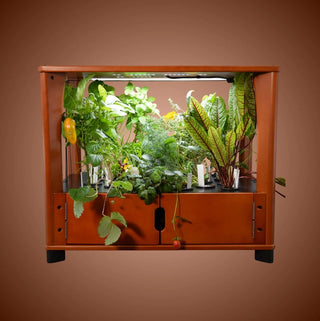
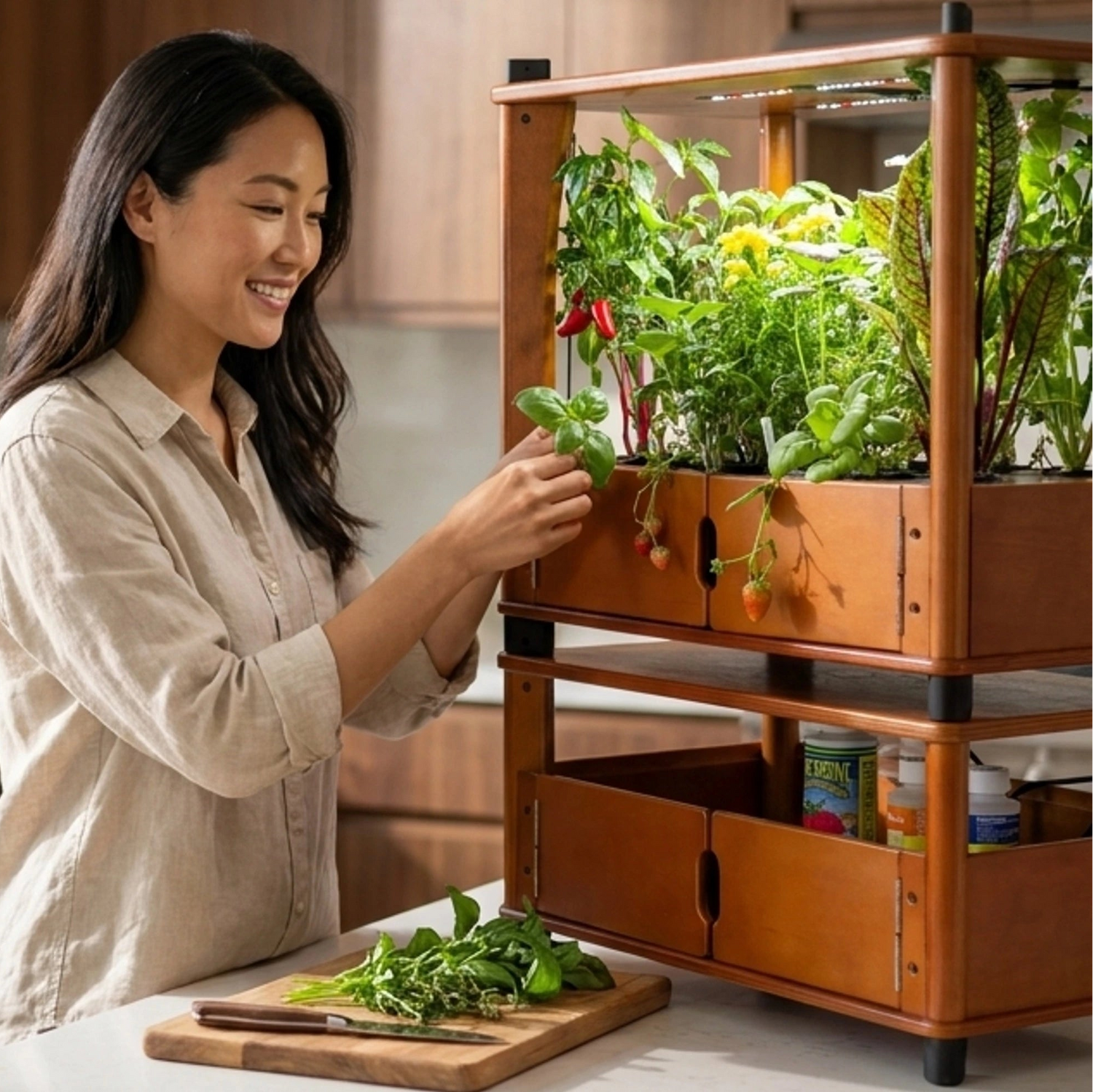
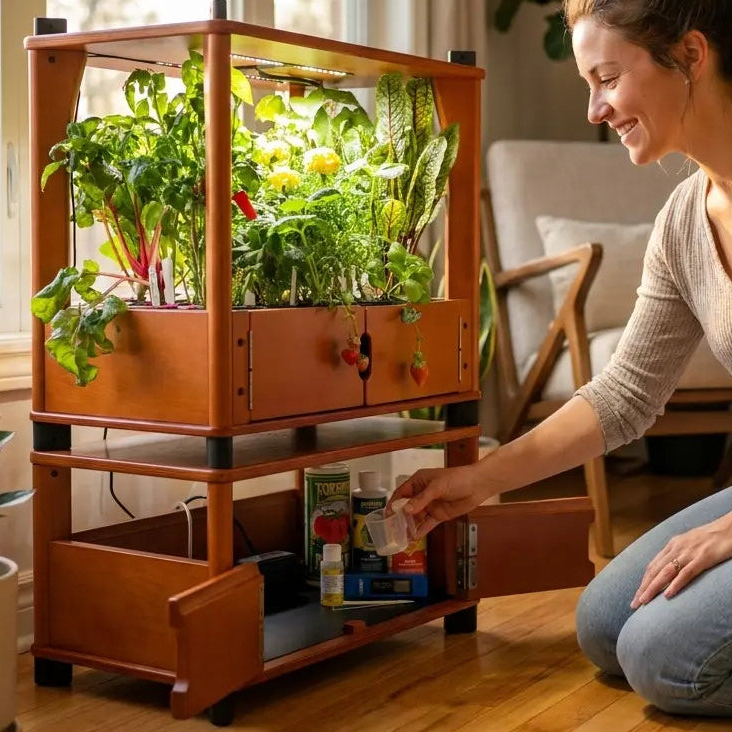
What to do instead: remove the two variables that cause most failures. Watering gets easier with a grow mat that holds moisture evenly, and light gets easier when it's not left up to a window. The Aquager Indoor Farm has built-in LED lighting calibrated for microgreens, so consistent light stops being something you have to watch for every day.

Mini FAQ
Are microgreens really the easiest food to grow indoors?
Yes. Their short growth cycle and minimal space requirements remove many common indoor growing challenges.
Do microgreens require special equipment?
No. A shallow tray, seeds, light, and basic watering consistency are sufficient to start.
How long does it take to harvest microgreens?
Most varieties are ready in 7 to 10 days.
Can beginners grow microgreens successfully?
Yes. Their simplicity and fast turnaround make them ideal for first-time indoor growers.
Growing your own food doesn't have to start with large containers or complex setups.
If you're looking for the easiest food to grow indoors, microgreens offer a fast, compact, beginner-friendly entry point, and once you know which beliefs were slowing you down, there's nothing left stopping you from starting this week.
For the full step-by-step process, read How to Grow Microgreens at Home in Less Than 10 Days.
Author: Aquager Team · Published: February 17, 2026 · Updated: August 24, 2026 · Reviewed: August 24, 2026 (Phase 3)












0 comments