Fastest Growing Microgreens You Can Harvest in Days (2026)
This page explains what makes certain microgreens grow faster than others — and why some varieties can be harvested in just a few days under indoor conditions.
When people search for fastest growing microgreens, they are usually looking for speed. But speed in microgreens is not random. It follows predictable biological patterns.
Fast-growing microgreens are varieties that reach harvest stage in the shortest time while maintaining healthy, upright growth.
This means they germinate quickly, establish strong stems early, and develop harvest-ready leaves within a compressed growth cycle.
Because microgreens are harvested at the seedling stage, their growth cycle is dramatically shorter than traditional vegetables. While mature plants can take months to produce harvestable leaves or fruit, many microgreens complete their entire growth cycle in less than two weeks.
Some varieties grow even faster. Under stable indoor conditions, certain microgreens can be harvested in as little as 5–8 days after planting.
This rapid growth is one of the reasons microgreens are commonly recommended for beginners. Fast harvest cycles provide quick feedback, allowing growers to see results quickly and adjust their growing conditions if necessary.
For people growing indoors, this speed also reduces the time plants are exposed to environmental stress. Shorter cycles mean fewer opportunities for watering mistakes, lighting fluctuations, or airflow issues to affect the crop.
As a result, fast-growing microgreens often become the first successful indoor crop for many beginners.
What “Fastest Growing” Actually Means
Microgreens are harvested at the seedling stage — before they mature into full plants. Because this window is short, small differences in seed behavior can create large differences in harvest timing. Most microgreens are ready within 7–14 days. Fast-growing varieties often reach harvest in 5–8 days.
The difference comes down to:
- Germination speed
- Seed energy reserves
- Early stem expansion
- Leaf development timing
This is not about forcing growth. It is about natural seed characteristics.
Seeds contain stored nutrients that fuel the plant during its earliest stages of growth. Varieties with larger or more energy-dense seeds often use these reserves to push stems upward quickly after germination.
Because microgreens are harvested so early in their life cycle, the plant’s initial energy reserves play a much larger role than they do in mature vegetable crops. The faster the seed can convert that stored energy into stem and leaf growth, the sooner the microgreens reach harvest size.
Environmental stability also influences how quickly this process happens. Consistent moisture, stable temperatures, and reliable lighting allow seeds to focus their energy on vertical growth rather than stress response.
This is why growers often see dramatic differences in harvest timing when switching between varieties — even when the growing conditions remain exactly the same.
Why Some Microgreens Grow Faster Than Others
Seed structure is the primary driver of speed. Larger, energy-dense seeds often germinate more aggressively because they contain more stored nutrients to fuel early development.
Common examples of fast-harvest microgreens include:
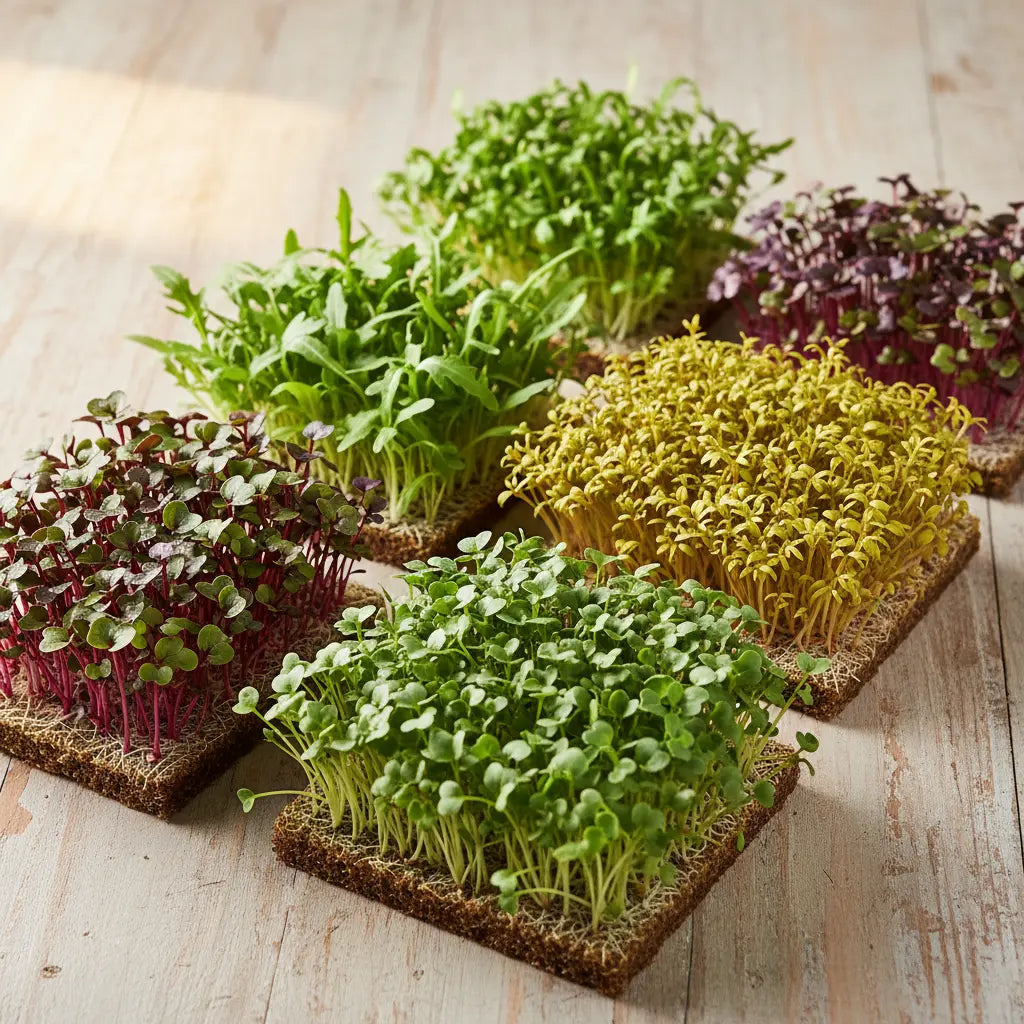
Radish, Broccoli, Mustard, Arugula, Kale
These varieties tend to sprout quickly and form strong stems within days. In contrast, slower-growing varieties may require tighter environmental control or simply have longer natural development cycles. Speed is built into the seed.
Seed size and internal nutrient reserves strongly influence how quickly microgreens develop after germination. Seeds that store more energy can support rapid early stem growth, allowing the plant to push upward and reach harvest height faster.
This is why certain varieties consistently appear in lists of the fastest microgreens. Radish and mustard seeds, for example, germinate quickly and produce sturdy stems within just a few days. Broccoli and kale microgreens also establish quickly and develop dense canopies that are easy to harvest.
The Fastest Microgreens You Can Grow Indoors
Fast-growing microgreens are popular because they deliver visible results quickly. Some varieties consistently germinate faster and reach harvest stage sooner than others.
Below are five of the fastest microgreens commonly grown indoors.


Radish Confetti Mix Microgreens Seeds


Broccoli Microgreens Seeds


Mustard Microgreens Seeds


Arugula Microgreens Seeds


Kale Kalefetti Mix Microgreens Seeds
Radish Microgreens
Radish microgreens are widely considered the fastest microgreens to grow. Under stable indoor conditions, they often reach harvest stage in 5–7 days. Radish seeds germinate quickly and produce strong stems that stand upright, which makes them easier to harvest compared to more delicate varieties.
Radish microgreens also develop a bold, fresh flavor and dense canopy, making them a popular choice for beginners.
Broccoli Microgreens
Broccoli microgreens are known for their consistent germination and uniform growth. They typically reach harvest stage within 7–9 days, producing delicate stems and bright green leaves.
Because broccoli seeds germinate evenly, trays often grow with a smooth and uniform canopy. This makes them one of the most reliable varieties for first-time growers.
Mustard Microgreens
Mustard microgreens germinate rapidly and produce vibrant green leaves with a distinctive flavor. They are commonly harvested within 6–8 days, making them one of the quicker varieties available.
Their fast early growth helps trays fill in quickly, creating dense microgreen coverage that is easy to harvest.
Arugula Microgreens
Arugula microgreens grow slightly slower than radish or mustard but still develop quickly under stable indoor conditions. Most trays reach harvest stage in about 7–10 days.
Arugula produces delicate leaves and thin stems that grow densely when seeded evenly.
Kale Microgreens
Kale microgreens grow steadily and typically reach harvest stage in 8–10 days. While slightly slower than radish or mustard, kale microgreens produce dense trays with small rounded leaves.
Their reliable germination and compact growth pattern make them a popular microgreen variety for indoor growing.
Why Speed Matters Indoors
Speed changes the indoor growing experience.
A shorter growth cycle means:
- Less time exposed to environmental stress
- Fewer watering inconsistencies
- Reduced mold risk window
- Faster feedback if something goes wrong
This matters because indoors, the shorter the growth cycle, the fewer environmental variables can disrupt development.
Fast harvest greens compress the learning curve. Beginners see results quickly, which builds confidence and momentum. However, speed alone does not guarantee success.
Indoor environments introduce variables that outdoor gardens rarely face. Light intensity fluctuates throughout the day, airflow is typically lower, and containers limit root space compared to open soil.
Because of these constraints, crops with long growth cycles can sometimes struggle indoors if environmental conditions are not perfectly balanced.
Fast-growing microgreens reduce this risk. Their short development window allows plants to complete most of their growth before small environmental fluctuations have time to cause serious stress.
This is one reason microgreens are often recommended as an ideal starting point for indoor gardening. Harvests happen quickly, mistakes become visible sooner, and growers can adjust their approach with each new tray.
Over time, these rapid cycles help beginners develop a reliable rhythm for watering, lighting, and airflow management.
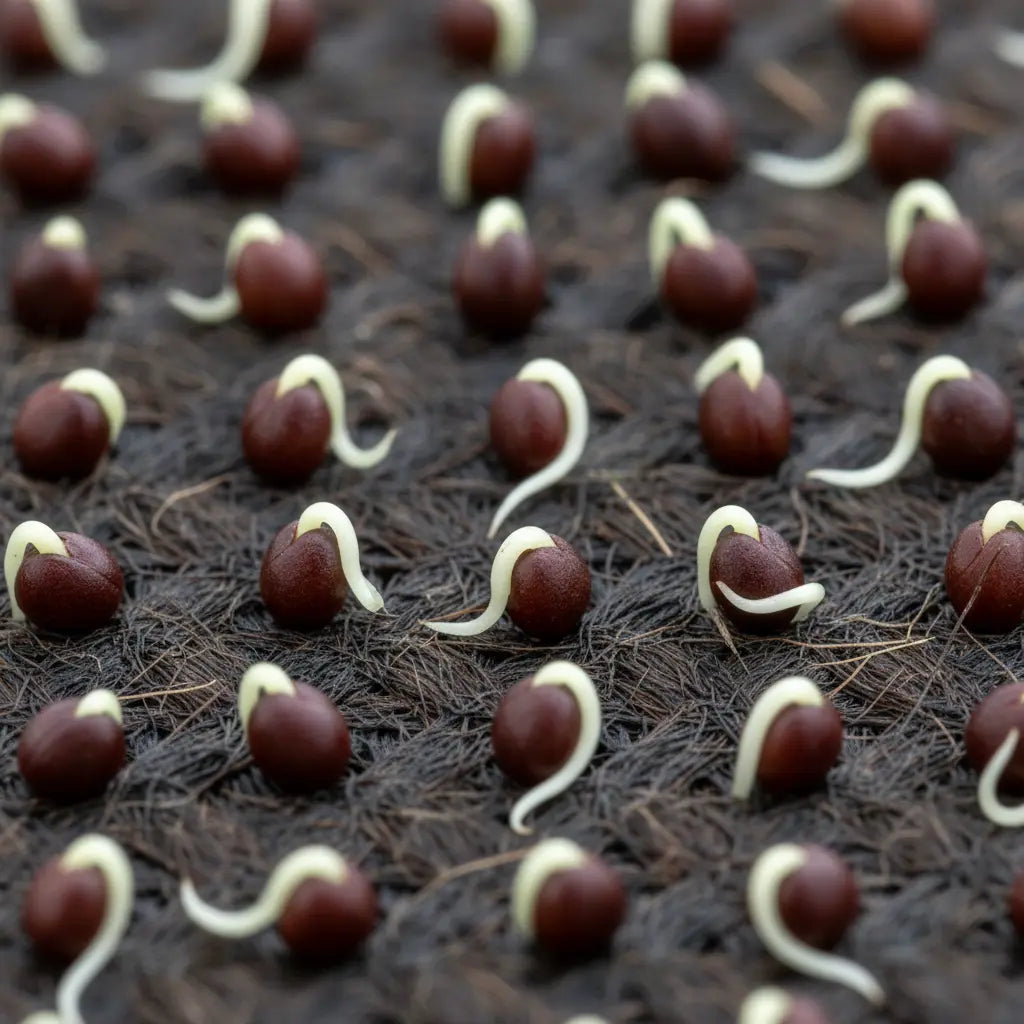
How Fast Growth Works (High-Level)
Fast-growing microgreens follow a simple biological pattern:
- Rapid water absorption
- Quick radicle emergence (initial root)
- Strong stem elongation
- Cotyledon leaf expansion
- Early harvest readiness
Because microgreens are harvested before true leaves fully form, they do not require long-term root expansion.
The plant’s stored energy is used primarily for early vertical growth. That is why environmental stability during the first 3–4 days is critical.
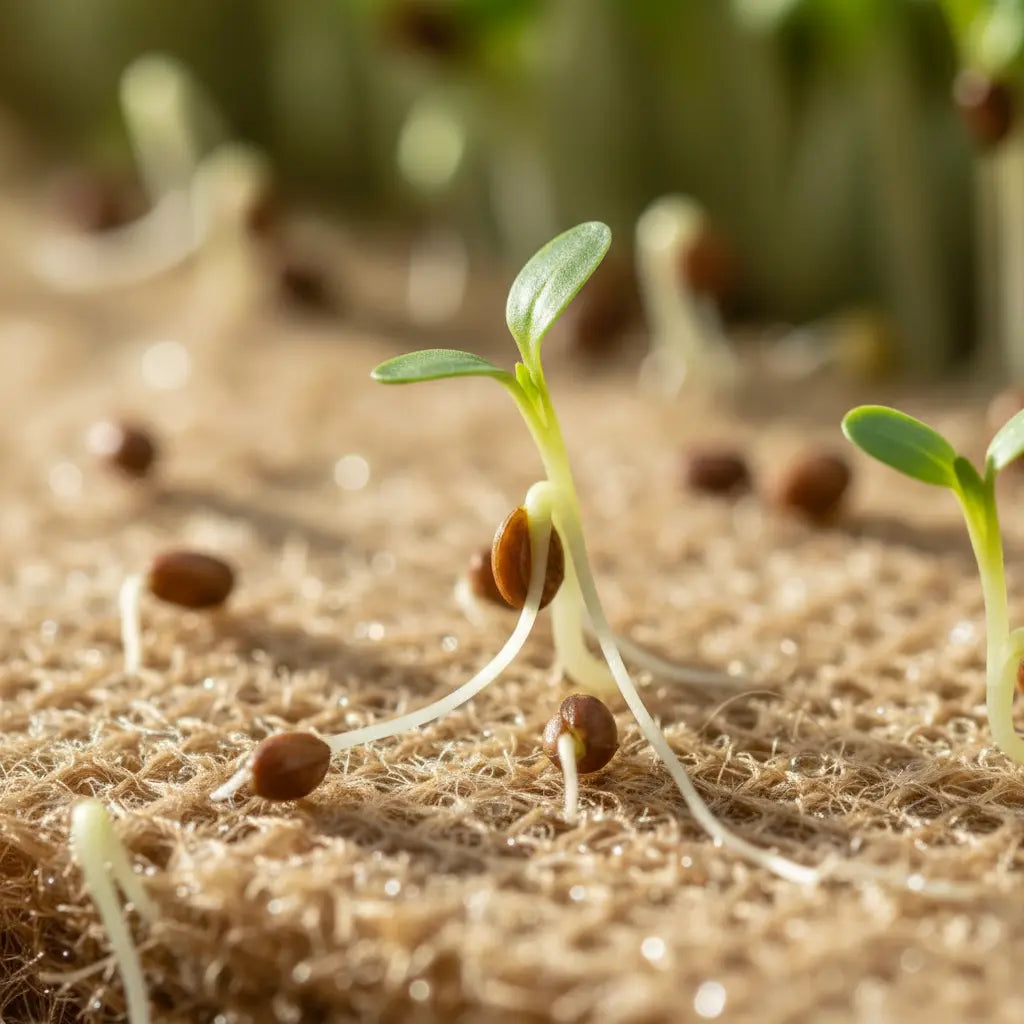
The first few days after planting are the most important stage in the microgreens growth cycle. During this period, seeds absorb water and activate the internal enzymes that drive germination.
Once the radicle — the plant’s first root — emerges, the seed begins converting stored energy into upward stem growth. This early vertical development allows microgreens to quickly reach the height required for harvesting.
Unlike mature vegetables that must develop large root systems and complex leaf structures, microgreens focus almost entirely on early stem and cotyledon development. This concentrated growth pattern is what allows many varieties to reach harvest stage within just a few days.
Because this process happens so quickly, maintaining stable moisture and consistent light during the first few days significantly improves the success rate of microgreens trays.
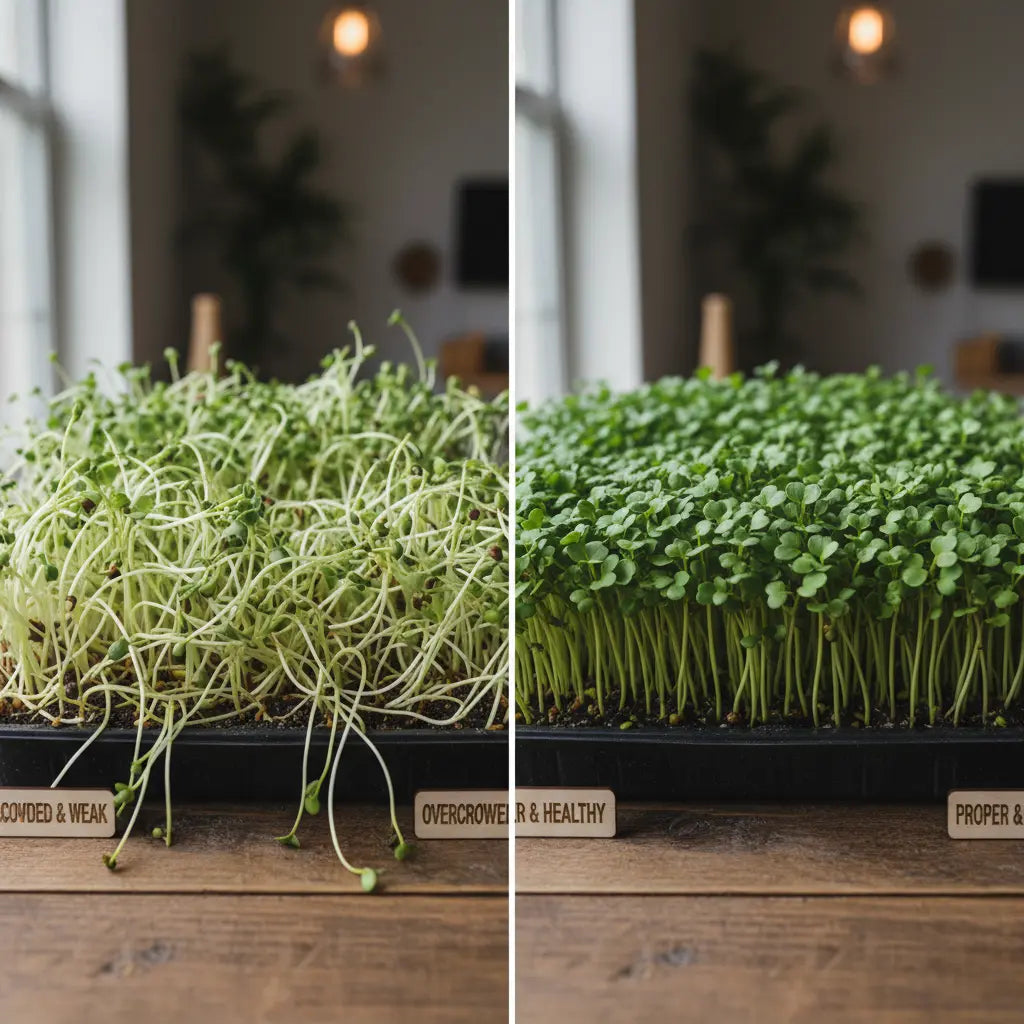
Common Misunderstandings About Fast Microgreens
“Faster Means Higher Yield”
Speed does not determine total harvest weight. Some slower varieties produce denser canopies.
“Faster Means More Nutritious”
Nutritional value depends on plant variety and harvest timing, not just speed.
“Fast Varieties Require No Care”
Fast-growing microgreens still require: Consistent moisture, Proper airflow, and Balanced seed density
Chasing speed without stability can create uneven germination or thin growth.
Fast-growing varieties simplify the growing process, but they do not eliminate the need for stable conditions. Even the quickest microgreens depend on proper moisture levels and adequate airflow during the early germination stage.
Many beginner failures occur when growers focus only on speed while ignoring environmental balance. Overwatering, overcrowding seeds, or restricting airflow can disrupt germination even in fast varieties like radish or mustard.
The goal of growing fast microgreens is not to force the plants to grow faster than their natural cycle, but to choose varieties that naturally develop quickly under stable indoor conditions.
When the environment is balanced and seeds are distributed evenly, fast-growing microgreens usually produce the most reliable early harvests.
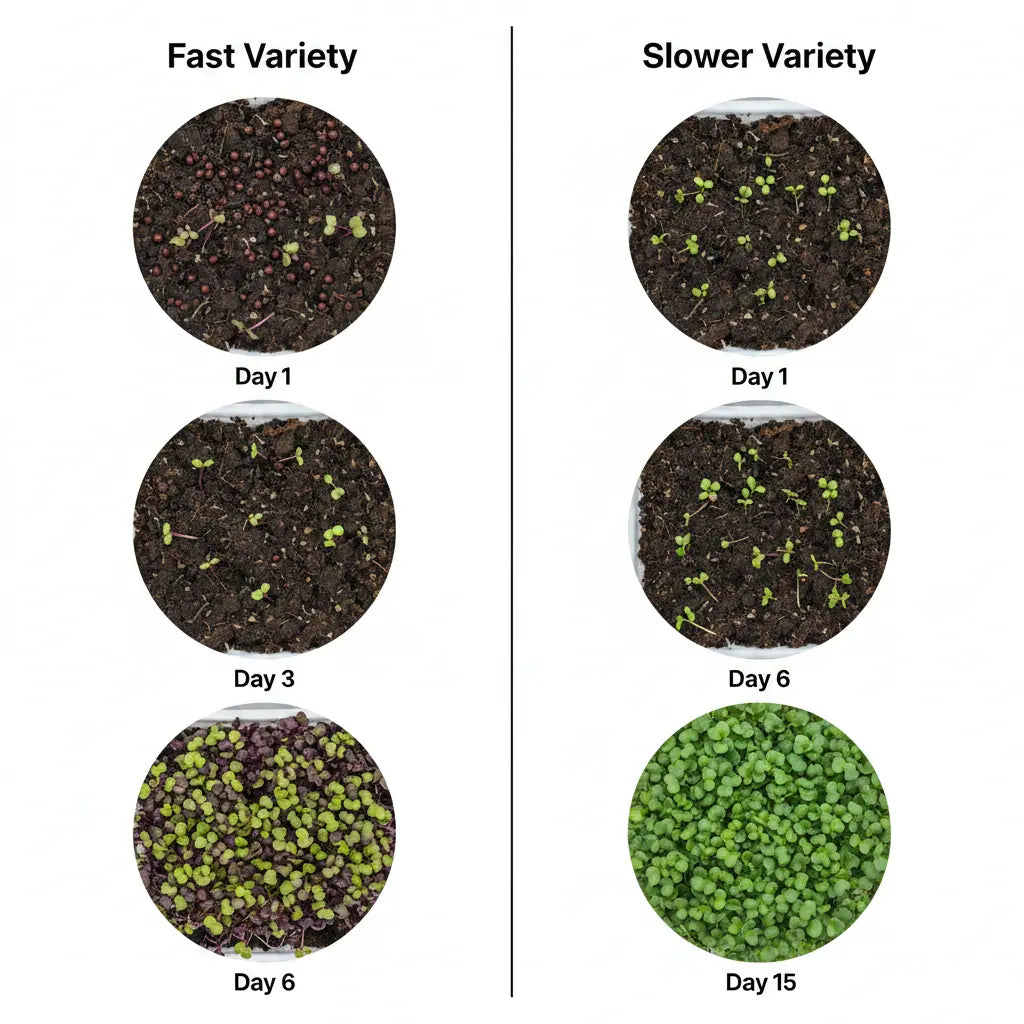
When Speed Becomes a Problem
Attempting to accelerate growth beyond natural patterns can cause: Overwatering, Overcrowding, Leggy stems, and Early collapse
Fast growth must remain controlled. If trays repeatedly fail within the first few days, the issue is usually environmental setup rather than seed choice.
For a structured step-by-step process that ensures stable germination and harvest timing, read: How to Grow Microgreens at Home (Step-by-Step)
Fast-growing microgreens already operate near the upper limits of their natural growth cycle. Trying to accelerate that cycle further often leads to instability in the growing environment.
For example, adding excessive water in an attempt to “help” the seeds grow faster can actually reduce oxygen around the roots, slowing development instead of speeding it up. Similarly, placing too many seeds in a tray may initially look productive, but overcrowding often produces thin stems and uneven growth.
In most cases, the fastest harvests come from maintaining consistent conditions rather than aggressive intervention. Stable moisture, balanced seed density, and reliable light allow the plants to follow their natural growth rhythm.
When these variables are controlled properly, fast-growing varieties such as radish, broccoli, and mustard will usually reach harvest stage within a predictable window.
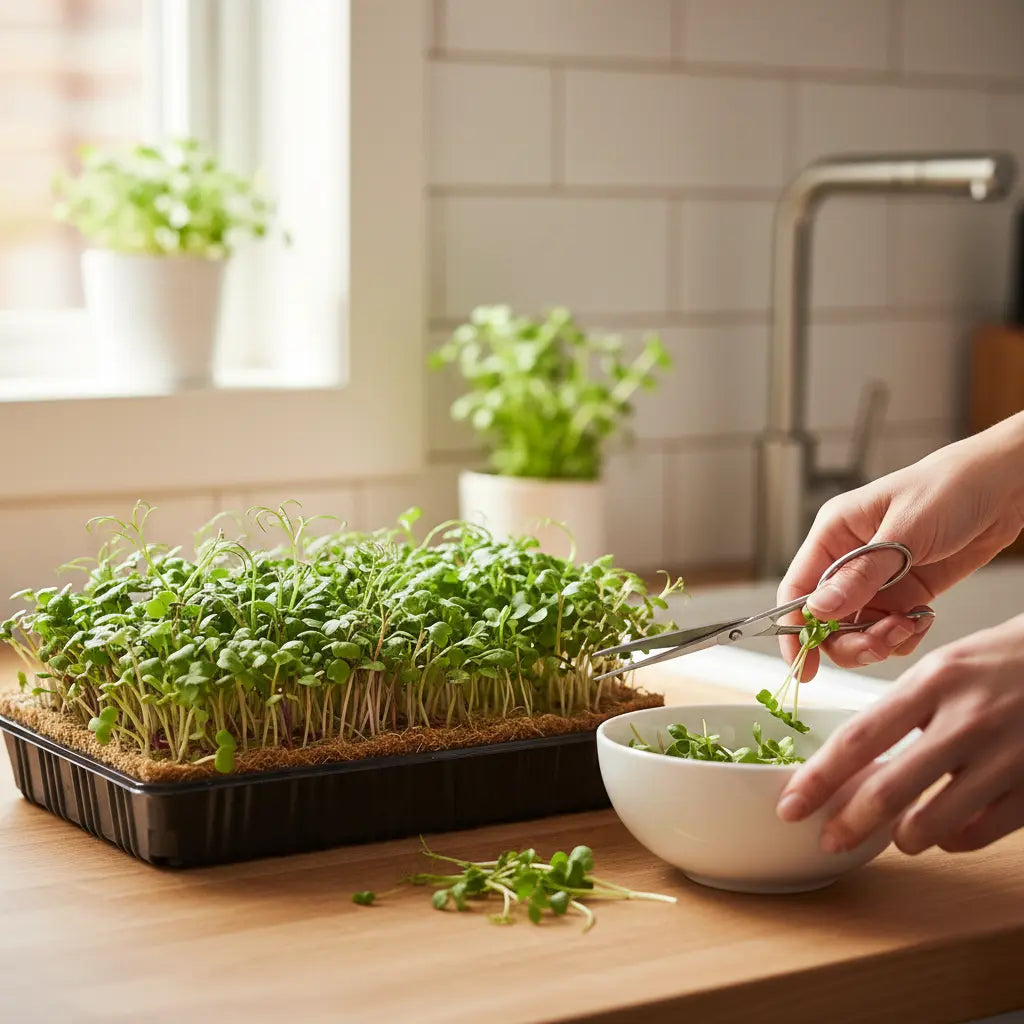
How Fast Microgreens Support Learning
Speed reduces hesitation.
When growers harvest within a week, they:
- See visible progress quickly
- Identify mistakes earlier
- Restart faster if needed
- Build consistency through repetition
This makes fast-harvest greens particularly useful for beginners developing rhythm and confidence.
For those new to microgreens entirely, understanding what they are and how they differ from mature vegetables is helpful.
You can read more here: What Are Microgreens? Benefits, Taste, and Why They’re Easy
Short growth cycles allow beginners to experiment without long waiting periods between harvests. If a tray develops uneven germination or lighting conditions need adjustment, growers can make corrections within days instead of weeks.
This rapid feedback loop helps new growers develop an intuitive understanding of how microgreens respond to moisture, light, and airflow. Each tray becomes a small learning cycle that improves the next harvest.
Because the growing process repeats so quickly, many beginners gain confidence after just a few harvests. What initially feels uncertain gradually becomes a predictable routine.
Over time, these quick cycles help growers refine their setup and maintain consistent microgreen harvests indoors.
FAQ section
What are the fastest growing microgreens?
Radish, broccoli, and mustard are commonly harvested within 5–8 days under stable indoor conditions.
How long do fast microgreens take to grow?
Most fast varieties are ready within one week, though exact timing depends on temperature and moisture consistency.
Are faster microgreens easier to grow?
Fast-growing microgreens often reduce the failure window because they complete their growth cycle quickly.
However, proper moisture, airflow, and seed density still play an important role in maintaining healthy trays.
Can all microgreens grow this quickly?
No. Different microgreen varieties have different natural growth cycles.
Some varieties such as radish and mustard grow rapidly, while others like basil or cilantro typically require longer harvest windows.
Ready to Grow Your Own?
Understanding speed is helpful — but execution matters.
If you want the full step-by-step method for consistent germination, lighting, watering, and harvest timing, start here: 👉 How to Grow Microgreens at Home (Step-by-Step)
For beginners, the easiest way to start growing microgreens is to begin with a simple and predictable setup. Fast-growing varieties such as radish, broccoli, and mustard allow growers to see results quickly while learning how moisture, lighting, and airflow affect the plants.
Starting with reliable seeds also plays an important role. High-quality seeds designed specifically for microgreens typically produce more uniform germination and stronger early growth compared to generic seeds sold for general gardening.
Aquager’s Microgreens Starter Kit was designed specifically for beginners who want a simple way to start growing microgreens indoors. The kit includes grow trays, humidity dome, organic grow mats, and microgreen seed varieties selected for fast germination and consistent harvest cycles.
The seeds used in the kit are sourced from professional suppliers such as Johnny’s Selected Seeds, which test germination rates and seed quality to ensure reliable growth. This helps reduce one of the most common beginner frustrations — uneven germination from low-quality seeds.
If you're just beginning your indoor growing journey, starting with fast-growing microgreens and a structured setup can make the first harvest much easier.
You can explore the starter kit here: 👉 Microgreens Starter Kit
Author: Aquager Editorial Team
Published: February 24, 2026
Last Updated: March 15, 2026