What Are Microgreens?
Benefits, Taste, and Why They’re Easy
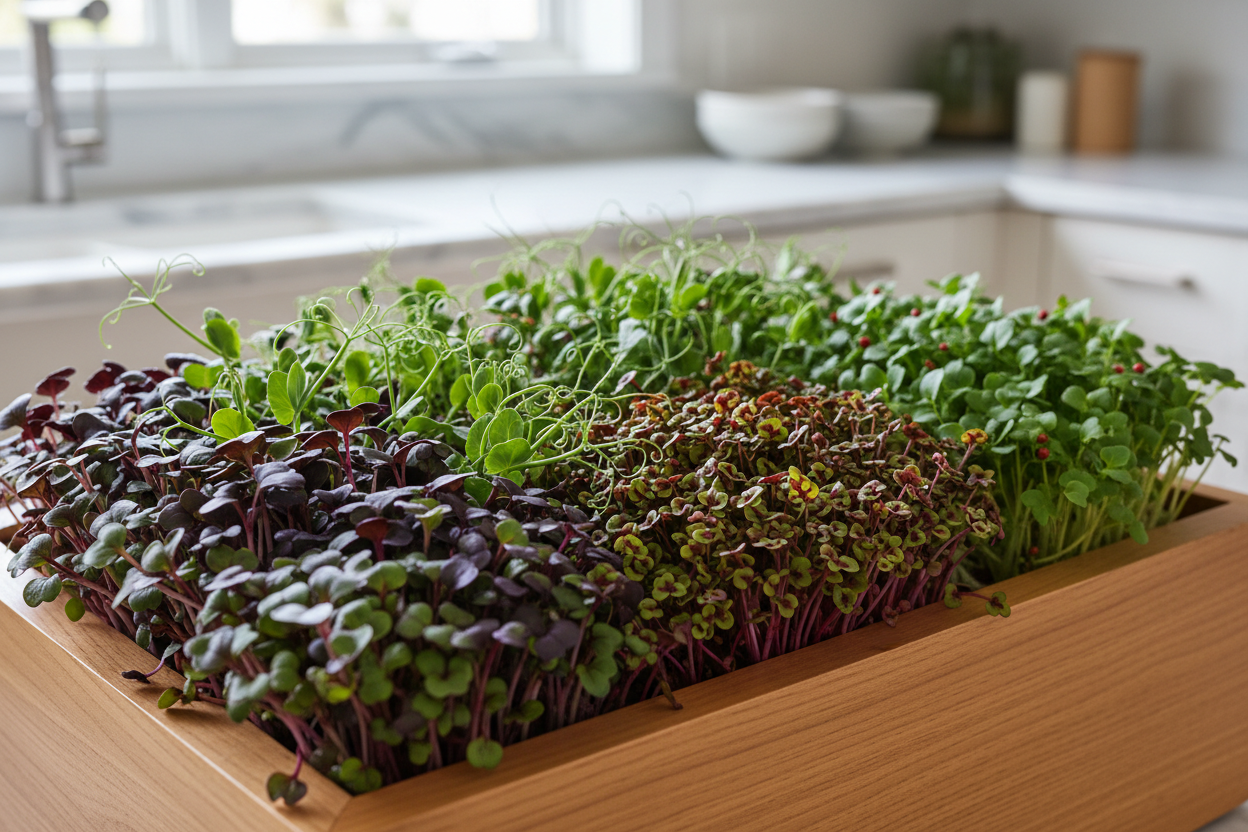
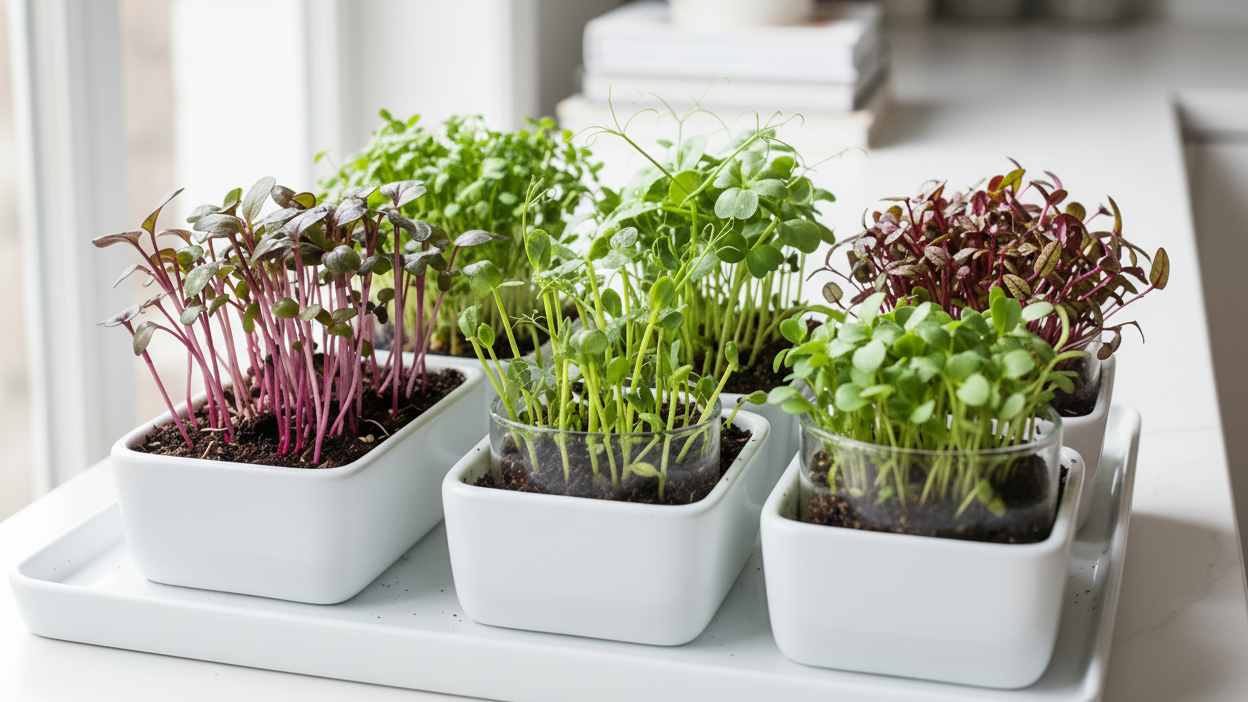
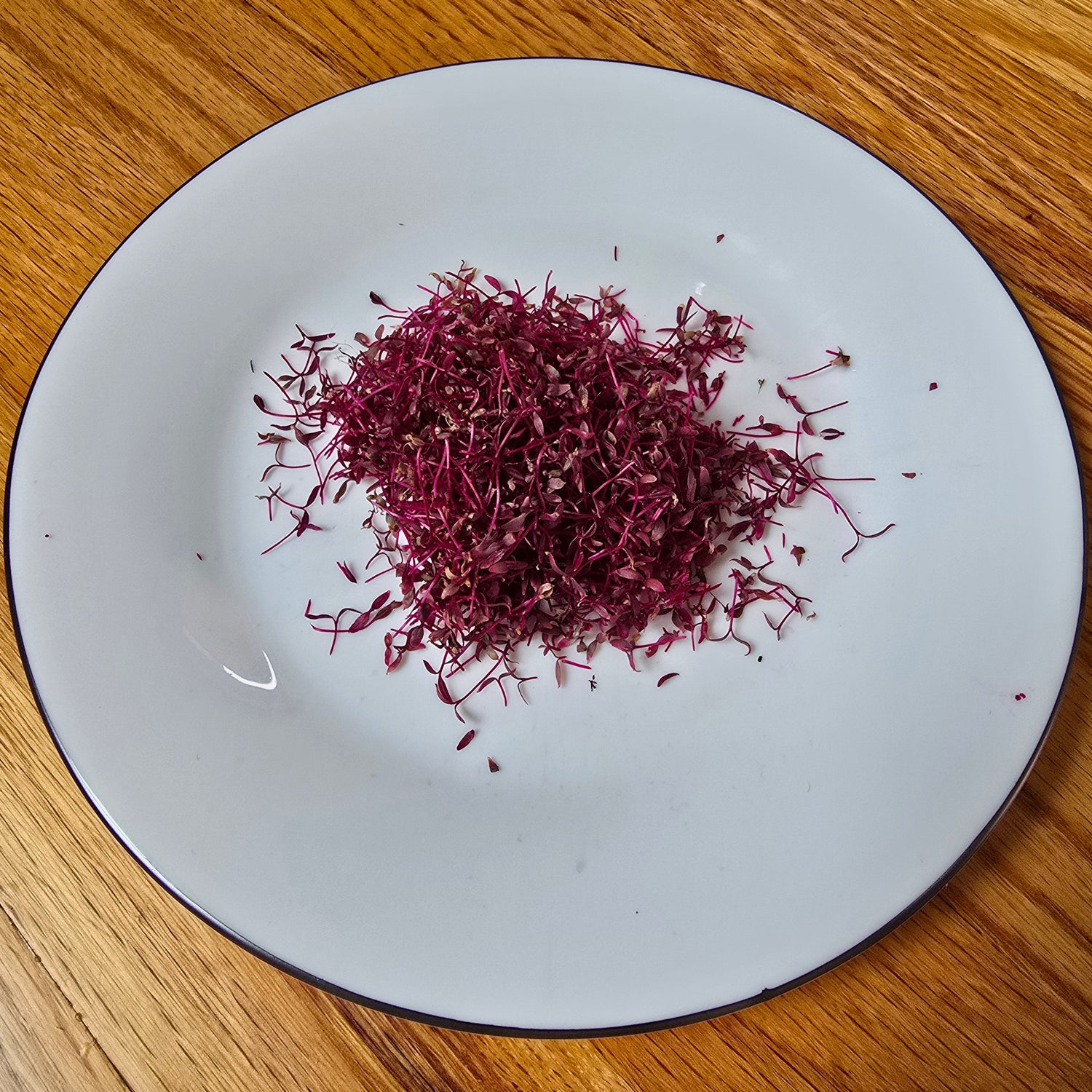
Microgreens are young vegetable plants harvested shortly after sprouting, typically 7–21 days after emergence, when the seed leaves are fully developed and the first true leaves may begin to form.
This means they are not sprouts and not mature vegetables.
They represent an early growth stage where flavor and nutrient density are concentrated, while growing requirements remain simple.
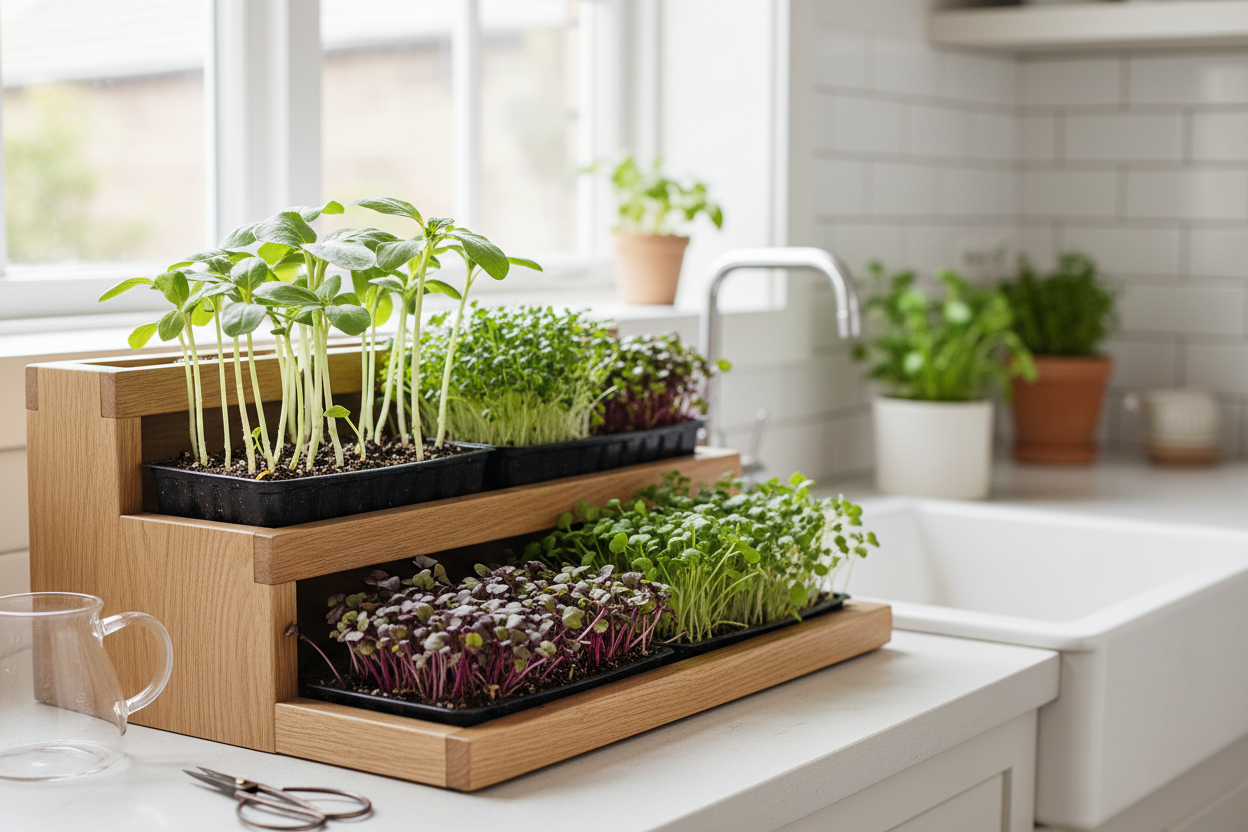
In practice, microgreens are grown in a shallow growing medium, exposed to light for a short period, and harvested above the root line. Only the stem and leaves are eaten.
What this is
Microgreens are edible seedlings of vegetables and herbs grown for early harvest.
They are defined by:
- A short growth window
- Harvest above the roots
- Use of a substrate rather than water-only systems
The term microgreens refers to the growth stage, not a specific plant type. Many common vegetables—such as broccoli, radish, kale, and cabbage—can be grown as microgreens.
The microgreens meaning is precise: young plants harvested early for flavor and nutrition, before full maturity.
Why Microgreens matters
Understanding what microgreens are is important because many growers fail by confusing them with other growing methods.
Common problems include:
- Expecting long-term plant care
- Treating microgreens like houseplants
- Overcomplicating inputs too early
Microgreens succeed when the grower understands that the plant’s needs are temporary and front-loaded. Most of the growth energy comes from the seed itself, not from long-term root development.
Cause and effect matters here:
- Misunderstanding the growth stage leads to overwatering, overcrowding, or poor expectations
- Understanding the growth stage leads to faster success and fewer errors
This conceptual clarity directly affects outcomes.
How Microgreens works
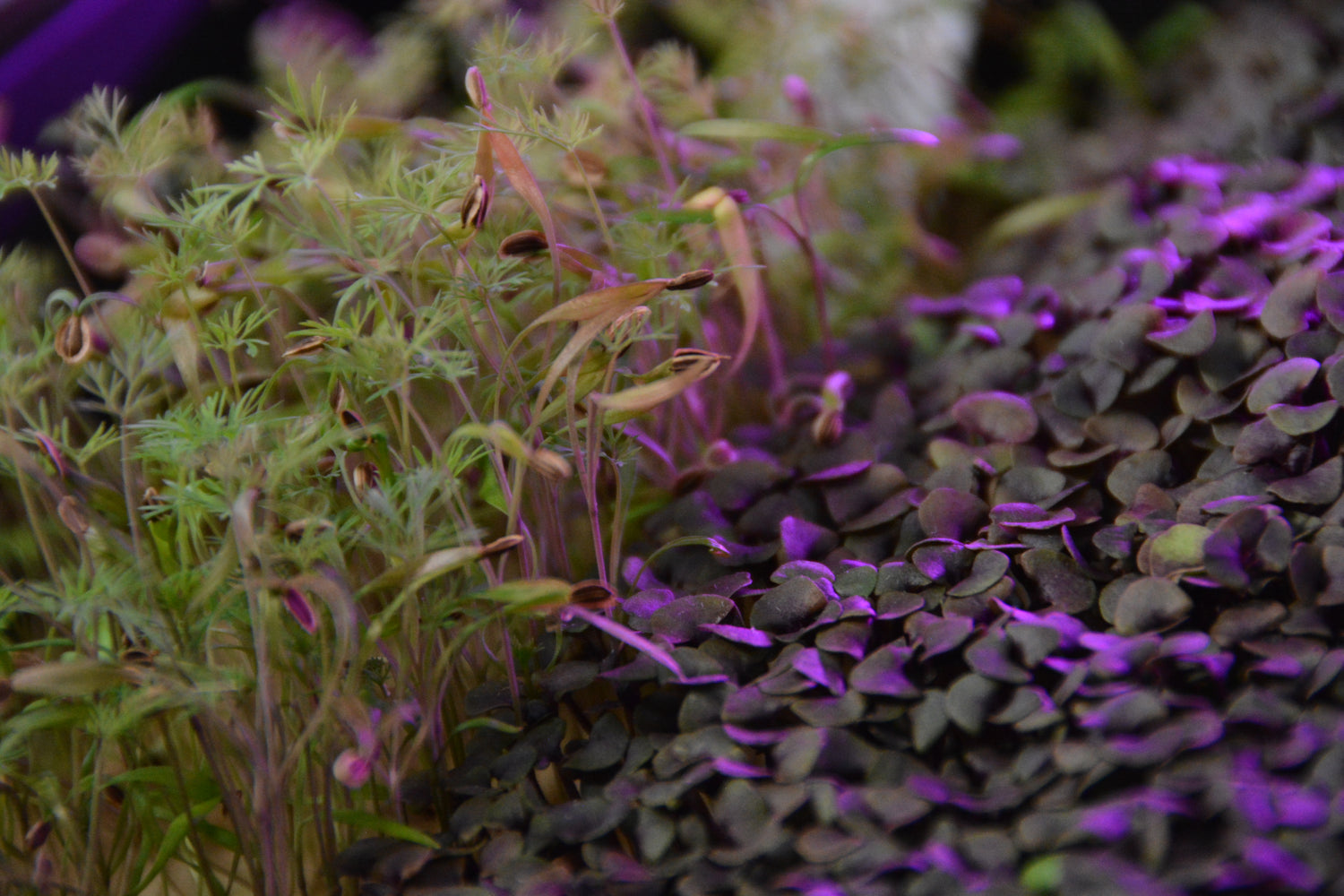
Microgreens rely primarily on stored seed energy.
At seed early stage:
- The seed provides most of the nutrients
- The root system remains shallow
- The plant’s goal is rapid upward growth toward light
Because of this, microgreens do not require:
- Deep soil
- Long nutrient cycles
- Extended maintenance
Light exposure triggers leaf development, while moisture supports germination and early growth. The plant is harvested before structural complexity develops.
This is why microgreens are often described as “easy”—not because they require no care, but because the biological system is short, predictable, and constrained.
Common misconceptions

Microgreens are the same as sprouts.
They are not. Sprouts are grown in water and eaten whole, including the root. Microgreens are grown in a medium and harvested above the root.
They need advanced gardening knowledge.
They do not. Most failures are mechanical, not biological.
They are just tiny vegetables.
They are a distinct growth stage with different requirements and expectations.
You can grow anything as a microgreen the same way.
While many plants work well, growth behavior still varies by species.
Easy means impossible to mess up.
Ease reduces failure risk, but it does not eliminate it.
When Microgreens becomes a problem
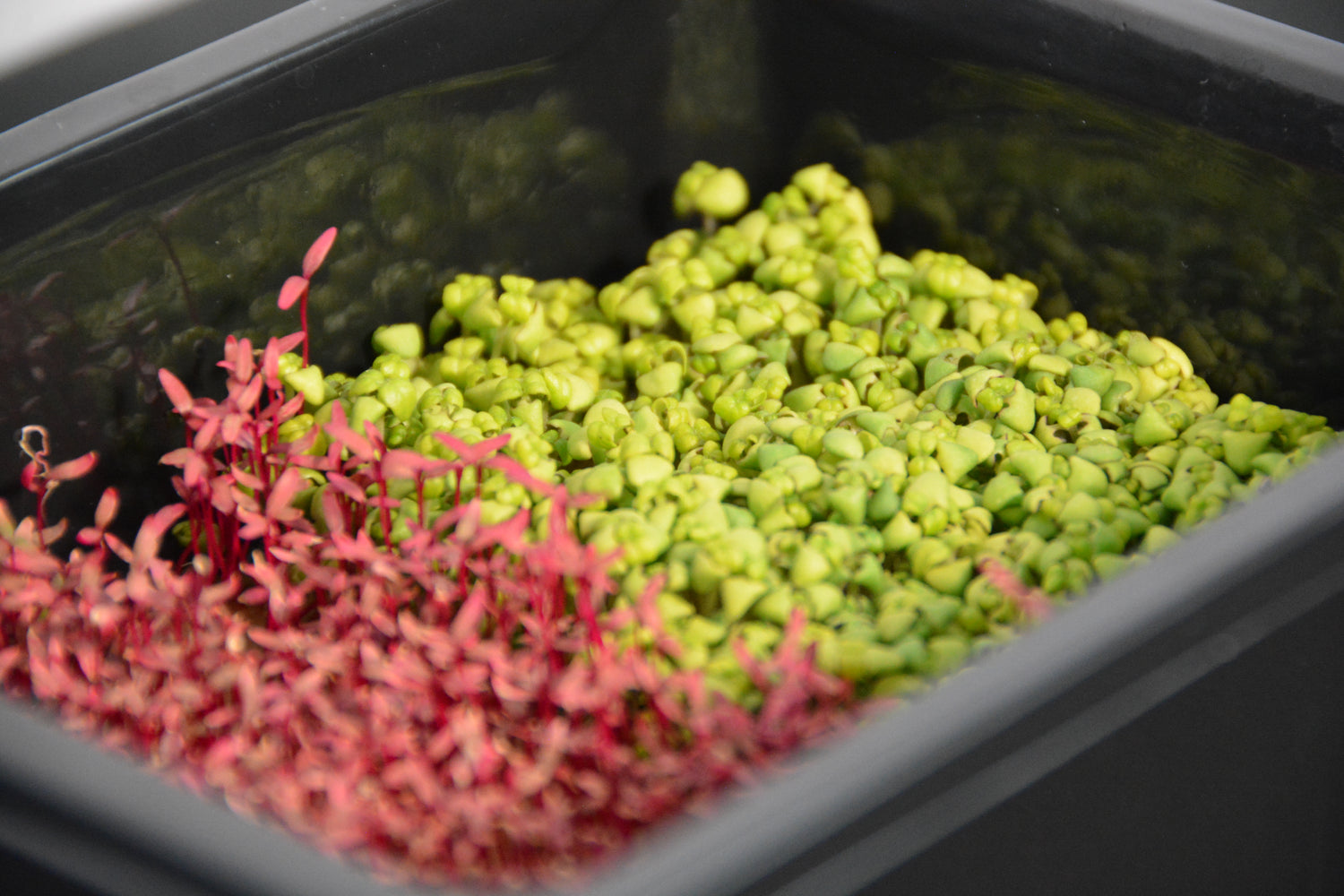
Microgreens become problematic when expectations do not match the system.
Common warning signs include:
- Treating microgreens like long-term plants
- Expecting multiple harvests from the same tray
- Allowing excess moisture to remain too long
- Overcrowding seeds without understanding airflow limits
These issues usually indicate a misunderstanding of what microgreens are, not a lack of effort.
Before deciding
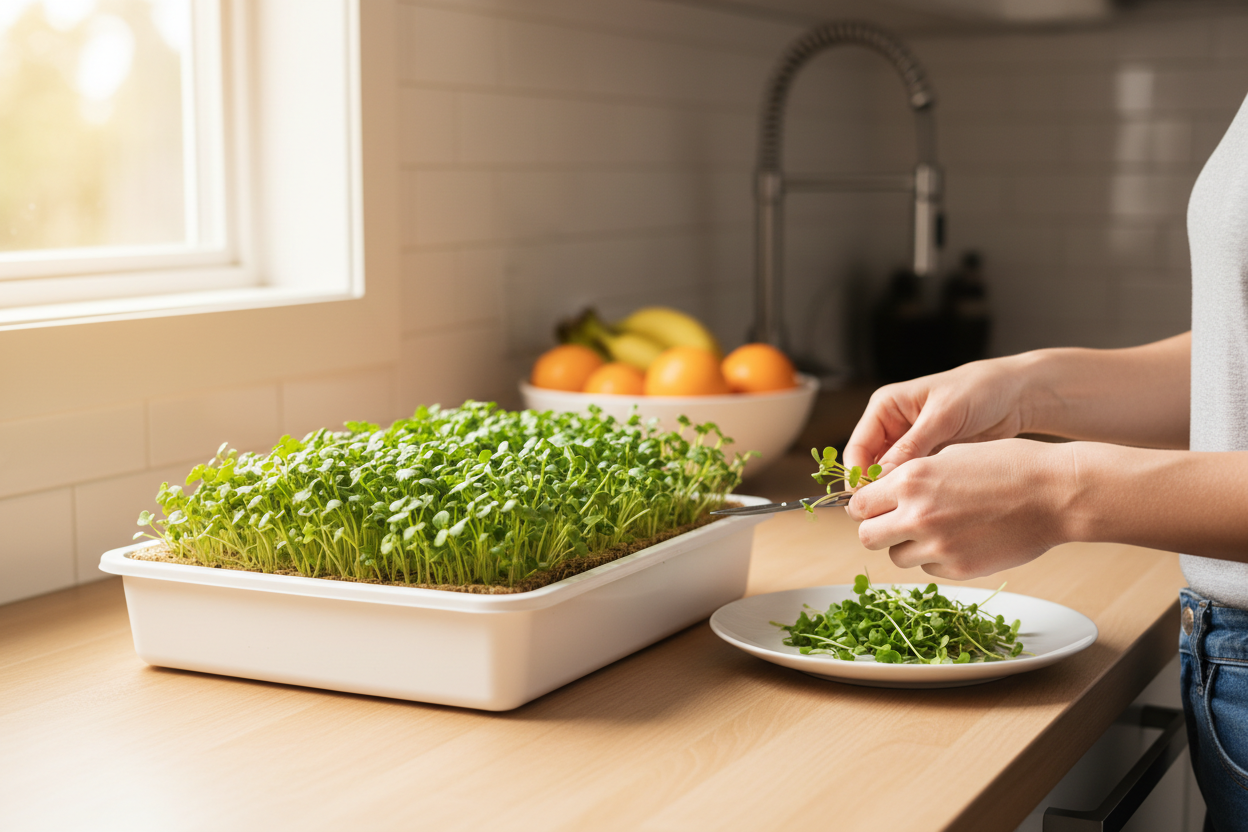
Microgreens are best understood as a short-cycle indoor food system, not a gardening hobby.
Key tradeoffs to understand:
- Fast results, but short lifespan
- High flavor density, but limited volume per cycle
- Simple mechanics, but less flexibility than mature plants
They are ideal for learning controlled growing. Understanding these limits prepares you to evaluate whether this approach fits your goals.
Next step: see how this fits into the bigger system
If you’re deciding whether microgreens are the right starting point and how they compare to other indoor growing options, here’s the full picture:
Last updated: January 2026