
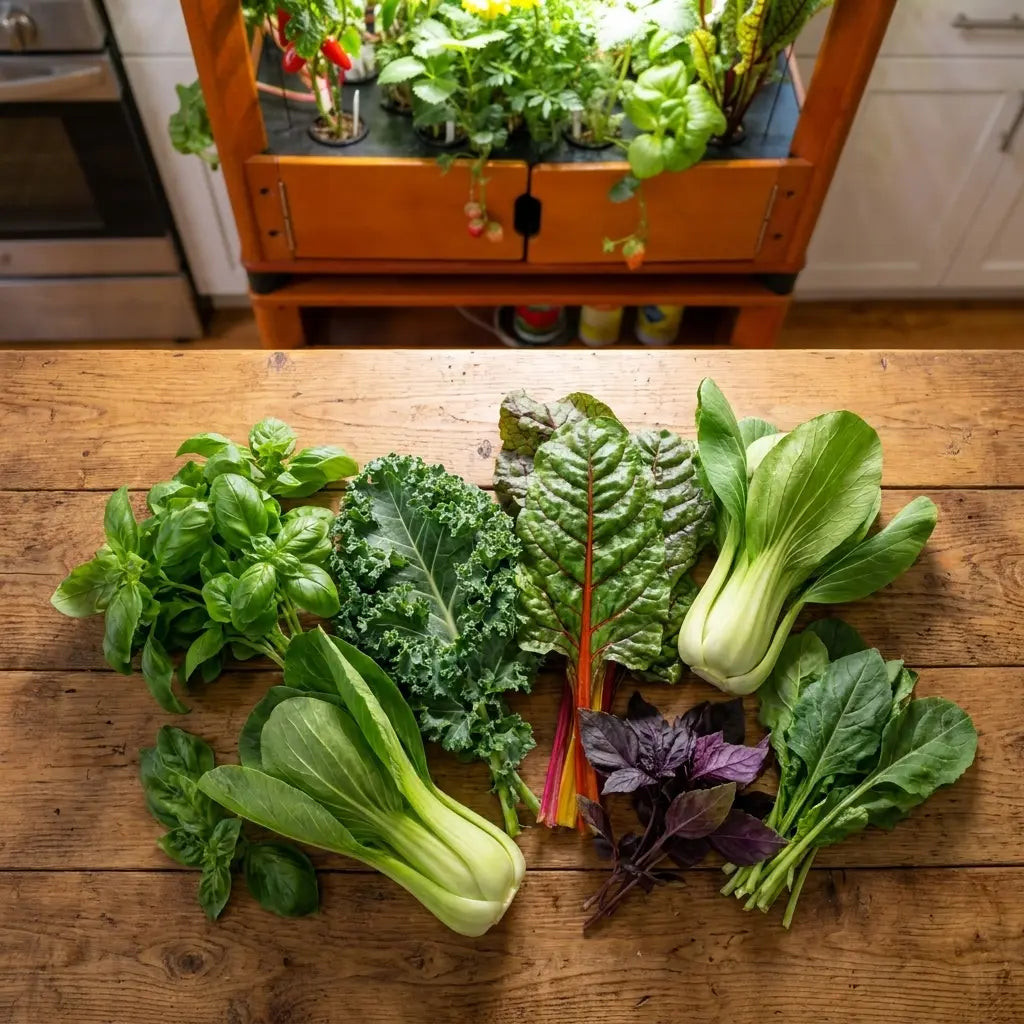
If you searched for an AeroGarden alternative, there's a good chance you already know why. AeroGarden's parent company shut down operations in 2024, leaving longtime owners without support or replacement pods for months before the brand relaunched under new ownership in 2025. That gap made a lot of people rethink what they want from an indoor herb garden.
The problem is that most 'alternative' lists just swap one plastic countertop gadget for another. Same proprietary pods, same companion app, same recurring cost that shows up a few months after you unbox it.
This guide covers what actually changed with AeroGarden, what to look for in a real alternative, and where a few other smart garden options land on price and long term cost. No subscription required for any of it.
Why So Many People Are Searching for an AeroGarden Alternative
AeroGarden was, for years, the default answer to 'indoor herb garden.' That's exactly why its 2024 shutdown rattled so many buyers. Customers who had built a routine around their unit suddenly had no support line, no replacement pods, and no clear answer about whether the product they'd paid for would keep working.
The brand came back in 2025 under new ownership, and it's actively selling and supporting products again. But that history is a legitimate thing to weigh before buying into any single brand's ecosystem again, especially one built around pods you can only buy from them.
That's the real question behind most 'AeroGarden alternative' searches right now. It's not just 'what else grows herbs indoors.' It's 'what won't leave me stuck if the company behind it has a bad year.'
What to Look for in a Real AeroGarden Alternative
Before comparing specific products, it helps to know what actually separates a good alternative from a slightly different version of the same problem.
Proprietary pods are the biggest one. If a system only accepts its own branded seed pods, you're locked into that company's pricing and availability forever, the exact position AeroGarden owners found themselves in during the shutdown.
A required subscription is the next thing to check. Some newer smart garden systems have started gating basic features like watering reminders behind a monthly plan, which quietly turns a one time purchase into a recurring bill.
App dependency matters too, even if it seems minor. A system that needs a companion app to function normally is one more piece of software that can change, get discontinued, or stop being supported.
Finally, look at what's actually included at purchase. Some systems ship with just the hardware and expect you to keep buying pods or grow mediums separately. Others include everything you need for the first several grows. That difference adds up fast. If you're setting up your very first system, our beginner's guide to hydroponic systems walks through what the first few weeks actually look like, regardless of which brand you choose.
The Best Overall AeroGarden Alternative: Aquager Home Farm
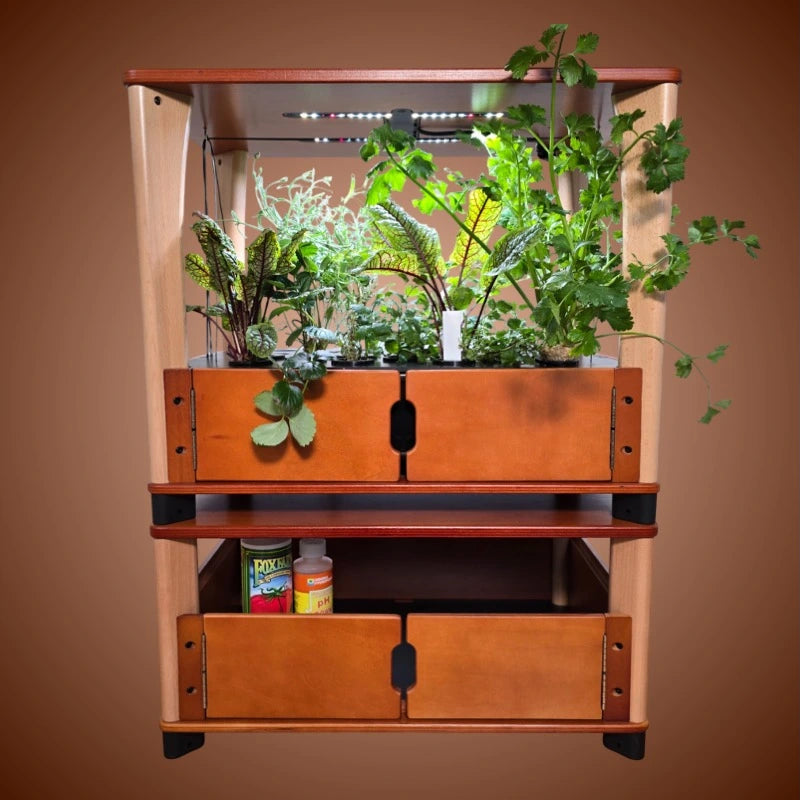
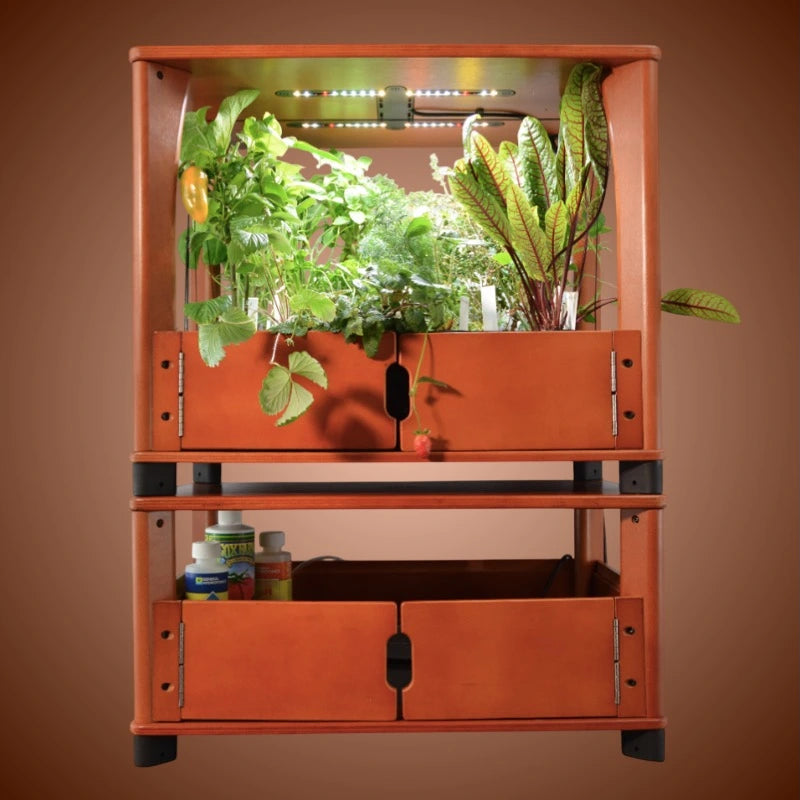
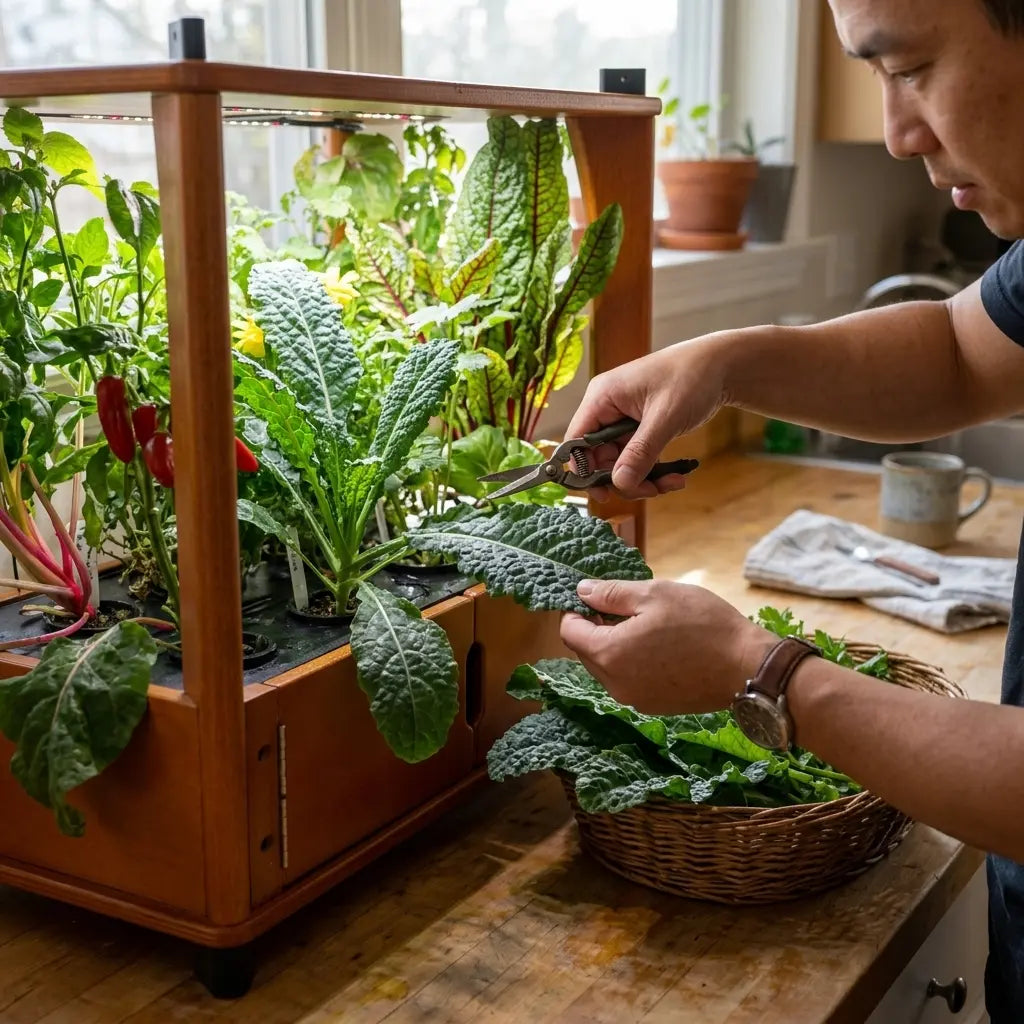
The Aquager Home Farm was built specifically around the problems buyers run into with pod based, app dependent systems. It's designed as furniture first, with a wood finish meant to sit on a kitchen counter rather than announce itself as a gadget.
The Aquager Chef's Organic Set bundles two grow boxes together for 24 plants, expandable further if you want to grow more later. Setup takes about an hour, and ongoing maintenance runs under 10 minutes a week.
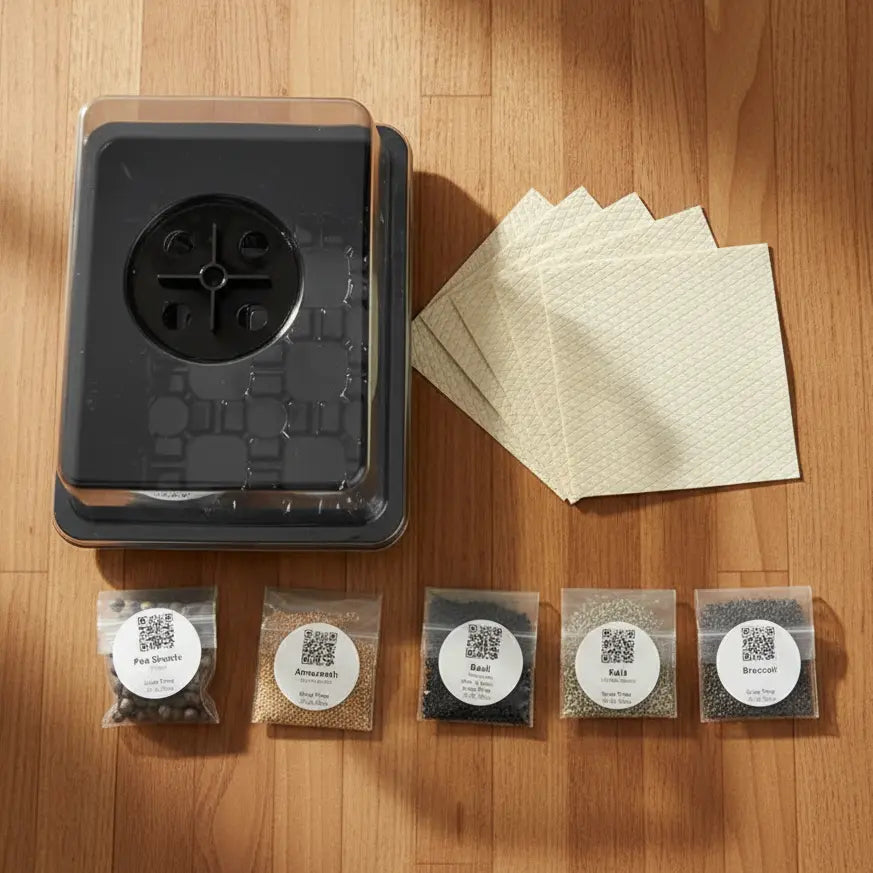
The detail that matters most for anyone coming from AeroGarden: everything needed to grow ships with the unit. Seeds, organic grow mediums, and nutrients are all included at purchase, with no subscription required, ever, and no proprietary pod format to keep buying into.
There's also no companion app to install and no account to create. If the company behind it ever had a rough year, your unit would keep working exactly as it does today, since nothing about it depends on a server staying online.

Other AeroGarden Alternatives Worth Knowing
Aquager isn't the only option out there, and it's worth knowing what else buyers are comparing before you commit.
Click and Grow's Smart Garden 9 is simple to set up and has a smaller footprint. The tradeoff shows up after the first grow cycle, since it runs on a closed pod system priced around $6 per pod, with an LED light that typically needs replacing every 24 to 30 months.
Gardyn sits at the high end, with a tall vertical design that grows significantly more plants per unit. It also requires an ongoing subscription of $29 to $39 a month, which in recent years has expanded to gate features like watering reminders that used to be standard.
Rise Gardens takes a modular approach, letting buyers start smaller and add grow levels later. It doesn't require a subscription to keep functioning, which puts it closer to Aquager on total cost of ownership, though it still leans on a companion app for monitoring.
For a full side by side breakdown of all of these, including Aquager and the relaunched AeroGarden lineup, our indoor hydroponic system comparison covers the complete field.
Price and Ongoing Cost, Side by Side
The sticker price only tells part of the story. What a system costs a year or two in is usually the number that actually matters.
Aquager Chef's Organic Set: $199.99, no subscription, no proprietary pods, seeds and grow mediums included at purchase.
AeroGarden Bounty Elite: around $230, plus ongoing proprietary seed pod purchases.
Click and Grow Smart Garden 9: around $200, plus roughly $6 per proprietary pod and periodic $89 light replacements.
Gardyn: $695 to $899, plus a required $29 to $39 monthly subscription.
Rise Gardens: around $380, app based monitoring, modular add-ons priced separately.
Looked at this way, the lowest sticker price on this list and the lowest total cost of ownership happen to be the same system, which isn't always true in this category.
AeroGarden Alternative FAQ
Is AeroGarden still safe to buy from after the 2024 shutdown?
The brand relaunched under new ownership in 2025 and is actively selling and supporting products again, though the history is worth factoring into any long term reliability decision.
What's the biggest difference between AeroGarden and a no-subscription alternative?
AeroGarden uses proprietary seed pods you'll keep repurchasing from the brand. A system like the Aquager Home Farm includes seeds and grow medium at purchase, with nothing ongoing to buy.
Do all smart garden systems require an app?
No. AeroGarden, Gardyn, and Rise Gardens all use companion apps for monitoring and reminders. Aquager and Click and Grow don't require an app to operate.
Which alternative is easiest for a first-time grower?
Aquager and Click and Grow both have straightforward setups, but Aquager includes seeds and grow medium at purchase, so there's nothing extra to buy before your first grow.
Can I switch seeds later, or am I locked into one brand?
Aquager and Rise Gardens both allow more flexibility over time. AeroGarden and Click and Grow are built around proprietary pod formats that limit sourcing your own seeds.
The Alternative That Won't Leave You Stuck
Every system on this list will grow plants successfully in the short term. The real test is what happens a year or two in, once pod costs, subscription bills, or a company's own business troubles either fade into the background or become a real problem.

The Aquager Chef's Organic Set was built specifically to avoid that second category: everything included at purchase, no subscription, no proprietary pods, and nothing that depends on one company staying in business the way you'd hoped.
Author: Aquager · Published: September 5, 2026 · Updated: September 5, 2026













0 comments