
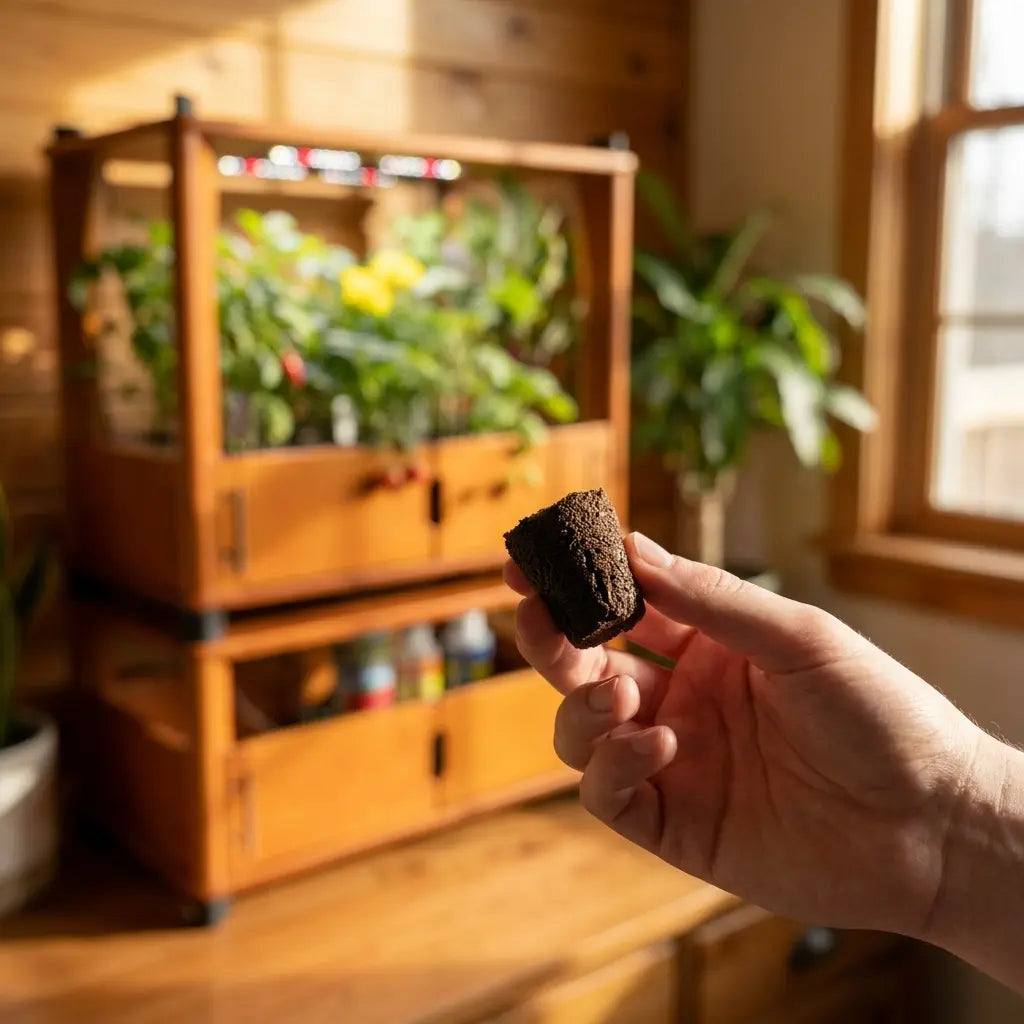
If you've narrowed it down to Aquager and Click and Grow, the decision usually comes down to one thing: what happens after you buy. Click and Grow pods cost about $6 each, and that's a bill that keeps showing up long after the initial purchase.
Both systems are genuinely easy to set up, and neither requires a subscription to keep running. Where they split apart is what 'no subscription' actually means once you look at the real, ongoing cost of feeding either system over a year or two.
This comparison covers price, what's included, size, aesthetics, and the true cost of ownership for both, so you can pick based on what you'll actually pay over time, not just the sticker price on day one.
'Smart garden' has become a crowded category over the last few years, and Click and Grow and Aquager are two of the names that keep coming up in the same searches, alongside AeroGarden, Gardyn, and Rise Gardens. Most buyers land on this specific comparison because both brands avoid the subscription trap that some of the higher-end systems require, which narrows the real decision down to pods versus no pods.
Quick Verdict
If you want everything included at purchase, seeds, organic grow medium, and nutrients, with nothing proprietary to keep rebuying, the Aquager Chef's Organic Set is the simpler long-term choice. If you want the smallest possible footprint and don't mind an ongoing per-pod cost, Click and Grow's Smart Garden 9 is a reasonable pick.
Why This Comparison Comes Up So Often
Click and Grow is one of the more recognized names in this category, and its Smart Garden line has been around for over a decade, with real staying power in a market where a lot of competitors have come and gone. That name recognition is exactly why it comes up so often when people are comparing options.
Aquager is a smaller, newer brand by comparison, but among people who've come across our furniture-style approach, this specific question, Aquager or Click and Grow, is one of the most common comparisons we hear. Both are well reviewed and neither locks you into a subscription, so the decision usually comes down to details that don't show up on a spec sheet at first glance.
Aquager Chef's Organic Set: What You Get
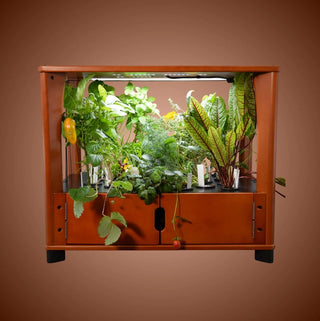
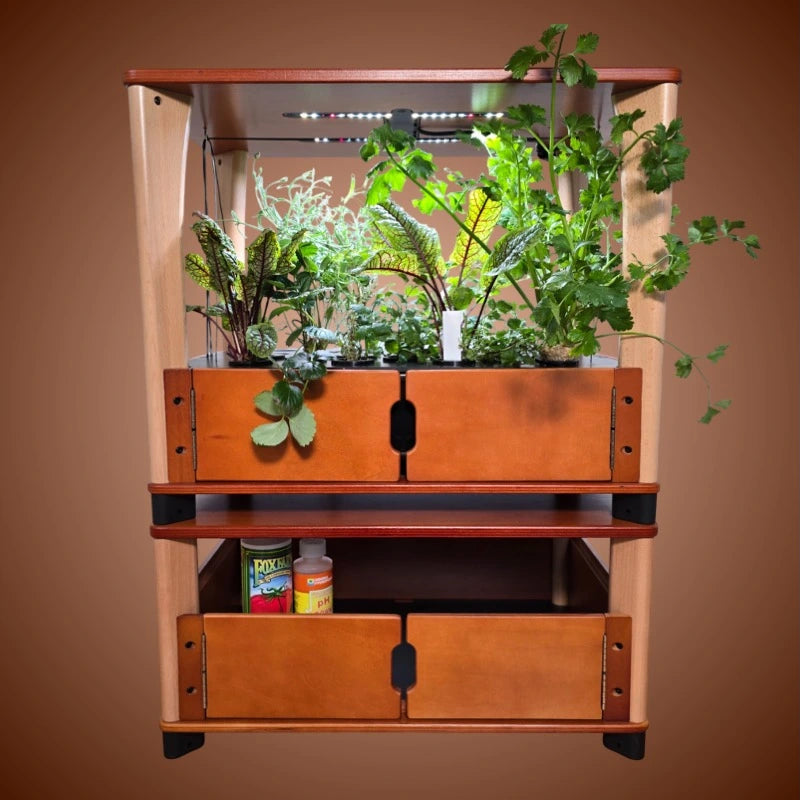
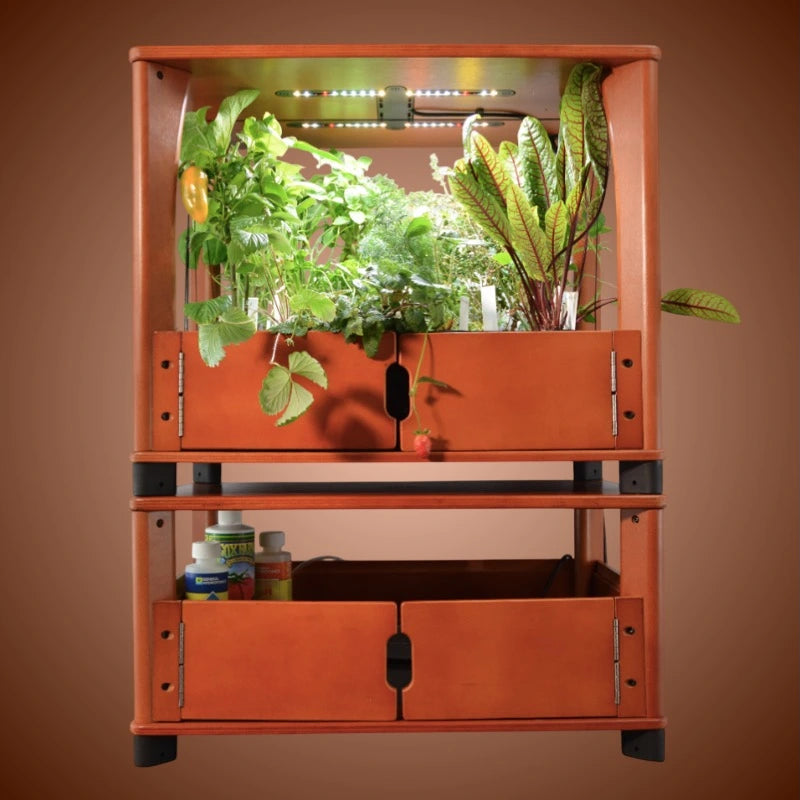
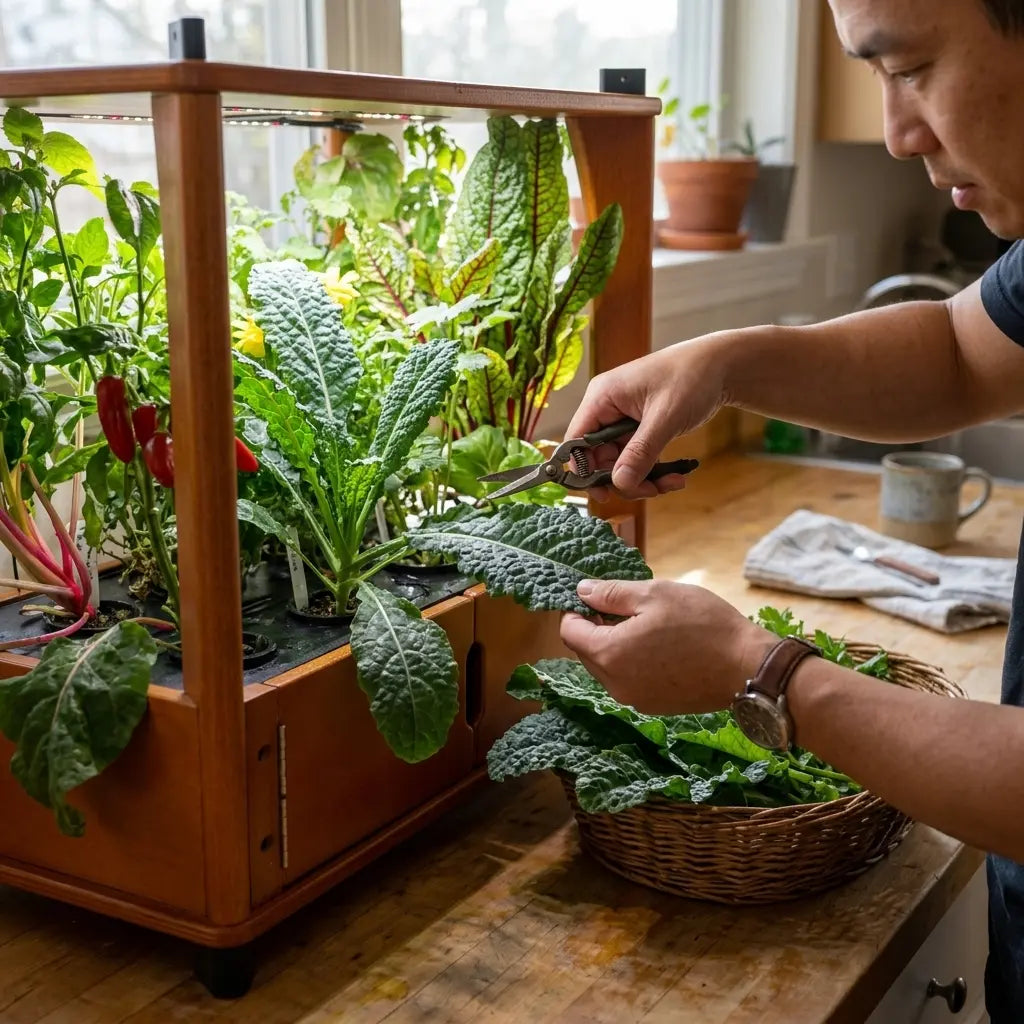
Every Chef's Organic Set bundles two Aquager grow boxes together for 24 plants total, built as wood furniture rather than a plastic countertop appliance. It's available in a few wood finishes designed to sit naturally in a kitchen rather than read as a gadget on the counter. Setup takes about an hour, and weekly maintenance runs under 10 minutes.
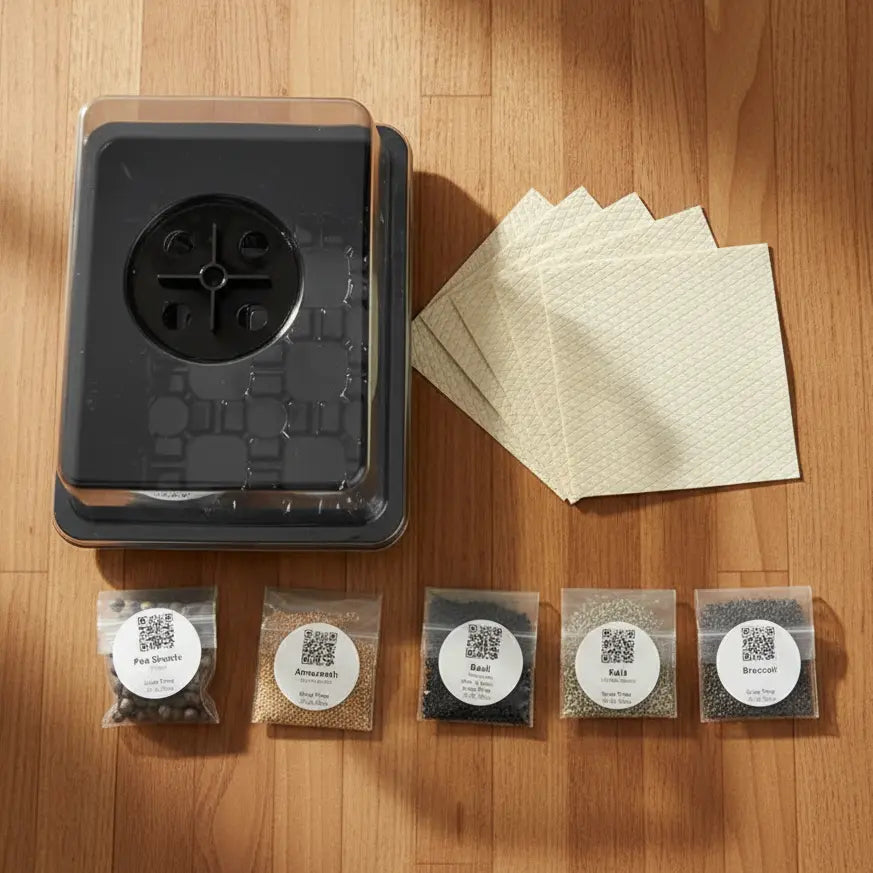
Every unit ships with USDA Certified Organic starter plants, organic grow mediums, and nutrients included at purchase. Full spectrum LED grow lights are built in, and the system is expandable if you decide later that 24 plants isn't enough. There's no proprietary pod format and no subscription, so what you pay at checkout is close to what you'll actually spend over the life of the system. If you want to plant something other than what ships in the box, Aquager also sells individual pre-seeded pods for dozens of herbs, vegetables, and flowers separately, with no requirement to buy exclusively from us.
Click and Grow Smart Garden 9: What You Get
The Smart Garden 9 is one of the simpler systems to set up, with a smaller footprint and a plastic body that fits neatly on a counter. Click and Grow markets its own patented 'smart soil' growing medium and a companion app that sends watering reminders and basic plant care tips, which some buyers find genuinely useful and others consider unnecessary for a countertop planter.
The tradeoff shows up after the first grow cycle. Click and Grow runs on a closed, proprietary pod system priced around $6 per pod, with a wide library of plant varieties available, but no generic or third-party alternative. Every future planting means buying directly from Click and Grow at their price. The LED grow light is also proprietary, typically needing replacement every 24 to 30 months at roughly $89 each. Build quality is functional and well regarded for its price point, though it reads more as a kitchen appliance than a piece of furniture.
Head-to-Head Comparison
Price: Aquager Chef's Organic Set $199.99. Click and Grow Smart Garden 9 around $200.
Ongoing cost: Aquager, none. Click and Grow, about $6 per pod plus periodic $89 light replacements.
What's included at purchase: Aquager includes seeds, organic grow medium, and nutrients. Click and Grow includes the unit and starter pods only.
Companion app required: neither system requires an app to operate, though Click and Grow's app is a common add-on for reminders.
Build: Aquager is wood furniture-style, available in multiple finishes. Click and Grow is plastic, smaller footprint.
Plant capacity: Aquager Chef's Organic Set grows 24 plants across two boxes, expandable further. Smart Garden 9 grows 9 plants.
Setup time: both take under an hour for a first-time setup.
Ongoing maintenance: Aquager runs under 10 minutes a week. Click and Grow requires refilling the water reservoir roughly every 1 to 2 weeks depending on plant load.

The True Cost After 2 Years
Sticker prices land close together, around $200 for both. The real difference shows up over time, once pods and lights enter the picture.
Here's a rough, illustrative estimate rather than an exact figure, since actual pod life depends on what you're growing and how you use the system. A typical grow cycle for a Click and Grow pod runs about 2 to 3 months before it needs replacing. Across 9 plant sites over 24 months, that works out to roughly 8 replacement cycles per site, or about 72 pod purchases at $6 each, close to $430 in pods alone. Add one LED light replacement around the 24 to 30 month mark at about $89, and the 2-year total lands somewhere in the $700 to $750 range, well above the $200 sticker price. Aquager's total cost after 2 years stays close to the original $199.99, since there's nothing proprietary left to buy.
For anyone planning to keep a system running long-term rather than as a short-term experiment, that gap between sticker price and real cost is worth knowing before you buy, not after your third pod order shows up.
Consider a household that wants a steady supply of basil, cilantro, and a couple of leafy greens year-round. With a Smart Garden 9, that's roughly 9 pod slots cycling every couple of months, which adds up quickly in both cost and the small chore of reordering pods before you run out. With the Chef's Organic Set, that same household plants once with the included organic seeds and grow medium, and the ongoing task shrinks to watering and occasional nutrient top-offs rather than a recurring purchase.
How Long Until Your First Harvest
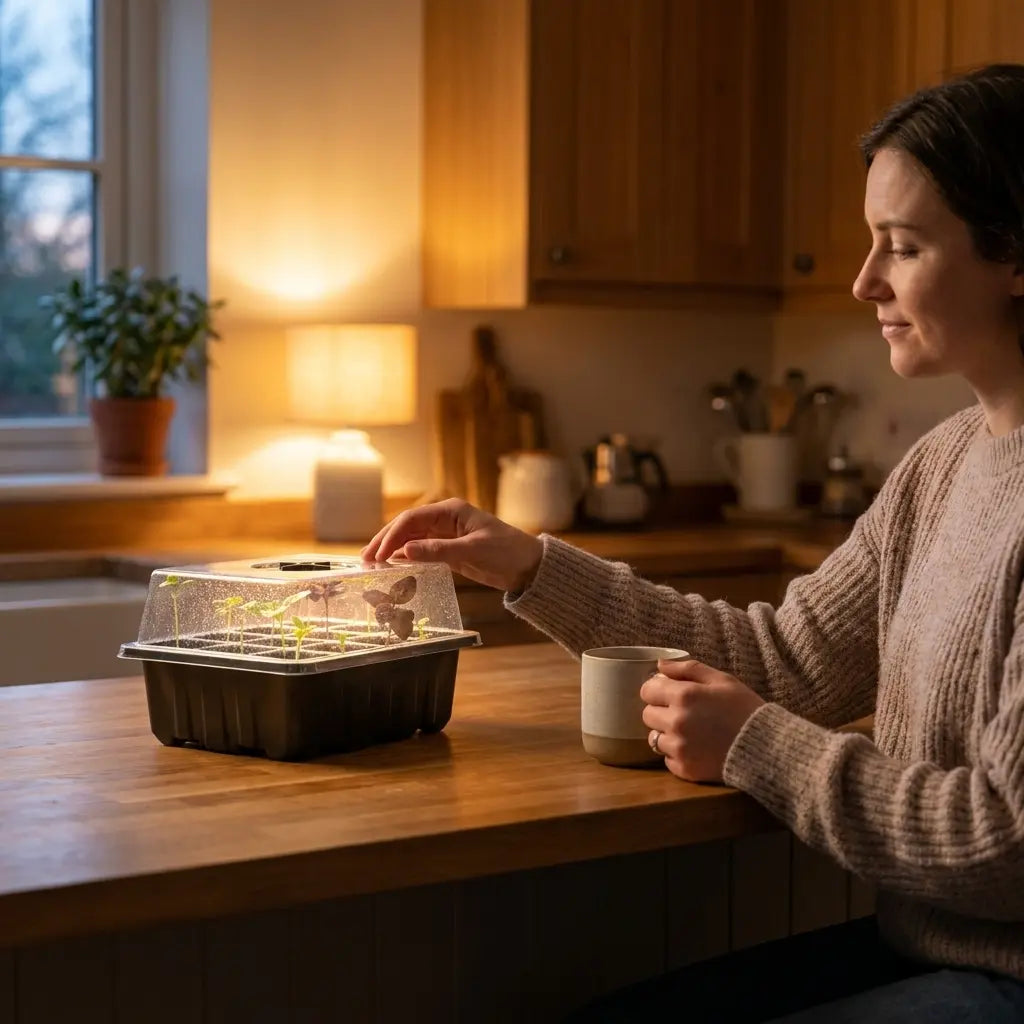
First sprouts on the Aquager Chef's Organic Set typically show up in 6 to 9 days, with a first harvest in 2 to 4 weeks depending on what's planted. Click and Grow's Smart Garden 9 runs on a similar general timeline for most herbs, since both systems rely on the same basic combination of light, water, and nutrients rather than any dramatically different growing method. Neither system meaningfully outpaces the other here, so germination speed isn't a strong reason to pick one over the other.
Aesthetics and Everyday Use
The aesthetics question matters more than most buying guides give it credit for. A system that looks like a piece of lab equipment tends to get used less than one that looks like it belongs in the room. The Smart Garden 9's compact plastic design is genuinely unobtrusive, which is part of its appeal for small kitchens. The Chef's Organic Set takes the opposite approach, built to look and function like real furniture, which tends to mean it stays visible, gets checked on daily, and doesn't end up pushed into a corner after the first few weeks of novelty wear off.
Which One Fits Your Kitchen
Buyers who want the smallest possible unit, don't mind an ongoing per-pod cost, and like having app-based reminders are reasonably well served by Click and Grow's Smart Garden 9. It's a good fit for a small apartment kitchen or a first-time buyer who wants to start with just a handful of plants.
Buyers who want to grow more at once, would rather not think about reordering pods, and want a piece that looks intentional in the room are better served by the Aquager Chef's Organic Set. It's also the more predictable option for anyone budgeting a fixed cost rather than an open-ended one.
There's also a waste question worth considering, even if it doesn't show up on most spec sheets. Click and Grow's pods are a proprietary, largely plastic capsule format, replaced every 2 to 3 months per plant site for the life of the system. Aquager's organic grow medium is designed to be used with your own seed selection over time rather than replaced as a sealed capsule, which means less proprietary plastic moving through your kitchen on a recurring basis. Neither approach is dramatically wasteful, but it's a real difference for anyone weighing it.
Both systems also come up often as gifts, and the aesthetics difference tends to matter even more in that context. A Smart Garden 9 works well as a compact, low-commitment gift for someone who's never grown anything indoors before. The Chef's Organic Set tends to land better as a gift for someone setting up a first kitchen or already interested in cooking with fresh ingredients, since it reads as a piece of the room rather than a small appliance to find counter space for.
If you're deciding between more systems than just these two, our full indoor hydroponic system comparison covers the wider field, including AeroGarden, Gardyn, and Rise Gardens. If AeroGarden is also on your list, our guide to the best AeroGarden alternatives for 2026 is worth reading too. And if this is your first hydroponic system of any kind, our beginner's setup guide walks through what the first few weeks actually look like.
Aquager vs Click and Grow FAQ
Which system is cheaper over time?
Aquager, since it has no proprietary pods to rebuy. Click and Grow's per-pod cost and periodic light replacement add up to several times the purchase price over 2 years.
Do either of these require an app?
No. Neither Aquager nor Click and Grow requires a companion app to operate, though Click and Grow offers one for reminders.
Can I use my own seeds with either system?
Aquager allows more flexibility here, and also sells individual pods separately if you want variety beyond what's included. Click and Grow is built around its own proprietary pod format, which limits sourcing seeds independently.
Which system grows more at once?
The Aquager Chef's Organic Set grows 24 plants across two boxes, expandable further. The Smart Garden 9 grows 9.
Is Click and Grow a bad option?
No. It's a genuinely simple, well regarded, small-footprint system with over a decade on the market. It's a better fit for someone who wants a handful of plants going and doesn't mind an ongoing pod cost, not for someone trying to minimize long-term spending.
How does organic certification factor in?
Aquager's starter plants and grow medium are USDA Certified Organic. Click and Grow's proprietary smart soil pods are not marketed as organic certified, which is worth knowing if that matters to how you cook.
Does either system make noise?
Both are quiet by design. Neither uses a water pump or circulation system that runs constantly, so the only regular sound is an occasional fan or the LED lights cycling on and off on a timer.
What kind of warranty do these come with?
Aquager covers the Chef's Organic Set with a standard limited warranty on the hardware. Click and Grow offers its own manufacturer warranty on the Smart Garden 9. Check each brand's current policy directly before buying, since terms can change.
The System That Costs What It Says It Costs
Both systems will grow herbs and greens successfully from week one. The real difference is what your card gets charged 18 months in, and what the unit still looks like sitting on your counter by then.

The Aquager Chef's Organic Set was built so the purchase price and the real cost of ownership land close to the same number, no pods, no subscription, and nothing proprietary standing between you and next season's seeds.
Author: Aquager · Published: September 5, 2026 · Updated: September 5, 2026












0 comments