
Anyone who has typed "best indoor hydroponic system" into a search bar knows what happens next: a wall of nearly identical looking towers, pods, and grow lights, each claiming to be the easiest, smartest, or most productive option on the market. The marketing copy all sounds the same. The actual differences only show up once you dig into price structure, what happens after the first year, and what the thing looks like sitting in your kitchen every day.
This comparison looks at five systems buyers actually research side by side in 2026: Aquager, AeroGarden, Click and Grow, Gardyn, and Rise Gardens. It covers size, aesthetics, ease of use, and price, including the costs that only show up after the first purchase.
None of these systems are bad at growing plants. Where they differ is in the ongoing commitment each one asks for, and that difference matters more than any single spec sheet number once a system has been sitting on your counter for six months.
A note on pricing: list prices shift by retailer and promotion, so treat the figures below as a general reference point for comparison rather than a live quote, and check each brand's own site before buying.
This comparison is built from each brand's own published specs, pricing pages, and, where relevant, publicly reported business history rather than assumptions or marketing copy alone. Where a claim could not be independently verified, that uncertainty is noted rather than glossed over.
What Actually Matters When Comparing These Systems
Size determines whether a system lives happily on a counter or ends up shoved in a corner because it never quite fit the space it was bought for. A few of the systems below run considerably taller or wider than their product photos suggest.
Aesthetics matter more than most buying guides admit. A system that looks like a piece of lab equipment gets used less than one that looks like it belongs in the room, and a kitchen counter is not a place most people want a plastic tower with blinking lights.
Ease of use is really two separate questions: how hard is setup, and how much ongoing attention does the system demand. A system that takes an hour to set up but needs daily app check-ins is not actually easier to live with than one that takes a little longer up front and then mostly runs itself.
Price is the most misleading category of all, because the sticker price rarely reflects what a system actually costs over a year or two. Proprietary pods, required subscriptions, and specialty replacement parts can quietly double the real cost of ownership.
What a system is grown in matters too, and it is the category most buying guides skip entirely. Some systems use proprietary foam pods with undisclosed ingredients, while others are upfront about using organic-certified starter plants and grow mediums. That distinction affects both what ends up in your food and how much flexibility you have to source your own seeds later.
Aquager: Wooden, Modular, No Subscription
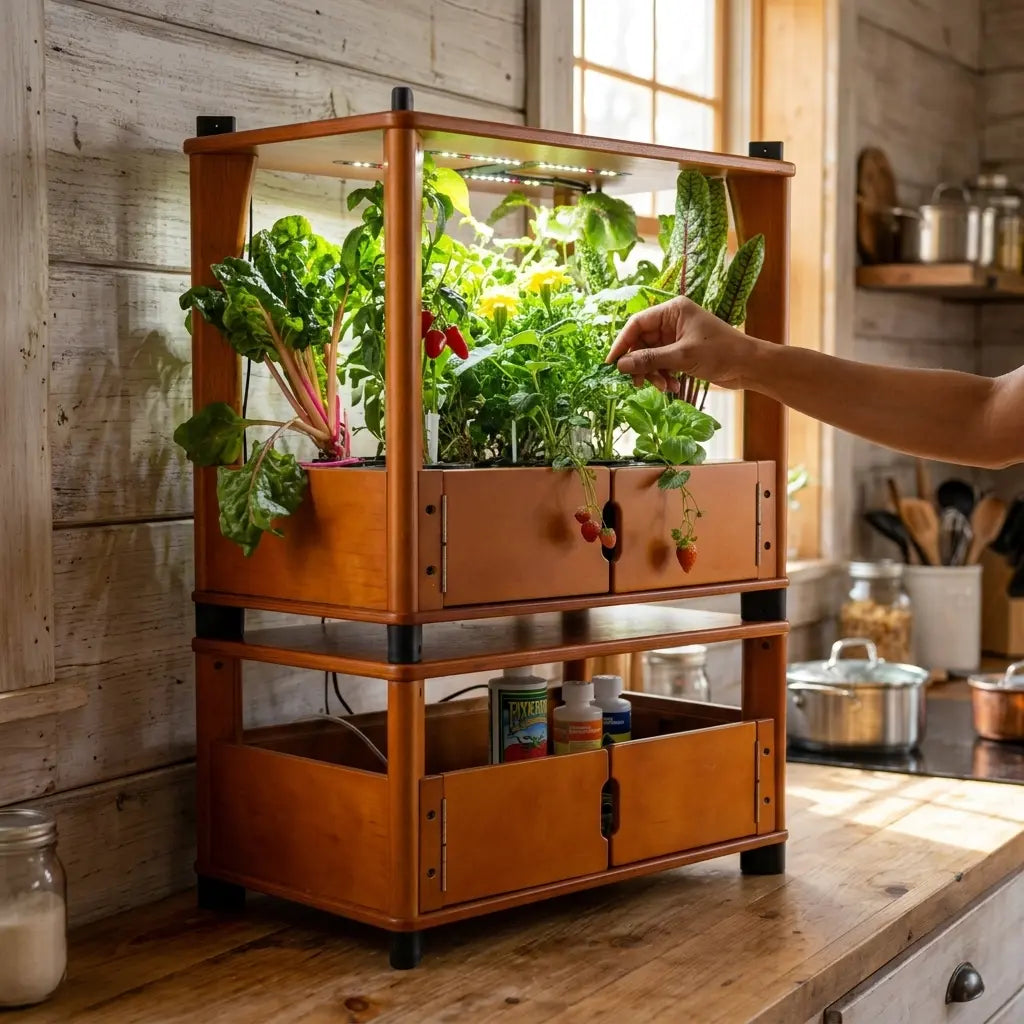
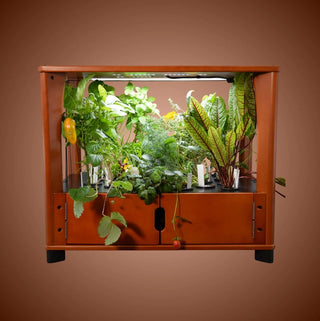
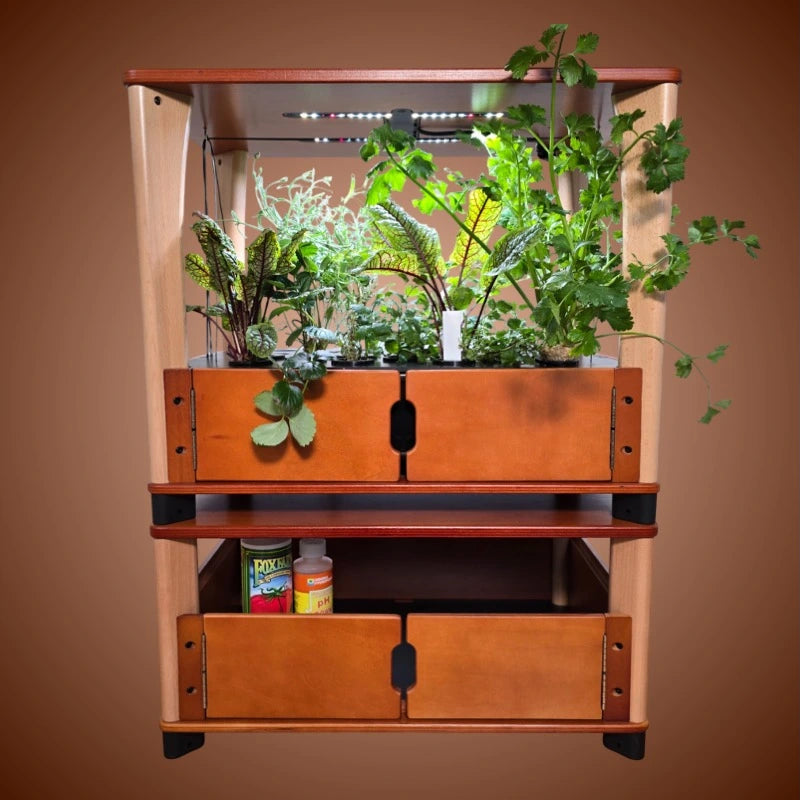
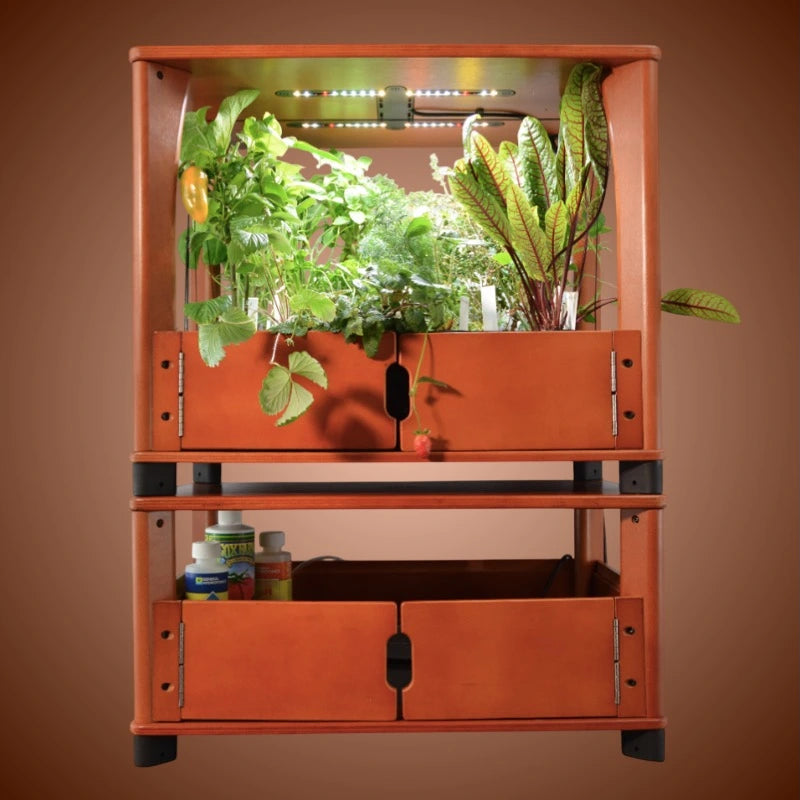
The Aquager Home Farm is built as furniture first and a growing system second, available in four wood finishes designed to sit in a kitchen rather than announce itself as a gadget. Each unit runs 24 plants and is expandable to 96, with full spectrum LED grow lights built in.
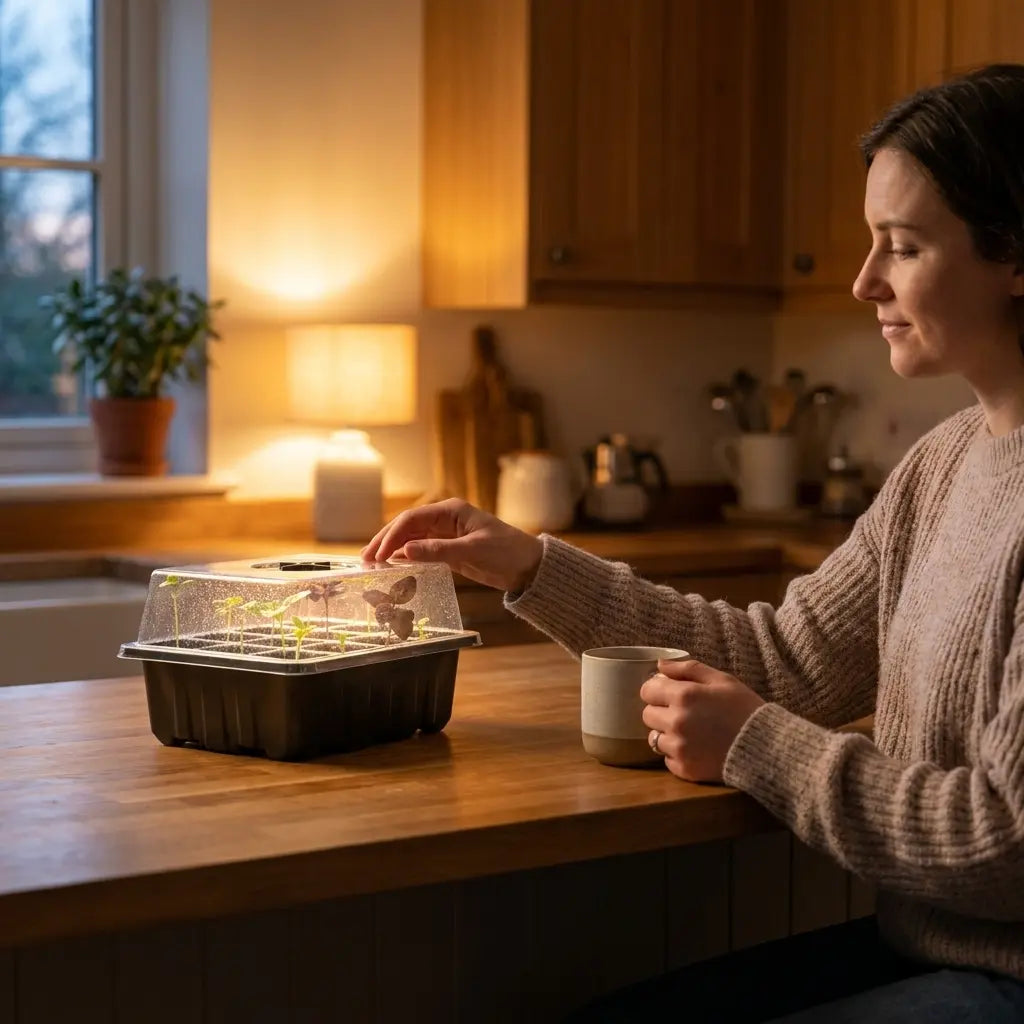
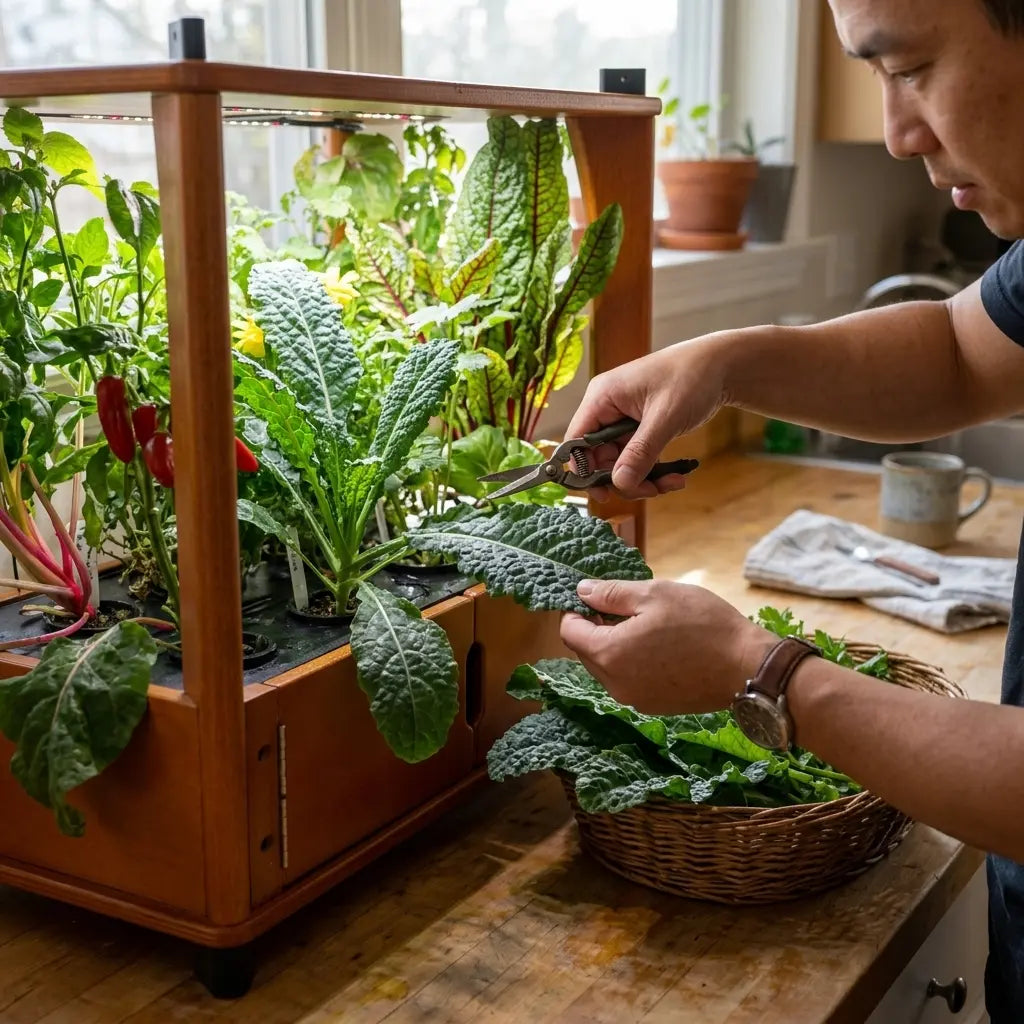
Setup takes about an hour, and ongoing maintenance runs under 10 minutes a week. First sprouts typically appear in 6 to 9 days, with a first harvest in 2 to 4 weeks depending on what is planted.
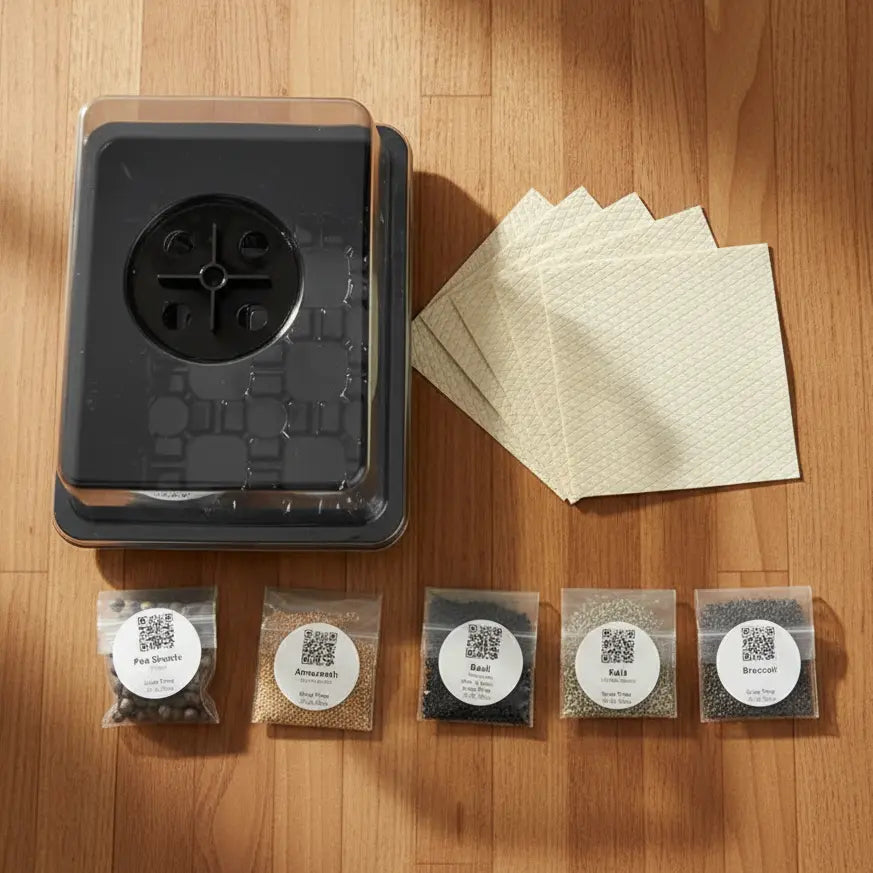
The detail that separates Aquager most clearly from the rest of this list: everything needed to grow is included at purchase, seeds, organic grow mediums, and nutrients, with no subscription required, ever, and no proprietary pod format locking future purchases to one brand. USDA Certified Organic starter plants ship with every unit.
There is also no companion app to manage, no account to create, and no software updates to wait on. The Chef's Organic Set bundles two grow boxes together, useful for anyone who wants to run more than 24 plants without stepping up to the larger expansion units.
The wood finish is not purely cosmetic either. Because the unit is designed to be lived with rather than tucked away, it tends to actually get used, which matters more for a kitchen appliance than most spec sheets account for. A system that looks at home on a counter gets checked on, watered, and harvested more consistently than one that reads as a piece of equipment to be hidden in a pantry.
AeroGarden: The Familiar Name With a Complicated Recent History
AeroGarden is the name most people already recognize, largely because it has been on the market longer than most competitors. The Bounty Elite, one of its more popular models, typically lists in the low $200s and is built from plastic with an integrated grow light column.
It connects to Alexa and a companion app for watering and nutrient reminders, which some buyers like and others find unnecessary for a countertop planter. AeroGarden uses its own proprietary seed pod system, so ongoing costs depend on repurchasing pods rather than sourcing seeds independently.
Worth knowing before buying: AeroGarden's parent company shut down operations in 2024, leaving existing customers without support or replacement pods for a stretch, before the brand relaunched under new ownership in 2025. That gap is a legitimate consideration for anyone weighing long term reliability of parts and support, not a knock on the current product itself.
Build quality is functional rather than furniture grade, which is consistent with its price point but worth knowing if a countertop appliance staying visually part of the kitchen matters to you. For buyers who specifically want smart home integration and are comfortable repurchasing seed pods indefinitely, it remains a reasonable option with a long track record, the 2024 disruption aside.
Click and Grow: Simple to Start, Closed Once You Do
Click and Grow's Smart Garden 9 typically lists around $200 and is one of the simpler systems to set up, with a plastic body and a smaller footprint than several competitors on this list. It is a reasonable pick for someone who wants a straightforward countertop herb garden without much fuss.
The tradeoff shows up after the first grow cycle. Click and Grow runs on a closed, proprietary pod ecosystem priced around $6 per pod, with no third party or generic alternative available, meaning every future planting requires buying directly from Click and Grow at their price.
The LED grow light is also proprietary, typically needing replacement every 24 to 30 months at roughly $89 each. Between pod costs and periodic light replacement, the real multi-year cost of a Click and Grow system runs meaningfully higher than the initial purchase price suggests.
It is a fine choice for someone who only wants a few herbs going at once and does not mind being locked into one supplier for every future planting. It is a harder sell for anyone who wants the flexibility to grow whatever seeds they already have on hand.
Gardyn: Powerful Growing Capacity, Ongoing Subscription Required
Gardyn sits at the high end of this comparison, typically priced between $695 and $899 depending on the model, with a tall vertical design that grows significantly more plants per unit than most countertop options. For buyers who want serious growing capacity, that vertical footprint is a genuine advantage.
The catch is the subscription. Gardyn's ongoing plan runs $29 to $39 a month, and in recent years that subscription has expanded to gate even fairly basic functionality, like watering reminders and plant health tracking, that once felt like they should come standard with a system this expensive.
Over two or three years, that subscription cost can add up to more than the unit itself, which is worth factoring in for anyone comparing sticker prices alone. Gardyn is a capable system for people who are comfortable with a recurring bill attached to their kitchen garden.
Rise Gardens: Modular and Well Reviewed, Still App Dependent
Rise Gardens typically lists around $380 and takes a modular approach, letting buyers start smaller and add grow levels later as space and interest allow. It consistently reviews well, landing around 8.1 out of 10 in independent consensus scoring, and the expandability is a real point in its favor for buyers unsure how much they will actually want to grow.
Like AeroGarden and Gardyn, Rise Gardens leans on a companion app for monitoring and reminders, and the build is metal and plastic rather than furniture grade wood. It is a solid mid-range option for buyers who want room to grow into a bigger system without committing to Gardyn's price point or subscription model up front.
Rise Gardens does not require an ongoing subscription to keep the unit functional, which puts it closer to Aquager on total cost of ownership than Gardyn, even though the two systems land at very different price points and design philosophies. Anyone deciding between Rise Gardens and Aquager is really choosing between a modular metal tower and a fixed wooden furniture piece, not between a cheap option and an expensive one.

Price and Ongoing Cost, Side by Side
Sticker price only tells part of the story. Some of these systems ask for very little beyond the initial purchase, while others quietly accumulate cost through pods, replacement parts, or a monthly subscription that never really stops.
Aquager Home Farm: $179.99, no subscription, no proprietary pods, seeds and grow mediums included at purchase.
Aquager Chef's Organic Set: $199.99 for two grow boxes, same no-subscription structure.
AeroGarden Bounty Elite: around $230, plus ongoing proprietary seed pod purchases.
Click and Grow Smart Garden 9: around $200, plus roughly $6 per proprietary pod and periodic $89 light replacements.
Gardyn: $695 to $899, plus a required $29 to $39 monthly subscription.
Rise Gardens: around $380, app-based monitoring, modular add-ons priced separately.
Looked at this way, the lowest sticker price on this list and the lowest total cost of ownership happen to be the same system. That is not always true in this category, where a cheaper unit upfront can end up costing more over two years once pods and subscriptions are added in.
Which System Actually Fits Your Kitchen
Buyers who want the simplest possible entry point, with no ongoing costs and no app to manage, are best served by a system like Aquager that includes everything needed at purchase and stops there. If you are brand new to growing anything indoors, our beginner's guide to setting up a hydroponic system walks through what the first few weeks actually look like.
Buyers who specifically want a smart home integration, and do not mind an ongoing pod cost, may find AeroGarden's Alexa connectivity worth the tradeoff, with the 2024 shutdown history factored into expectations around long-term support.
Buyers chasing maximum growing capacity and comfortable with a recurring bill are the clearest fit for Gardyn, while buyers who want room to expand gradually without a subscription attached tend to land on Rise Gardens instead.
Anyone who has already compared basic countertop setups and wants the simplest possible option outright should also see our picks for the simplest hydroponic systems for beginners, and our breakdown of hydroponics versus soil growing indoors is worth reading first if you are still deciding whether hydroponics is the right approach at all.

The aesthetics question is worth its own consideration separate from function. A wooden system built to look like real kitchen furniture sits differently in a room than a plastic tower with an LED ring, and for a device that lives on a counter permanently, that difference tends to matter more over time than most buyers expect at the moment of purchase.
Indoor Hydroponic System Comparison FAQ
Which indoor hydroponic system has the lowest total cost over time?
Aquager, since it has no subscription and no proprietary pod format, meaning the purchase price is close to the actual multi-year cost of ownership.
Do all of these systems require a companion app?
No. AeroGarden, Gardyn, and Rise Gardens all use companion apps for monitoring and reminders. Aquager and Click and Grow do not require an app to operate.
Is Gardyn's subscription actually required?
Yes, for full functionality. In recent years the subscription has expanded to include features like watering reminders and plant health tracking that used to be considered basic, unlocked functionality.
Is AeroGarden still a safe brand to buy from after its 2024 shutdown?
The brand relaunched under new ownership in 2025 and is actively selling and supporting products again, though buyers weighing long-term reliability should factor that history into their decision.
Which system is easiest for a complete beginner?
Aquager and Click and Grow both have straightforward setups, but Aquager includes seeds and grow medium at purchase, while Click and Grow requires ongoing proprietary pod purchases after the first grow cycle.
Which system grows the most plants at once?
Gardyn's vertical design and Aquager's expandable format, up to 96 plants when scaled up, both support significantly higher plant counts than the smaller countertop options like Click and Grow's Smart Garden 9.
Do any of these systems use organic-certified grow mediums or seeds?
Aquager includes USDA Certified Organic starter plants and organic grow mediums with every unit. Availability of organic options varies across the other brands and is worth confirming directly with each manufacturer before buying.
Does a wooden system need more care than a plastic one?
No. The wood finish is sealed for kitchen use and wiped clean the same way as any counter appliance. It does not require special cleaning products or extra maintenance compared to a plastic housing.
Can I switch seeds or grow mediums with any of these systems later, or am I locked in?
Aquager and Rise Gardens both allow more flexibility around what you grow over time. Click and Grow and, to a lesser extent, AeroGarden are built around proprietary pod formats that limit sourcing seeds independently.
The System You Will Still Want on Your Counter Next Year
Every system on this list will grow plants successfully in the short term. The real differences show up six months to two years in, once pod costs, subscription bills, and the accumulated hassle of an app-dependent routine either faded into the background or became a quiet source of friction.
Aquager's approach, wooden furniture-grade construction, everything included at purchase, and no subscription attached, was built specifically to avoid that second category. If a low-maintenance, no-surprises system is what you are actually looking for, that is the gap it fills.
None of this means the other four systems on this list are poor choices. AeroGarden's brand recognition, Click and Grow's simplicity, Gardyn's growing capacity, and Rise Gardens' modularity all serve real buyer needs. The point of a genuinely honest comparison is not to declare one universal winner, but to make the tradeoffs visible before you buy rather than six months into ownership.
Author: Aquager · Published: July 5, 2026 · Updated: July 5, 2026












0 comments