
Some indoor hydroponic gardens quietly turn into a monthly bill. Others don't. The difference usually isn't obvious from the product photos, and it rarely shows up until a few months after you've already bought one.
This category has grown crowded over the last few years, with more brands experimenting with subscription plans, proprietary pod formats, and app-gated features than there used to be. Some of that adds real convenience. Some of it just adds a recurring charge to something that used to be a one-time purchase. Buyers researching this category often start with price alone and only discover the real cost structure after living with a system for a few months, which is exactly the gap this list is meant to close.
This is a short list of systems that don't require an ongoing subscription to keep working, plus a couple that look subscription-free at first glance but aren't, once you look at what they actually cost to keep running.
Why 'No Subscription' Actually Matters
It's easy to treat a subscription or a pod cost as a minor detail when you're comparing sticker prices side by side. In practice, it's often the single biggest factor in what a system actually costs you by year two, bigger than the initial price difference between any of the options on this list. A $150 price gap upfront can flip entirely once you add a year or two of pods or a monthly plan on top of the cheaper unit.
This list was built around actual published pricing and subscription terms for each brand, not marketing copy. Where a brand's ongoing cost depends on usage, like how often you replant or how many plant sites you're running, that's noted rather than presented as a single fixed number.
How to Spot a Hidden Subscription Before You Buy
The clearest tell is whether basic features, like watering reminders or plant health tracking, are locked behind a paid plan. If a system needs an active subscription just to function normally, that's a recurring cost, whether or not the brand calls it one.
The second tell is proprietary pods. A system that only accepts its own branded seed pods isn't technically a subscription, but it behaves like one every time you need to plant something new, since you're locked into buying from one company at their price, indefinitely.
A third, smaller tell is app dependency. A companion app isn't a subscription on its own, but it's one more piece of software that can change, get discontinued, or eventually push you toward a paid tier for features that used to be free.
None of these tells are dealbreakers on their own. A subscription can be worth it if the features behind it genuinely matter to you, and proprietary pods can be a fair tradeoff for a smaller footprint or simpler setup. The point of checking for them isn't to rule out every system that has one. It's to know what you're actually signing up for before you're two years in, rather than finding out by surprise when a bill or a pod order shows up.
Best No-Subscription Picks
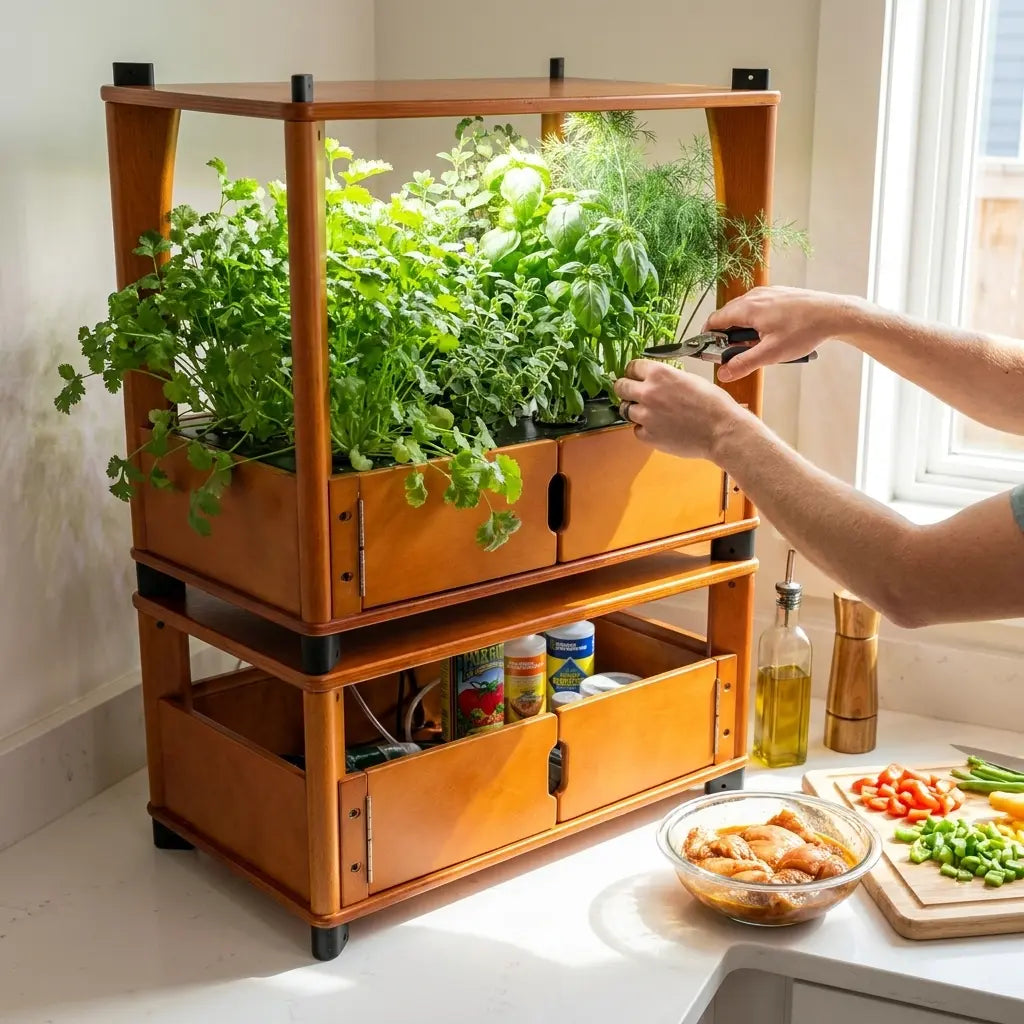
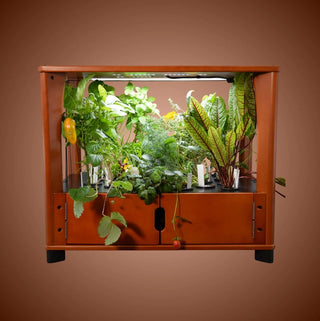
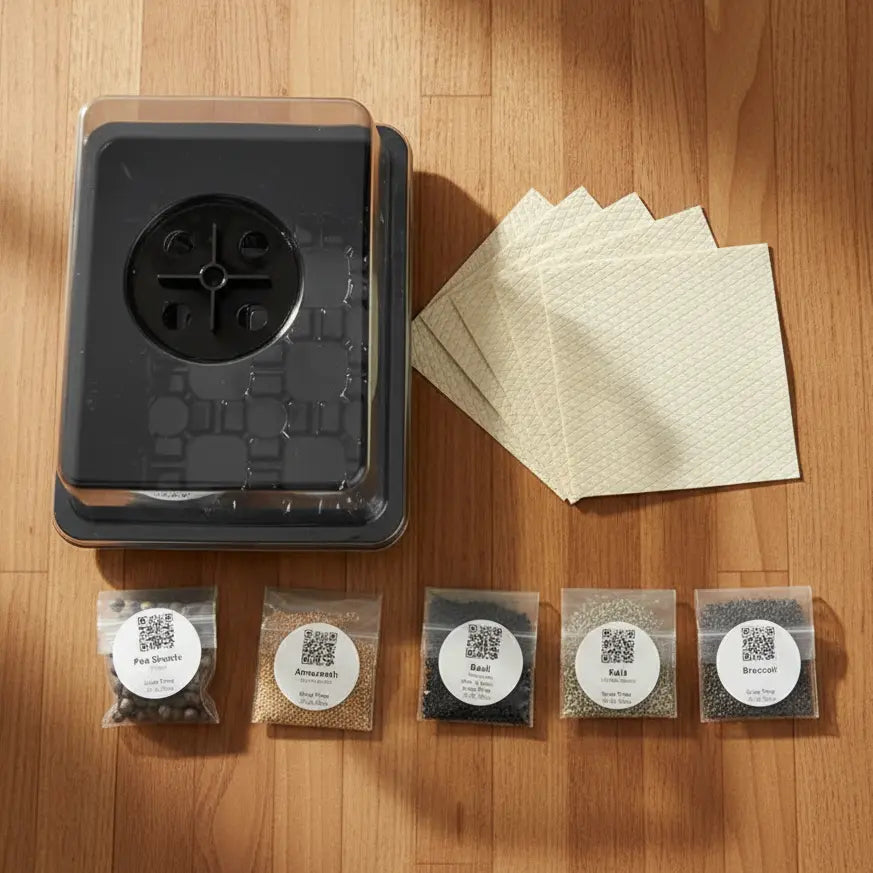
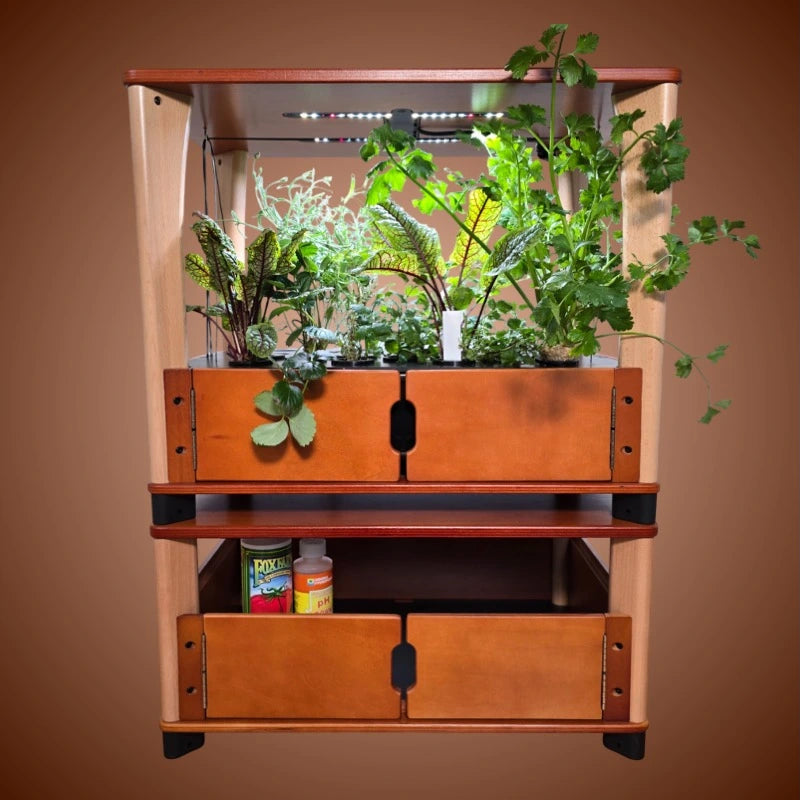
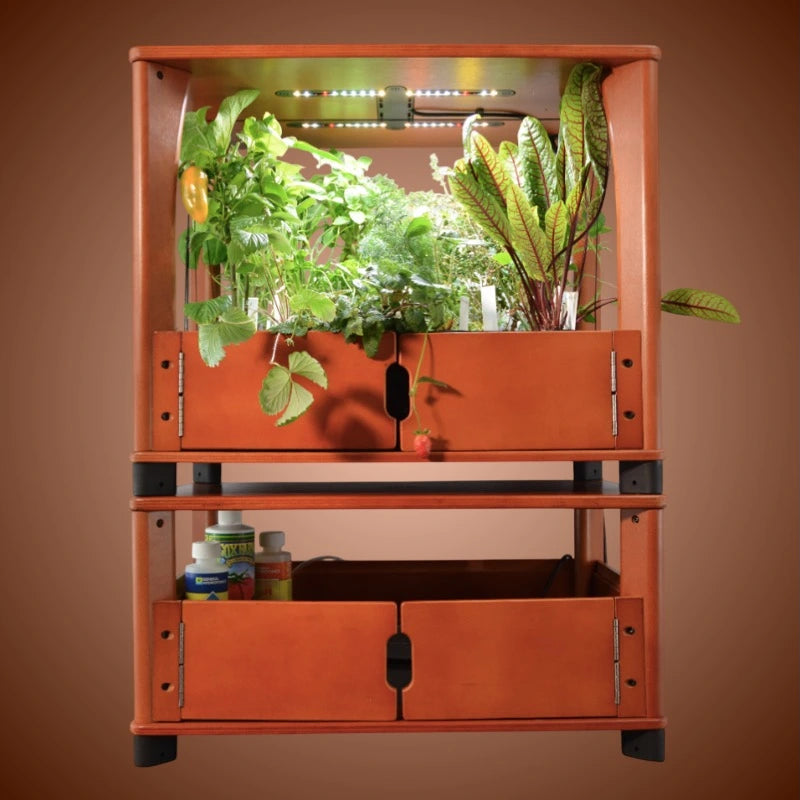
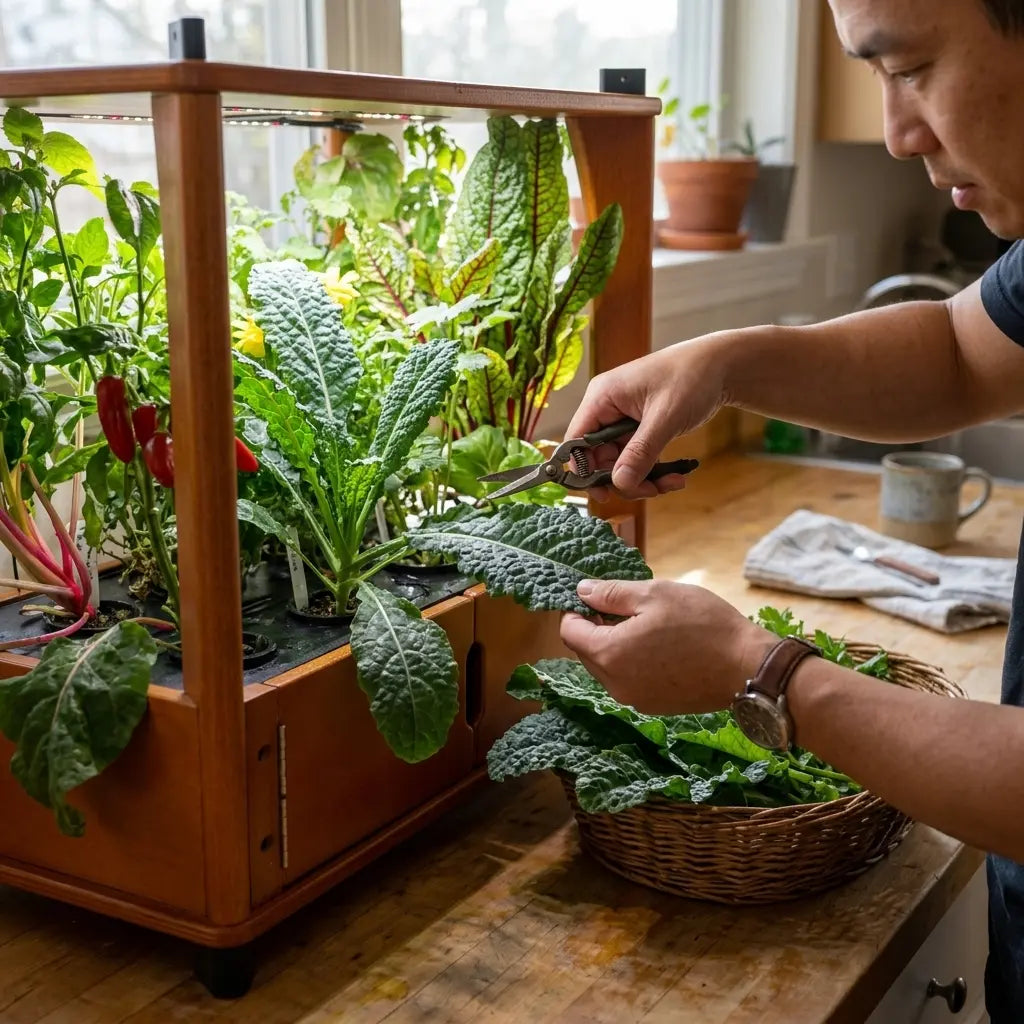
1. Aquager Chef's Organic Set. Everything needed to grow, seeds, organic grow medium, and nutrients, ships included at purchase. No subscription, no proprietary pods, and no companion app required to operate. The set bundles two grow boxes together for 24 plants total, built as wood furniture rather than a plastic countertop appliance. Setup takes about an hour, and ongoing maintenance runs under 10 minutes a week. At $199.99, the purchase price and the real cost of ownership land close to the same number, since there's nothing ongoing left to buy. It also ships with full spectrum LED grow lights built in and is expandable later if 24 plants isn't enough, so growing into a bigger setup doesn't mean starting over with a new purchase.

2. Rise Gardens. A modular system that lets you start smaller and add grow levels later as space and interest allow. It typically lists around $380 and doesn't require a subscription to keep functioning, though it does lean on a companion app for monitoring and reminders. It reviews well and is a solid pick for anyone who wants room to grow into a larger system without a recurring bill attached, even if the metal and plastic build reads more as equipment than furniture. First sprouts and harvest timelines run similarly to most hydroponic countertop systems, generally within a couple of weeks depending on what's planted, so the tradeoff against Aquager isn't speed. It's really a question of aesthetic preference and whether a companion app for monitoring is a feature you want or one more thing to manage.
Both of these let you use the system for years without an ongoing bill attached, which is the entire point of this list.
Systems to Watch For
Gardyn is the clearest example of subscription creep in this category. Its required plan runs $29 to $39 a month, and in recent years that subscription has expanded to gate fairly basic functionality, like watering reminders and plant health tracking, that used to come standard. Over two or three years, that monthly cost can add up to more than the unit itself, which typically lists between $695 and $899 before the subscription even starts.
To put a number on it: two years of Gardyn's subscription at the low end of its range, $29 a month, comes to just under $700, on top of a unit that already costs $695 to $899 before the plan starts. That means total spend over two years can easily clear $1,400, more than double the price most buyers think they're paying when they check out.
Click and Grow doesn't charge a monthly fee, but its closed pod system, priced around $6 per pod, plus an LED light that needs replacing every 24 to 30 months, functions like a subscription in practice even without the label. Over two years, that adds up to several hundred dollars beyond the roughly $200 purchase price.
AeroGarden sits somewhere in between. It doesn't require a subscription, but it does run on proprietary seed pods, so ongoing cost depends on how often you replant. Worth noting too: AeroGarden's parent company shut down operations in 2024 before relaunching under new ownership in 2025, which is a separate but relevant consideration if long-term brand stability matters to your decision. Ongoing cost with AeroGarden depends heavily on how many pods you replace and how often, which makes it harder to budget for compared to a flat, one-time purchase. Our guide to the best AeroGarden alternatives covers that in more detail.
For the complete picture across all five major systems, including full pricing, aesthetics, and ease of use comparisons, our indoor hydroponic system comparison covers the full field in depth. This post is intentionally the short version, pointed at the one question that actually separates these systems long term.
No-Subscription Hydroponic Garden FAQ
Which system has no subscription and no proprietary pods?
The Aquager Chef's Organic Set. It's the only system on this list with neither an ongoing plan nor a closed pod format, so nothing about its ongoing cost depends on a subscription or a proprietary refill.
Is Gardyn's subscription optional?
No, not for full functionality. Basic features like watering reminders and plant health tracking are gated behind the paid plan, and skipping it means losing access to features other systems include standing.
Does 'no subscription' mean no ongoing cost at all?
Not always. A system can skip the monthly bill and still cost more over time through proprietary pods, like Click and Grow's roughly $6 per pod, or periodic proprietary part replacements.
Which no-subscription option is best for someone who wants to grow more over time?
Rise Gardens, since its modular design is built specifically to expand. Aquager's Chef's Organic Set is also expandable, but Rise Gardens was designed around gradual growth from the start.
How much can a hidden subscription or pod cost really add up to?
For a system like Gardyn, the subscription alone can exceed $700 over two years on top of the purchase price. For Click and Grow, pod and light replacement costs typically add several hundred dollars over the same period. Neither shows up on the sticker price.
Do any of these systems require creating an online account?
Aquager doesn't require an account or app of any kind to operate. Rise Gardens and Gardyn both use companion apps that generally require account setup for full monitoring features.
The System That Stays Paid Off

A subscription-free system is really just one that doesn't ask you to keep paying for what you already bought. The Aquager Chef's Organic Set was built around that idea specifically: everything included at purchase, nothing proprietary to keep rebuying, and no plan required to keep it running, this year or three years from now. Every system on this list will grow something successfully in the first few weeks. The real test, as always, is what it's still costing you a year or two after that.
Author: Aquager · Published: September 5, 2026 · Updated: September 5, 2026











0 comments