
Christmas dinner is twelve weeks away. If you want fresh sage for the stuffing, rosemary for the potatoes, and thyme in the gravy, you need to start growing now. Most Christmas cooking herbs take six to eight weeks from planting to first harvest. Miss October, and you’re buying dried herbs from a jar in December.
This guide covers ten herbs worth growing for the holiday season — each with its Christmas dish pairing, the exact week to plant for a Christmas harvest, and what to expect from a single Aquager pod. One October setup covers Thanksgiving, Christmas, and New Year’s.
The October Window: Why These Herbs Need 8 Weeks
Herb growing isn’t instant. Sage, rosemary, and thyme — the three herbs that define Christmas cooking — each take five to seven weeks to establish and produce their first meaningful harvest. Chives and parsley are faster at three to four weeks. Dill falls in between.
Running the numbers backward from December 25: plant the slow herbs (sage, rosemary, thyme) by the first or second week of October and you arrive at Christmas with full, established plants at their most productive. Wait until November and you’ll have scraggly seedlings on Christmas morning.
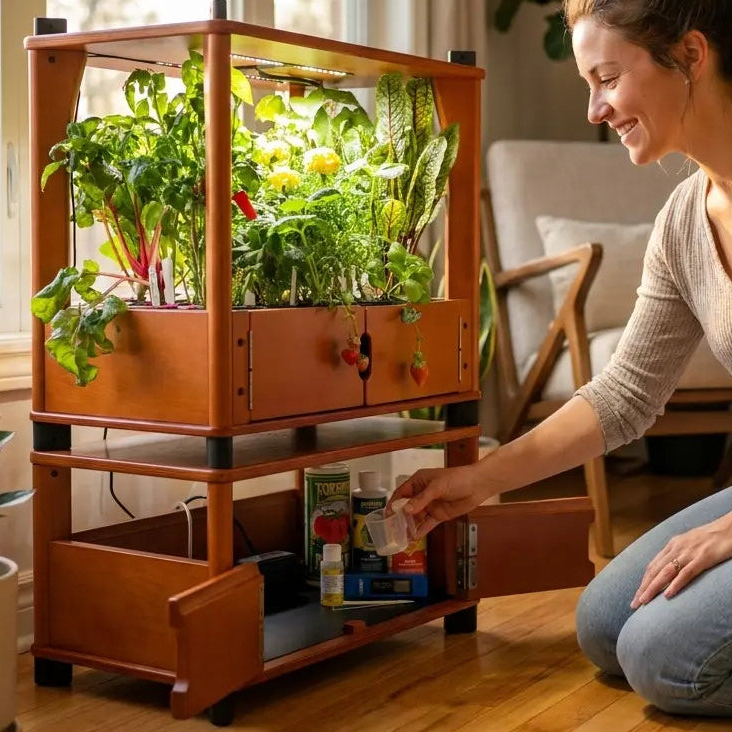
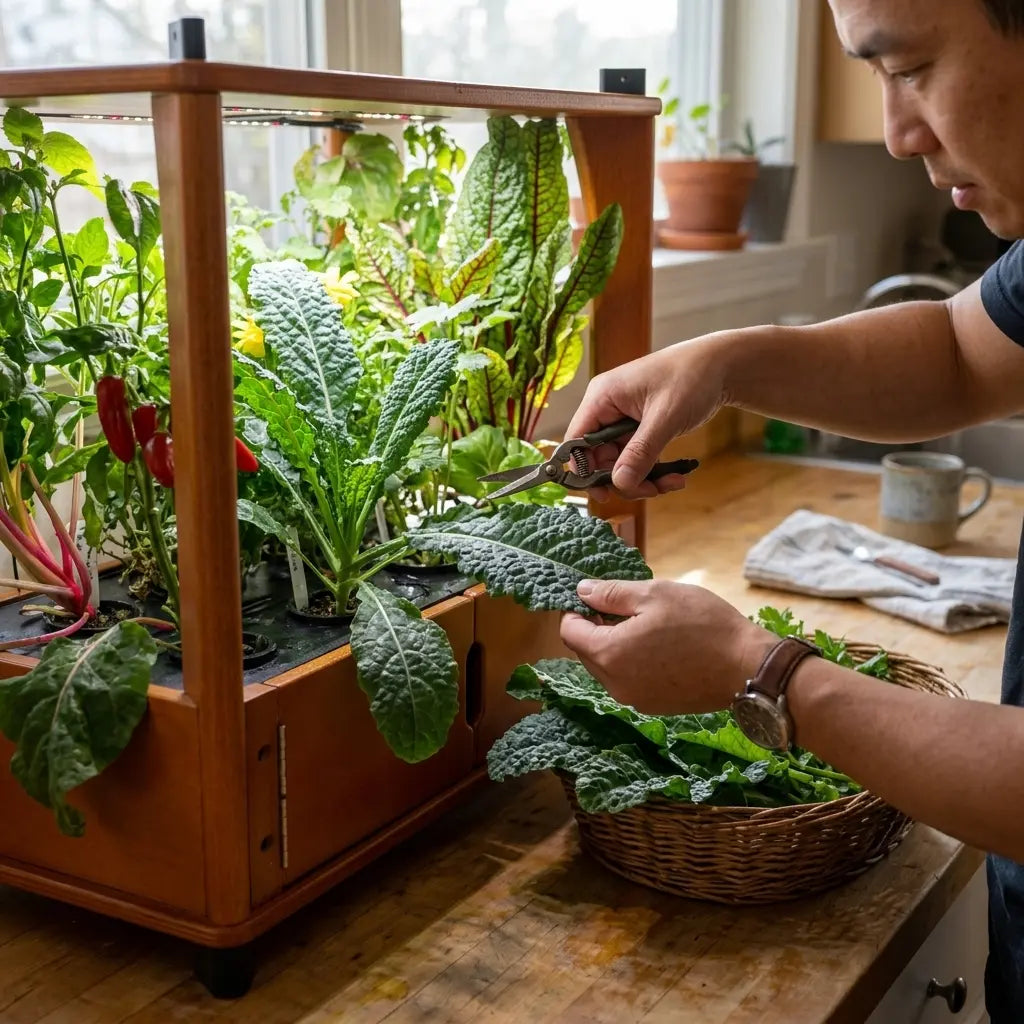
The good news: an indoor hydroponic system like the Aquager Home Farm removes every other variable. No outdoor frost dates. No low-light slowdowns. No watering schedule to track. The timing constraint is the only one that matters — and it starts now.
The 10 Christmas Herbs: Plant Dates, Yields, and Dish Pairings
1. Sage
Plant by: October 10. Yield from one pod: 4–6 large leaves per week once established; increases with plant maturity. Christmas dish: Classic stuffing and dressing, butternut squash soup, brown butter pasta, turkey gravy, holiday sausage dishes.
Sage is the most distinctly Christmas herb on this list. Its flavor is inseparable from traditional holiday cooking, and it’s the one most commonly found dried and flavorless at grocery stores. Fresh sage bears almost no resemblance to dried sage — it’s the upgrade that most improves holiday stuffing.
2. Rosemary
Plant by: October 10. Yield from one pod: 2–3 woody sprigs per week; continues producing for 6–12 months. Christmas dish: Roasted potatoes, leg of lamb, prime rib, focaccia, compound butter, holiday bread, mulled wine garnish.
Rosemary smells like Christmas. Growing it on the kitchen counter fills the room with a pine-and-herb fragrance that no candle accurately replicates. The flavor, like fresh sage, is dramatically more intense than the dried version — one fresh sprig replaces three teaspoons of dried.
3. Thyme
Plant by: October 10. Yield from one pod: 1–2 teaspoons of stripped leaves per week; more generous after week 8. Christmas dish: Roasted turkey, pan gravies, root vegetable roasts, holiday soups and braises, chicken stock.
Thyme is the foundational savory herb in Christmas cooking — it goes into virtually every roast, sauce, and soup. One established pod keeps a busy holiday kitchen supplied continuously. Plant it in October and it will be at its most productive by the time you need it.
4. Chives
Plant by: October 20. Yield from one pod: Continuous snip-and-regrow; a few tablespoons of greens per week, more each month. Christmas dish: Mashed potatoes, holiday dips and spreads, Christmas morning eggs and omelets, sour cream garnish for soups.
Chives are the fastest herb on this list — first harvest in three to four weeks — and among the most used in December cooking. Plant them later in October and they’ll be ready before the others. One pod keeps a household in fresh chives indefinitely.
5. Parsley
Plant by: October 20. Yield from one pod: 1–2 tablespoons per week, increasing significantly as the plant matures. Christmas dish: Herb stuffing, compound butters, salsa verde, garnish for every roast and side dish, chimichurri for lamb.
Flat-leaf Italian parsley is the workhorse of the Christmas table. It goes into or on top of nearly every dish. Store-bought parsley is almost always curly and almost always wilted — the flat-leaf variety grown fresh has a brightness and bitterness that transforms garnishes into flavor contributions.
6. Dill
Plant by: October 20. Yield from one pod: Feathery fronds continuously for 8–12 weeks. Christmas dish: Holiday salmon and gravlax, cucumber dill dip, beet and potato salads, compound butters for Christmas bread, pickle brine for winter cocktails.
Dill is underrepresented in most indoor herb gardens and overpriced at every grocery store in December. It grows quickly in a hydroponic system and won’t bolt prematurely the way it does in outdoor summer heat. For a complete Scandinavian Christmas spread, dill is non-negotiable.
7. Mint
Plant by: October 20. Yield from one pot: Generous, continuous harvests once established. Christmas dish: Holiday mocktails and cocktails, mulled wine, hot chocolate, after-dinner tea, mint chocolate pairings, Christmas candy decoration.
Mint grows best from a cutting or established plant rather than from seed. Instead of a seed pod, grab a small potted mint from any nursery or garden center in October and give it a bright kitchen counter spot. It will produce prolifically through the entire holiday season and into the new year.
8. Cilantro
Plant by: Any time — harvest in 7–10 days. Yield: One tray = a full handful of microgreens in under two weeks. Christmas dish: Cilantro-lime spreads, holiday salsas, Mexican Christmas traditions, pico de gallo, garnish for holiday soups and tacos.
Cilantro bolts rapidly when grown as a full herb, making it frustrating to maintain as a counter plant. The better approach is cilantro microgreens — grown in a flat tray, harvested at seven to ten days, and replanted immediately. The microgreens version has the same bright cilantro flavor with none of the bolting problem. Aquager cilantro microgreens seeds are the fastest, most reliable way to keep this herb at the Christmas table.
9. Bay
Plant by: Purchase a nursery plant in October. Yield: One to two leaves per use; one plant provides for years. Christmas dish: Holiday braises, beef and lamb stocks, mulled wine, Christmas ham brine, bean soups, tomato-based holiday sauces.
Bay laurel grows very slowly from seed — too slowly for a Christmas harvest. The correct approach is to source a potted bay laurel plant from a nursery in October and bring it indoors to a bright kitchen spot. Bay plants are inexpensive, long-lived, and one plant provides all the bay you’ll need for holiday cooking for years. This is the one herb on the list that’s best treated as a permanent kitchen companion rather than a seasonal grow.
10. Tarragon
Plant by: Source a cutting or division in October. Yield from one pot: Regular harvests of delicate, anise-scented leaves once established. Christmas dish: Classic French roast chicken, béarnaise sauce, tarragon compound butter, holiday cream sauces, festive egg dishes.
A note on tarragon varieties: French tarragon (the one you want) cannot be grown from seed — it’s always sterile and must come from a cutting or division. Russian tarragon grows from seed but has virtually no flavor. Get French tarragon from a nursery, farmers market herb vendor, or a friend with an established plant. Pot it up in October and bring it to a bright indoor spot. Growing tarragon this way gives you one of the most distinctively French holiday cooking herbs, not commonly found fresh at any grocery store.
The Chef’s Organic Set: Your October Starting Point
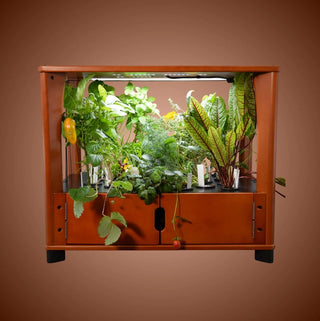
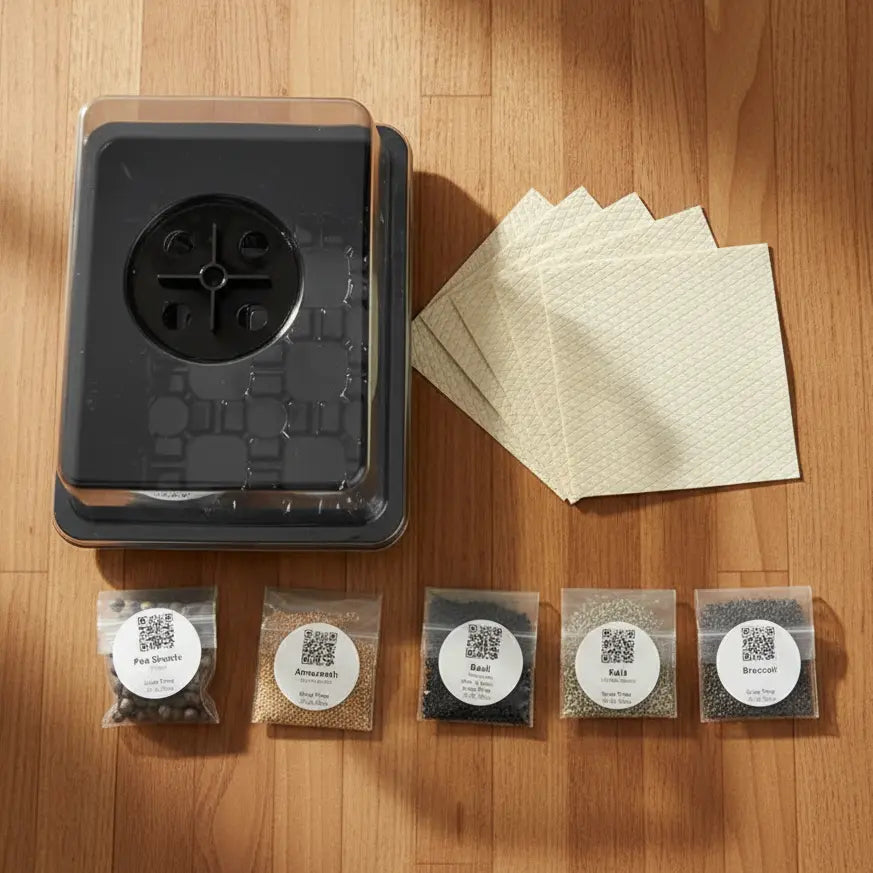
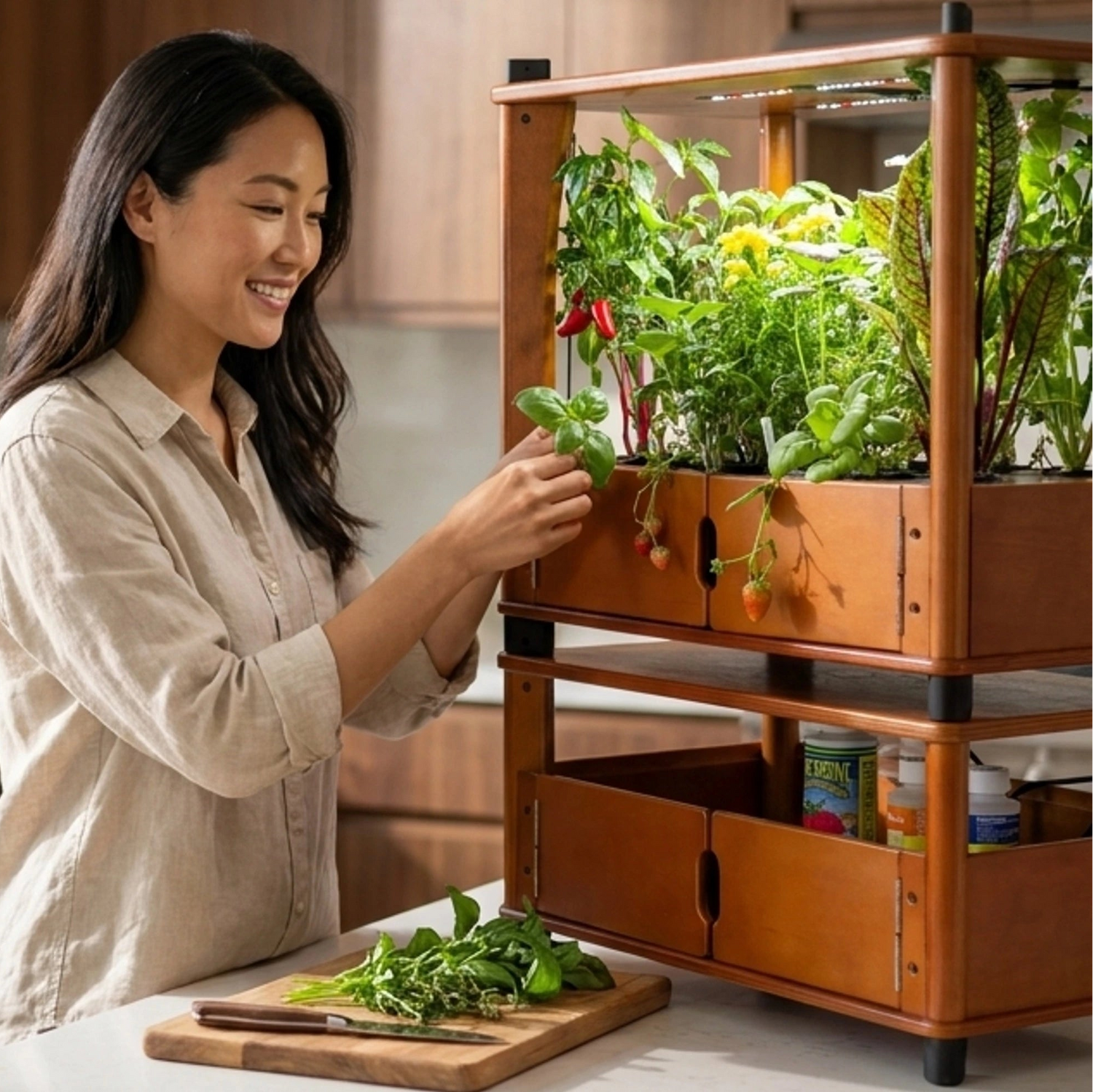
The six Aquager-grown herbs on this list — sage, rosemary, thyme, chives, parsley, and dill — are all available as pre-seeded pods and grow consistently in the Aquager Chef’s Organic Set. The set includes the Home Farm (24 pod capacity), the matching Storage Unit, and a curated starting herb pod selection. Everything arrives ready to plant.
Start all six pods in the first or second week of October. Run them alongside your nursery-sourced mint, bay, and tarragon. By the time Thanksgiving arrives, chives and parsley will be at first harvest. By Christmas, sage, rosemary, and thyme will be at full production. By New Year’s, dill will be in its most generous window.
One Setup, Three Holidays
This is the math that makes October planting so compelling: the herbs you start now don’t just serve Christmas. They serve three consecutive holidays.
Thanksgiving (late November): Chives and parsley are at full production. Thyme is at first harvest. Rosemary and sage are beginning. Your Thanksgiving table gets fresh herbs starting with this first holiday.
Christmas (December 25): All six farm-grown herbs at or near peak production. Sage for the stuffing. Rosemary for the potatoes. Thyme in the gravy. Parsley on everything. Chives on the mashed potatoes. Dill on the smoked salmon appetizer. Plus your nursery mint in the cocktails and mocktails.
New Year’s Eve and Day (December 31–January 1): Herbs that were modest at Christmas are at full output by New Year’s. Rosemary and sage are most productive at 8–10 weeks. Dill is in its most generous window. The herbs that powered Christmas dinner now power the January cooking that follows — the long braises, roast chickens, and soups that define early winter.
One October setup. Three holidays. Months of fresh herbs afterward. For more on what thrives in the Aquager system through winter, see our December indoor growing guide and the year-round herb growing guide.
Frequently Asked Questions
Do I really need to start in October? What if I start in November?
November starts are possible but produce significantly less by Christmas. Sage, rosemary, and thyme — the three most important Christmas cooking herbs — take 5–7 weeks to reach first harvest. A November 1 start gives you 7–8 weeks to Christmas Day, which is borderline. A November 15 start means Christmas herbs that are barely past the seedling stage. October gives you margin and fully established plants.
Can I run all ten herbs simultaneously on the Aquager farm?
The Aquager Home Farm holds 24 pods simultaneously. The six Aquager-grown herbs (sage, rosemary, thyme, chives, parsley, dill) can all run at once — with room to spare for additional varieties. Mint, bay, tarragon, and cilantro microgreens run alongside the farm on the same counter, each in their own containers. The full ten-herb setup fits on a standard kitchen counter.
What’s the difference between fresh and dried herbs for Christmas cooking?
For the herbs on this list, fresh is categorically better. Sage, rosemary, and thyme lose their volatile oils rapidly after drying — dried versions have a fraction of the aromatic intensity. Fresh sage in stuffing is not a subtle upgrade; it’s a completely different ingredient. If you’ve only ever made holiday stuffing with dried sage, the first time with fresh will be a revelation.
Which herbs are the most impactful if I can only grow three?
Sage, rosemary, and thyme — in that priority order for Christmas cooking. These three cover the roast, the stuffing, the gravy, and the potatoes. Chives fourth for mashed potatoes and eggs. Parsley fifth as the universal garnish. If the farm’s capacity is limited, this is the priority sequence.
Plant Now, Cook Better in December
The window for Christmas herbs closes in a few weeks. Every day past the second week of October is a day less of growing time before Christmas dinner. The herbs that define holiday christmas cooking — sage, rosemary, thyme — are not herbs you can decide to grow in December. They require a decision made now.
An October morning spent setting up the farm pays dividends across three holidays and several months of winter cooking. The investment is a one-time setup. The return is fresh herbs at every holiday meal, then through January and beyond, from a system that runs itself on the kitchen counter.
Author: Aquager · Published: June 7, 2026 · Updated: June 7, 2026












0 comments