
December isn’t when most people think to start a garden. But indoor growing — on a kitchen counter, year-round — doesn’t follow seasonal rules. Outdoor gardening is over. Grocery store produce is at its worst. And the herbs that make holiday cooking memorable are exactly the ones that grow best in a temperature-controlled indoor environment.
This guide covers everything that thrives in December: fast herbs ready before Christmas, hardy greens for winter salads and sides, and microgreens for quick harvests in days. Each crop includes time to first harvest, expected yield, and the best holiday dish pairing. Whether you’re setting up a new garden now or just received one as a gift, this is where to start.
Why December Is Actually a Great Month to Start Growing Indoors
The logic is the reverse of outdoor gardening. Outside, December means frost, dormancy, and waiting. Inside, with a hydroponic system that supplies its own light, December means consistent conditions: stable temperature, automated light scheduling, and no seasonal variation at all.
Herbs that grow in shade or lower light outdoors thrive in the full-spectrum light of an indoor grow system, regardless of the time of year. The Aquager Home Farm manages its own light cycle, so shorter winter days don’t slow growth rates. A basil pod planted in December germinates and grows at the same rate as one planted in June.
What changes in December is what you do with the harvest. Holiday cooking demands fresh herbs more than any other season — rosemary and thyme for roasts, sage for stuffing, parsley for everything. Starting an indoor garden now puts these herbs at peak harvest right when they’re needed most: Christmas dinner, New Year’s Eve, and the long months of winter cooking that follow.
Fast-Growing Herbs for the Holidays (3–5 Weeks to First Harvest)
Start these now and they’ll be ready before Christmas. Plant them the day your farm arrives.
Chives
Time to first harvest: 3–4 weeks. Expected yield: Continuous snip-and-regrow harvests; a few tablespoons of greens per pod per week once established, growing more generous each month. Best holiday pairings: Mashed potatoes, holiday dips and spreads, cream cheese and bagels, scrambled eggs for Christmas morning, sour cream toppings for soups.
Chives are one of the fastest-establishing herbs in the Aquager system and among the most versatile for winter cooking. Snip just above the base and they regrow within days. A single pod keeps a household in fresh chives indefinitely.
Parsley
Time to first harvest: 3–5 weeks. Expected yield: Regular harvests of 1–2 tablespoons per week, increasing significantly as the plant matures. Best holiday pairings: Herb stuffing and dressing, roasted potatoes, pasta, salads, and garnish for virtually every roast or side dish on the holiday table.
Growing parsley indoors gives you a reliable supply of what is otherwise the most overpriced and poorly stored herb at the grocery store. The flat-leaf Italian variety from the Aquager pod catalog is significantly more flavorful than the curly variety that dominates supermarket shelves.
Basil
Time to first harvest: 3–4 weeks. Expected yield: 2–4 tablespoons of leaves per week per pod; grows more generous with each harvest cycle. Best holiday pairings: Caprese appetizers, holiday pasta dishes, fresh pesto, bruschetta, and summer-in-winter salads that contrast with the season.
Basil loves the consistent warmth and light of an indoor hydroponic system and is one of the most rewarding crops to grow in December — when the gap between counter-fresh and store-bought flavor is widest. For a complete basil growing guide, see how to grow basil indoors.
Dill
Time to first harvest: 4–5 weeks. Expected yield: Feathery fronds continuously for 8–12 weeks; harvest frequently to extend the productive period. Best holiday pairings: Holiday salmon, cucumber dill dip, potato and beet salads, compound butters for Christmas bread, pickle brine for winter cocktails.
Dill is consistently underused in home herb gardens and consistently overpriced at the grocery store. It grows well in December’s stable indoor conditions — it won’t bolt prematurely the way it does when exposed to outdoor heat spikes.
Holiday Herbs Worth the Wait (5–7 Weeks to First Harvest)
These herbs take longer to establish but are essential for serious holiday cooking. Start them now and they’ll be at peak harvest for Christmas dinner and the full winter season ahead.
Thyme
Time to first harvest: 5–6 weeks. Expected yield: 1–2 teaspoons of stripped leaves per week per pod; production increases significantly after 8 weeks as the woody stems fill in. Best holiday pairings: Roasted turkey and chicken, Christmas prime rib, gravies and pan sauces, root vegetable roasts, winter soups and stews.
Thyme is the backbone of holiday cooking and one of the most reliable performers in the Aquager system. Its woody growth habit means it takes slightly longer to establish than leafy herbs, but once going it produces steadily for months without attention.
Rosemary
Time to first harvest: 5–7 weeks. Expected yield: 2–3 woody sprigs per week once established; grows slowly but produces for 6–12 months continuously. Best holiday pairings: Roasted potatoes, leg of lamb, focaccia and holiday bread, herb compound butter, roasted vegetables, holiday cocktail garnishes.
Rosemary is the signature scent of Christmas cooking and one of the herbs that grocery stores rarely stock fresh in meaningful quantities. Growing it indoors means having it available not just for Christmas dinner but for every roast and bake through the full winter.
Sage
Time to first harvest: 5–7 weeks. Expected yield: 4–6 large leaves per week per pod once established; leaf size increases as the plant matures. Best holiday pairings: Classic stuffing and dressing, butternut squash soup, brown butter pasta, holiday sausage and pork dishes, turkey gravy.
Sage defines the flavor of traditional holiday cooking more distinctly than perhaps any other herb. Its flavor profile is inseparable from Thanksgiving and Christmas in most households. For a complete overview of year-round herb growing, see our guide to growing herbs indoors year-round without sunlight.
Hardy Greens for Winter Harvests (3–5 Weeks)
Beyond herbs, the Aquager system grows a full range of winter greens that establish quickly and pair naturally with holiday cooking.
Arugula
Time to first harvest: 3–4 weeks. Expected yield: Generous cut-and-come-again harvests; a full side salad’s worth of leaves per week across multiple pods. Best holiday pairings: Holiday salads with pomegranate and goat cheese, prosciutto and fig crostini, pasta with fresh greens, Christmas dinner appetizer boards.
Arugula is the fastest-growing green in the system and one of the most impressive on a holiday table. A plate of freshly harvested peppery arugula at a Christmas dinner signals effort and intention in a way that store-bought salad mix never does.
Kale
Time to first harvest: 4–5 weeks. Expected yield: Outer leaves harvested continuously for 3–5 months; a generous handful per week per pod. Best holiday pairings: Winter salads with lemon and Parmesan, white bean and kale soup, sautéed sides for holiday roasts, winter pasta dishes.
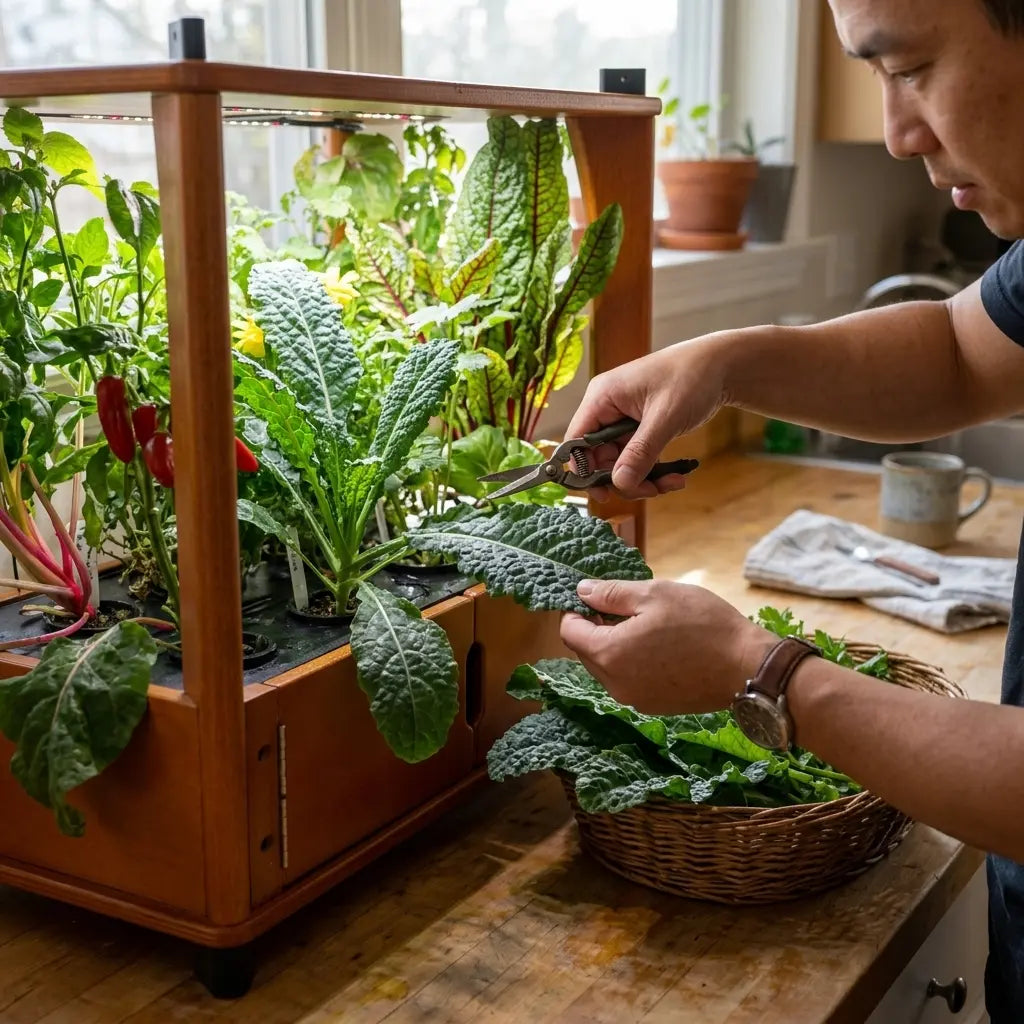
Kale grown indoors in a hydroponic system is notably milder and more tender than field-grown kale, which develops bitterness when cold-stressed. Consistent water and nutrition indoors produces the version of kale that actually tastes good. Learn more in our beginner guide to growing greens indoors.
Microgreens: The Fastest December Harvest (7–12 Days)
If you need fresh food ready for a holiday gathering with minimal lead time, microgreens are in a separate category. Grown from seed to harvest in 7–12 days, they’re cut at the seedling stage and deliver concentrated flavor in the shortest possible window.
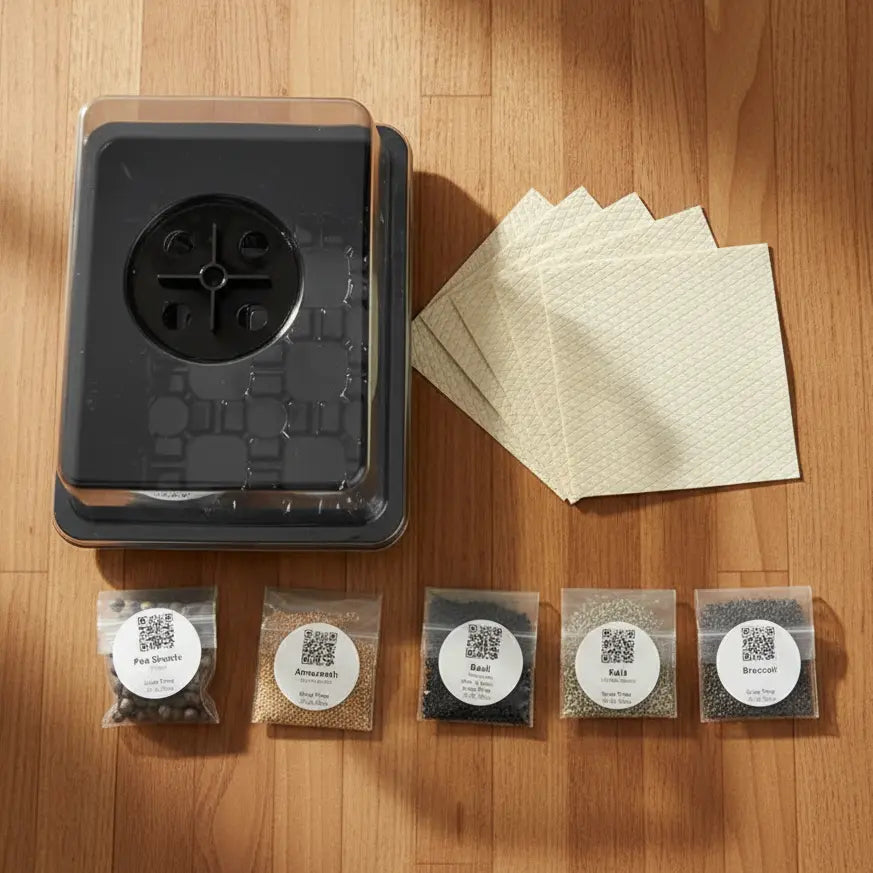
The best December microgreens for holiday cooking: radish (5–7 days, spicy and crisp, excellent on canapés and smoked salmon), pea shoots (8–10 days, sweet and tender, ideal for winter salads and garnishes), sunflower (8–10 days, nutty and substantial, great in winter grain bowls), and broccoli (7–10 days, mild and nutritious, the most versatile everyday option).
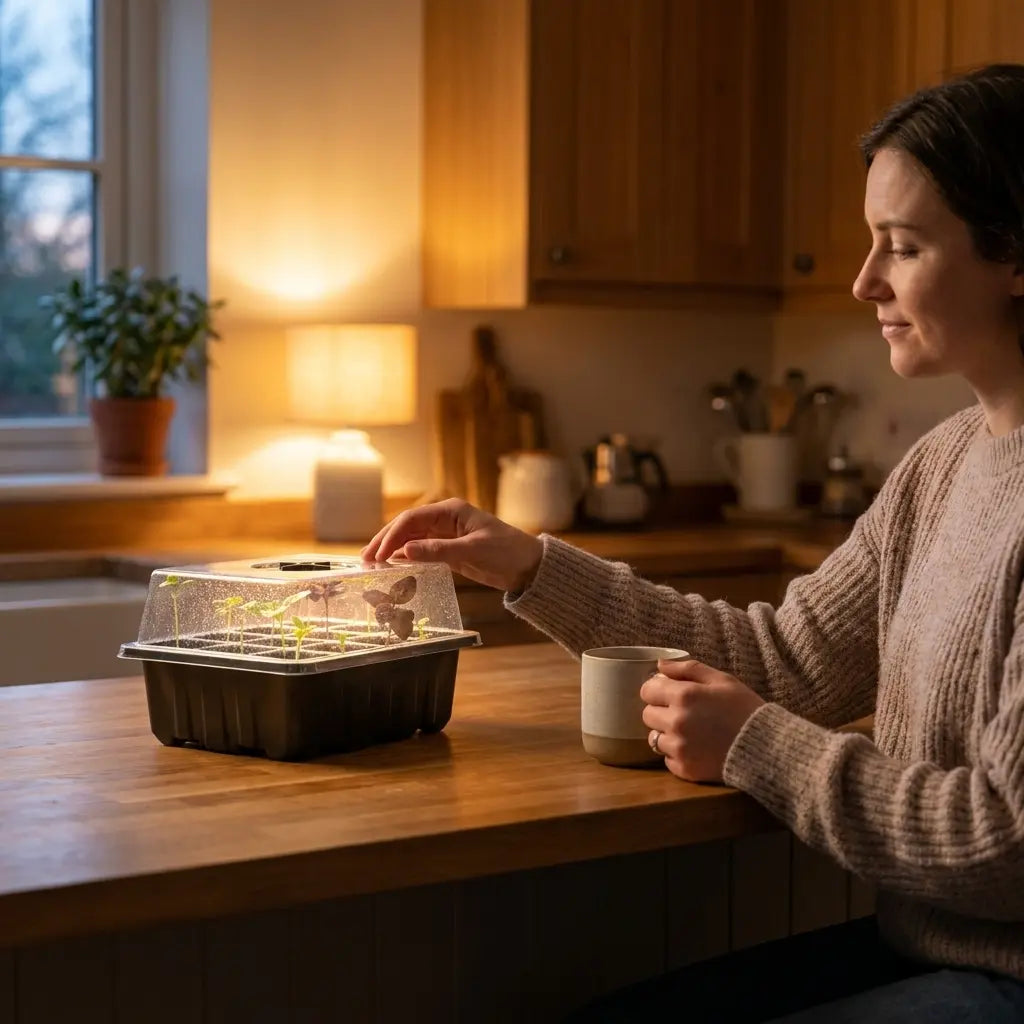
Microgreens grow in a tray-based system separate from the Aquager Home Farm. Many households run both simultaneously — the farm for herbs and greens, a microgreens tray for rapid weekly harvests.
Your December Growing Timeline
If you’re setting up your indoor garden now, here’s how the timeline maps to the holiday calendar:
Plant now → ready mid-December (3–4 weeks): Chives, basil, parsley, arugula. These are your Christmas-week crops. Start them the day your farm arrives.
Plant now → ready late December through January (5–7 weeks): Thyme, rosemary, sage, kale, dill. These will be at their best for New Year’s entertaining and the full winter cooking season that follows.
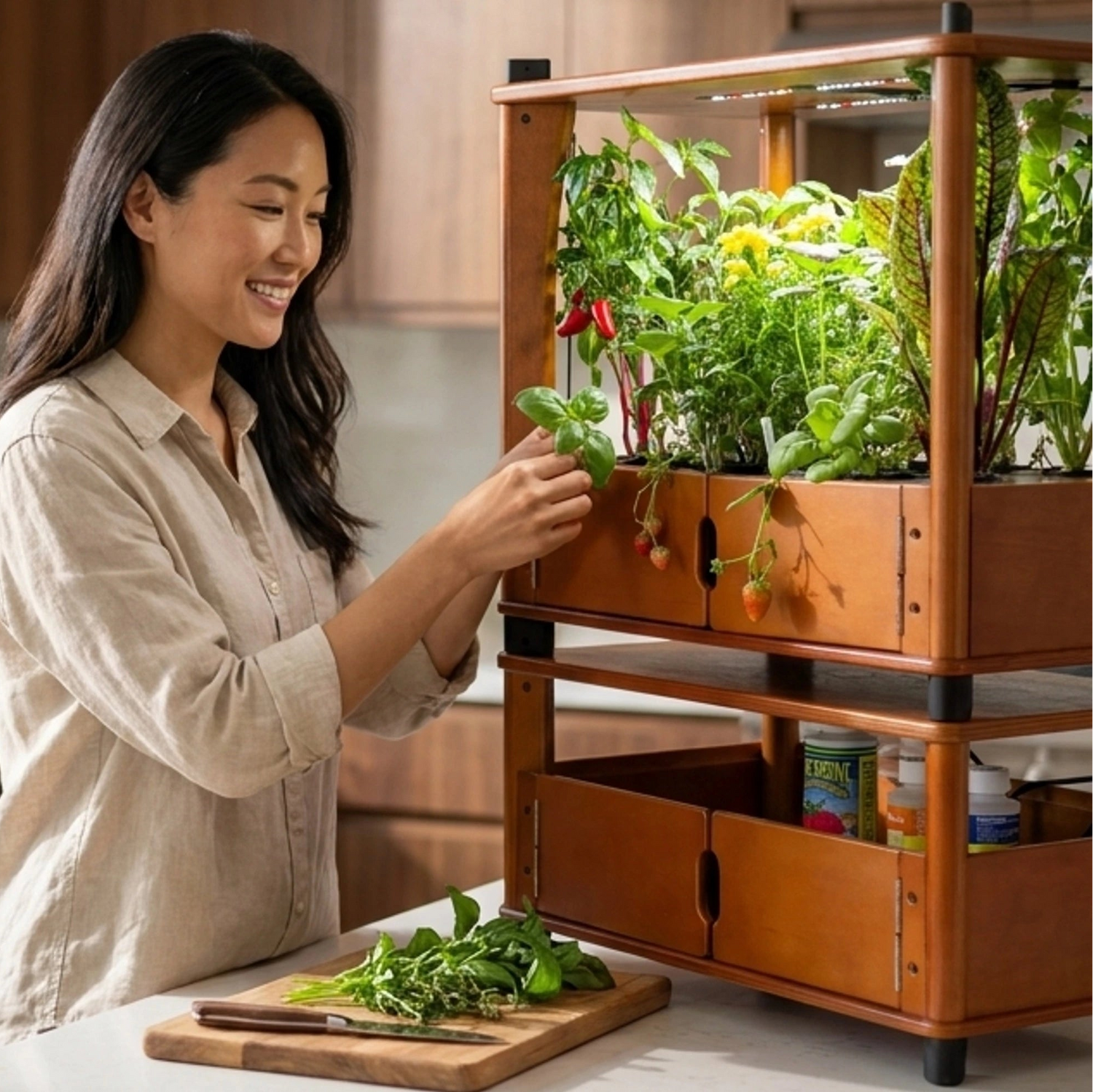
Run everything at once: The Aquager farm holds 24 pods simultaneously. A strong December configuration: 4 basil, 3 chives, 2 parsley, 2 dill, 2 thyme, 2 rosemary, 2 sage, 3 arugula, 2 kale, 2 oregano. Continuous harvests across the full range of holiday herbs and winter greens.
Planting seeds in winter indoors follows the same process as any other time of year — no cold stratification, no special preparation. The pre-seeded Aquager pods go directly into the farm. The light and water do the rest.
The Chef’s Organic Set: Start Growing Everything on This List
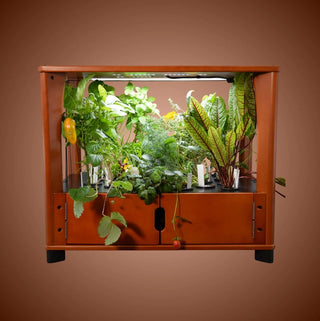
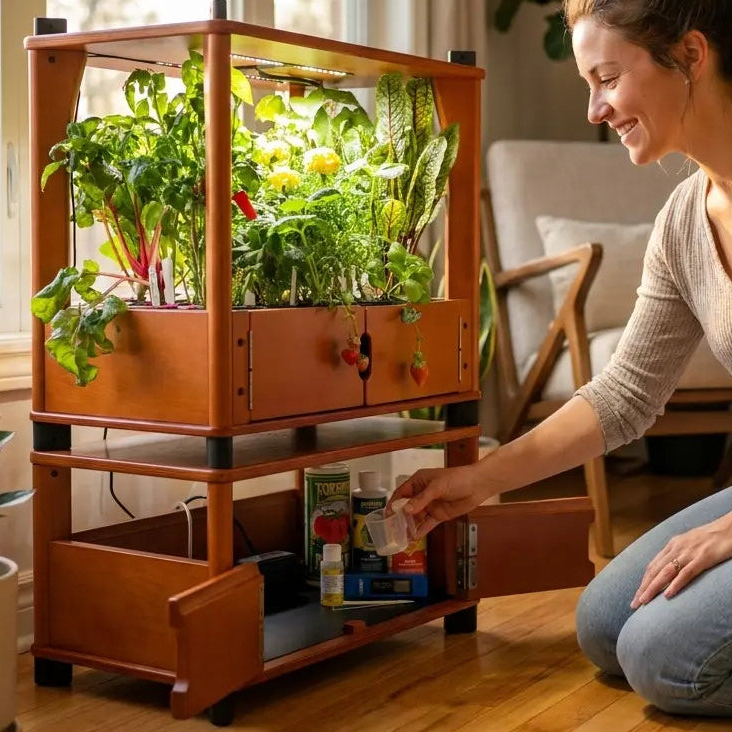
The Aquager Chef’s Organic Set includes the Home Farm, the matching Storage Unit, and a curated selection of herb pods — everything needed to start growing every crop on this list the day it arrives. It’s available in Chestnut Ember and Blonde Maple finishes and works as well as a self-purchase as it does as a holiday gift.
Every herb and green in this guide is available as an individual Aquager seed pod for growers who already have the farm and want to expand their December growing lineup.
Frequently Asked Questions
Do indoor herbs grow more slowly in December because of low light?
Not in a system with built-in grow lighting. The Aquager farm runs its own full-spectrum light on an automated schedule, so shorter winter days have no effect on growth rates. Indoor growing timelines are consistent year-round — a basil pod in December grows at the same rate as in July.
Which herbs should I start first for Christmas?
Start chives, parsley, and basil immediately — they’ll be at first harvest within 3–4 weeks. Plant thyme, rosemary, and sage at the same time; they’ll be ready for late December and early January, which covers both Christmas dinner and the full winter cooking season.
How many pods should I run at once in December?
All 24 if possible. The farm runs them simultaneously with no additional effort. Spreading across fast and slow crops means you’ll have something at peak harvest every week from mid-December through the entire winter.
Can I grow these herbs if I’ve never grown anything before?
Yes — the Aquager system is designed specifically for non-gardeners. The pre-seeded pods germinate without any intervention. The system handles light and water automatically. The only skill involved is knowing when to harvest, which becomes obvious within a few weeks of watching the plants grow.
What’s the difference in flavor between counter-grown herbs and grocery store herbs?
The difference is significant. Store herbs are harvested weeks before the shelf, transported long distances, and stored in conditions that degrade flavor rapidly. Counter-grown herbs are harvested minutes before use. The flavor gap is most dramatic with basil, rosemary, and sage — the three herbs whose aroma dissipates fastest after cutting.
Start Now, Harvest All Winter
December is one of the best months of the year to start an indoor herb garden — not despite the season, but because of it. The herbs that winter cooking demands grow without interruption in a hydroponic system, and the quality gap between counter-grown and store-bought is at its widest when outdoor produce is at its seasonal worst.
Start now. The chives and basil will be ready before Christmas. The rosemary and sage will carry you through New Year’s and into the long winter months ahead. And by February, you’ll have a fully running indoor garden that you’ll wonder how you cooked without.
Author: Aquager · Published: June 7, 2026 · Updated: June 7, 2026












0 comments