
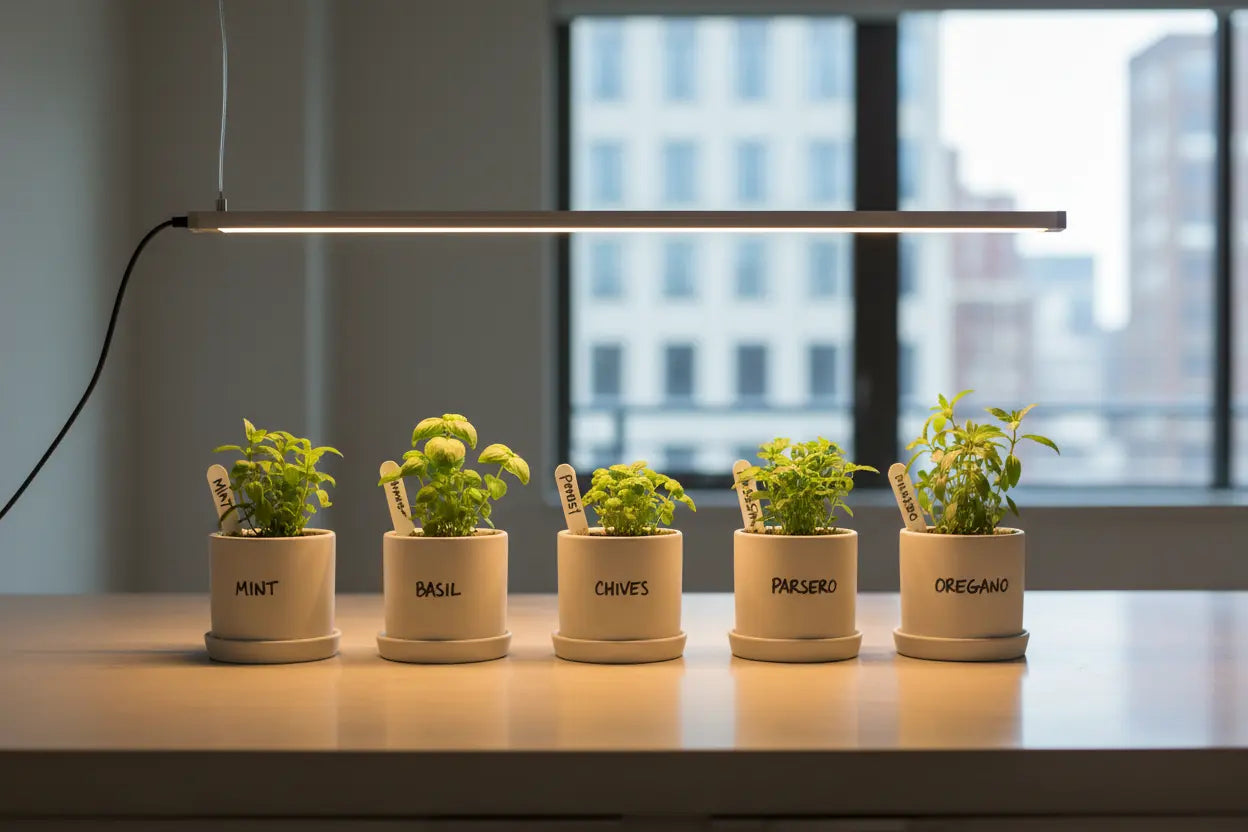
If you've ever brought home a basil plant and watched it collapse within two weeks, you're not alone. Indoor herbs often seem simple at first — until leaves yellow, stems stretch, and everything feels fragile. Many beginners assume they "don't have a green thumb," when in reality, they simply started with herbs that demand more than indoor environments easily provide.
If you're searching for the easiest herbs indoors, what you really need are plants that tolerate imperfect light, inconsistent watering, and small-space containers. Some herbs are biologically more adaptable to indoor conditions than others.
In short, the easiest herbs to grow indoors are the ones that handle small mistakes without shutting down — and that don't require intense sunlight or constant correction.
Indoors, light, airflow, and watering margins are tighter — which is why some herbs struggle while others thrive.
The difference is rarely effort. It's plant selection.
Want to skip the guesswork entirely?
The Aquager Grab & Grow Kit comes pre-seeded with beginner-friendly herbs. No measuring planting depth, no unreliable seeds. Just add water and see sprouts in days.
Indoor environments are fundamentally different from outdoor gardens. Natural airflow is limited, sunlight is filtered through glass, and containers restrict root development compared to open soil. Herbs that thrive outside may become fragile indoors if their environmental expectations aren't met — which is why plant selection matters more than effort.
Successful indoor herb growing begins with choosing plants that are biologically tolerant of indoor conditions. Herbs with flexible watering tolerance, moderate light needs, and compact root systems perform far better inside homes and apartments than demanding Mediterranean varieties.
Why Some Herbs Adapt Indoors (and Others Don't)
Herbs evolved in different climates. Mediterranean herbs like rosemary and lavender expect strong sun, dry soil, and significant airflow. When those conditions aren't present, they decline quickly.
Other herbs naturally tolerate variable moisture and moderate light. They don't demand deep root systems or intense solar exposure to survive.
Indoors, the most common stressors are:
- Filtered or insufficient light
- Stagnant air
- Soil that dries slowly
- Small containers limiting roots
The easiest herbs indoors are those that tolerate these stressors rather than fighting them. Start with plants that are structurally forgiving, and growing herbs indoors becomes far less frustrating.
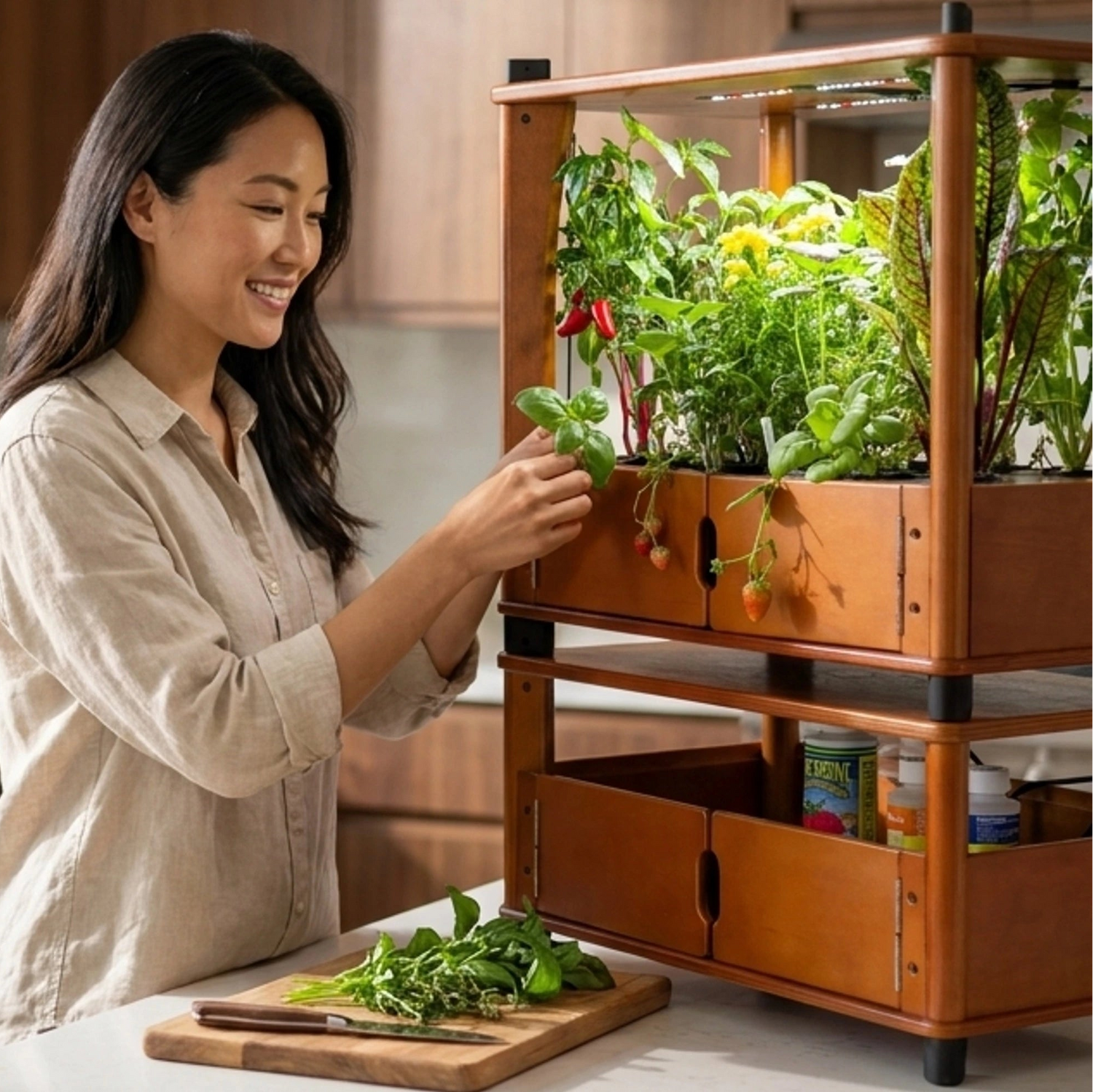
Many beginners find that once they have the right plants and the right setup, everything clicks. If you want the fastest, most reliable path, the Aquager Indoor Farm delivers stable light and water conditions that eliminate the most common failure points from day one.

What Makes an Herb Easy to Grow Indoors?
Not all herbs behave the same indoors. Some plants require intense sunlight, fast-draining soil, and strong airflow that typical homes simply cannot provide.
Beginner-friendly herbs tend to share several biological traits that allow them to tolerate the imperfect conditions of indoor environments.
First, easy indoor herbs usually tolerate variable watering. Plants like mint or chives can recover from small watering mistakes, which makes them much more forgiving for beginners who are still learning how quickly indoor containers dry out.
Second, these herbs grow well in moderate lighting conditions. While some plants require hours of direct sunlight, adaptable herbs can grow successfully near bright windows or under simple indoor lighting. Many indoor gardeners use supplemental lighting to stabilize plant growth, especially during darker seasons.
Third, easy herbs tend to have compact root systems that adapt well to containers. Indoors, plants rarely have the deep soil access they would outdoors, so herbs that grow well in smaller root spaces are naturally more successful.
When herbs combine these three traits — flexible watering tolerance, moderate light needs, and compact root growth — they become significantly easier to manage indoors.
The 10 Easiest Herbs to Grow Indoors
These herbs are chosen for resilience, not popularity.
1. Mint
Mint tolerates irregular watering and moderate indoor light. Its aggressive growth habit makes it resilient. Even if leaves droop temporarily, mint often rebounds quickly. It adapts well to small containers and doesn't require perfect placement.
Mint is one of the most forgiving herbs for beginners because it grows aggressively and recovers quickly from small mistakes. Even if watering schedules fluctuate slightly, mint usually rebounds within a few days once conditions stabilize.
Because mint spreads rapidly, it performs well in containers where other herbs might struggle to establish roots — making it particularly well suited for indoor growing setups where soil depth is limited.
2. Chives
Chives are compact and structurally sturdy. They don't demand deep soil and regrow quickly after trimming. Their upright growth makes them less prone to collapse in moderate indoor lighting.
Chives are especially beginner-friendly because they grow vertically and require very little space. Their compact structure allows them to grow successfully even on small kitchen counters or windowsills.
Unlike many herbs that require careful trimming, chives naturally regrow after cutting — making them ideal for anyone who wants to harvest fresh herbs regularly without worrying about damaging the plant.
→ Shop Chive Seeds — pre-measured, ready to plant
3. Basil
Basil requires consistent light, but it responds clearly to care. If placed near bright windows or under supplemental lighting, it grows quickly. It signals stress early, allowing beginners to correct issues before the plant declines severely.
Basil is one of the most rewarding herbs to grow indoors because it grows fast once light conditions are stable. Under consistent indoor lighting, basil produces fresh leaves regularly and responds well to trimming.
With proper lighting and drainage, basil often becomes one of the most productive herbs in an indoor herb garden.
→ Get the Basil Grab & Grow Kit — 12 seeds pre-planted, just add water
4. Parsley
Parsley grows more slowly but handles cooler indoor conditions well. Once established, it remains stable with moderate light and consistent moisture. It's less sensitive to temperature swings than more delicate herbs.
Parsley is often overlooked by beginners because it grows more slowly than herbs like basil or mint. However, this slower growth actually makes it easier to manage indoors — the plant develops steadily without dramatic swings in moisture or light requirements.
Because parsley tolerates cooler indoor temperatures, it often performs well in kitchens or apartments where temperatures fluctuate slightly throughout the day.
→ Shop Italian Parsley Seeds — steady grower, minimal fuss
5. Oregano
Oregano prefers slightly drier soil, which makes it surprisingly beginner-friendly. Many indoor failures stem from overwatering, and oregano tolerates minor dryness better than leafy herbs.
Oregano naturally evolved in Mediterranean climates where soil dries quickly. Because of this, it often performs better indoors than people expect — and forgives inconsistent watering schedules far better than soft-leaf herbs.
→ Shop Oregano Seeds — thrives with less water, not more

6. Thyme
Thyme prefers bright light but tolerates drier soil and compact containers. It grows slowly but steadily, making it less reactive to minor care inconsistencies.
Thyme grows more compactly than many leafy herbs, which makes it particularly well suited for indoor containers. Its slow and steady growth pattern allows beginners to observe changes in lighting and watering without sudden plant decline.
When placed near a bright window or under a grow light, thyme can remain productive for long periods with very little maintenance.
→ Shop Thyme Seeds — low maintenance, long lasting
7. Lemon Balm
Closely related to mint, lemon balm adapts easily indoors. It grows steadily under moderate light and tolerates occasional watering fluctuations.
Lemon balm grows reliably in containers and adapts well to the moderate lighting conditions commonly found in homes. Its fragrant leaves are popular for teas and light cooking, while its steady growth makes it easy to harvest regularly.
→ Shop Lemon Balm Seeds — pleasant citrus scent, very easy to grow
8. Green Onions (Scallions)
Green onions are among the fastest confidence-builders. They can regrow from kitchen scraps and require minimal depth. Their vertical growth makes lighting easier to manage.
Green onions are one of the easiest edible plants to grow indoors because they regenerate quickly after harvesting. Even beginners with no gardening experience can grow them with minimal effort.
Their vertical growth pattern lets them fit easily on windowsills or kitchen counters without requiring large containers.
9. Cilantro
Cilantro is more sensitive to heat but performs reasonably well indoors if kept in cooler areas. It requires steady moisture but doesn't demand deep containers.
Cilantro can be slightly more sensitive than herbs like mint or chives, but it still performs well indoors when temperatures remain moderate. Keep it away from direct heat sources like ovens or heating vents, and it grows reliably with consistent moisture and moderate light.
10. Sage
Sage tolerates dry soil and bright indoor light. Once rooted, it remains structurally stable and requires minimal maintenance compared to more delicate herbs.
Sage is a hardy herb that develops thick, durable leaves capable of tolerating slightly drier soil conditions. This makes it more forgiving than many leafy herbs that require constant moisture.
When placed in bright indoor lighting, sage grows steadily and produces aromatic leaves commonly used in cooking — with very little ongoing maintenance once established.
→ Shop Sage Seeds — hardy, aromatic, and very low maintenance

Starting Herbs Indoors Without Guesswork
For many beginners, the most confusing part of growing herbs indoors is not choosing the plant — it's getting started. Containers, planting depth, watering balance, and seed germination often create more uncertainty than the herbs themselves.
Seeds must be planted at the correct depth, kept consistently moist during germination, and provided with enough light once they sprout. When any of these steps go wrong, new growers often assume the plant simply "failed."
One way to simplify the process is starting with a structured indoor growing setup where the most difficult steps are already handled. Beginner systems such as the Grab & Grow Kit remove much of the early uncertainty by providing pre-seeded grow mediums designed for indoor environments.
Instead of measuring seed spacing or guessing planting depth, the growing medium already contains evenly distributed seeds. This allows beginners to focus on the two most important variables for indoor herbs — light and watering — without worrying about whether the seeds were planted correctly.
Another important factor that influences early success is seed quality. Many inexpensive seeds sold online have inconsistent germination rates, which can make indoor growing frustrating for beginners. Poor seed viability often leads to uneven sprouting or slow plant development.
For this reason, the seeds used in Aquager growing kits are sourced from Johnny's Selected Seeds, a well-known supplier that tests germination rates and seed quality for commercial growers. Using reliable seeds significantly improves the likelihood that herbs will sprout evenly and establish healthy plants.
Most beginners don't fail because they lack a green thumb. They fail because the setup wasn't designed for success. The Grab & Grow Kit fixes that — seed quality, planting depth, and moisture balance are all handled before the kit ships.
→ Get Your Grab & Grow Kit — pre-seeded, just add water
Light Tiers: What Most Beginners Miss
Indoor light varies dramatically. Understanding light levels improves success more than buying new plants.
Low to moderate light (indirect window light):
Mint, parsley, chives, lemon balm.
Bright light (south-facing window or grow light):
Basil, oregano, thyme, sage.
If herbs stretch or lean heavily toward the window, light is insufficient. Supplemental LED lighting often stabilizes growth patterns immediately.
Indoor environments rarely provide the same intensity of sunlight that plants receive outdoors. Even bright windows filter a significant portion of natural light, which means herbs that require strong sun may grow more slowly indoors.
This is why many indoor gardeners supplement natural light with LED grow lights. Consistent lighting helps herbs maintain compact growth and prevents the thin, stretched stems that appear when plants reach toward weak light sources.
When lighting is balanced correctly, herbs develop denser leaves and stronger stems — improving both plant health and the overall productivity of an indoor herb garden.
If you want to eliminate lighting uncertainty entirely, the Aquager Indoor Farm comes with built-in LED lighting tuned specifically for herbs and greens — so you never have to guess about placement or intensity.

Watering: The Most Common Failure Point
Overwatering kills more indoor herbs than underwatering. Indoors, soil dries slowly due to limited airflow. Roots sitting in constantly damp soil suffocate.
Instead of watering daily, check moisture manually. If the top inch feels dry, water thoroughly and allow excess to drain. Containers must have drainage holes.
Herbs that tolerate minor dryness (oregano, thyme, sage) often survive beginner watering habits better than soft-leaf varieties.
Roots require oxygen just as much as they require water. When soil remains constantly saturated, oxygen levels around the roots decrease, which prevents the plant from absorbing nutrients efficiently. This is why drainage holes aren't optional — they're essential.
This is why drainage is one of the most important elements of successful indoor herb growing. Containers should always include drainage holes so excess water can escape and oxygen can return to the root zone.
If you want to take drainage entirely off the table, the Aquager Indoor Farm uses a hydroponic system that delivers oxygen directly to plant roots — eliminating overwatering as a failure point completely.

If You've "Killed Every Plant"
Killing plants indoors usually means one of two things: light wasn't sufficient, or drainage was poor. It rarely means you're incapable.
The easiest herbs indoors reduce emotional pressure. They grow steadily, recover from minor mistakes, and let you build confidence without major setbacks.
When you begin with forgiving plants, you shorten the learning curve. You build rhythm before complexity. Indoor gardening is less about talent and more about removing friction.
Once lighting, drainage, and watering habits become predictable, growing herbs indoors becomes far less intimidating. Beginners often discover that plants respond quickly when conditions improve — building confidence with every growing cycle.
The easiest reset is starting with a kit that was designed for success from day one. The Aquager Grab & Grow Kit removes the three biggest early failures — wrong planting depth, bad seed quality, and inconsistent moisture — before the box even ships.
→ Get the Grab & Grow Kit — pre-seeded, just add water
Quick Comparison: Easiest Indoor Herbs
Choosing the right herb becomes easier when you compare how each plant behaves indoors. Some herbs tolerate lower light levels, while others prefer brighter environments but remain forgiving if watering is not perfectly consistent.
The table below summarizes the key characteristics of the herbs covered in this guide.
| Herb | Difficulty | Light Preference | Watering Tolerance |
|---|---|---|---|
| Mint | Very Easy | Moderate light | Very forgiving |
| Chives | Very Easy | Moderate light | Moderate |
| Basil | Easy | Bright light | Consistent watering |
| Parsley | Easy | Moderate light | Moderate |
| Oregano | Easy | Bright light | Tolerates dryness |
| Thyme | Easy | Bright light | Prefers dry soil |
| Lemon Balm | Very Easy | Moderate light | Flexible |
| Green Onions | Very Easy | Moderate light | Moderate |
| Cilantro | Moderate | Moderate light | Consistent moisture |
| Sage | Easy | Bright light | Tolerates dryness |
Starting with herbs that tolerate small mistakes dramatically increases the chances of success. Once you're comfortable managing light and watering, you can expand into more varieties — or level up to the Aquager Indoor Farm for year-round growing without soil, drainage worries, or guesswork.
Mini FAQ
What is the absolute easiest herb to grow indoors?
Mint is generally the most forgiving, followed by chives. Start mint with our Mint Seeds or chives with our Chive Seeds — both grow back fast after every harvest.
Do I need a grow light?
Not always — mint, chives, parsley, and lemon balm do well near a bright window. But for basil, thyme, and sage, consistent supplemental light makes a real difference. The Aquager Indoor Farm has built-in LED lighting already calibrated for herb growth, so you never have to guess about placement.
How often should I water indoor herbs?
When the top inch of soil is dry. Avoid fixed daily schedules — soil dries at different rates depending on container size, airflow, and season.
Can herbs grow indoors year-round?
Yes — if light and drainage are stable. The easiest way to guarantee that is with the Aquager Indoor Farm, which provides consistent light and eliminates drainage issues entirely.
Why do indoor herbs sometimes grow tall and weak?
This usually happens when plants do not receive enough light. Herbs stretch toward light sources, producing thin stems and fewer leaves. Providing stronger window light or a grow light — like the one built into the Aquager Indoor Farm — resolves this immediately.
Growing herbs indoors doesn't require perfect conditions. It requires selecting herbs that align with indoor realities and giving them a setup that removes the common failure points.
Ready to start? The Grab & Grow Kit is the simplest first step — pre-seeded, germination-tested seeds, just add water. Or go all-in with the Aquager Indoor Farm for a complete year-round growing system with built-in lighting.
Once you understand how light, watering, and plant selection interact, indoor herb growing becomes far more predictable. Starting with resilient herbs and gradually refining the environment allows anyone to build a productive indoor garden, even in small apartments.
Author: Aquager Editorial Team
Published: February 24, 2026
Last Updated: May 9, 2026




0 comments