
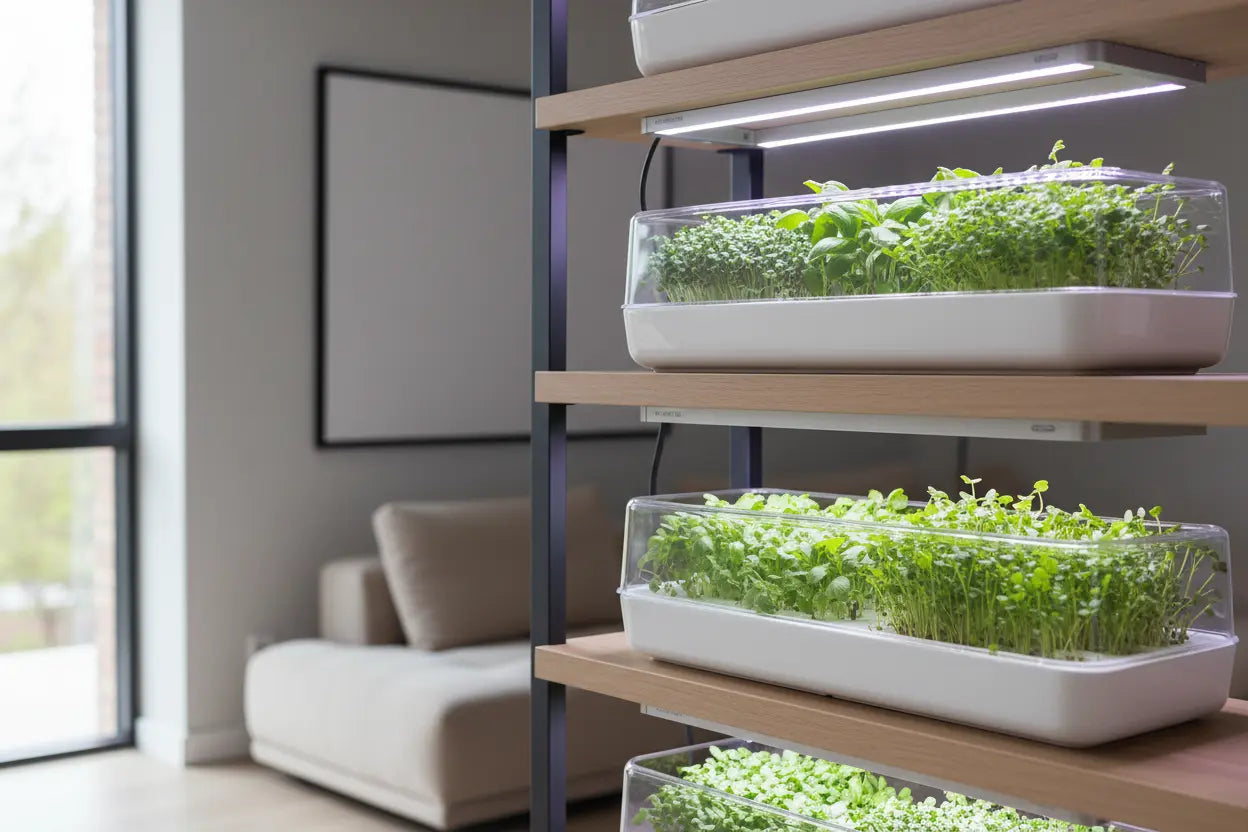
Spring does something psychological.
The days stretch longer. Light feels brighter. Mornings carry energy. Even indoors, something shifts. You feel ready to grow again — or maybe try for the first time.
But starting an indoor garden in spring isn't about copying outdoor gardening habits. It's about designing a controlled environment that responds to seasonal momentum without becoming chaotic.
In short, starting your indoor garden now means resetting your system to match longer daylight, faster plant metabolism, and more stable indoor conditions.
Indoors, small environmental shifts compound quickly — which is why spring can either accelerate success or amplify weak setup design.
If you want this season to be different from past attempts, start with structure — not enthusiasm alone.
Why Spring Changes Indoor Growing (Even Inside an Apartment)
Even indoors, spring alters growth conditions.
Light duration increases. Window exposure shifts. Indoor temperatures rise slightly. Evaporation increases. Plants respond.
Growth cycles speed up.
This matters because indoor systems are compact. Containers are shallow. Soil volume is limited. Airflow is restricted. When growth accelerates, your setup must support it.
Spring doesn't magically fix winter problems. It simply exposes whether your system is ready for active growth.
If you struggled in winter, spring is the right time to reset — not revive.

Step 1: Reset the System, Not Just the Plants
Spring is not the time to rescue weak winter plants. It's the time to rebuild your environment.
Instead of nursing declining containers, consider:
- Refreshing compacted soil
- Clearing blocked drainage
- Cleaning trays or containers
- Rebalancing light positioning
- Starting new seeds with intention
Indoor growing rewards clean cycles. When you reset containers and remove hidden variables, you reduce risk.
Many indoor failures come from trying to fix plants instead of fixing structure.
Spring is your opportunity to design intentionally.
If you've experienced repeated indoor plant decline, it often points to foundational system gaps. A structured overview of indoor principles can help: Indoor Gardening for Beginners
Step 2: Design for Light Consistency, Not Just Brightness
Spring brings longer days, but not uniform light.
Window angles shift. Reflections change. Morning exposure differs from afternoon exposure. Indoor shadows remain.
The goal isn't chasing direct sun. It's creating consistent exposure.
Plants respond better to steady, repeatable light than to sudden bursts of intensity.
If stems lean or stretch thin, the issue isn't effort — it's light design.
A simple, controlled lighting approach stabilizes early growth cycles and prevents fragile stems.
Spring increases opportunity. Structure converts opportunity into stability.

Step 3: Adjust Watering to Match Growth Speed
As light increases, plants metabolize faster. Soil dries more quickly. Roots expand.
But spring growth does not mean daily watering.
Overwatering is still the most common indoor failure.
In shallow indoor systems, excess moisture suffocates roots faster than outdoor soil would. Containers hold less air. Drainage matters more.
Instead of increasing frequency automatically:
Check moisture depth.
Water thoroughly, then allow airflow.
Avoid shallow surface watering.
Spring is about responsive watering, not reactive watering.
If you're struggling with repeated watering mistakes, it may not be about discipline — it may be about container design and airflow. Indoor Gardening for Beginners
Step 4: Start With Fast, Reliable Crops
Spring motivation often leads to overcomplication.
Too many varieties, containers, and too much change at once.
Instead, design for quick feedback.
Short-cycle crops like microgreens and resilient herbs provide fast results. They compress the learning loop. They reduce the emotional weight of long waiting periods.
Indoor gardening works best when cycles are short and repeatable.
When growth completes in days or weeks — not months — you can adjust rapidly and improve quickly.
The goal this spring isn't diversity. It's rhythm.

Common Spring Indoor Mistakes
Spring creates energy — and impatience.
One common mistake is moving plants abruptly into direct sunlight. Indoor leaves adapted to filtered light burn quickly under sudden intensity.
Another mistake is increasing watering frequency simply because growth appears active.
Some beginners start multiple varieties simultaneously, which complicates monitoring.
Spring success requires restraint. Add structure gradually.
Remember: indoor growing is controlled. Outdoor momentum doesn't automatically translate indoors.
When Spring Growth Exposes System Weakness
If your indoor garden still declines in spring, the problem is likely structural.
Drainage without airflow traps moisture.
Light without consistency produces weak stems.
Dense planting without spacing restricts oxygen.
Spring amplifies both strengths and weaknesses.
If you find yourself repeating patterns — yellow leaves, mold, collapse — the issue is rarely seasonal.
It's system design.
In short, spring rewards intentional structure.
If you want to understand the environmental principles that stabilize indoor growing year-round, explore: 👉 Indoor Gardening for Beginners

Mini FAQ
Is spring really better for starting an indoor garden?
Yes. Increased daylight and stable indoor temperatures support faster growth cycles.
Should I reuse winter containers?
Only if drainage and soil structure are refreshed.
Does spring eliminate indoor plant problems?
No. It accelerates growth, which makes system design even more important.
What grows fastest in spring indoors?
Short-cycle greens and resilient herbs respond quickly to increased light.
Spring is momentum.
But momentum without structure creates inconsistency.
Reset your containers. Design consistent light. Adjust watering thoughtfully. Choose reliable crops. Keep cycles short.
Start simple. Build rhythm. Let the season support you — not overwhelm you.
And if you want the structured foundation that makes indoor growing reliable in any season, continue here: 👉 Indoor Gardening for Beginners
Author: Aquager Team · Published: March 3, 2026 · Updated: August 2, 2026 · Reviewed: August 2, 2026 (Phase 2)












0 comments