
Think back to the last gift you gave that you were genuinely proud of — not just proud of the wrapping or the price, but proud because three months later it was still being used.
Most holiday gift sets are forgotten within weeks. The candle gets burned. The wine gets drunk. The scented bath set migrates from the bathroom to a cabinet. These aren't bad gifts. They're just done once they're opened.
There's a category of gift that works differently — one that earns a permanent spot in someone's daily life and keeps producing something real for the full year that follows. An indoor hydroponic garden is one of the few gifts that qualifies. It starts the day it's opened, improves every month, and is still actively useful 365 days later.
The Problem with Most Holiday Gifts
Most gifts fall into three categories: things people use up quickly, things that get returned, and things that sit on a shelf looking nice without doing much.
Consumables disappear fast. Experiences are memorable but brief. Objects — even beautiful ones — get absorbed into the background of a home within a few months. The frustration isn't with the giver. It's with the format. Most gifts are designed to be received, not to keep producing value.
The best christmas gifts — the ones people mention years later — have one thing in common: they improved the recipient's daily life in a way that stuck. A great book. A pan they still cook with. A tool they reach for every week. These aren't accidents. They're gifts chosen for long-term use, not short-term impact.
An indoor herb garden belongs in this category. Not because it's trendy — but because it produces something the recipient needs every day: fresh food. And that is almost impossible to forget.
What 365 Days with an Indoor Garden Actually Looks Like
The value of an indoor garden isn't obvious from the box. It reveals itself slowly, month by month, in the way it changes how someone cooks and shops.
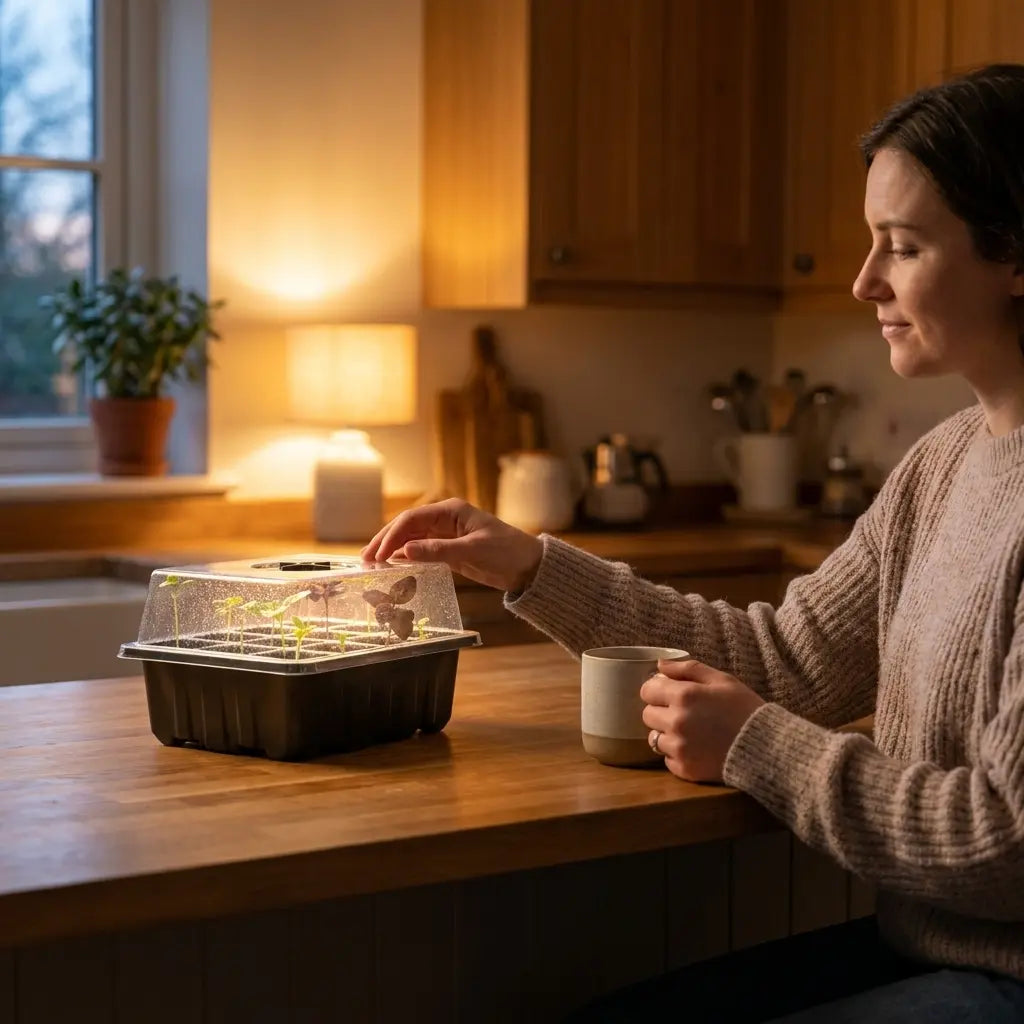
Week one. The seeds sprout. For most first-time growers, this is the moment it becomes real — tiny green tips pushing through the grow medium, a little more each morning. There's something unexpectedly satisfying about watching food grow in your own kitchen.
Week three. The first herbs are ready to harvest. Basil for pasta. Thyme for roasted chicken. Sage for butternut squash soup. The garden shifts from "interesting gift" to "part of how I cook."
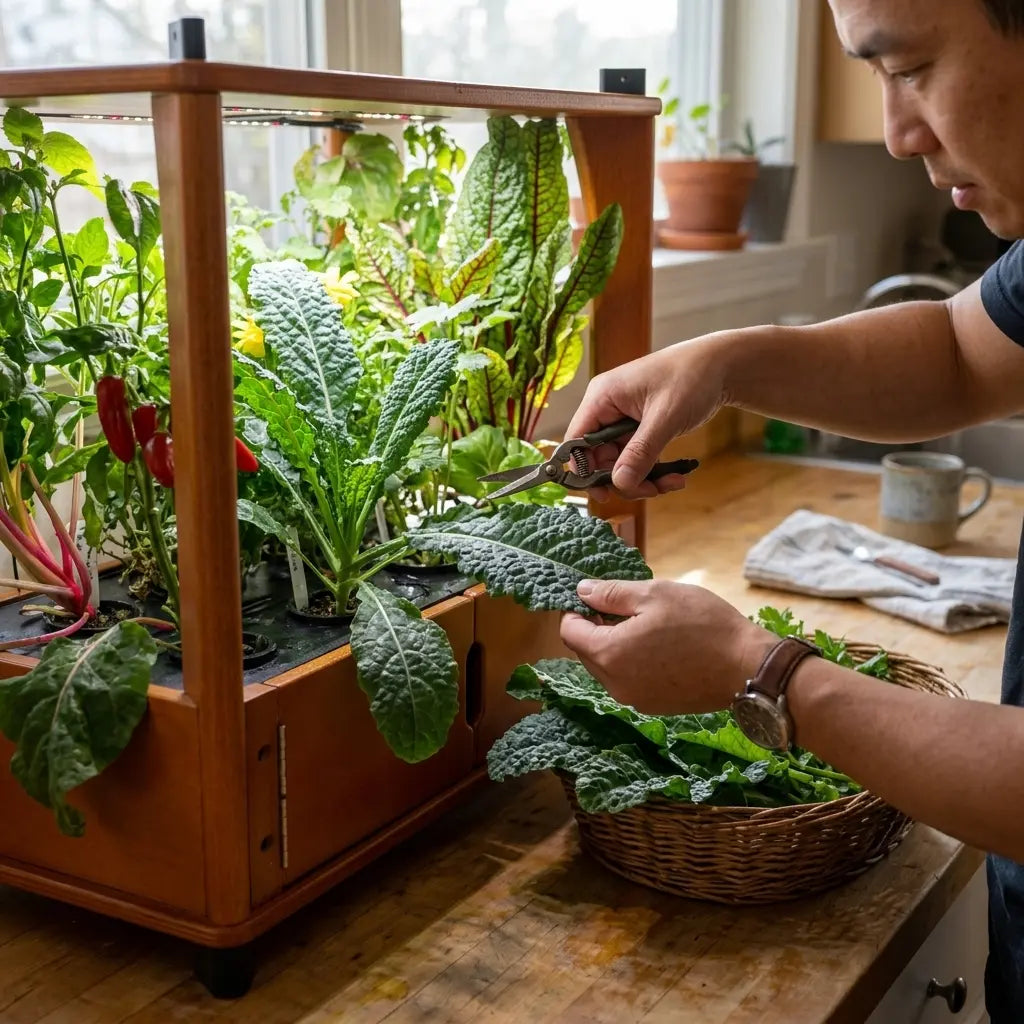
Month two. A rhythm develops. Check the farm with morning coffee. Snip what you need before dinner. Fresh herbs are no longer something you buy — they're just there, on the counter, always available.
Month four. Experimentation begins. Dill folded into scrambled eggs. Lemon balm in a cocktail. Chives on everything. The farm introduces herbs the grower wouldn't have bought at a store, and those herbs change the flavor of everyday meals in ways that are hard to go back from.
Month six. The moment happens. They're standing in the herb section of the grocery store, looking at wilted plastic clamshells at $3.99 each, and they think: I don't need these anymore. That thought is the return on a great gift — not a one-time experience, but a permanent change in how they live.
Month nine. The garden has become infrastructure. Not décor. Not a novelty. Infrastructure. It has a role in the kitchen the same way the coffee maker does. Removing it would change how cooking works in that home.
Month twelve. The holiday season arrives again. The gift that was wrapped and opened 365 days ago has contributed to hundreds of meals. It still looks good on the counter. It's still producing. And the person who received it will tell you — if you ask — that it's the best gift they got that year.
For more on what year-round growing looks like in practice, see our complete guide to growing herbs indoors year-round without sunlight.
The Moment They Stop Buying Store Herbs
The grocery store herb clamshell is one of the great small frustrations of cooking. It costs $3–4, contains far more than any single recipe requires, wilts within days, and ends up in the trash. This happens dozens of times a year in most households.
The farm eliminates this completely. When fresh rosemary lives on the counter, you don't buy it in a plastic bag — you walk over and snip what you need. The flavor is better; fresh-harvested herbs have a potency that wilted store herbs can't match. The cost per use drops dramatically. And the kitchen smells better all the time.
This shift — from store dependency to counter abundance — is the real payoff of this gift. It doesn't just deliver a single moment of joy. It removes a small, recurring frustration from every week of the recipient's life for as long as they grow.
Why This Beats Every Other Gift on Your List
Three qualities separate a truly memorable gift from everything else on the shelf: it's immediately useful, it improves with time, and it fits seamlessly into the recipient's daily life.
An indoor herb garden scores on all three. The person who receives it starts using it within days. The experience gets richer as they learn which herbs they love to grow and which dishes call for fresh. And it lives on the kitchen counter — the most-visited square footage in any home.
Compare that to a gift card (immediate but generic), a subscription box (delivers value over time, but no daily touchpoint), or a kitchen gadget (useful in theory, forgotten in a drawer by February). None of them change how someone cooks. A living herb garden does.
For the home cook on your list, this isn't just another option in a search for holiday gift ideas. It's the one gift that makes every meal they cook for the rest of the year better — a different category entirely.
The Chef's Organic Set: Built for a Kitchen That Uses It Every Day
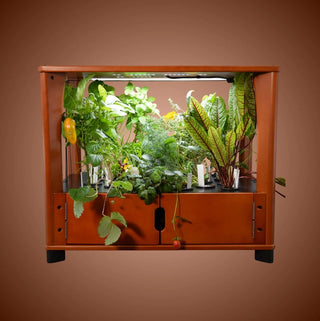
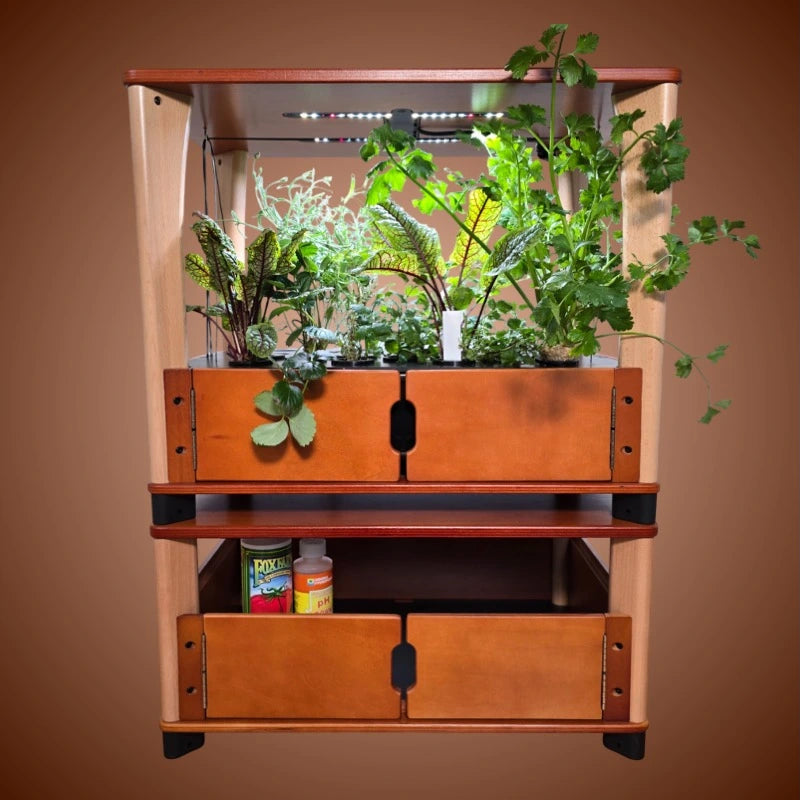
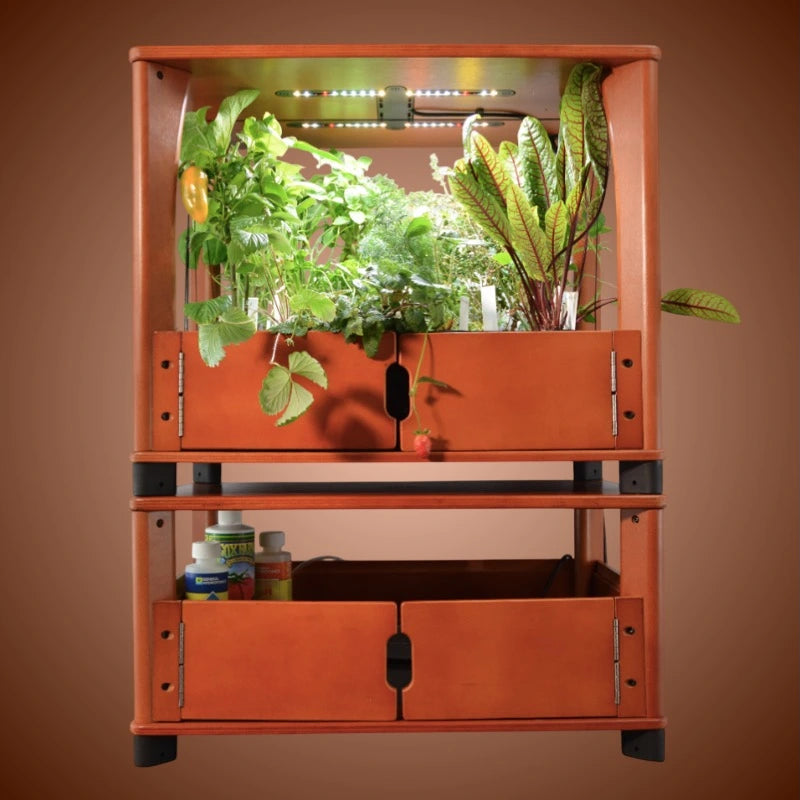
The Aquager Chef's Organic Set is the most complete indoor garden gift available — designed for the kind of daily cooking use that makes a gift earn its place.
The set includes the Aquager Home Farm, which grows up to 24 herbs and greens simultaneously, paired with the matching Storage Unit and a curated selection of pre-seeded herb pods. Both pieces come in two finishes — Chestnut Ember and Blonde Maple — so the farm looks like furniture that happens to grow food, not like a piece of equipment that got left on the counter.
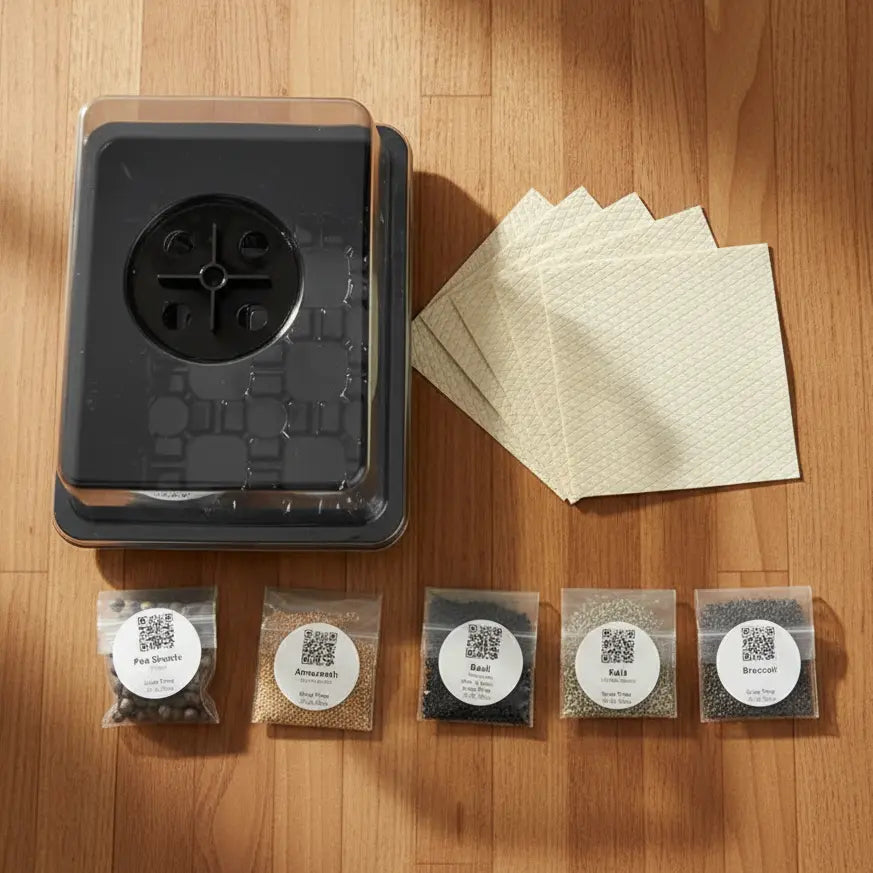
The pre-seeded pods include culinary staples: basil, thyme, rosemary, sage, parsley, chives, and oregano. The system handles lighting and water circulation automatically. The recipient harvests. That is the entire user experience.
At $199.99, it's priced like a gift you're proud to give — and one the recipient will mention when someone walks into their kitchen and asks, "What is that?"
Frequently Asked Questions
Is this gift easy to set up?
Yes. The farm arrives nearly ready to use. Pre-seeded pods go directly into the unit, the reservoir fills in minutes, and the grow light is built in. Most people have everything running within 20 minutes of unboxing — no tools, no prior experience needed.
What herbs can you grow in the Aquager farm?
Over 24 herb and green varieties, including six types of basil, thyme, rosemary, sage, parsley, chives, oregano, dill, arugula, kale, chard, lemon balm, and more. The Chef's Organic Set includes a curated selection of the herbs that get used most in everyday cooking.
How long does each crop last?
Most culinary herbs produce continuously for three to six months when harvested regularly. Many growers stagger new pods every few weeks so there's always something at peak harvest. The farm runs year-round without seasonal interruption.
Is this a good gift for someone who doesn't have a green thumb?
It's one of the best. The farm handles lighting, water circulation, and nutrient delivery automatically. The grower's only job is to harvest. Most people who describe themselves as "bad with plants" succeed on the first try.
Is this a good gift for couples?
Consistently, yes. Growing and cooking together is a shared activity, and a counter garden feeds into both. If you're looking for christmas gifts for couples who cook, this is the gift that shows up in every meal they make together. See our guide to romantic indoor garden ideas for couples for more on this angle.
Give Something That Keeps Growing
The best gifts don't just make someone happy on December 25th. They improve how that person lives in small, real ways — every single day for the year that follows.
An indoor hydroponic garden does this better than almost anything else you can give. It starts producing the week it's opened. It gets better every month. And 365 days from now, the person who received it will still be harvesting from it — long after every other holiday gift set on their shelf has been consumed, returned, or quietly moved to the back of a cabinet.
If you want to give something that grows with them, you've found it.
We wrote more about year-round gift value in our guide to Mother's Day gifts she'll actually use all year — the same logic applies here, in any season.
Author: Aquager · Published: June 7, 2026 · Updated: June 7, 2026












0 comments