
Imagine a Christmas dinner table where the centerpiece is a rosemary plant shaped into a small evergreen tree, flanked by thyme, sage, and mint — and guests reach across to snip fresh herbs into their dishes throughout the meal. The centerpiece is the meal. The decoration is the ingredient.
This is one of the most distinctive christmas table decoration ideas you can execute, and it’s fully achievable starting in October with an indoor hydroponic farm. By the time Christmas arrives, your rosemary will be full, fragrant, and shaped. And when the holiday is over, you still have six to eight weeks of fresh herbs for January cooking.
Why This Centerpiece Works Better Than Any Other
Most christmas centerpiece for dining table ideas are beautiful for exactly one evening and discarded the next day. Cut flowers wilt. Candle arrangements melt. Pine boughs dry out and drop needles by December 26th.
A living herb centerpiece does none of these things. It arrives at the table still growing. It smells better than any candle. It actively participates in the meal. And it leaves the table with you — back to the kitchen counter, still producing, for weeks afterward.
The anchoring plant is rosemary, which happens to grow in a naturally upright, conical habit that looks unmistakably like a small Christmas tree when lightly shaped. Surround it with thyme (low, sprawling, woody), sage (wide, velvety silver-green), and mint (lush, vibrantly green), and you have a living tableau that works as both holiday decor and a complete fresh herb station.
It’s the christmas dinner table decorations idea that people will ask about — and then immediately want to replicate.
Start in October: The Growing Timeline
The key to arriving at Christmas with a full, shapeable rosemary and a complete herb arrangement is starting early enough. October is the ideal window.
Here’s what the timeline looks like from planting to Christmas table:
October — Plant everything. Add rosemary, thyme, sage, and mint pods to your Aquager farm the first or second week of October. All four go in simultaneously. The farm’s automated light and water system does the establishment work without intervention.
Late October — First growth. By week three, visible stems and leaves. Start very light directional pruning on the rosemary — nipping the outermost lateral branches to encourage the central stem to grow upward and the overall silhouette to narrow into a cone shape. Don’t take much. Just guide it.
November — Shaping month. The rosemary is now producing actively. Every week, trim outer branches to maintain the cone silhouette. The trimmed rosemary goes directly into your cooking — you’ll be making the best roasted potatoes of your life this month. Thyme, sage, and mint can be harvested freely during this period; frequent harvesting makes them bushier and more full.
Early December — Final form. By the first week of December, the rosemary topiary should have a recognizable Christmas tree shape: pyramidal, full at the base, pointed at the top. Stop aggressive shaping. Let it fill in for the remaining weeks. This is also when you can add decoration — more on this below.
December 25 — Set the table. Your centerpiece is at peak form. The other herbs are full and ready for harvest at the table.
How to Shape a Rosemary Topiary
This sounds like a specialist skill. It isn’t. Rosemary grows slowly enough that mistakes are forgiving and the process is iterative over weeks rather than requiring precision in one sitting.
The basic principle: rosemary branches laterally from a central stem. To create a cone shape, you want lateral branches to get shorter as they go up, and you want to remove any branches that stick out past the silhouette you’re building toward. Stand back every few days, look at the plant from the side, and snip anything that breaks the cone outline.
For decoration, small battery-powered LED fairy light strands draped loosely through the rosemary branches are the most effective and low-effort choice. The warm white lights through the dark green needles look genuinely festive without requiring ornaments or structural supports. Small dried orange slice picks, cinnamon sticks pushed gently between branches, or tiny wooden star clips add texture if you want to go further.
The result: a 12–18 inch living rosemary Christmas tree, fragrant with pine-like aroma, fully edible, and growing throughout the holiday season.
Styling the Full Centerpiece
The rosemary is the centerpiece anchor. The other herbs are its supporting cast. Here’s how to arrange them for maximum visual and practical impact at a christmas centerpiece for dining table setup:
Position: Rosemary at center-back, slightly elevated if possible (a small wooden board or cake stand works). Thyme trailing forward on one side, sage on the other, mint at the front corners. The arrangement should read as low-to-tall from the guest perspective, with rosemary visible above everything.
Containers: The Aquager pods can go directly to the table in their farm positions, or individual pods can be transferred to matching terracotta or ceramic pots for a more styled look. Natural twine wrapped around each pot and small handwritten herb labels add warmth.
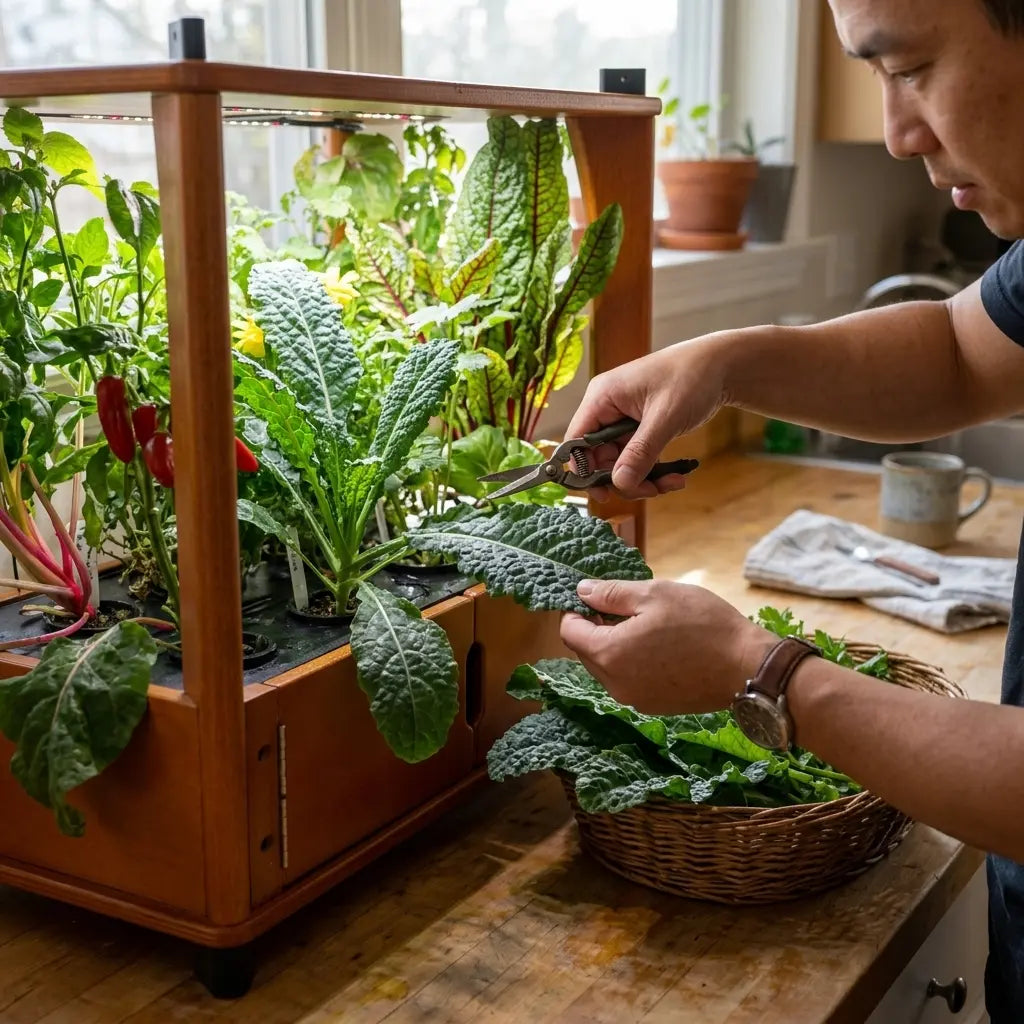
Tools: Place a small pair of pruning shears or kitchen scissors at the edge of the centerpiece with a card that says “help yourself.” This signals to guests that the herbs are there to be used — not just admired.
The full arrangement takes up roughly the same footprint as a traditional candle centerpiece, but it fills the space with life, scent, and texture in a way that candles and cut flowers cannot replicate. For more ideas on pairing herbs together for visual and culinary interest, see our guide to growing herbs indoors year-round.
How the Centerpiece Works at Christmas Dinner
This is where the concept pays off. The christmas dinner table decorations arrangement isn’t passive — it’s interactive.
Pre-dinner drinks: Guests arrive and immediately notice the arrangement. The rosemary topiary draws the first questions. Someone will pick a sprig. The mint will be snipped into holiday cocktails and mocktails. This is the conversation-starting version of a centerpiece.
Soup and starter course: Fresh thyme sprigs dropped into butternut squash soup or tucked under a bread basket. Snipped chives over potato leek soup. Parsley scattered over the appetizer board. Guests become participants in the cooking rather than spectators.
Main course: Rosemary sprigs laid across the serving platter with the roast. Fresh sage leaves placed alongside the stuffing. Thyme sprigs as garnish for roasted vegetables. The herbs move from the center of the table to the dishes in real time — harvested seconds before use.
Dessert and after: Mint goes into digestif cocktails, hot chocolate, and tea. The centerpiece is still standing, slightly lighter than it was, and will grow back within days.
The flavor difference between herbs snipped directly at the table and herbs that traveled from a grocery store is the biggest surprise for guests who haven’t experienced it. Rosemary and sage especially — their oils dissipate rapidly after cutting. Counter-to-table time of seconds versus days is not subtle. For a deeper look at growing basil and other aromatic herbs this way, see how to grow basil indoors.
After Christmas: Your January Herb Supply
The centerpiece does not end on December 25th. This is the close that turns a charming holiday project into a year-round habit.
After Christmas dinner, the rosemary topiary goes back to the kitchen counter — still shaped, still growing, still fragrant. January is one of the best months for herb-heavy cooking: long braises, roasted chickens, soups, stews. The rosemary, thyme, and sage that starred on the Christmas table are now at peak maturity and producing at their most generous.
The mint continues into January mocktails and teas. The sage goes into the winter pasta dishes and grain bowls that define January cooking after holiday excess. The centerpiece becomes the herb supply. The decoration becomes the ingredient, all winter long.
This is also the moment when most people decide to add more pods — parsley, chives, dill — and expand from a Christmas centerpiece into a fully running indoor herb garden. The jump happens naturally. Learn more about what to grow through the winter in our December indoor growing guide.
Everything You Need: The Chef’s Organic Set
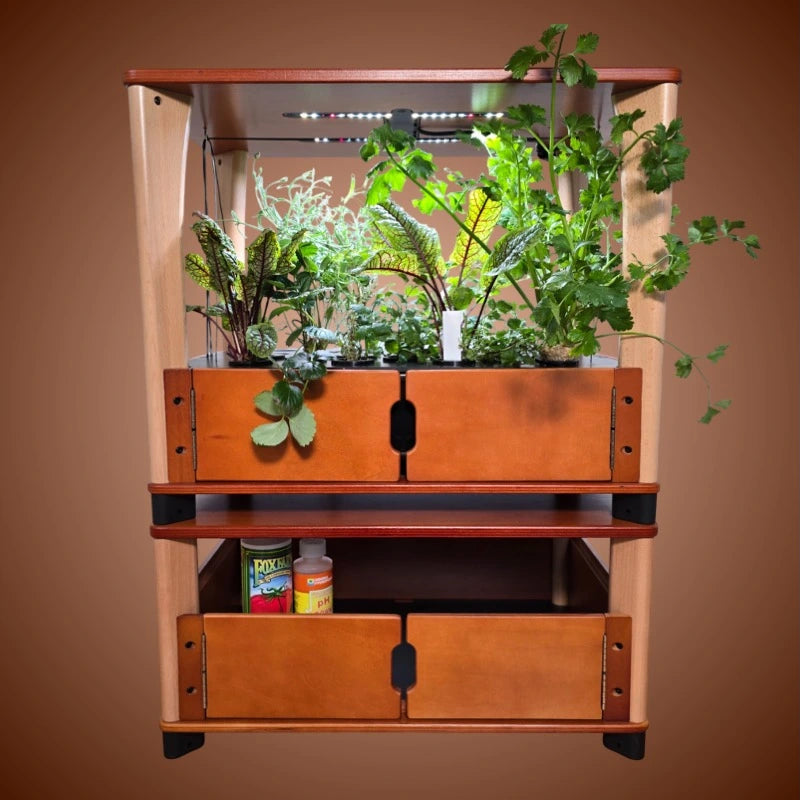
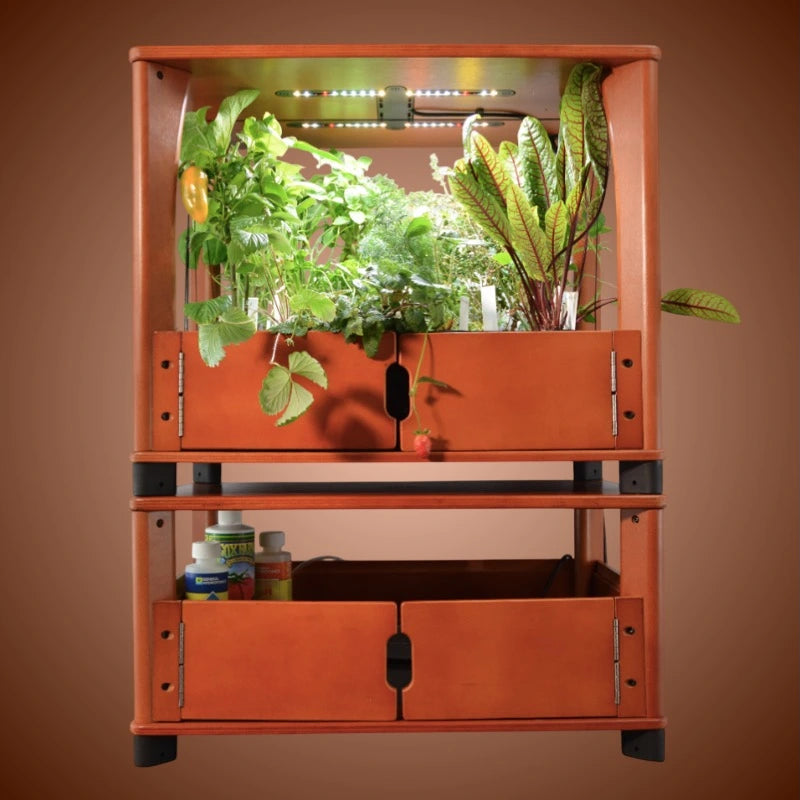
The Aquager Chef’s Organic Set includes the Home Farm, the Storage Unit, and a curated herb pod selection — everything needed to grow this centerpiece starting in October. Rosemary, thyme, sage, and mint pods are available individually or as part of the set’s included selection.
The farm comes in two finishes — Chestnut Ember and Blonde Maple — and is as much a piece of kitchen furniture as it is a growing system. It works year-round as your counter herb supply and transforms for December into the most distinctive christmas table centerpiece in the room.
Frequently Asked Questions
When should I start growing for a Christmas centerpiece?
The first or second week of October. Rosemary takes 5–7 weeks to establish and several additional weeks of gentle shaping to develop a topiary form. Starting in October gives you eight to ten weeks of growing and shaping time before Christmas — more than enough. Later starts in November are possible but produce smaller, less fully shaped plants.
Does rosemary actually look like a Christmas tree when shaped?
Yes — meaningfully so. Rosemary’s needle-like leaves and naturally upright, slightly pyramidal growth habit make it the plant that most closely resembles a miniature evergreen when shaped into a cone. At 12–18 inches tall with LED lights draped through it, the effect is both charming and unmistakable.
Can guests actually eat the herbs directly from the living plants?
Yes. The Aquager system uses organic grow media and no pesticides. Herbs grown in the farm are food-safe and intended for direct kitchen and table use. The “help yourself” approach is core to the concept — guests snipping directly from the plant at the table is the intended experience.
What if I don’t want the rosemary to be the main feature?
Sage makes an excellent alternative centerpiece anchor — its large, velvety silver-green leaves are visually distinctive and equally fragrant. A large sage plant surrounded by thyme, chives, and rosemary is a beautiful variation. The same shaping and styling principles apply.
How long will the herbs keep producing after Christmas?
Months. Rosemary, thyme, and sage are perennial herbs with long productive lives in a hydroponic system — often six to twelve months per pod. Mint produces heavily for three to four months. The centerpiece you build in October for Christmas will still be actively producing in February and March.
The Most Memorable Table You’ll Set This Christmas
Most christmas table decoration ideas are either beautiful or functional. A living herb centerpiece is both — and it’s the one that guests talk about after the meal. Not the candles. Not the tablecloth. The rosemary tree with the scissors next to it and the sage they snipped into their stuffing.
Start now, in October. Shape through November. Set it at Christmas. Cook with it through January. The best decoration you’ve ever put on a table will also be the most useful thing in your kitchen for the months that follow.
Author: Aquager · Published: June 7, 2026 · Updated: June 7, 2026













0 comments