
A 100 watt bulb and a 20 watt LED can deliver wildly different amounts of usable light to a herb plant, which is exactly why comparing grow lights by wattage alone leads so many indoor gardeners astray.
The number that actually predicts how well a plant grows is PPFD, a measurement of how much usable light is landing on the leaves. Two lights with the same wattage can have very different PPFD, and a herb garden lit at the wrong PPFD stays leggy and slow no matter how bright the bulb looks to your eyes.
This guide compares LED, fluorescent, and full-spectrum bulbs on the metric that actually matters, what PPFD range herbs need, and where each light type tends to fall short indoors.
Why PPFD Matters More Than Wattage
PPFD stands for photosynthetic photon flux density, a measurement of how many light particles useful for photosynthesis land on a given area of leaf surface each second.
Wattage measures electricity consumed, not light delivered. A fixture's efficiency at converting that electricity into usable light varies enormously by technology and design, which is why two lights of identical wattage can produce very different actual growing results.
Human eyes are also poor judges of grow light quality, since we perceive brightness differently than the wavelengths plants actually use for photosynthesis. A light that looks dim to a person can still deliver strong PPFD if it is tuned to the wavelengths plants respond to.
A concrete example makes this clearer. A 40 watt fluorescent tube and a 20 watt full-spectrum LED can deliver similar or even better PPFD from the LED, despite using half the electricity, simply because LEDs convert a higher share of that electricity into the specific wavelengths plants use rather than losing it as heat.
How to Measure PPFD at Home
A dedicated PPFD meter gives an exact reading, but a reasonable home approximation comes from checking a fixture's manufacturer specifications for PPFD at a specific distance, then measuring that same distance from your plant canopy to the light.
Some smartphone light meter apps offer a rough lux-based estimate, though lux and PPFD measure different things and the conversion between them varies by light spectrum, so an app reading is a starting point rather than an exact figure.
The more reliable home method is simply watching plant behavior at a known distance. Stocky, compact growth with good leaf color signals adequate PPFD, while stretched, pale growth signals the light is too far away or too weak for the distance it is placed at.
LED Grow Lights
LED grow lights convert electricity to light more efficiently than most alternatives, which generally means higher PPFD per watt consumed and less wasted heat.
Modern full-spectrum LED fixtures cover the range of wavelengths herbs use for both leafy growth and, later, flowering, without needing to swap bulbs between growth stages.
LEDs also run cooler than fluorescent or incandescent alternatives, which matters in a small kitchen or apartment setup where excess heat near the plant can stress leaves or dry out the growing medium faster than intended.
The main downside is upfront cost. A quality full-spectrum LED fixture typically costs more than a comparable fluorescent setup, though the lower electricity use and longer bulb life narrow that gap over time.
LED fixtures also typically last considerably longer before their output noticeably declines, often rated for tens of thousands of hours compared to a few thousand for a fluorescent tube, which further offsets the higher upfront price over a few years of regular use.
Fluorescent Grow Lights
Fluorescent tubes, particularly T5 fixtures, have long been a budget-friendly standard for seed starting and leafy herb growth, and they remain a reasonable low-cost option today.
Their PPFD output is generally lower than an equivalent LED fixture, and it drops more noticeably as the distance between bulb and leaf increases, which means fluorescent setups need to sit closer to the plant canopy to deliver adequate light.
Fluorescent bulbs also degrade in output over their lifespan faster than LEDs do, so a tube that looks fine can be delivering meaningfully less usable light after a year or two of regular use than it did when new.
They remain a sensible choice for a grower on a tight budget or testing out indoor growing for the first time, as long as the light is kept close to the plants and replaced on a reasonable schedule.
A reasonable rule of thumb is replacing fluorescent tubes every six to twelve months of regular daily use, even if they still light up normally, since visible light output and actual PPFD output decline at different rates as the bulb ages.
Full-Spectrum Bulbs
Full-spectrum describes the range of wavelengths a bulb emits, not a specific technology, so both LED and fluorescent fixtures can be built to a full-spectrum design.
A true full-spectrum bulb covers the blue wavelengths that support compact, leafy growth and the red wavelengths that support flowering, which matters for a herb garden growing both leafy herbs and flowering, fruiting plants like peppers in the same setup.
A narrower-spectrum bulb, tuned to only one part of the light range, can grow leafy herbs adequately but tends to underperform for anything that needs to flower and set fruit, which is why a full-spectrum design is the safer default for a mixed home herb garden.
| Light Type | Typical PPFD Efficiency | Best For |
| LED (full spectrum) | High PPFD per watt, low heat | Mixed herb and fruiting plant gardens |
| Fluorescent (T5) | Moderate PPFD, drops with distance | Budget seed starting and leafy herbs |
| Full-spectrum bulb (either type) | Depends on underlying technology | Any garden growing both leaves and flowers or fruit |

How Much PPFD Do Herbs Actually Need
Most leafy herbs grow well between roughly 200 and 400 PPFD, while flowering and fruiting plants like peppers benefit from a higher range, generally 400 to 600 PPFD, once they move past the seedling stage.
Distance between the light and the plant canopy affects PPFD significantly. Moving a fixture just a few inches farther from the leaves can drop PPFD by a large margin, which is why a light that tested well at one height can underperform once plants grow taller and closer to it.
Day length matters alongside intensity. Most home herb gardens do well with 14 to 16 hours of light per day, since a shorter photoperiod at a good PPFD still leaves the plant short on total daily light energy.
Signs Your Herb Garden Isn't Getting Enough Light
Leggy, stretched stems reaching toward the light source are usually the first visible sign, since a plant grown at insufficient PPFD elongates its stems in an attempt to get closer to whatever light it can find.
Pale, washed-out leaf color, distinct from the yellowing pattern of a nutrient deficiency, often points to inadequate light rather than a feeding problem, especially when it affects new growth evenly rather than showing the vein patterns typical of a nutrient issue.
Slow, stalled growth despite otherwise correct nutrients and pH is the clearest overall signal. Once nutrient concentration and pH are confirmed to be in range, insufficient light is the next most likely explanation for a plant that simply is not developing.
The Simpler Option: Built-In Full-Spectrum Lighting
Comparing PPFD across light types, calculating distance from canopy, and adjusting as plants grow is a reasonable project for someone building a custom setup, but it is also a lot of ongoing work for someone who just wants fresh herbs.
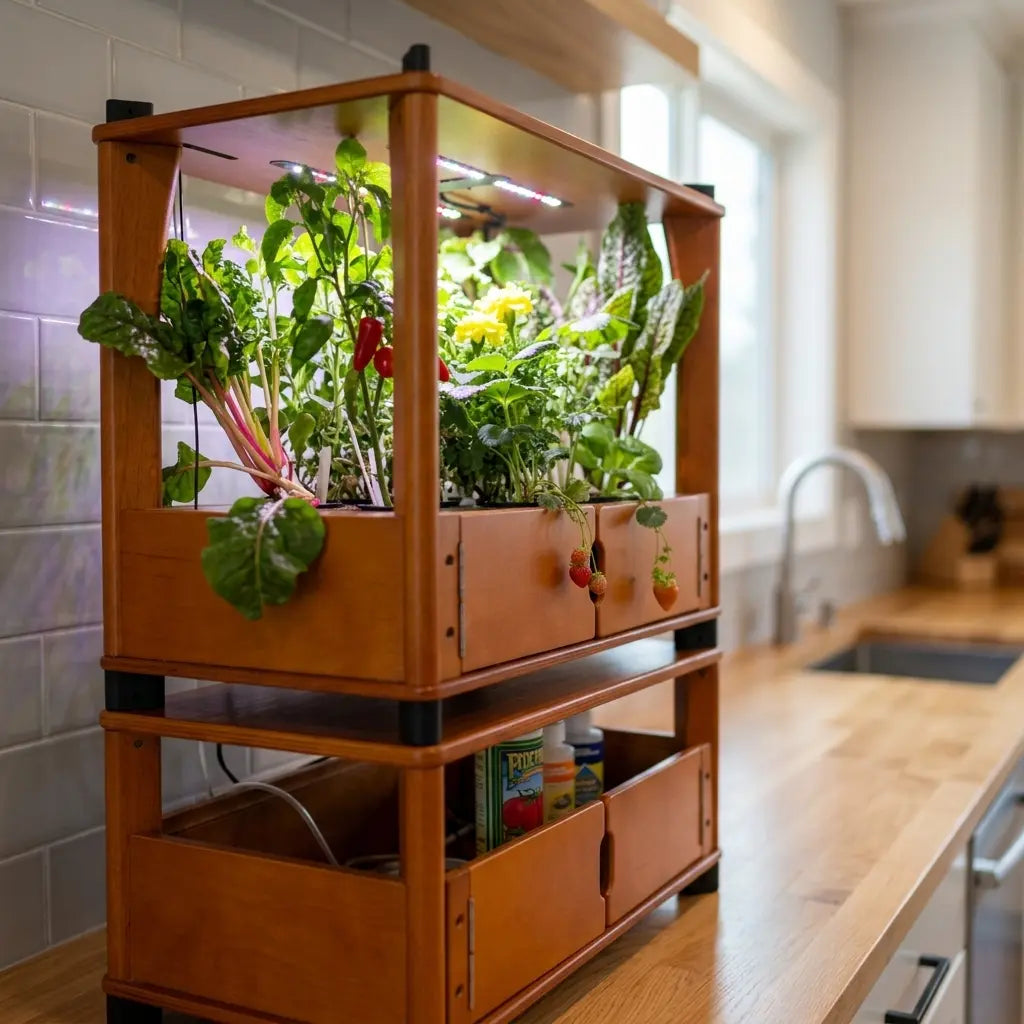
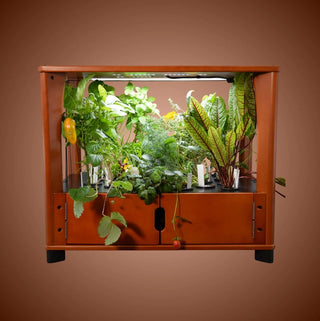
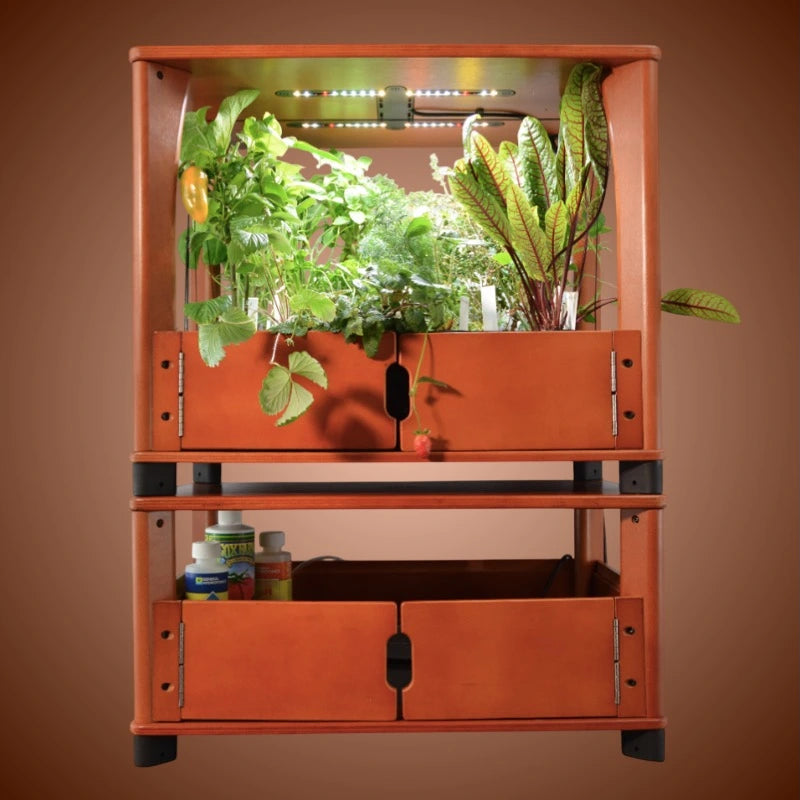
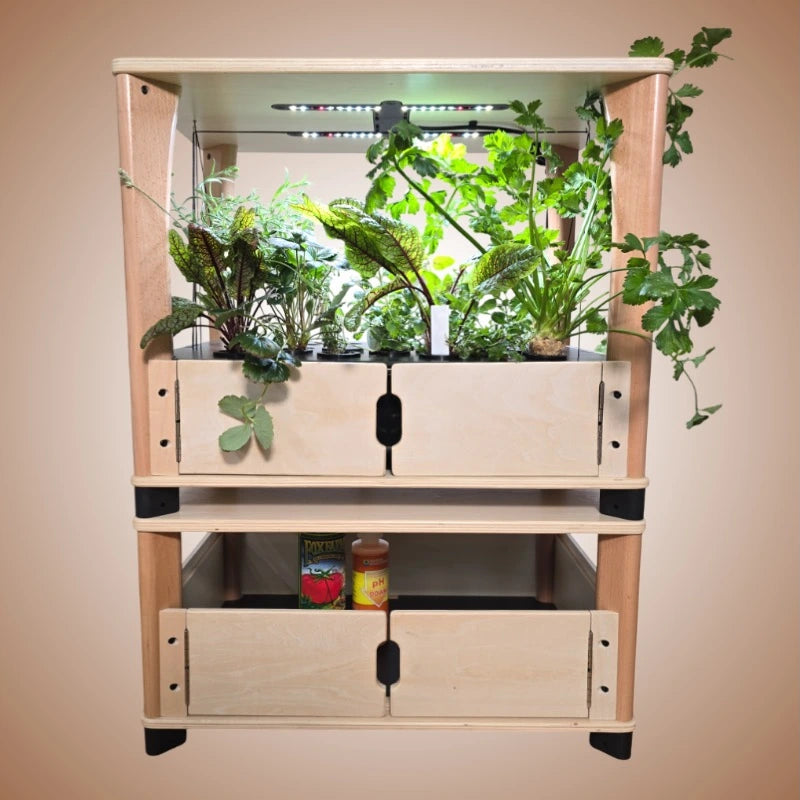
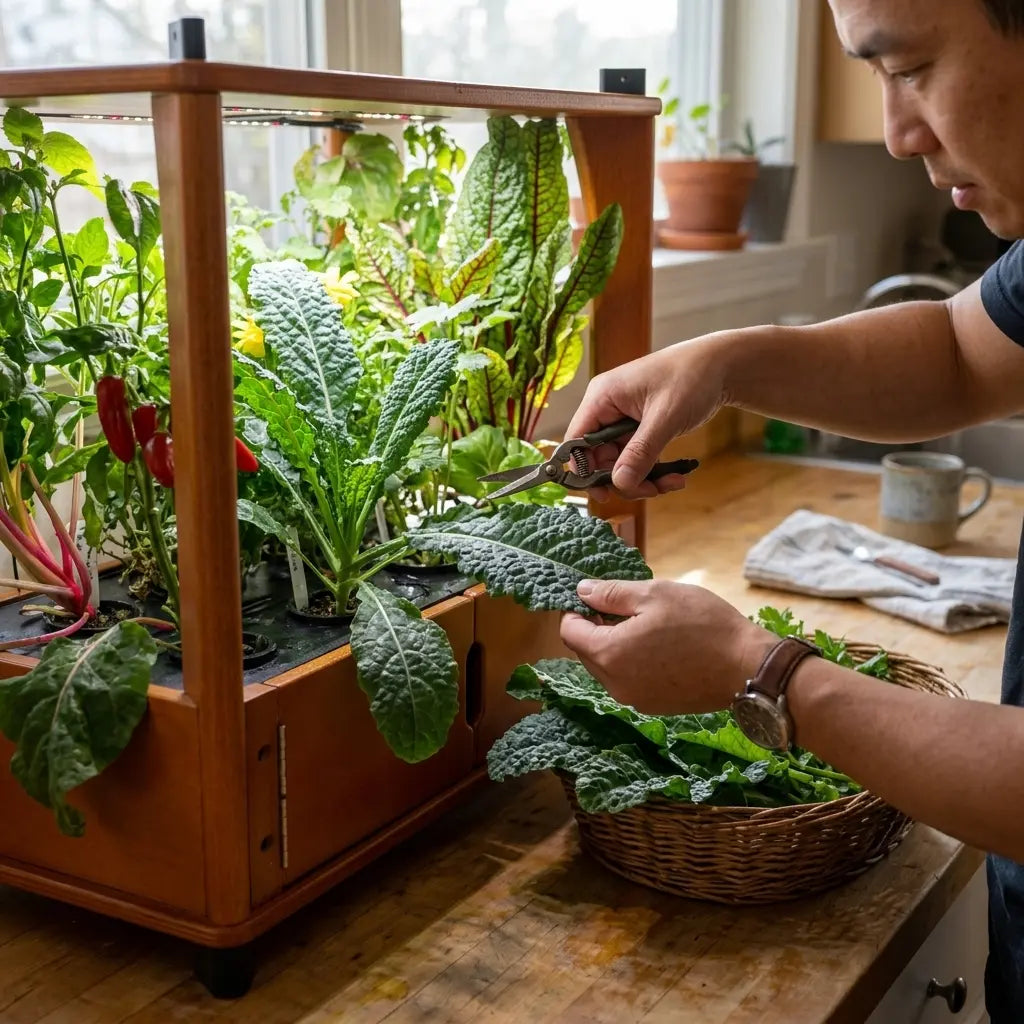
The Aquager Home Farm comes with a built-in full-spectrum LED system already positioned at the right distance from the growing plants, so the PPFD and spectrum questions this guide covers are already answered before the unit reaches your counter.
That built-in design also adjusts naturally as plants grow within the unit's structure, without the manual light-height adjustments a standalone fixture requires as a herb garden fills in.
Common Grow Light Mistakes
Judging a light by how bright it looks to the eye, rather than its PPFD output, is the most common mistake, since human brightness perception does not track closely with the wavelengths plants actually use.
Leaving a fixture at a fixed height as plants grow taller is another frequent error. As the canopy rises closer to the light, PPFD can climb into a range that stresses or bleaches leaves, which calls for raising the fixture as growth progresses.
Running a narrow-spectrum bulb built for only leafy growth on a garden that also includes flowering or fruiting plants tends to disappoint, since that bulb was never designed to support the red wavelengths flowering depends on.
Assuming more hours of light always compensates for lower intensity is a subtler mistake. Extending a weak light's schedule to 20 or more hours a day rarely matches what a properly sized light at the correct PPFD delivers in the standard 14 to 16 hour window, and it removes the dark period some plants use for other growth processes.
Grow Light FAQ
What is PPFD and why does it matter more than wattage?
PPFD measures how much usable light for photosynthesis actually reaches the leaves. Wattage measures electricity used, which does not reliably predict how much of that electricity became usable light.
Are LED grow lights better than fluorescent for herbs?
Generally yes, for PPFD efficiency and lower heat output, though fluorescent remains a reasonable budget option for leafy herbs and seed starting.
What PPFD do herbs need indoors?
Roughly 200 to 400 PPFD for most leafy herbs, and 400 to 600 PPFD for flowering or fruiting plants once past the seedling stage.
How many hours of light do indoor herbs need per day?
Most home herb gardens do well with 14 to 16 hours of light daily, even at a good PPFD, since total daily light exposure matters alongside intensity.
Does a full-spectrum bulb mean it is automatically a good grow light?
Not necessarily. Full spectrum describes the range of wavelengths, not the overall PPFD output, so a full-spectrum bulb can still be weak if its underlying technology delivers low PPFD.
Can I use a regular household lamp instead of a grow light?
Household bulbs are generally not designed for the specific wavelengths and PPFD levels plants need, so they are a poor long-term substitute even if they make a room look bright to the eye.
How do I know if my herb garden needs more light versus more nutrients?
Leggy stems and pale, evenly washed-out new growth point to light. Yellowing that follows a specific vein pattern, or symptoms concentrated in older leaves, points more toward a nutrient deficiency.
Choosing the Right Light
PPFD, not wattage, is the number worth comparing when choosing between LED, fluorescent, or a full-spectrum bulb for an indoor herb garden.
LED generally wins on efficiency and heat, fluorescent remains a fair budget choice for leafy herbs, and a genuine full-spectrum design matters most once flowering or fruiting plants join the garden.
Whichever light type you choose, checking PPFD against a manufacturer's spec at your actual mounting distance, and watching plant behavior for the signs of insufficient light, will tell you far more than a wattage number ever could.
For more on growing herbs without relying on a sunny window, our guide to growing herbs indoors year-round without sunlight covers the lighting fundamentals in more depth, and our beginner's guide to setting up hydroponics walks through getting a full system running from scratch.
If you are deciding which herbs to start with once your lighting is sorted, our 10 easiest herbs to grow indoors post is a good next stop.

Whether you build a custom lighting setup or start with something that already has the PPFD question solved, herbs grown under the right light, at the right distance, for the right number of hours, are the ones that actually thrive.
Author: Aquager · Published: July 6, 2026 · Updated: July 6, 2026












0 comments