
Most people prune herbs the same way they pick a bouquet: snip a stem from the top, wherever it looks long enough, and move on. It works, in the sense that you get a stem. It does not work if the goal is a fuller, more productive plant.
Pruning basil correctly comes down to one small detail that most beginners miss entirely: where on the stem the cut actually lands. A cut made just above a leaf node does something a random top-off cut does not, it tells the plant to send out two new growth tips instead of one.
This guide covers exactly where that node is, how to make the cut, how often to repeat it, and how the same principle applies to rosemary, oregano, and most other herbs growing in an indoor garden.
Why Pruning Above a Leaf Node Doubles New Growth
Every herb plant has a natural growth pattern called apical dominance. The topmost growing tip produces a hormone that suppresses the smaller buds waiting below it along the stem, so the plant channels most of its energy upward into one dominant shoot.
Removing that top growing tip removes the source of the suppressing hormone. The two small buds sitting at the nearest leaf node below the cut are no longer held back, so both of them activate and grow outward as new stems.
That is the entire mechanism behind why a correctly placed cut produces two growth tips where there was previously one. Repeat the process on each of those two new stems a few weeks later, and a single plant can branch into four, then eight, productive stems over a season.
This is different from simply harvesting leaves off the top as needed. Picking individual leaves does not remove the dominant growing tip, so it does not trigger the branching response, the plant just keeps growing taller with the same single main stem it started with.
Where to Find the Right Leaf Node
A leaf node is simply the point on a stem where a pair of leaves attaches. Looking closely at that point, there are usually two small, barely visible buds tucked into the junction between the leaf stem and the main stem.
Those buds are exactly what activates after a correctly placed cut. Cutting through the middle of a section of bare stem, well above or below any node, leaves nothing there to respond, so the plant simply stops growing from that point instead of branching.
On a basil plant, working down from the top, count two to three leaf node pairs and identify the node just above one of them as the cutting point. This leaves enough stem and leaves below the cut for the plant to keep photosynthesizing while the new growth develops.
How to Make the Cut
Use a clean, sharp blade rather than pinching with your fingernails whenever the stem has thickened past its earliest, most tender stage. A crushed or torn cut heals more slowly and is more vulnerable to disease than a clean one.
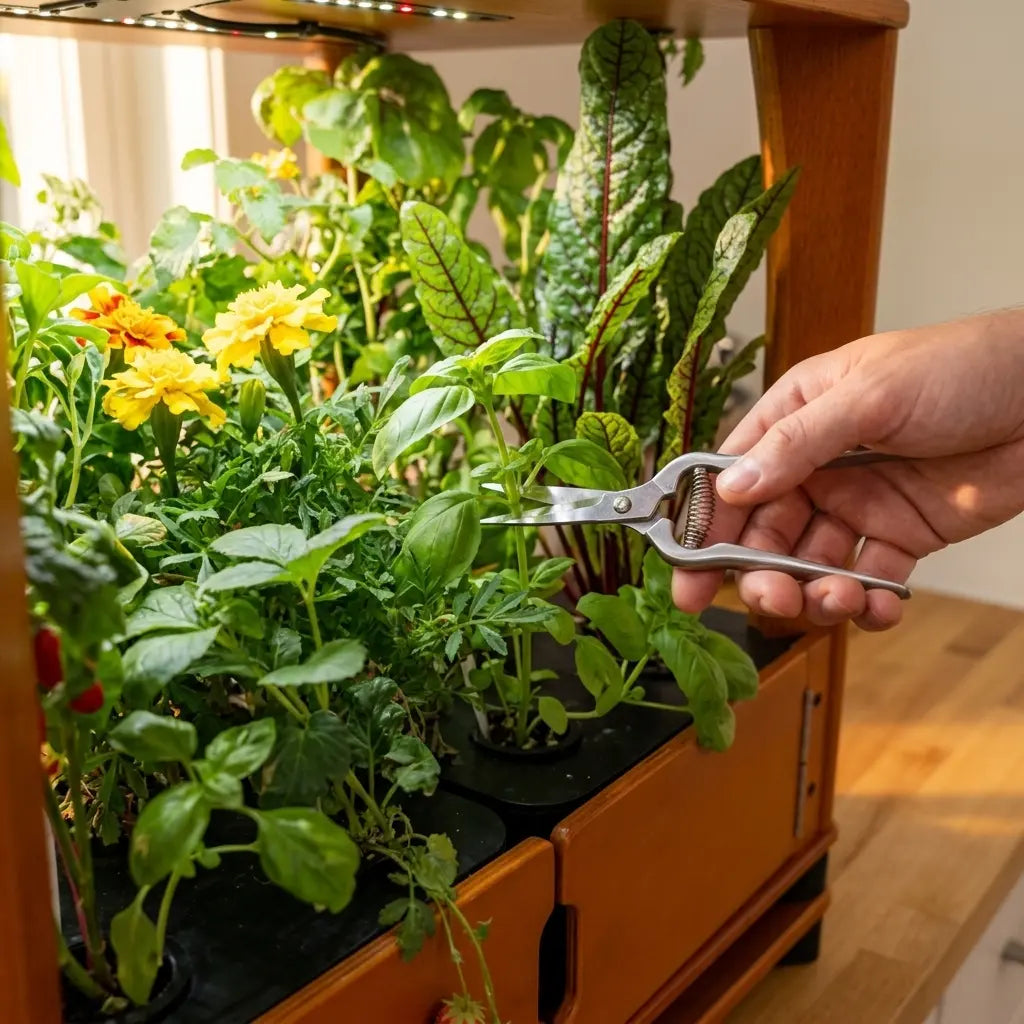
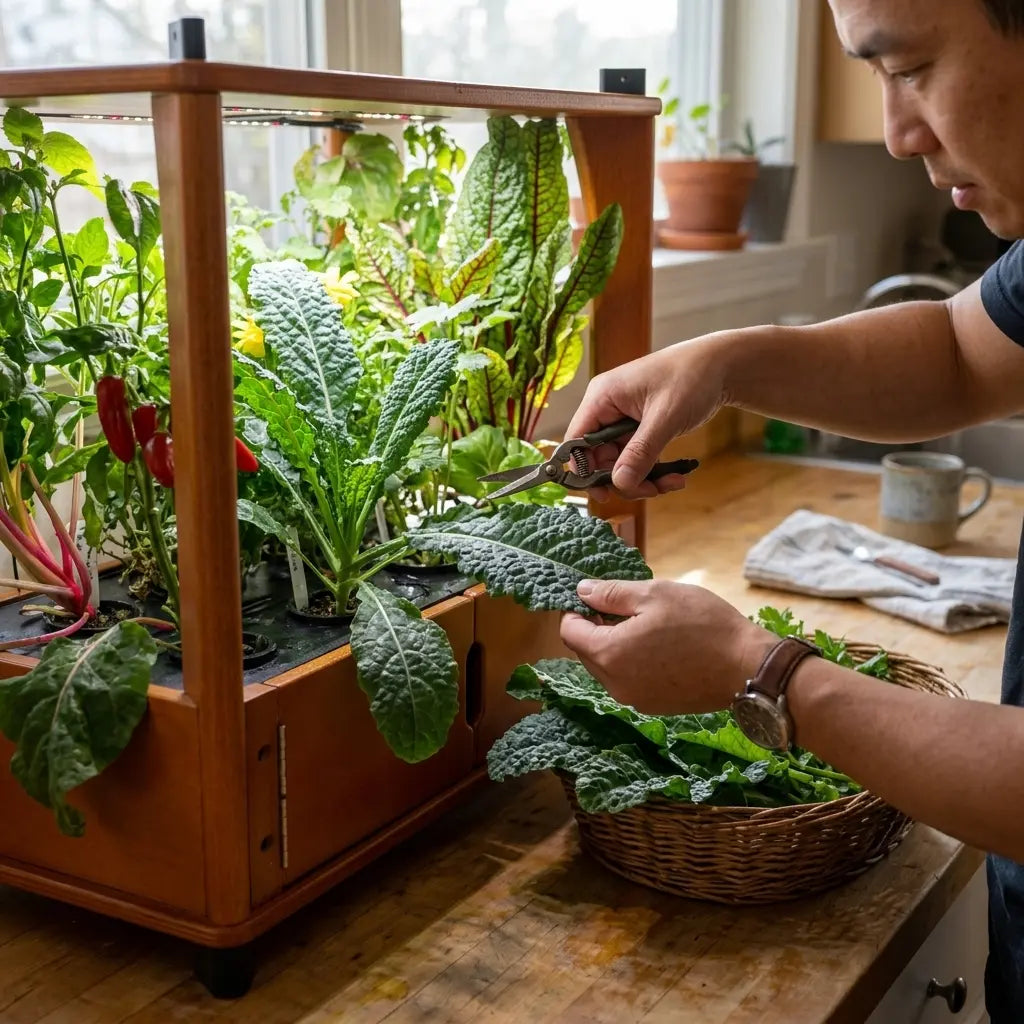
The Aquager Pruning Shears are sized specifically for herb stems, small enough for precise, controlled cuts right above a node without damaging the buds sitting just below the blade.
Position the blade about a quarter inch above the chosen node and cut straight across. Cutting too close crowds the buds and can damage them; cutting too far above the node leaves a stub of bare stem that serves no purpose and can attract rot.

What Happens After You Cut
The response is not instant. In the first few days after a correctly placed cut, the plant redirects energy toward the two dormant buds at the node just below the cut rather than producing anything visible right away.
Within one to two weeks, in a well-lit and consistently fed hydroponic setup, two small new growth tips should be clearly visible at that node, each developing into its own stem with its own leaves. This is the visual confirmation that the cut worked as intended.
If nothing appears after two weeks, the most common explanation is a cut that missed the node entirely, either too far above or too far below it, rather than anything wrong with the plant's overall health.
Reading Your Plant's Growth Stage Before You Prune
A young seedling with only two or three leaf nodes total is not ready for its first prune. Cutting too early removes too much of the plant's total leaf area relative to its size, which can slow it down rather than encourage branching.
The general threshold worth waiting for is at least six leaf nodes and a main stem sturdy enough to hold its own weight without support. At that point the plant has enough established leaf area to recover quickly from a cut and redirect energy into new branches.
A plant that is already flowering or showing early flower buds is at a different stage entirely. Pruning at that point can still work, but the plant's priorities have shifted toward reproduction, so branching response tends to be slower than it is during active vegetative growth.
Applying This to Other Herbs
The same node-based cutting principle applies to nearly every herb with a branching stem structure, though the timing and texture of the cut varies somewhat between soft-stemmed and woody herbs.
Soft-stemmed herbs like basil, mint, and cilantro respond within one to two weeks and can tolerate more frequent pruning since new growth develops quickly. Woody herbs respond more slowly and need a gentler touch, especially once the stem has hardened.
Pruning rosemary works on the same node principle, but rosemary's woody lower stems should generally be left alone. Cutting into the softer, green upper growth just above a node encourages new branching without stressing the older woody structure the plant relies on. The same applies to oregano, which branches readily from node cuts made in its newer growth.
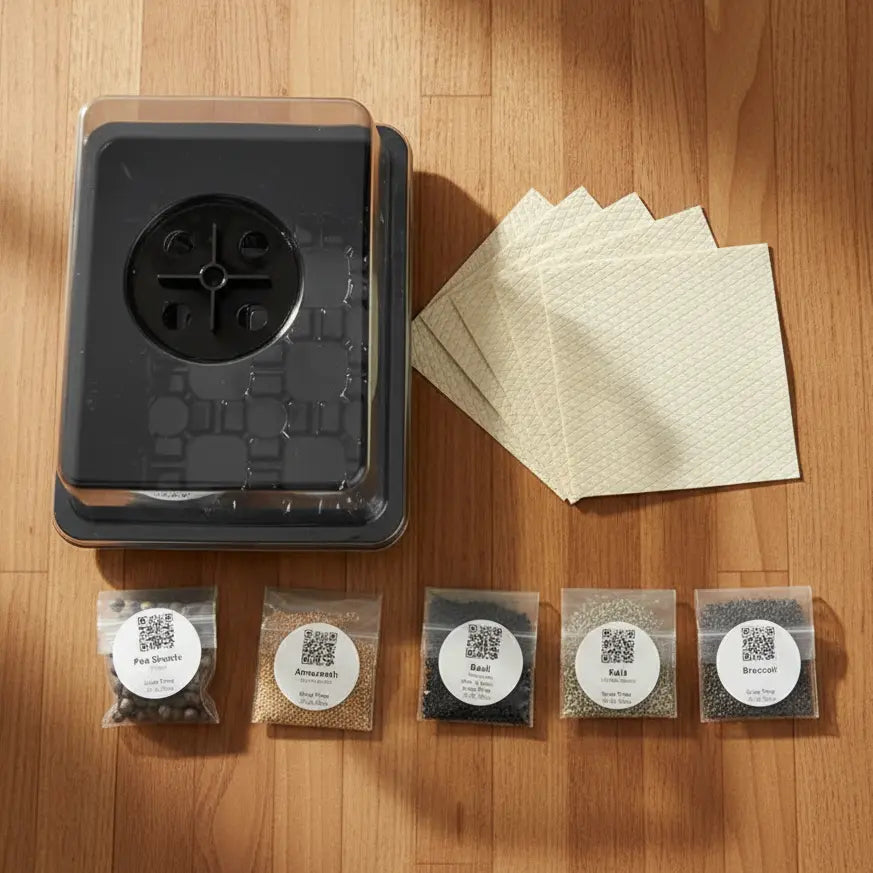
For anyone growing multiple herb varieties side by side, the Aquager Rosemary seeds are a straightforward way to add a woody herb into the same node-pruning routine already being used on basil.
| Herb Type | Response Time | Cutting Notes |
|---|---|---|
| Basil, mint, cilantro (soft-stem) | 1 to 2 weeks | Tolerates frequent pruning, cut anywhere above a node |
| Rosemary, thyme, sage (woody) | 3 to 5 weeks | Cut only into green upper growth, avoid old woody stems |
| Oregano, marjoram (semi-woody) | 2 to 3 weeks | Branches readily, similar handling to basil once established |
How Often to Prune for Maximum Yield
A general rule for fast-growing herbs like basil is to prune every two to three weeks once the plant has at least six leaf nodes, which keeps the plant continuously branching rather than growing tall and leggy with all its energy in one stem.
Pruning on a schedule also doubles as the harvest itself. Every stem removed above a node is usable in the kitchen immediately, so a consistent pruning routine produces a steady, ongoing supply rather than one large harvest at the end of a growing cycle.
Stopping pruning a couple of weeks before a plant is expected to flower lets it redirect energy into full leaf production rather than branching, which matters if the goal for that stretch is maximum leaf volume rather than plant shape.
Common Pruning Mistakes
Cutting in the middle of a bare stem section, rather than just above a node, is the single most common mistake, and it is also the reason many people conclude that pruning "doesn't work" for their plant.
Harvesting only from the very top of the plant repeatedly, without ever cutting deeper into the plant's structure, keeps the plant tall and thin rather than encouraging the branching that leads to higher total yield.
Waiting too long between prunings lets a plant get tall and leggy before the first cut, which means the eventual cut removes a large amount of growth all at once rather than encouraging a steady branching pattern from early on.
Pruning with dull scissors or fingernails on a thickened stem crushes the tissue at the cut site rather than slicing it cleanly, which slows healing and makes that node less likely to produce strong new growth.
Treating every herb the same way regardless of type is a subtler mistake. Applying an aggressive basil-style pruning schedule to a young rosemary plant, for example, removes growth faster than the woody stem can replace it, which stunts the plant rather than filling it out.
Pruning right before a long stretch without light or nutrients, such as before traveling, leaves a plant recovering from a cut with fewer resources available to fuel the new growth, which slows the branching response considerably.
Building a Simple Rotation Across Multiple Plants
For an indoor garden with several herb plants growing side by side, staggering prune dates rather than cutting everything on the same day keeps a steady supply of fresh cuttings coming rather than one large batch followed by a lull.
A simple rotation might prune one third of the plants each week on a three-week cycle, so every plant still gets pruned roughly every three weeks while the kitchen always has something freshly cut on hand.
Keeping a quick note of which plant was pruned and when, even something as simple as a plant label with a date, removes the guesswork of trying to remember each plant's individual schedule from memory.
Pruning FAQ
How often should I prune basil for maximum yield?
Every two to three weeks once the plant has at least six leaf nodes keeps it branching continuously rather than growing tall with unused energy in a single stem.
Does cutting above a leaf node actually increase total yield?
Yes. Removing the dominant growing tip releases the two buds at the nearest node below the cut, and each of those buds becomes a new, independently productive stem.
What is the best time of day to prune herbs?
Morning, after the plant has had light for a while but before the heat of midday, gives the cut the most time to begin healing while the plant is actively growing.
Can I prune woody herbs like rosemary the same way as basil?
The node principle is the same, but rosemary's older woody stems should be left alone. Cut into the newer, green growth just above a node instead.
What should I do with the cuttings after pruning?
Most herb cuttings, especially basil, can be rooted in water and replanted, which is a simple way to expand a garden using nothing but the trimmings from routine pruning.
Will pruning too often hurt a plant's growth?
Pruning more often than every one to two weeks on a soft-stem herb like basil rarely allows enough new leaf area to develop between cuts, which can weaken the plant over time rather than making it more productive.
Do I need to prune every single stem on a plant?
No. Pruning the tallest, most dominant stems first is usually enough to trigger branching across the whole plant, since removing that dominance affects nearby growth as well.
Keeping Your Herbs Productive All Season
Node-based pruning is a small adjustment to make, moving the cut a quarter inch to land just above a leaf node instead of anywhere convenient, but it changes how a plant grows for the rest of the season.
Basil responds especially well to this approach, and our complete guide to growing basil indoors covers the earlier stages of getting a healthy, established plant ready for its first prune.
For a sense of what consistent node pruning can produce over a full season, our study on how much basil you can grow at home breaks down real yield numbers, and our guide to the easiest herbs to grow indoors is a good next stop for anyone ready to apply this same technique across a wider variety of herbs.

A quarter inch of precision at each cut is a small habit that, repeated every few weeks, is what actually separates a leggy, single-stem herb plant from a dense, consistently productive one.
Author: Aquager · Published: July 7, 2026 · Updated: July 7, 2026













0 comments