
Rosemary is one of the most commonly failed herbs anyone tries to grow rosemary indoors. It is not because rosemary is a finicky plant. In its native Mediterranean hillsides, rosemary thrives in tough, sun-baked conditions with barely any care at all.
The gap between that outdoor reality and a typical kitchen windowsill comes down to one thing almost every time: light. Rosemary needs far more of it, and far more consistently, than most indoor spaces naturally provide.
This guide covers exactly how much light rosemary actually needs, how to recognize when a plant isn't getting enough, and how to set up an indoor space that finally gets rosemary right.
Why Rosemary Fails Indoors (Almost Always Light)
Ask anyone who has killed an indoor rosemary plant what happened, and the story is usually the same: it looked fine for a few weeks, then slowly got thinner, paler, and eventually gave up.
That pattern is the signature of a light problem, not a watering problem, a soil problem, or bad luck. Rosemary evolved on open, sun-exposed hillsides, and it simply does not have a backup plan for low light the way some shade-tolerant houseplants do.
Most beginners assume a bright-looking windowsill is bright enough, since it looks sunny to the human eye. Human eyes are remarkably good at adjusting to dim conditions, which makes a windowsill feel far brighter than it actually is from a plant's perspective.
How Much Light Rosemary Actually Needs
Rosemary needs at least eight hours of direct, bright light every day to grow well indoors. This is significantly more than most other common kitchen herbs, and more than a typical indoor windowsill provides for most of the year.
A south-facing window in the right climate can occasionally deliver something close to this during the brightest part of summer, but the same window in winter, on a cloudy day, or facing any direction other than due south usually falls well short.
Direct light matters as much as duration. Bright, indirect light, the kind many houseplants tolerate just fine, is not the same thing as the direct light rosemary needs, and substituting one for the other is one of the most common reasons an indoor rosemary plant slowly fades.
Seasonal light changes make this even harder to manage with a window alone. The same south-facing window that delivers strong direct light in June can drop to a fraction of that intensity by December, simply because the sun sits lower in the sky and daylight hours shrink.
A plant that looked healthy all summer can start declining in fall for no reason other than the light it depended on quietly weakening as the seasons changed, which is often mistaken for a watering issue or a pest problem instead.
Windowsill vs. Grow Light: A Practical Comparison
| Factor | South-Facing Window | Full-Spectrum Grow Light |
|---|---|---|
| Daily light hours | Varies by season, often 3 to 6 hours of true direct light | Consistent, set on a timer for 8 or more hours daily |
| Winter performance | Drops significantly as days shorten | Unaffected by outdoor season |
| Cloudy day impact | Light intensity drops sharply | No impact |
| Consistency | Depends on weather and window direction | Same output every day |
This is not to say a window is useless. A bright south-facing window can be a helpful supplement, especially in summer. It is simply an unreliable sole source for a plant that needs as much light as rosemary does, year round.
How to Tell If Your Setup Is Actually Delivering Enough Light
A simple shadow test gives a rough read on light intensity. Hold a hand about a foot above where the plant sits during the brightest part of the day. A sharp, well-defined shadow suggests strong direct light, while a faint, fuzzy shadow suggests the light is closer to indirect, which is not enough for rosemary on its own.
Tracking actual hours matters more than a single spot check, since light quality can look fine at noon and fall off completely by mid-afternoon once the sun moves past a window's angle.
A cheap plug-in timer on a grow light removes this guesswork entirely, since it guarantees the same number of light hours every single day regardless of the weather, the season, or whether anyone remembers to check on the plant.
Signs Your Rosemary Isn't Getting Enough Light
Legginess is the earliest and clearest sign. A rosemary plant stretching upward with long gaps between leaf clusters, rather than staying compact and bushy, is reaching for light it isn't getting.
Pale or faded green color, rather than the deep, rich green of a healthy plant, often shows up alongside legginess as the plant's overall vigor declines from insufficient light.
Needle drop, especially toward the base of the plant, is a later-stage sign that a light-starved rosemary plant is shedding growth it can no longer support.

Slow or stalled growth over several weeks, even with regular watering and feeding, points back to light more often than any other cause once the basics are otherwise being handled correctly.
Does the Variety of Rosemary Change Its Light Needs
Upright rosemary varieties, the most common type sold for cooking, and trailing or creeping varieties, often grown more for ornamental use, both share the same fundamentally high light requirement.
Neither growth habit is more shade-tolerant than the other. The difference in appearance comes from stem structure, not from any difference in how much light the plant's underlying biology needs to thrive.
This is worth knowing because it is tempting to assume a compact or trailing variety, marketed as suited to small spaces, might also tolerate lower light. That assumption is not supported by how rosemary actually grows, regardless of variety.
Setting Up the Right Light Indoors
A windowsill alone is rarely enough to reliably hit eight hours of true direct light across an entire year, which is why growing rosemary indoors long term usually means supplementing with a dedicated light source.
A full-spectrum grow light removes the guesswork and the seasonal inconsistency of relying on a window, delivering a consistent light duration and intensity regardless of the weather or time of year outside.
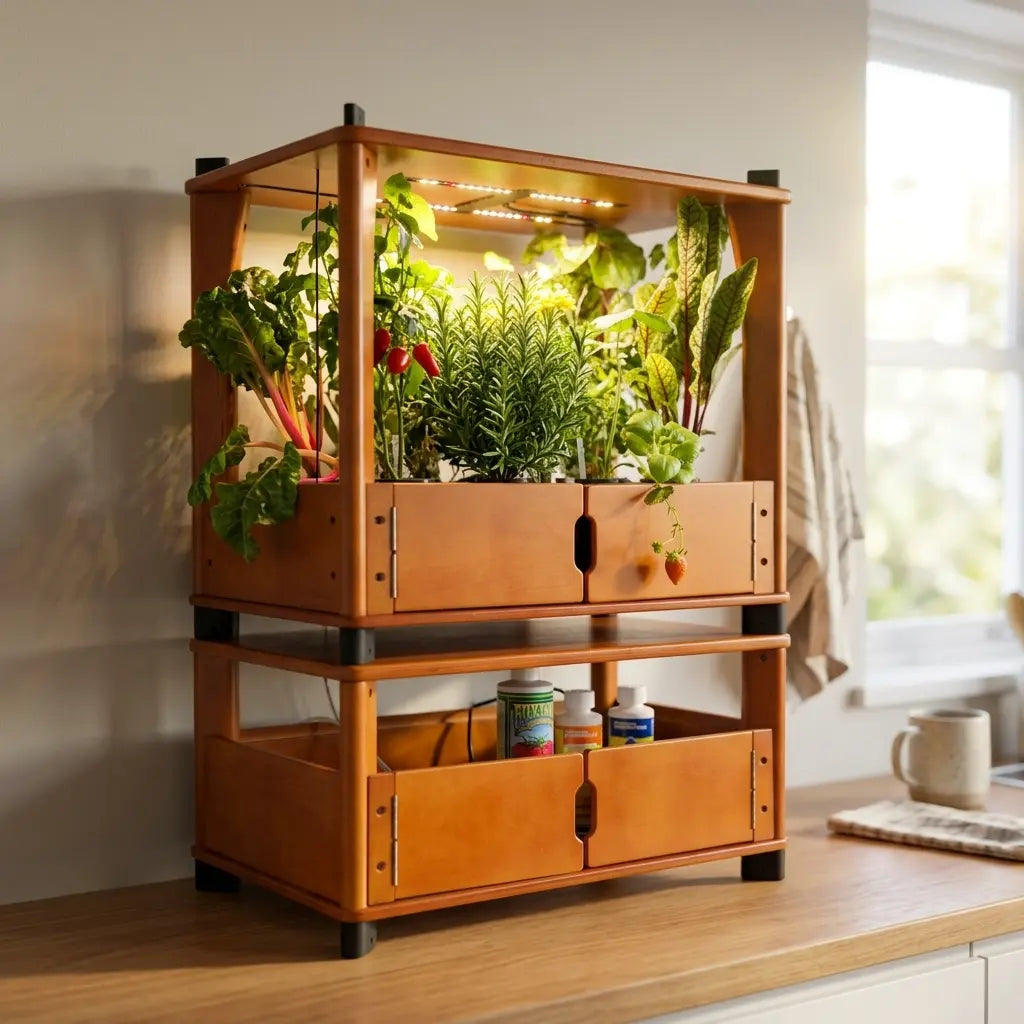
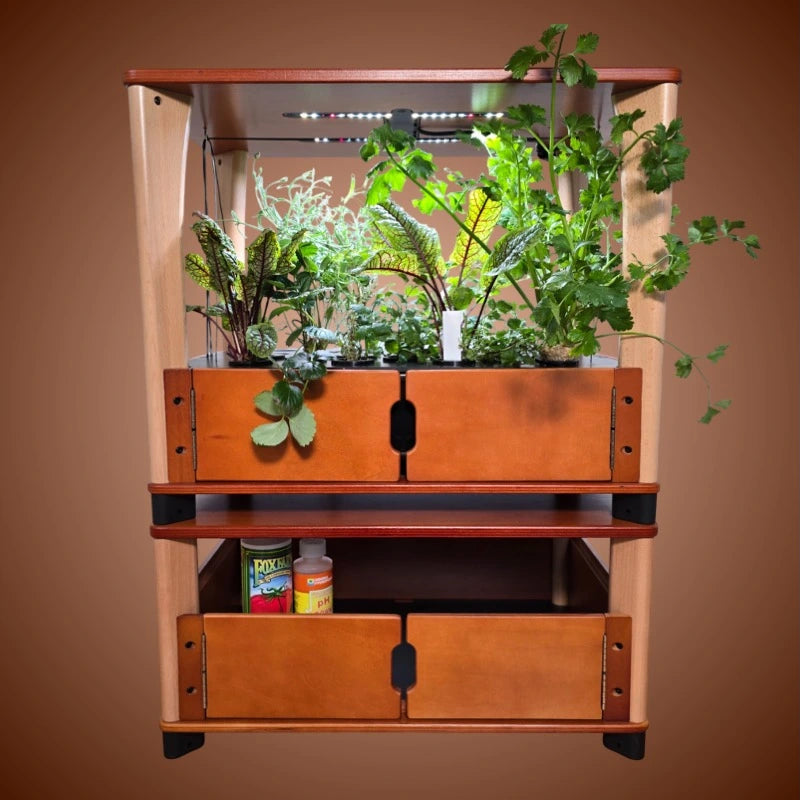
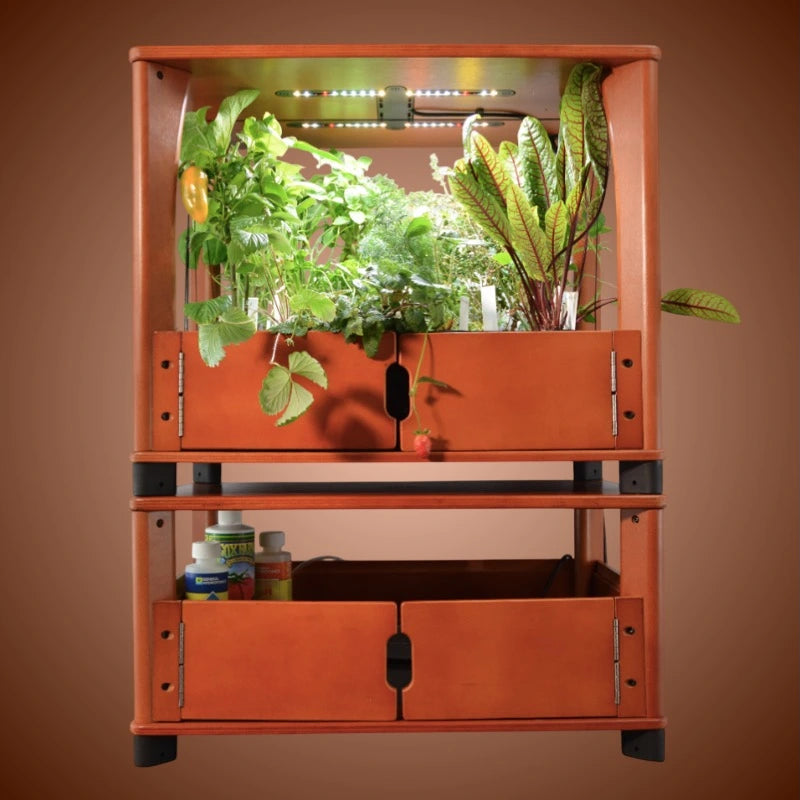
The Aquager Home Farm bundle has a built-in full-spectrum LED grow light designed to give herbs like rosemary the direct light duration they need, without depending on a window at all.
Distance between the plant and the light matters too. A grow light mounted too far above the foliage delivers much less usable intensity than the same light positioned closer, even though both technically count as "on" for the same number of hours.
The built-in light on the Home Farm is positioned at a fixed, tested distance from the growing area specifically to avoid this problem, so there is no need to guess at the right height or constantly readjust a clip-on light as the plant grows.
Choosing the Right Growing Medium
Rosemary grown in traditional potting soil needs a fast-draining mix, often amended with sand or perlite, since standard potting soil retains more moisture than rosemary's roots tolerate well.
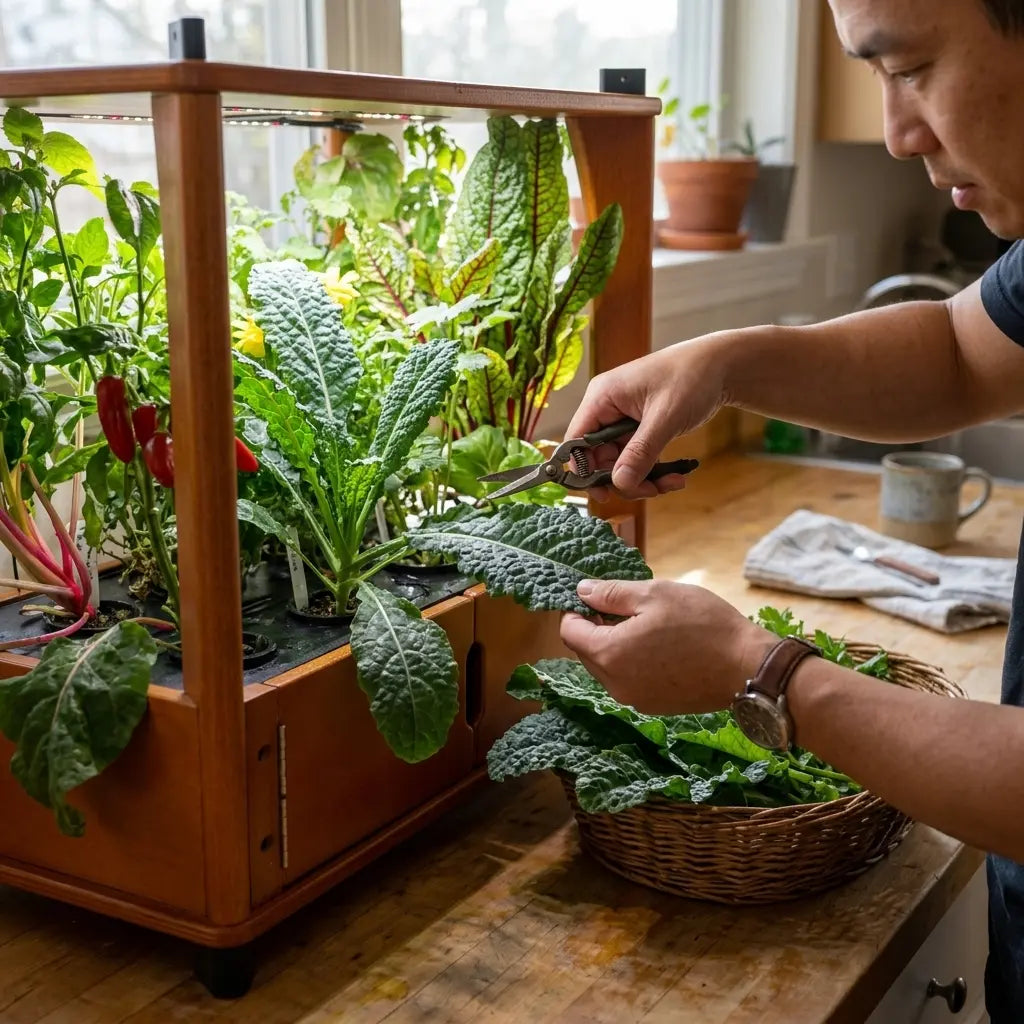
A hydroponic setup sidesteps the soil-drainage question entirely. Rosemary's roots sit in a growing medium like clay pebbles or rockwool, drawing water and nutrients from a reservoir engineered to avoid the waterlogged conditions that cause root rot in soil.
This matters more for rosemary than for many other herbs, since rosemary's Mediterranean origins make it especially sensitive to constantly wet roots, one of the few care details that rivals light in terms of how often it determines success or failure.
Other Care Basics Once Light Is Solved
Once light is no longer the limiting factor, rosemary's remaining care needs are genuinely simple, since it evolved to tolerate lean, well-drained conditions rather than rich, constantly moist soil.
Overwatering is the second most common cause of indoor rosemary failure, since rosemary's roots are adapted to dry out somewhat between waterings and are prone to root rot in consistently soggy conditions.
A hydroponic setup with a consistent reservoir and proper aeration sidesteps a lot of the guesswork around watering timing, since the plant draws what it needs from a steady water source rather than depending on a human remembering a watering schedule.
Rosemary also prefers slightly cooler temperatures and good airflow around its foliage, both of which help prevent the fungal issues that can develop in stagnant, humid indoor air.
Positioning Your Setup for the Best Results
Keep rosemary away from heating vents and radiators, since the dry, fluctuating heat from indoor climate systems can stress the plant even when light levels are otherwise perfect.
A spot with steady room temperature and decent airflow, rather than a location that swings between a cold drafty window at night and a blast of forced-air heat during the day, supports more consistent growth.
Rotating a plant that relies partly on a window, even one supplemented with a grow light, helps prevent it from growing lopsided toward whichever direction receives the strongest light source.
Grouping rosemary with other Mediterranean herbs that share similar light and drainage preferences, such as thyme or oregano, makes it easier to manage a whole herb setup under one consistent light source rather than juggling different light needs across a windowsill.
Common Rosemary Growing Mistakes
Relying on a windowsill alone, without ever measuring or questioning whether it actually delivers eight hours of direct light, is the single most common mistake and the one this entire guide is built around fixing.
Overwatering out of habit, treating rosemary like a thirstier herb such as basil, stresses roots that are adapted to drier conditions and is the second most common way an indoor rosemary plant declines.
Giving up too early is a subtler mistake. Rosemary is slower growing than soft-stemmed herbs, so a lack of dramatic growth in the first few weeks is normal and not necessarily a sign anything is wrong.
Ignoring air circulation around a rosemary plant in a humid indoor environment invites fungal problems that a plant grown outdoors, with constant natural airflow, would rarely encounter.
Switching pots or growing setups too frequently, out of impatience with slow visible progress, disrupts the plant right as it is adjusting to a light source, which can reset progress rather than speed it up.
What to Expect Month by Month
In the first month after starting from a young plant or rooted cutting, expect mostly root establishment rather than dramatic top growth, even under strong, consistent light.
By the second and third month, with 8 or more hours of direct light daily, new stem growth becomes noticeably denser, and the plant starts to look genuinely bushy rather than sparse.
By months four through six, a well-lit rosemary plant is typically producing enough growth to support regular harvesting without setting the plant back, assuming light and watering have both been consistent.
A rosemary plant kept under insufficient light rarely follows this same trajectory. Instead, it tends to plateau early, staying thin and slow no matter how much time passes, which is the clearest long-term signal that light, not patience, is the missing ingredient.
Reviving a Light-Starved Rosemary Plant
A leggy, pale rosemary plant is usually not beyond saving, as long as it has not also been badly overwatered on top of the light problem. Moving it to significantly stronger, more consistent light is the first and most important step.
Resist the urge to prune heavily right away. A stressed plant needs its existing foliage to rebuild energy reserves under the new, stronger light before it can support the kind of pruning that would normally encourage bushier growth.
Expect a few weeks of adjustment before new growth clearly picks up. A plant that has been light-starved for months will not fully recover overnight, but consistent light going forward reliably turns the trajectory around.
Once new growth appears denser and greener than what came before, that is the signal the plant has adjusted well and normal care, including regular light pruning, can resume.
Growing Rosemary Indoors FAQ
How many hours of light does rosemary actually need indoors?
At least eight hours of direct, bright light daily. Less than this is the most common reason indoor rosemary struggles or fails.
Can rosemary survive in low light indoors?
It can survive for a while in low light but will not thrive, typically becoming leggy, pale, and increasingly sparse over time rather than staying full and productive.
Can a grow light fully replace natural sunlight for rosemary?
Yes. A full-spectrum grow light providing consistent daily duration and intensity can fully replace natural sunlight for rosemary and often outperforms an inconsistent window.
How long does it take for indoor rosemary to establish?
Several months of steady, slower growth is typical before a rosemary plant reaches a size worth regularly harvesting from, especially compared to faster herbs like basil.
Why does my indoor rosemary keep dying even though I water it regularly?
Insufficient light is the most common underlying cause even when watering seems adequate, since a light-starved plant weakens in ways that make it more vulnerable to other stresses, including overwatering.
Can I move my rosemary outdoors seasonally and back inside later?
Yes, and many growers do exactly this, moving rosemary outdoors for summer sun and bringing it back inside before temperatures drop, though this transition works best when done gradually to avoid shocking the plant.
Is a south-facing window ever enough on its own?
In some climates during summer, it can come close, but it typically falls short the rest of the year as day length and sun angle change, which is why most indoor growers pair a window with a dedicated grow light.
Does rosemary need a rest period or dormancy indoors?
Indoors, under consistent light, rosemary does not require a true dormancy period the way it might experience naturally outdoors through a cold winter, and can keep growing steadily year round.
What is the biggest difference between growing rosemary in soil versus hydroponically?
Hydroponic growing removes the guesswork around drainage and watering timing, which addresses the second most common cause of indoor rosemary problems after insufficient light.
Getting Rosemary Right Indoors
Rosemary's reputation as a difficult indoor herb almost always comes down to one overlooked factor: not enough direct light, for not enough hours, on a consistent enough basis.
Our list of the easiest herbs to grow indoors covers how rosemary compares to faster, more forgiving herbs, and our guide to growing herbs indoors year round covers the broader light and setup principles this guide builds on.
For more on rosemary specifically, our guide to rosemary's research-backed health benefits is a good next stop once a plant is established and producing.

Solve the light problem first, and rosemary stops being one of the hardest herbs to grow indoors and becomes one of the more reliable ones, exactly as it is outdoors in the right conditions.
Author: Aquager · Published: July 7, 2026 · Updated: July 7, 2026












0 comments