
Anyone who has tried to grow parsley from seed and watched nothing happen for two weeks has probably wondered if they did something wrong. Most likely, they didn't.
Parsley seeds are simply slower than almost every other common kitchen herb, and the reason has nothing to do with growing skill. It comes down to the seed itself.
This guide covers why parsley takes its time to sprout, how to speed that process up, how to grow it indoors from seed to harvest, and finally settles the flat-leaf versus curly parsley debate for anyone cooking with it.
Why Parsley Seeds Take Longer to Germinate
Parsley seeds are coated in a waxy, hard outer layer that slows water absorption far more than the seed coats of faster-sprouting herbs like basil or cilantro.
That coating exists naturally to protect the seed, but it also means water takes longer to reach the embryo inside, which delays germination by days or even weeks compared to softer-coated seeds.
This is why parsley has a reputation for being slow or difficult, when the real story is simply that it needs a bit of help getting past its own seed coat before germination can properly begin.
There is actually an old gardener's saying that parsley has to travel to the devil and back before it sprouts, a folk explanation for what is really just a thick, water-resistant seed coat doing its job a little too well for anyone in a hurry.
Compare this to basil or cilantro, both of which have thinner, softer seed coats that let water in almost immediately, sprouting in as little as three to five days under similar conditions.
Parsley is not an outlier because something is wrong with the seed. It's an outlier because its seed coat evolved to protect it through a longer, less predictable period before conditions are right to sprout.
How to Speed Up Parsley Germination
Soaking parsley seeds in room-temperature water for 24 hours before planting softens the hard seed coating and noticeably shortens the time to sprouting.
Some growers take this a step further by lightly nicking the seed coat with a fingernail or fine sandpaper, a technique called scarification, though soaking alone handles most of the slowdown for home growers.
Keeping the growing medium consistently moist, not soggy, during the germination window matters more for parsley than for faster herbs, simply because there is a longer stretch of time for the medium to dry out before sprouting happens.

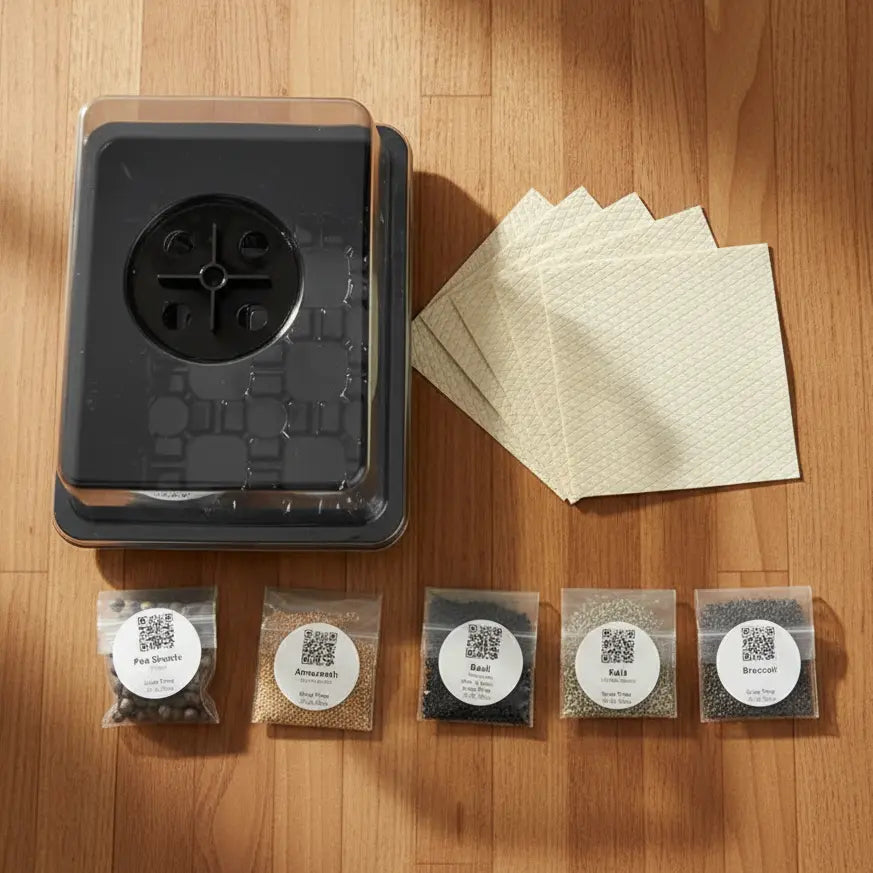
Pre-seeded organic grow mediums remove most of this guesswork, since the seed is already positioned at the right depth in a medium designed to hold consistent moisture without oversaturating.
Even with these steps, expect parsley to take longer than basil or cilantro. Seven to fourteen days is a realistic germination window, and patience during that stretch matters more than any single trick.
Temperature also plays a role. Parsley germinates fastest in growing medium that stays around 65 to 75 degrees Fahrenheit, and conditions colder than that can stretch the germination window out even further.
Marking a calendar date at planting is a genuinely useful habit, since it is easy to assume a slow-germinating tray has failed when it is actually still well within a normal timeframe for parsley specifically.
Flat-Leaf vs. Curly Parsley: Resolving the Debate
Flat-leaf parsley, sometimes called Italian parsley, has broader, glossy, toothed leaves and a noticeably stronger, more peppery flavor than curly parsley.
Curly parsley has tightly ruffled leaves and a milder flavor, which historically made it popular as a plate garnish precisely because it looked decorative without adding much taste.

| Factor | Flat-Leaf Parsley | Curly Parsley |
|---|---|---|
| Flavor | Stronger, more peppery | Milder |
| Texture | Tender, easy to chop | Firmer, more fibrous |
| Best use | Cooking, sauces, salads | Garnish, decoration |
| Nutrition | Nearly identical to curly | Nearly identical to flat-leaf |
For cooking, flat-leaf wins clearly. Its stronger flavor and more tender texture hold up better in sauces, salads, and finishing touches, which is why most professional kitchens reach for flat-leaf over curly by default.
Curly parsley still has a place as a garnish where a milder flavor and decorative texture are the goal, but as an ingredient meant to actually be tasted, flat-leaf is the better choice for nearly every recipe.
Other Parsley Varieties Worth Knowing
Beyond flat-leaf and curly, a few less common parsley varieties occasionally show up in seed catalogs and are worth knowing, even if they are not the focus of this guide.
Hamburg parsley, sometimes called root parsley, is grown primarily for its edible root rather than its leaves, more similar in use to a parsnip than to a typical leafy herb.
French parsley is essentially another name used regionally for flat-leaf parsley, rather than a genuinely distinct variety, which occasionally causes confusion when comparing seed packets from different brands.
For the vast majority of home cooks, the flat-leaf versus curly decision covers everything that actually matters, with root and regional varieties being niche options rather than everyday choices.
Setting Up Parsley to Grow Indoors
Parsley grows well with 6 to 8 hours of bright light daily, tolerating slightly less than sun-hungry herbs like rosemary but still needing more than a dim corner provides.
A consistently moist, well-draining growing medium suits parsley best. It doesn't like to fully dry out between waterings, but it also doesn't tolerate sitting in standing water for long stretches.
Moderate room temperature, similar to what most homes already maintain, is fine for parsley. It doesn't require the specific temperature management that more sensitive herbs sometimes do.
Soil vs. Hydroponic Growing for Parsley
Parsley grows well in both traditional potting soil and hydroponic setups, making it a flexible choice regardless of which growing method someone already has set up at home.
In soil, parsley needs a loose, well-draining potting mix, since compacted or heavy soil holds too much water around its roots and can encourage rot during the long germination and early growth period.
A hydroponic setup sidesteps the soil-drainage question by design, with roots drawing water and nutrients from a reservoir engineered to avoid waterlogging, which pairs well with parsley's dislike of soggy conditions.
The main practical advantage of hydroponic growing for parsley specifically is consistency during that long germination window, since the growing medium's moisture level stays far more stable than potting soil exposed to a home's normal humidity swings.
Step-by-Step: Growing Parsley From Seed to Harvest
Start by soaking seeds for 24 hours, then plant them at a shallow depth in a moist, well-draining growing medium, keeping the medium consistently damp during the following one to two weeks.
Once seedlings emerge, position them under 6 to 8 hours of bright light daily, whether from a window or a grow light, and continue keeping the medium evenly moist as the plant establishes.
By around 70 to 75 days from seed, a healthy parsley plant reaches a size worth regular harvesting, developing multiple stems that support ongoing cutting without setting the plant back.
The Aquager Chives grow on a similar cut-and-come-again cycle and pair well with parsley in the same setup for a well-rounded fresh herb rotation.
What to Expect Week by Week
In week one after planting soaked seeds, expect to see nothing visible above the surface yet, even though the seed is actively absorbing moisture and beginning to germinate beneath it.
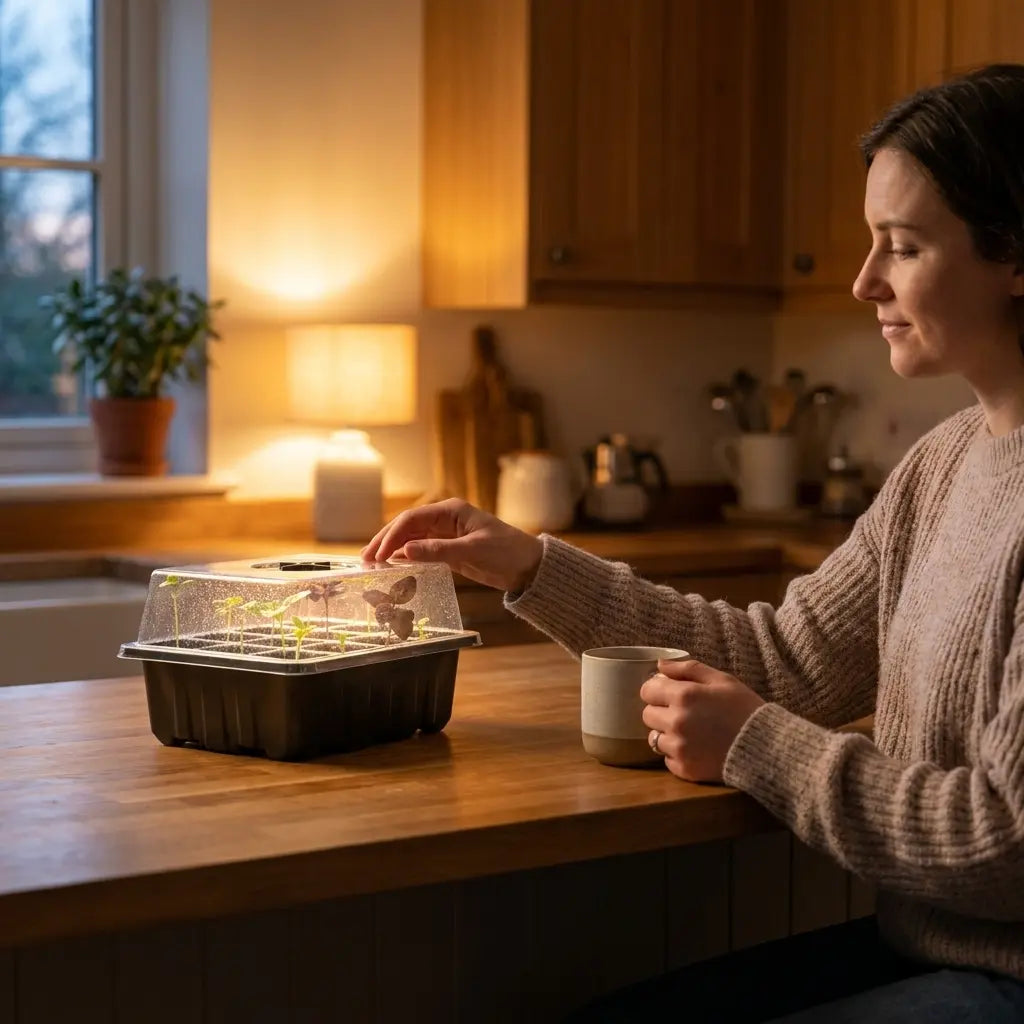
By weeks two to three, small, delicate seedlings typically break the surface, showing thin initial leaves that look quite different from the mature, feathery foliage parsley eventually develops.
By weeks four to six, true leaves with the recognizable parsley shape appear, and the plant begins to look like a small, established herb rather than a fragile seedling.
From around week ten onward, roughly the 70 to 75 day mark, the plant typically has enough mature stems to support its first real harvest without setting growth back.
Growing Parsley the Easy Way
The Aquager Parsley (Giant of Italy) Seeds are a flat-leaf variety, which settles the flavor debate before growing even begins, and come with pre-seeded organic grow mediums that take the guesswork out of depth and spacing.
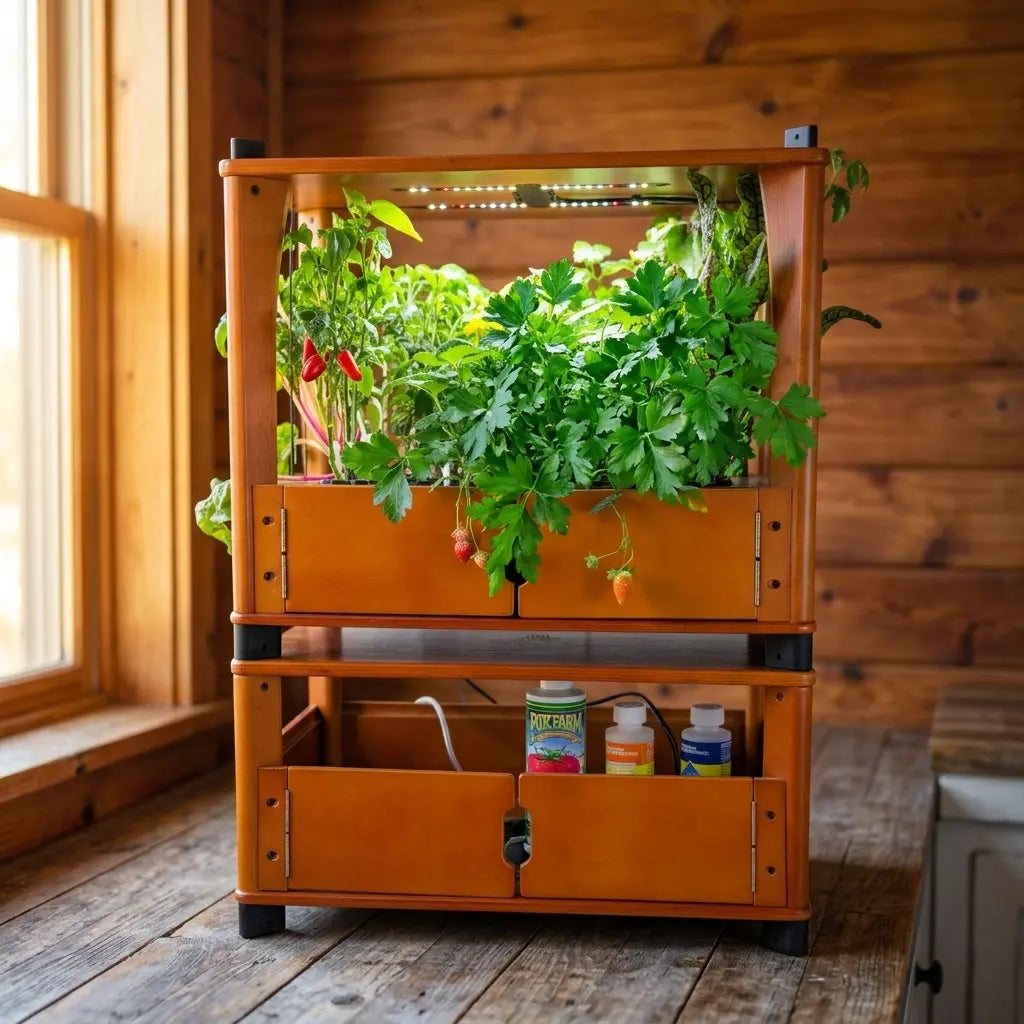
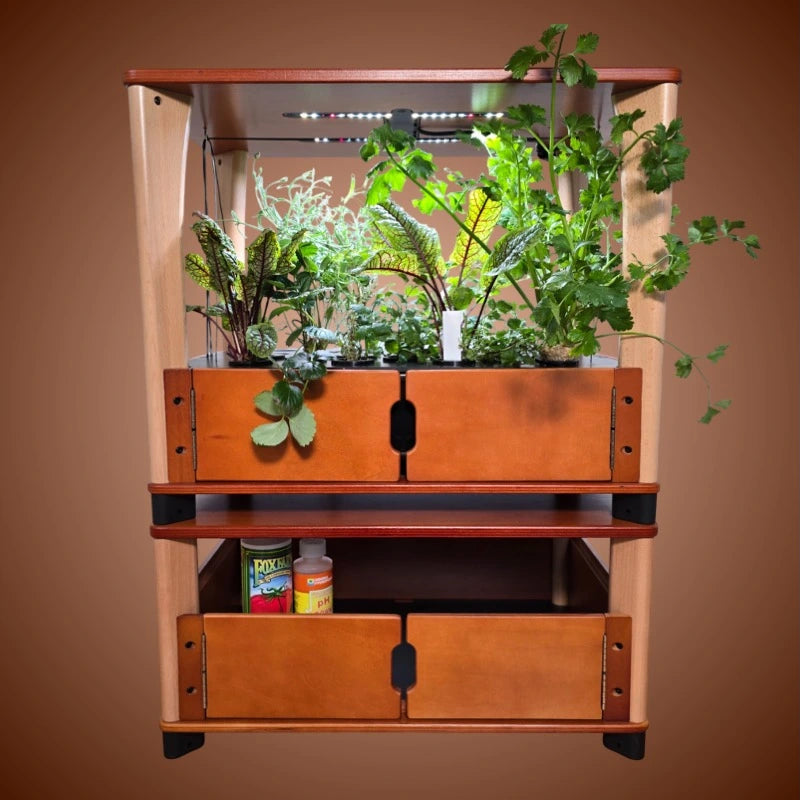
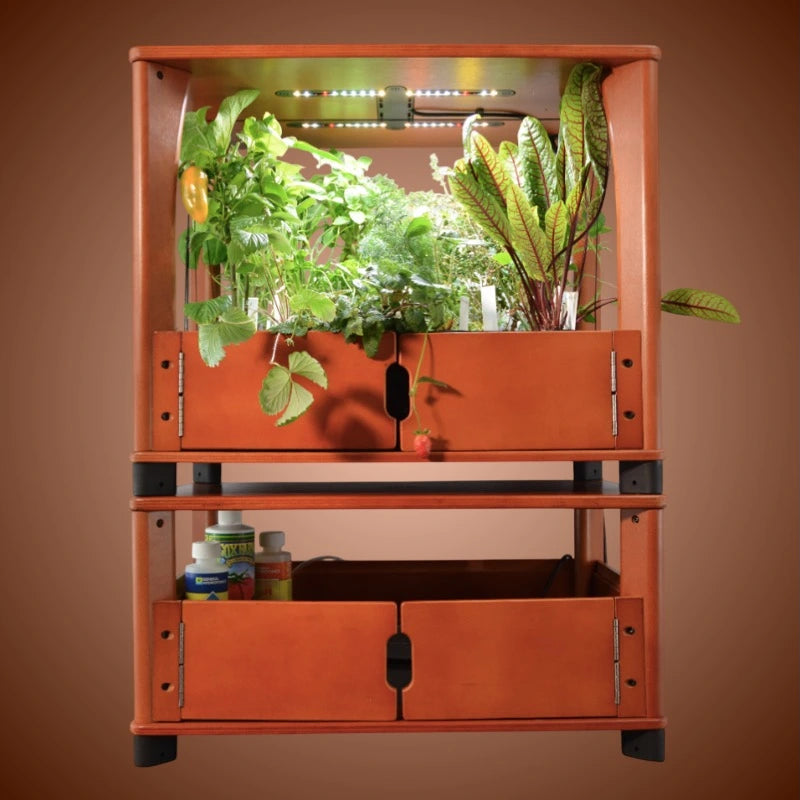
Growing it hydroponically in an Aquager Home Farm keeps light, water, and nutrients consistent through the entire germination and growing window, which matters more for a slower-sprouting herb like parsley than for faster ones.
Common Parsley Growing Mistakes
Giving up too early is the most common mistake. Two weeks of apparent nothing is normal for parsley, not a sign of a failed batch, given how slowly its seed coat lets in water.
Letting the growing medium dry out during the long germination window undoes progress that has already happened beneath the surface, since drought stress at this stage can kill a seed that was close to sprouting.
Harvesting too aggressively too early, before the plant has built up several mature stems, weakens a young plant right when it needs energy to keep establishing.
Assuming germination has failed after just a week is another common mistake. Given parsley's realistic seven to fourteen day window, a week of apparent nothing is still well within normal, not a sign to start over.
Overwatering out of impatience, hoping to force faster growth, tends to backfire with parsley, since its roots are more prone to rot in saturated conditions than to benefit from extra water.
Positioning and Companion Considerations
Parsley pairs well physically with other herbs that share similar light and water needs, such as chives, basil, or cilantro, making it easy to group several fast-growing kitchen herbs in one setup.
Rotating plants occasionally, if relying partly on a window for light, helps prevent parsley from growing lopsided toward whichever direction gets the strongest light source.
Keeping parsley away from direct heating vents or drafty windows helps maintain the more consistent temperature it prefers, particularly during the vulnerable germination and early seedling stage.
Harvesting Parsley Without Killing the Plant
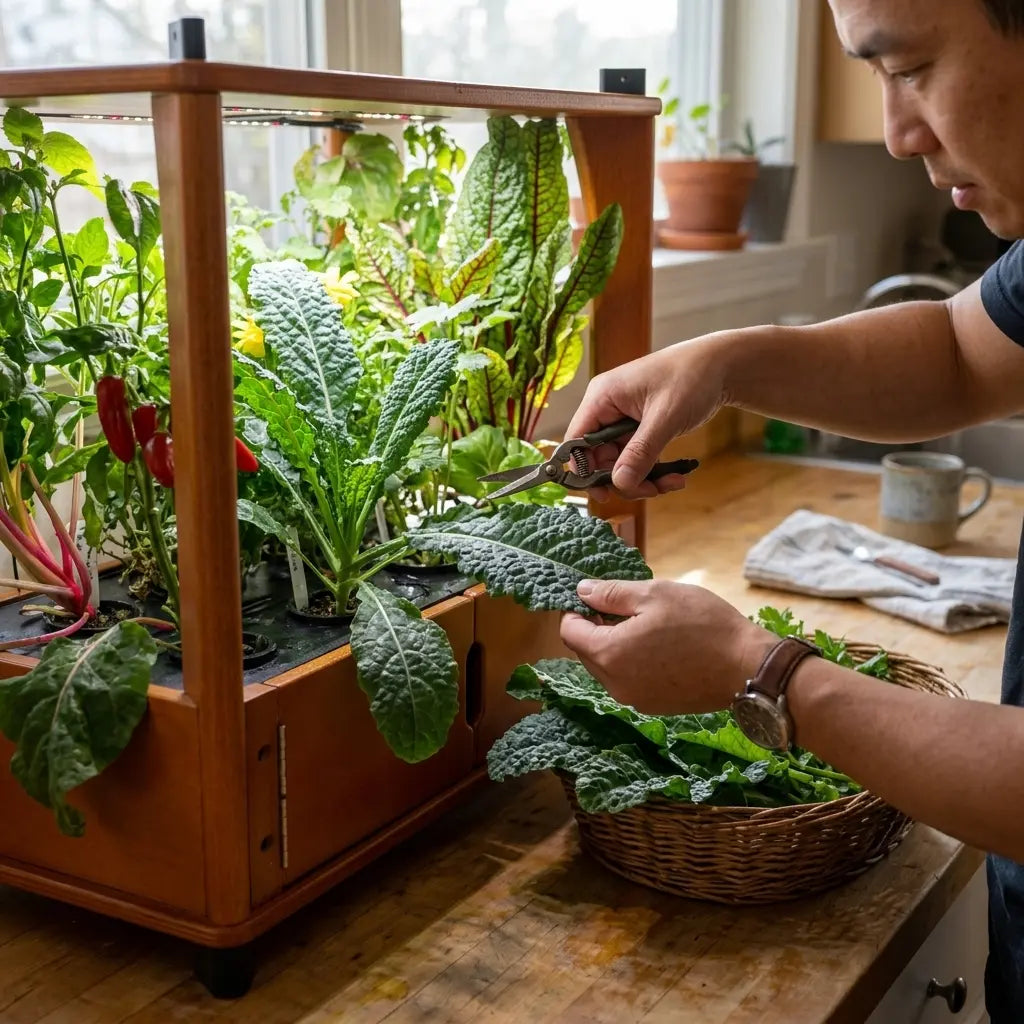
Cut outer, mature stems near the base rather than trimming from the center, which allows new growth to keep emerging from the plant's center over time.
Leaving at least a third of the plant's stems intact after each harvest keeps enough foliage in place for the plant to keep photosynthesizing and producing new growth.
A well-maintained parsley plant, harvested this way, can keep producing usable stems for months, making a single planting go much further than a one-time cut.
Parsley is a biennial, meaning it naturally lives for two growing seasons before flowering and going to seed. Indoors, under consistent conditions, most home growers replace plants well before this natural lifecycle becomes a factor.
If a parsley plant does start to flower, called bolting, its leaves turn noticeably more bitter shortly after. Harvesting whatever remains promptly and starting a fresh planting is usually the better move at that point.
Storing Fresh-Harvested Parsley
Freshly cut parsley stems stored upright in a small glass of water on the counter, similar to a bouquet, stay fresh noticeably longer than parsley wrapped loosely and left in the refrigerator.
Changing the water every couple of days extends this further, sometimes keeping harvested parsley usable for a week or more without any noticeable decline in flavor or texture.
For longer storage, chopped parsley freezes reasonably well in a small amount of water or oil within an ice cube tray, giving pre-portioned herb ready to drop into a pan whenever needed.
Troubleshooting Yellowing or Wilting Parsley
Yellowing lower leaves on an otherwise healthy plant are often simply older leaves being naturally shed as the plant redirects energy toward newer growth, not necessarily a sign of a problem.
Widespread yellowing across the whole plant, rather than just older leaves, more often points to overwatering and root stress than to a light or nutrient issue.
Wilting despite consistently moist growing medium can indicate root rot from prolonged waterlogging, in which case letting the medium dry slightly before the next watering often helps the plant recover.
Pale, washed-out new growth, as opposed to yellowing old leaves, more often points to insufficient light than to a watering problem, since new growth relies heavily on active photosynthesis to develop full color.
Growing Parsley Indoors FAQ
Why hasn't my parsley germinated after two weeks?
This is normal. Parsley's hard seed coating slows germination, and seven to fourteen days, sometimes longer, is a realistic window before sprouts appear.
Does soaking parsley seeds actually help?
Yes. Soaking for 24 hours softens the seed coating and measurably speeds up how quickly water reaches the seed's embryo, shortening the overall germination time.
Is flat-leaf or curly parsley better for cooking?
Flat-leaf parsley has a stronger flavor and more tender texture, making it the better choice for cooking, sauces, and salads, while curly parsley is better suited to garnish.
How much light does parsley need indoors?
Six to eight hours of bright light daily, less demanding than sun-hungry herbs like rosemary but more than a dim, low-light spot provides.
How long until parsley is ready to harvest?
Around 70 to 75 days from seed to a size worth regular harvesting, though outer stems can sometimes be lightly harvested a bit earlier once the plant is established.
Can I keep harvesting from the same parsley plant?
Yes, as long as outer mature stems are cut rather than the center, and at least a third of the plant is left intact after each harvest.
Is parsley a good beginner herb to grow indoors?
Yes, once the germination patience piece is understood. After sprouting, parsley's ongoing care needs are straightforward compared to its reputation.
Can I grow parsley hydroponically, or does it need soil?
Parsley grows well in both. Hydroponic setups offer more consistent moisture during the long germination window, which can make the slow-sprouting stage more predictable.
Why did my parsley suddenly turn bitter?
This usually means the plant has started to bolt, or flower, which is a natural part of parsley's biennial lifecycle. Harvesting promptly and starting a new planting is the usual fix.
Growing Parsley Worth the Wait
Parsley's slow germination is a seed-coating quirk, not a sign of difficulty, and understanding it turns two frustrating weeks of apparent nothing into an expected, manageable part of the process.
Our list of the easiest herbs to grow indoors shows how parsley compares to faster-sprouting options, and our guide to growing herbs indoors year-round covers the broader light and setup principles this guide builds on.
For anyone starting their first indoor herb garden, our guide to growing basil indoors is a good companion, since basil's fast germination makes a nice contrast to parsley's slower timeline.
Once established, a single flat-leaf parsley planting, harvested carefully, can supply fresh herb for months, which is a solid return on two weeks of patience at the start.
Author: Aquager · Published: July 10, 2026 · Updated: July 10, 2026












0 comments