
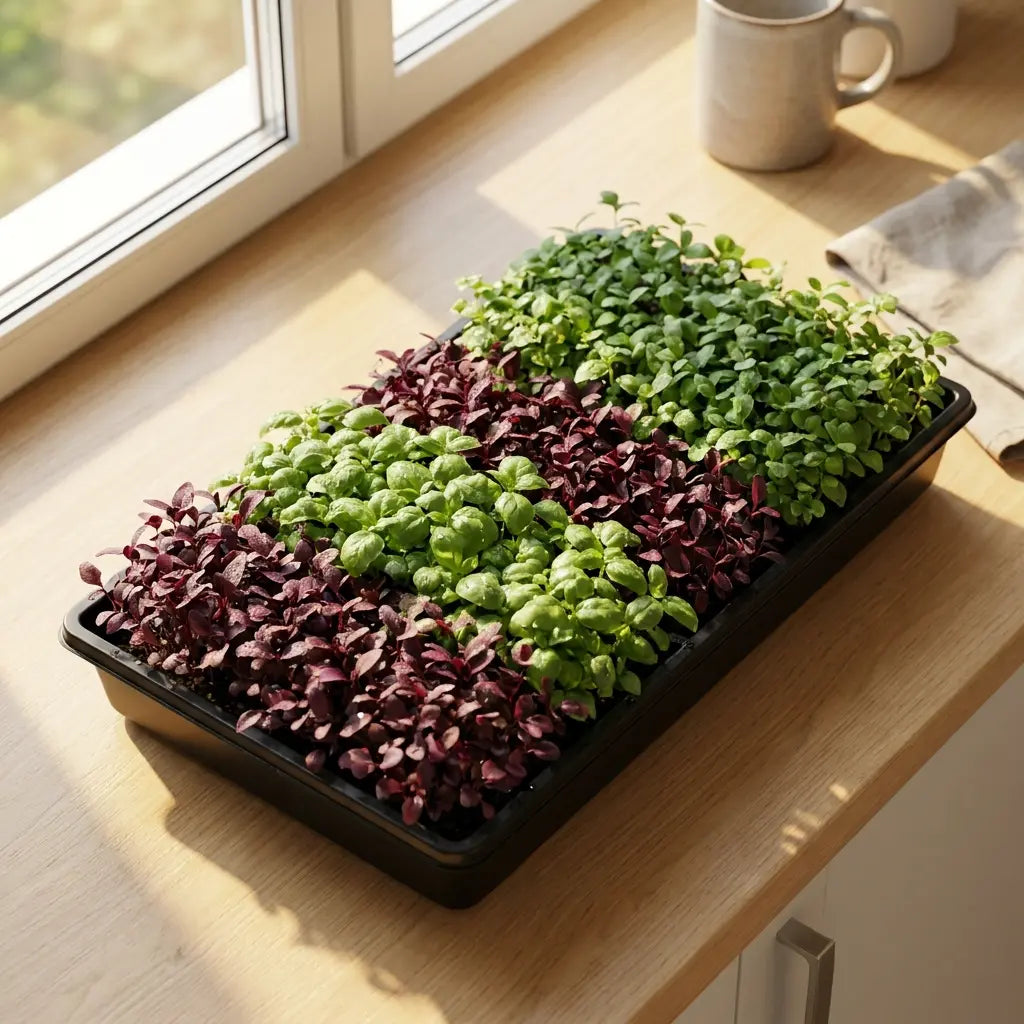
Most people discover this the hard way: they grow microgreens all spring, build a routine they love, then hit summer and watch their trays stall, turn leggy, or bolt before they can harvest. The problem isn't the grower. It's the variety.
Temperature has a bigger effect on microgreens than most people realize. Once your indoor space climbs past 75°F (which happens in most homes from June through August), cool-weather crops start to struggle. Germination slows, roots get stressed, and tender greens lose their flavor before they're ready.
But here's the good news: the best microgreens for summer are genuinely some of the most flavorful, nutritious, and visually impressive varieties in the whole lineup. If you pick the right seeds now, summer becomes your most productive growing season, not your slowest.
Why Heat Tolerance Matters When You Grow Microgreens
Microgreens are harvested young, usually within 7 to 14 days of germination, so they don't need to survive a full season of weather. But that germination window and those first few days of growth are surprisingly temperature-sensitive.
Cool-weather varieties like pea shoots and arugula evolved to sprout in soil that ranges between 55°F and 68°F. Push them into a warm kitchen and their cell walls build too fast, triggering premature bolting, bitterness, or poor germination rates. You'll get a harvest, but it won't taste the way it should.
Heat-tolerant microgreens, on the other hand, come from plants that naturally thrive in warm climates. Their germination is actually faster and more even when indoor temps run 70°F to 80°F. For home growers who don't have climate-controlled grow rooms, this makes all the difference: no fans, no ice packs, no guesswork. Just consistent, reliable summer greens on your counter from Memorial Day through Labor Day.
The 4 Best Microgreens to Grow in Summer
The best microgreens to grow in summer are basil, amaranth, sunflower, and radish. All four are heat-tolerant varieties that germinate faster and more evenly once indoor temperatures climb into the 70°F to 80°F range, unlike cool-weather crops that stall or turn bitter in the heat. Each is available as a seed with an organic grow mat included.
| Variety | Grow Time | Flavor | Best For |
|---|---|---|---|
| Basil | 10 to 14 days | Sweet, aromatic, anise-forward | Italian dishes, garnishes, salads |
| Amaranth | 8 to 12 days | Mild, earthy, lightly sweet | Smoothies, grain bowls, salads, garnish |
| Sunflower | 7 to 10 days | Nutty, mildly sweet, satisfying crunch | Sandwiches, wraps, grain bowls, smoothies |
| Radish | 5 to 7 days | Bold, peppery, bright | Tacos, eggs, rice bowls, avocado toast |
1. Basil Microgreens: The Summer Star

Basil is the single best microgreen to grow in summer. It's a tropical plant by nature, which means it actually prefers the warm, humid conditions that drive other varieties off the rails. At 70°F to 80°F, basil microgreens germinate in just 4 to 6 days and reach harvest size in 10 to 14 days.
The flavor is where basil microgreens really stand out. They pack a concentrated punch of sweet, anise-forward basil taste, more intense than a full-grown leaf, and perfectly sized to finish a Caprese salad, pizza, or pasta straight from the tray. Micro basil also holds up better in summer heat than full-size basil leaves, which tend to bruise and blacken quickly after cutting.
The Basil Genovese Microgreens is the classic starting point, but if you want something that makes a visual impression on the plate, Basil Bicolor Microgreens offer the same great flavor with striking green-and-purple contrast. For the full growing timeline, see our complete guide to growing basil microgreens indoors.
Grow time: 10 to 14 days | Flavor: Sweet, aromatic, anise-forward | Best for: Italian dishes, garnishes, salads
2. Amaranth Microgreens: The Heat Champion

Amaranth is one of the most heat-resilient microgreens you can grow, full stop. It originates from arid, tropical regions where summer temperatures regularly exceed 90°F, which means a warm apartment in July is practically ideal growing conditions.
What makes amaranth particularly special as a summer green is its color. The Amaranth Garnet Red Microgreens produce deep burgundy-to-magenta cotyledons that make any dish instantly more dramatic. They have a mild, earthy flavor with a subtle beet-like sweetness that works equally well in smoothies, grain bowls, and on avocado toast.
Nutritionally, amaranth microgreens punch far above their tiny size: they're packed with lysine, an essential amino acid that most plant foods lack, along with iron, vitamin C, and antioxidants. For health-conscious home cooks, these are a year-round staple that just happens to be at its best in summer.
Grow time: 8 to 12 days | Flavor: Mild, earthy, lightly sweet | Best for: Smoothies, grain bowls, salads, garnish
3. Sunflower Microgreens: Big Flavor, Heat-Proof

If you've never grown sunflower microgreens before, summer is the perfect time to start. These are substantial, meaty greens with a nutty, slightly sweet flavor and a satisfying crunch that holds up well in sandwiches, wraps, and salads where you want actual texture.
Sunflower seeds are large and easy to handle, which makes them very forgiving for beginners. They germinate fast and evenly in warm conditions (70°F to 78°F is the sweet spot) and grow into thick, sturdy shoots in just 7 to 10 days. Unlike delicate varieties that wilt when your kitchen gets warm, sunflower shoots stay crisp and upright even in summer heat.
The Sunflower Black Oil Microgreens are the go-to choice for home growers. The black oil variety produces consistently thick, flavorful shoots and has the highest germination rate of any sunflower microgreen type, ideal when you're growing tray after tray through the summer months. For the full process, see our step-by-step guide to growing sunflower microgreens indoors.
Grow time: 7 to 10 days | Flavor: Nutty, mildly sweet, satisfying crunch | Best for: Sandwiches, wraps, grain bowls, smoothies
4. Radish Microgreens: Fast and Forgiving

Radish is the variety that beginner growers reach for first, and for good reason: it's one of the fastest and most reliable microgreens in any season. In summer, radish maintains that reliability while adding a bonus: the warmth actually speeds up an already quick crop to as fast as 5 to 7 days from seed to harvest.
The flavor profile is bold and spicy: think of a bright, peppery bite that wakes up eggs, rice bowls, tacos, and anything that could use a kick. Radish microgreens are the plant version of adding a squeeze of lime or a pinch of chili flakes. They add flavor and visual contrast without overpowering a dish.
The Radish Confetti Mix Microgreens adds another dimension: a blend of radish varieties that produces a mix of green, purple, and pink cotyledons in the same tray. If you're growing microgreens to cook with and to impress, the confetti mix delivers both. For the full method, see our complete step-by-step guide to growing radish microgreens.
Grow time: 5 to 7 days | Flavor: Bold, peppery, bright | Best for: Tacos, eggs, rice bowls, avocado toast
Microgreens to Avoid Growing in Summer (Save These for Fall)
Knowing what not to grow is just as valuable as knowing what to plant. These varieties are excellent, but they're at their best in cooler conditions and will underperform when indoor temps consistently exceed 72°F.
Pea Shoots thrive in the 50°F to 65°F range and are best grown from late September through May. In summer heat, germination becomes uneven and the shoots tend to grow thin and leggy rather than thick and sweet. Save your pea shoot seeds for autumn, that's when they'll truly shine.
Cilantro is one of the trickiest microgreens regardless of season, but summer turns the difficulty up considerably. The seeds can take 7 to 10 days just to germinate reliably in warm conditions. The result often disappoints compared to the flavor payoff you'd get from a fall or winter tray.
Arugula microgreens prefer it cool and can become intensely bitter, almost unpleasantly so, when germinated in warm conditions. In spring and fall, they produce their characteristic peppery bite in a balanced, pleasant way. In summer, that bite can sharpen to the point it overwhelms a dish.
Broccoli microgreens are nutritional powerhouses, but they're a cool-weather brassica that sulks in the heat. Plan your last spring tray for May and pick back up in September. The variety to reach for in summer is radish: same Brassica family, heat-tolerant, faster, and just as rewarding.
If you're reading this in June or July and have pea shoot or cilantro seeds waiting, don't throw them out. Seal them in an airtight container, store somewhere cool and dry, and they'll be ready when the weather shifts. Good seeds keep for 1 to 2 years when stored properly.
The Easiest Way to Start Growing Summer Microgreens
If you've been thinking about starting or scaling up your microgreens routine, summer is actually the perfect time to commit, because the heat does the work for you. You don't need a grow light, a heated mat, or a climate-controlled room. A countertop and a sunny window is enough.
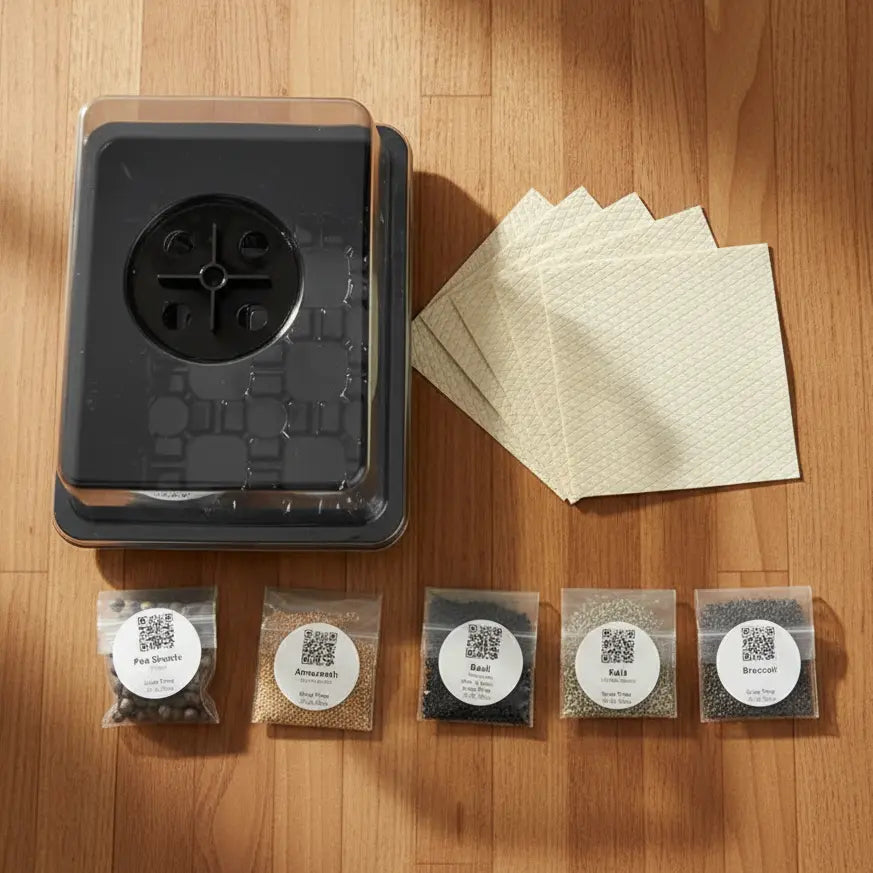
The Aquager Microgreens Starter Kit includes everything you need to get your first tray growing: a growing tray, humidity dome, and organic grow mat. Each of the summer-friendly seeds above (basil, amaranth, sunflower, and radish) comes with its own grow mat already included, so you're set from the very first tray.
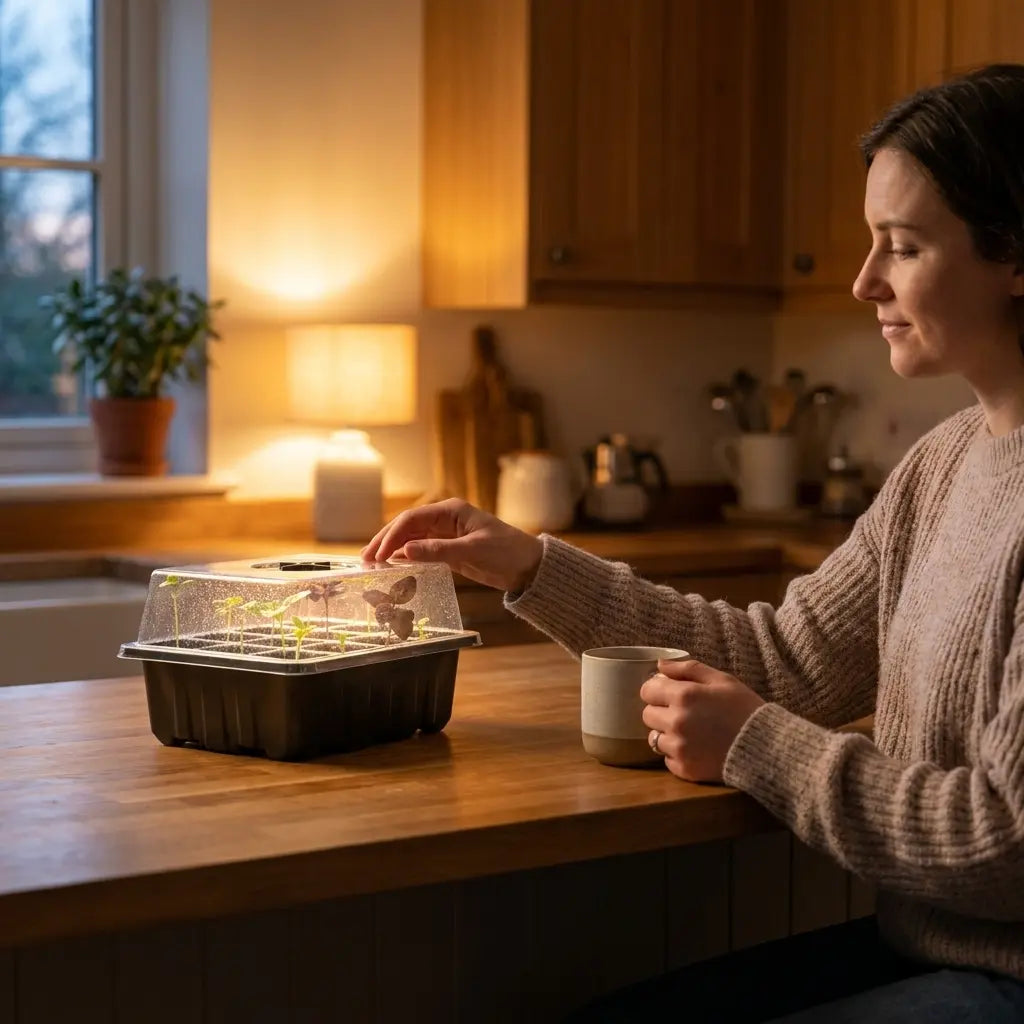
What makes this setup work so well in summer is simplicity. The grow mat eliminates soil mess entirely, and the humidity dome locks in moisture during germination so you're not chasing dry trays when your kitchen runs warm. Once germination is complete (usually 4 to 6 days for summer varieties), you remove the dome and let natural light do the rest.
For home cooks who want a continuous supply of fresh microgreens, the strategy is simple: start a new tray of one summer variety every 5 to 7 days. By the time you harvest one tray, the next is already mid-grow. You'll have fresh summer greens on the counter every single week from now through September.
Frequently Asked Questions
Can I grow microgreens outside in summer?
You can, with some caveats. Direct outdoor sun is too intense for most microgreens: it dries out the growing medium too fast and can scorch tender cotyledons. A covered patio, shaded balcony, or a spot with morning sun and afternoon shade works well for heat-tolerant varieties like sunflower and radish. Keep the grow mat consistently moist, which may mean watering twice a day in very warm conditions.
What temperature is too hot for microgreens?
Most microgreens, including the heat-tolerant varieties in this guide, perform best between 65°F and 80°F. Once indoor temperatures consistently exceed 82°F to 85°F, even heat-tolerant varieties like basil and amaranth can show slowed germination or increased mold risk from excess humidity. Good airflow, even just a small nearby fan, makes a meaningful difference in very warm spaces.
Do summer microgreens need more water?
Yes. Warm temperatures increase evaporation from the grow mat, which means you'll likely need to water once or twice daily instead of every other day. The best test is lifting the tray slightly: if it feels noticeably lighter than yesterday, it needs water. Never let the mat dry out completely, especially during the first three days when seeds are germinating.
How long do summer microgreens stay fresh after harvest?
Harvested microgreens stored in an airtight container in the refrigerator typically last 5 to 7 days. Basil is the exception: it's tropical and doesn't love cold storage. Harvest and use basil microgreens within 1 to 2 days, or keep the tray intact on your counter and snip as needed rather than harvesting all at once.
Which summer microgreen is the most nutritious?
All four varieties in this guide are nutritionally dense, but amaranth stands out for its unique profile. It contains lysine, an essential amino acid rare in most plant foods, along with high levels of iron and vitamin C. If you grow microgreens as part of a whole-food health routine, amaranth is the summer variety to prioritize.
Start Your Summer Microgreens Routine Now
The shift from cool-weather to warm-weather varieties is one of the easiest adjustments you can make to keep growing without interruption all year. Swap your pea shoots for sunflowers, your arugula for radish, your spring greens for basil and amaranth, and your tray keeps producing from the first warm day to the last.
Summer might actually be the most low-maintenance season to grow microgreens. The heat helps. Shorter grow times mean faster harvests. And the varieties above are exactly the kind of flavorful, colorful, nutritious summer greens that make cooking feel like less work and more reward.
For first-timers and experienced growers alike, the Aquager Microgreens Starter Kit is the cleanest starting point: everything in one box, with seeds that each include their own organic grow mat. Want to know which varieties are foolproof year-round? Our guide to 7 Microgreens You Can't Mess Up is a great next read. Microgreens for Beginners covers the full setup process from scratch, and The 5 Fastest-Growing Microgreens is worth checking before you choose your next seed.
Pick your summer varieties, fill your tray, and enjoy the harvest.
Author: Aquager Team · Published: May 27, 2026 · Updated: August 25, 2026 · Reviewed: August 25, 2026 (Phase 3)












0 comments