
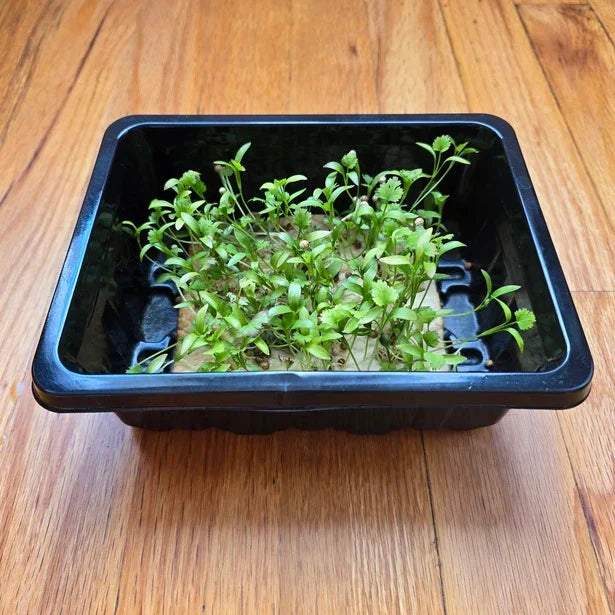
Your 4th of July salsa is only as good as the cilantro in it, and if you've bought a bunch from the store, you already know what happens. It looks great on Monday, goes limp by Wednesday, and by Friday it's brown at the edges and smells like it's been sitting in the fridge too long.
Here's the thing: cilantro microgreens take just 10 to 14 days from seed to harvest. Start a tray about two weeks before your cookout and you'll have fresh, vibrant cilantro microgreens ready to fold into your salsa bowl right on time.
This guide covers the full grow timeline, what to expect day by day, and fresh salsa and guacamole recipes that use cilantro microgreens as the star ingredient. Once you taste the difference, you won't go back to the bunch.
Why Cilantro Microgreens Are Perfect for 4th of July
Cilantro microgreens are the young seedlings of cilantro, harvested 10 to 14 days after sprouting, before they reach full size. They carry the same citrusy, herbal flavor as full-grown cilantro but in a more concentrated form, and they stay fresh for several days after harvest because they're still alive when you cut them.
Store-bought cilantro comes pre-cut, which means the clock starts ticking the moment it leaves the greenhouse. By the time it travels, sits in cold storage, stocks the shelf, and makes it to your fridge, you've already lost most of its shelf life. Cilantro you grow and cut yourself the morning of the cookout is a completely different ingredient.
There's also the volume question. A standard bunch from the store gives you cilantro for maybe one or two batches of salsa. A single tray of cilantro microgreens gives you a thick, harvestable mat: enough for several rounds of fresh salsa and guacamole. Plant two trays a few days apart and you have a rolling harvest that keeps up with a full holiday weekend.
The Day-by-Day Cilantro Microgreen Grow Timeline
Knowing what to expect makes the difference between panicking at Day 4 (totally normal to see slow germination) and harvesting confidently on Day 12. Here's what the typical cilantro microgreen grow looks like:
Days 1 to 3: Germination
Seeds are on the mat, lightly misted, and under the dome. You won't see much yet: cilantro is one of the slower germinators in the microgreens world. Keep the dome on to hold in moisture and check daily to mist if the surface feels dry. Consistent moisture at this stage is the single biggest factor in germination success.
Days 4 to 6: Sprout Emergence
Tiny white shoots begin pushing up from the mat. The hulls (seed casings) will still be attached to many of the sprouts, that's normal. Keep the dome on and avoid overwatering. The goal is moist, not wet.
Days 7 to 9: Green-Up
The sprouts straighten and start reaching for light. Cotyledons (the first leaves) open and turn green. This is when you remove the dome and move the tray to your brightest window, or 2 to 4 inches below a grow light. Cilantro microgreens do well in indirect to medium light.
Days 10 to 12: Ready to Harvest
Leaves are fully open and bright green, stems are standing upright, and the citrus-herb scent is distinct. Taste one: it should have that unmistakable fresh cilantro flavor. This is your harvest window.
Days 13 to 14: Peak Harvest
Flavor is at its peak. Use scissors to cut just above the mat. Rinse gently, dry, and use immediately or refrigerate in a small container lined with a dry paper towel for up to 3 to 4 days.
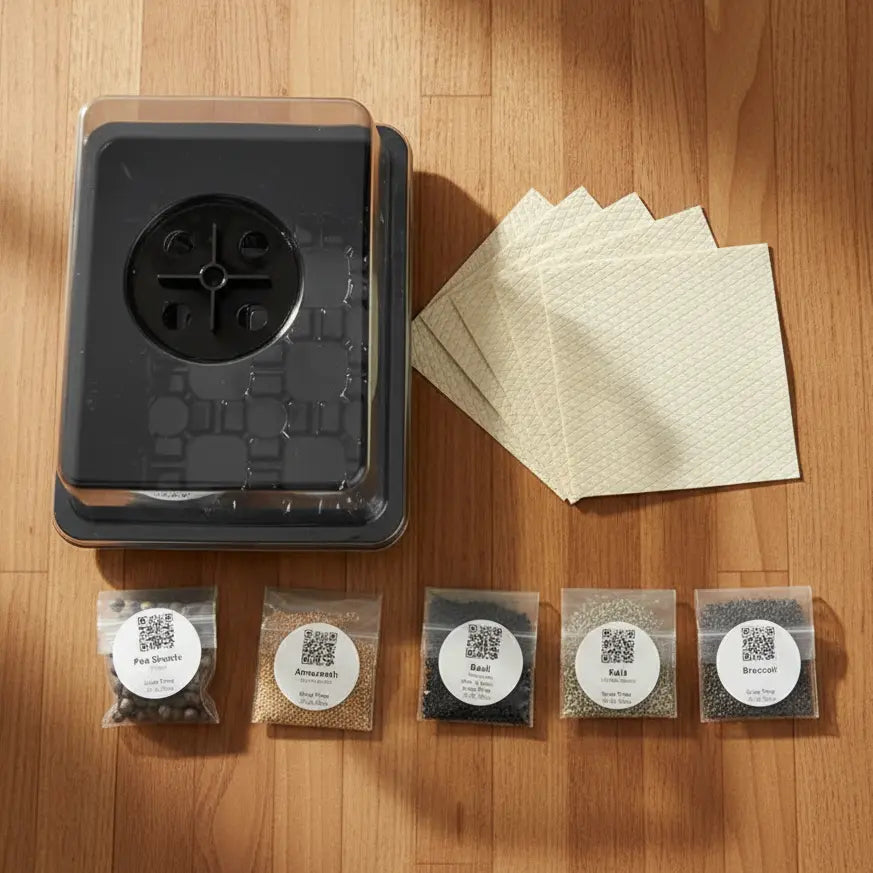
If you're ordering Cilantro Monogerm Microgreens Seeds from Aquager, each pack includes an organic grow mat, so you're set up to start the moment the seeds arrive.
Fresh Salsa and Guacamole Recipes for the 4th of July
These two recipes are made for the 4th of July table. Both use cilantro microgreens in place of chopped cilantro: no stems, no chopping, just snip and toss.
4th of July Fresh Salsa
Makes about 2 cups
- 4 ripe roma tomatoes, diced
- ½ white onion, finely diced
- 1 jalapeño, seeded and minced
- Juice of 1 lime
- ½ tsp salt
- 1 large handful cilantro microgreens (roughly ½ cup, loosely packed)
Combine the tomatoes, onion, and jalapeño in a bowl. Add lime juice and salt. Fold in the cilantro microgreens right before serving, don't mix them in advance, as they'll wilt. Taste and adjust salt. Serve within an hour for best texture.
Because they're cut fresh, cilantro microgreens hold their color and flavor without releasing the bitter compounds that wilted cilantro sometimes does. Every bite of salsa gets a clean hit of cilantro.
Simple Guacamole with Cilantro Microgreens
Makes about 1.5 cups
- 3 ripe avocados
- Juice of 1 lime
- ½ tsp salt
- ¼ tsp garlic powder
- 2 tbsp white onion, finely minced
- 1 large handful cilantro microgreens
Mash the avocados to your preferred texture. Add lime juice, salt, garlic powder, and onion. Stir to combine. Top with cilantro microgreens right before serving: they look beautiful pressed into the surface and add a fresh, aromatic note that the dish usually gets from chopped stems. Taste and adjust seasoning.
How to Get It Right on the First Try
Cilantro is one of the trickier microgreens to germinate reliably. The seeds need consistent moisture at the surface without sitting in standing water, and if humidity drops during germination, you'll see uneven sprouting at best. This is where most first-time growers run into trouble.
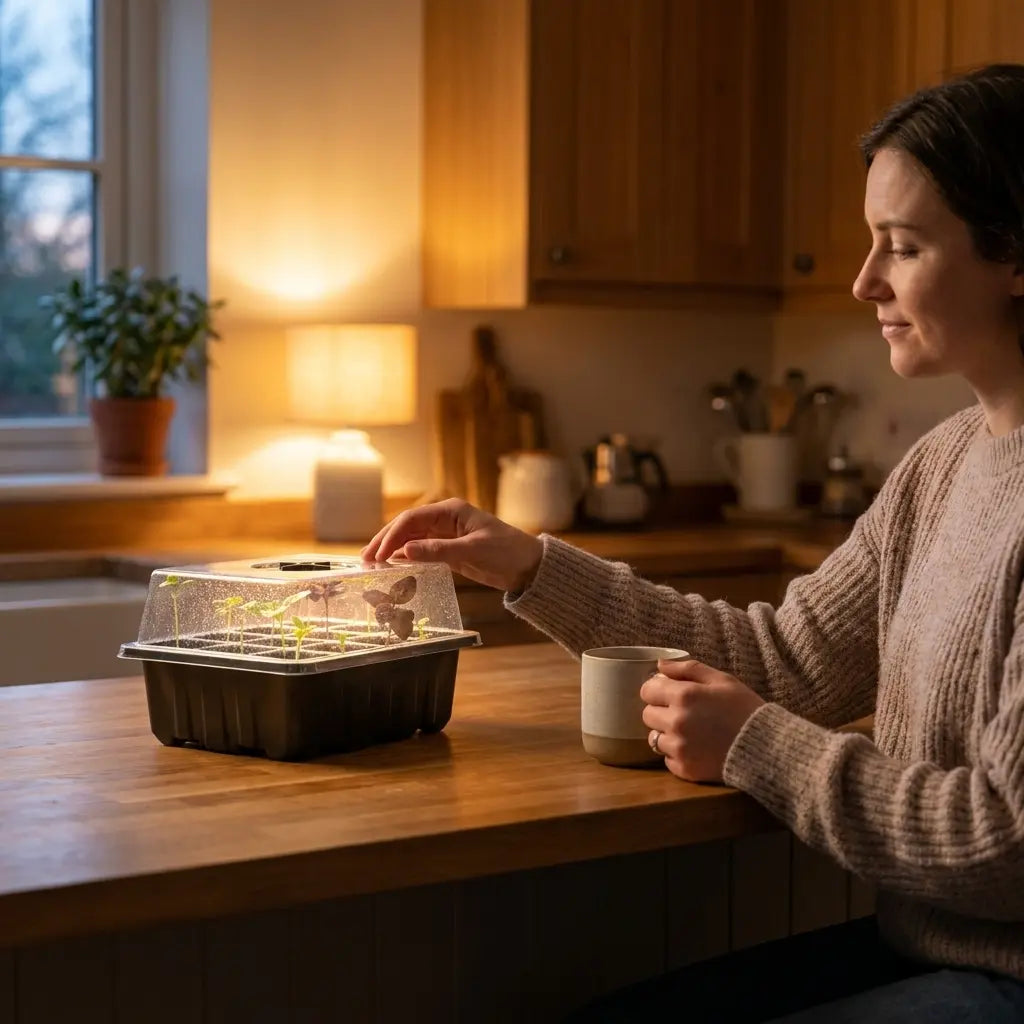
The easiest way to guarantee a successful first grow is to start with a kit that has everything matched up: a tray with drainage, a humidity dome to lock in moisture through germination, and an organic grow mat sized to the tray. Buying these pieces separately means guessing at sizing and hoping your setup retains moisture properly. A kit removes all of those variables.
The Microgreens Starter Kit from Aquager includes the tray, dome, and an organic grow mat: everything you need except seeds. Pair it with Cilantro Monogerm Microgreens Seeds and you have a complete, matched setup. The monogerm variety gives you better germination rates than standard cilantro seeds, which is exactly what you want when you're growing on a schedule.
Frequently Asked Questions
How long does it take to grow cilantro microgreens?
Cilantro microgreens take 10 to 14 days from seeding to harvest under normal indoor conditions. Germination begins around Day 3 to 4, and the harvest window opens around Day 10 to 12 when cotyledons are fully open and the cilantro scent is strong.
Can I grow cilantro microgreens without a kit?
Yes, but you need a shallow tray with drainage, a growing medium (organic mat or coconut coir), and a way to maintain humidity during germination. A dedicated microgreens kit makes this easier because the tray, mat, and dome are sized to work together and eliminate the guesswork.
Do cilantro microgreens taste like regular cilantro?
Yes: same citrusy, herbal flavor as mature cilantro, often more concentrated. People who find full-grown cilantro slightly overpowering often prefer microgreens because the flavor is bright and clean without being harsh.
How much can I harvest from one tray?
A standard 10x20 tray seeded densely will yield a full mat: roughly 2 to 3 large handfuls, enough for several batches of fresh salsa or guacamole. For a crowd, plant two trays 3 to 4 days apart for a rolling harvest through the holiday weekend.
Do cilantro microgreens need a lot of sunlight?
They grow best in bright indirect light: a south-facing window works well. They can also grow under a grow light positioned 2 to 4 inches above the tray. Avoid direct afternoon sun in summer, which can dry them out quickly.
Plant Two Weeks Ahead of Your Cookout
The math is simple: cilantro microgreens are ready in 10 to 14 days. Start a tray about two weeks before your next cookout, whether that's the 4th of July, Labor Day, or just a weekend gathering, and you'll harvest well ahead of time with plenty of margin to spare.
For most home cooks, this is the first time growing something with a deadline actually works in their favor. There's no guessing whether your cilantro plant will produce in time. You know within a narrow window when it will be ready, and you can plan your salsa prep around that date.
Start with the right tools for the best chance at a full first harvest. Pick up Cilantro Monogerm Microgreens Seeds, each pack includes an organic grow mat, and if you don't already have a tray and dome, the Microgreens Starter Kit has everything you need to get started today.
For more on growing microgreens indoors, see our guide to growing microgreens at home in less than 10 days and our round-up of 7 microgreens you can't mess up.
Author: Aquager Team · Published: May 24, 2026 · Updated: August 8, 2026 · Reviewed: August 8, 2026 (Phase 2)












0 comments