
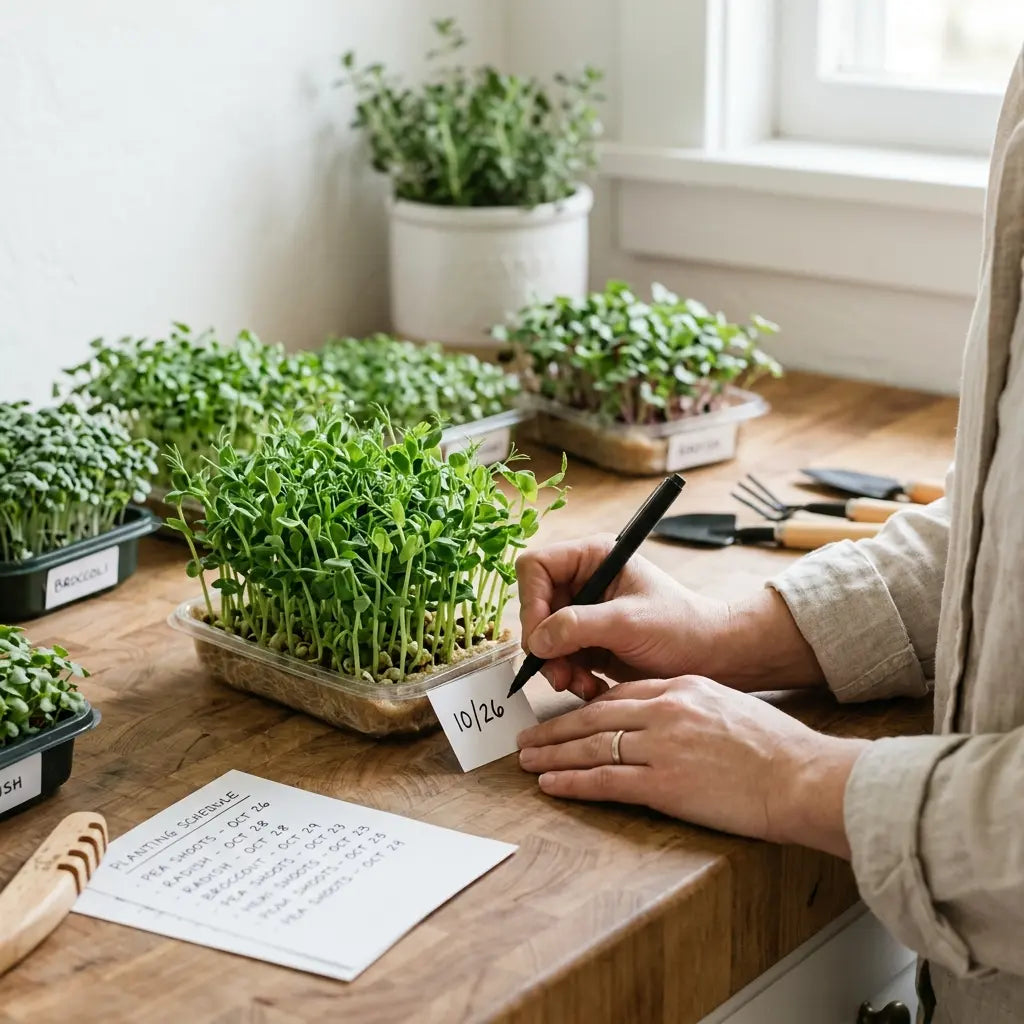
If Thanksgiving is on Thursday, November 26, most microgreens need to be planted on November 11 or 12. Two varieties need a head start: amaranth by November 1 and sunflower by November 2.
Microgreens are one of the few foods you can grow in a kitchen and time to a date on the calendar, because they are ready to cut in 5 to 25 days. Fast varieties like pea shoots, radish, and mustard finish in about two weeks.
This guide gives you the plant-by date for each variety, what to buy, the step-by-step care for every stage, and what to do on the morning you cut. If you are still deciding what to put on the table, our guide to the best microgreens for Thanksgiving garnish covers the serving side.
What Do You Need to Grow Microgreens for Thanksgiving?
You need a tray, a grow mat, seeds, water, and a bright spot. There is no soil and no mess, because the seeds grow on a mat that holds water evenly. Here is the full list.
- A tray with drainage and a humidity dome (the dome keeps seeds moist while they sprout)
- An organic grow mat that fits the tray
- Seeds for each variety you want to grow
- A spray bottle or small watering can
- Clean scissors for cutting
- A windowsill, counter, or grow light
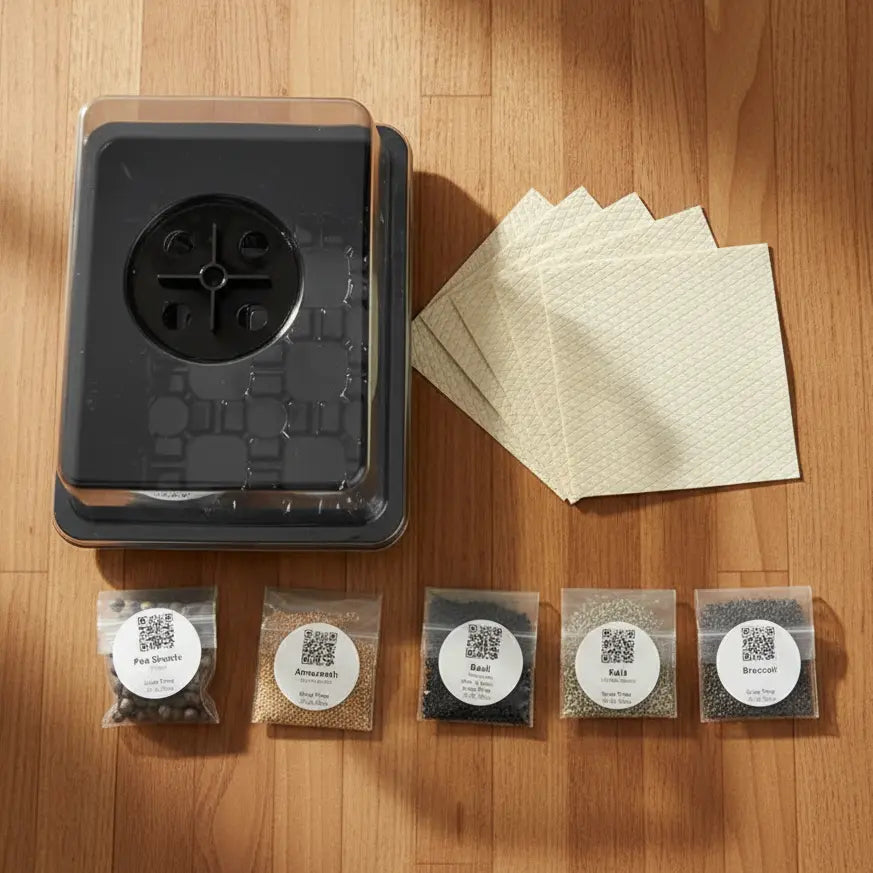
The Aquager Microgreens Starter Kit ($29.99) covers the first four items. It includes two trays, a humidity dome with an adjustable vent, organic grow mats, and seeds for lemon basil, kale, pea shoots, and broccoli. The pea shoots and broccoli from the kit both fit the November 11 and 12 plant dates. You can add more varieties as $7.99 seed packs, and each pack includes its own organic grow mat.
When Should You Plant Microgreens for Thanksgiving?
Plant most microgreens on November 11 or 12 for a Thanksgiving harvest on November 26. Count back from the slowest end of each grow time, so you are never short. Amaranth needs up to 25 days and sunflower up to 21 days plus a 48 to 72 hour soak, so start those first.
| Variety | Flavor | Grow time | Yield per tray | Plant by (for Nov 26) |
|---|---|---|---|---|
| Amaranth Garnet Red | Mild, earthy | 16 to 25 days | 5 g | Nov 1 |
| Sunflower | Nutty, crunchy | 7 to 21 days, plus a 48 to 72 hour soak | 22 g | Nov 2 (start the soak) |
| Radish Confetti Mix | Peppery, spicy | 10 to 15 days | 20 g | Nov 11 |
| Mustard | Bold, spicy | 10 to 15 days | 10 g | Nov 11 |
| Pea shoots | Sweet, mild | 7 to 14 days | 30 g | Nov 12 |
| Clover (last-minute option) | Mild, slightly sweet | 5 to 7 days | 9 g | Nov 19 |
Most trays are ready before the slow end of their range, so you can start cutting a few days early. Grow times and yields come from each Aquager seed pack page. Each of these varieties has its own seed pack: Radish Confetti Mix, Mustard, Pea Shoots Field, Amaranth Garnet Red, and Sunflower Black Oil. Not sure which to plant first? Our list of the fastest-growing microgreens can help.
How Do You Grow Microgreens Step by Step?
The steps below follow a radish tray planted on November 11, which is ready between November 21 and November 26. Other varieties follow the same steps with different timing, so use the plant-by table for your dates. Each step takes under five minutes.
1. Prepare the Tray and Mat
Rinse the grow mat, lay it flat in the tray, and wet it until it is evenly damp but not dripping. A flat, level mat gives you an even crop.

2. Scatter the Seeds
Spread seeds evenly across the mat, dense but not stacked. If you are growing sunflower, soak the seeds for 48 to 72 hours before this step. Mist the seeds lightly so they stay in place.
3. Cover the Tray and Keep It Dark
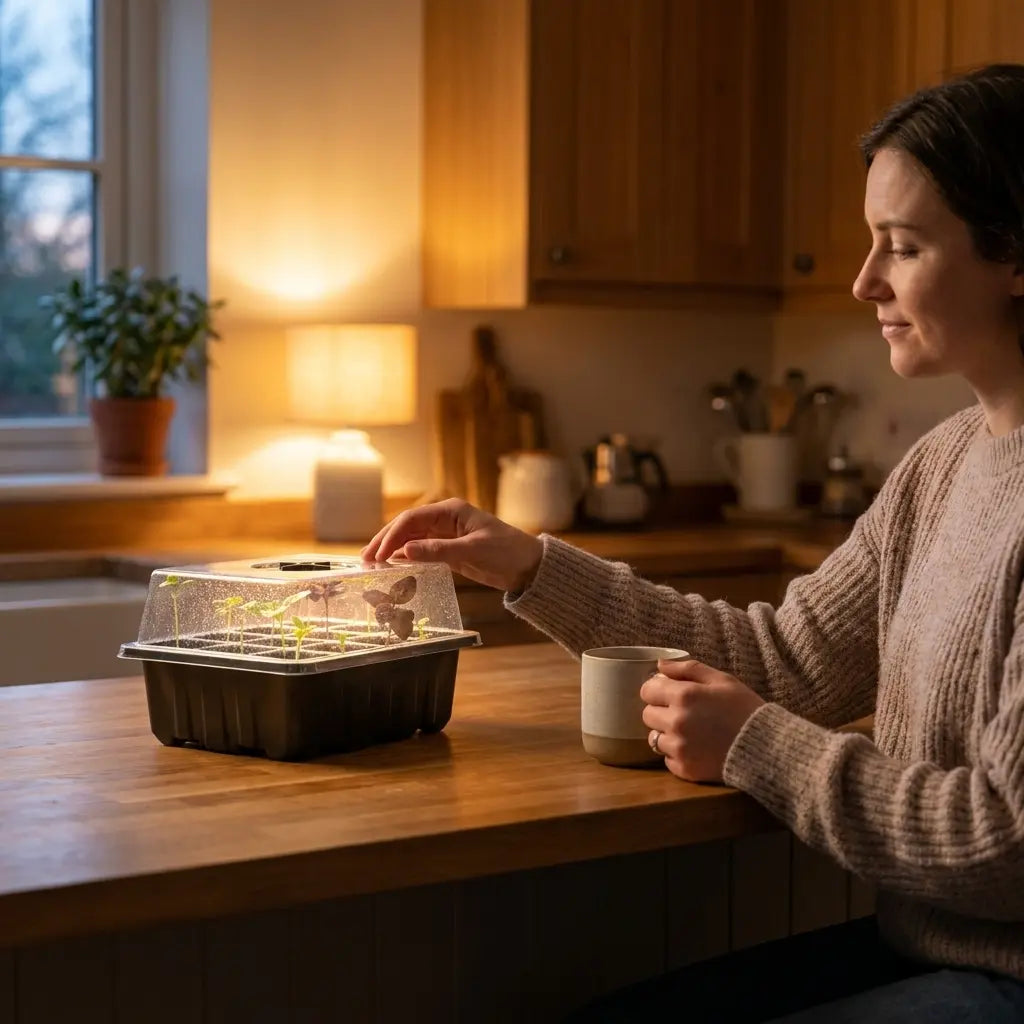
Put the humidity dome on top and set the tray somewhere dark and at room temperature, like a cabinet or pantry shelf. Keeping the seeds covered at first helps the shoots grow upward. Set the vent so a little air can move.
4. Mist Once a Day for the First 3 Days
Lift the dome once a day, mist the mat, and check that it is still damp. You will see white root threads within a day and small shoots by day two or three. If nothing is moving, check the room temperature, which should be 65°F to 75°F.
5. Uncover and Move to Light
When the shoots are 1 to 2 inches tall and pushing on the dome, take the dome off and move the tray to a bright windowsill or under a grow light. Shoots turn green within a day or two of getting light.
6. Water from the Bottom Every Day or Two
Pour water into the tray below the mat so the roots drink from the bottom. This keeps moisture even and helps prevent mold on the surface, which is the most common problem for new growers. If you see white fuzz, read our guide to preventing and fixing microgreens mold.
7. Cut on the Morning of Thanksgiving
When the first round leaves are fully open and the shoots stand tall, cut them with clean scissors about half an inch above the mat. Rinse gently, pat dry, and keep them cold until serving. For more detail, see our guide to harvesting microgreens the right way, and our guide to storing microgreens after harvest if you cut early.
How Do You Serve Microgreens at Thanksgiving?
Add them raw as a finishing touch right before serving, since heat wilts them. Pea shoots go well around the turkey platter, sunflower floats on squash soup, and radish or mustard adds a peppery bite to a cranberry salad or a cheese board.

Want recipes for each dish? Read our 12 holiday microgreens recipes, or build a Thanksgiving appetizer board with microgreens. If you want to keep growing after the holidays, see the 4 best winter greens microgreens and a two-tray plan for winter or our fall and winter growing guide. Microgreens for Beginners and our guide to growing microgreens at home cover the basics.
Frequently Asked Questions
Do I need a grow light to grow microgreens for Thanksgiving?
A bright windowsill works for most varieties, and a south-facing window is best in November. If your windows get little light, a grow light helps the shoots stay sturdy. The Aquager kit fits on a windowsill, a counter, or under a grow light, so you can choose what suits your kitchen.
What if my seeds do not sprout within 3 days?
Check moisture and temperature first. The grow mat should be damp but not sitting in water, and the room should stay between 65°F and 75°F. Cold rooms slow germination a lot. Move the tray to a warmer spot and keep the dome on. Most seeds sprout within a few more days.
Can I grow different varieties in the same tray?
It is better to keep each variety in its own tray, because germination and harvest times differ. The Aquager kit comes with two trays, so you can start two varieties side by side. Add more trays as you add varieties, and cut each one when it is ready.
How do I know when microgreens are ready to cut?
Look at the first round leaves, called cotyledons. When they are fully open and the shoots stand tall and dense, the tray is ready. You do not need to wait for the second set of leaves. Most trays in the table above reach this point between day 7 and day 15.
What if I miss the plant-by date for Thanksgiving?
Plant a fast variety. Clover is ready in 5 to 7 days, so you can still plant it as late as November 19 and cut it fresh on Thanksgiving morning. Pea shoots take 7 to 14 days, so November 12 is the last safe date for them.
What if my microgreens grow too long before I cut them?
Microgreens past their peak get leggy and lose some flavor, but they are still safe to eat. Trim off the bottom of the stems and use them. Aim to cut on the morning of the meal, and cut a day or two early if your tray looks ready.
Ready to Plant for Thanksgiving?
Mark November 1 and 2 for amaranth and sunflower, and November 11 and 12 for radish, mustard, and pea shoots. Cut the morning of Thursday, November 26, and the greens go from tray to table in minutes.
The Aquager Microgreens Starter Kit gives you two trays, a dome, mats, and seeds to begin right away, and you can reuse the trays for every grow after Thanksgiving.
Author: Aquager Team · Published: June 7, 2026 · Updated: October 11, 2026 · Reviewed: October 11, 2026 (Phase 2 and 3)












0 comments