
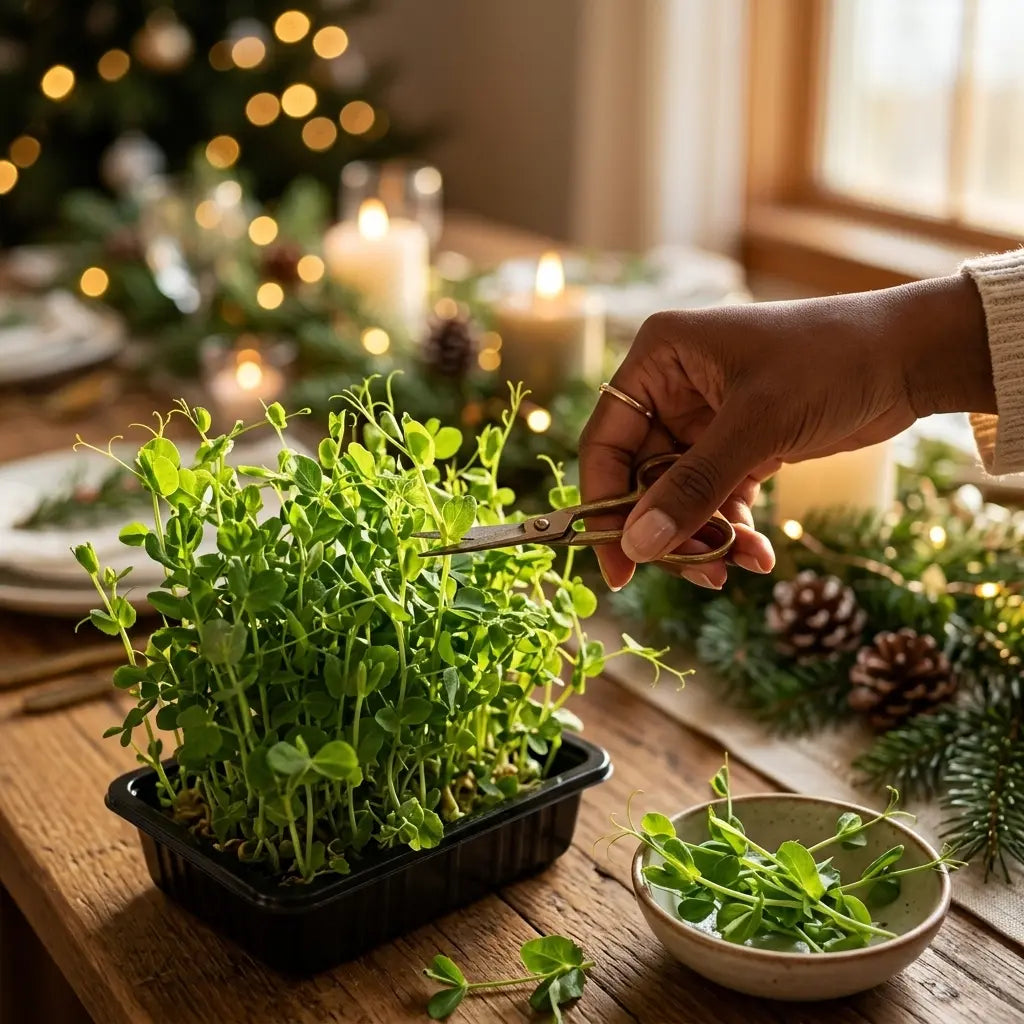
Garnish is the detail that makes a plate look finished, and it is also the easiest one to get wrong. A parsley sprig nobody eats, a sage leaf curled by the oven, a bunch of herbs that sat in a truck for three days before you bought it.
Microgreens fix this. They are young vegetable shoots, harvested in about one to three weeks, and every variety on this list improves the dish it sits on with a contrasting flavor, a bit of crunch, or a pop of color. Because you grow them yourself, you harvest the morning of the meal, not on the store's schedule.
Below are the five best microgreens for garnish, what each one tastes like, what to put it on, and exactly when to plant them for Thanksgiving on November 26, 2026.
What Are the Best Microgreens for Garnish?
The best microgreens for garnish are radish for a peppery bite, pea shoots for sweet and tender leaves, sunflower for nutty crunch, red amaranth for deep magenta color, and mustard for spicy heat. Scatter a small handful over each dish just before serving, so the garnish adds flavor and not just decoration.
| Variety | Flavor | Best on | Grow time | Yield per tray |
|---|---|---|---|---|
| Radish Confetti Mix | Peppery | Turkey, stuffing, cheese board | 10 to 15 days | 20 g |
| Pea Shoots | Sweet and mild | Mashed potatoes, soup, creamed corn | 7 to 14 days | 30 g |
| Sunflower | Nutty and crunchy | Salad, roasted vegetables | 7 to 21 days | 22 g |
| Amaranth Garnet Red | Mild and earthy | Turkey platter, sweet potatoes | 16 to 25 days | 5 g |
| Mustard | Spicy | Gravy, Brussels sprouts | 10 to 15 days | 10 g |
Grow times and yields come from each Aquager seed pack page. Seed packs are $7.99 each and include an organic grow mat.
The 5 Best Microgreens for Garnish, Variety by Variety
1. Radish Confetti Mix: The Peppery Accent

Radish microgreens have a sharp, peppery bite: concentrated radish flavor in a paper-thin leaf. They add heat and texture without overwhelming the dish, and the mix of red, white, and purple stems makes them one of the most striking greens on this list.
Best on sliced turkey, stuffing (a small handful over the top just before serving), or the cheese and charcuterie board that starts the meal. The peppery bite cuts through rich, savory flavors and adds contrast where everything else on the plate is soft.
Grow your own: Radish Confetti Mix Microgreens Seeds ($7.99), ready to cut in 10 to 15 days.
2. Pea Shoots: The Crowd Pleaser

Pea shoots are sweet, tender, and mild, clean and fresh without any bitterness. They are the most universally liked variety here, which makes them the right call when you are cooking for a crowd with different tastes.
Best on mashed potatoes (a small cluster in the center just before serving, which looks striking against the white), butternut squash soup, or creamed corn. They add fresh green contrast to anything rich and starchy, and the mild flavor pairs with nearly everything on a Thanksgiving spread.
Grow your own: Pea Shoots Field Microgreens Seeds ($7.99), ready in 7 to 14 days. For ideas beyond the holiday table, see 8 ways to use your pea shoot harvest.
3. Sunflower: The Substantial One

Sunflower microgreens taste nutty and slightly sweet, with a satisfying crunch. They eat more like a salad green than a garnish, and the thicker leaves hold up better in warm dishes.
Best on the Thanksgiving salad, roasted vegetable sides, or the soup course, where three to five sunflower greens floated on the surface hold their shape in warm broth. Their neutral, nutty flavor pairs well with vinaigrette and olive oil.
Grow your own: Sunflower Black Oil Microgreens Seeds ($7.99), ready in 7 to 21 days. Soak the seeds for 48 to 72 hours before planting.
4. Amaranth Garnet Red: The Visual Statement

Red amaranth is the most dramatic variety on this list. Deep magenta stems and dark green leaves look unmistakably holiday-colored on a white plate or serving platter, and the flavor is mild and earthy, so it never competes with the food.
Best around the carved turkey on the platter, on roasted sweet potatoes, or on any plated dish where red and green play up the seasonal mood. It is also the smallest harvest here, about 5 g per tray, which is plenty for garnish.
Grow your own: Amaranth Garnet Red Microgreens Seeds ($7.99), ready in 16 to 25 days. It is the slowest variety here, so plant it first.
5. Mustard: The Bold Accent

Mustard microgreens are spicy and punchy, with horseradish-like heat in a fragile, almost translucent leaf. A small amount goes a long way. This is a flavor decision, not a neutral garnish, and the right one for a table that leans toward bold, savory dishes.
Best on the gravy boat (float a small pinch on the surface just before serving), Brussels sprouts, or roasted cauliflower. Not sure how much heat you want? See radish vs. mustard vs. arugula, ranked by heat.
Grow your own: Mustard Microgreens Seeds ($7.99), ready in 10 to 15 days.
How Do You Use Microgreens as a Garnish at the Thanksgiving Table?
Microgreens are a finishing element, not a salad. The goal is placement, not volume: a small handful per dish is enough to change how it looks and tastes.
- Turkey platter: Scatter red amaranth and pea shoots around the carved meat. The deep red and bright green against golden skin looks intentional.
- Mashed potatoes: A small cluster of pea shoots at the center of the bowl just before serving.
- Soup course: Three to five sunflower microgreens floated on the surface.
- Stuffing: A pinch of radish microgreens adds peppery contrast to the soft interior.
- Brussels sprouts or roasted vegetables: Mustard microgreens add a spicy layer that pairs well with caramelized, charred edges.
- Cheese and charcuterie board: Scatter all five varieties across the board before setting it out. For the full setup, see our microgreens charcuterie board guide.
For more ideas across the fall season, see the Fall Microgreens Growing Guide.
When Should You Plant Microgreens for Thanksgiving?
Thanksgiving is Thursday, November 26, 2026. Count back from the slow end of each grow time: plant amaranth by November 1, sunflower by November 2 (start the soak), radish and mustard by November 11, and pea shoots by November 12. That gives every tray enough time to be ready the morning of the meal.
| Variety | Grow time | Plant by (harvest Nov 26) |
|---|---|---|
| Amaranth Garnet Red | 16 to 25 days | November 1 |
| Sunflower | 7 to 21 days, plus a 48 to 72 hour soak | November 2 (start the soak) |
| Radish Confetti Mix | 10 to 15 days | November 11 |
| Mustard | 10 to 15 days | November 11 |
| Pea Shoots | 7 to 14 days | November 12 |
Most trays are ready before the slow end of their range, so you can cut early and refrigerate. For a day-by-day plan, see the 14-day Thanksgiving microgreens countdown. New to growing? Start with the beginner's guide to growing microgreens at home.
What Is the Easiest Way to Grow Thanksgiving Greens at Home?
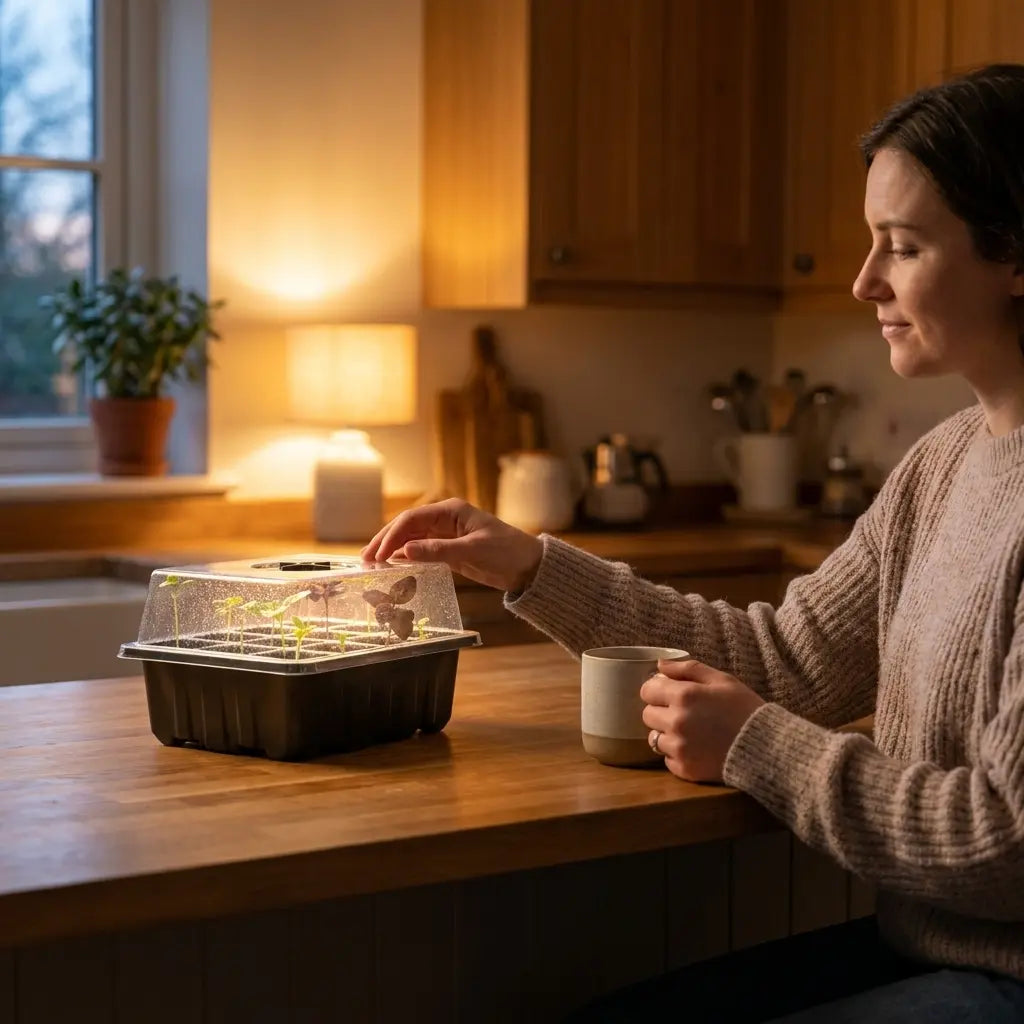
Microgreens grown in an ordinary container tend to water unevenly, and uneven trays give you patchy greens that are hard to cut cleanly for a plate. A proper tray, dome, and mat removes most of that.
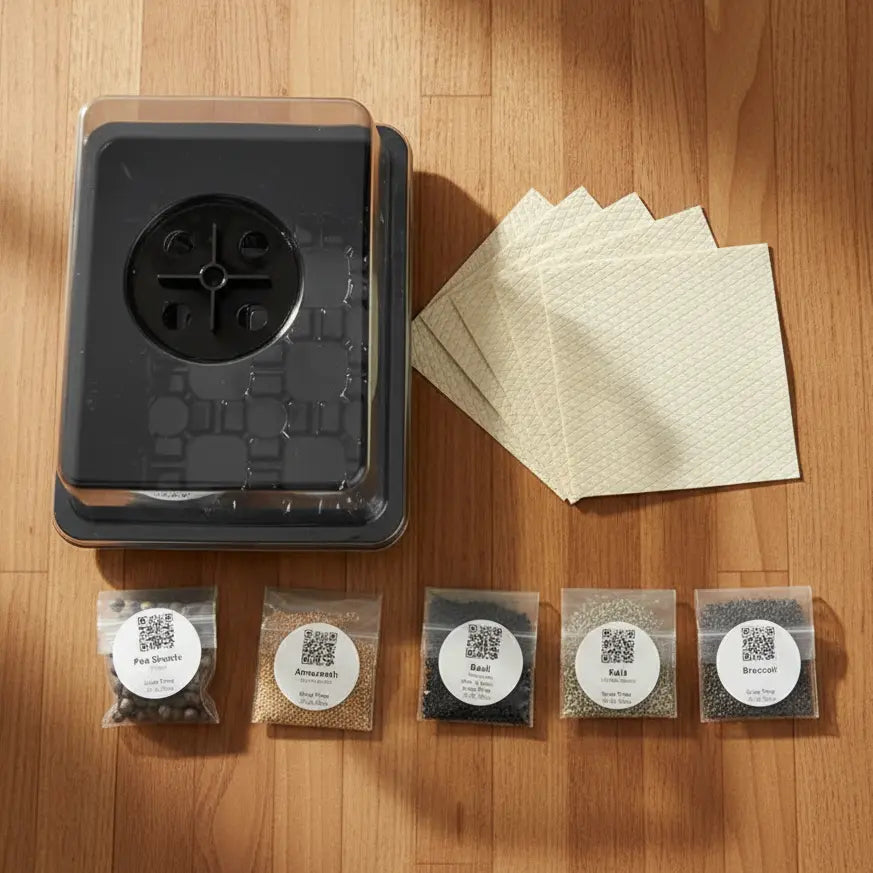
The Aquager Microgreens Starter Kit ($29.99) includes two trays, a humidity dome, and organic grow mats, plus seeds for lemon basil, kale, pea shoots, and broccoli. The mat soaks up water and holds the seeds, so there is no soil and no mess. Pea shoots are one of the five garnish picks above, so you only need to add radish, sunflower, amaranth, and mustard. Those packs are $7.99 each, or $31.96 for all four.
Frequently Asked Questions
Can I grow all five microgreens at the same time?
Yes. Grow each variety in its own tray, because germination times and watering needs differ slightly. The Aquager Microgreens Starter Kit includes two trays, so you can run two varieties side by side on one counter and add more trays for the rest.
Do microgreens need a grow light?
Not required. A bright windowsill works for most varieties. November days are short, so if your window is dim, a grow light helps the trays grow evenly. The Starter Kit fits on a windowsill, a counter, or under a grow light.
How do I store harvested microgreens until Thanksgiving dinner?
Harvest the morning of the meal for the best flavor and texture. If you need to cut early, refrigerate the greens dry in an airtight container lined with a paper towel. For more detail, see our guide to storing microgreens after harvest.
Do I need to wash microgreens before using them as a garnish?
Yes. Rinse them briefly under cold water and pat dry gently. Microgreens grown on a mat have no soil to remove, so it takes less than a minute. Dry them well before plating so extra water does not wilt the rest of the dish.
How many microgreens do I need to garnish a whole Thanksgiving table?
One tray of each variety is enough for most tables. A tray yields about 5 g of amaranth, 10 g of mustard, 20 g of radish, 22 g of sunflower, or 30 g of pea shoots, and a garnish needs only a small pinch or handful per dish.
Bring Fresh Garnish to Every Dish This Year
Five trays, planted by the dates above and cut the morning of the meal, are enough to garnish every dish on the table with something that looks and tastes like it came from a professional kitchen. Start with amaranth, since it is the slowest, then add the rest.

Cooking Christmas dinner too? See how to garnish Christmas dinner with microgreens, with a planting calendar for December 25. Mixing drinks? Try these cocktail garnishes you can grow. Want recipes to go with the garnishes? See our 12 holiday microgreens recipes.
The Aquager Microgreens Starter Kit has the trays, dome, and mats you need, and it already includes pea shoots. Add radish, sunflower, amaranth, and mustard, and plant amaranth by November 1.
Author: Aquager Team · Published: June 7, 2026 · Updated: October 11, 2026 · Reviewed: October 11, 2026 (Phase 3)












0 comments