
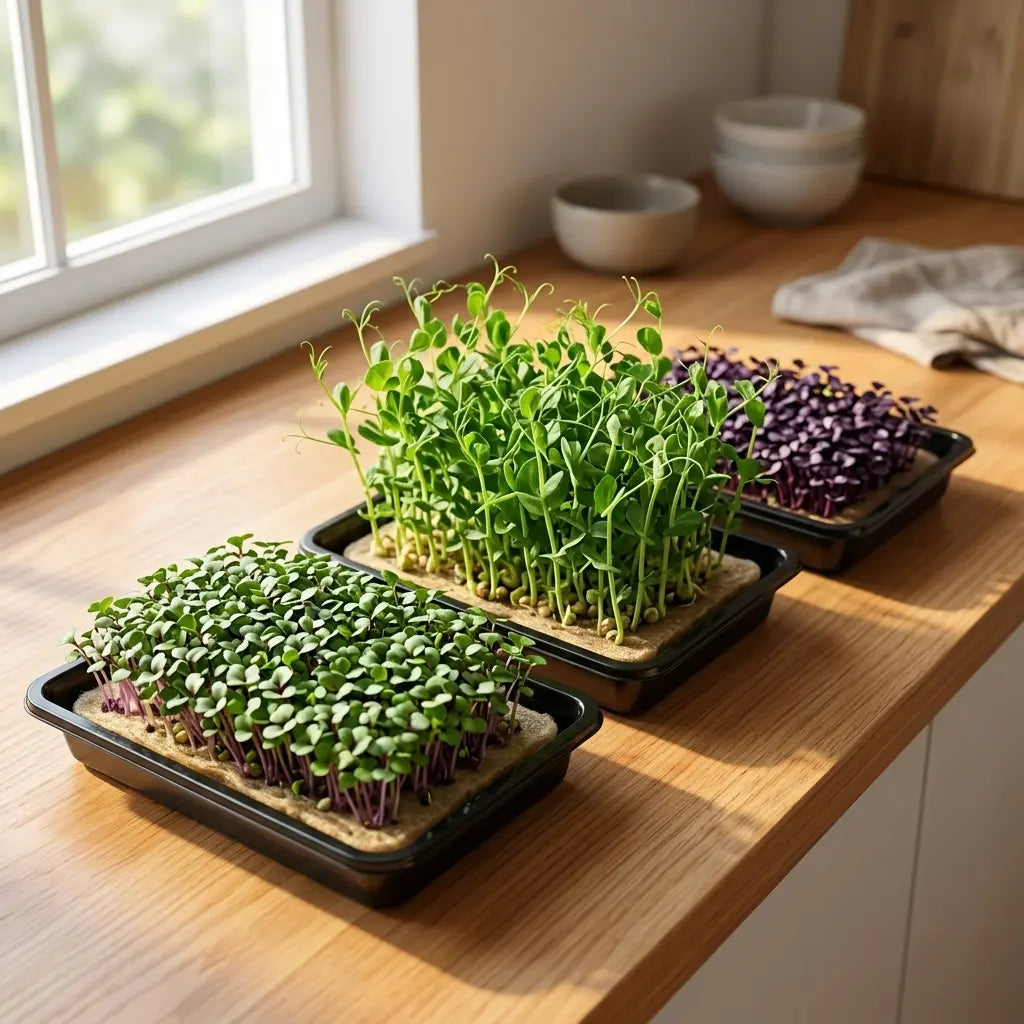
Growing mustard microgreens is one of the fastest ways to get a harvest out of a tray, often ready in just 5 to 7 days from seed. If you've grown radish or broccoli before, mustard behaves similarly: quick to germinate and quick to reward you with a sharp, horseradish-like bite.
The one thing that catches new growers off guard is the smell. Mustard seeds release a noticeably strong, pungent odor during germination, especially once the blackout dome comes off, and it can be surprising if you're not expecting it.
This guide covers exactly how to grow mustard microgreens from soak to harvest, including the blackout steps that get you there fastest and how to manage the smell so it doesn't take over your kitchen.
Why Mustard Microgreens Are One of the Fastest Crops
Mustard sits near the top of the list when it comes to speed. Most trays are ready to harvest within a week, which makes it a satisfying crop when you want a quick win or don't want to wait the 10 to 14 days that slower varieties like basil need.
The flavor is the payoff for that speed. Mustard microgreens carry a sharp, spicy bite similar to horseradish or wasabi, much more intense than the mild mustard greens you'd find in a grocery store salad mix. For a sense of how mustard compares to other spicy varieties, see Spicy Microgreens Ranked: Radish vs. Mustard vs. Arugula.
Because it germinates so quickly, mustard is also a good crop for testing out a new tray setup or grow light before committing to a slower, more expensive variety.
What You'll Need to Grow Mustard Microgreens
The setup doesn't require soil. Mustard microgreens grow well on a thin, absorbent grow mat that holds moisture evenly across the tray without waterlogging the roots.
Here's what to have ready before you start:
- A shallow 10x20 microgreens tray, ideally one with drainage holes
- A light brown organic grow mat cut to fit the tray, never soil or potting mix
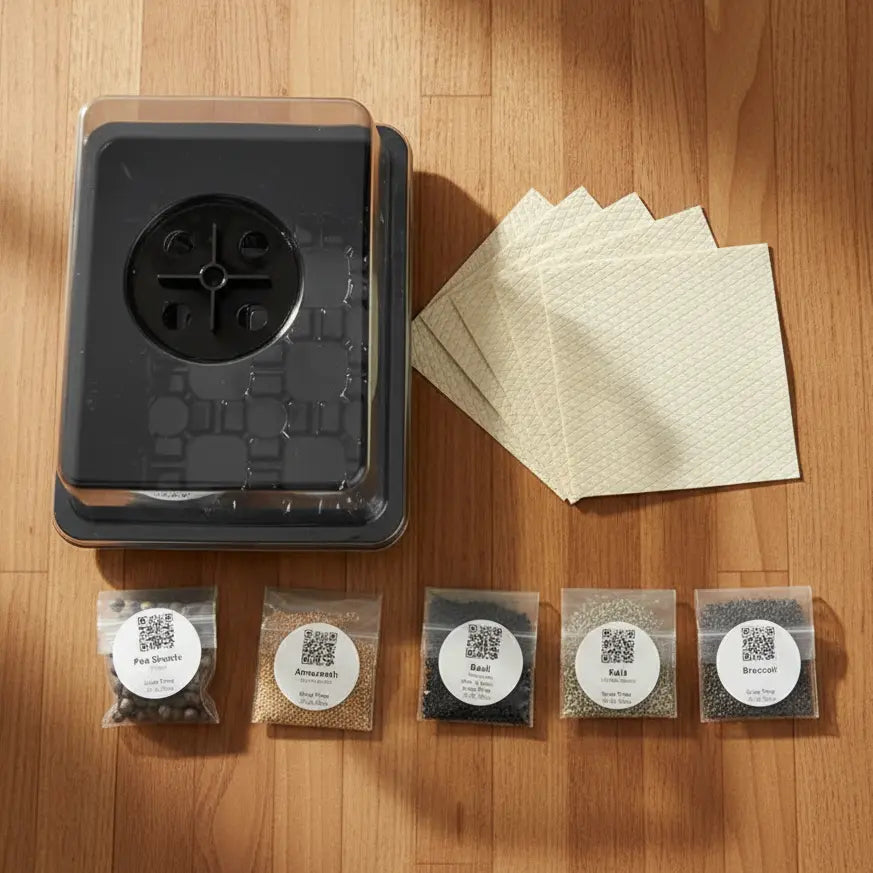
- Mustard Microgreens Seeds, which come with an organic grow mat included
- A spray bottle for misting
- A humidity dome or a second tray to use as a blackout cover for the first few days
Unlike some microgreens, mustard seeds benefit from a short soak before planting, which softens the seed coat and speeds up germination even further.
How to Grow Mustard Microgreens: The 5 to 7 Day Process
Day 1: Soak and Seed the Tray
Soak mustard seeds in room temperature water for 4 to 6 hours before planting. Drain well, then spread the seeds evenly across a pre-wetted grow mat and press down gently so they make good contact.
Days 2 to 3: Germination and Blackout
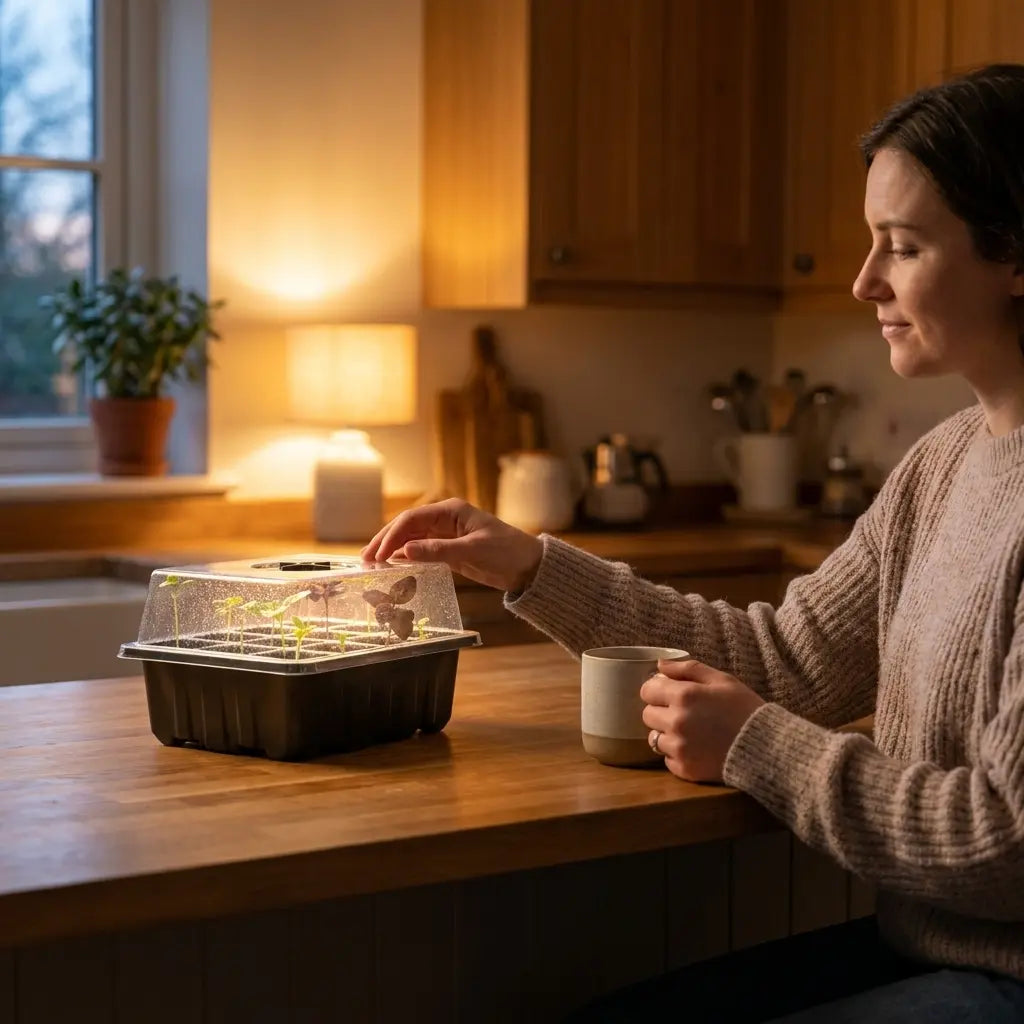
Cover the tray with a dome or a second tray flipped upside down to block out light. This blackout period helps the seeds germinate quickly and push up straight. Check once a day and mist lightly if the mat starts to dry at the edges.
Days 3 to 5: Light and Moisture
Once you see pale sprouts pushing up, uncover the tray and move it into bright, indirect light. An east or west-facing window works well, or a grow light set 6 to 8 inches above the tray. Mist once or twice a day, letting the surface dry slightly between waterings.
Days 5 to 7: Harvest
Mustard microgreens are usually ready between day 5 and day 7, once the greens reach about 1.5 to 2 inches tall with the first true leaves showing. The flavor gets noticeably spicier the longer you wait, so harvest earlier for a milder bite or a day or two later for more heat.
Managing the Strong Smell During Germination
Mustard seeds contain compounds called glucosinolates, the same family responsible for the sharp smell of horseradish and wasabi. Once germination gets going, especially in the day or two after the blackout period ends, that smell becomes noticeable in the room.
The smell isn't a sign anything is wrong. It's simply part of how mustard develops its flavor, and it fades once the tray is harvested.
A few things help keep it manageable. Growing the tray somewhere with a bit of airflow, like near a cracked window or a small fan, keeps the smell from concentrating in one spot. Placing the tray in a less central room, like a laundry room or a bright hallway, also works well if a strong plant smell isn't something you want filling the kitchen for a week.

Why Grow Mustard Microgreens With Aquager
Mustard Microgreens Seeds from Aquager come with an organic grow mat included, so you can go from seed to harvest in under a week without sourcing separate supplies.
Because mustard is one of the fastest crops in the lineup, it's also one of the most forgiving ways to build a weekly growing habit. A new tray started every few days keeps a fresh, spicy harvest coming without much planning.
For general harvest technique once your tray is ready, see How to Harvest Microgreens the Right Way.
Mustard Microgreens FAQ
How long does it take to grow mustard microgreens?
Most trays are ready to harvest in 5 to 7 days from seeding, making mustard one of the fastest microgreens you can grow.
Why do mustard microgreens smell so strong?
The smell comes from glucosinolates, natural compounds in mustard seeds that also give the plant its spicy flavor. It's normal and not a sign of a problem with the tray.
Do mustard microgreens need a pre-soak?
Yes. A 4 to 6 hour soak softens the seed coat and speeds up germination, unlike smaller-seeded microgreens like arugula that skip this step.
Why do my mustard microgreens taste too spicy?
Flavor intensity increases the longer a tray grows. Harvest a day or two earlier, closer to day 5, for a milder bite.
Can I grow mustard microgreens without a dome?
Yes, though germination may be slightly less even. A second tray flipped upside down works just as well as a dedicated humidity dome for the blackout period.
Grow Your Own Mustard Microgreens This Week
Mustard microgreens are one of the fastest, most satisfying crops to grow, and the smell during germination is a small tradeoff for a spicy harvest in under a week.

Grab a tray of Mustard Microgreens Seeds and you can have a sharp, spicy harvest on your counter by next weekend.
Author: Aquager · Published: July 25, 2026 · Updated: July 25, 2026












0 comments