
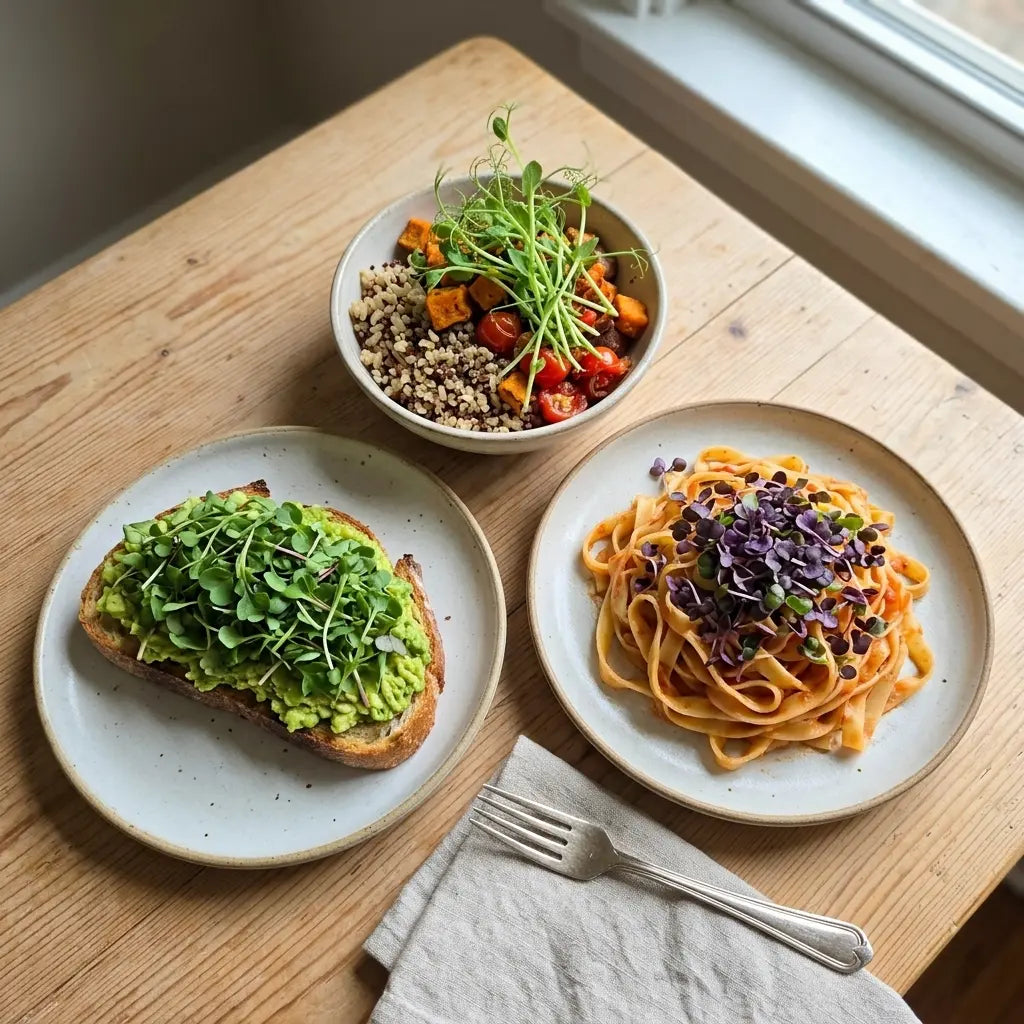
Once you're growing microgreens regularly, the hardest part usually isn't the growing. It's remembering to actually use them before the tray bolts past its best window. Working microgreens into every meal, not just the occasional salad garnish, is the easiest way to keep a tray from going to waste.
The good news is that microgreens don't need a special occasion or a fancy recipe. A pinch here and a handful there covers breakfast, lunch, and dinner without any of them needing to be the star of the plate.
This guide walks through one full day of eating with microgreens: arugula on breakfast toast, pea shoots in a lunch grain bowl, and basil finishing off a dinner pasta, plus a few rules that make microgreens work in almost anything.
Why Microgreens Work in Every Meal
Microgreens are concentrated, not filling. A small handful adds color, crunch, and a burst of flavor without changing the character of a dish the way a full serving of a vegetable would.
That makes them less like a side dish and more like a seasoning. The same way you'd reach for a squeeze of lemon or a pinch of flaky salt to finish a plate, microgreens work as a last step that makes an ordinary meal look and taste more finished.
Because different varieties bring different flavors, peppery, sweet, mild, or nutty, it's easy to match a variety to the meal instead of using whatever happens to be on hand. That's the approach this guide takes: one variety per meal, matched to what that meal already needs.
Breakfast: Arugula on Toast
Arugula microgreens bring a peppery bite that wakes up a breakfast plate the same way black pepper or hot sauce would, but with more texture and color. On avocado toast, they cut through the richness of the avocado instead of getting lost underneath it.
To build it, mash avocado onto good toasted bread, add a pinch of salt and a squeeze of lemon, then finish with a generous handful of arugula microgreens right before eating. The heat from the toast wilts delicate greens fast, so add them last.
Arugula microgreens work just as well scattered over scrambled eggs, folded into a breakfast burrito, or layered onto a bagel with cream cheese and smoked salmon. If you want more ideas built specifically around arugula, we cover the nutrition case for the variety in Arugula Microgreens Benefits: The Peppery Superfood That Grows in a Week.

Growing your own means you always have a fresh handful ready. Arugula Microgreens Seeds from Aquager come with an organic grow mat included and are ready to harvest in about a week.
Lunch: Pea Shoots in a Grain Bowl
Pea shoots have a sweet, tender bite that works well as a base green rather than just a garnish, which makes them a good fit for lunch, when you often want something with a bit more substance than breakfast.
Build a grain bowl with a base of rice, farro, or quinoa, add roasted vegetables, a protein like chickpeas or grilled chicken, and a simple dressing. Then pile pea shoots on top instead of, or alongside, a traditional leafy green like spinach or lettuce.
Because pea shoots hold up slightly better than more delicate microgreens, they're also a solid choice for a packed lunch, since they won't wilt as fast sitting in a container for a few hours. For more ways to use a pea shoot harvest, see Pea Shoot Microgreens Recipes: 8 Ways to Use Your Harvest This Week.
Pea Shoots Field Microgreens Seeds from Aquager grow into a generous, tender harvest that's substantial enough to build a whole bowl around, not just sprinkle on top.
Dinner: Basil on Pasta
Basil microgreens carry the same sweet, slightly peppery flavor as full-grown basil, in a smaller, more tender leaf that doesn't need to be torn or chopped before serving. On pasta, they do the same job a few whole basil leaves would, just faster and with less prep.
Finish a simple pasta, tomato sauce, pesto, or even just olive oil and parmesan, with a generous handful of basil microgreens right before serving. The residual heat from the pasta is enough to release the aroma without wilting the leaves completely.
Basil microgreens also work well on pizza after it comes out of the oven, stirred into a finishing oil, or layered into a caprese salad alongside dinner. For the nutrition case behind this variety, see Basil Microgreens Benefits: Why They're More Antioxidant-Rich Than Mature Basil.

Basil Genovese Microgreens Seeds deliver the classic Italian basil flavor this dish depends on, without needing a full outdoor basil plant taking up counter space.
A Few Rules for Using Microgreens in Any Dish
A handful of habits make microgreens work in almost any meal, not just the three examples above.
- Add microgreens last, after cooking, since heat wilts them within seconds and washes out both flavor and color
- Match the variety to the dish: peppery arugula or radish for rich foods, mild pea shoots or sunflower for delicate dishes, basil or cilantro for dishes already built around that herb
- Use a light hand at first. Microgreens are more concentrated in flavor than the mature plant, so a small handful usually does more work than you'd expect
- Store harvested microgreens dry, loosely wrapped in a paper towel, and use them within a few days for the best flavor and texture
Once these habits are second nature, working microgreens into a meal stops feeling like a separate step and starts feeling like just another seasoning in the kitchen.
Build a Microgreens Rotation With Aquager
Covering breakfast, lunch, and dinner with fresh microgreens means keeping more than one variety going at a time, which is easier than it sounds once you're set up for it.
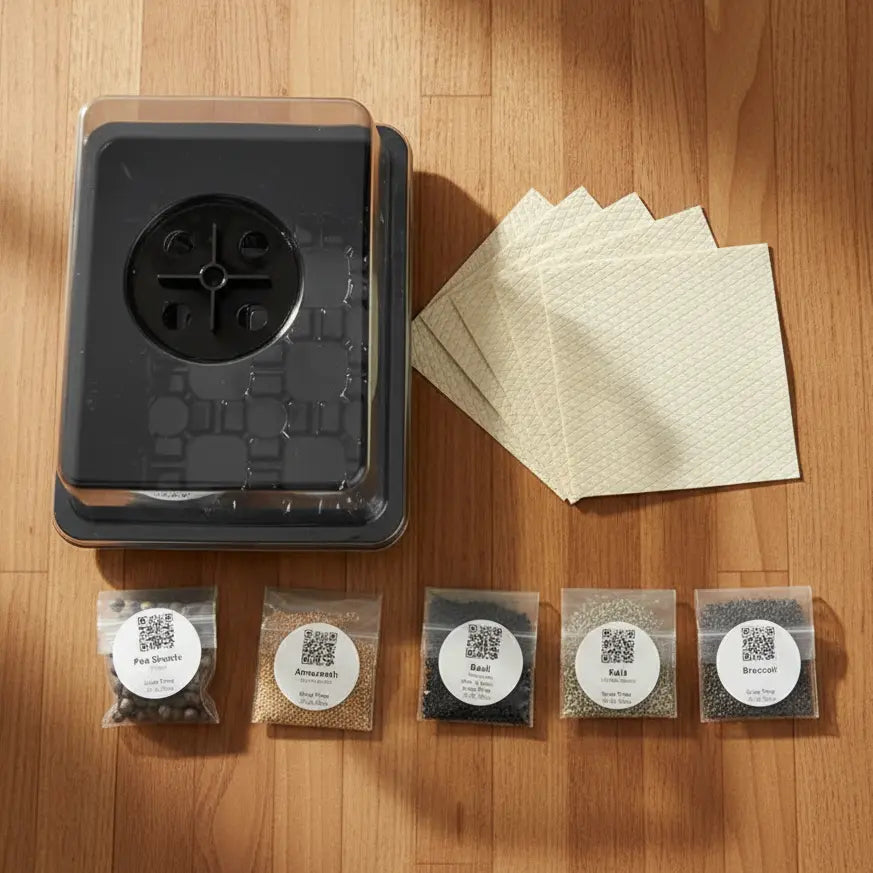
Each Aquager microgreens seed packet, including Arugula, Pea Shoots, and Basil Genovese, comes with an organic grow mat included, so starting a new tray is as simple as seeding, watering, and waiting.
If you want to run two varieties side by side from day one, the Microgreens Starter Kit includes two trays, so you can have a fast crop and a slower one going at the same time.
Microgreens for Every Meal FAQ
Which microgreens are best for breakfast?
Arugula works well for its peppery bite on toast or eggs, but milder varieties like pea shoots or sunflower are good options if you prefer something less sharp first thing in the morning.
Can I use the same microgreen for every meal?
You can, but rotating varieties keeps meals more interesting and spreads out the different nutrients each variety concentrates. Matching flavor to dish, rather than using whatever is closest to ready, usually makes for a better result.
Do microgreens need to be cooked?
No. Microgreens are almost always used raw, added at the very end of cooking or right before serving. Heat wilts them quickly and reduces both flavor and nutrient content.
How much microgreens should I use per serving?
A small handful, roughly a quarter cup, is usually enough to add flavor and texture without overwhelming a dish. Microgreens are more concentrated in flavor than mature greens, so a little goes further than you'd expect.
How long do harvested microgreens stay fresh?
Stored dry in the fridge, most microgreens stay good for 5 to 7 days. Keeping them dry and loosely wrapped, rather than sealed in a wet container, makes the biggest difference in shelf life.
Make Microgreens Part of Your Daily Rotation
Arugula at breakfast, pea shoots at lunch, and basil at dinner is just one version of a full day built around microgreens. Once you get comfortable matching flavor to dish, almost any meal becomes an opportunity to use up a fresh tray.
Start with a tray of Arugula Microgreens Seeds or the Microgreens Starter Kit and you'll have fresh greens ready for your next meal within a week.
Author: Aquager · Published: July 25, 2026 · Updated: July 25, 2026












0 comments