
If a 7-year-old grows it, they'll eat it. Not always, not immediately, not every variety, but the success rate of "vegetable grown by the child vs. vegetable served by the adult" is not even close.
This is the most reliable principle in getting children to eat fresh food. Not hiding spinach in brownies, not elaborate snack plates shaped like animals. Kids are significantly more likely to eat food they participated in growing because ownership changes the relationship to the food on the plate.
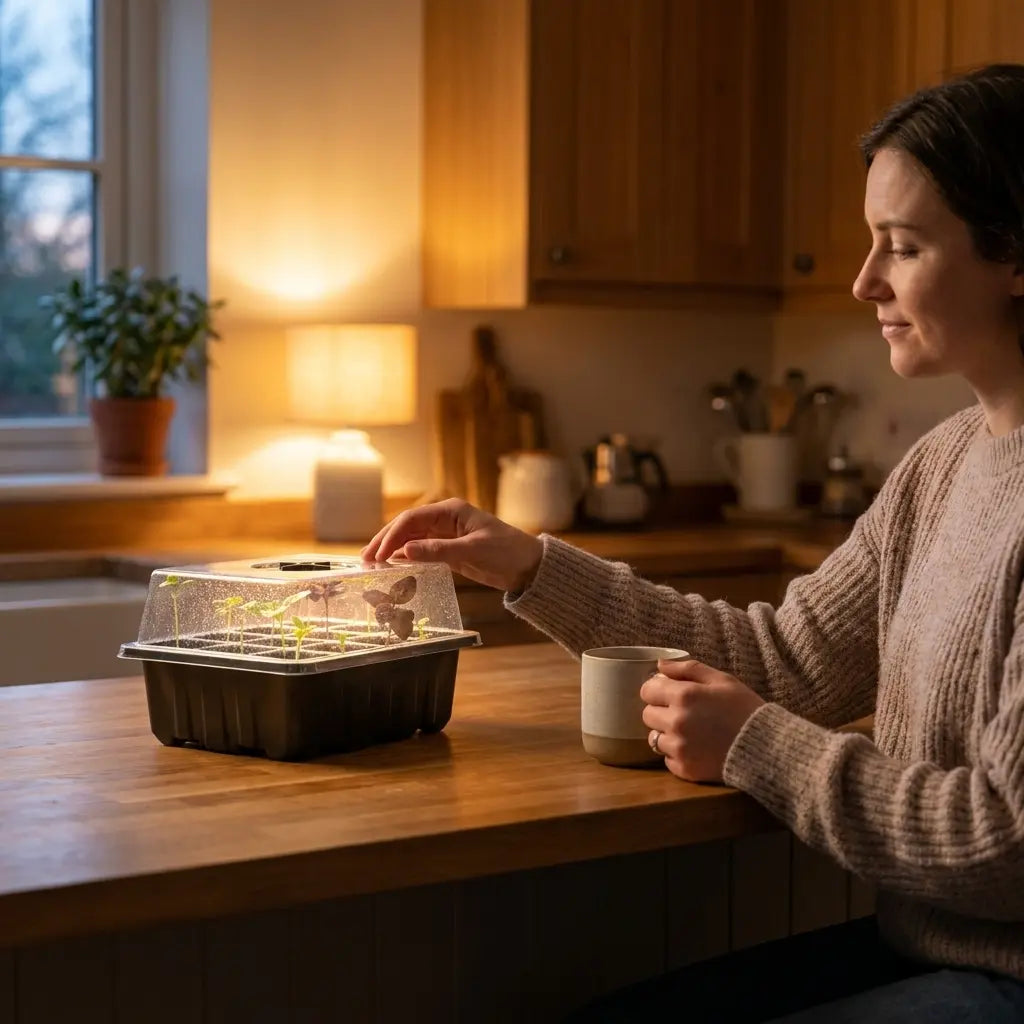
Microgreens are uniquely suited to this. A child can plant a tray in under 10 minutes. They can check it every morning and see visible progress within 24 hours. They can harvest it themselves with a pair of scissors. And pea shoots, sunflower microgreens, and mild basil varieties taste genuinely good to children, sweet, mild, and nothing like the bitter vegetables most kids resist.
Which Microgreens Work Best for Kids
Not all microgreens are equally kid-friendly. Arugula, mustard, and radish confetti have sharp, peppery flavors that most children under 10 will immediately reject. Others are approachable enough to work.
Pea shoots are the best starting point. They taste like fresh spring peas, sweet, mild, and immediately recognizable as pleasant. Children who eat peas eat pea shoots. They're also the most visually impressive: tall, curling shoots with small pea-like leaves that invite curiosity. See the full growing guide: Pea Shoot Microgreens: The Complete Beginner's Growing Guide.
Sunflower microgreens are large, crunchy, and slightly sweet. They have a nutty flavor and satisfying texture that appeals to children who like substantial food. Visually striking, thick stems with large seed leaves that look more interesting than a typical salad.
Basil microgreens are familiar. Children who like pizza and pasta recognize basil immediately, and it's not threatening in the way bitter greens can be. Use in context (on pizza, in pasta, mixed into hummus) rather than presenting raw.
Skip for young children: arugula, mustard, radish confetti. These can be introduced as the palate develops.
The Science Behind "I Grew It"
Research consistently shows that children who participate in growing food are more likely to eat it, including vegetables they've previously refused. The mechanism is straightforward: ownership and agency change the relationship to food.
Microgreens are particularly effective for this because:
The timeline matches a child's attention span. Pea shoots show root growth by day 2 and visible shoots by day 3. A child who checks the tray every morning sees daily change. A 90-day tomato doesn't hold a 6-year-old's attention the same way.
Harvesting is a complete, satisfying activity. Cutting with scissors, collecting in a bowl, rinsing, eating, this is a full sequence that a child can own from start to finish.
It creates natural food conversations. "These are the seeds we planted a week ago" opens a completely different conversation than "eat your vegetables." The child has context and an emotional investment.
Simple Recipes Kids Can Make Themselves
The most effective recipes have minimal steps that a child aged 6–12 can execute independently.
Microgreens toast. Toast a slice of bread. Spread with butter, cream cheese, or avocado. Scatter a handful of pea shoots on top. Add a small drizzle of honey for extra sweetness. Under 3 minutes, no adult required once the toast is made.
Pea shoot smoothie. Blend: 1 banana, 1/2 cup frozen mango, 1/2 cup orange juice, a large handful of pea shoot microgreens. The result is orange-yellow (not intimidatingly green) and sweet, no detectable green flavor. A child can operate a blender (with supervision) and produce this themselves.
Microgreens hummus. Stir a small handful of chopped basil microgreens into store-bought hummus with a squeeze of lemon. Use as a dip for carrot sticks, pita, or cucumbers. Kids who won't eat plain hummus often eat it when it's more aromatic and colorful.
Sunflower microgreens on eggs. Scramble or fry eggs (adult-assisted for younger children). Top with a handful of sunflower microgreens immediately when plating. The warmth wilts them slightly and the nutty flavor pairs naturally with eggs.
Sandwich builder. Set up a sandwich station: bread, cheese, protein (turkey, ham, tuna), and a bowl of pea shoot microgreens. Let children build their own. Kids are significantly more likely to eat a sandwich they assembled themselves, microgreens included.
Microgreens as a Back-to-School Science Activity
For school-age children, the microgreens tray is also a legitimate science project, one that fits naturally into the back-to-school period.
The short grow cycle makes it uniquely well-suited to observation-based learning:
- Day 1: Why do seeds need water to germinate? What happens during soaking?
- Days 2–4: What do roots look like? Why do plants grow in the dark first?
- Days 5–8: Why do plants grow toward light? What is chlorophyll?
- Day 10: What does "harvest" mean? Where does food come from?
Children who answer these questions with hands-on evidence remember them. A microgreens tray started in late August can be a project that carries into September, and a child who eats something they studied and grew has a fundamentally different relationship to fresh food.
The Best Setup for Families
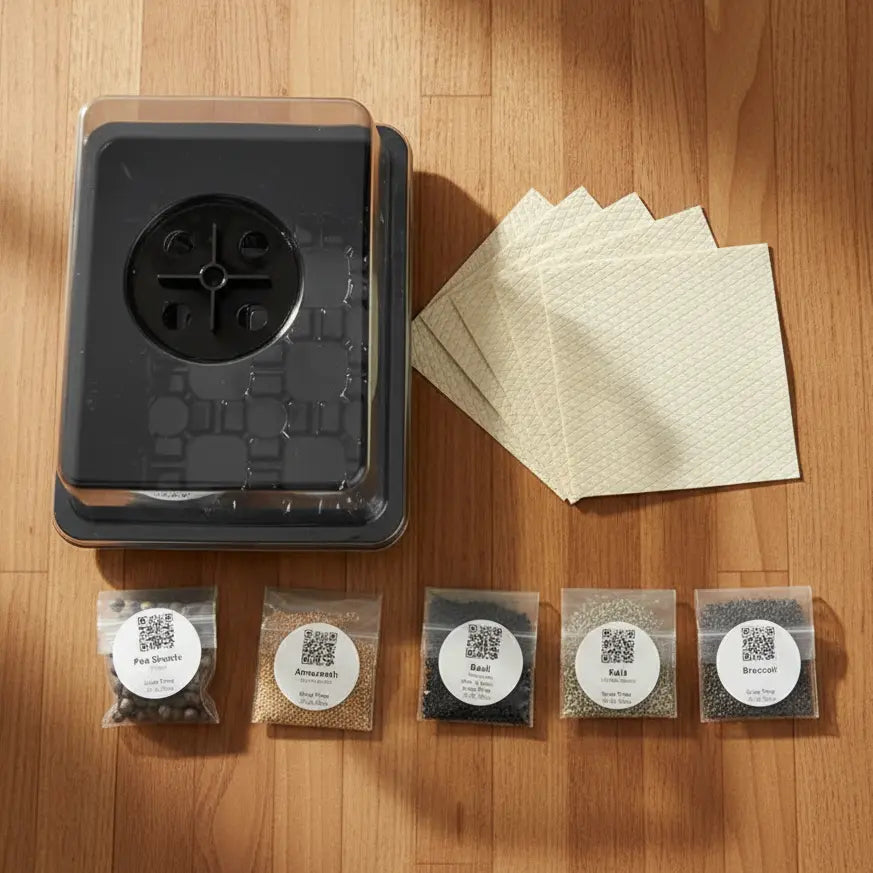
The Aquager Microgreens Starter Kit is the easiest entry point. The tray, dome, and grow mat require no assembly, children can handle the seeding and watering with minimal adult instruction.
Start with pea shoot seeds, the most kid-palatable variety and the most forgiving for beginners. After a successful pea shoot tray, add sunflower seeds for a different texture and visual experience.
Frequently Asked Questions
What age can children start growing microgreens?
Children aged 5+ can participate in seeding, misting, checking daily, and harvesting with scissors (with adult supervision). A 10-year-old can run the entire process independently.
Are microgreens safe for children to eat?
Yes, they're young seedlings grown from food-grade seeds, nutritionally no different from eating a vegetable at any other stage. Wash before eating. If your child has allergies to legumes, note that pea shoots come from peas; sunflower microgreens come from sunflower seeds.
Which microgreens do kids like most?
Pea shoots are the most universally accepted, the sweet, mild flavor doesn't trigger rejection the way bitter or peppery varieties can. Sunflower microgreens are second for children who like texture.
How do I get a picky eater to try microgreens?
Let them grow it first. Most children who planted the seeds, checked the tray daily, and harvested themselves are curious enough to taste what they grew, especially when it's presented in a familiar context like a sandwich or smoothie.
Healthy Snacks That Start With Growing
The most effective healthy snack for kids isn't a product, it's a process. Growing something, harvesting it, and eating it within the same week creates a different relationship to fresh food than anything from a package.
The Aquager Microgreens Starter Kit and a pack of pea shoot seeds give you everything you need to start this weekend. The first harvest is ready in 10 days. For more on choosing the right first variety, see: Microgreens for Beginners: How to Start Growing Indoors in 7 Days.
Author: Aquager Team · Published: May 29, 2026 · Updated: August 8, 2026 · Reviewed: August 8, 2026 (Phase 2)












0 comments