
There’s a $4 ingredient that will make your Labor Day cookout the most talked-about of the summer. It grows in your kitchen in 5–7 days, takes 60 seconds to add to any dish, and the people who try it will ask you what you did differently.
These are Labor Day recipes and pairings built around microgreens — the simplest, most impressive upgrade you can make to a cookout spread. Every dish below gets the right variety for maximum flavor impact, plus a quick grow timeline so you know exactly when to plant.
The Microgreens Topping Matrix
One rule runs through every pairing: match the flavor of the microgreen to what the dish already needs — not to decorate it, but to complete it. Here’s the whole picture before we go dish by dish.
| Dish | Microgreen | Flavor | Why It Works |
|---|---|---|---|
| Burger | Radish Confetti Mix | Peppery, sharp | Cuts through fat the way mustard does — but fresher |
| Grilled corn | Cilantro | Bright, citrusy | Natural match for street-corn, cotija, and lime |
| Flatbread / pizza | Arugula | Peppery, nutty | Classic Italian move — wilts just right on heat |
| Tacos / wraps | Pea Shoots | Sweet, fresh, tender | Balances spiced meat, dramatic texture |
| Hot dogs | Radish | Sharp, peppery | Same logic as the burger — cleaner than relish |
| Potato salad | Dill | Herbal, delicate | Replaces fresh dill with better texture and flavor |
| Hummus board | Radish or Arugula | Bold, peppery | Instant restaurant-quality presentation |
| Caprese skewers | Basil Genovese | Sweet, intense | More concentrated than fresh basil leaves |
Bookmark this table. Every cookout for the rest of the summer benefits from it.
For more on which microgreen varieties grow fastest — useful when you’re planning around a specific date — see our fastest-growing microgreens guide.
The Burger — Radish Confetti Mix
A charred beef patty is one of the best delivery vehicles for peppery microgreens. Radish microgreens do exactly what dijon mustard or horseradish does — cut through the richness of the fat with sharp, bright heat — but they add crunch and freshness that no condiment can.
How to use: Add a generous handful directly on top of the patty, under the bun. They’ll soften just slightly from the residual heat but keep their crunch through the first few bites. The red, purple, and white stems of the Confetti Mix look visually stunning in cross-section when the burger is cut or bitten into.
Also works on: Pulled pork sliders, salmon burgers, smash burgers with aioli, portobello mushroom burgers.
Grow time: 5–7 days — the fastest microgreen you can grow. Plant tonight, harvest by the weekend.
Radish Confetti Mix Microgreens Seeds — $3.99, organic grow mat included.
The Corn — Cilantro Microgreens
Grilled corn is the best canvas at any summer cookout, and cilantro microgreens take it somewhere most guests have never tasted. If you’re going street-corn style — lime, cotija, a smear of mayo or sour cream — cilantro microgreens are the final step that makes the dish complete.
How to use: Grill the corn as usual. After applying your toppings, scatter a small handful of cilantro microgreens over the top. They stick naturally to any creamy topping and hold their shape even on hot corn.
Also works on: Guacamole as a finishing layer, black bean salad, grilled shrimp skewers, any taco bar component.
Grow time: 10–14 days. Start early this week for Labor Day weekend.
Cilantro Monogerm Microgreens Seeds — $3.99, organic grow mat included.
The Flatbread — Arugula Microgreens
Arugula on a grilled flatbread is the move that every Italian restaurant uses and most home cooks haven’t tried yet. The residual heat from the flatbread wilts the arugula microgreens just slightly as they land, releasing their peppery-nutty flavor into each bite. It’s one of the rare applications where microgreens specifically benefit from warmth — not raw, not cooked, just barely kissed by the heat.
How to use: Take the flatbread off the grill. Immediately pile arugula microgreens on top — before slicing. The heat does the work. Drizzle with good olive oil to take it further.
Flavor match: Prosciutto and burrata flatbread. Grilled tomato and fresh mozzarella. White pizza with ricotta. Anything with a bold or salty element.
Grow time: 7–10 days.
The Tacos and Wraps — Pea Shoots
Pea shoots are the surprise hit of every summer spread. Their flavor is sweet, fresh, and slightly grassy — the perfect counterpoint to spiced meat, hot sauce, and rich fillings. They also have a visual impact that no other microgreen matches: long, curling shoots that spill out of a taco and tell everyone at the table something interesting is happening.
How to use: Add a generous handful as the last ingredient before folding or rolling. Their texture holds up well against warm fillings.
Also works on: Chicken wraps, fish tacos, grain bowls, Vietnamese summer rolls, and any lettuce cup appetizer.
Grow time: 8–10 days.
Pea Shoots Field Microgreens Seeds — $3.99, organic grow mat included.
Five More Quick Upgrades
The matrix above is just the start. A few more summer entertaining ideas that take 10 seconds to execute:
Hot dogs. Radish microgreens and spicy brown mustard. Crunch, heat, and color — better than relish.
Potato salad. Fold in dill microgreens right before serving. Same flavor as fresh dill, better texture, and they don’t wilt into the salad.
Hummus board. Pile radish or arugula microgreens on top of the hummus. It instantly looks like a restaurant appetizer.
Caprese skewers. Use Basil Genovese microgreens between the tomato and mozzarella instead of basil leaves. More intense flavor, cleaner presentation, no tearing.
Deviled eggs. A single radish microgreen stem or small pinch of dill microgreens on each egg. The visual impact is immediate.
The principle is the same for all of these: if the mature herb or green would work, the microgreen version will work better. More flavor, fresher, and it looks deliberate.
Grow Your Own Before Labor Day
Here’s the timing that makes this work. Labor Day is the first Monday of September.
Radish microgreens: 5–7 days. Plant tonight, harvest Labor Day weekend. No other fresh ingredient gives you that turnaround.
Pea shoots: 8–10 days. Plant today, ready for the cookout.
Arugula: 7–10 days. Same window.
Cilantro: 10–14 days. Plant early this week for full flavor by the holiday.
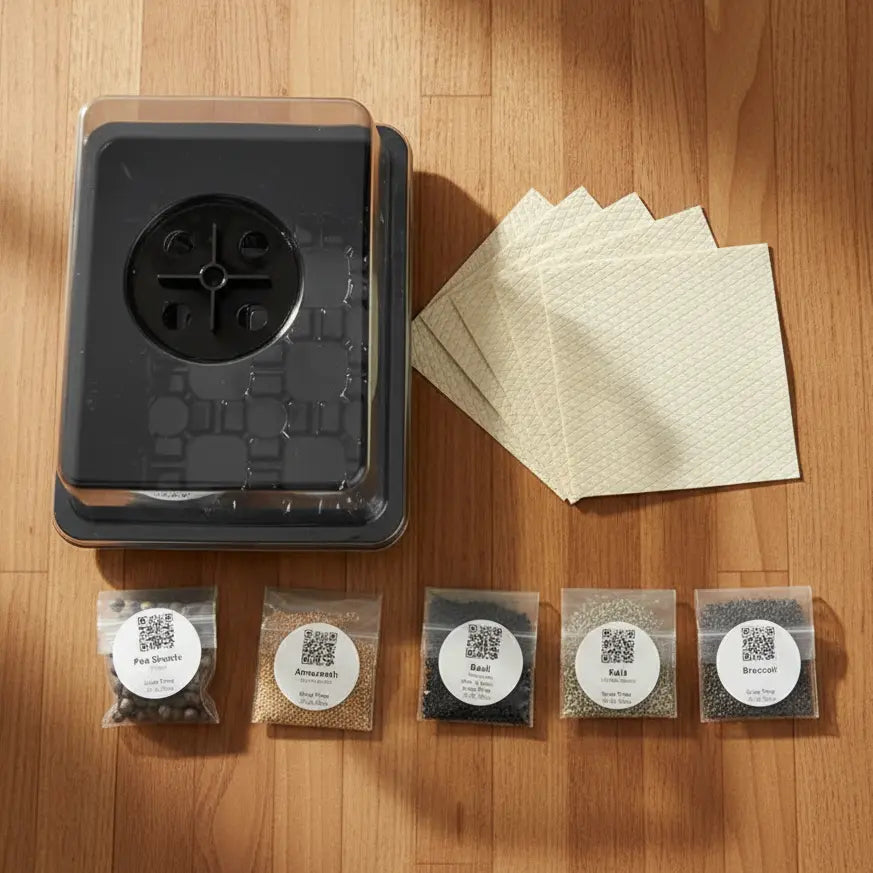
The Microgreens Starter Kit from Aquager has everything for one complete tray: 10×20" growing tray, humidity dome, and organic coco coir grow mat — $24.99. Pick up the seeds for whichever dish you’re most excited about and you’re seeding tonight.
For more summer cookout microgreens ideas, see our Memorial Day microgreens guide — all the same pairing logic applied to the start of grilling season.
Frequently Asked Questions
Do microgreens need to be cooked before adding to cookout food?
No — microgreens are at their best raw. Add them as the very last step before serving. They hold up to residual heat (like on a just-grilled flatbread) but don’t need to be cooked and shouldn’t go directly into a hot pan or pot.
How much do I need for a cookout of 10 people?
One 10×20" tray yields approximately 4–6 ounces — enough to top 10–12 burgers generously or cover an entire flatbread board. For a full spread across multiple dishes, run two or three trays with staggered start dates.
Which microgreen is easiest to grow for a first-timer?
Radish. It’s the fastest (5–7 days), the most forgiving, and the most visually impressive on a plate. It’s also the variety that gets the most “what is that?” questions at a cookout. Start there.
The Cookout Upgrade Nobody Expects
The biggest compliment at any cookout isn’t “these burgers are great.” It’s “wait — what did you put on these?” Microgreens deliver that reaction every time. And for $4 in seeds and 5–7 days of growing, it’s the easiest impressive thing you can bring to a Labor Day table.
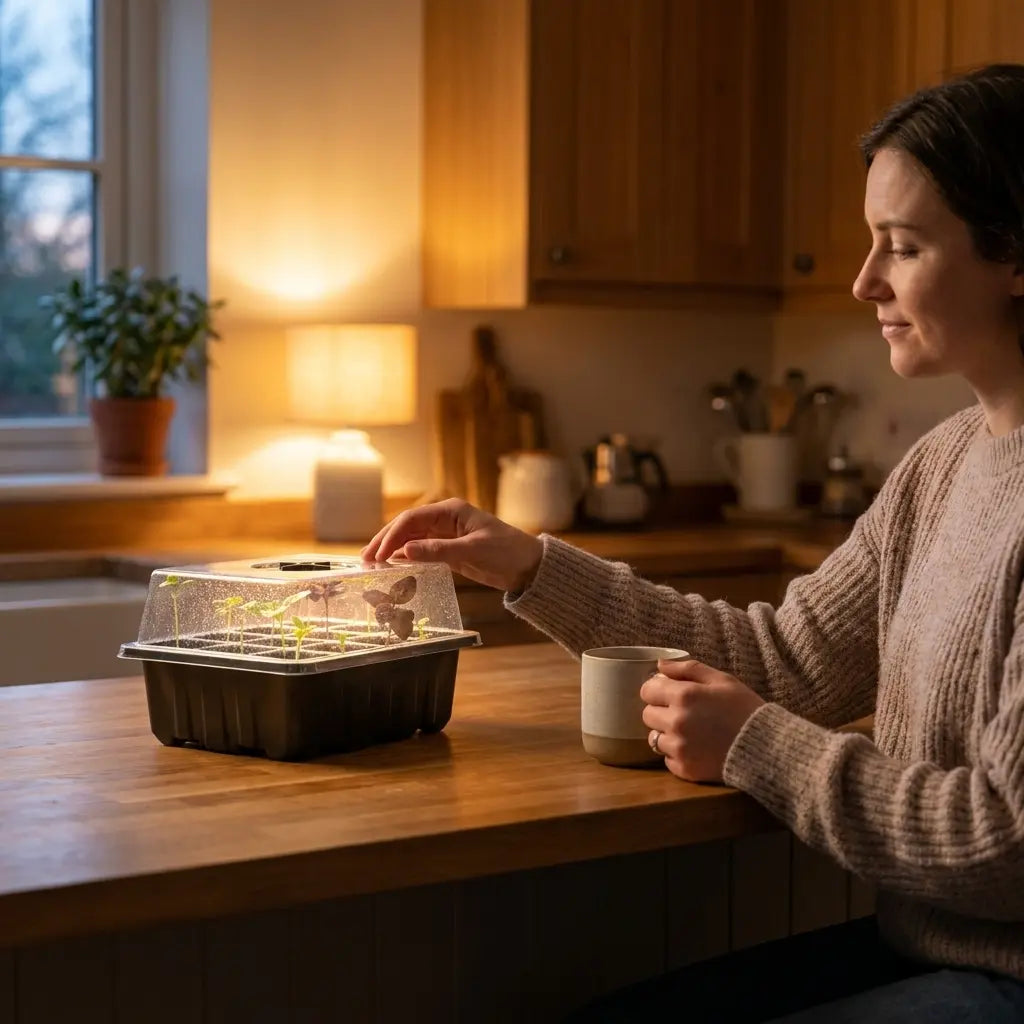
Start one tray tonight with Radish Confetti Mix and you’ll have your first fresh harvest by the long weekend. The Microgreens Starter Kit has everything you need to get it growing.
Author: Aquager · Published: May 30, 2026 · Updated: August 8, 2026












0 comments