
Fall soup season and microgreens season arrive at exactly the same moment. The outdoor herbs are winding down. The first lentil soup is already simmering. And the gap between a good fall soup and a memorable one is almost always whatever goes on top.
These fall soup recipes and pairings are built around one idea: microgreens as the finishing element that turns a weeknight bowl into something worth making again. The right microgreen in the right soup changes everything — dill blooming on potato soup, cilantro scattered across black bean, pea shoots curling from lentil.
This guide covers five classic fall soups with the best microgreen match for each, plus a planting timeline so you can grow your own garnishes at home before the first cold month arrives.
The Fall Soup Microgreens Pairing Guide
One rule: the microgreen should complete what the soup already is — not compete with it. Bold soups get assertive microgreens; delicate soups get delicate ones.
| Fall Soup | Microgreen | Flavor | Why It Works |
|---|---|---|---|
| Potato soup | Dill | Herbal, delicate | Like a loaded potato's sour cream and chives — but better |
| Lentil soup | Pea Shoots | Sweet, fresh | Brightens earthy legumes without clashing |
| Roasted tomato | Arugula | Peppery, nutty | Classic Italian move — cuts acidity beautifully |
| Black bean soup | Cilantro | Bright, citrusy | Non-negotiable for anything with cumin and lime |
| Minestrone | Kale Kalefetti | Mild, earthy | Nutritious and colorful without competing |
| Butternut squash | Pea Shoots | Sweet, tender | Contrasts richness with fresh sweetness |
| Chicken noodle | Dill | Classic herb | More intense than dried — elevates the familiar |
| Pumpkin bisque | Arugula | Peppery | Balances sweetness with a clean heat |
For more on what microgreens deliver nutritionally as a soup finishing element, see our guide to the most nutritious microgreen varieties.
Potato Soup — Dill Microgreens
Dill and potato is one of the most natural food pairings in existence. Loaded baked potato, potato salad, potato soup — dill belongs in all of them. Dill microgreens deliver that same classic herbal flavor but in a form that holds up beautifully on a hot soup bowl.
Why this works: The feathery texture of dill microgreens floats on the surface of the soup rather than sinking. They release their flavor as you eat through each spoonful, giving every bite a fresh herb note that dried dill sprinkled into the pot simply cannot provide.
How to use: Ladle the potato soup into a bowl. Add a swirl of sour cream or crème fraîche if using. Pile a generous handful of dill microgreens in the center. Finish with a crack of black pepper. Serve immediately — the microgreens soften slightly as they sit, which is exactly right.
Also works on: Vichyssoise, leek soup, cream of celery, roasted carrot soup, any chowder.
Grow time: 10–14 days.
Dill Microgreens Seeds — $3.99, organic grow mat included.
Lentil Soup — Pea Shoots
Lentil soup is one of the most satisfying fall bowls — earthy, warming, and deeply savory. What it often lacks is freshness and brightness. Pea shoots provide exactly that: a sweet, clean, slightly grassy contrast that lifts the whole bowl.
Why this works: Pea shoots are the mildest of the sweet microgreens. They don't compete with the rich, spiced broth of a well-built lentil soup — they sit on top of it and add a layer of texture and brightness that makes the soup feel more complete.
How to use: Ladle the lentil soup. Add a squeeze of lemon over the bowl if your recipe calls for it. Place a loose pile of pea shoots in the center — don't compress them. The shoots will curl slightly from the steam and look deliberately beautiful.
Also works on: Split pea soup, white bean soup, chickpea stew, any dal-style preparation.
Grow time: 8–10 days.
Pea Shoots Field Microgreens Seeds — $3.99, organic grow mat included. For more ways to use pea shoots, see our pea shoot microgreens recipes guide.
Roasted Tomato Soup — Arugula Microgreens
Arugula on tomato is as Italian as it gets. Roasted tomato soup with a pile of arugula microgreens on top is the kind of thing that looks like it came from a very good restaurant — and takes about 10 seconds to execute.
Why this works: The sharpness of arugula cuts through the sweetness and acidity of the tomato without overwhelming either. The peppery-nutty flavor adds complexity to a soup that can otherwise feel one-dimensional. The visual impact — deep green against rich orange-red — is genuinely striking.
How to use: Pour the soup. Drizzle with good olive oil. Pile arugula microgreens in the center. A scatter of freshly grated parmesan over the whole thing, if you want to commit fully. Serve with crusty bread.
Also works on: Gazpacho, roasted red pepper soup, marinara-style bean soups.
Grow time: 7–10 days.
Black Bean Soup — Cilantro Microgreens
There is no dish featuring cumin, lime, and black beans where cilantro doesn't belong. Cilantro microgreens bring the same bright, citrusy herb flavor as fresh cilantro — without the bolting frustration of growing full cilantro at home in any season other than fall.
Why this works: Black bean soup tends toward rich, dense, and smoky. Cilantro microgreens cut through all of that with their clean, high note of fresh herb. The color contrast — pale green on deep black-purple — is one of the most visually compelling microgreen pairings in any cuisine.
How to use: Ladle the black bean soup. Add a spoonful of sour cream or crema. Squeeze a wedge of lime over the bowl. Pile cilantro microgreens on top. The lime and cilantro together finish the bowl exactly the way they finish a taco.
Also works on: Tortilla soup, posole, spiced chickpea soup, any Mexican or Latin-inspired stew.
Grow time: 10–14 days.
Cilantro Monogerm Microgreens Seeds — $3.99, organic grow mat included.
Minestrone — Kale Kalefetti Mix
Minestrone already has kale in it half the time — but adding kale microgreens as a finishing garnish gives the bowl something the cooked kale inside cannot: freshness, texture, and a visual burst from the Kalefetti mix's deep red and purple stems.
Why this works: Kale microgreens are mild enough that they don't compete with the complex, herby vegetable broth of minestrone. They add nutritional density, a slight earthiness, and a beautiful visual element that makes the bowl look composed and intentional.
How to use: Ladle the minestrone. Drizzle with olive oil. Add a small pile of Kale Kalefetti Mix microgreens in the center. The multi-colored stems against the vegetable-heavy broth make it look extraordinary.
Also works on: Ribollita, Tuscan white bean soup, vegetable barley soup, any brothy fall stew.
Grow time: 8–12 days.
Plant Your Fall Soup Garnishes Now
Here's the planting timeline from seed to ready-to-use garnish:
| Microgreen | Ready In | Plant By (for October soups) |
|---|---|---|
| Pea Shoots | 8–10 days | Plant in late September |
| Arugula | 7–10 days | Plant in late September |
| Kale Kalefetti | 8–12 days | Plant in late September |
| Dill | 10–14 days | Plant mid-September |
| Cilantro | 10–14 days | Plant mid-September |
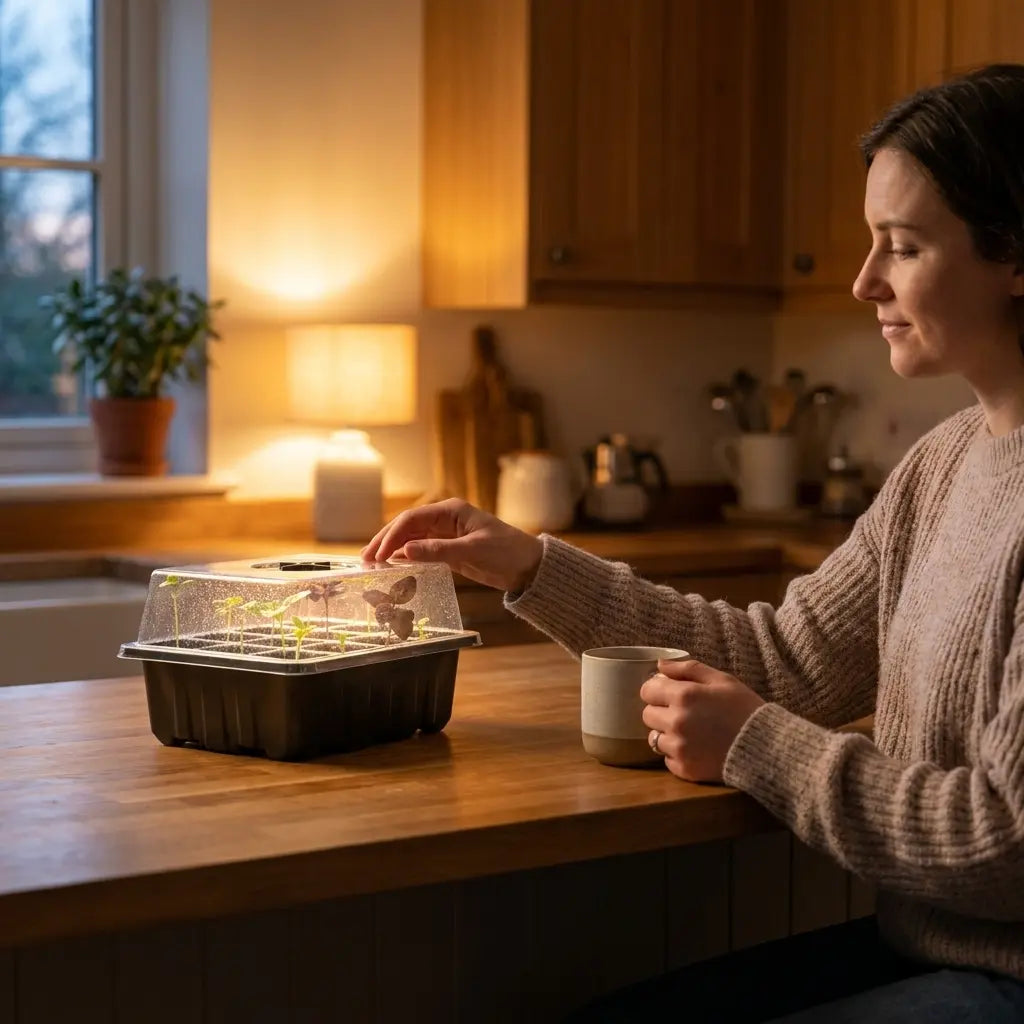
All five varieties are in continuous rotation through fall and winter — once you finish one tray, start the next. Two weeks later you're harvesting again. The same tray setup works for every variety, every season. For more on grow times, see our fastest-growing microgreens guide.
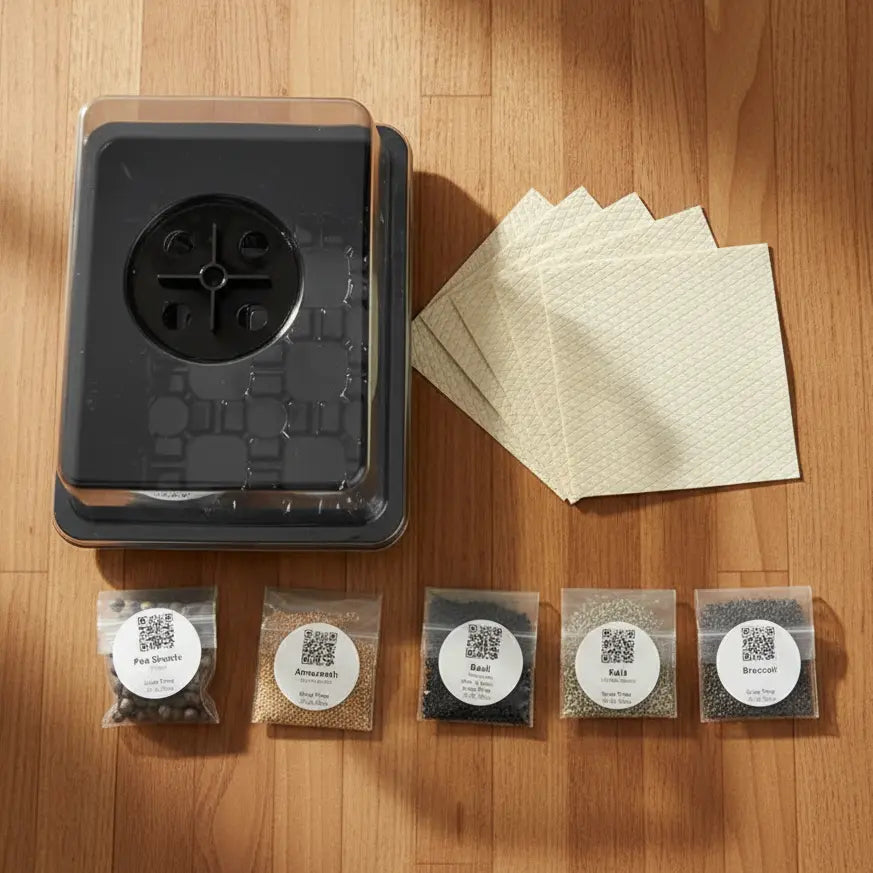
The Microgreens Starter Kit from Aquager includes the tray, humidity dome, and organic coco coir grow mat — everything for one complete cycle at $24.99. Pick up the seed varieties that match what you're cooking most this fall and plant this week.
Frequently Asked Questions
Do microgreens hold up on hot soup, or do they wilt immediately?
They soften slightly from the steam, which is actually desirable — the heat releases their flavor. For maximum texture, add them at the very last moment before serving. They won't survive sitting on a hot bowl for 10 minutes, but that's not how soup garnishes work anyway.
Can I add microgreens directly into the soup pot?
The garnish application preserves their texture and flavor best. If you add them during cooking or blending, they'll lose most of what makes them interesting. Use them raw, at the end, on top.
How much does one tray yield for soup garnishes?
One 10×20" tray yields approximately 4–6 ounces at harvest — enough to garnish 8–12 individual soup bowls generously. If you're making soup for a dinner party, one tray per variety gives you more than enough.
Which fall soup microgreen is easiest to grow for a first-timer?
Pea shoots — large seeds, near-perfect germination, sweet flavor that works on multiple soups. Plant them first, then add dill or cilantro to your rotation once you've done one successful cycle.
Can I grow all five varieties at the same time?
Yes — each variety gets its own tray. Running five trays simultaneously means you always have a different garnish ready at different points in the cycle. Stagger your start dates by 2–3 days and you'll have fresh options through the whole soup season.
Soup Season Starts Today
The soups will happen regardless. What changes is whether the bowl on the table is good or genuinely memorable — and that difference is almost always the finishing detail.
Plant one tray this week. By the time the first batch of fall soup is ready, so will your garnishes.
The Microgreens Starter Kit and your first seed selection are everything you need to start. Choose Dill, Pea Shoots, or Cilantro based on what you're cooking first this fall, and your first harvest will be ready in under two weeks.
Author: Aquager Team · Published: May 30, 2026 · Updated: August 8, 2026 · Reviewed: August 8, 2026 (Phase 2)














0 comments