
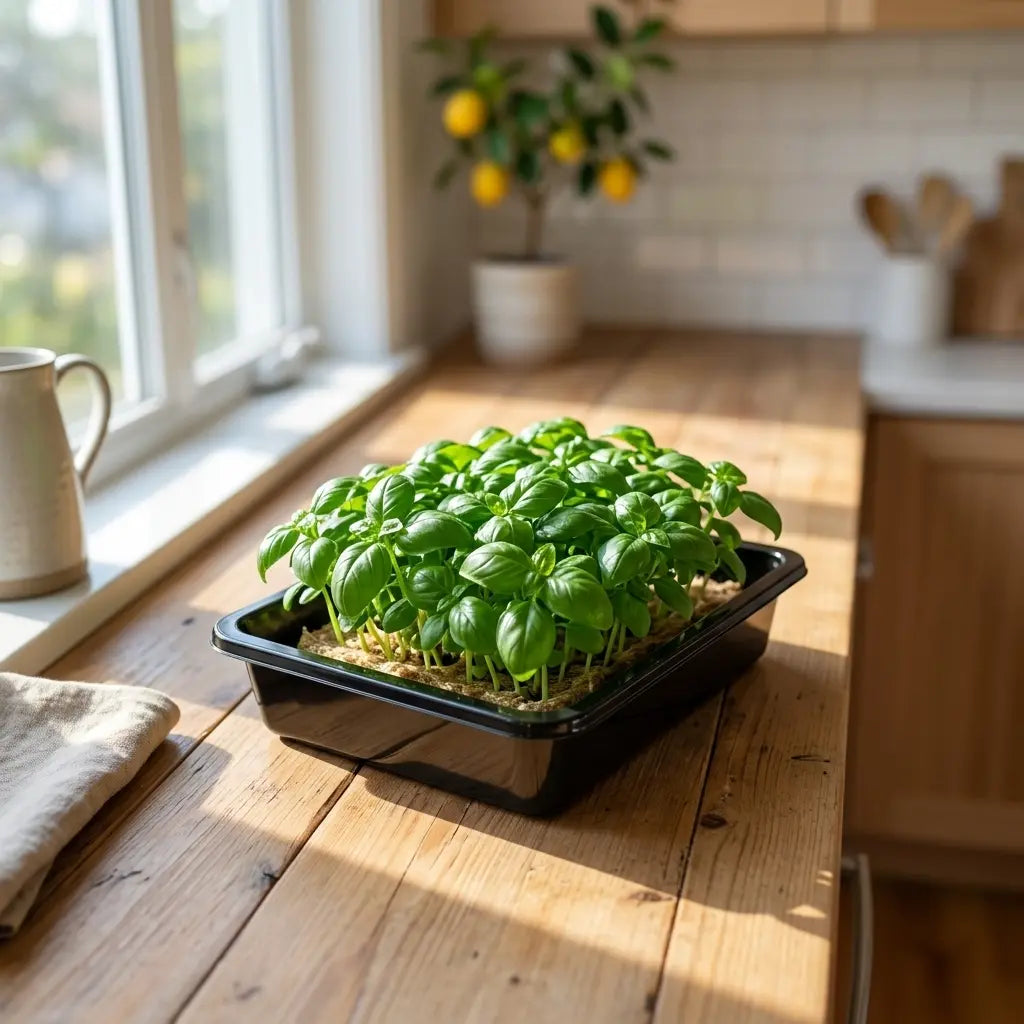
Basil microgreens benefits go well beyond a pretty garnish. Because the plant is harvested at the seedling stage, basil microgreens pack a more concentrated dose of antioxidants and anti-inflammatory compounds into every bite than the mature leaves you'd pull off a full-grown plant.
You still get the same classic Italian flavor that makes basil a kitchen staple. It's just delivered in a smaller, more nutrient-dense package that's ready to harvest in about 2 weeks instead of the months a full basil plant needs.
This guide breaks down what the research actually shows about basil microgreens nutrition, how it compares to mature basil, and where the antioxidant and anti-inflammatory benefits come from.
Basil Microgreens vs Mature Basil: What Changes During Growth
Microgreens in general tend to concentrate nutrients during the first couple of weeks of growth, before the plant puts its energy into building out stems, branches, and a larger leaf surface. Basil follows the same pattern.
Studies on microgreens across several species have found nutrient concentrations several times higher than the same plant at full maturity, largely because the seedling is investing heavily in protective compounds like antioxidants while it's most vulnerable. A mature basil plant dilutes those same compounds across a lot more plant material.
That doesn't make mature basil a poor choice. It means basil microgreens are a genuinely different, more concentrated product from the same seed, not just a smaller version of the same thing.
Antioxidant Content in Basil Microgreens
Basil microgreens are rich in polyphenols and flavonoids, two of the main antioxidant compound families found across leafy greens. These compounds help neutralize free radicals in the body, which are linked to cellular aging and a range of chronic health conditions.
Basil in general already ranks among the more antioxidant-dense herbs, and it sits alongside other antioxidant rich foods like berries and leafy greens in most nutrition comparisons. Because microgreens concentrate these compounds during early growth, a small handful of basil microgreens can contribute a meaningful amount toward daily antioxidant intake.
Purple-tinted varieties like Basil Red Rubin often test even higher in anthocyanins, a specific antioxidant pigment responsible for the reddish-purple color, giving you a visual cue for where the antioxidant content tends to concentrate.
Anti-Inflammatory Compounds in Basil Microgreens
Basil contains eugenol, a natural compound with documented anti-inflammatory properties, along with rosmarinic acid, which has been studied for its role in reducing inflammatory markers in the body. Both compounds are present in mature basil, but early research on microgreens suggests these secondary plant compounds are often more concentrated in the seedling stage.
This is part of why basil shows up so often on lists of anti inflammatory foods, alongside things like turmeric and fatty fish. Basil microgreens simply offer a more concentrated way to work that same herb into a daily diet.
None of this replaces medical treatment for inflammatory conditions. It's best understood as one small, consistent addition to an already reasonably balanced diet.
The Nutrition Beyond Antioxidants
Basil nutrition doesn't stop at antioxidants and anti-inflammatory compounds. Basil microgreens also carry meaningful amounts of vitamin K, which supports normal blood clotting, along with smaller amounts of vitamin A and iron.
For a deeper look at how basil microgreens stack up against the other 17 varieties Aquager grows, see Microgreens Nutrition: A Complete Comparison of All 18 Varieties. If you're still deciding whether the microgreens category as a whole lives up to the superfood label, we've also broken down the research in Are Microgreens a Superfood? What the Research Actually Says.
Growing your own with Basil Genovese Microgreens Seeds means you're harvesting at peak freshness, which matters because some of these compounds start to degrade once leaves are cut and shipped.
How to Add Basil Microgreens to Your Kitchen
Basil microgreens carry the same sweet, slightly peppery flavor as the full-grown herb, just in a smaller, more delicate leaf. A pinch on top of a finished dish adds flavor without needing to be chopped or torn the way mature basil leaves do.
They work especially well on anything already built around Italian flavors. Try them on a caprese salad, scattered over a finished pizza, stirred into pesto for extra brightness, or layered into a sandwich in place of full-size basil leaves.

Because basil microgreens are delicate, add them at the very end of cooking or right before serving. Heat wilts them quickly and washes out both the flavor and the antioxidant content you grew them for in the first place.
Why Grow Basil Microgreens With Aquager
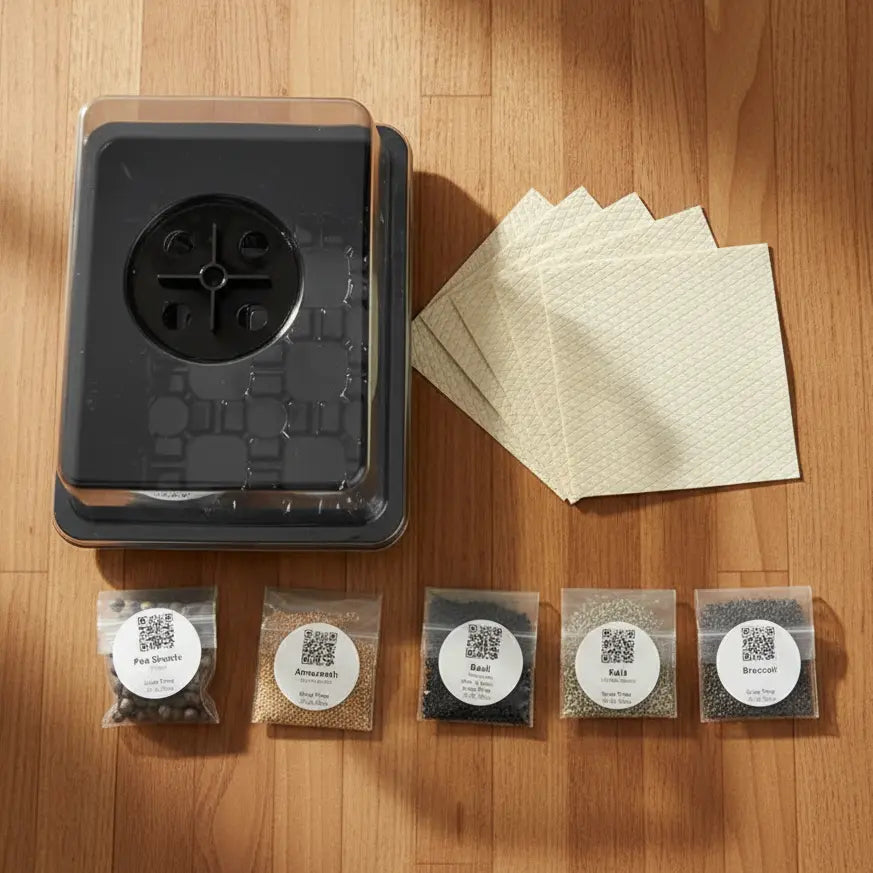
Basil Genovese Microgreens Seeds from Aquager come with an organic grow mat included, delivering the classic sweet Italian basil flavor in a tray that's ready in about 2 weeks.
Growing your own means the microgreens go from tray to plate in minutes, not days in transit, which matters for compounds that start breaking down as soon as the leaf is cut. It's also simply cheaper than buying pre-packaged microgreens by the ounce.
If you want to compare flavor profiles, Aquager also carries Basil Lemon, Basil Red Rubin, and Basil Bicolor microgreens seeds, each with a slightly different flavor and antioxidant pigment mix.
Basil Microgreens FAQ
Are basil microgreens more nutritious than mature basil?
In most nutrient categories, yes. Microgreens are generally harvested at a growth stage where antioxidant and anti-inflammatory compound concentrations run higher per gram than in the same plant at full maturity.
What do basil microgreens taste like?
They taste like a milder, slightly sweeter version of mature basil, with the same core flavor profile. The texture is more tender since the leaves haven't fully developed.
Do basil microgreens have the same anti-inflammatory compounds as basil leaves?
Yes. Eugenol and rosmarinic acid are both present in basil microgreens, and early research suggests these compounds may be even more concentrated at the seedling stage.
How long do basil microgreens take to grow?
Basil microgreens typically take 10 to 14 days from seed to harvest. For the full process, see How to Grow Basil Microgreens Indoors: Complete Guide.
Can basil microgreens replace fresh basil in recipes?
For garnishing and finishing dishes, yes. For recipes that need cooked or wilted basil, like a simmered sauce, mature leaves hold up better since microgreens are delicate and best added raw at the end.
Get the Antioxidant Benefits of Basil Microgreens at Home
Basil microgreens deliver the same Italian flavor you already know, just with a more concentrated dose of the antioxidants and anti-inflammatory compounds that make basil worth growing in the first place.

Grab a tray of Basil Genovese Microgreens Seeds and you'll have a fresh, antioxidant-rich harvest ready in about 2 weeks.
Author: Aquager · Published: July 25, 2026 · Updated: July 25, 2026














0 comments