
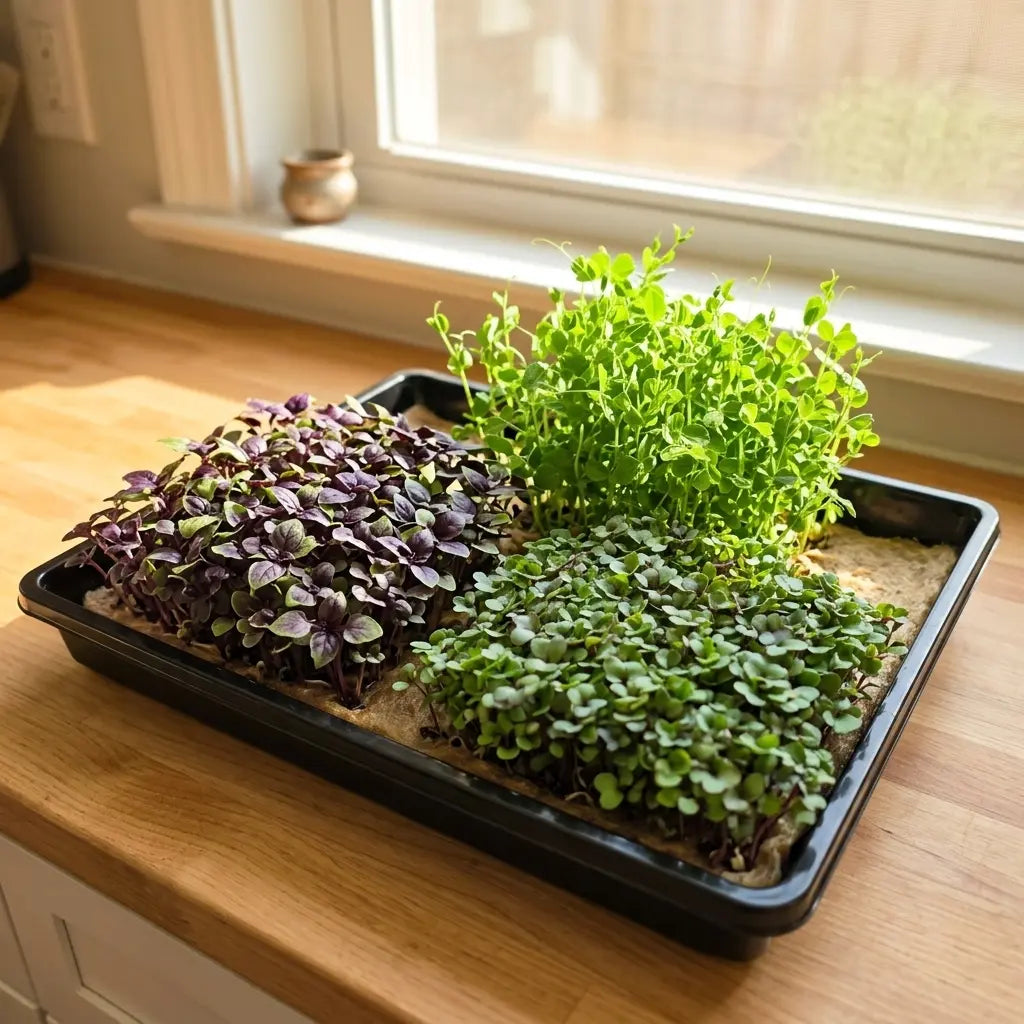
Your first tray of microgreens can tell you a lot about your light, whether you meant it to or not. Short, sturdy, deeply colored greens mean you got it right. Tall, pale, floppy stems mean the tray was reaching for light it never quite found.
Unlike a houseplant that can recover over months, a microgreens tray only lives for 5 to 14 days. There is no second chance to fix a bad light setup mid grow.
Ask five different growers how much light microgreens need and you will likely get five different answers, mostly because they are each describing whatever setup happens to be working for them.
So how much light do microgreens need? The honest answer depends on whether you are working with a sunny window, a dim one, or a grow light, and this guide walks through all three so you can match your setup to what you actually have.
How Much Light Do Microgreens Actually Need
Most microgreens want bright light for 12 to 16 hours a day, whether that light comes from the sun or an LED. A few hours of dim light here and there is not enough to keep growth compact and the color true to the variety.
Light does more than just prevent legginess. It also drives the plant's own food production, and it triggers the pigments responsible for color and flavor. More light generally means more of both, up to a point.
If you are relying on natural sunlight, aim for at least 4 to 6 hours of direct or very bright indirect light. Less than that and the seedlings start stretching upward, trying to find more light than the room is giving them.
Too much harsh, unfiltered afternoon sun through a hot pane of glass can also stress tender microgreens, though this is a smaller risk than too little light. If leaves look bleached or crispy at the edges on a scorching summer windowsill, move the tray back a few inches from the glass.
Because the entire crop cycle is so short, light quality in that narrow window matters more than it would for a full-grown plant. A seedling that stretches out during its first three days will stay stretched for the rest of its life, even if you move it somewhere brighter afterward.
Do All Microgreens Need the Same Amount of Light?
Not quite. Fast, mild varieties like radish, mustard, and broccoli rely heavily on the energy stored in the seed itself, so they can get away with slightly less light and still turn out reasonably well.
Larger, longer-growing varieties like sunflower and pea shoots have bigger leaves and a longer runway to harvest, so they benefit more from strong, consistent light. Skimp on light with these and the difference in size and sturdiness is obvious.
Color-driven varieties are the most light-hungry of all. Red amaranth, purple kohlrabi, and red cabbage all develop their signature color through pigments that need bright light to form fully. Grow them in dim light and you often get a duller, greener version instead of the deep color you were expecting.
If you are only able to give one tray your best light spot, put a colorful or slow-growing variety there first. The quick, mild greens are more forgiving if they end up in a slightly dimmer corner.
This is worth planning around if you grow more than one variety at a time. A mixed windowsill setup works best when the pickiest variety gets the brightest square foot and everything else fills in around it.
South-Facing vs North-Facing Windows
A south-facing window is usually the easiest spot in the house to grow microgreens well, at least in the Northern Hemisphere. It tends to receive the most direct sun for the longest stretch of the day, and most varieties do just fine there without any extra light.
A north-facing window is a different story. It receives soft, indirect light only, with no direct sun at any point in the day. Trays grown there often come out noticeably paler and leggier, with thin stems that lean hard toward the glass.
East and west-facing windows land somewhere in between. They usually get a few solid hours of direct sun, either in the morning or the afternoon, which is often enough on its own in spring and summer but may need a boost in winter when the sun sits lower and days are shorter.
If a north-facing window is your only option, a sheet of white poster board or foil propped behind the tray can bounce extra light back onto the seedlings. It is not a full substitute for real light, but it helps close the gap.
Whatever direction your window faces, give the tray a quarter turn once a day. Seedlings lean toward the brightest light source, and rotating the tray keeps growth even instead of one-sided.
Windowsill Growing: What Works and What Doesn't
A windowsill is a perfectly good spot for microgreens, as long as it faces the right direction. In a bright south-facing spot, a windowsill tray can produce greens just as dense and colorful as one grown under a dedicated light.
Glass does filter out some light intensity, though, and short winter days make the difference more noticeable. Expect slightly slower growth and slightly paler color on a windowsill from November through February compared to the same setup in June.
Summer brings its own quirk. A south-facing window can get intense enough in the early afternoon that a sheer curtain for an hour or two prevents the tray from overheating, especially on trays sitting right against the glass.
Cold glass is another thing to watch for. In freezing weather, a single-pane window can chill the tray sitting right against it, which slows germination and stresses young roots. Keep trays a few inches back from the glass on the coldest days.
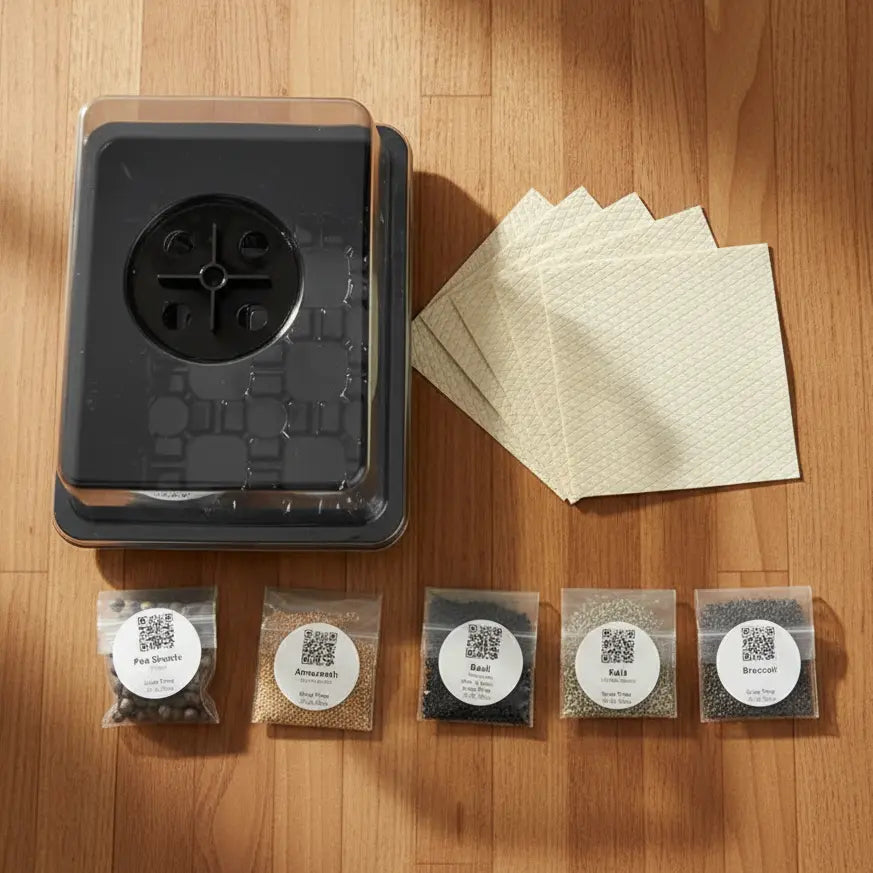
The Microgreens Starter Kit is a good match for windowsill growing since it is just add water, with no wiring or setup required to fit on a sunny sill. If you are getting your first tray going, our guide on growing your first tray indoors in 7 days covers the basics of picking a good spot before you plant.
LED Grow Lights: The Year-Round Fix
An LED grow light solves the biggest problem with natural light: it does not care what season it is, what direction your windows face, or how cloudy the week has been. A full-spectrum LED gives microgreens the same quality of light every single day.
A basic setup runs the light 12 to 16 hours a day on a timer, positioned roughly 6 to 12 inches above the tray. Full-spectrum bulbs, which include both blue and red wavelengths, tend to produce more compact, evenly colored growth than a plain white bulb.
Growers sometimes talk about daily light integral, which is really just a way of measuring total light over a full day rather than intensity at any one moment. For microgreens, hitting a consistent total each day matters more than any single bright hour.
We do not currently have an Aquager-branded grow light listed as available, so if you are shopping for one, look for three things: full spectrum output, a built-in or plug-in timer so you are not manually flipping a switch twice a day, and a height that is easy to adjust as your tray grows taller.
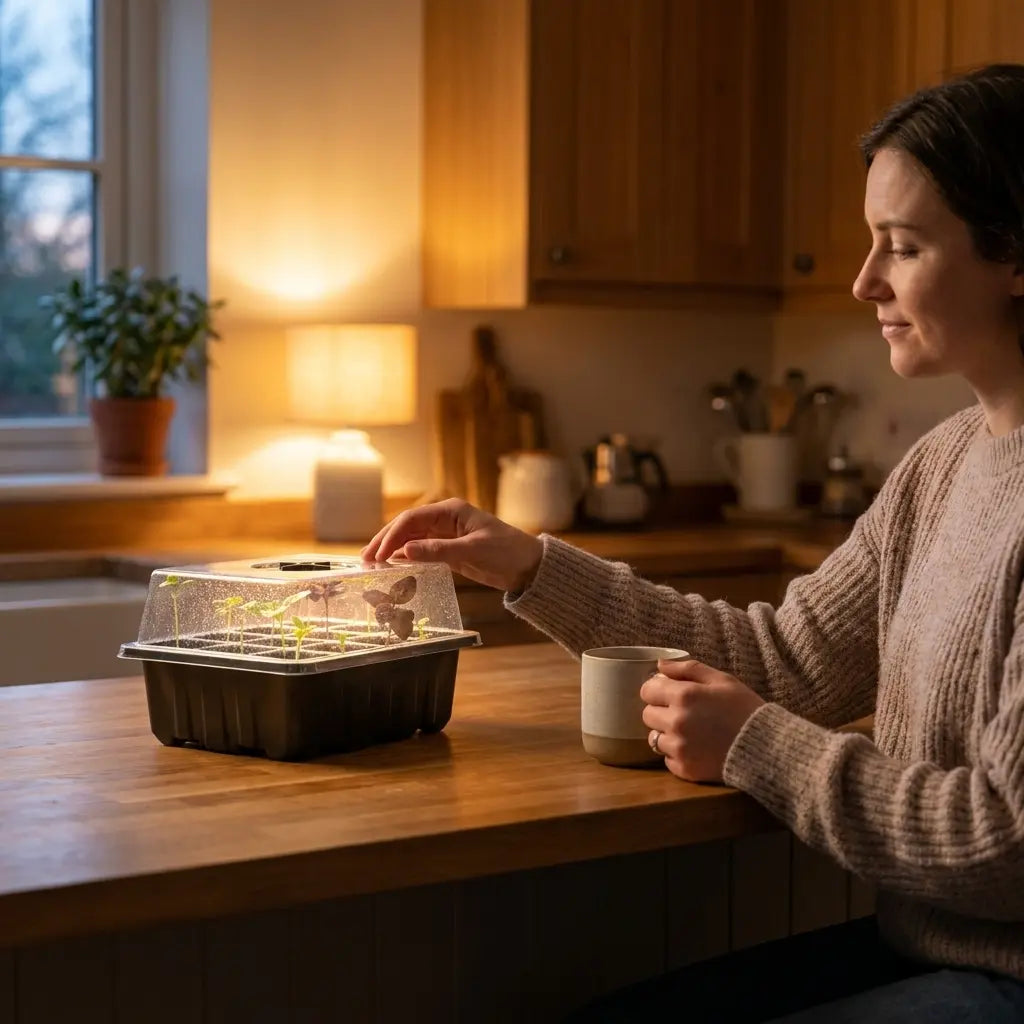
The Indoor Seed Starter Kit works equally well under a window or under a grow light, since the trays themselves do not care where the light comes from. If your space runs short on daylight for months at a time, our guide on growing microgreens in fall and winter goes deeper into building a light routine that holds up through the darker months.

How to Tell If Your Microgreens Are Getting Enough Light
Pale, yellow-green leaves are one of the clearest signs of too little light. Healthy microgreens should show rich, saturated color, whether that is deep green, red, or purple depending on the variety.
Thin, stretched stems are the other big warning sign, often called legginess. If your seedlings look taller than usual but floppy and weak, and they are all leaning hard in one direction, they are chasing light that is not strong enough where they are.
This stretching response has a name: phototropism, the plant bending or growing toward the strongest light source it can sense. It is a survival instinct that works great outdoors and works against you on a dim windowsill.
Good light shows up as the opposite: short, sturdy stems that hold themselves upright, dense leaf coverage by day 7 to 10, and color that matches what the variety is supposed to look like. Radish should look bright and crisp, not washed out.
If you spot legginess early, move the tray somewhere brighter or add a lamp right away. A stem that has already stretched out will not shorten back down, so the fix is preventing it early rather than correcting it later.
A Simple Light Setup for Every Season
In spring and summer, a south-facing windowsill is usually all you need. Long, strong daylight hours do most of the work, and you can grow a full tray from seed to harvest without ever plugging anything in.
In fall and winter, daylight gets shorter and weaker, even at a good window. This is when an LED grow light earns its keep, giving you the same 12 to 16 hour light day no matter how gray it is outside.
Either setup works well with the same trays and seeds. The Microgreens Starter Kit comes with two trays, so you can keep one growing on the windowsill in summer and move the routine indoors under a light once the days get short.
Light is only one piece of the setup, though. For a broader rundown of the airflow, temperature, and watering basics that pair with whatever light setup you choose, our guide on growing microgreens indoors is a good next stop.
FAQ: Light and Microgreens
How much light do microgreens need each day?
Aim for 12 to 16 hours of bright light a day, whether from a sunny window or an LED grow light. Less than that tends to produce pale, stretched growth.
Can microgreens grow in a north-facing window?
They can survive, but growth is usually pale and leggy since north-facing windows only get soft, indirect light. A south-facing window or a grow light will give better results.
What is the best light for microgreens in winter?
A full-spectrum LED grow light on a timer is the most reliable option in winter, since daylight hours are short and window light is weaker even in a good spot.
Do microgreens need direct sunlight?
Direct sunlight helps, but bright indirect light works too if it is strong enough. The key is total brightness and hours of light, not strictly direct sun.
What should I look for in grow lights for microgreens?
Look for full-spectrum output, a built-in timer, and adjustable height. Those three features matter more than wattage or brand name for a tray-sized setup.
Does more light always mean better microgreens?
Not past a certain point. Once you are hitting 12 to 16 hours of strong, even light a day, adding more rarely improves results and can occasionally stress delicate leaves if it comes with excess heat.
The Bottom Line: Give Microgreens Consistent Light
A south-facing window is usually enough on its own, most of the year, for most varieties. A north-facing window will leave you with pale, leggy trays no matter how well you water them.
An LED grow light is the simplest fix if your windows do not cooperate, or if you want the exact same results every day of the year regardless of season.
Match the light to the variety when you can. Save your brightest window or your grow light for color-driven or slow-growing varieties, and let the fast, mild greens take whatever spot is left.
Whichever setup you choose, consistency is what actually matters. Twelve to sixteen hours of steady, bright light, every day of the grow, is what turns a pale, floppy tray into a short, dense, colorful one.

Author: Aquager · Published: July 19, 2026 · Updated: July 19, 2026












0 comments