
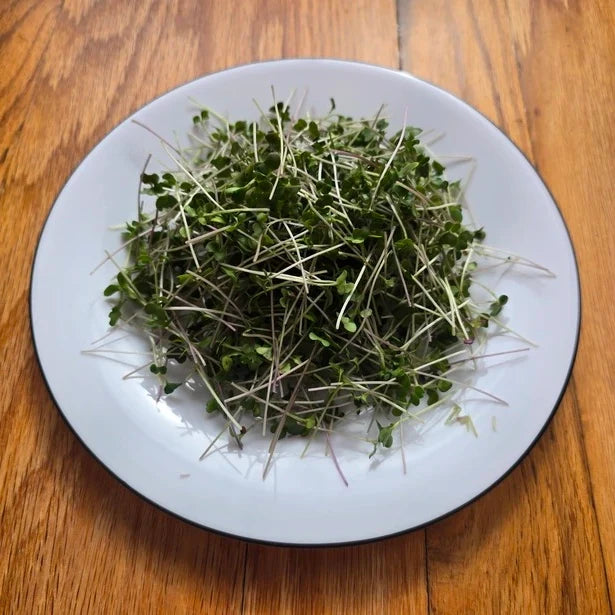
Your outdoor garden has slowed down. The tomatoes are gone, the basil has bolted, and the patio planter is sitting empty. But your kitchen counter does not have to follow suit.
Microgreens are one of the few crops that grow well in fall and winter. They do not need outdoor soil, warm weather, or long days of sunshine. A windowsill, a tray, and a few seeds are all it takes to keep fresh, nutrient-dense greens growing all season long.
This guide covers the 5 best microgreens for fall and winter, how to give them enough light on short days, and how to grow microgreens at home on a schedule so you always have a harvest coming.
What Are the 5 Best Microgreens to Grow in Fall and Winter?
The 5 best are broccoli, pea shoots, radish, kale, and clover. Each one sprouts at normal room temperature and is ready to harvest in about one to two weeks. Cool winter rooms can add a day or two.
| Microgreen | Harvest time | Flavor | Best for |
|---|---|---|---|
| Broccoli | 8 to 12 days | Mild, slightly spicy | Soups, bowls, sandwiches |
| Pea shoots | 8 to 10 days | Sweet, fresh | Beginners, salads, stir-fries |
| Radish Confetti Mix | 5 to 8 days | Peppery | Fastest harvest, toppings |
| Kale Kalefetti Mix | 8 to 12 days | Mild, earthy | Smoothies, soups, garnish |
| Clover | 5 to 7 days | Very mild, slightly sweet | Sandwiches, wraps |
1. Broccoli Microgreens: The Cold-Season Superfood
Broccoli microgreens are the best all-around pick for cool months. They sprout at normal room temperature and are ready in about 8 to 12 days. The flavor is mild, slightly earthy, and a little spicy, so they work in soups, grain bowls, and sandwiches. They are also high in sulforaphane, a compound researchers study for its health benefits.
For the full nutrition story, see our guide to the most nutritious microgreen varieties. For step-by-step growing, read How to Grow Broccoli Microgreens at Home. Ready to plant? Broccoli Microgreens Seeds are $7.99 and include an organic grow mat.

2. Pea Shoots: Sweet, Fast, and Beginner-Friendly
Pea is a cool-season crop, so pea shoots do well in a cooler fall or winter room. They are also the most forgiving microgreen for beginners. The seeds are large, they sprout fast, and you see progress every day. Harvest takes 8 to 10 days, and the flavor is sweet, fresh, and a little grassy.
Use them in salads, grain bowls, soups, and stir-fries. For the full process, see Pea Shoot Microgreens: The Complete Beginner's Growing Guide. Pea Shoots Field Microgreens Seeds are $7.99 and include an organic grow mat.

3. Radish Confetti Mix: Fastest Harvest of the Season
Radish is the fastest microgreen on this list, ready in about 5 to 8 days even in winter. The Confetti Mix grows a colorful blend of red, purple, and white stems with a bold, peppery bite. It is a great first tray when you want a quick win.
Learn the details in How to Grow Radish Microgreens, or start with Radish Confetti Mix Microgreens Seeds, $7.99 with a grow mat included.

4. Kale Kalefetti Mix: Nutrition and Color for the Cold Months
Kale microgreens fit fall flavors well. They are rich in vitamins K and C and folate, and the taste is mild and earthy, far gentler than mature kale. The Kalefetti variety grows a multi-color tray in 8 to 12 days. Add it to smoothies, soups, and warm fall dishes as a garnish.
Want the nutrition details? Read Kale Microgreens Benefits. Then grab Kale Kalefetti Mix Microgreens Seeds, $7.99 with a grow mat included.

5. Clover: The Mildest, Most Versatile Winter Green
Clover microgreens are very mild, with a light, slightly sweet taste. That makes them the easiest variety to add to a meal without changing the flavor. They are ready in just 5 to 7 days, so clover is a great low-effort winter crop for sandwiches, wraps, and salads.
Try Clover Microgreens Seeds when you want a gentle, fast green. They are $7.99 and include an organic grow mat.

Why Do Microgreens Grow Well Indoors in Fall and Winter?
Microgreens grow well in cold months because they live indoors, on a counter, shelf, or windowsill, where outdoor weather does not reach them. The grow cycle is also short, about 5 to 12 days for most varieties, so a few gray days barely change the result.
The main thing to manage is room temperature. Utah State University Extension recommends about 68 to 74°F for growing microgreens (source). A cooler room, around 60 to 65°F, slows growth by a day or two but will not harm the crop. The other adjustment is light, which is covered next.
How Much Light Do Microgreens Need in Winter?
Microgreens need steady light after they sprout, and in winter a window alone is often not enough because the days are short. A south-facing windowsill is the best natural option, and a basic LED grow light fills in the rest.
South-facing windows work for fast varieties. Radish and pea shoots often do fine with good window light. Rotate the tray daily so the stems do not lean.
East, west, and north windows need help. If your best window faces east, west, or north, your microgreens may grow slowly and stretch toward the glass. A simple LED strip or desk-style grow light on a timer fixes this.
Use a timer. Utah State University Extension suggests running grow lights about 18 hours a day, with 6 hours of dark. Follow your light's instructions for how far above the tray to hang it, and raise it as the plants grow.
The most common winter mistake is too little light right after sprouting. Keep the tray covered while seeds germinate, then give it your brightest light as soon as the seeds break the surface.
How Do You Stagger Your Plantings for a Weekly Harvest?
Start a new tray every 5 to 7 days. That one habit gives you fresh microgreens on a reliable schedule all fall and winter.
By the time your first tray is ready to harvest, your second tray is halfway grown and your third is just sprouting. After you cut the first tray, clean it, add a fresh grow mat, and seed it again.
With three trays running, you harvest about once a week. With five trays, you harvest about twice a week. Indoor conditions stay steady in cold months, so your timing becomes easy to predict.
What Setup Do You Need for Year-Round Indoor Microgreens?
You need a tray, a growing mat, a humidity dome, and a way to water from below. These four things make the biggest difference when you are growing through winter.
Growing mat: Organic coco coir mats hold the right amount of moisture, stay clean on a countertop, and get replaced between grows, which keeps each cycle sanitary.
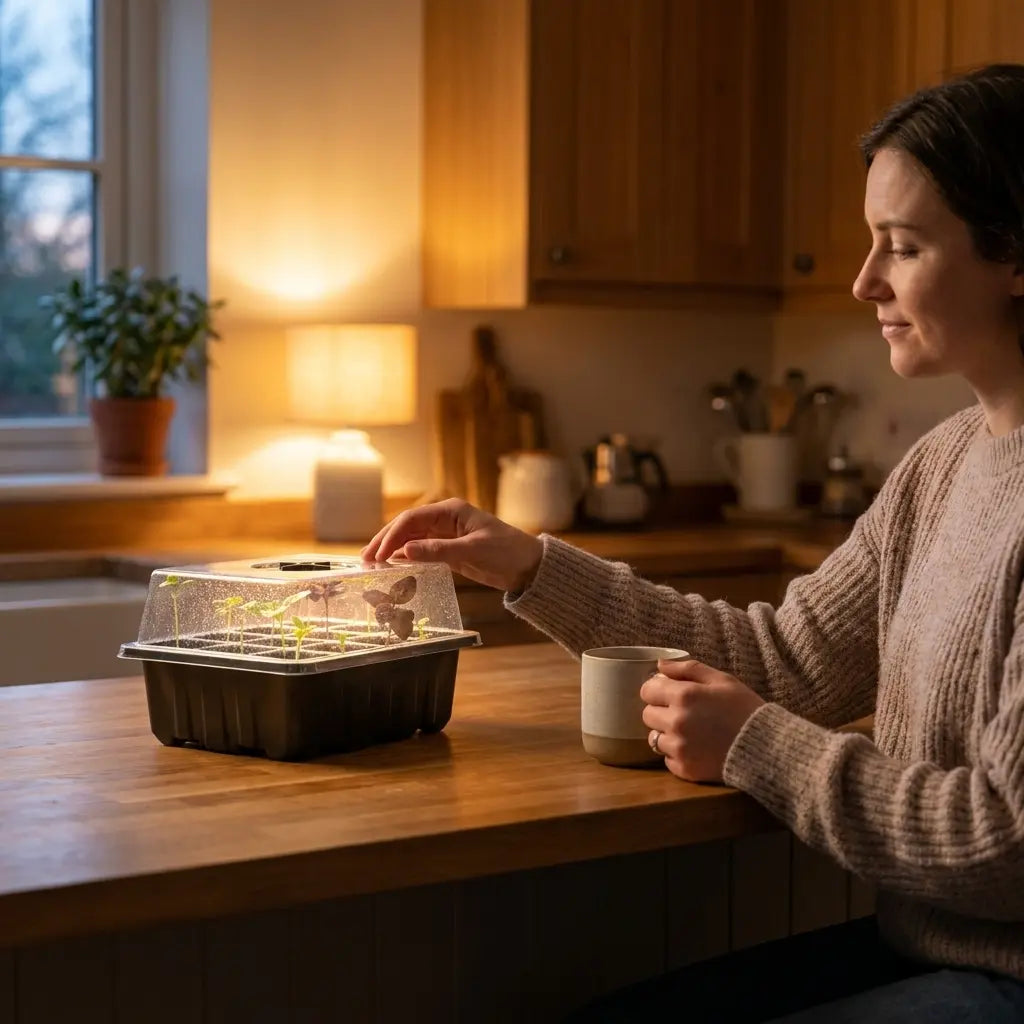
Humidity dome: A dome over the seeds during the first days of germination helps keep them moist, which matters in the drier air of heated winter homes. Once the seeds sprout, take the dome off and move the tray into full light.
Bottom watering and airflow: Pour water into the tray and let the mat soak it up from below. This keeps the leaves dry and avoids washing seeds around. Utah State University Extension also notes that microgreens need constant airflow, so a small fan on low near the tray helps.
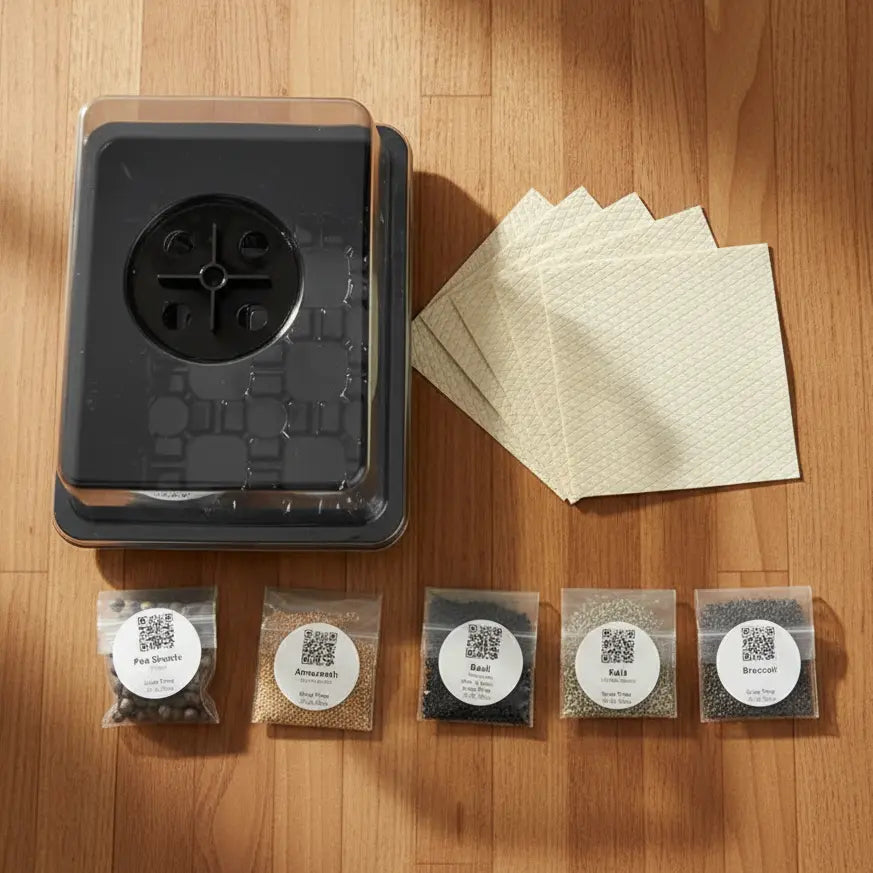
The Microgreens Starter Kit ($29.99) covers all of this in one box: two trays, a humidity dome, organic grow mats, and starter seeds including broccoli, kale, pea shoots, and lemon basil. To learn more about the soil-free method, see our guide to growing microgreens without soil.
What Are the Most Common Winter Microgreen Mistakes?
The most common mistakes are too little light, cold glass, a soaked mat, still air, and harvesting by the calendar. Each one is easy to fix.
- Too little light after sprouting: Stems turn pale and stretch. Move the tray to your brightest spot or add a grow light.
- Trays against cold glass: A window pane can be much colder than the room on freezing nights. Move the tray back to the counter overnight.
- A soaked mat: The mat should feel damp, not wet. Heated winter air dries it faster than you expect, so check morning and evening at first.
- Still air: Add a small fan on low so air moves gently around the tray.
- Harvesting by the calendar: Winter can add a day or two. Cut when the seed leaves are fully open, not on a fixed day.
What Can You Make With Your Fall and Winter Harvest?
Fresh microgreens turn simple fall meals into something special. Scatter them over a warm bowl of soup, fold them into a grain bowl, or use them to top roasted vegetables.
For ideas, see How to Use Microgreens in Soup and Fall Microgreens Growing Guide: The Best Varieties for Autumn Cooking.

Frequently Asked Questions About Growing Microgreens in Winter
What temperature do microgreens need to grow in winter?
Microgreens grow best at normal room temperature, about 68 to 74°F, according to Utah State University Extension. Cooler rooms around 60 to 65°F slow the grow cycle by a day or two but will not ruin the crop. If your home often drops below 60°F, move the tray to a warmer spot away from drafty windows.
Do microgreens need sunlight in winter?
They need light, but not direct sun. A bright south-facing window can work for fast varieties, but winter days are short. A basic LED grow light on a timer fills the gap for any window. Utah State University Extension suggests about 18 hours of light and 6 hours of dark each day.
How often should I water microgreens in winter?
Once per day is usually enough, but check the grow mat. It should feel damp, not soaked. Winter heating makes indoor air drier, which can dry the mat faster than expected. Check morning and evening during the first few days until you learn your own setup.
Can I grow microgreens on a windowsill in December?
Yes, with one caveat: do not leave trays directly against the glass on very cold nights. The glass can drop well below room temperature and shock the seeds during germination. Set the tray on the sill during the day and move it back to the counter at night when it is freezing outside.
When should I harvest microgreens in winter?
Harvest at the cotyledon stage, when the two seed leaves are fully open but before the first true leaf appears. In winter the grow cycle may take 1 to 2 extra days compared to summer. Use the leaf stage as your signal, not just the calendar.
Keep Your Kitchen Counter Green All Winter
The short days and cold weather outside do not have to change what you eat. Microgreens grow indoors on a counter, in a tray, no matter the season.
Start with one tray this week and add a second the following week. By December you will have a rotation running and fresh greens ready whenever you need them: broccoli for nutrition, pea shoots for sweetness, radish for speed. Planting for Thanksgiving? See our 4 best winter greens microgreens for plant-by dates and a two-tray plan through February.
The Microgreens Starter Kit has everything you need to start your first fall or winter grow today, so you can plant right away and see your first harvest in about 8 to 12 days.
Author: Aquager Team · Published: May 30, 2026 · Updated: October 11, 2026 · Reviewed: October 10, 2026 (Phase 2 and 3)












0 comments