
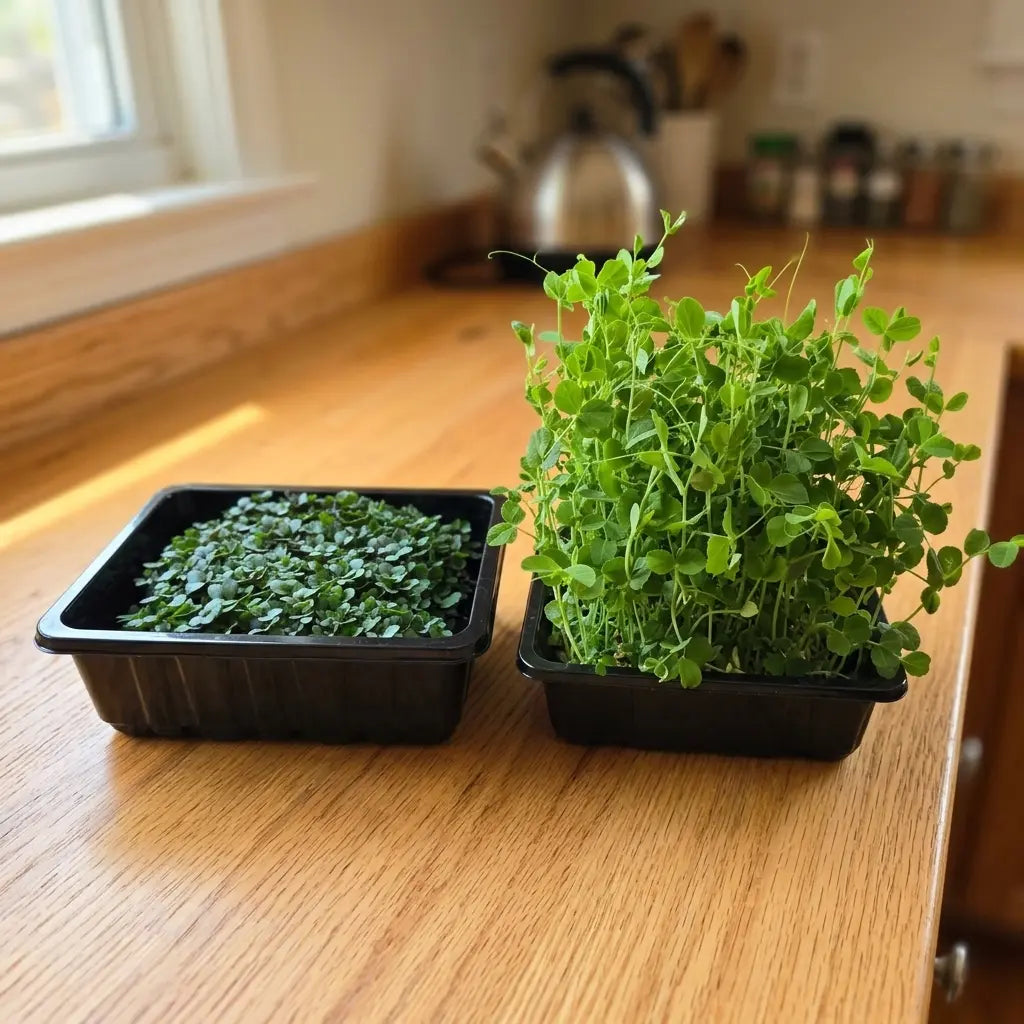
Microgreens and baby greens get mixed up constantly, and it is an easy mistake to make. Both show up in small clamshells at the grocery store. Both look like tiny versions of a full grown vegetable. Both get called "greens" by people who are just trying to eat healthier.
They are not the same thing, though, and the difference is not just marketing. It comes down to exactly when each one gets harvested, which changes the flavor, the texture, and according to the research, the nutrition as well.
The short version is that microgreens are cut at the cotyledon stage, just 7 to 14 days after germination, while baby greens are left to grow for 3 to 4 weeks until they reach the true leaf stage. That gap in timing explains almost everything else about how the two compare.
The Cotyledon Stage: What Makes Something a Microgreen
By definition, a microgreen is a seedling harvested at the cotyledon stage, sometimes with the very first true leaf just starting to emerge. This happens fast, usually 7 to 14 days after the seed germinates, depending on the variety.
At this stage, the plant only has its cotyledons, the embryonic leaves that were packed inside the seed itself, plus a short stem. It has not yet grown any of the true leaves that will eventually define what the mature plant looks like. Radish, broccoli, and sunflower microgreens are common examples, all cut while still just an inch or two tall.
This is the strict micro greens definition used by growers and researchers, and it is what separates a microgreen from a sprout on one side, sprouts are eaten root and all, seed included, and a baby green on the other. Chefs sometimes call microgreens vegetable confetti, since a small handful is usually all a dish needs.
What Makes Something a Baby Green?
A baby green is harvested later, once the plant has developed actual true leaves, typically 3 to 4 weeks after germination. This is a true leaf plant in the technical sense, meaning it has moved past the cotyledon stage and grown the leaves that photosynthesize and support further growth.
Baby spinach, baby kale, baby arugula, and baby lettuce mixes are the most common examples on grocery shelves. They are simply young versions of the mature vegetable, picked early for a milder flavor and more tender texture than a full grown head or bunch. Most bagged spring mix blends are also baby greens, just several varieties combined in one bag.
The seed is the same in many cases. Baby kale and mature kale come from identical seed stock, just harvested at different points. The same is often true for baby greens versus their own microgreen counterparts. Farms harvest at the baby green stage because it balances yield per planting with the tenderness shoppers expect from a salad green, a tradeoff that simply favors a later harvest than microgreens.
Where Sprouts Fit Into the Picture
Sprouts are the earliest stage of all, harvested just 2 to 5 days after germination. Unlike microgreens or baby greens, sprouts are eaten whole, seed, root, and stem included, usually grown in water rather than soil or a grow mat.
This is where a lot of the confusion starts, since sprouts and microgreens are sometimes lumped together as tiny grocery store greens. They are grown differently, harvested at different points, and carry different food safety considerations because sprouts are grown in a warm, wet environment that also favors bacterial growth. Microgreens vs Sprouts: Which Is Safer and Easier? covers that comparison in more depth.
The Harvest Stage Timeline, Side by Side
Laid out in order, the harvest stage for each product looks like this.
- Sprouts: harvested within 2 to 5 days of germination, eaten whole including the seed and root, no leaves developed yet.
- Microgreens: harvested at the cotyledon stage, about 7 to 14 days after germination, embryonic leaves only.
- Baby greens: harvested at the true leaf stage, about 3 to 4 weeks after germination, several actual leaves developed.
- Mature vegetables: harvested 45 to 65 days or more after planting, full size with a fully developed leaf and root structure.
Seeing all four stages together makes the confusion easier to understand. Microgreens and baby greens sit right next to each other on this timeline, separated by only a couple of weeks, which is exactly why they get lumped together so often.
Why the Extra Growing Time Doesn't Pay Off Nutritionally
The extra 2 to 3 weeks a baby green spends growing does not translate into more nutrition per bite. If anything, research points the other way. A USDA Agricultural Research Service study testing 25 microgreen varieties found they averaged about five times more vitamins and carotenoids than their mature, fully grown counterparts, by weight.
The mechanism is straightforward. In the first couple of weeks, a seedling is pouring concentrated, stored energy into a small amount of tissue. By the time a plant reaches the true leaf stage and keeps growing toward maturity, a larger share of its added mass is water, fiber, and structural cell walls rather than concentrated vitamins.
Baby greens land in between microgreens and mature vegetables on this curve. They are usually somewhat more nutrient dense than the full grown version of the same plant, but not nearly as concentrated as the same plant cut at the cotyledon stage. For the full numbers on one common comparison, Microgreens vs. Baby Lettuce: Which Is More Nutritious Per Ounce? walks through the actual USDA figures.
None of this means baby greens are a poor choice. They still deliver more nutrition than a fully mature vegetable at the same weight, and they offer volume and texture that a small handful of microgreens cannot replace in a full salad. The point is simply that extra growing time is not the same as extra nutrition, and in this case the relationship actually runs backward.
How to Tell Them Apart at the Store or in a Tray
At the grocery store, microgreens are usually sold either as a living tray you cut yourself or as a small clamshell of loose, very short pieces, rarely more than 2 inches tall. The stems are thin and the leaves are simple, often just a single pair of cotyledons per stem.

Baby greens look noticeably more like a small version of the adult plant. Baby spinach has the recognizable spinach leaf shape, just smaller. Baby kale has the ruffled, sturdier leaf structure of full grown kale. If what you are looking at resembles a miniature version of the vegetable it is named after, it is a baby green, not a microgreen.
Flavor is another giveaway. Microgreens, like Radish Confetti Mix Microgreens, tend to taste more concentrated and intense than their mature version, since all of that flavor compound is packed into a much smaller amount of tissue. Baby greens taste milder than microgreens but slightly more developed than a true sprout.
Packaging labels can help too, though they are not always consistent. "Microgreens" and "micro greens" both refer to the cotyledon stage. "Baby greens," "spring mix," and "baby [vegetable name]" almost always mean the true leaf stage. If a label just says "greens" with no other qualifier, it is worth checking the size and leaf shape before assuming which one you are getting.
Grow the Real Thing at Home in a Week
The fastest way to actually taste the difference is to grow a tray yourself. Radish Confetti Mix Microgreens are one of the quickest options, ready to harvest at the cotyledon stage in about 7 days, with a crisp texture and a bold, peppery kick that store bought baby greens simply do not have.
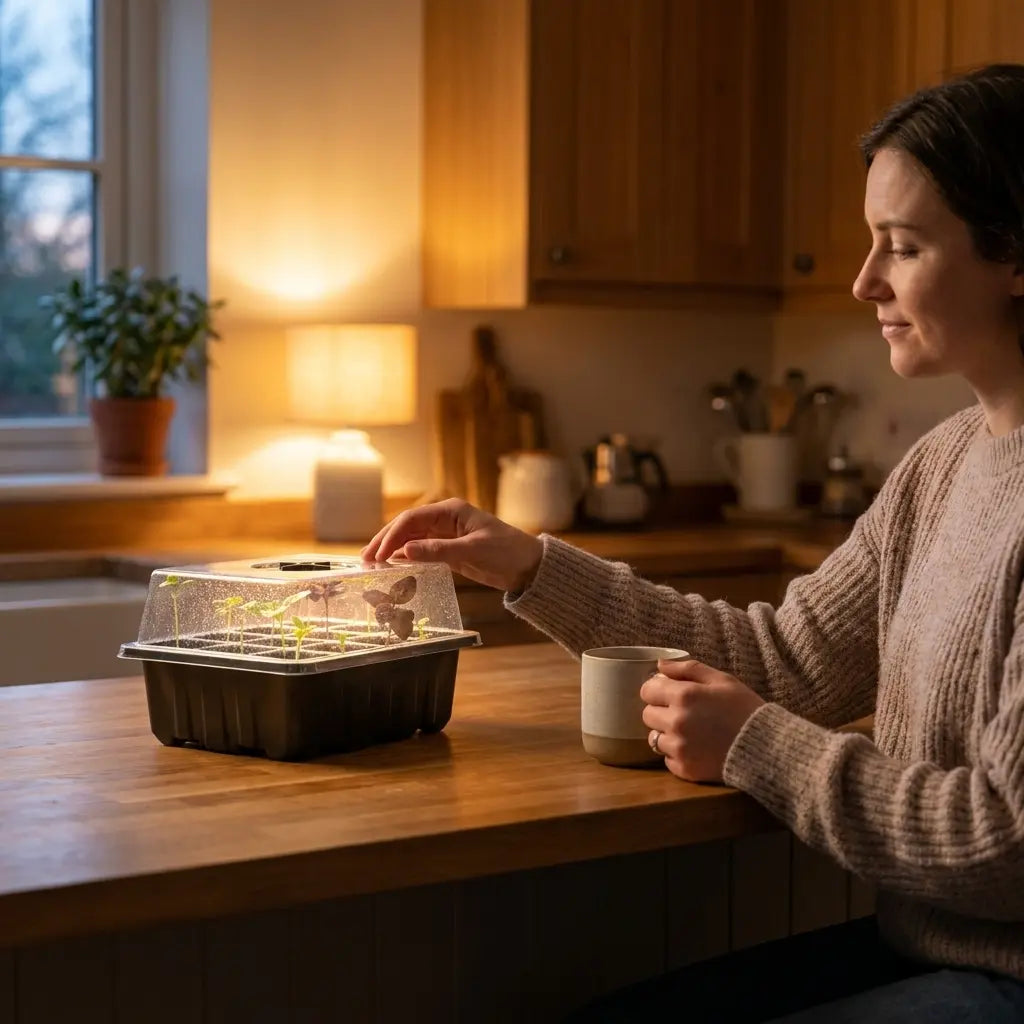
Because the timeline is so short, it is an easy way to see the growth stages described above play out in real time, rather than just reading about them. You seed the tray, watch the cotyledons emerge within days, and harvest before the plant ever gets the chance to grow true leaves.
It is also a useful side by side experiment if you already buy baby greens regularly. Start a tray the same week you pick up a clamshell of baby spinach or spring mix, and you can compare both the timeline and the flavor difference firsthand, rather than taking any article's word for it.
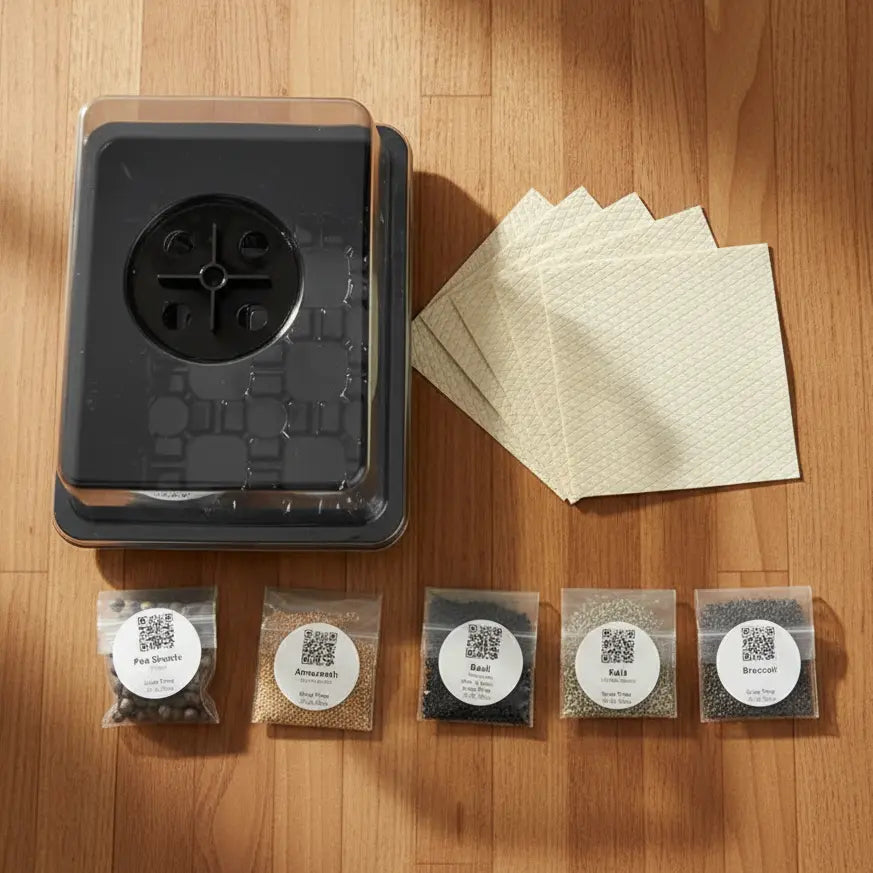
Each seed and mat packet already includes an organic grow mat, so there is nothing extra to buy to get a tray started.
Frequently Asked Questions
Are microgreens and baby greens the same thing?
No. Microgreens are harvested at the cotyledon stage, about 7 to 14 days after germination. Baby greens are harvested later, at the true leaf stage, about 3 to 4 weeks after germination.
Which is more nutritious, microgreens or baby greens?
Microgreens generally test higher in vitamins and carotenoids per ounce, since nutrients are more concentrated at the earlier cotyledon stage before growth dilutes them into fiber and water.
Is baby arugula the same as arugula microgreens?
They come from the same plant but are harvested at different growth stages. Baby arugula has developed true leaves and a milder flavor, while arugula microgreens are cut at the cotyledon stage with a sharper, more concentrated taste.
Can I eat baby greens raw like microgreens?
Yes, both are typically eaten raw, though microgreens are more often used as a garnish or topping due to their more concentrated flavor, while baby greens are commonly used as a salad base.
Which is cheaper to grow at home, microgreens or baby greens?
Microgreens are usually cheaper and faster, since the shorter growing window means less water, less space, and less time before you get a usable harvest.
Do microgreens and sprouts mean the same thing?
No. Sprouts are harvested within 2 to 5 days of germination and eaten whole, including the seed and root. Microgreens are cut later, at the cotyledon stage, and only the stem and leaves are eaten.
Why do grocery stores sell baby greens instead of microgreens more often?
Baby greens produce more usable volume per planting and hold up better during shipping and storage, which makes them more practical for large scale grocery distribution than the more delicate, faster growing microgreen stage.
Conclusion
The confusion between microgreens and baby greens comes down to two or three weeks of growing time, but that gap changes more than people expect. Microgreens are cut at the cotyledon stage for concentrated flavor and nutrition. Baby greens grow past that point to the true leaf stage for a milder, more familiar salad green.
Once you know what to look for, telling them apart at the store takes seconds. If you want the fuller picture of what microgreens are and how they're grown before starting your first tray, What Are Microgreens? A Beginner's Guide is a good next stop.
Growing your own removes the guesswork entirely, since you control exactly which stage you harvest at. The Microgreens Starter Kit is the simplest way to start, with everything needed for your first two trays included.















0 comments